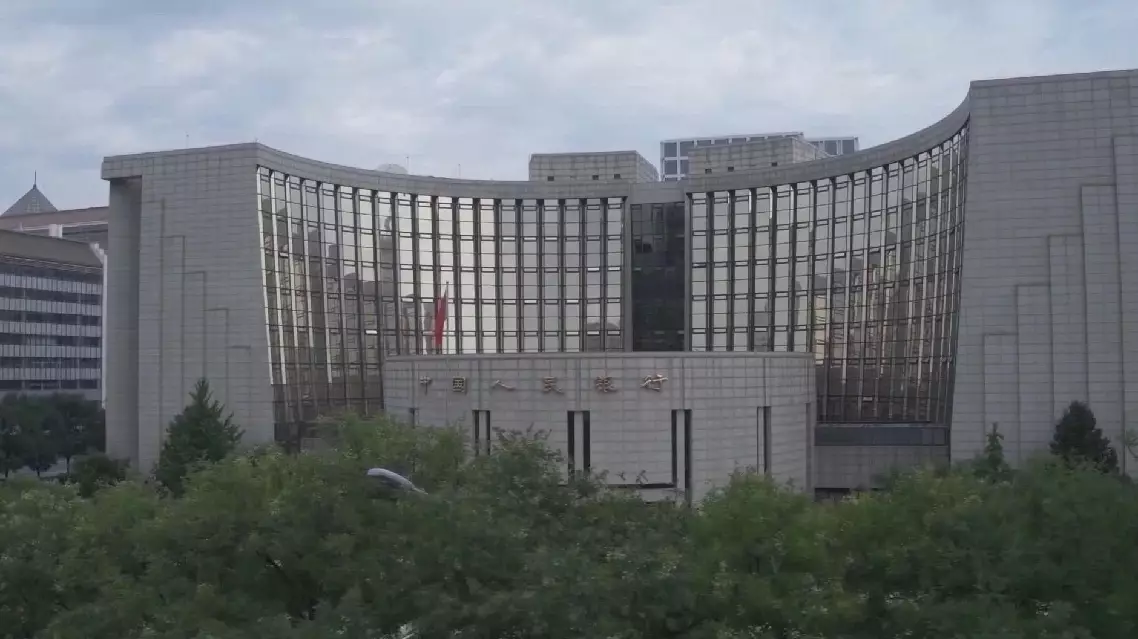
China's central bank reported stable and sustained growth in green, tech, and small business loans in the third quarter of 2026, underscoring financial support for innovation and sustainability.
The People's Bank of China announced Wednesday that green lending and loans to tech firms remained strong, while loans to small businesses and rural sectors continued to grow.
Inclusive loans to small and micro businesses continued to grow. By the end of the third quarter of this year, the balance of the inclusive small and micro business loans in renminbi reached 38.5 trillion yuan (5.73 trillion U.S. dollars), representing a year-on-year increase of 6.7 percent. This growth rate was 1.9 percentage points higher than the overall loan growth. In the first three quarters, inclusive small and micro business loans increased by 1.93 trillion yuan.
Green loans grew at a steady pace. By the end of the third quarter of 2026, the balance of green loans reached 49.22 trillion yuan, up 13.0 percent year on year, with an increase of 4.41 trillion yuan in the first three quarters.
Lending support for science and technology innovation enterprises remained stable. By the end of the third quarter, 307,300 science and technology-oriented small and medium-sized enterprises had received loan support, with a loan access rate of 51.1 percent, 0.9 percentage points higher than at the end of the previous year. A total of 292,700 high-tech enterprises received loan support, with a loan access rate of 58.2 percent, also up 0.9 percentage points compared to the end of last year.
Loans for the agricultural sector saw steady growth. At the end of the third quarter of 2026, the balance of loans related to agriculture totaled 54.29 trillion yuan, a year-on-year increase of 5.6 percent. This was 0.9 percentage points higher than the overall loan growth, with an increase of 2.78 trillion yuan in the first three quarters.
Business loans to households recorded a slight year-on-year increase. By the end of the third quarter, the balance of household loans was 82.25 trillion yuan, of which business loans stood at 25.64 trillion yuan, a year-on-year increase of 1.7 percent and an increase of 538.3 billion yuan in the first three quarters.
China sees steady growth in green, tech, small loans
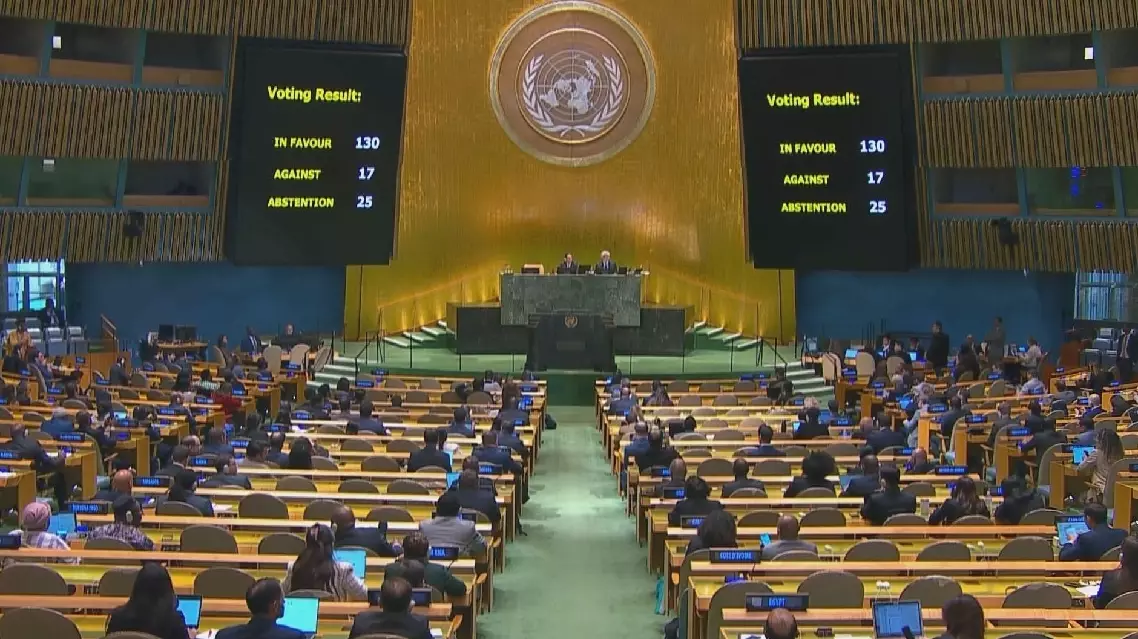
The UN General Assembly on Wednesday adopted a resolution calling for an end to the decades-old U.S. embargo on Cuba.
The resolution was adopted with 130 votes in favor, 17 against and 25 abstentions.
It expresses concern about the continued promulgation and application of laws and regulations, including the Helms-Burton Act enacted by the United States in 1996, whose extraterritorial effects undermine the sovereignty of other states, the legitimate interests of individuals and entities under their jurisdiction, and the freedom of trade and navigation.
The resolution calls on all states to refrain from promulgating and applying such laws and measures, and urges states that have applied and continue to apply such laws and measures to take necessary steps to repeal or invalidate them as soon as possible.
The resolution also requests the UN secretary-general to prepare a report on the implementation of this resolution and to submit it to the General Assembly at its next annual session.
Wednesday's resolution marked the 34th consecutive adoption of a resolution on the necessity of ending the economic, commercial and financial embargo imposed by the United States on Cuba.
Speaking at the General Assembly, Cuban Foreign Minister Bruno Rodriguez strongly criticized remarks made by the U.S. representative Michael Waltz, who shouted "this is the United States" during a heated exchange of words with Rodriguez the day before.
"This is the United Nations. This is the United Nations organization. Where we are standing is the capital of multilateralism. Here is the center of an international order that is based on international laws and the UN Charter. This is the most universal and democratic institution of the United Nations," said Rodriguez.
"The remark reflects a worldview -- the way they view and treat the entire planet as if the Earth were part of U.S. territory. The way they view Cuba, the way they view everyone seated here, as if you were one of the 50 states of the United States. This is the very core of the so-called 'peace through strength' concept: might makes right, imposing peace by force. Cuba is not a threat; the blockade is the threat," Rodriguez continued.
The United States has adopted a hostile policy towards Cuba following the victory of the Cuban Revolution in 1959, and imposed a full economic and financial blockade as well as a trade embargo against Cuba in 1962. In March 1996, the United States enacted the Helms-Burton Act, which stipulated harsh sanctions against all foreign companies engaged in economic and trade relations with Cuba.
UN votes overwhelmingly against US embargo on Cuba