Skip to Content Facebook Feature Image

Israelis await final election results as difficult choices lie ahead

News

Israelis await final election results as difficult choices lie ahead
News

News

Israelis await final election results as difficult choices lie ahead

2026-10-29 15:07 Last Updated At:15:12

JERUSALEM (AP) — Israelis on Thursday waited for final election results to confirm what they see taking shape: No majority of parliament seats for Prime Minister Benjamin Netanyahu and his allies, or for the array of parties seeking to unseat him.

Difficult decisions lie in the weeks ahead, including whether some Jewish and Arab parties would team up in a historic alliance, or whether some parties that campaigned on ousting Netanyahu would toss that aside and join forces with the deeply divisive prime minister. While this plays out, Netanyahu remains in charge.

Final results could come as early as Thursday evening after about a half-million absentee ballots are counted from military personnel, diplomats, people in prisons and hospitals, and others. They are not expected to sway the results dramatically.

Local media projected 53 parliament seats for Netanyahu's bloc, 48 seats for opposition parties and 19 for Arab-led ones, which also want Netanyahu out.

The chief rival to Netanyahu, former military chief Gadi Eisenkot, in his first public statement since an address to supporters early Wednesday spoke of a government in service to all and reflecting the will of the people.

Eisenkot did not mention the prospect of joining forces with the Arab-led parties that had a strong showing, as some Arab citizens broke longstanding vows never to vote in a country where they have long faced discrimination. But he has said he is open to working with them to reach the 61-seat majority needed to control the 120-seat Knesset.

One of those Arab parties, the Joint List, late Wednesday noted the “unprecedented show of strength" and the Jewish voters "willing to swim against the tide of racism." It said it was open to political cooperation.

There were small rallies overnight in Tel Aviv, and in far more conservative Jerusalem, in support of a coalition that includes Arab-led parties. Until 2021, no Arab party had joined a coalition government, and that was brief.

Netanyahu's Likud party, despite receiving the most votes, has accused Arab-led parties of stealing the election and asked the election committee to investigate. It did not provide specific evidence to support its claims. The election committee has said the number of reported irregularities in the relatively calm election was low.

Israel’s president next week will task someone to form the next government. It has traditionally been the leader of the party with the most votes, but that’s not required.

If a new government cannot be formed after multiple attempts, Israel would face a new election early next year. On Wednesday, President Isaac Herzog signaled he wanted to avoid that step – something Eisenkot has said as well.

New elections bring new questions, including whether Arab citizens would again go to the polls in large numbers and whether the tens of thousands of Israelis who flew home to vote would do it again. Many had said they took that step to save the country from Netanyahu.

Israel, already divided along multiple fault lines – Jews and Arabs, secular and religious – entered the election with huge and painful issues at stake.

Those include whether the fast-growing ultra-Orthodox population should remain exempted from compulsory military service in a country where many families have seen their sons and daughters killed in three years of inconclusive wars.

Netanyahu, Israel’s longest-serving prime minister, has been especially polarizing, with corruption allegations hanging over him along with accusations that he delayed making deals over the war in Gaza, including to free hostages, for political gain.

While many Israelis voted with security issues first in mind, the country’s international standing is also at stake after widespread criticism over the treatment of Palestinians in Gaza and growing violence by Jewish settlers in the occupied West Bank.

For Arab citizens, who make up 20% of Israel’s population, there is cautious hope of change. “God willing, we will have something for us in the government, something that will bring us our rights,” said Brosli Elias, a resident of Nazareth, one of Israel’s largest Arab cities.

Meanwhile, the threat of further strikes against Iran adds to the election uncertainty, as the Trump administration has spoken of new attacks after the midterm elections on Nov. 3. Experts have said Netanyahu could seize on the renewed all-out war to press for a unity government with him in charge.

That could delay what Netanyahu has long resisted: a public inquiry into the security failures that led to the deadliest extremist attack on Israel in the country’s history, the Hamas-led assault on Oct. 7, 2023, that sparked the war in Gaza.

Saeed reported from Abu Snan.
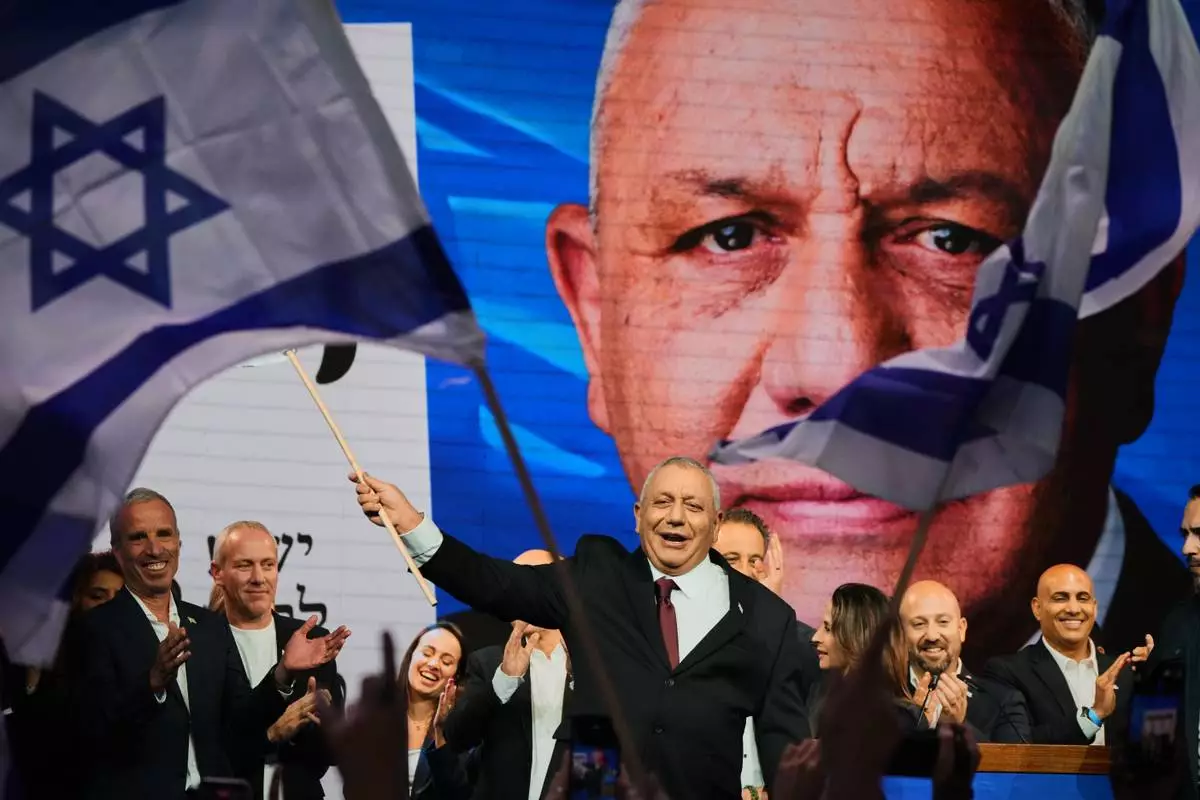
Gadi Eisenkot, leader of the Yashar ("Straight") party, waves an Israeli flag onstage following the release of the first exit poll results in Israel's general election in Tel Aviv, Israel, Wednesday, Oct. 28, 2026. (AP Photo/Ariel Schalit)
Gadi Eisenkot, leader of the Yashar ("Straight") party, waves an Israeli flag onstage following the release of the first exit poll results in Israel's general election in Tel Aviv, Israel, Wednesday, Oct. 28, 2026. (AP Photo/Ariel Schalit)

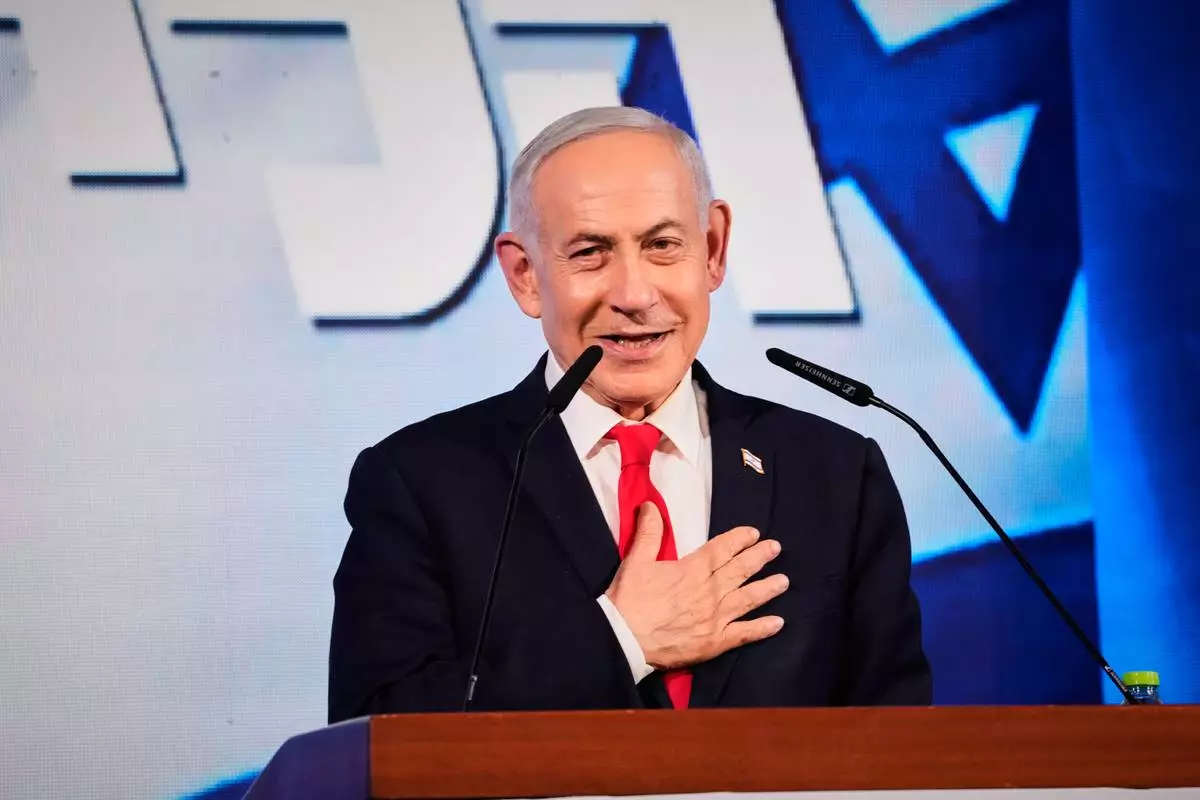
Israeli Prime Minister Benjamin Netanyahu speaks to his supporters at Likud party headquarters in Jerusalem after the release of the first exit poll results in Israel's general election, Wednesday, Oct. 28, 2026. (AP Photo/Ohad Zwigenberg)

Israeli Prime Minister Benjamin Netanyahu speaks to his supporters at Likud party headquarters in Jerusalem after the release of the first exit poll results in Israel's general election, Wednesday, Oct. 28, 2026. (AP Photo/Ohad Zwigenberg)

People walk next to a Likud party campaign ad featuring Israeli Prime Minister Benjamin Netanyahu and U.S. President Donald Trump, with a Hebrew message reading "We have one opportunity to win," in Jerusalem on Wednesday, Oct. 28, 2026, a day after the elections in Israel. (AP Photo/Ohad Zwigenberg)

People walk next to a Likud party campaign ad featuring Israeli Prime Minister Benjamin Netanyahu and U.S. President Donald Trump, with a Hebrew message reading "We have one opportunity to win," in Jerusalem on Wednesday, Oct. 28, 2026, a day after the elections in Israel. (AP Photo/Ohad Zwigenberg)
ESPOO, Finland--(BUSINESS WIRE)--Oct 29, 2026--

IQM Quantum Computers (Nasdaq: IQMX), a global leader in superconducting quantum computers, today announced that its cloud-accessible IQM Emerald system has fully entangled all 54 qubits on the chip simultaneously, a result that shows the system’s computational quality holds up when every qubit is put to work at once. IQM’s cloud customers now have access to that same full-chip performance, so their computations can draw on the entire processor rather than a fraction of it.

This press release features multimedia. View the full release here: https://www.businesswire.com/news/home/20261029191153/en/

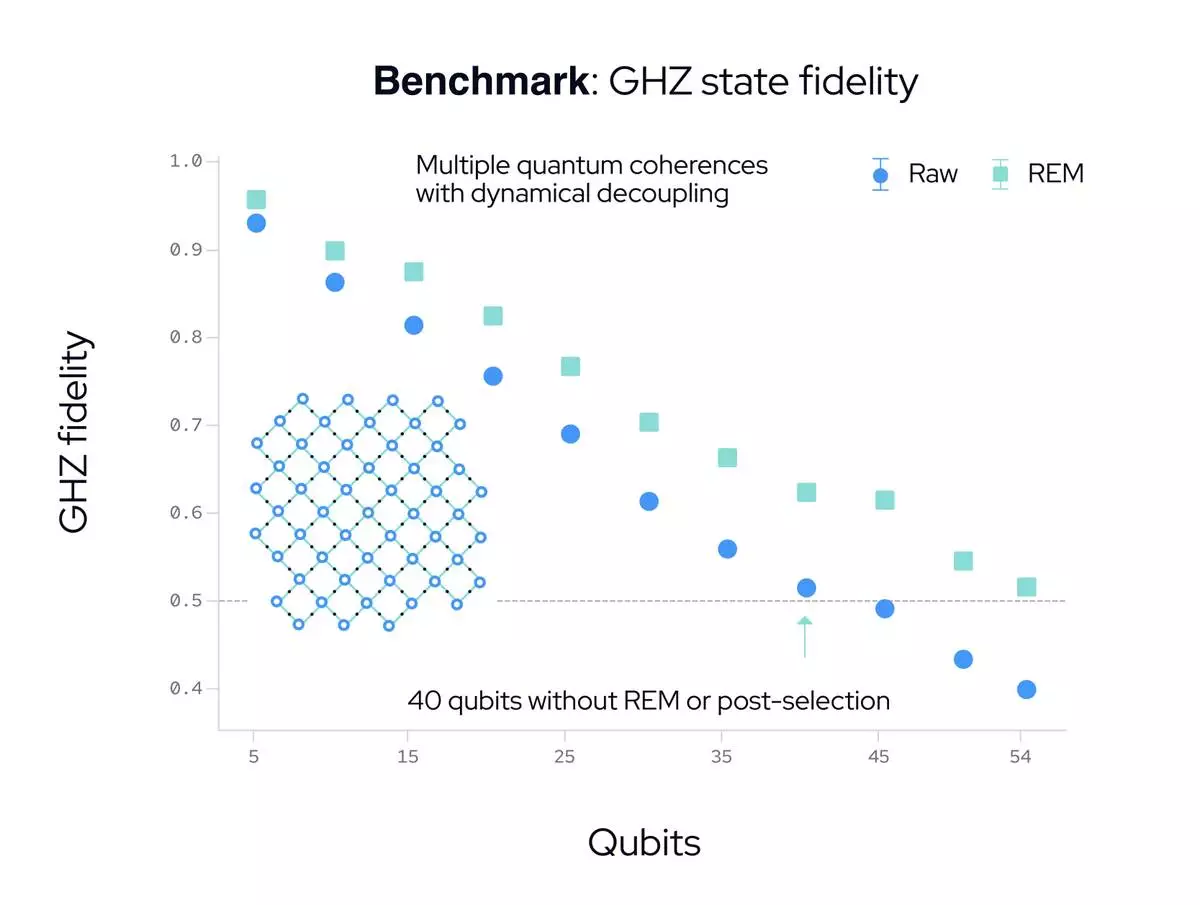
IQM measured a fidelity of 0.515 at 40 qubits without readout error mitigation (REM) and 0.516 at the full 54 qubits with REM applied, both above the classical threshold of 0.500 that separates genuine entanglement from noise. 

These results rank among the strongest reported for any commercially available quantum computer, giving customers access to state-of-the-art, high-quality processors. Until now, a user running a comparable demonstration on IQM Emerald could reliably use on the order of 30 qubits within a single algorithm. Studies on large quantum chips often use only a fraction of the available qubits, commonly 10 to 20, even when the hardware has many more. Emerald's result shows the alternative: an entire processor working together on one computation.

"Entangling the entire chip means every qubit and every connection between them has to work correctly in the same circuit. Getting there came down to being smarter about how we prepare the state itself, choosing the gate order to keep idle time to a minimum," said Craig Ciesla, CTO, IQM Quantum Computers. "Our current and prospective cloud customers now have the chance to benefit from the same tools and system performance that made this achievement possible."

The demonstration used a Greenberger–Horne–Zeilinger (GHZ) state, a standard benchmark for large-scale entanglement, prepared across the entire IQM Emerald processor. The result was enabled by a smarter, automated routine for state preparation that selects the best two-qubit gates while weighing gate fidelity against qubit idle time, choosing both the qubits and the gate order to minimize idle time as the state is built. IQM measured a fidelity of 0.515 at 40 qubits without readout error mitigation (REM) and 0.516 at the full 54 qubits with REM applied, both above the classical threshold of 0.500 that separates genuine entanglement from noise.

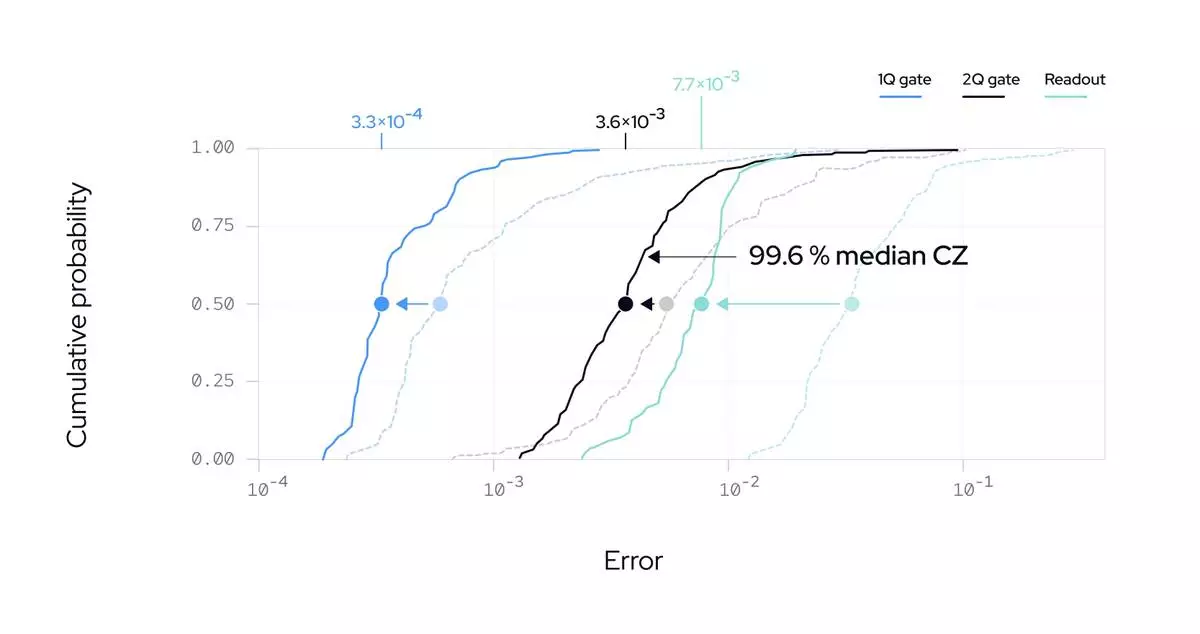
The result builds on roughly a year of hardware and calibration work across IQM’s technical teams, including an updated calibration methodology, an improved gate set and continued deployment of error-reduction tools such as dynamical decoupling and qubit selection. These improvements led to an error rate reduction of up to 50% for quantum operations in the processor.

The automated state-preparation routine is part of IQM’s broader effort to automate the operation of quantum computers. This development, along with IQM’s AI-driven agentic calibration work, is part of a broader effort to automate the tuning of quantum systems.

About IQM Quantum Computers

IQM Quantum Computers (Nasdaq: IQMX) is a global leader in superconducting quantum computers, delivering full-stack quantum computers and cloud platform access to enterprises, research institutions, universities, high-performance computing centers and national laboratories worldwide. IQM’s on-premises deployment model gives customers direct ownership and control of their quantum infrastructure. Founded in 2018 and headquartered in Finland, with major operations in Munich, IQM employs over 450 people and operates across Europe, Asia and North America. IQM is the first publicly listed European quantum company on Nasdaq Stock Market.

IQM Emerald Demonstrates Entanglement Across All 54 Qubits.

IQM Emerald Demonstrates Entanglement Across All 54 Qubits.

IQM's Emerald entanglement results led to an error rate reduction of up to 50% for quantum operations in the processor.

IQM's Emerald entanglement results led to an error rate reduction of up to 50% for quantum operations in the processor.

IQM measured a fidelity of 0.515 at 40 qubits without readout error mitigation (REM) and 0.516 at the full 54 qubits with REM applied, both above the classical threshold of 0.500 that separates genuine entanglement from noise.

IQM measured a fidelity of 0.515 at 40 qubits without readout error mitigation (REM) and 0.516 at the full 54 qubits with REM applied, both above the classical threshold of 0.500 that separates genuine entanglement from noise.

Recommended Articles