Skip to Content Facebook Feature Image

HKSTP Releases First-Ever Battery and Energy Storage Strategy Analysis Report

Asia Pacific

HKSTP Releases First-Ever Battery and Energy Storage Strategy Analysis Report
Asia Pacific

Asia Pacific

HKSTP Releases First-Ever Battery and Energy Storage Strategy Analysis Report

2026-10-29 15:00 Last Updated At:15:02

Leveraging Hong Kong’s Leading Four-Stage Value Chain in Asia to Capture Significant Market Opportunities

  • Responding to Global Energy Transition Demands: Energy security, renewable energy grid integration, accelerating electrification, and surging power demand from AI infrastructure are jointly propelling the growth of the battery and energy storage (BES) industry.
  • Demonstrating Hong Kong's Comprehensive Industrial Ecosystem: Boasting a comprehensive four-stage BES value chain, Hong Kong ranks among Asia's premier energy storage ecosystems, driving circular industry development. Three of the world's top ten energy storage giants—CATL, BYD, and Gotion High-Tech—have established a presence within HKSTP's ecosystem

HONG KONG SAR – Media OutReach Newswire – 29 October 2026 – Facing global energy security challenges, accelerating electrification, and massive power demands driven by artificial intelligence (AI) data centers, Battery and Energy Storage (BES) has emerged as a key driver of the low-carbon energy transition. Hong Kong Science and Technology Parks Corporation (HKSTP) today officially released its inaugural BES Strategic Analysis Report at the international flagship event One Earth Summit 2026.
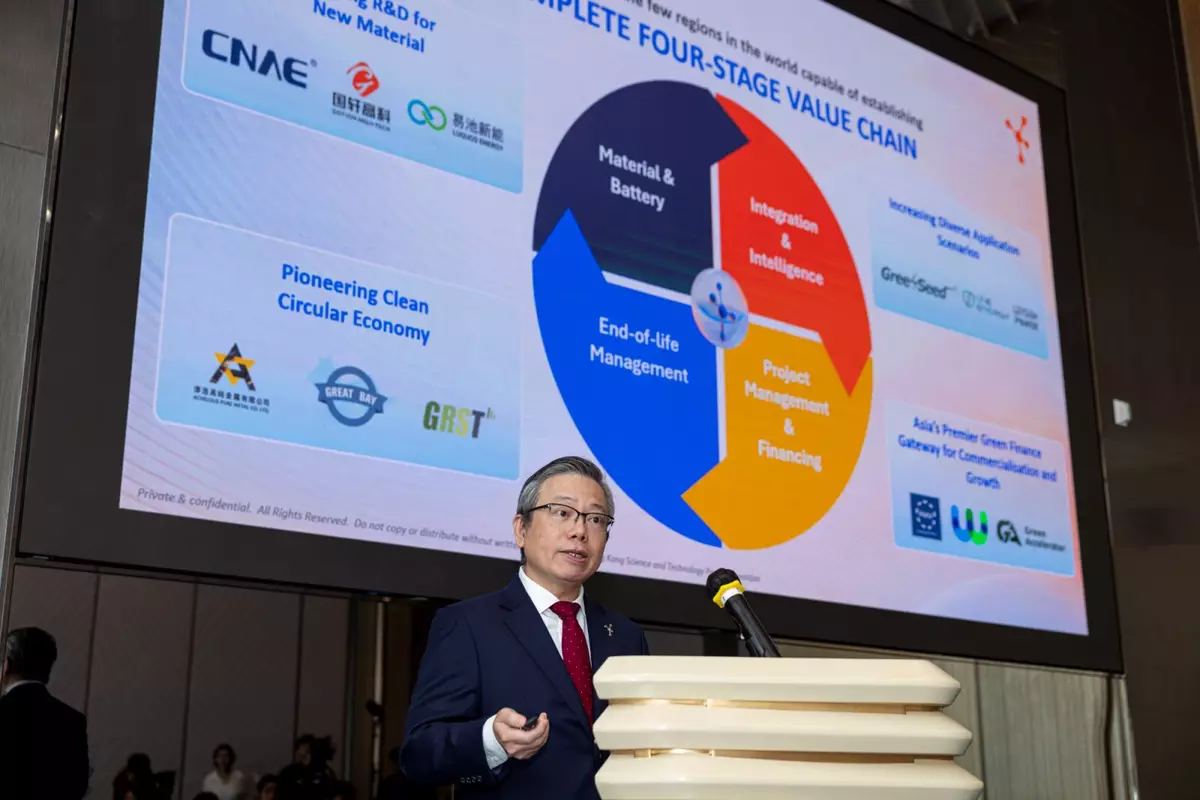
Mr Terry Wong, Chief Executive Officer of HKSTP hosts a media briefing, sharing key findings from the report and successful experiences in translating local battery R&D into commercial applications.

Mr Terry Wong, Chief Executive Officer of HKSTP hosts a media briefing, sharing key findings from the report and successful experiences in translating local battery R&D into commercial applications.

Mr Terry Wong, Chief Executive Officer of HKSTP, delivered a keynote address titled "Supercharging Battery and Energy Storage Innovation for Energy Transition" at the Summit, to share insights from the report and experiences in commercialising home-grown R&D. The report highlights the explosive growth of the global BES market while underscoring Hong Kong's position as Asia's leading Greentech hub, driven by a comprehensive four-stage value chain spanning frontier R&D, integration and intelligence, green finance, and end-of-life battery management.

Mr Terry Wong, Chief Executive Officer of HKSTP, said: "HKSTP is fully committed to supporting the nation's 15th Five-Year Plan, Hong Kong's first Five-Year Plan, and the HKSAR Government's Policy Address initiatives, as we work tirelessly to build Hong Kong into an international innovation and technology hub. The global energy transition is ushering in an unprecedented golden era for the BES industry. By taking the initiative to publish our inaugural Strategic Analysis Report, HKSTP is not only identifying global industry opportunities, but also showcasing Hong Kong's position as a leading energy storage ecosystem in Asia with a comprehensive value chain. HKSTP will continue to serve as both a 'super-connector' and a 'super value-adder', helping companies overcome commercialisation barriers, align with international standards, and capture the significant opportunities in the global multi-trillion-dollar energy storage market."

HKSTP regards green technology as one of its core strategic industries. Its ecosystem brings together more than 250 green tech companies, around 100 of which focus on BES. In response to the strong growth driven by the global energy transition, HKSTP aims to increase the number of BES companies by 60% to more than 160 over the next few years. Notably, three of the world's top ten battery and energy storage leaders—CATL, BYD, and Gotion High-Tech—have already established a presence within the HKSTP ecosystem. Their presence creates strong industrial synergies with park companies, deepening cross-disciplinary technology exchanges, supply chain integration, and business matching.

Two Key Insights Outlining Opportunities for Hong Kong's Energy Storage Industry:

The report provides an in-depth analysis of market data and compares BES development models and policies across major global economies. Drawing on interviews with local and overseas industry partners and park companies, it identifies two key insights:

Mainland BES companies currently account for more than half of the global battery applications market. Leveraging its unique advantage of being backed by the Chinese Mainland while connected to the world, Hong Kong has become a preferred springboard for Mainland energy leaders expanding overseas. As European and US markets impose increasingly stringent trade and compliance requirements on new energy supply chains, Mainland companies can draw on Hong Kong's mature common law system, international certification standards, and leading green finance platform in Asia-Pacific to meet international compliance requirements and expand their global presence.

  • Material and Battery: Hong Kong is home to five of the world's top 100 universities and possesses world-class research capabilities. Its leading university network and open talent admission schemes have successfully attracted international talent. Several HKSTP park companies focus on cutting-edge R&D in next-generation batteries. For example, Luquos Energy, led by a team from The Chinese University of Hong Kong, has successfully developed the world's first sulphur-based flow battery. Technology significantly reduces costs while avoiding the fire risks associated with overheating in conventional lithium-ion batteries, enhancing safety.

  • Integration and Intelligence: Assembling batteries into battery packs or containerised energy storage systems enables wider deployment across communities. Hong Kong's exceptionally high-density urban environment offers abundant real-world application scenarios for energy storage technologies. The growing number of electric vehicles is driving demand for fast-charging infrastructure. With more than 60% of private buildings in Hong Kong over 30 years old and facing power supply capacity constraints, energy storage systems can store electricity during off-peak periods and discharge it during peak periods, providing a supplementary solution for ageing buildings. Park companies' technologies are also being deployed at construction sites to support the high-power demands of heavy machinery and reduce reliance on conventional diesel generators. Meanwhile, intelligent technologies are steadily maturing, including the use of AI to monitor battery condition and health.

  • Project Management and Finance: A range of large-scale projects in Hong Kong supports BES development, including a major local battery energy storage system under construction by a power company. The commercial sector is also accelerating the adoption of energy storage technologies. Park company Halo Energy, for example, has partnered with XPENG to introduce the world's first megawatt-level ultra-fast EV charging station in Hong Kong, setting a new benchmark for smart mobility in the city. As Asia's largest international green and sustainable debt arranging hub, Hong Kong also plays a distinctive role as a green finance gateway, with related issuance exceeding USD 76 billion in 2025. This month, HKSTP also signed a memorandum of understanding with the "Green Accelerator" to connect promising green tech companies with capital and financing channels, helping startups progress from R&D to commercialisation.

  • End-of-Life Battery Management: Market projections indicate that Hong Kong will generate nearly 6,700 tonnes of retired EV batteries in 2030, making proper treatment and the reduction of environmental pollution pressing priorities. Several park companies have already taken the lead in technology development. GRST, for example, has developed a non-toxic, water-soluble battery binder that eliminates the need for conventional incineration or strong-acid soaking during battery recycling, reducing carbon emissions at the recycling stage by up to 80%. Together with the HKSAR Government's introduction of the city's first large-scale EV battery recycling facility last year, which converts waste batteries into valuable mineral resources, these efforts demonstrate how industry, government, and the research community are working together to build a green circular economy.

HKSTP is committed to capturing the global energy transition opportunities identified in the BES Strategic Analysis Report and developing Hong Kong into an international green technology hub. HKSTP's GreenTech Hub in Kowloon Tong will continue to serve as a bridge, deepening cross-sector collaboration among companies, research institutions, and industry partners. It will help investors identify energy storage opportunities, advance the adoption of cutting-edge green solutions, and accelerate startup commercialisation, building a green innovation ecosystem with international influence and jointly tapping into the global market for the green energy transition.

HKSTP also showcased green solutions from six park companies at the summit, fostering exchanges among tech ventures, industry partners, and investors.

Exhibiting Park Companies:

  • Luquos Energy Limited
  • Syneric Technology (HK) Limited
  • CAS Testing Technical Services (Hong Kong) Company Limited
  • Nanofil Filtration Technology Limited
  • ECO Technologies Limited
  • i2Cool Limited

Hashtag: #HKSTP

The issuer is solely responsible for the content of this announcement.

Hong Kong Science and Technology Parks Corporation

Hong Kong Science and Technology Parks Corporation (HKSTP) was established in 2001 and has built a proven foundation as Hong Kong's leading innovation and technology (I&T) ecosystem. Established for 25 years, HKSTP is supporting 14 unicorns, has nurtured more than 17,000 research professionals and built a community of over 2,500 technology companies from 26 countries and regions across four strategic technology clusters: Life and Health Technology, AI and Data Science, Microelectronics and Advanced Manufacturing, and GreenTech and New Energy.

As an ecosystem orchestrator, HKSTP provides end-to-end support to attract and nurture talent, accelerate commercialisation and help technology ventures scale. Its innovation infrastructure spans over 240 hectares covering Hong Kong Science Park in Pak Shek Kok, InnoCentre in Kowloon Tong, and three modern InnoParks in Tai Po, Tseung Kwan O and Yuen Long, advancing Hong Kong's vision for new industrialisation and smart manufacturing.

Hong Kong Science Park Shenzhen Branch in Futian, Shenzhen, strengthens cross-border collaboration by connecting Hong Kong, the Chinese Mainland and global innovation networks and propels Chinese innovators onto the world stage, while also delivering comprehensive GBA landing support to accelerate cross-border success for local and international ventures.

As HKSTP enters its next chapter with strong foundations, it continues to deepen impact, elevate quality and create value for innovators. As an ecosystem built to lead change, HKSTP is empowering Hong Kong to define what comes next in innovation, growth and opportunity.

More information about HKSTP is available at .

** This press release is distributed by Media OutReach Newswire through automated distribution system, for which the client assumes full responsibility. **

From design and camera to AI, OPPO has taken R&D, testing, and manufacturing to the next level in the making of its latest flagship series.

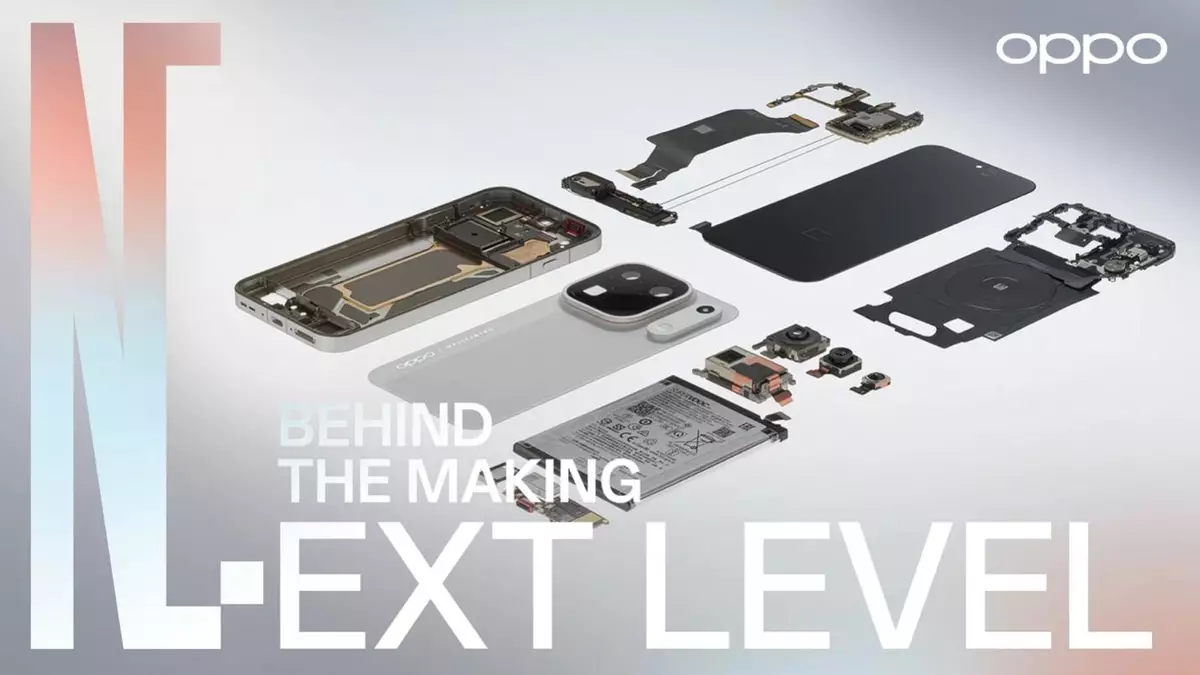
SHENZHEN, CHINA – Media OutReach Newswire – 29 October 2026 – Following the global debut of Find X10 Series—featuring industry-leading camera hardware, including the industry-first Triple 200MP Camera System on Find X10 Pro Max, the next-generation LUMO True Image Engine, an all-new flagship design, and the latest AI-powered ColorOS 17—OPPO today invited members of the media for a closer look at the next-level making behind its new True Camera Phone. From what users see and feel on the outside, to the technologies and intelligence inside, and the manufacturing behind them, the Next Level of Making tour revealed OPPO's integrated approach to product design, mobile imaging, and AI, where each technology and feature is developed, tested, and verified through rigorous processes designed to deliver exceptional levels of quality and consistency on a global scale.


"Quality is the foundation of OPPO's entire product portfolio, and our control over the product creation process is what allows us to realize this commitment at scale," said Ling Liu, Overseas CMO of OPPO. "Last year, we introduced Apex Guard to show how our commitment to quality goes beyond everyday use, product lifespans, and industry standards. This year, we are opening up our development, testing, and manufacturing processes to unveil how that vision translates into the Next Level of Making, and ultimately elevates the products and experiences we deliver."

The Making of Clean and Sophisticated Design

For OPPO, achieving the Next Level of Making starts with product design, where purposeful functionality, signature aesthetics, and meticulous craftsmanship merge the latest technology and timeless style intuitively into one.

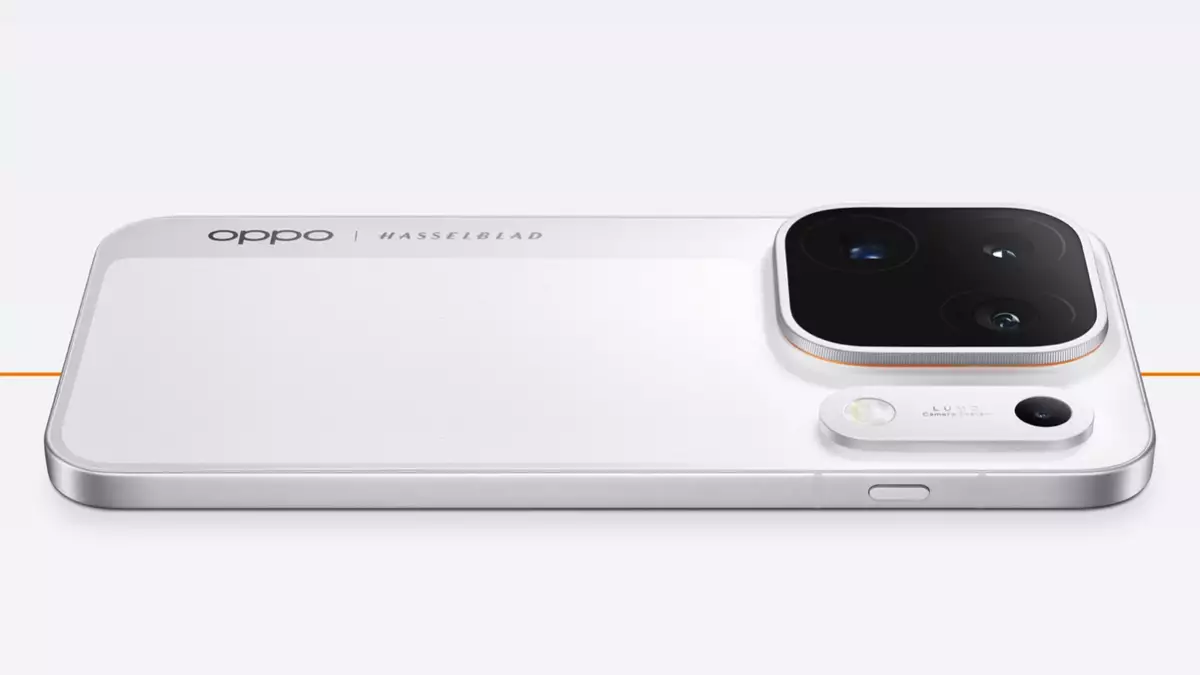
At the heart of this vision is OPPO's Clean and Sophisticated design language, exemplified on Find X10 Series by the phone's One-Piece Sculpted Glass design. The glass back cover gradually rises toward the camera area, introducing a finely sculpted transition before reaching the camera module. This subtle, three-level design softens the visual impact of the camera, creating a clear visual hierarchy that allows the camera to blend more naturally into the overall body of the phone.


On the Luna White edition of Find X10 Pro Max, this philosophy is taken further through a unique design drawing inspiration from classic cameras. Lining the vertical edge of the camera module, a fluted texture crafted through high-precision CNC engraving makes a nod to the focus ring seen on classic lenses. Complementing this, Luna White introduces a distinctive two-tone treatment with a delicate woven texture recreated within the matte glass surface. At first glance, the rear cover appears clean and pure white, but as the phone turns with the light, the fine woven pattern gradually comes into view, adding subtle depth and warmth beneath the minimalist surface.

The final design is the result of continuous testing, refinement, and close collaboration between OPPO's Industrial Design and CMF teams. The Luna White colorway alone has undergone over 40 rounds of fine-tuning to achieve the desired tone, and a single rear-panel pattern requires more than 10 rounds of refinement across multi-stage precision treatments to achieve the intended appearance and durability needed to bring the design of the True Camera Phone to life.

The Making of a "Hasselblad True-to-Life Camera"

The same commitment to next-level making that shapes the product's exterior extends to the camera system within.

Building on the co-development with Hasselblad that began in 2022, OPPO continues to reimagine its optical expertise for mobile. On Find X10 Series, three Hasselblad modes—Master Mode, Hi-Res Mode, and Portrait Mode—enable professional control, crystal-clear quality, and optical-quality bokeh, while industry-leading camera hardware combined with a next-generation LUMO True Image Engine bring natural color, fine detail, and lifelike tone to visual content.

The LUMO True Image Engine operates across three primary imaging architectures: the LUMO Natural Tone Engine delivers linear tonal rendering in default photo mode, the LUMO True Color Engine gains more accurate source information from the 24-channel multispectral sensor to reproduce color naturally, and the LUMO Hyper Pixel Engine enables continuous 26MP output by default across the main, telephoto, and ultra-wide cameras from ultra-wide to 9.9x zoom in Auto Mode, and uses multi-frame fusion to produce full-resolution 200MP photos with fine details at native focal length supported by 200MP sensors in Hasselblad Hi-Res Mode.

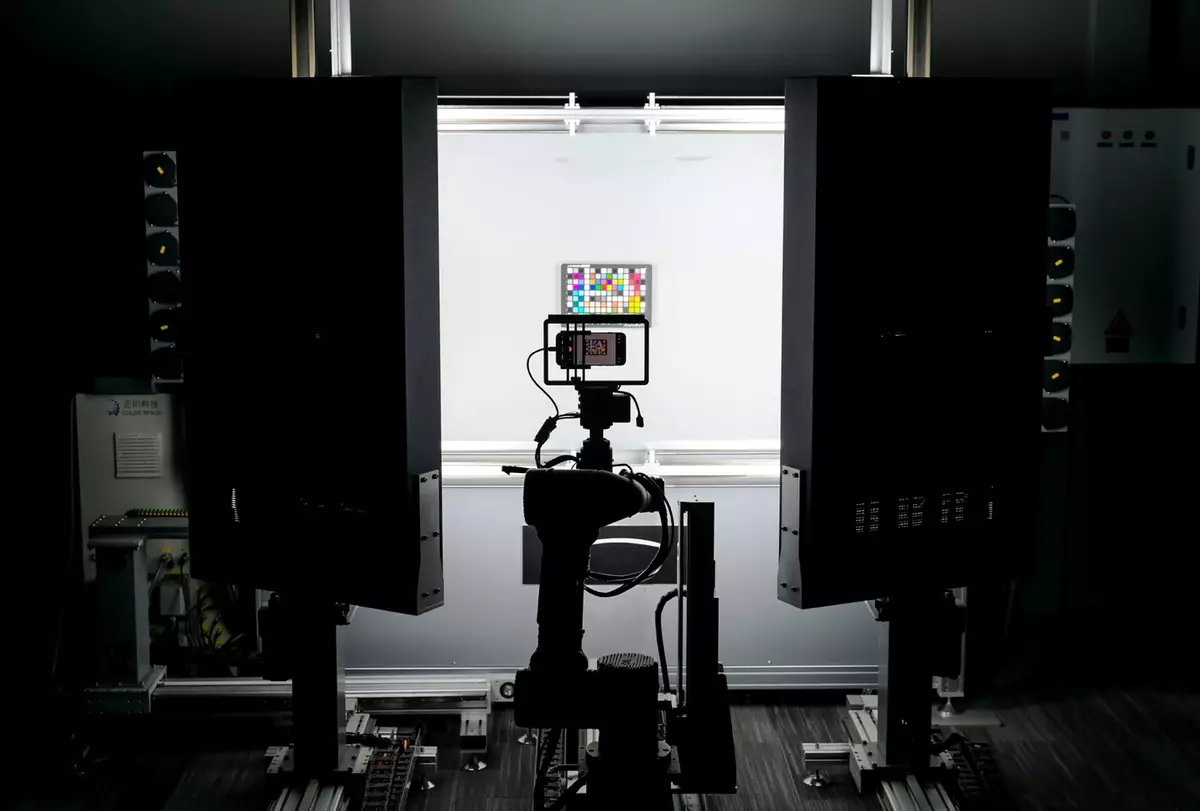
Reaching this level of realism requires extensive testing and validation at both the technical and perceptual levels. OPPO evaluates image quality against established industry benchmarks while applying its own True-to-Life criteria to ensure light and shadow appear vivid, colors remain faithful, and details appear lifelike in every image. HDR performance, facial brightness, and skin-tone gradation are assessed across 40 different lighting conditions to ensure tone remains balanced. For color testing, OPPO goes beyond the industry-standard 24-color chart, testing instead against 140 different colors to achieve more precise color reproduction across different hues and saturation levels. Lifelike human head models with real hair and wrinkles provide even more insights into how well the camera preserves intricate details and authentic textures without introducing overprocessed artifacts.


Laboratory testing is complemented by real-world shooting scenarios, combining objective metrics with human-led visual tuning to create the True Camera Phone. To simulate the challenges of filming a live concert, OPPO uses a dedicated stage setup that recreates demanding lighting and shooting conditions, while multi-axis robotic arms simulate natural hand movements and vibrations to assess image stabilization, with additional telephoto testing to help ensure consistent performance at different zoom levels.

The Making of a Truly Personal AI Experience

The Next Level of Making is ultimately about creating technology that better serves the people who use it. Through the latest ColorOS 17, OPPO has brought system-level AI to Find X10 Series, supported by a dedicated security framework that makes every interaction smarter, smoother, and more secure.


The updated AI Mind Pilot supplements the existing Ask Mode with a new Agent Mode powered by the third-party AI agent Manus to achieve a major breakthrough in system-level AI. Operating directly on the device across the photos and files, the new AI agent understands complex context and executes multi-step workflows in real time. For creative tasks, ColorOS 17 also introduces a new AI Photo Agent backed by OPPO's proprietary Visual-Language Model and six expert image models. By interpreting visual references and natural-language instructions provided by the user, or proactively suggesting suitable edits, AI Photo Agent makes the edits that users actually want, allowing the creative process to become more intuitive for everyone.

Behind these capabilities is a global computing infrastructure designed to ensure consistent, reliable AI performance for OPPO users around the world. OPPO operates nine Internet Data Centers across six regions, each deployed based on the specific regulatory requirements, network and cloud infrastructure in the local market. With 99.99% availability, these data centers support round-the-clock operations and coordinated services worldwide.

Alongside this growth in AI capabilities, OPPO's AI Security Framework prioritizes privacy and security by safeguarding user data at every stage of the AI lifecycle, from model training to everyday use. All OPPO data management practices align with local regulations and established operational controls, and OPPO's Private Computing Cloud, developed in partnership with Google, isolates and protects user data when processed in the cloud.

A Smart Manufacturing Ecosystem Built for Scale

Since becoming one of the first smartphone companies to introduce automated manufacturing in 2017, OPPO has continued to expand its intelligent production capacity, today operating nine smart manufacturing centers globally. Spanning China, India, Indonesia, Egypt, Turkey, Brazil, Pakistan, and Bangladesh, these facilities operate at a high level of automation, with over 95% of Surface Mount Technology (SMT) production lines and an average of 85% of final assembly lines fully automated.

At the Chang'an Intelligent Manufacturing Center in China, early-stage R&D concepts are tested using over 300 automated testing stations on final assembly lines, accelerating the time needed from initial innovation to high-quality production at scale. The center is also responsible for final assembly, shipping up to 7,200 finished OPPO Find X10 Pro Max devices every day.

Through continuous innovation in key manufacturing processes—including display assembly, automated camera module installation, airtightness testing, and battery compartment inspection—OPPO continues to improve assembly precision and manufacturing consistency, allowing it to bring more advanced and reliable products to users worldwide.

Hashtag: #OPPO #FindX10Series #NextLevelOfMaking

The issuer is solely responsible for the content of this announcement.

About OPPO

OPPO is a leading global smart device brand. Since the launch of its first mobile phone - "Smiley Face" - in 2008, OPPO has been in relentless pursuit of the perfect synergy of aesthetic satisfaction and innovative technology. Today, OPPO provides a wide range of smart devices spearheaded by the Find and Reno series. Beyond devices, OPPO also provides its users with ColorOS operating system and internet services. OPPO has footprints in more than 90 countries and regions, with more than 40,000 employees dedicated to creating a better life for customers around the world.

** This press release is distributed by Media OutReach Newswire through automated distribution system, for which the client assumes full responsibility. **
OPPO Reaches the Next Level of Making with Find X10 Series

OPPO Reaches the Next Level of Making with Find X10 Series

140-color chart at the OPPO True-to-Life Image Lab

140-color chart at the OPPO True-to-Life Image Lab

OPPO Find X10 Pro Max in Luna White

OPPO Find X10 Pro Max in Luna White

OPPO Reaches the Next Level of Making with Find X10 Series

OPPO Reaches the Next Level of Making with Find X10 Series

Recommended Articles