- The innovation breakthroughs for pioneering new communications networks include RetinaMIMO, new materials, and OSCAR solution among other root technologies. By tackling coverage, energy consumption, and capacity challenges, the breakthroughs drive ubiquitous experience, simplified and green networks, and superior spectral efficiency. The breakthroughs have unlocked a wealth of new capabilities, including the world's first commercial U6 GHz device VitaAAU, GigaGreen Plus series, and UBBPi series.
- Huawei promotes A2A-T standards and drives commercial open-source OpenAN through extensive partnerships to build an open telecom agent ecosystem.
SHANGHAI, CHINA - Media OutReach Newswire - 29 October 2026 - At Huawei Decoding China 2026, Fang Xiang, Corporate Vice President and President of Wireless Network Solution of Huawei, unveiled a series of innovation breakthroughs to pioneer new communications networks. The innovation breakthroughs mark major leaps in root technologies focused on ubiquitous experience, simplified and green networks, and superior spectral efficiency. With the breakthroughs, Huawei has launched the world's first commercial U6 GHz device VitaAAU, GigaGreen Plus series, and UBBPi series. Additionally featuring the new progress in open ecosystem for telecom agents, the breakthroughs will lay a solid foundation for new communications networks.

Xiang Fang, Corporate Vice President and President of Wireless Network Solution of Huawei, unveiling innovation breakthroughs for new communications networks
With booming intelligent devices and services, new devices, traffic, and applications are taking shape in the mobile industry. The new devices are expanding network connectivity from people to things and agents, increasing the number of connections by 100 times. Device-cloud synergy for intelligent services calls for stronger uplink capabilities to support training and inference, shifting network focus from downlink dominance to both uplink and downlink. With new applications, come a diversity of new interaction modes, calling for higher standards in experience and driving networks to support ubiquitous steady ultra-low latency with a high reliability.
As the world steps into an intelligent era, the value of connectivity is not only about quantity—it's more about quality. This has been inspiring Huawei to convert cutting-edge breakthroughs into the commercial practices of new communications networks by focusing on root technologies for ubiquitous experience, simplified and green networks, and superior spectral efficiency.
Pioneering ubiquitous experience
RetinaMIMO is a new pioneering technology designed to solve the challenge of concurrent ultra-high bandwidth and ubiquitous coverage. It features the industry's first Retina scanning system that allows RF link topologies to be reconstructed to eliminate coverage collapse in the vertical direction. It also adopts a reconstructed antenna array architecture to address the diminishing marginal gains as array elements (AEs) increase.
Based on RetinaMIMO, Huawei has launched the world's first commercial U6 GHz device VitaAAU. Compared with similar products with 1024 AEs, VitaAAU widens coverage by about 30%, enabling U6 GHz to match C-band in both horizontal and vertical directions. This enables operators to deliver U6 GHz coverage for new communications networks on their C-band sites, minimizing overall TCO. To date, VitaAAU has seen commercial adoption in the UAE and other markets, with peak downlink speeds exceeding 10 Gbps, making ubiquitous premium experience a reality.
Pioneering simplified, green networks
Huawei's pioneering EP power amplifier (PA) architecture capitalizes on new materials and technologies to solve the problem of energy efficiency decline on higher frequency bands, maximizing energy conversion efficiency. The industry's first-ever multimode dielectric filters allow antennas to have small dimensions and low power consumption on multi-channel networks with high frequency bands. Powered by new materials, technologies, and architectures, VitaAAU antenna is reduced to 1.5 m in diameter while supporting "0 Bit 0 Watt 0 Loss", delivering superior energy saving efficiency. These innovations enable Huawei's GigaGreen Plus series products to achieve significant reductions in dimensions, weight, and power consumption, better positioned to power simplified and green networks.
Pioneering superior spectral efficiency
Multi-band, multi-cell, and multi-user interference is a major restrictive factor of capacity. The time scaling of the Tau (τ) law is introduced to base stations for the first time to realize optimal dynamic resource scheduling across all domains based on the OSCAR solution. With low-latency bus and high-speed interconnect technology, a high-speed architecture is built to enable the real-time exchange of massive data. Thanks to software and hardware synergy, new UBBPi series products improve average user experience by 1.3 times while reducing power consumption by approximately 40%, further improving spectral and energy efficiency.
Pioneering open-source autonomous networks
Autonomous networks have emerged as an inevitable choice to deal with the growing AI services and increasing network complexity. RANSpirit is another industry first from Huawei, implementing single-domain network autonomy based on the telecom foundation model and digital twins. To date, RANSpirit is serving more than 1.2 million cells across 25 networks around the world, providing assistance to more than 2,000 engineers.
Extensive agent collaboration relies on an open, win-win ecosystem. This galvanizes Huawei to join industry partners to develop ecosystem standards, communities, and industry alliances. In terms of standards, Huawei adapts to the TM Forum, building a cross-agent foundation on the A2A-T standard and framework agreed upon by the industry. In terms of communities, Huawei jointly promotes neutral open-source communities and donates open-source agent components to the Linux Foundation, driving global collaboration and innovation. With regard to industry alliances, Huawei has taken the initiative to pool ecosystem strengths to accelerate business implementation based on the GSMA industry platform.
Fang concluded with the reiteration of Huawei's unswerving pursuit of dual-drive innovation to promote new breakthroughs in mobile networks and work with partners from around the world to deepen the OpenAN ecosystem, advancing new communications networks through technological innovation and open collaboration.
FAQs
Q1: Why is it challenging to balance ultra-high bandwidth and ubiquitous coverage?
Ultra-high bandwidth depends on higher frequency bands. As we know, a higher frequency leads to a greater propagation loss of electromagnetic waves and a weaker ability for them to penetrate obstacles, because high-frequency signals attenuate fast and have short coverage distances, while ubiquitous coverage requires signals to travel a long distance in complex environments. Inherently, the two priorities pull in sharply opposite directions.
Hashtag: #Huawei
The issuer is solely responsible for the content of this announcement.
** This press release is distributed by Media OutReach Newswire through automated distribution system, for which the client assumes full responsibility. **
From design and camera to AI, OPPO has taken R&D, testing, and manufacturing to the next level in the making of its latest flagship series.
SHENZHEN, CHINA – Media OutReach Newswire – 29 October 2026 – Following the global debut of Find X10 Series—featuring industry-leading camera hardware, including the industry-first Triple 200MP Camera System on Find X10 Pro Max, the next-generation LUMO True Image Engine, an all-new flagship design, and the latest AI-powered ColorOS 17—OPPO today invited members of the media for a closer look at the next-level making behind its new True Camera Phone. From what users see and feel on the outside, to the technologies and intelligence inside, and the manufacturing behind them, the Next Level of Making tour revealed OPPO's integrated approach to product design, mobile imaging, and AI, where each technology and feature is developed, tested, and verified through rigorous processes designed to deliver exceptional levels of quality and consistency on a global scale.
"Quality is the foundation of OPPO's entire product portfolio, and our control over the product creation process is what allows us to realize this commitment at scale," said Ling Liu, Overseas CMO of OPPO. "Last year, we introduced Apex Guard to show how our commitment to quality goes beyond everyday use, product lifespans, and industry standards. This year, we are opening up our development, testing, and manufacturing processes to unveil how that vision translates into the Next Level of Making, and ultimately elevates the products and experiences we deliver."
The Making of Clean and Sophisticated Design
For OPPO, achieving the Next Level of Making starts with product design, where purposeful functionality, signature aesthetics, and meticulous craftsmanship merge the latest technology and timeless style intuitively into one.
At the heart of this vision is OPPO's Clean and Sophisticated design language, exemplified on Find X10 Series by the phone's One-Piece Sculpted Glass design. The glass back cover gradually rises toward the camera area, introducing a finely sculpted transition before reaching the camera module. This subtle, three-level design softens the visual impact of the camera, creating a clear visual hierarchy that allows the camera to blend more naturally into the overall body of the phone.
On the Luna White edition of Find X10 Pro Max, this philosophy is taken further through a unique design drawing inspiration from classic cameras. Lining the vertical edge of the camera module, a fluted texture crafted through high-precision CNC engraving makes a nod to the focus ring seen on classic lenses. Complementing this, Luna White introduces a distinctive two-tone treatment with a delicate woven texture recreated within the matte glass surface. At first glance, the rear cover appears clean and pure white, but as the phone turns with the light, the fine woven pattern gradually comes into view, adding subtle depth and warmth beneath the minimalist surface.
The final design is the result of continuous testing, refinement, and close collaboration between OPPO's Industrial Design and CMF teams. The Luna White colorway alone has undergone over 40 rounds of fine-tuning to achieve the desired tone, and a single rear-panel pattern requires more than 10 rounds of refinement across multi-stage precision treatments to achieve the intended appearance and durability needed to bring the design of the True Camera Phone to life.
The Making of a "Hasselblad True-to-Life Camera"
The same commitment to next-level making that shapes the product's exterior extends to the camera system within.
Building on the co-development with Hasselblad that began in 2022, OPPO continues to reimagine its optical expertise for mobile. On Find X10 Series, three Hasselblad modes—Master Mode, Hi-Res Mode, and Portrait Mode—enable professional control, crystal-clear quality, and optical-quality bokeh, while industry-leading camera hardware combined with a next-generation LUMO True Image Engine bring natural color, fine detail, and lifelike tone to visual content.
The LUMO True Image Engine operates across three primary imaging architectures: the LUMO Natural Tone Engine delivers linear tonal rendering in default photo mode, the LUMO True Color Engine gains more accurate source information from the 24-channel multispectral sensor to reproduce color naturally, and the LUMO Hyper Pixel Engine enables continuous 26MP output by default across the main, telephoto, and ultra-wide cameras from ultra-wide to 9.9x zoom in Auto Mode, and uses multi-frame fusion to produce full-resolution 200MP photos with fine details at native focal length supported by 200MP sensors in Hasselblad Hi-Res Mode.
Reaching this level of realism requires extensive testing and validation at both the technical and perceptual levels. OPPO evaluates image quality against established industry benchmarks while applying its own True-to-Life criteria to ensure light and shadow appear vivid, colors remain faithful, and details appear lifelike in every image. HDR performance, facial brightness, and skin-tone gradation are assessed across 40 different lighting conditions to ensure tone remains balanced. For color testing, OPPO goes beyond the industry-standard 24-color chart, testing instead against 140 different colors to achieve more precise color reproduction across different hues and saturation levels. Lifelike human head models with real hair and wrinkles provide even more insights into how well the camera preserves intricate details and authentic textures without introducing overprocessed artifacts.
Laboratory testing is complemented by real-world shooting scenarios, combining objective metrics with human-led visual tuning to create the True Camera Phone. To simulate the challenges of filming a live concert, OPPO uses a dedicated stage setup that recreates demanding lighting and shooting conditions, while multi-axis robotic arms simulate natural hand movements and vibrations to assess image stabilization, with additional telephoto testing to help ensure consistent performance at different zoom levels.
The Making of a Truly Personal AI Experience
The Next Level of Making is ultimately about creating technology that better serves the people who use it. Through the latest ColorOS 17, OPPO has brought system-level AI to Find X10 Series, supported by a dedicated security framework that makes every interaction smarter, smoother, and more secure.
The updated AI Mind Pilot supplements the existing Ask Mode with a new Agent Mode powered by the third-party AI agent Manus to achieve a major breakthrough in system-level AI. Operating directly on the device across the photos and files, the new AI agent understands complex context and executes multi-step workflows in real time. For creative tasks, ColorOS 17 also introduces a new AI Photo Agent backed by OPPO's proprietary Visual-Language Model and six expert image models. By interpreting visual references and natural-language instructions provided by the user, or proactively suggesting suitable edits, AI Photo Agent makes the edits that users actually want, allowing the creative process to become more intuitive for everyone.
Behind these capabilities is a global computing infrastructure designed to ensure consistent, reliable AI performance for OPPO users around the world. OPPO operates nine Internet Data Centers across six regions, each deployed based on the specific regulatory requirements, network and cloud infrastructure in the local market. With 99.99% availability, these data centers support round-the-clock operations and coordinated services worldwide.
Alongside this growth in AI capabilities, OPPO's AI Security Framework prioritizes privacy and security by safeguarding user data at every stage of the AI lifecycle, from model training to everyday use. All OPPO data management practices align with local regulations and established operational controls, and OPPO's Private Computing Cloud, developed in partnership with Google, isolates and protects user data when processed in the cloud.
A Smart Manufacturing Ecosystem Built for Scale
Since becoming one of the first smartphone companies to introduce automated manufacturing in 2017, OPPO has continued to expand its intelligent production capacity, today operating nine smart manufacturing centers globally. Spanning China, India, Indonesia, Egypt, Turkey, Brazil, Pakistan, and Bangladesh, these facilities operate at a high level of automation, with over 95% of Surface Mount Technology (SMT) production lines and an average of 85% of final assembly lines fully automated.
At the Chang'an Intelligent Manufacturing Center in China, early-stage R&D concepts are tested using over 300 automated testing stations on final assembly lines, accelerating the time needed from initial innovation to high-quality production at scale. The center is also responsible for final assembly, shipping up to 7,200 finished OPPO Find X10 Pro Max devices every day.
Through continuous innovation in key manufacturing processes—including display assembly, automated camera module installation, airtightness testing, and battery compartment inspection—OPPO continues to improve assembly precision and manufacturing consistency, allowing it to bring more advanced and reliable products to users worldwide.
Hashtag: #OPPO #FindX10Series #NextLevelOfMaking
The issuer is solely responsible for the content of this announcement.
About OPPO
OPPO is a leading global smart device brand. Since the launch of its first mobile phone - "Smiley Face" - in 2008, OPPO has been in relentless pursuit of the perfect synergy of aesthetic satisfaction and innovative technology. Today, OPPO provides a wide range of smart devices spearheaded by the Find and Reno series. Beyond devices, OPPO also provides its users with ColorOS operating system and internet services. OPPO has footprints in more than 90 countries and regions, with more than 40,000 employees dedicated to creating a better life for customers around the world.
** This press release is distributed by Media OutReach Newswire through automated distribution system, for which the client assumes full responsibility. **

OPPO Reaches the Next Level of Making with Find X10 Series
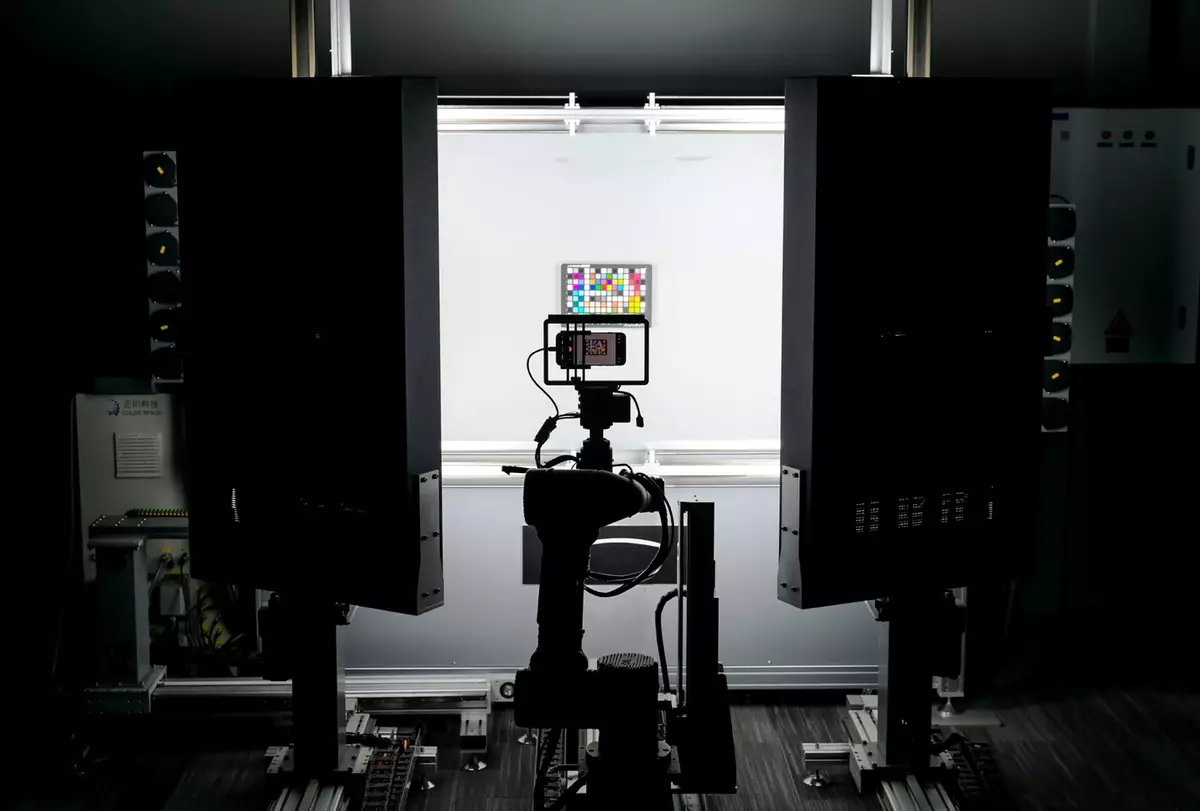
140-color chart at the OPPO True-to-Life Image Lab
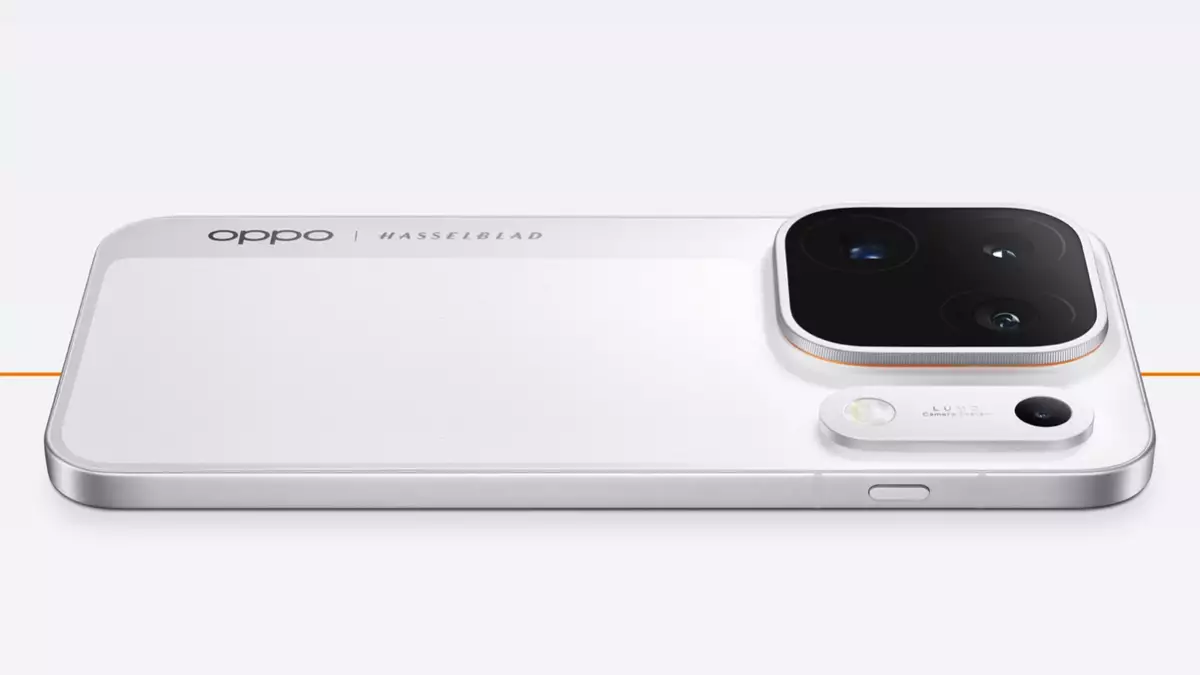
OPPO Find X10 Pro Max in Luna White
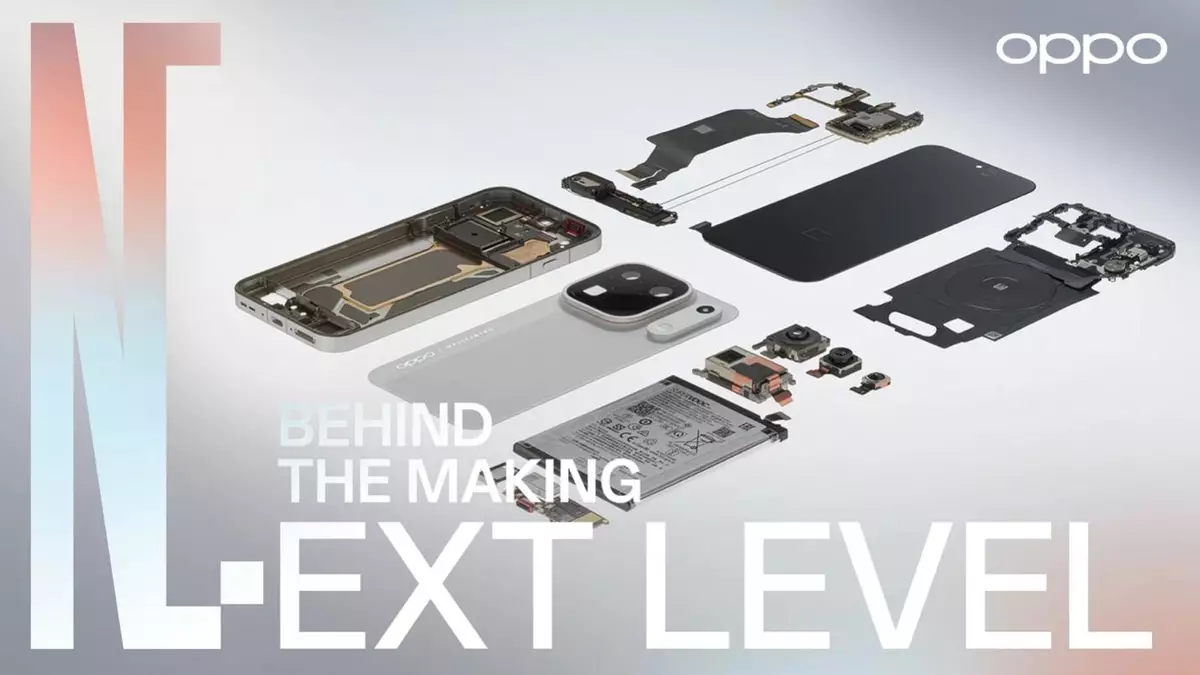
OPPO Reaches the Next Level of Making with Find X10 Series