RIO DE JANEIRO (AP) — Flávio Bolsonaro is now in Miami after fleeing to the U.S. following his stunning defeat to Luiz Inácio Lula da Silva in Brazil’s presidential elections.
Bolsonaro has refused to concede and has positioned himself as the “leader of Brazil” while declaring that there was electoral fraud, without providing evidence. In a letter on Wednesday, the senator for Rio de Janeiro said he relocated to the U.S. because he is the victim of political and judicial persecution.
The departure of the 45-year-old ally of U.S. President Donald Trump from Brazil days after losing the runoff vote is sending shock waves across Brazil’s right and reverberating across the region, and it may spell more trouble for relations between Washington and Brasilia.
Here’s what to know about the possible impacts of Bolsonaro’s exodus from Brazil.
Bolsonaro has promised to lead the opposition to Lula from abroad. “I will say what you cannot say, and I will assume the risks you cannot take,” he said in a letter on Wednesday, addressing himself to political representatives of his party.
But Bolsonaro’s move to Miami complicates that vow, analysts say, leaving a power vacuum on the Brazilian right, which had united around Flávio’s presidential bid. His father, former President Jair Bolsonaro, appointed him as his political heir last December. The elder Bolsonaro is serving a 27-year sentence for attempting a coup.
“Flávio’s departure, along with the difficulty of directing the process from a distance and all the criticism he is likely to face for saying he wouldn’t flee and then fleeing, is likely to weaken him,” said Carlos Melo, a political-science professor at Insper university.
But as a political force, the right may lose neither influence nor impact following his departure due to its gains in Congress, said Luciana Santana, a political scientist at the Federal University of Alagoas.
“The group in Congress retains instruments to block proposals, negotiate with government and dispute the public agenda,” Santana said.
A Bolsonaro win would have aligned Brazil with many of its regional neighbors, where conservatives have swept to power in seven presidential elections in 18 months.
Across much of Latin America, voters fed up with rising crime have rewarded presidential candidates promising to restore order. From Peru’s Keiko Fujimori to Colombia’s Abelardo de la Espriella, newly elected conservatives have courted Trump while taking their cues from El Salvador’s President Nayib Bukele, whose sweeping gang crackdown has sharply reduced homicides at the cost of mass arrests and suspended civil liberties.
Bolsonaro’s defeat is a setback for the far-right in the region and beyond, as it stops its ascension to the presidency of an economic powerhouse in the region that has significant diplomatic weight, said Santana.
But Lula’s win will not necessarily translate into the overall weakening of the movement, she said. As well as the gains in Congress, Flávio received nearly 60 million votes, indicating the competitiveness of the movement in Brazil.
Beyond Brazil’s borders, the international repercussions of Flávio’s flight depend on how the episode will be interpreted.
“Bolsonaro’s escape can be used by international networks as a symbol of alleged persecution. This could mobilize those who most strongly identify with the movement,” said Santana.
As congratulations poured in from Brazil’s allies and rivals around the world, Trump suggested Monday, without providing evidence, that Lula’s reelection was “rigged.”
But when asked about Bolsonaro’s assertion on Wednesday that he was the “rightful president-elect of Brazil” — a term the defeated candidate later softened to “leader of Brazil” — the U.S. president said he would not comment. Instead, Trump said he has given Bolsonaro a “pass” to come into the country.
“I won’t get involved,” Trump said, before repeating his claim that the election was “very strange.”
Lula’s win cements Latin America’s most populous country and largest economy as a counterweight to Washington and limits Trump’s drive to tighten his grip on the Western Hemisphere.
Lula has championed Brazil’s long tradition of nonalignment, cultivating ties with competing powers. His government deepened trade ties with China and sought greater global influence through BRICS, a group of emerging economies.
While Bolsonaro’s presence in the U.S. adds “a new layer of problems to the already complicated bilateral relationship,” it is unlikely to be decisive, said Oliver Stuenkel, a political scientist and researcher at the Carnegie Endowment think-tank.
While there will now be two Bolsonaro brothers potentially lobbying the U.S. government on behalf of specific policies vis-a-vis Brazil, whether Washington heeds any such calls remains to be seen, Stuenkel said.
“Either Trump will pursue a pragmatic stance and basically recognize that U.S. pressure to elect Flávio failed (…) or there will continue to be continued friction,” he said.
Follow AP’s coverage of Latin America and the Caribbean at https://apnews.com/hub/latin-america
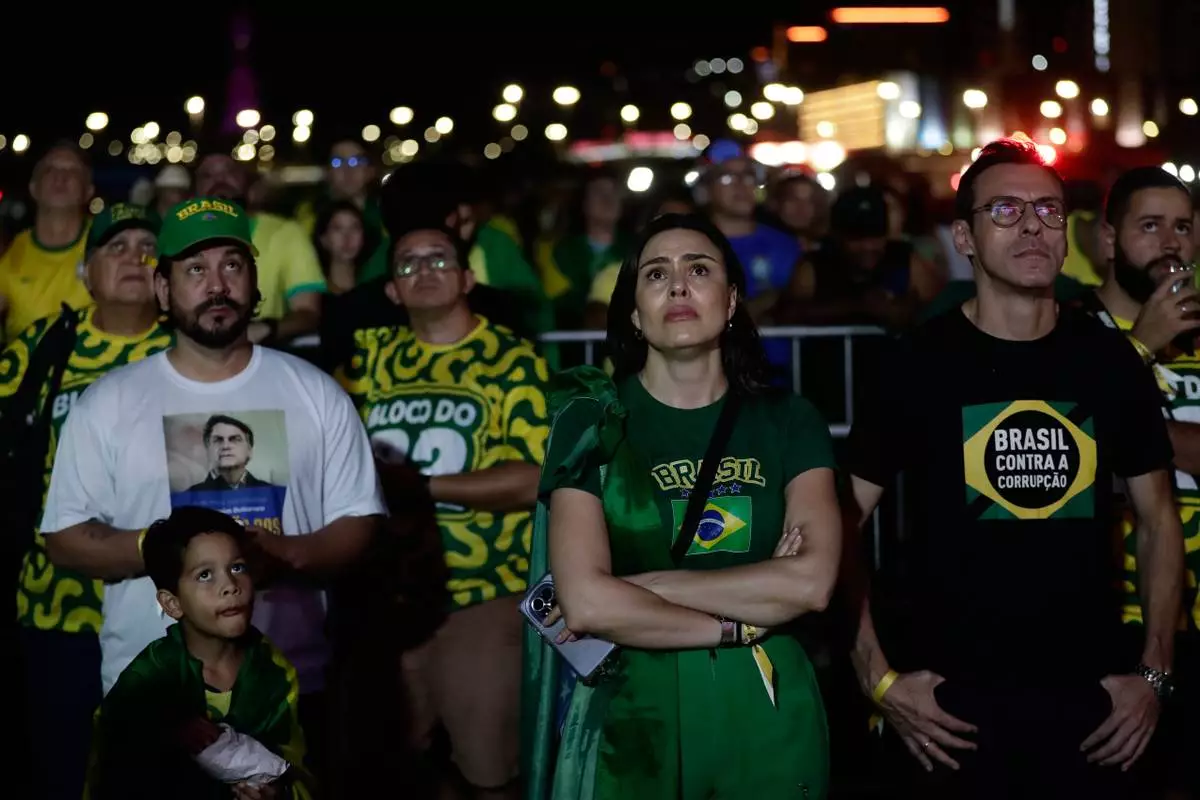
Supporters of opposition presidential candidate Sen. Flavio Bolsonaro react to presidential runoff results in Brasilia, Sunday, Oct. 25, 2026. (AP Photo/Bruna Prado)
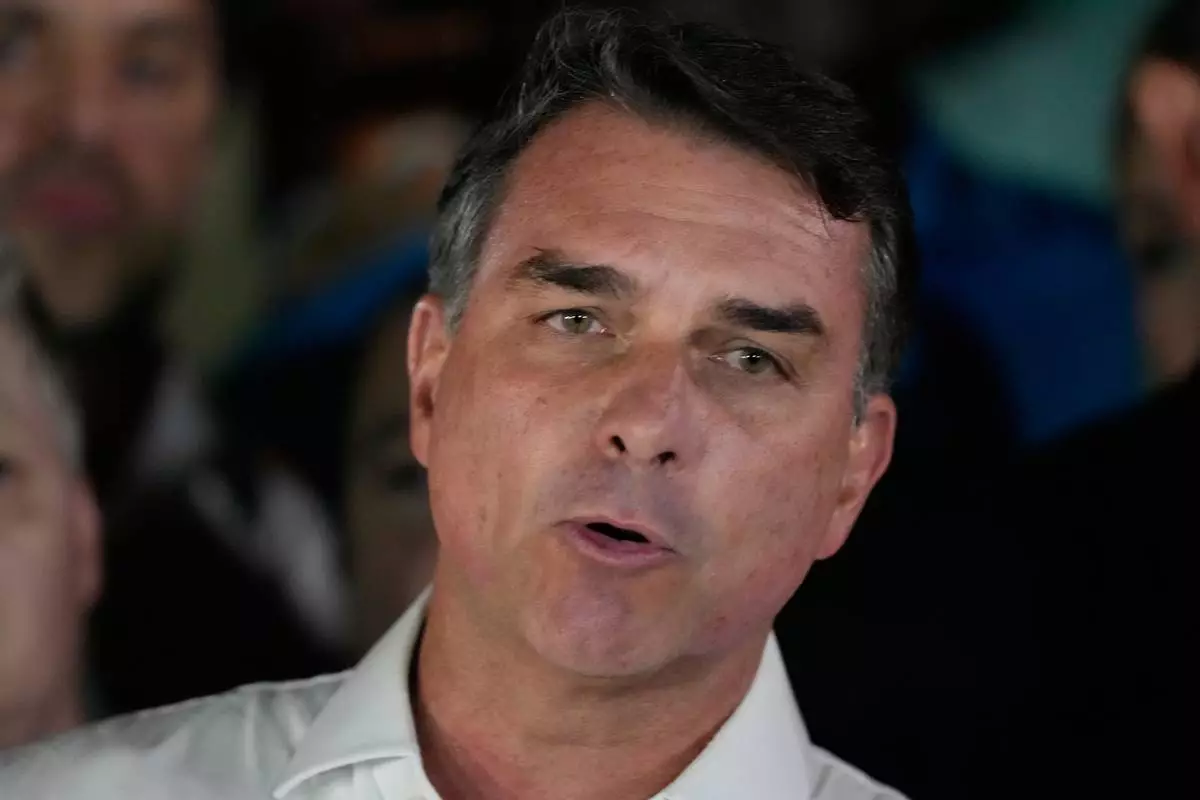
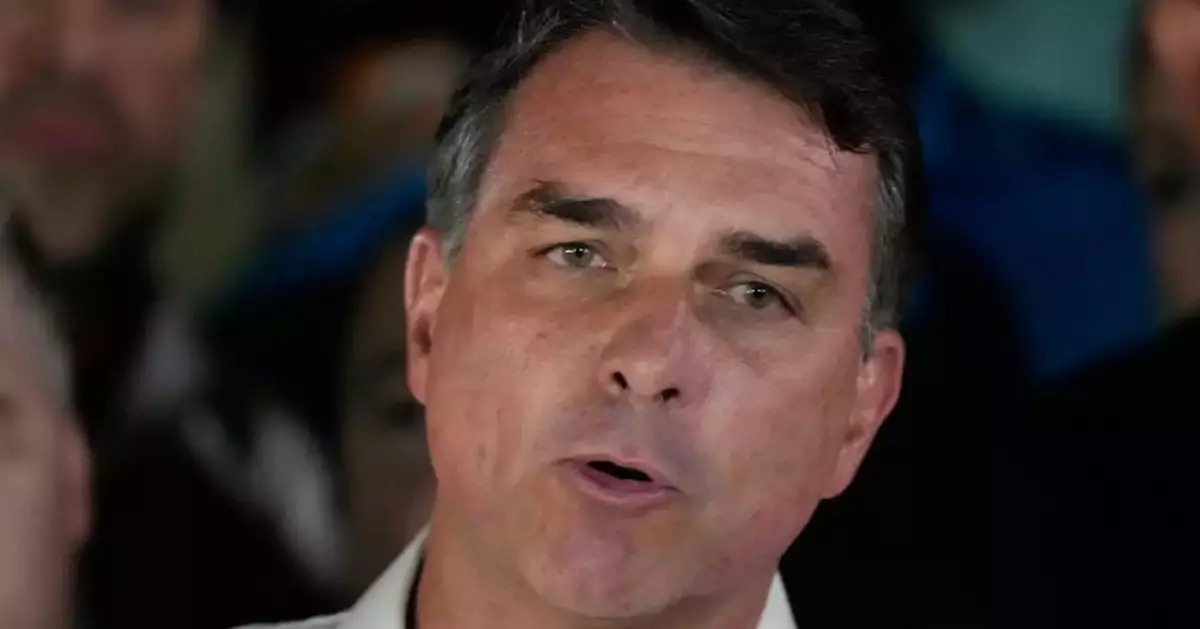
Opposition presidential candidate Sen. Flavio Bolsonaro speaks after the presidential runoff in Brasilia, Brazil, Sunday, Oct. 25, 2026. (AP Photo/Eraldo Peres)
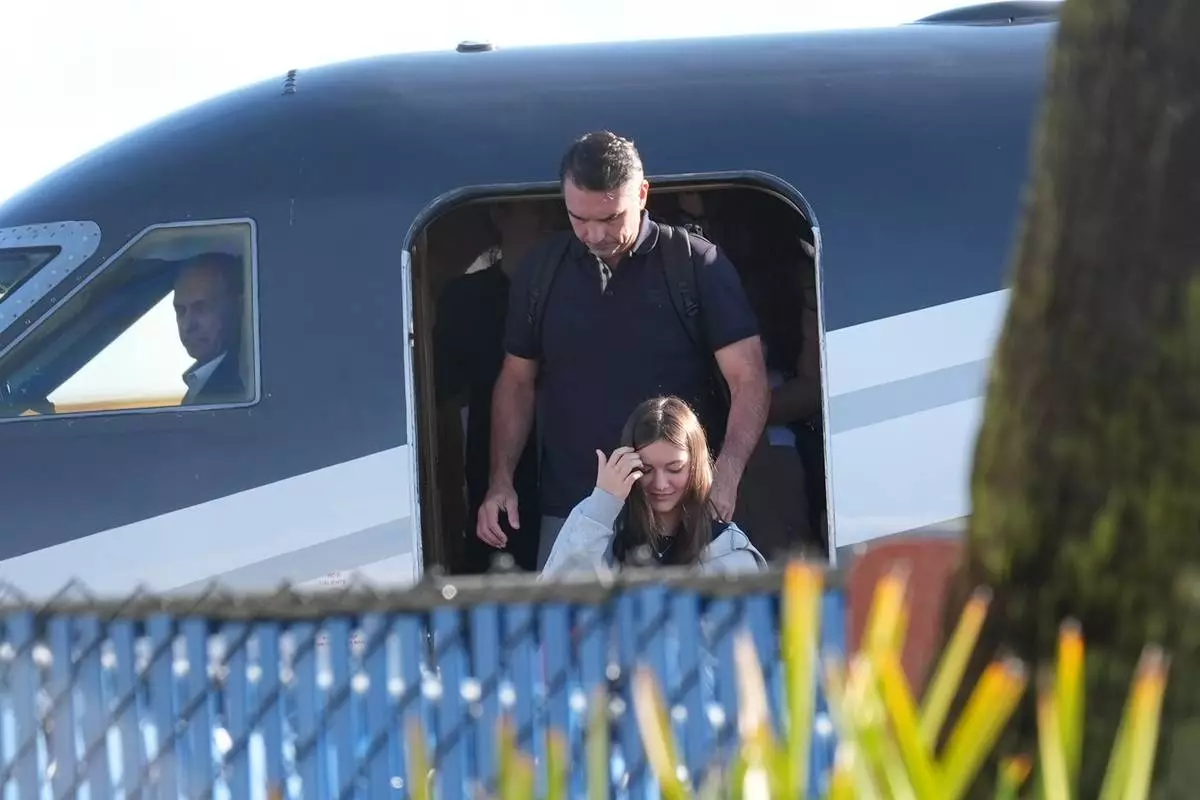
Flávio Bolsonaro arrives at Miami Opa-Locka Executive Airport on Wednesday, Oct. 28, 2026, in Opa-locka, Fla. (AP Photo/Marta Lavandier)
URDA, Spain (AP) — Spain's second high-speed rail disaster this year, in which one train struck another from behind, killing 69 people, has raised fresh concerns about the safety of the country's rail network ahead of a national election.
Search teams with sniffer dogs continued to look for victims on Thursday morning, a day after the collision in central Spain. Cranes helped shift the carriages as police and soldiers helped pick through the wreckage strewn down the gravel slope where at least three train carriages were tossed by the impact.
One more body was found overnight, taking the death toll to 69, according to the regional leader of Castilla La Mancha, Emiliano García-Page.
“Yesterday we experienced a catastrophe that without a doubt has left all of Spain in shock,” García-Page said.
García-Page said that a crane would lift a damaged carriage that had flipped over. He added that 50 people remained hospitalized. “Besides bodies, there are body parts that need to be identified,” García-Page said.
Spain’s government declared three days of mourning starting Thursday.
Spain’s high-speed rail network has been considered one of the nation’s crowning achievements. It is the world's second-largest, after China's. Until this year, it had not endured a deadly crash since coming into service over three decades ago.
The collision Wednesday morning that turned a sleepy stretch of rail lined by olive groves into a scene of carnage came just four weeks before the country votes in a national election.
Spanish Prime Minister Pedro Sánchez visited the crash site in the province of Toledo on Wednesday after regional authorities confirmed that more than 60 people had died and dozens more were being treated at hospitals.
In January, 46 people had died when one train jumped the track and slammed into the side of another going the opposite way in southern Spain.
Sánchez pledged an investigation into the latest collision and improvements to prevent another tragedy like the two that have shaken trust in a rail system that carried 45 million travelers last year, including millions of tourists.
“It is clear that we need to reinforce the safety of our train service to rebuild the trust in our high-speed rail,” Sánchez said. “It is not acceptable for a country like Spain to endure two high-speed train accidents in the same year.”
Both deadly crashes this year took place on the same rail line. Each involved a train operated by state-owned RENFE and another operated by privately owned IRYO. Spain liberalized its high-speed rail service in 2021, with the Italian IRYO starting service the following year.
Sánchez has weathered many crises since taking power in 2018, staying in office and winning reelection after the COVID-19 pandemic and the global rise in inflation.
But polls show he faces another uphill battle when voters cast ballots in Spain's first national election since 2023. The new rail disaster can't help the prospects of his Socialist party.
Sánchez and other progressive parties had hoped to leverage a wave of discontent over housing costs and high rents when he called for early elections earlier this month.
About an hour before news of Wednesday's crash spread, Sánchez had posted on X a message that “There are lots of reasons to be optimistic about this country.”
He now faces questions about the safety of Spain's rail service along with criticism from right-wing parties of his liberal migration policies and accusations of corruption against his party and his wife, which both he and his wife deny.
His transport minister, Óscar Puente, faced media questions over whether he would resign following a second major train wreck under his watch. He said he was fully focused on dealing with the collision, not his future.
Sánchez's main rival, Popular Party leader Alberto Núñez Feijóo, demanded a full investigation of the crash on Wednesday. The conservative leader said that in respect for the victims his party canceled its campaign events for the day.
“This is the moment to respect the dead, the injured and their families,” Núñez Feijóo said. “That does not mean we will ignore the fact that Spaniards are asking tough questions that demand answers.”
The far-right Vox leader, Santiago Abascal, who is likely hoping to enter a coalition government with the conservatives, did not show the same restraint.
“More dead. Another tragedy. More rage over being left to fend for ourselves, the despair and the betrayal that Spaniards are enduring,” Abascal said just hours after the crash.
“I promise to work tirelessly until this government, which is a criminal organization, is sitting in a courtroom to answer for its crimes,” he said.
Puente said that the crash was caused by what he called the “inexplicable” order from a central command center for Spain’s trains after a security system had failed. He said the train engineers were not to blame.
Puente said that at 8:30 a.m. the security system on a stretch of 63 kilometers (39 miles) stopped working due to a computer malfunction, causing all trains on that stretch to stop. At that point the IRYO train was stopped near the town of Urda, while the RENFE train was 25 kilometers (15.5 miles) behind it.
But a few minutes later the central command told the RENFE train to start running again without any speed restrictions, and it ended up colliding with the stationary IRYO train at 8:53 a.m.
Puente said that the train should never have been told to start moving again since there was still a “stop signal” active on that line. And if it had, at least it should have been told to go at reduced speed.
Thousands of travelers were left stranded and searching for alternative transport after the high-speed line connecting Madrid and Seville was shut down. RENFE, which operates the most trains, is not selling tickets online for this service until mid-December.
Wilson reported from Barcelona, Spain. Associated Press writer Teresa Medrano in Madrid contributed to this report.
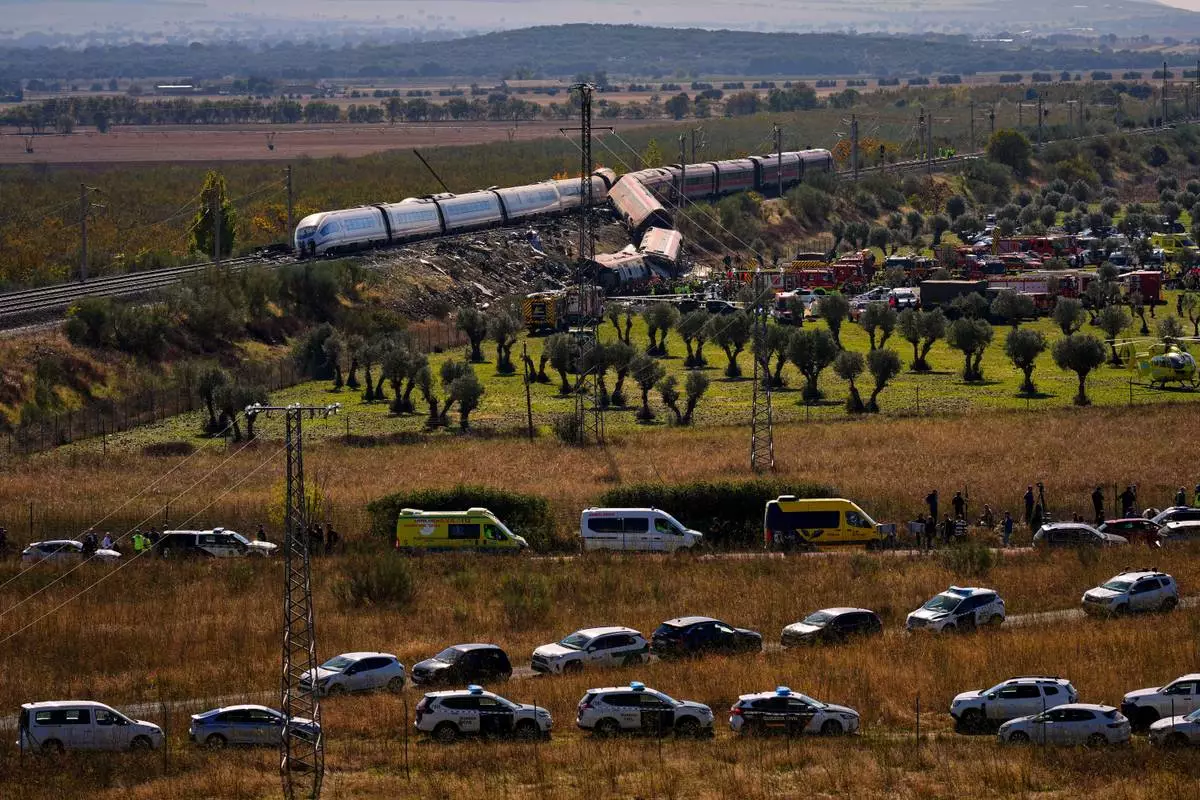
Emergency services work at the scene of a collision between two trains in Urda, Spain, on Wednesday, Oct. 28, 2026. (AP Photo/Manu Fernandez)
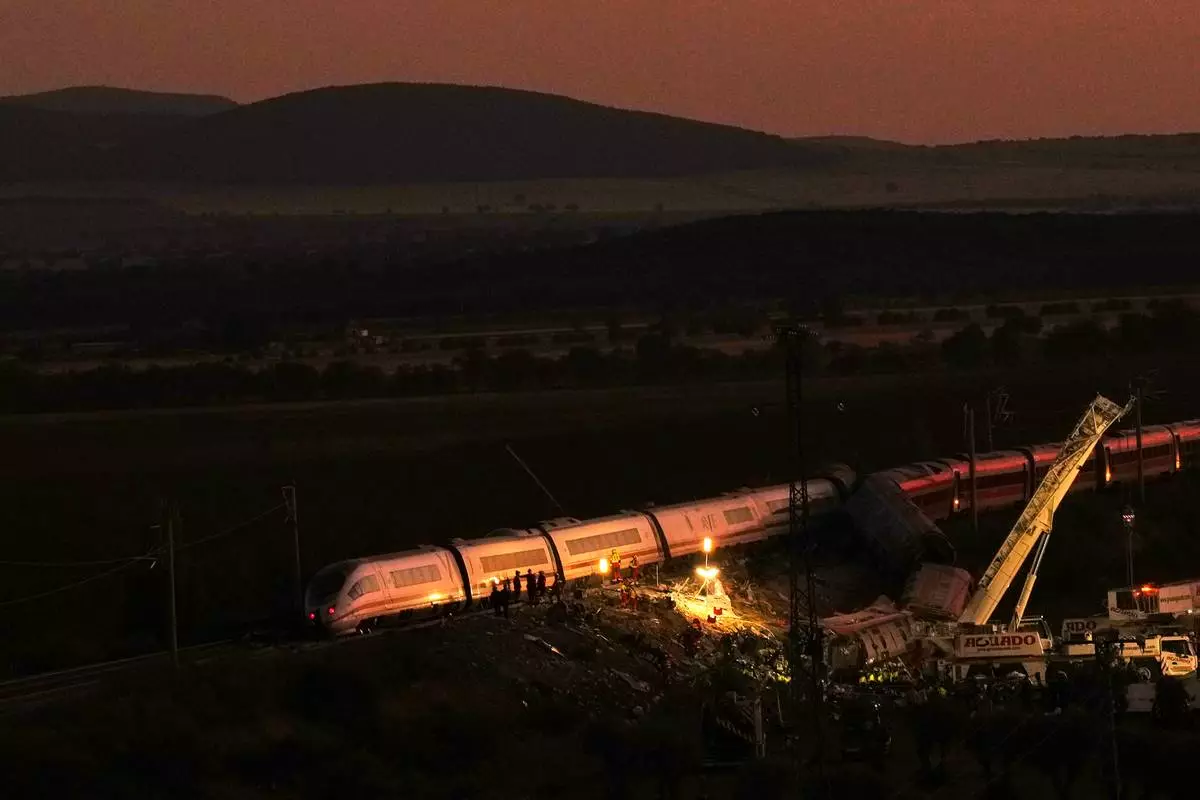
Emergency services work at the scene of a collision between two trains in Urda, Spain, on Wednesday, Oct. 28, 2026. (AP Photo/Manu Fernandez)
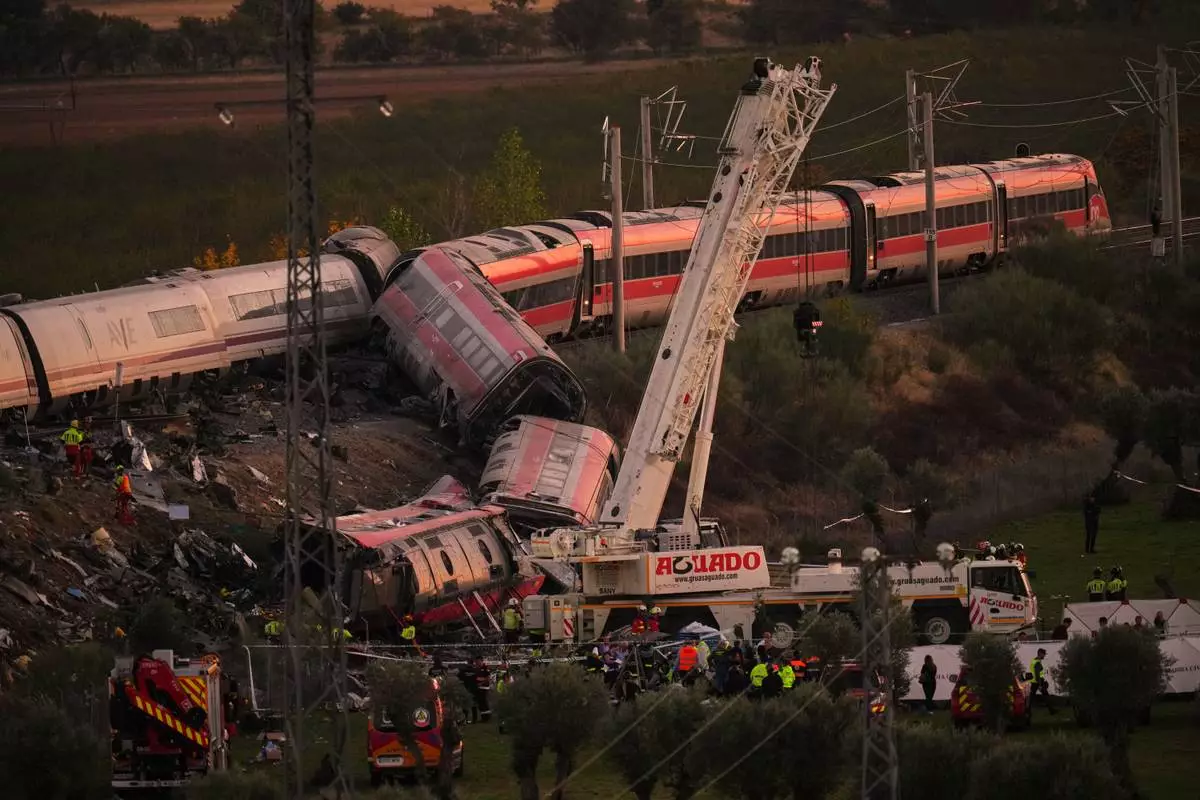
Emergency services work at the scene of a collision between two trains in Urda, Spain, on Wednesday, Oct. 28, 2026. (AP Photo/Manu Fernandez)
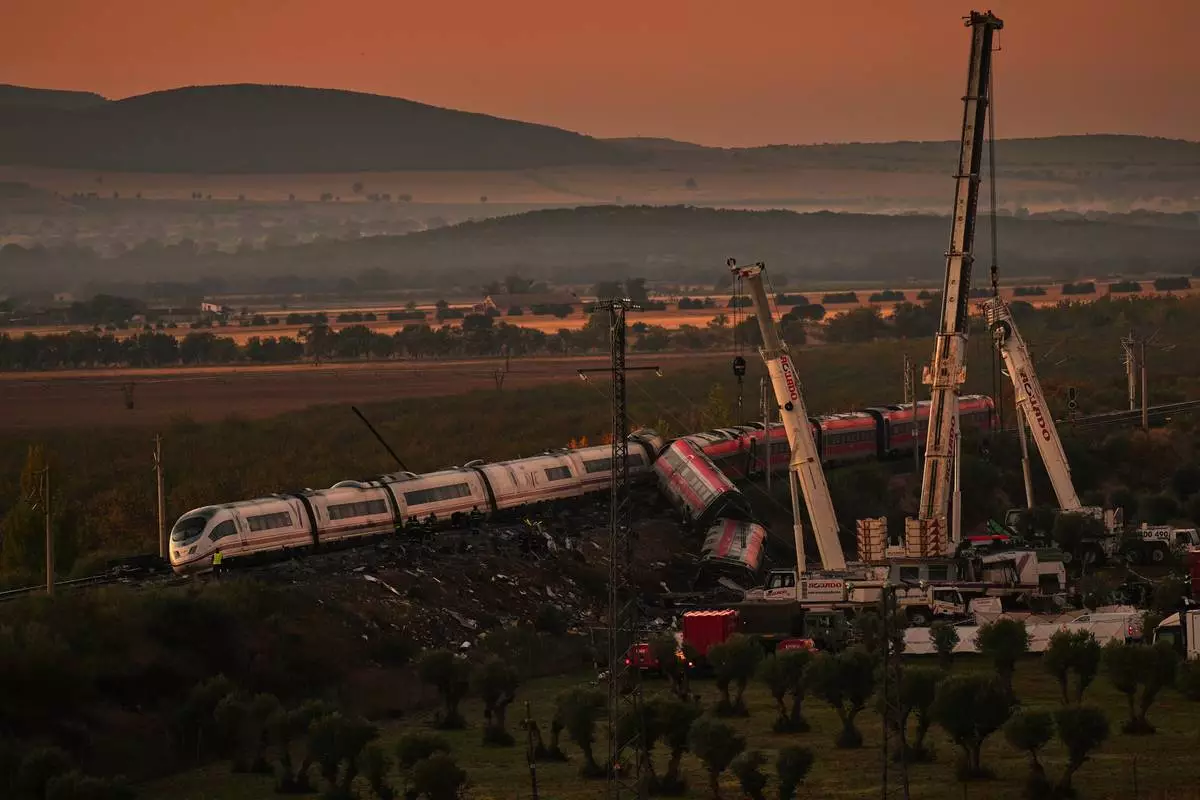
Cranes lift wrecked train carriages as rescuers search for victims following a collision between two trains in Urda, Spain, Thursday, Oct. 29, 2026. (AP Photo/Manu Fernandez)