DoorDash is offering $17 billion to buy Instacart in a deal that could consolidate the grocery delivery business in the U.S. and abroad.
The companies say the tie-up would combine DoorDash's global reach and expertise in logistics with Instacart's purpose-built technology and long relationships with grocers. It could also help the companies better compete with rivals like Amazon.
But it could also lead to less competition in the delivery space, which could raise prices for consumers and give grocers fewer partners to negotiate with.
“They were competing for a share of consumers' wallet," said Randall Sargent, a partner specializing in grocery and retail at the consulting firm Oliver Wyman. “As a general economic principle, less competition and more consolidation tends to be worse for consumers.”
The deal is expected to be finalized by the end of 2027 or in early 2028 if it’s approved by Instacart shareholders and government regulators.
Instacart, founded in 2012, specializes in grocery and convenience store delivery in the U.S. and Canada. DoorDash said the Instacart brand name and app would remain, and Instacart's 600,000 shoppers — who are independent contractors — would be able to continue fulfilling orders as before.
Consumers who are currently paying $9.99 per month for separate DashPass and Instacart+ memberships, which give them free delivery on most orders and other perks, would be able to pay one fee instead of two, DoorDash said. Instacart customers would also have access to 50,000 additional stores that are on DoorDash's platform.
Grocers would also be able to choose either delivery platform. Tony Xu, DoorDash's co-founder and CEO, said the deal could help local grocers compete with larger players. Walmart is the largest U.S. grocer, with 21% share of spending, followed by Costco and Amazon, which each have 8% share, according to Numerator, a market research company.
“Over the past decade or even two decades, what you see is the largest companies are only eating more and more of the pie. Why is that? It’s because they’ve invested aggressively into capabilities like a modern technology stack, like fast delivery, like new fulfillment models,” Xu said Thursday during a conference call with investors. “That’s what this combination is really about, where DoorDash and Instacart can give every retailer a fighting chance at competing in the modern-day era.”
The deal would also help DoorDash and Instacart fend off rivals like Walmart, which has been moving into restaurant delivery. Walmart partnered with Subway, its largest in-store restaurant tenant, this past summer and has since expanded to select locations at Dunkin’ and Papa Johns. The company said it now has 2,400 restaurant locations on its restaurant delivery platform.
DoorDash, founded in San Francisco in 2013, began as a restaurant delivery business but has expanded to pet food, electronics and many other products. Operating in 40 countries, it completed more than 3 billion orders last year using a network of 9 million independent delivery workers. That dwarfs Instacart, which fulfilled 338 million orders last year. DoorDash has a market value of $73 billion.
DoorDash began delivering groceries in 2020 amid a surge in pandemic-era demand. Grocers were initially cautious. Kroger partnered with the San Francisco company in 2022 but initially allowed the company to deliver only flowers, sushi and prepared meals from a limited number of stores.
The partnership expanded last fall, and DoorDash now lists the full inventory of all 2,700 U.S. Kroger stores in its online marketplace. DoorDash scored another coup last month when it added delivery from Costco.
DoorDash’s move into grocery has hurt Instacart. Five years ago, Instacart commanded 26% of spending on U.S. delivery platforms; that share has fallen to 18%, according to Consumer Edge, a market research company. DoorDash’s share grew from 44% to 59% in that same period. Uber Eats’ share held steady at just under 20%.
Sargent said a combined DoorDash and Instacart could potentially attract more ad revenue from food companies. Right now, Instacart can only share what consumers put in their baskets, for example, but a combined company could also show them what customers ordered for takeout lunch.
“Food companies want to spread their ad dollars around and reach customers efficiently,” Sargent said. “The more you can hand them an audience that you know all about, the more formidable a challenger this new company is.”
But the tie-up will also be subject to scrutiny from antitrust regulators in the U.S. and elsewhere, particularly at a time when consumers are agitated about food price inflation. Ethan Litwin, an antitrust attorney and partner with New York-based Shinder Cantor Lerner, said it could be problematic if DoorDash controls Instacart's technology, since many grocers use that technology to power their online storefronts.
“DoorDash could therefore cut rivals off, outmatch them on targeting and logistics, or monitor competitors’ pricing and discounting in real time, which could facilitate coordination on pricing,” Litwin said. “I expect that the parties will call these efficiencies, but an advantage big enough to build a monopoly will not stay consumer-friendly for long.”
Apoorva Mehta, who founded Instacart but left the company after its initial public offering in 2023, said Thursday that he and Xu had explored the idea of combining Instacart and DoorDash for years.
“We kept coming back to it because the industrial logic has always been clear. Customers have 21 meals a week to figure out. Groceries and restaurant delivery each solve part of that problem. Serving customers well means bringing together the best of both,” he said.
Mehta said the combination would also benefit shoppers, who would have more opportunities to earn money.
It wasn't immediately clear how delivery drivers would be impacted by a combined company. The Associated Press left a message seeking comment from the Service Employees International Union, which has unionized gig workers in California.
Litwin said combining DoorDash and Instacart would potentially give drivers fewer options.
“In many markets, these two companies are two of the three major buyers of shopper labor,” he said.
DoorDash shares were up 5% in Thursday afternoon trading. Instacart shares were down 1.6%.
AP Retail Writer Anne D'Innocenzio contributed from New York.
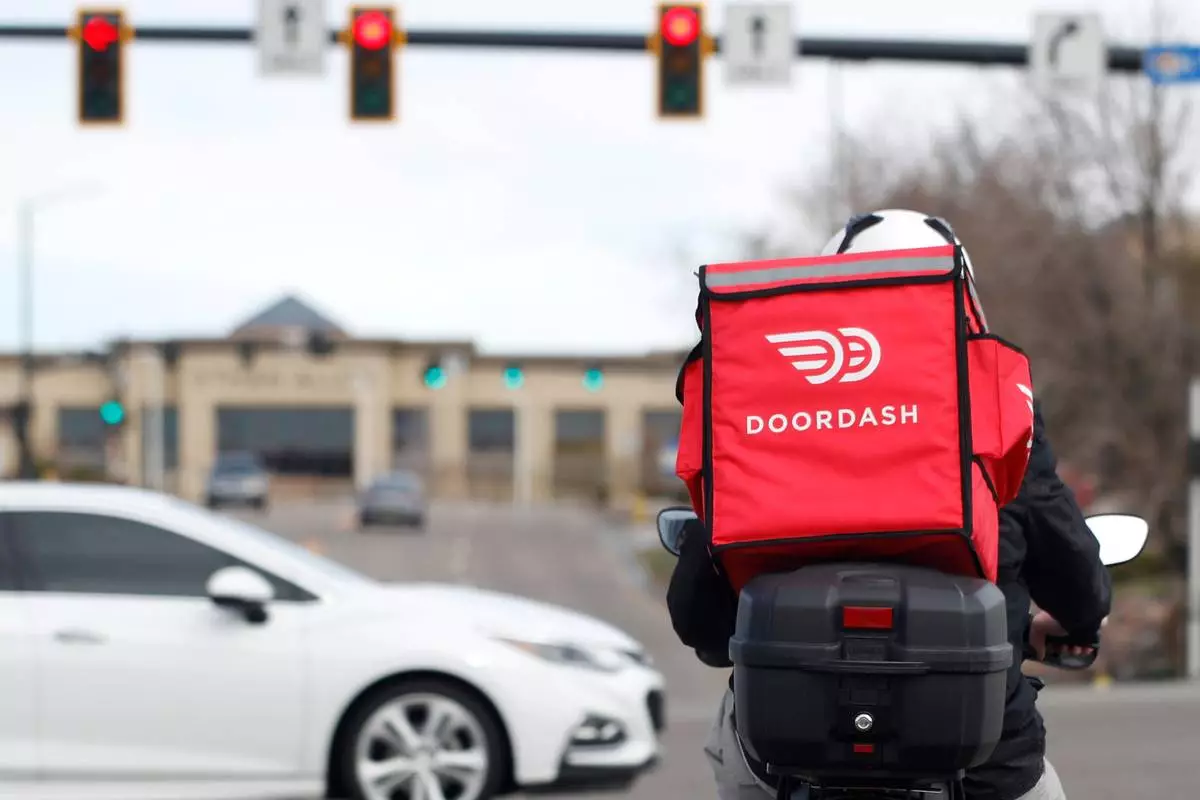
FILE - A food delivery rider waits at a traffic light, March 30, 2020, in Lone Tree, Colo. (AP Photo/David Zalubowski, File)
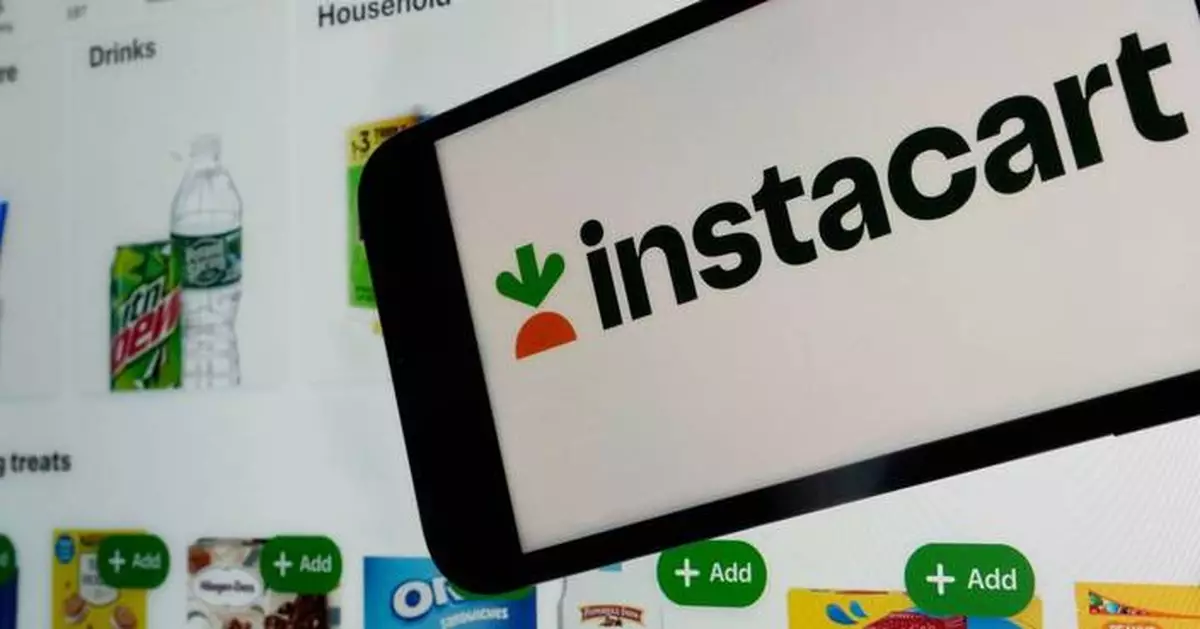
FILE - An instacart logo and an instacart webpage are seen in New York, Sept. 6, 2023. (AP Photo/Richard Drew, File)