Skip to Content Facebook Feature Image

Beehive Industries Completes Engine Test of Frenzy® 6 Prototype, Accelerating Rapid Development of Affordable Propulsion

Business

Beehive Industries Completes Engine Test of Frenzy® 6 Prototype, Accelerating Rapid Development of Affordable Propulsion
Business

Business

Beehive Industries Completes Engine Test of Frenzy® 6 Prototype, Accelerating Rapid Development of Affordable Propulsion

2026-10-29 22:08 Last Updated At:22:10

DENVER--(BUSINESS WIRE)--Oct 29, 2026--

Beehive Industries, an American manufacturer of advanced propulsion systems for uncrewed aerial defense applications, today announced the successful completion of an engine test of its 100 lbf Frenzy ® 6 engine prototype, marking a significant milestone in the rapid development of affordable propulsion for munitions, drones, and unmanned aerial vehicles (UAVs).

This press release features multimedia. View the full release here: https://www.businesswire.com/news/home/20261029750957/en/

The milestone comes just four months after Beehive finalized Frenzy 6 requirements with its U.S Air Force customer, demonstrating the company’s ability to rapidly progress from written criteria into a tested engine. First test-fired on September 23 at the company’s headquarters in Colorado, the Beehive-funded prototype engine successfully completed all initial test objectives, including starting reliability, engine performance, and operability.

WATCH THE VIDEO:Beehive Industries’ 100-lbf. Zero Engine to Test (ZETT) ramps up to 80,000 RPM during an early test run in September 2026.

The achievement builds directly on Beehive’s April announcement of a $29.7 million U.S. Air Force contract to advance development of the Frenzy engine family, and on the company’s maturation of its 200 lbf Frenzy 8 engine. The 100 lbf Frenzy 6 prototype leverages common design principles and lessons learned from the larger engine to accelerate development of a smaller propulsion system optimized for applications requiring affordable, scalable power.

"Frenzy 8 validated how we design and scale a concept at unprecedented speed, and the learnings from that program have enabled us to iterate even faster on Frenzy 6 while introducing new technology in a cost-competitive product that is entirely U.S.-designed and built,” said David Kimball, Chief Technology Officer at Beehive Industries. “Frenzy 8 is demonstrating class-leading performance and altitude-start capability, and we expect those strengths to carry over to Frenzy 6. Moving from finalized requirements to an engine test in just four months demonstrates the advantage of our additively enabled approach and the experience we’ve gained developing the Frenzy portfolio.”

The successful Frenzy 6 test is the latest milestone in Beehive’s broader effort to compress traditional propulsion development timelines and rapidly transition new engine designs from development into production. Beehive’s Frenzy family is designed specifically for scalable production and applications where affordability, performance, and rapid availability are critical.

“Frenzy 6 takes all the great things about Frenzy 8 and packages them into a smaller form factor to help address the needs of smaller munitions, drones, and unmanned aerial vehicles,” said Gordie Follin, Chief Product Officer at Beehive Industries. “We are focused on helping to enable affordable mass for U.S. defense, and this is the latest example of our commitment to do that across all relevant platforms. We are investing and leaning forward so that America has what it needs, when it needs it, and our additively enabled approach gives us unique advantages in meeting the customer’s need for speed, performance, cost, and scale.”

The company has also continued to make significant investments in the manufacturing infrastructure required to support Frenzy production at scale. Beehive has announced plans to build the capacity required to manufacture more than 8,000 jet engines annually, supported by investments in additive manufacturing technology, precision machining, and expanded production facilities.

With the initial engine test successfully completed, Beehive will continue Frenzy 6 testing and shift the focus to vehicle integration, advancing the program toward flight demonstration in 2027.

About Beehive Industries

Beehive Industries is a U.S.-based manufacturer specializing in the design and development of advanced, additively manufactured jet engines for uncrewed aerial defense applications. Leveraging innovative additive manufacturing techniques, Beehive delivers high-performance propulsion systems with unmatched speed, affordability, and scalability to meet the evolving needs of the warfighter and strengthen American defense superiority. For more information, visit www.beehive-industries.com.

Beehive Industries LLC was awarded an Other Transaction Authority (OTA) Project Agreement by SOSSEC, Inc. to support the Air Force’s Propulsion Directorate under the Propulsion Consortium Initiative 2.0 (PCI 2.0), OTA No. FA8626-24-9-0005, between the Air Force Life Cycle Management Center (AFMC/AFLCMC) and SOSSEC, Inc.

Beehive Industries’ 100-lbf. Frenzy 6 engine prototype, or Zero Engine to Test (ZETT), fires in the test cell at one of the company’s Colorado testing facilities in September 2026. [Photo Credit: Beehive Industries]

Beehive Industries’ 100-lbf. Frenzy 6 engine prototype, or Zero Engine to Test (ZETT), fires in the test cell at one of the company’s Colorado testing facilities in September 2026. [Photo Credit: Beehive Industries]
TOLEDO, Spain (AP) — Families desperately searched for missing loved ones Thursday, more than 24 hours after two high-speed trains collided in central Spain, killing at least 69 and injuring dozens of others.

“I have my father, and I don’t know where he is. I hope to find him, oh my Lord," said César Vicente, an actor who traveled 495 kilometers (307 miles) from his native Seville to Toledo in search of his father. He spent the night with many other families at a religious center converted into a base for those affected by the disaster.

Vicente was with his mother and his aunt, all of whom were looking for César Vicente, who was sitting in seat 13A on the RENFE train that struck another operated by the private company Iryo, which had stopped on the tracks. The family was among those who braved the cold to take a short walk on a chilly morning.

“I don’t want this to happen to anyone. This is unbearable,” he added. “This is hell.”

Online, relatives and friends flooded social media with desperate appeals for information on the whereabouts of their loved ones, posting photos or describing the clothes they were wearing when they boarded the trains bound for Seville and details about their physical appearance or the seat in which they were traveling.

In a post Wednesday on Instagram, Alejandra Marroquín told her followers that her sister Adriana, who was wearing dark blue clothes, was traveling in car 8 of the RENFE train and that they had been unable to contact her.

“We’re still praying, we don’t know anything,” Marroquín said in a post Thursday morning, as search teams with sniffer dogs continued to look for victims.

This was the second high-speed rail disaster this year. In January, 46 people died after one train jumped the track and slammed into the side of another going the opposite way in southern Spain.

“As a society, we have once again suffered a devastating blow. But we must keep moving forward, even amid this pain, without ever forgetting the wound they have left us,” said Spain’s King Felipe VI.

The king and Queen Letizia spent more than an hour visiting injured passengers at Toledo University Hospital.

“Let us move forward in their memory. Let us do so together, united. Let us do so with dignity and with resolve, he said.”

The high-speed rail network has been considered one of Spain’s crowning achievements. It is the world’s second-largest, after China’s. Until this year, it had not experienced a deadly crash since coming into service over three decades ago.

“The entire government is working to respond to the victims’ families, shed light on the tragedy, and strengthen security so that this never happens again,” Spanish Prime Minister Pedro Sánchez told reporters on Thursday morning.

Life in Urda, a small town of about 2,500 people south of Madrid, was turned upside down early Wednesday.

Residents rushed to help in any way they could: from assisting the injured to preparing sandwiches for the unharmed passengers, many of whom they even carried from the tracks to a nearby sports pavilion in their cars.

David Gómez, a construction worker, was working with his brother and another colleague nearby when they heard the crash and ran to help, he told the newspaper El País.

“People were trying to get out through the windows ... We cut through some fences to access the area and treated people with the first-aid kits we had brought until emergency services arrived," he said.

With 180 people injured, including 110 taken to hospitals, authorities issued a call for blood donations.

The response was immediate: in Castilla-La Mancha alone, the region where the collision occurred, more than 2,000 people volunteered in the aftermath.

“I want to express my personal and very sincere gratitude to everyone who has stepped up, starting with the all-time record number of donations,” said the region’s president, Emiliano García-Page, who also thanked the 1,300 emergency service personnel who were mobilized.

Medrano reported from Madrid.

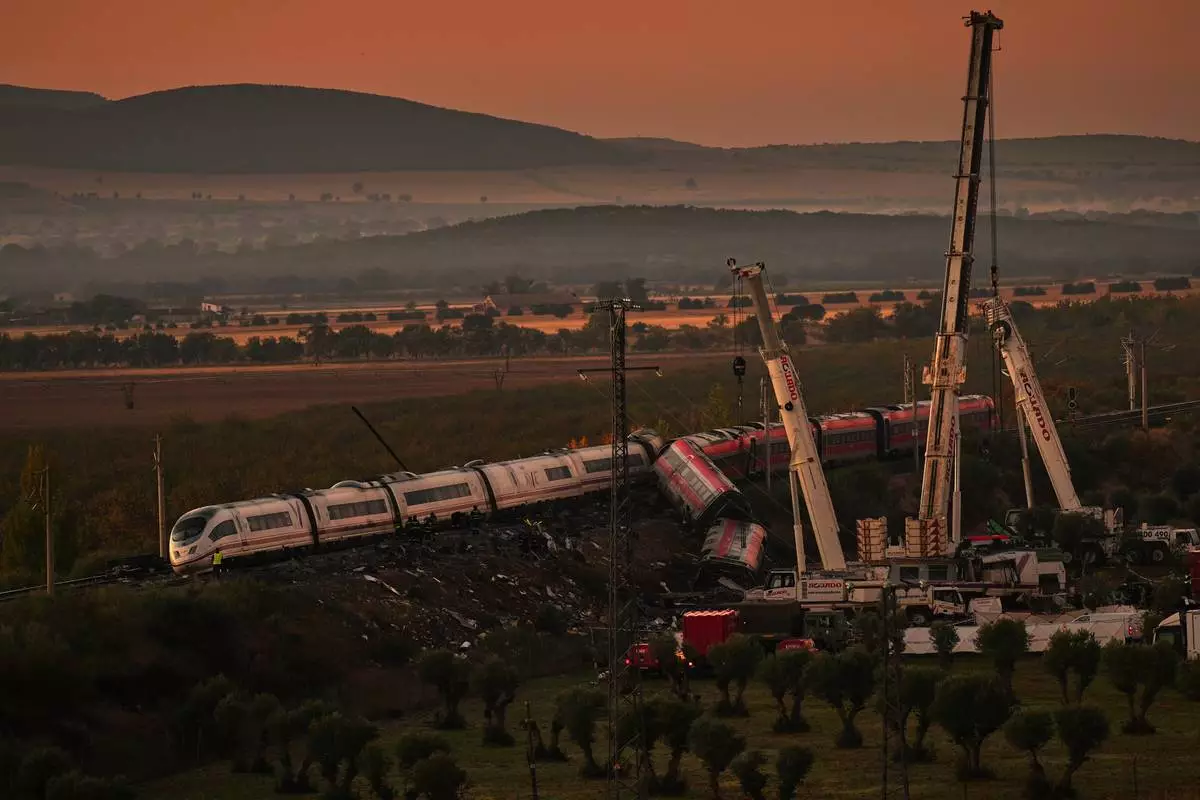
Cranes lift wrecked train carriages as rescuers search for victims following a collision between two trains in Urda, Spain, Thursday, Oct. 29, 2026. (AP Photo/Manu Fernandez)

Cranes lift wrecked train carriages as rescuers search for victims following a collision between two trains in Urda, Spain, Thursday, Oct. 29, 2026. (AP Photo/Manu Fernandez)

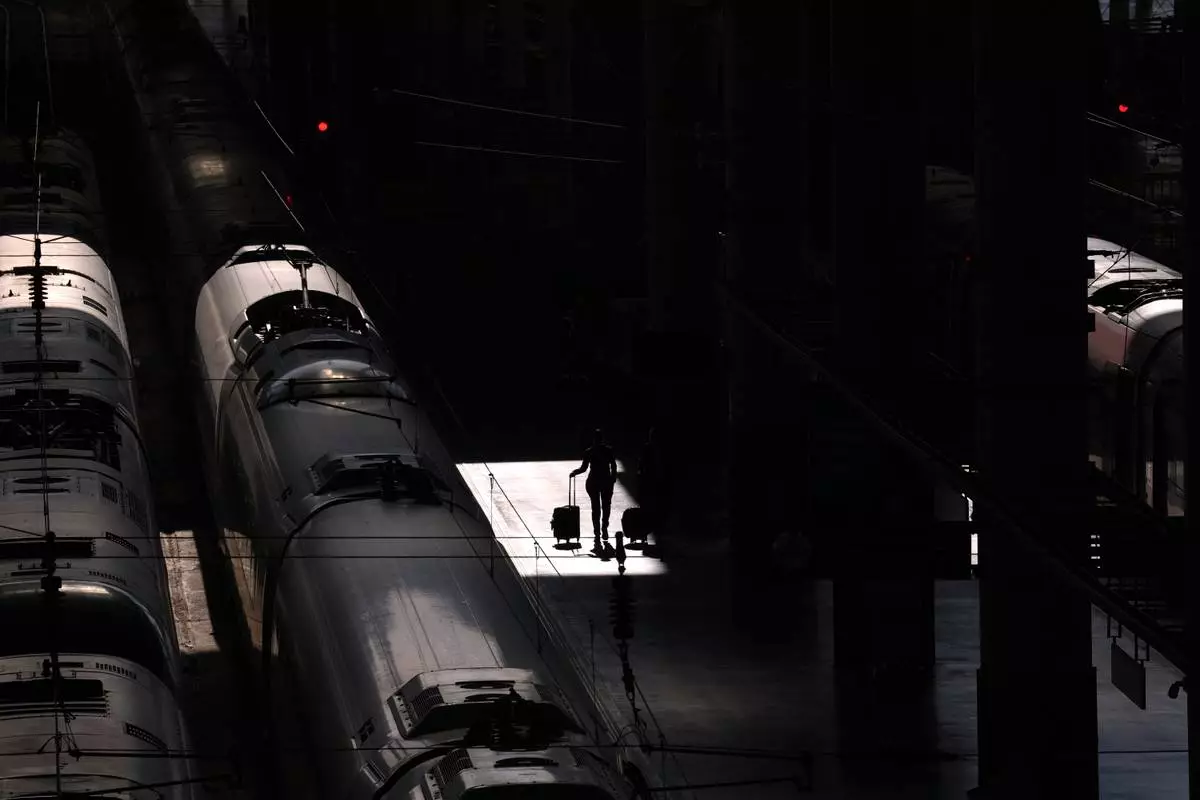
High-speed trains are photographed on their platforms at Madrid's Atocha station, Spain, Thursday, Oct. 29, 2026. (AP Photo/Bernat Armangue)

High-speed trains are photographed on their platforms at Madrid's Atocha station, Spain, Thursday, Oct. 29, 2026. (AP Photo/Bernat Armangue)

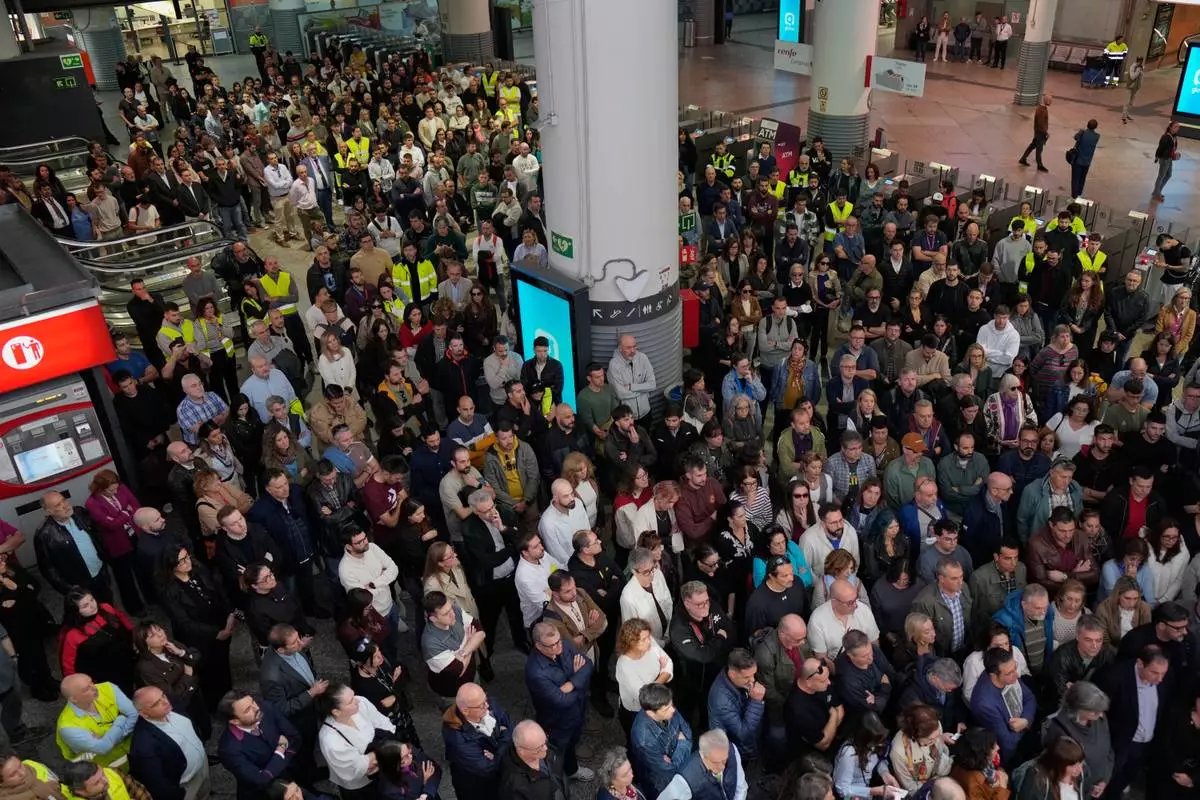
People observe a minute of silence in memory of the victims of a train collision at Atocha railway station in Madrid, Spain, Thursday, Oct. 29, 2026. (AP Photo/Bernat Armangue)

People observe a minute of silence in memory of the victims of a train collision at Atocha railway station in Madrid, Spain, Thursday, Oct. 29, 2026. (AP Photo/Bernat Armangue)

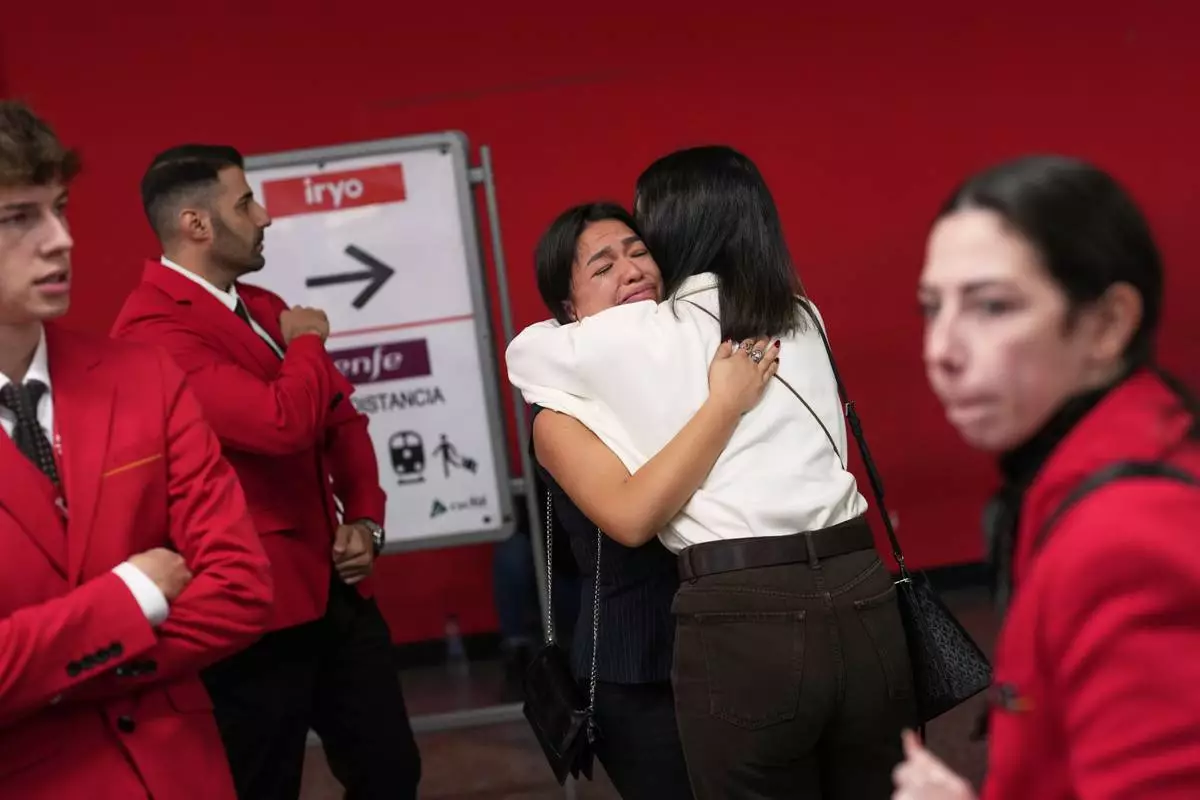
Iryo employees react after observing a minute of silence for the victims of a train collision at Atocha railway station in Madrid, Spain, Thursday, Oct. 29, 2026. (AP Photo/Bernat Armangue)

Iryo employees react after observing a minute of silence for the victims of a train collision at Atocha railway station in Madrid, Spain, Thursday, Oct. 29, 2026. (AP Photo/Bernat Armangue)

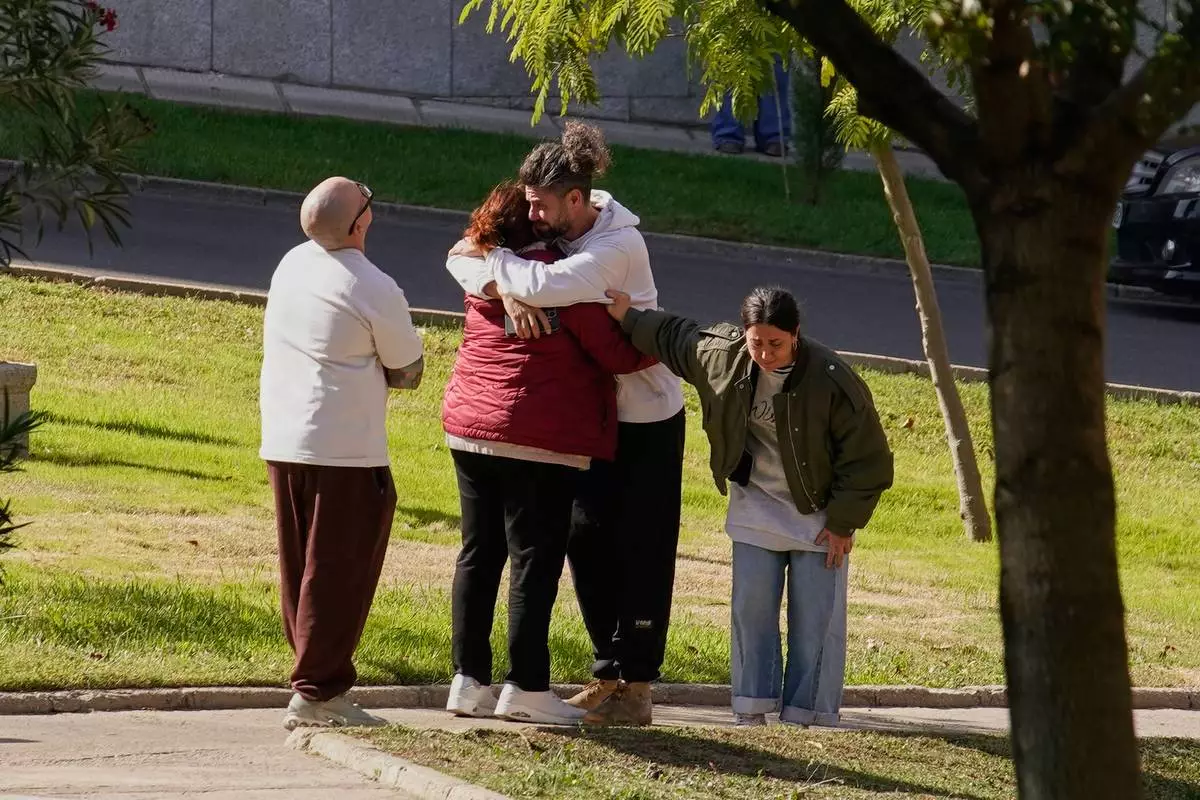
People searching for relatives who were traveling on the trains involved in a collision gather at a religious residence converted into a temporary medical facility in Toledo, Spain, Thursday, Oct. 29, 2026. (AP Photo/Andrea Comas)

People searching for relatives who were traveling on the trains involved in a collision gather at a religious residence converted into a temporary medical facility in Toledo, Spain, Thursday, Oct. 29, 2026. (AP Photo/Andrea Comas)

Recommended Articles