MONTAUK, N.Y. (AP) — On most October nights, fishing guide Bill Wetzel can be found navigating the shores of Montauk, New York, in a modified 4x4 pickup truck, rumbling over boulders and thick sand as he scans the surface of the Atlantic for signs of life.
He notes, and meticulously logs, where he spots seams in the water's currents, cuts in sandbars, points and coves, troughs along the shoreline or birds working over bait that was pushed to the surface by one of Montauk’s many predators. Any sign that a striped bass might be feeding beneath the waves, Wetzel will likely see it.
Click to Gallery
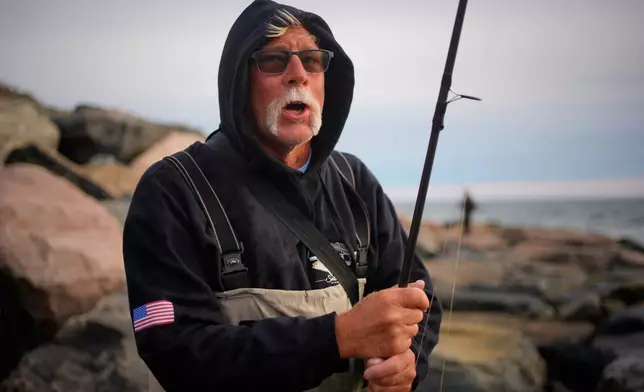
John Mahan takes a break from casting at Montauk Point on Sunday, Oct. 11, 2026, (AP Photo/Robert F. Bukaty)
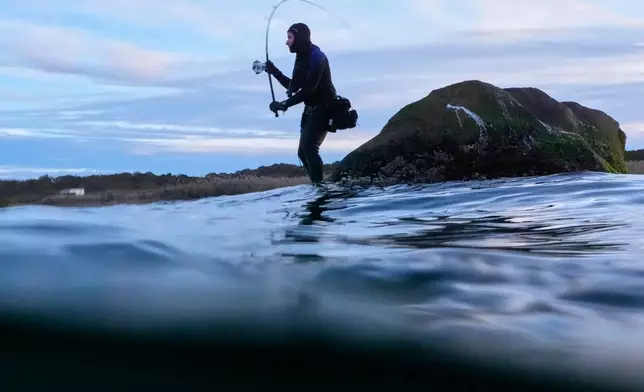
Jason Markowitz casts from an offshore rock while fishing for striped bass, Saturday, Oct. 10, 2026, in Montauk, N.Y. (AP Photo/Robert F. Bukaty)
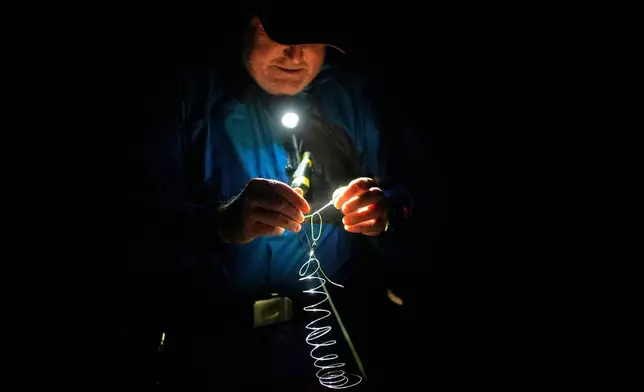
Fishing guide Bill Wetzel ties on a new leader for a client while fishing on a dark night during the new moon Friday, Oct. 9, 2026, in Montauk, N.Y. (AP Photo/Robert F. Bukaty)
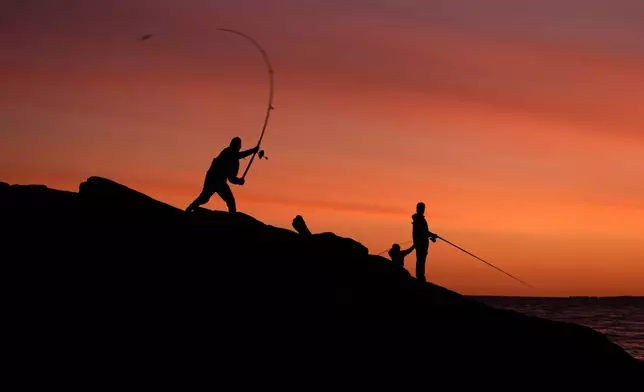
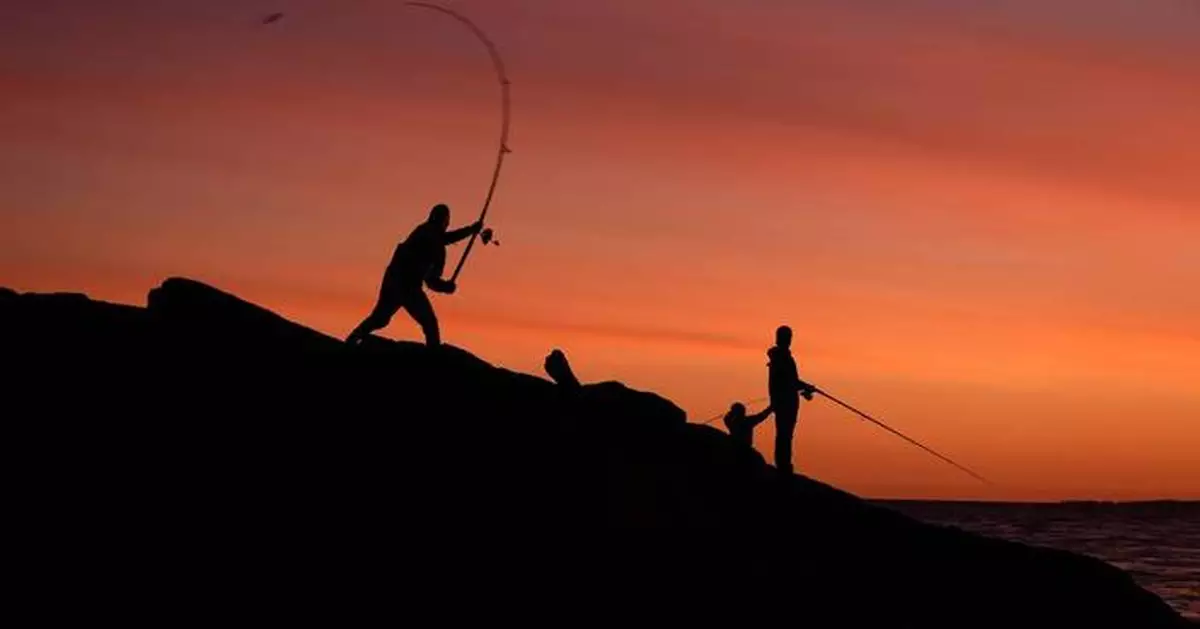
A striped bass fisherman casts his lure at dawn Saturday, Oct. 10, 2026, in Montauk, N.Y. (AP Photo/Robert F. Bukaty)
So, as he prepares for a mid-afternoon nap between nocturnal surfcasting customers, he tunes in his VHF radio to get the latest marine forecast. The squawking voice tells him something new.
“Northwest ...” he mutters aloud, pondering what the wind change might mean for his next outing.
He already knows the tides, the moon phase, and the best spots to fish under whatever conditions the ocean has to offer.
What he doesn’t know is if there will be any fish left to catch.
Some years, fishermen will make more than 17 million fishing trips seeking striped bass. But for countless anglers on the East Coast, that future is in danger. Scientists say the species is in decline because of a host of human-caused, environmental and ecological changes, putting the $8 billion industry in jeopardy, and threatening a generations-old tradition of standing on the ocean's edge and trying to catch a potentially humongous fish.
Here’s a look at Montauk’s anglers and what they’ve experienced amid a dramatic decline in striped bass.
Wetzel is obsessed with understanding and finding these fish, which can grow larger than 50 pounds (23 kilograms). Contrary to what one might expect, he doesn’t want to kill them. Instead, he wants to save them so future generations get the opportunity to enjoy the sport he loves.
He has led fishermen to Montauk in search of stripers for more than 25 years, and is one of the best known guides on Long Island. He also actively uses his platforms on social media to discuss conservation, and remembers the collapse of the stock decades ago that led to a fishing shutdown in the mid-1980s.
He doesn't want to relive those days. But he fears it's coming.
“I haven't seen a blitz in four years,” Wetzel said, referring to the chaotic feeding frenzies that were once a hallmark of Montauk's shores. “There's no small fish left. They're gone.”
More and more, he says, the only fish left are big ones. That's because the population isn't replenishing itself.
Jason Markowitz, an IT professional who lives outside New York City, is the former president of the Montauk Surfcasters Association. He is one of the intrepid anglers who still swim out to Montauk's offshore rocks, proven fishing grounds where strong waves can push you around and predators swim at your feet.
He said the chilly swim is worth it “if the fish are there.” Increasingly, he said, they aren't.
“You’ve got a lot of folks that are finding fish but it really is a case of ‘last of the buffalo,’” Markowitz said.
John Skinner is 65 and has been fishing for stripers on Long Island since he was a boy of 10 or younger. In the ensuing years, he has become one of the most respected and sought-after authorities on striped bass fishing.
Looking at the current state of the striped bass industry and the decline in population, two words come to his mind: “It sucks.”
Blunt, but the situation is devastating for Skinner, who runs a popular YouTube channel about striper fishing and authored a book on the subject. These days, he hits up his prime spots on Long Island's North Fork and sometimes leaves empty-handed.
Skinner is inclined to let the scientists come up with reasons for the decline, but he said he can't help but notice a lack of small fish like menhaden for the stripers to feed on. And he sees a lack of other large, predatory fish beyond just stripers.
It's about more than just fish. Sitting in his office, surrounded by decades-old fishing lures, he thinks back to his days on the family boat in the early 1970s, when the itch to fish first set in.
“What do you do with a little kid to keep him out of your hair,” Skinner said. “Give him a rod and some worms.”
With 40 years of fishing under his belt, Mahan says he’s nostalgic for a time when the fish were more abundant.
“What it was like, back in the later ‘80s and ’90s, was spectacular,” Mahan said.
Mahan, who sports a drooping white mustache and fishes from the rocks in a black hoodie and waders, fears the way to save the stripers might be to leave them alone entirely for a while. It would be hard, because striper fishing is in his blood, but sometimes it feels like the only way.
Read more about the science and regulatory issues facing striped bass here.
At “The End,” as it's known, of Long Island, Montauk’s waters are historically renowned for producing some of the best striper fishing in the world.
Part of the draw of Montauk has always been the danger and dynamic environment — there are sand beaches, boulder-strewn points and swift currents that pull bait into coves where fishermen can intercept the big predators chasing their forage.
“The lighthouse kind of draws you in,” said fisherman John Mahan on an October trip. “Beautiful conditions. There should be fish here right now.”
For a long time, Montauk's unofficial motto was “a small drinking village with a big fishing problem.”
“Not anymore,” says Wetzel, lamenting a change in culture.
But he's quick to say he still loves Montauk, and fishing.
“It's in me. If it's not in you, a lot of guys come and go. It's not in you. Plus, I mean, look at this. Look at this — that's why,” he said, motioning to the surf and the ocean beyond it.
Once a blue-collar fishing town, the community has become increasingly hard to distinguish from the nearby ultrawealthy enclaves of the Hamptons. It was a slow transformation that took place over decades and accelerated in the 2000s. But fishermen who have journeyed there for generations say it still maintains an identity all its own.
Whittle reported from Portland, Maine.
See a curated AP Photo Gallery of anglers fishing at Montauk here.
The Associated Press receives financial support from multiple private foundations. AP is solely responsible for all content. Find AP’s standards for working with philanthropies, a list of supporters and funded coverage areas at AP.org.
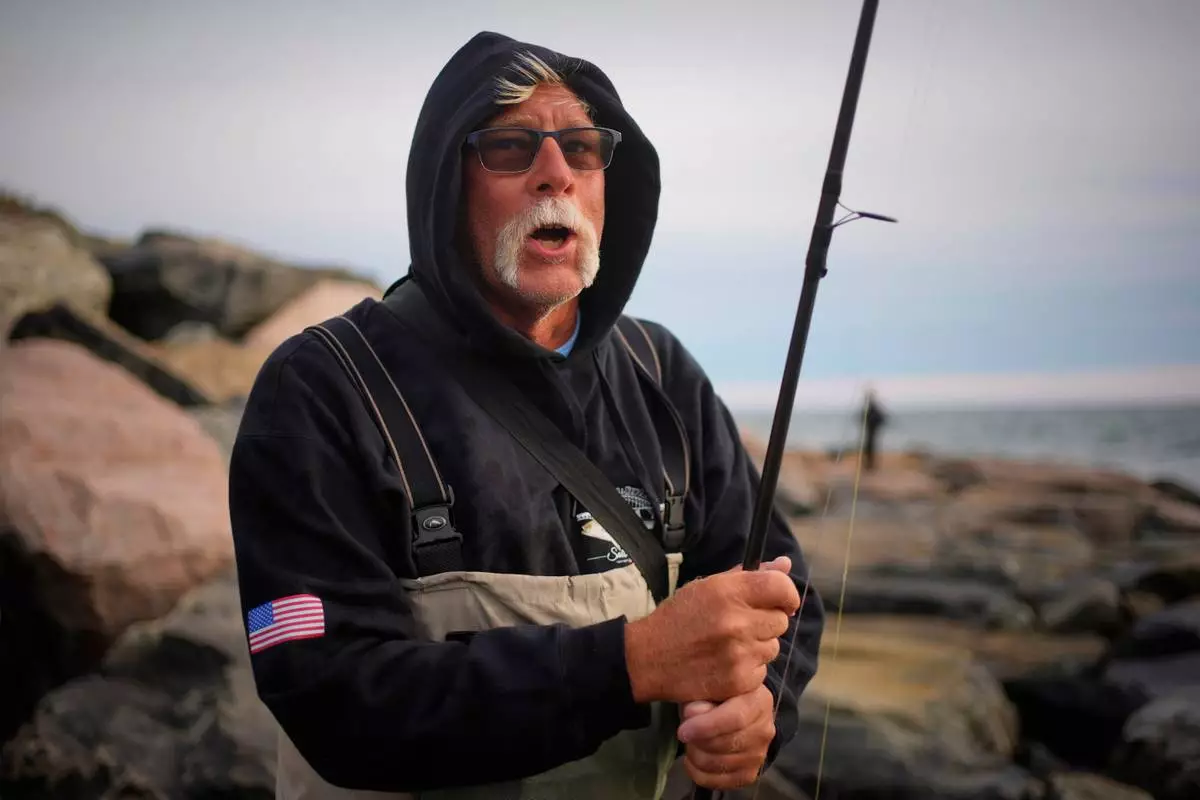
John Mahan takes a break from casting at Montauk Point on Sunday, Oct. 11, 2026, (AP Photo/Robert F. Bukaty)
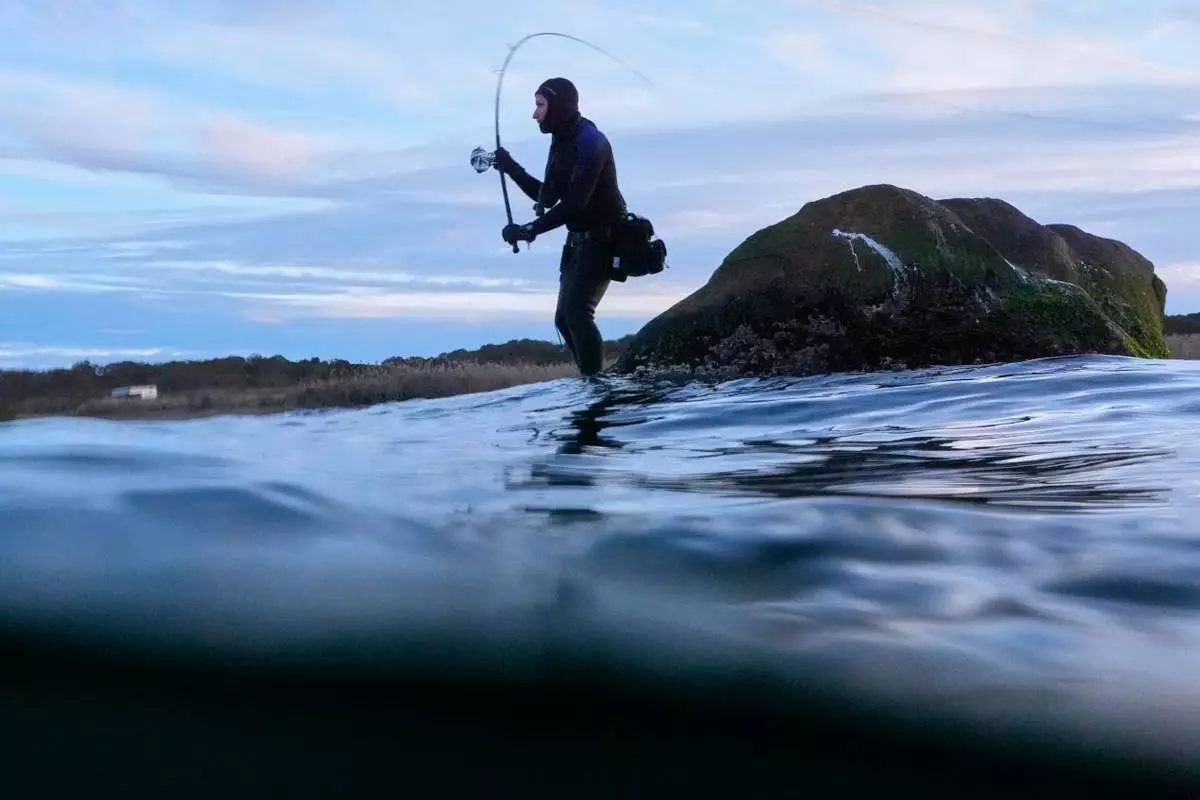
Jason Markowitz casts from an offshore rock while fishing for striped bass, Saturday, Oct. 10, 2026, in Montauk, N.Y. (AP Photo/Robert F. Bukaty)
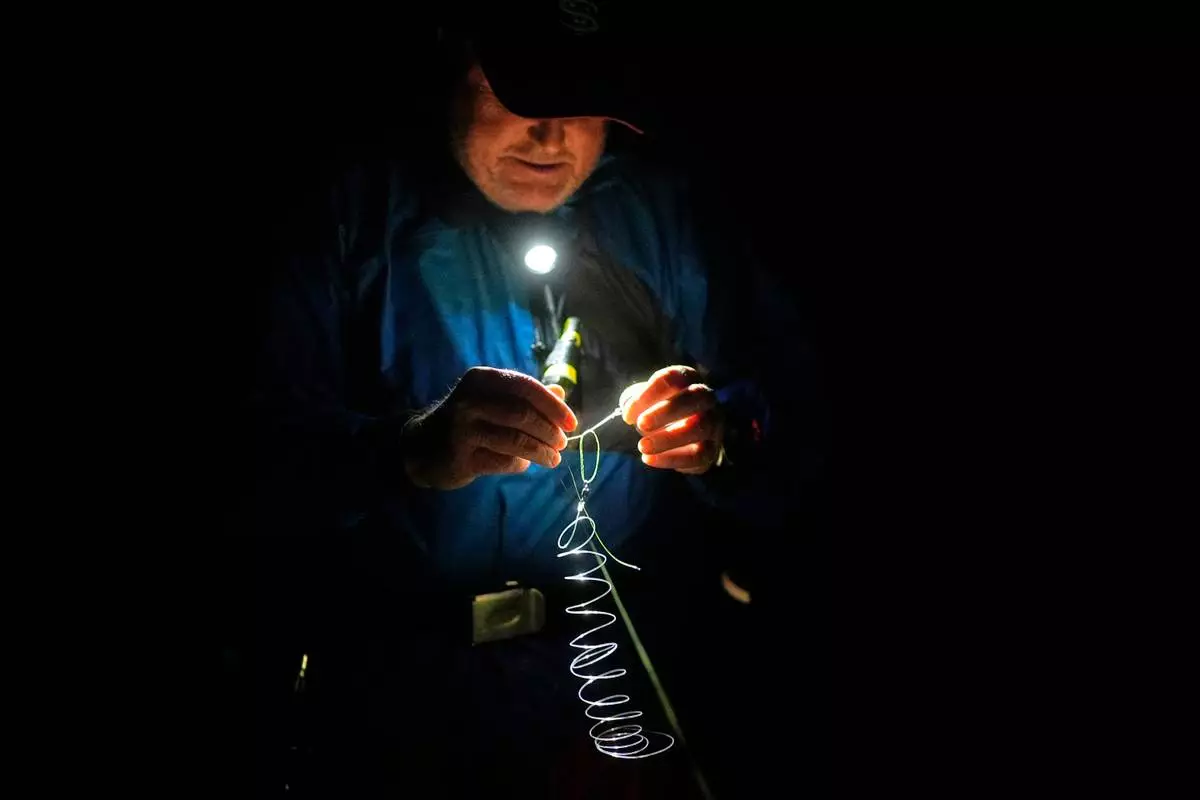
Fishing guide Bill Wetzel ties on a new leader for a client while fishing on a dark night during the new moon Friday, Oct. 9, 2026, in Montauk, N.Y. (AP Photo/Robert F. Bukaty)
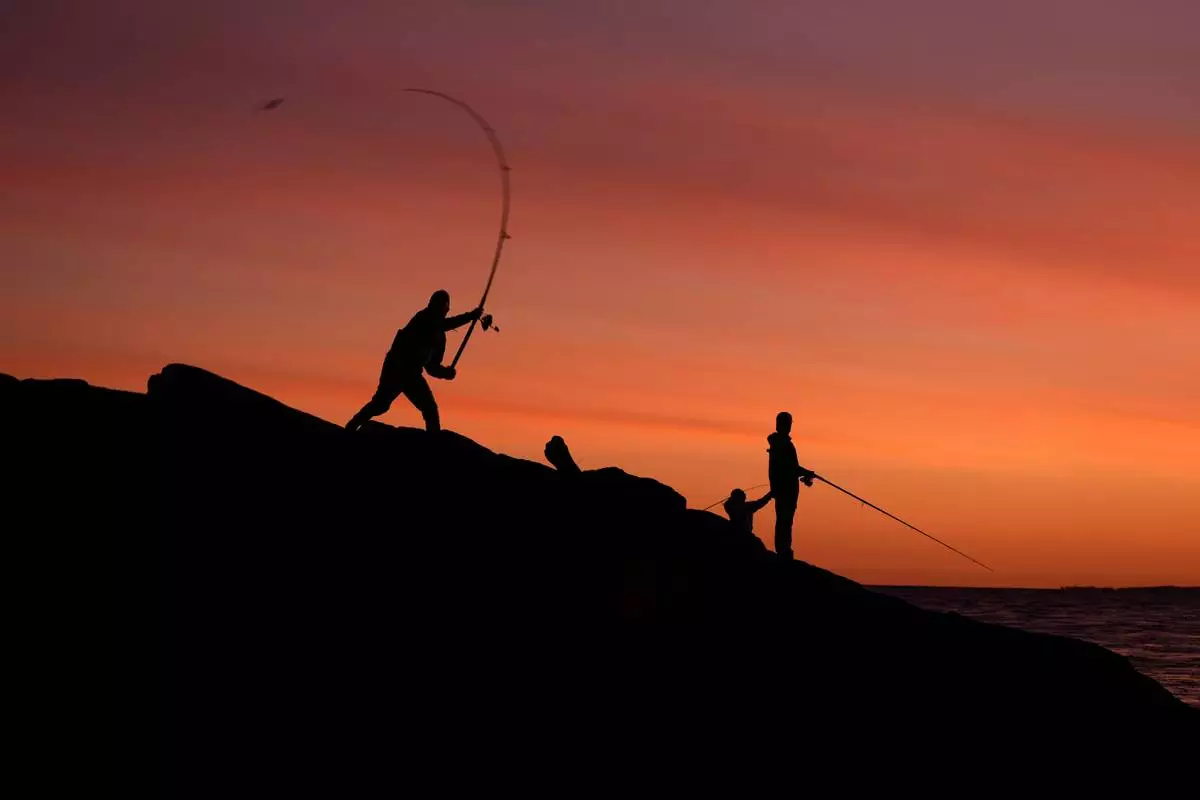
A striped bass fisherman casts his lure at dawn Saturday, Oct. 10, 2026, in Montauk, N.Y. (AP Photo/Robert F. Bukaty)