Skip to Content Facebook Feature Image

Iran says "enemy" USV struck, "violating" tankers caught fire in Hormuz Strait

China

China

China

Iran says "enemy" USV struck, "violating" tankers caught fire in Hormuz Strait

2026-10-31 09:40 Last Updated At:17:15

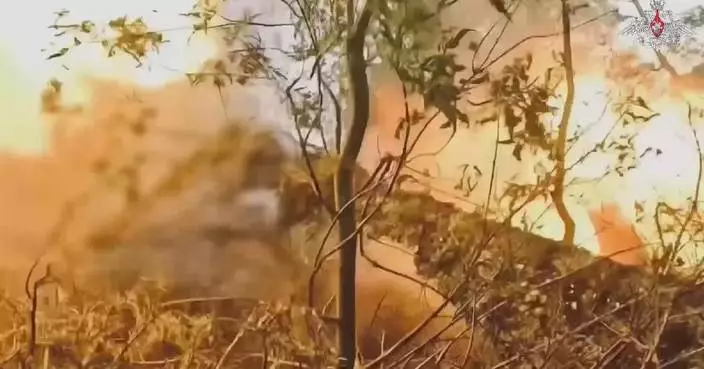
Iran said on Friday that its forces had struck an "enemy" unmanned surface vehicle (USV) east of the Strait of Hormuz and that four "violating" oil tankers were damaged or caught fire in separate incidents in the strategic waterway.

The Iranian Army's Navy said in a statement that its forces destroyed the USV as it was operating east of the strait, according to the army's website. It added that two "violating" oil tankers, which had turned off their tracking systems and, after repeatedly ignoring Iran's radio warnings, entered the "forbidden and unsafe" regions east of the waterway, were damaged after striking naval mines and caught fire.

Separately, the navy of Iran's Islamic Revolution Guard Corps (IRGC) said in a statement on Friday that two "violating" oil tankers, one east of the strait and the other west, with U.S. military support, sought to cross the waterway through the "unauthorized" route and were stopped in the strait's southern waters after earlier incidents.

In another statement the same day, the IRGC Navy said a supertanker carrying more than 2 million barrels of crude oil hit a naval mine on an unauthorized route in the Strait of Hormuz, exploded and caught fire.

Later in the day, the IRGC Navy said a fourth oil tanker exploded and caught fire while violating rules in the Strait of Hormuz after ignoring its radio warnings.

Iran warned the enemy that any action, infiltration or provocation in areas under the jurisdiction of the Iranian Armed Forces would face a strong counterattack from the Iranian Navy.

On Feb. 28, Israel and the United States launched joint attacks on Tehran and other Iranian cities. Iran responded with missile and drone attacks targeting Israel and U.S. bases and assets in the region, and tightened its grip on the Strait of Hormuz.

Iran says "enemy" USV struck, "violating" tankers caught fire in Hormuz Strait

Iran says "enemy" USV struck, "violating" tankers caught fire in Hormuz Strait

Iran says "enemy" USV struck, "violating" tankers caught fire in Hormuz Strait

Iran says "enemy" USV struck, "violating" tankers caught fire in Hormuz Strait

Iran says "enemy" USV struck, "violating" tankers caught fire in Hormuz Strait

Iran says "enemy" USV struck, "violating" tankers caught fire in Hormuz Strait
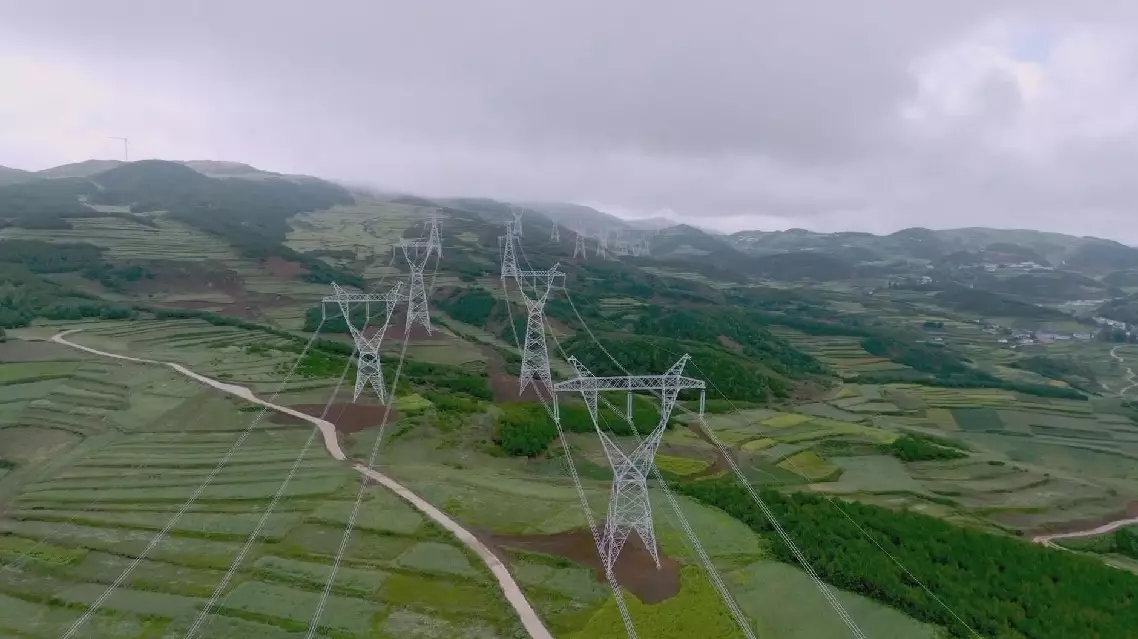
China's total electricity consumption exceeded 8 trillion kilowatt-hours in the first three quarters with stable grid operations, while residential power use edged down due to a high base from last year's extreme heat, the National Energy Administration (NEA) said Friday.

Total power consumption reached 8.07 trillion kilowatt-hours from January to September, up 3.9 percent year on year. Electricity use in the primary, secondary and tertiary industries grew 3.4 percent, 4.1 percent and 6.8 percent, respectively, while residential electricity consumption fell 0.3 percent.

"In the January-September period, residential electricity consumption declined. This was mainly because 2025 was China's most extreme high-temperature year since 1961, creating a significantly high baseline for cooling loads last summer. During this year's summer period, the national average temperature was lower than a year earlier, with more typhoons making landfall, staying longer and bringing broader rain belts. The cooler temperatures reduced cooling loads in the third quarter, driving down residential electricity use," said Xing Yiteng, deputy director of the Department of Development and Planning at the National Energy Administration.

Power usage patterns showed a clear divergence between old and new growth drivers, with high-tech sectors becoming the primary drivers of overall electricity growth. In the first three quarters, declines in industrial electricity consumption were mainly concentrated in real estate and energy-intensive industries, with cement, glass and construction down 8.1 percent, 10.7 percent and 8.7 percent, respectively.

By contrast, electricity use in high-tech and equipment manufacturing combined expanded by nearly 10 percent, while internet data services and EV charging and battery-swapping services jumped 41.6 percent and 55.4 percent, respectively, maintaining strong momentum.

China's power consumption tops 8 trillion kWh in Q1-3: NEA

China's power consumption tops 8 trillion kWh in Q1-3: NEA

Recommended Articles