WASHINGTON (AP) — There's been a lot of talk this midterm election season about socialism, but only a handful of candidates running for Congress actually align with the far-left wing of the party or consider themselves part of the Democratic Socialists of America.
Most of these candidates come from a few Democratic strongholds, and several toppled seasoned incumbents in hard-fought primary campaigns. They are expected to win their elections on Nov. 3, and would join two democratic socialists already in the House.
The progressive newcomers bring a new energy to the Democratic Party and also potential challenges for leadership, regardless of whether Democrats or Republicans hold the House majority, for the final two years of President Donald Trump's term.
While Republicans have raised alarm bells over socialism, the warning may not pack the punch it once did, particularly among Democrats. These candidates wouldn't be the first democratic socialists on the national scene. The election of New York's Mayor Zohran Mamdani, the rise of Rep. Alexandria Ocasio-Cortez, D-N.Y., and the enduring influence of Sen. Bernie Sanders of Vermont all speak to shifting ideas in American politics.
Here's a look at some of the candidates potentially coming to Congress.
Chevalier was a community organizer and a field staffer for Mamdani’s mayoral campaign who landed an upset victory over long-serving Rep. Adriano Espaillat in upper Manhattan and the Bronx.
A newcomer to politics who formally became a democratic socialist last year, Chevalier centered her campaign on the idea that government — and her opponent — had abandoned the working class. She argued Congress needs fresh faces to challenge the status quo.
“I think folks are really tired of politics that seems more beholden to donors,” she told The Associated Press hours before she won her primary.
Chevalier once helped organize pro-Palestinian protests at Columbia University and made opposition to Israel’s “genocide” in Gaza the cornerstone of her campaign. She was arrested last month during a protest of Israeli Prime Minister Benjamin Netanyahu’s speech at the United Nations General Assembly in Manhattan.
Kiros, a lawyer turned doctoral student, won a stunning primary victory, the first-time candidate beating 30-year incumbent Rep. Diana DeGette in the Denver-area seat.
The 29-year-old, an immigrant from Ethiopia whose family relocated to Colorado after she was born, earned a bachelor's degree in political science and economics from Washington College in Maryland, and her law degree from the University of Notre Dame. She was working as an attorney in New York City before running for Congress as a democratic socialist.
Taking to a stage under a sign that read “Power to the People,” Kiros laid out her plans in a victory speech: taking the fight to “Donald Trump and the oligarchy,” abolishing U.S. Immigration and Customs Enforcement, passing Medicare for All and ending the “genocide in Palestine.”
“This is a movement,” Kiros said. “We are just getting started.”
The 34-year-old McKinney overcame a major spending disadvantage in the Democratic primary to unseat Rep. Shri Thanedar in a Detroit-area congressional district.
McKinney, a Michigan state lawmaker, ran a grassroots campaign focused on reforming utility costs, backing Medicare for All, and getting money out of politics.
“No longer can our party continue to serve two masters,” McKinney said at an event in August. “It’s up to us to push our party to either fight for the working people, or continue to fight for the corporate oligarchs.”
McKinney has described himself as a democratic socialist and was endorsed by the Democratic Socialists of America.
Rabb has served 10 years in the Pennsylvania state House of Representatives, bringing a provocative style of politics as one of the chamber’s most progressive and outspoken members. The Ivy League-educated Rabb won a four-way primary in a heavily Democratic Philadelphia district.
Rabb has said that he joined the Philadelphia chapter of the Democratic Socialists of America in 2026, but that he traces his involvement with a constellation of progressive groups and causes. He ran on progressive issues in the primary, with an emphasis on the corrosive role of money in politics.
“I believe that the Democratic Party listens more to people who fund it than the people who actually come out to vote," he said. "And as a result, there’s this huge disconnect between the people closest to the pain and the people closest to the purse.”
He supported abolishing U.S. Immigration and Customs Enforcement, imposing a moratorium on data centers and passing a Medicare for All health care subsidy. He also supported creating new government-run grocery stores — to wipe out “food deserts” — and expanding federal minimum wage law to eliminate a lower tipped minimum wage and cover independent contractors such as gig workers.
Valdez is a state lawmaker and part of a slate of Mamdani-backed progressives in New York elections this year. She beat the handpicked successor to retiring Rep. Nydia Velazquez in the Democratic primary for a sprawling, gentrified district in Brooklyn and Queens, and is expected to sail through to Congress this fall, given the district’s deep-blue bent.
She cast herself as a booster of Mamdani’s agenda in Washington and campaigned heavily on affordability and generational change, promising to bring the fight to Trump and champion the working class from Congress.
A member of the New York City chapter of the DSA since 2019, Valdez has said she hopes to prove the buzz around Mamdani’s election wasn’t a flash in the pan but instead signaled a burgeoning populist shift in the Democratic Party.
“Right now there’s really mass dissatisfaction with the way the party leadership has been operating and not standing up strongly enough to Trump,” Valdez told The Associated Press earlier this year.
Several other candidates align with the party's left wing but are not necessarily DSA members. Additionally, some democratic socialist candidates remain locked in tight election contests.
Adam Hamawy, an Army veteran and medical doctor, running in a safe Democratic district in New Jersey, has said he’s not a member of the DSA but that he would ally himself with people who support getting corporate money out of politics.
“They’re getting attacked again by fearmongering, which is really always the last resort when you have nothing to talk about,” he said in an interview with journalist Chris Hedges.
In California, Angela Gonzales-Torres is a democratic socialist running to unseat Rep. Jimmy Gomez in the Los Angeles district. And in Michigan, climate activist and former DSA member William Lawrence is looking to defeat GOP Rep. Tom Barrett in one of the nation’s most competitive seats.
Associated Press writers Lisa Mascaro, Anthony Izaguirre, Joey Cappelletti, Jesse Bedayn, Marc Levy and Mike Catalini contributed to this report.
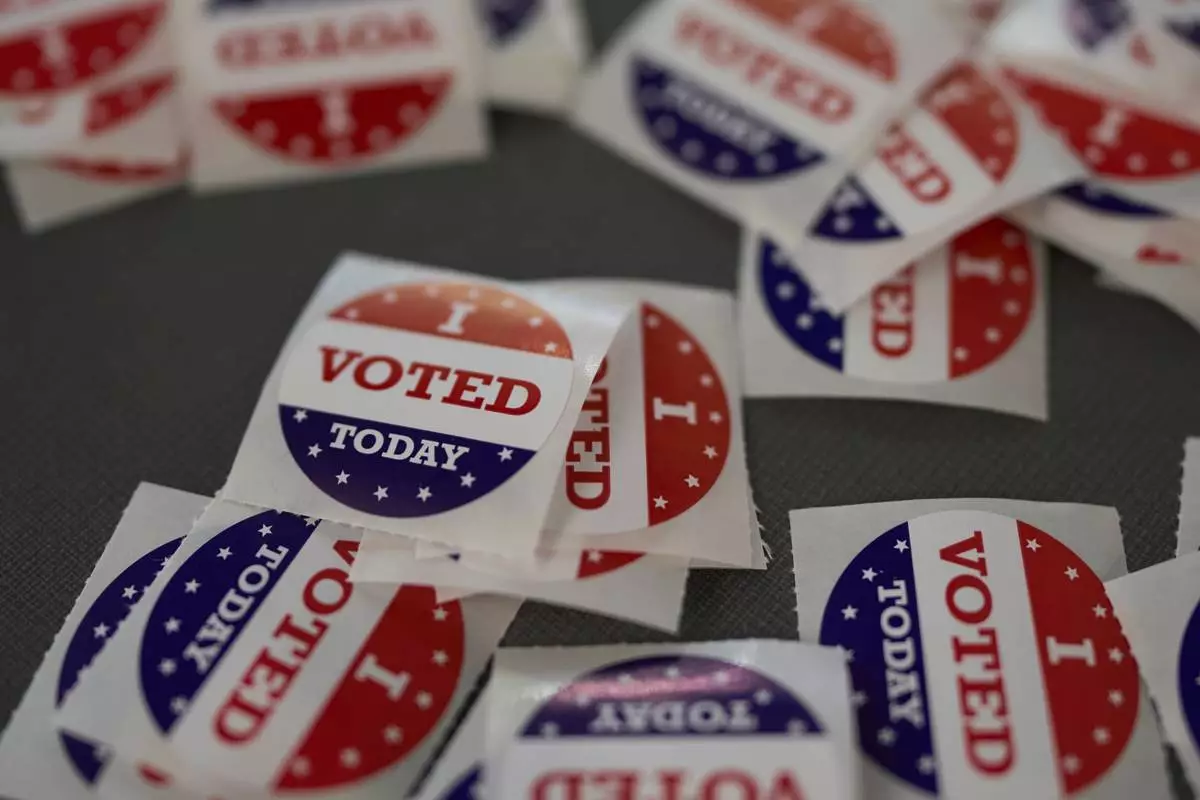
I Voted stickers are seen at an early voting polling place Friday, Oct. 23, 2026, in Nashville, Tenn. (AP Photo/George Walker IV)
ANCHORAGE, Alaska (AP) — The U.S. Department of Justice pushed Friday for a court order to isolate certain Alaska ballots to investigate potential voter confusion, while federal officials confirmed the existence of a criminal probe over a Senate candidate who shares a name with the Republican incumbent.
The dueling developments came days before Tuesday's ranked choice general election, in a race headlined by two-term Republican Sen. Dan Sullivan and Democratic former U.S. Rep. Mary Peltola. The race is among a handful nationwide expected to determine control of the Senate.
Alaska U.S. Attorney Michael Heyman told reporters in Anchorage that the investigation has been ongoing for several months, but recent revelations from The New York Times that Peltola’s campaign appeared to be involved in recruiting retired teacher Dan J. Sullivan have resulted in a “significant surge of law enforcement assets to Alaska.”
Separately, the Justice Department — as part of a lawsuit it filed last week — asked a judge to order that state elections officials isolate ballots ranking Dan J. Sullivan to investigate potential voter “confusion” with the senator. The owner of a boat dealership in the candidate's hometown of Petersburg who had donated to his campaign told The Associated Press that an FBI agent visited the business and wanted to know whether he had been misled by Dan J. Sullivan's candidacy. He said he had not and that “Everybody knows who the incumbent is.”
Alaska Assistant U.S. Attorney E. Bryan Wilson, in a filing, said the government “seeks to preserve and segregate all ballots ranking Daniel J. Sullivan for the purposes of investigating whether such ranking was the product of voter confusion, should such an investigation become necessary.”
The Department of Justice also filed with the court a list of proposed questions it seeks to compel the Peltola campaign and the Democratic Senatorial Campaign Committee to answer as part of the civil case seeking to block certification of the Senate race if the incumbent loses. President Donald Trump has said he told the department to file the case.
Peltola denied Thursday that she knew anything about the effort to put Dan J. Sullivan on the ballot: “I am not interested in tricking voters,” she said.
Democrats, including the DSCC, have repeatedly denied that they were involved in any campaign trick. Dan J. Sullivan has long denied he was running at Democrats’ behest.
The request to segregate the ballots in Alaska comes after the 9th U.S. Circuit Court of Appeals rejected the Justice Department’s request for California to set aside disputed ballots received in the midterm election sent to some 20,000 people the administration contends may not be U.S. citizens. California officials argued the list is highly unreliable and most likely includes many people who are U.S. citizens.
Justice Department attorneys in the Alaska case said there is a “substantial risk” that Dan J. Sullivan's candidacy “will mislead voters and ultimately result in an electoral process that lacks integrity.”
“To guard against this danger, the United States seeks an order directing Defendants to preserve and segregate all ballots ranking Daniel J. Sullivan for the purposes of investigating whether such ranking was the product of voter confusion, should such an investigation become necessary,” the filing states. It requests a decision by Monday.
Attorneys for the state in response questioned how segregation would be possible, writing that voters' ballots are commingled in the ballot box on Election Day and that election workers couldn't segregate ballots ranking Dan J. Sullivan without violating ballot secrecy protections. Ballots segregated or not wouldn't reveal any voter's reason for voting for Dan J. Sullivan, they said.
They have asked a judge to dismiss the case and said Alaska elections officials already took steps to distinguish the two Sullivans on the ballot. The senator is listed as Dan S. Sullivan, Republican and incumbent, while the challenger is listed as Daniel J. Sullivan Jr., with no party affiliation. That's also how they appeared on the August open primary ballot.
Attorneys for the state also have argued that Alaska’s ranked voting system further addresses concerns about potential confusion by allowing voters to rank both Sullivans.
Heyman on Friday would not say what potential crimes authorities are looking into or the targets of the probe, but asked members of the public to come forward with tips that could help investigators.
It’s highly unusual for Justice Department officials to publicly discuss a criminal investigation or even confirm its existence. The timing of the press conference is particularly notable given the Justice Department has had a longstanding practice of avoiding taking public steps in the weeks leading up to an election that could be perceived as attempting to influence a political outcome.
Trump during a rally late Friday in Florida said Peltola and Dan J. Sullivan should be prosecuted. He noted U.S. Attorney General Todd Blanche was in attendance and said, “He’s going to make his own decision.”
Trump, then addressing Blanche directly, said of decisions regarding the case, “Todd, please make your own,” and watched Blanche’s response.
Trump added: “OK, he said ‘yes.’”
Peltola, at a campaign rally in Anchorage late Friday, said she is “so deeply offended by these accusations about having any involvement with anyone else’s candidacy.” She said she doesn't need any help in winning the race outside of the support of voters.
She was asked before the rally if it was possible that someone on her campaign was involved in recruiting Dan J. Sullivan: “I have no idea,” she told KTUU. “I honestly have no idea.”
The Times story revealing the potential recruitment of Dan J. Sullivan was based partly on interviews with a former campaign manager, Elisa Rios, who was fired before the August primary. Asked about Rios by the station, Peltola said certain people are “gone for a good reason. If I could fire them again, I’d be happy to fire them again.”
Federal prosecutors this week issued dozens of grand jury subpoenas and requests to preserve records, a person familiar with the matter told The Associated Press.
Republican Alaska Gov. Mike Dunleavy said, following The New York Times' reporting, that he'd ordered an investigation into whether any violations took place.
Meanwhile, the Alaska Democratic Party has sued state elections officials, alleging absentee in-person voting sites did not open as advertised in some rural communities. The director of the Division of Elections in a letter dated Monday said the agency signs agreements with local or tribal offices to operate the sites and that most of the 18 highlighted had opened. A message seeking comment from the state Department of Law was not immediately returned.
Durkin Richer reported from Washington. Bohrer reported from Juneau, Alaska. AP reporter Will Weissert contributed from Washington.
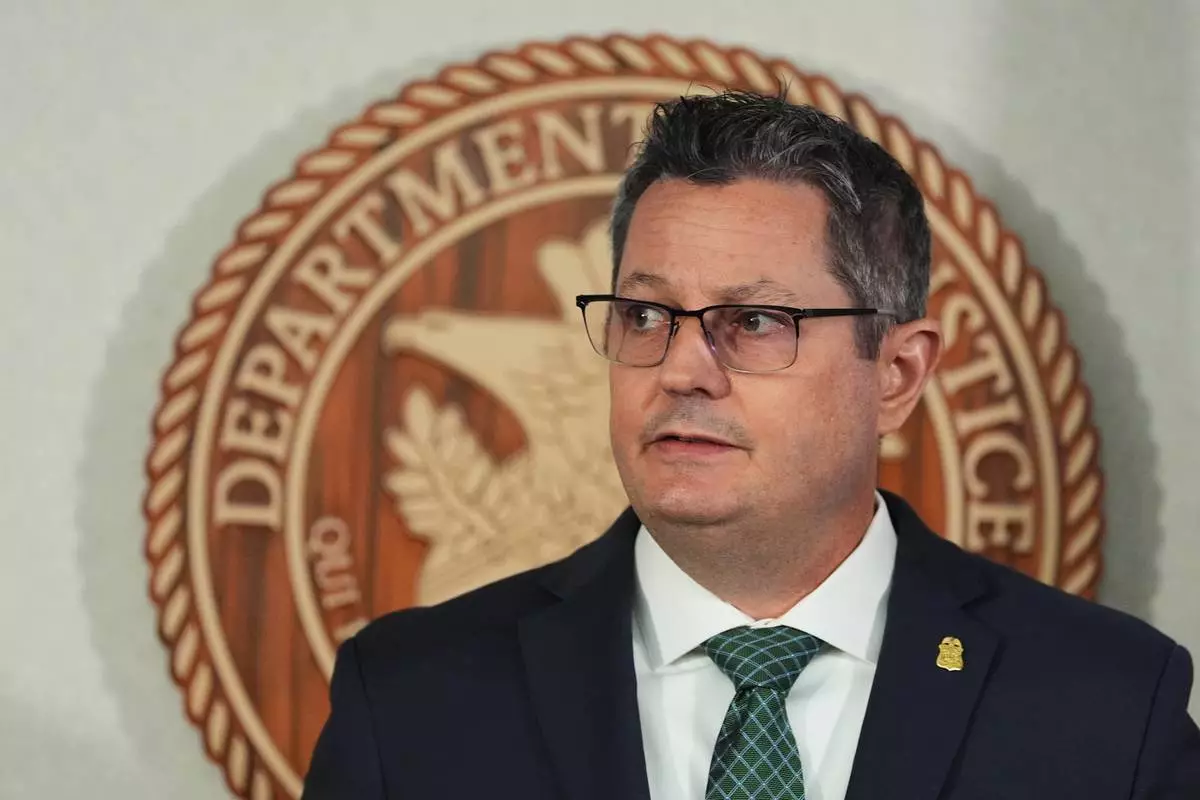
FBI Special Agent in Charge Matthew Schlegel of the Anchorage field office participates in a news conference on a criminal investigation related to an alleged scheme to confuse voters by putting a Senate candidate on the ballot with the same name as the Republican incumbent, at the James M. Fitzgerald U.S. Courthouse and Federal Building, Friday, Oct. 30, 2026, in Anchorage, Alaska. (AP Photo/Lindsey Wasson)
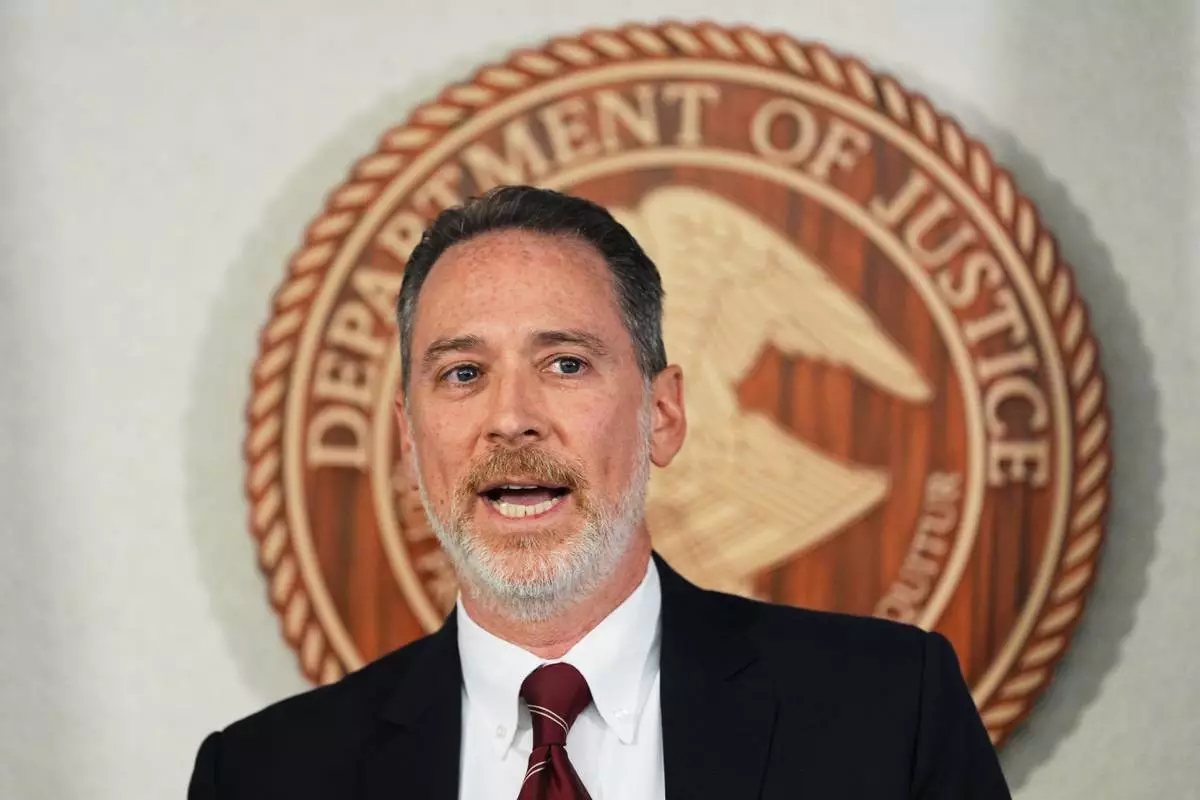
U.S. Attorney for the District of Alaska Michael J. Heyman holds a news conference on a criminal investigation related to an alleged scheme to confuse voters by putting a Senate candidate on the ballot with the same name as the Republican incumbent, at the James M. Fitzgerald U.S. Courthouse and Federal Building, Friday, Oct. 30, 2026, in Anchorage, Alaska. (AP Photo/Lindsey Wasson)
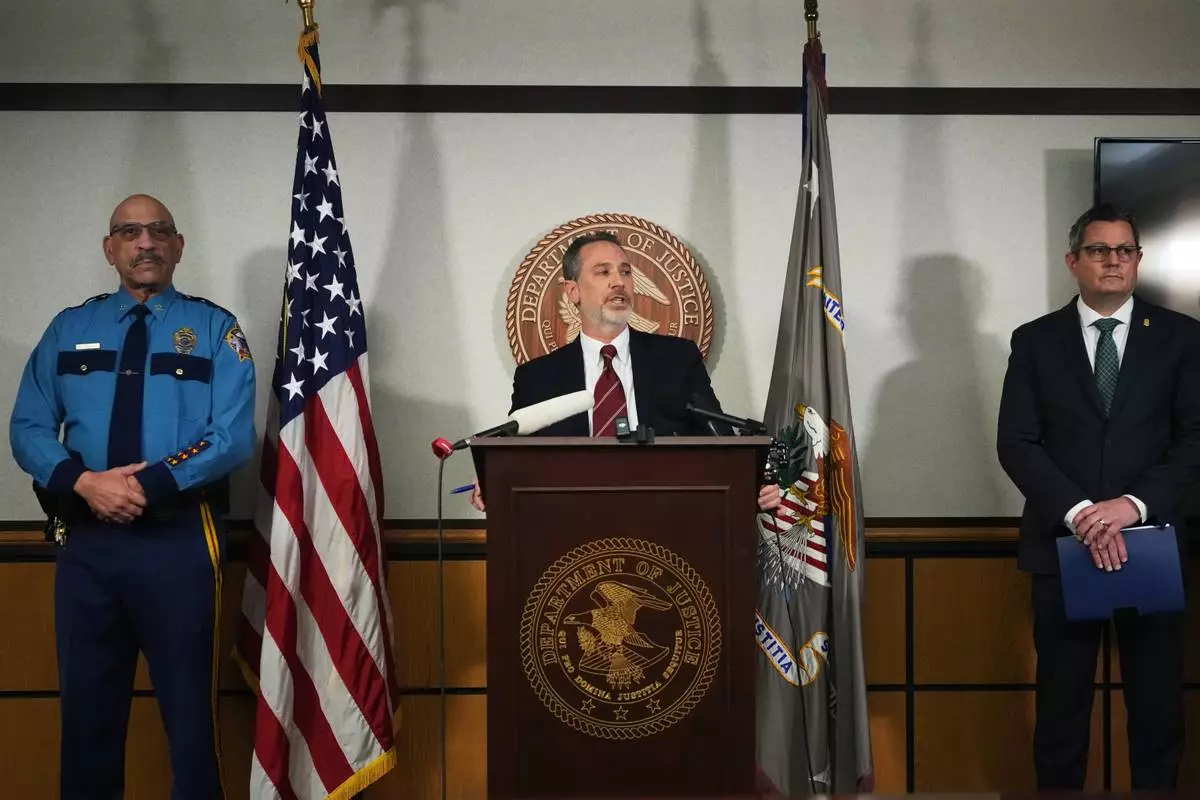
U.S. Attorney for the District of Alaska Michael J. Heyman holds a news conference on a criminal investigation related to an alleged scheme to confuse voters by putting a Senate candidate on the ballot with the same name as the Republican incumbent, at the James M. Fitzgerald U.S. Courthouse and Federal Building, Friday, Oct. 30, 2026, in Anchorage, Alaska. (AP Photo/Lindsey Wasson)

FILE - This combination photo shows Sen. Dan Sullivan, R-Alaska, left, in Palmer, Alaska, Aug. 17, 2026, and a candidate in Alaska's Senate race, Dan Sullivan, right, in Petersburg, Alaska, July 3, 2026. (AP Photos/Mark Thiessen/Becky Bohrer, File)
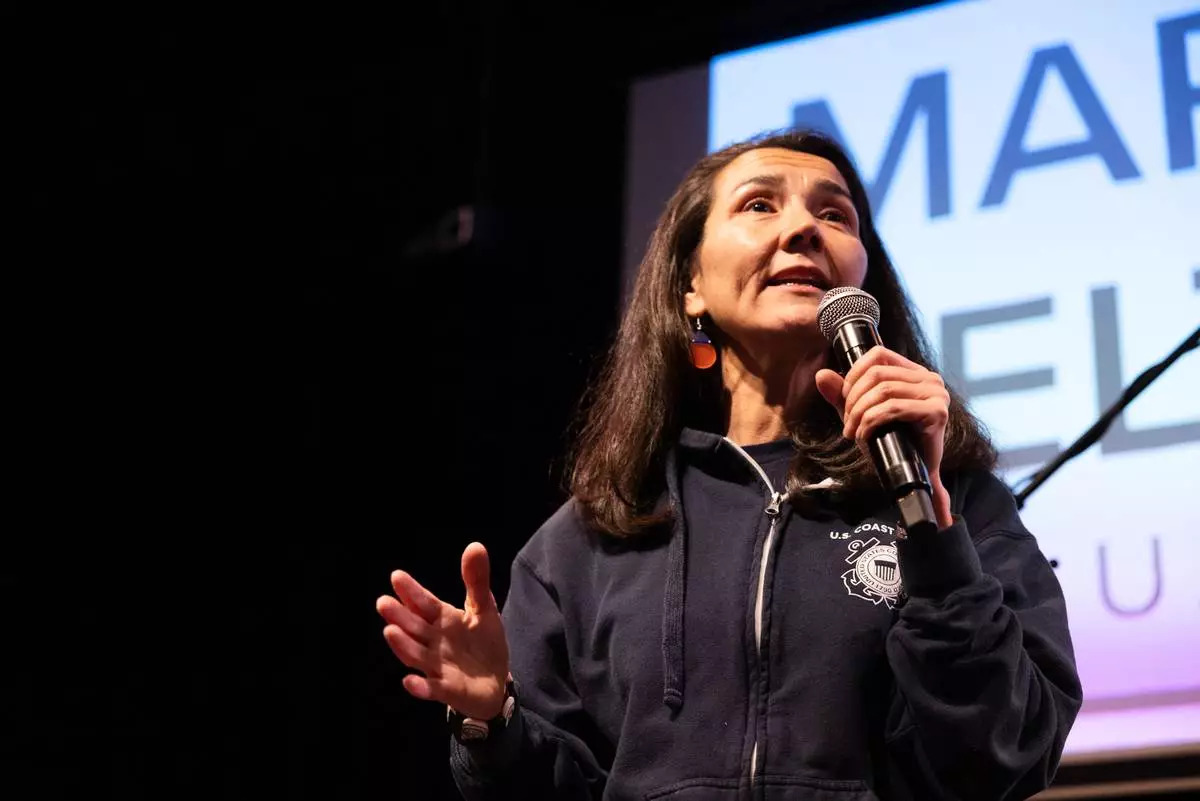
Democratic Senate candidate Mary Peltola speaks during a campaign event Thursday, Oct. 29, 2026, in Juneau, Alaska. (AP Photo/Chloe Anderson)
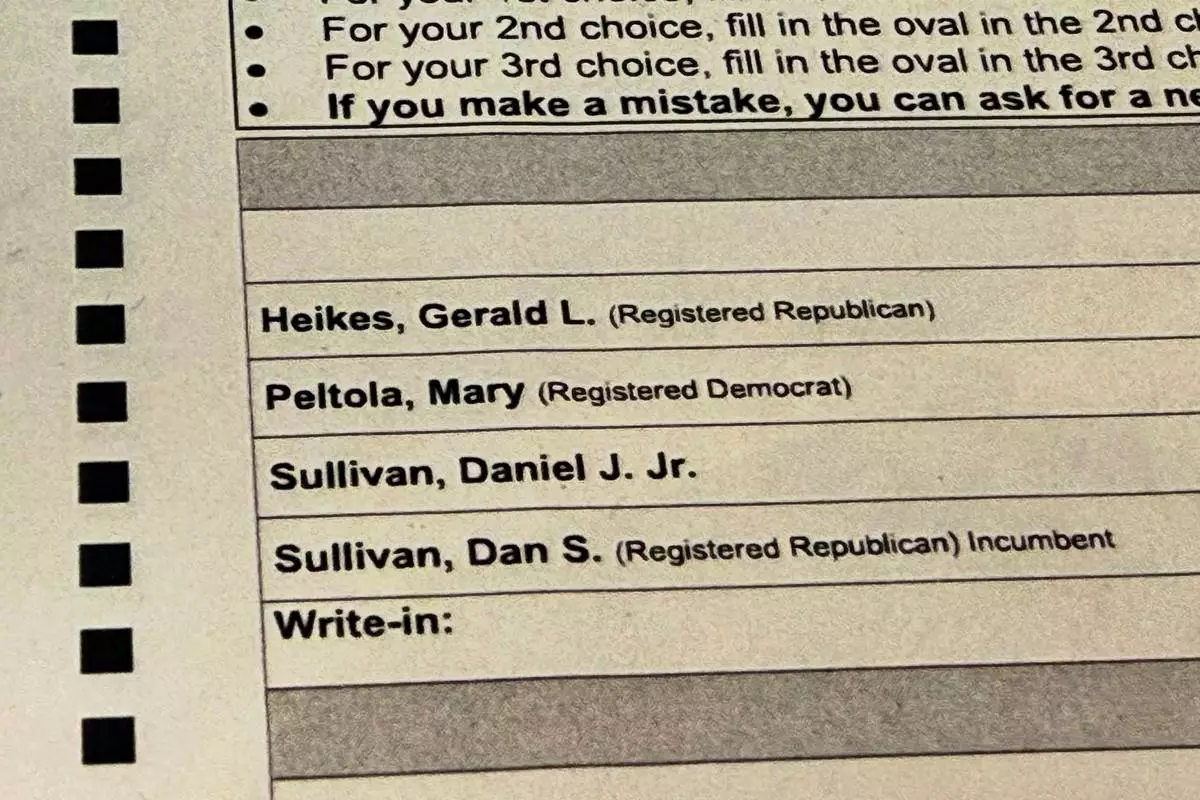
A sample election ballot is displayed in Anchorage, Alaska, on Friday, Oct. 23, 2026. (AP Photo/Haven Daley)