SAKHNIN, Israel (AP) — A Jewish ex-cop and self-described Zionist might seem an unlikely candidate to represent an Islamist party in Israel’s parliament.
But Yoav Segalovitz will soon be seated in the Knesset as a member of Ra’am, an Arab-led party that won eight seats in Tuesday's election.
Click to Gallery

Yoav Segalovitz, a former police investigator running with the Ra'am party, speaks during a campaign event in Tel Aviv, Israel, ahead of the country's general election, Friday, Oct. 23, 2026. (AP Photo/David Goldman)
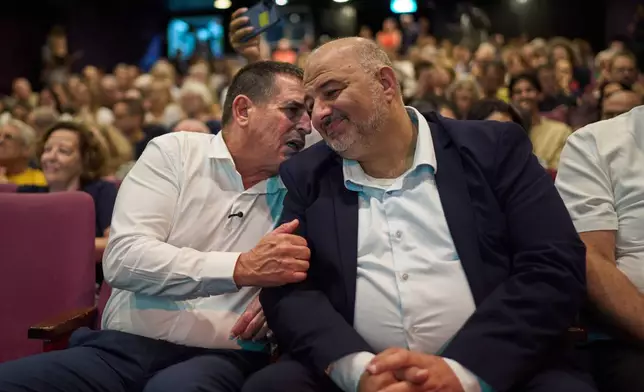
Mansour Abbas, right, leader of the Ra'am party, is joined onstage by Yoav Segalovitz, a former police investigator running second on the party's list, during a campaign event in Tel Aviv, Israel, Friday, Oct. 23, 2026. (AP Photo/David Goldman)

Israeli lawmaker Mansour Abbas, leader of the Ra'am party , centre, speaks to supporters after the release of the first exit poll results in Israel's general election in Sakhnin, Israel, Tuesday, Oct. 27, 2026. (AP Photo/Mahmoud Illean)
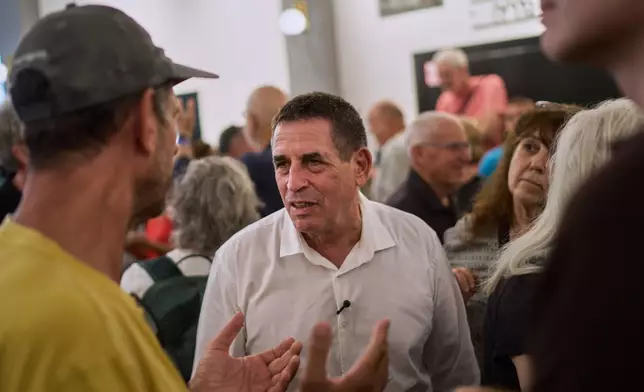
Yoav Segalovitz, a former police investigator running with the Ra'am party, speaks with attendees at a campaign event in Tel Aviv, Israel, Friday, Oct. 23, 2026, ahead of the country's general election. (AP Photo/David Goldman)

Yoav Segalovitz, a former police investigator running with the Ra'am party, speaks during a campaign event alongside Mansour Abbas, the party's leader, in Tel Aviv, Israel, Friday, Oct. 23, 2026, ahead of the country's general election. (AP Photo/David Goldman)
His decision to leave a centrist Jewish-led party and join a conservative Arab-led one has drawn curiosity and condemnation in Israel, where a key question after an inconclusive election is whether Arab-led parties will be embraced by other opponents of Prime Minister Benjamin Netanyahu to help oust him from power.
Segalovitz says the purpose of his partnership with Ra'am leader Mansour Abbas was to show that Jews and Arabs can build political coalitions across racial and religious divides.
“He’s Arab. I’m a Jew. I’m secular. He’s religious," he said of Abbas. "But we’re all citizens of Israel. We all take part in this society. If we want to get progress here, we must go in partnership together,” he said in an interview before the election.
Segalovitz was speaking about an alliance formed to help a small party win greater acceptance, but his words also have meaning within a broader debate that could determine the election's ultimate impact.
Arab-led parties won an unprecedented 18 seats in Israel’s 120-member Knesset and could play a decisive role in forming a majority in the next government — if the country’s Jewish-led opposition is willing to join hands with them.
In the banquet hall Tuesday night where Ra'am celebrated picking up three more seats in the Knesset, Segalovitz was the only politician who didn't address the crowd of supporters in Arabic. Few seemed to mind. Applause echoed off the walls as he declared, “Kulanu Yisraelim!” — Hebrew for “We are all Israelis!”
Not everyone agrees.
Right-wing critics said Segalovitz’s move betrayed Israel and paved the way toward Islamic law in the country. Some within the Joint List, the more left-wing Arab-led party, dismissed it as a branding exercise designed to appease mainstream parties rather than address issues facing Arab communities.
But both he and Abbas have said their union offers a different vision for Israel’s future while strengthening Ra’am’s case for inclusion in a governing coalition.
That's done little to stop Netanyahu and his allies, who attacked Ra’am before, during and after the election.
Netanyahu’s party was among those that petitioned to disqualify Ra’am from running. Campaigning on the slogan “Right or Palestine,” which rhymes in Hebrew, Netanyahu repeatedly warned that his top rival, former military chief Gadi Eisenkot, would partner with Abbas to secure a majority.
Netanyahu's party — which won more votes than any other even as its grip on power weakened — has also spread unsubstantiated claims that the election was “stolen” by Arab-led parties, something those parties have denied.
“Manifestations of incitement, racism, and exclusion are among the greatest threats to the resilience and strength of the State of Israel,” Segalovitz said Thursday on X.
With Netanyahu’s bloc unable to cobble together a majority, Segalovitz and Abbas' partnership has exposed a stark asymmetry in Israeli politics. An Arab-led party welcomed a Jewish lawmaker into its ranks, yet Jewish-led parties have thus far balked at forming a coalition with Arab-led parties to remove Netanyahu.
Only once has an Arab party joined a governing coalition, in 2021, and that government only lasted around 18 months.
In public, rather than court them, Eisenkot has set conditions for Arab-led parties, including that they profess that Israel is a Jewish and democratic state and declare that Hamas is a terrorist organization “to be demolished.”
As Ra’am’s leader, Abbas has acknowledged Israel as a Jewish state and repeatedly condemned Hamas’ Oct. 7, 2023, attack.
At a poolside campaign event in the Jewish-majority town of Caesarea the week before the election, he sidestepped a question about labeling Hamas a terrorist organization. He previously has described the question as a trap, a loyalty test set by extremists.
Palestinians who managed to stay in Israel after the 1948 war surrounding its creation, and their descendants, make up more than 20% of the population. They have Israeli citizenship and the right to vote. A majority are Muslim and many feel deep solidarity with Palestinians in Gaza and the West Bank.
Some Palestinian citizens have reached the highest echelons of business and politics in Israel. Yet many feel forsaken by authorities, with their communities marked by underinvestment and poverty. Their sense of exclusion and insecurity has grown during Netanyahu’s current term, as he and his far-right ministers have portrayed them as a threat.
For Segalovitz, they're part of Israel's pluralistic society, where people work alongside each other even when they don't share similar backgrounds.
The 67-year-old former police investigator makes no secret of his disagreements with Abbas on issues such as mandatory military service or LGBTQ rights. But he said showing that an Arab-led party can embrace a Jewish politician drawn from the political center is more important than any one issue.
That message resonated among Palestinian citizens who supported Ra'am, and it may have swayed some Jewish ones, too.
Irit Schenker, a restaurant consultant from Caesarea, said hearing Abbas and Segalovitz speak together convinced her to vote for Ra’am. A lifelong supporter of Israel’s left-wing parties, she said Jewish citizens needed to accept that they share their country with Palestinian citizens. If not, everyone would bear the costs of perpetual divisions.
“We can’t go on ignoring our problems. It’ll be a disaster,” Schenker said.
Segalovitz’s policing background is well-known and respected among Ra’am supporters.
Mazen Ghnaim, the mayor of the northern Israeli town of Sakhnin, said Segalovitz is viewed as effective, particularly in communities suffering from spikes in homicides and gang-related violence.
“He has the experience, and we’re also showing we can stand with Jews and be part of the next government,” Ghnaim, a Ra’am supporter, said.
Segalovitz acknowledged that his background was part of his appeal yet said his larger goal was to break down barriers harming Israeli society.
“We can’t just ignore 21% of the population. Arabs in Israel take part in everything. Just in politics there are walls,” he said. “We want to be part of the government and be responsible for what happens here in Israeli society.”
On election night as the results became clear, Abbas told a jubilant crowd of supporters that a majority of Israelis had voted against Netanyahu and his right-wing allies and had proved that peace, dignity and security could be on the horizon.
“Hundreds of thousands of Arab and Jewish citizens went against the tide and proved that Arabs and Jews here can be partners and cooperate with each other,” Abbas said.
Abbas and Segalovitz will be sworn in along with six other Ra’am lawmakers on Nov. 10. It could be weeks or even months before it is known whether they remain part of the Knesset’s opposition — or, in another improbable tie-up, get brought into the majority.
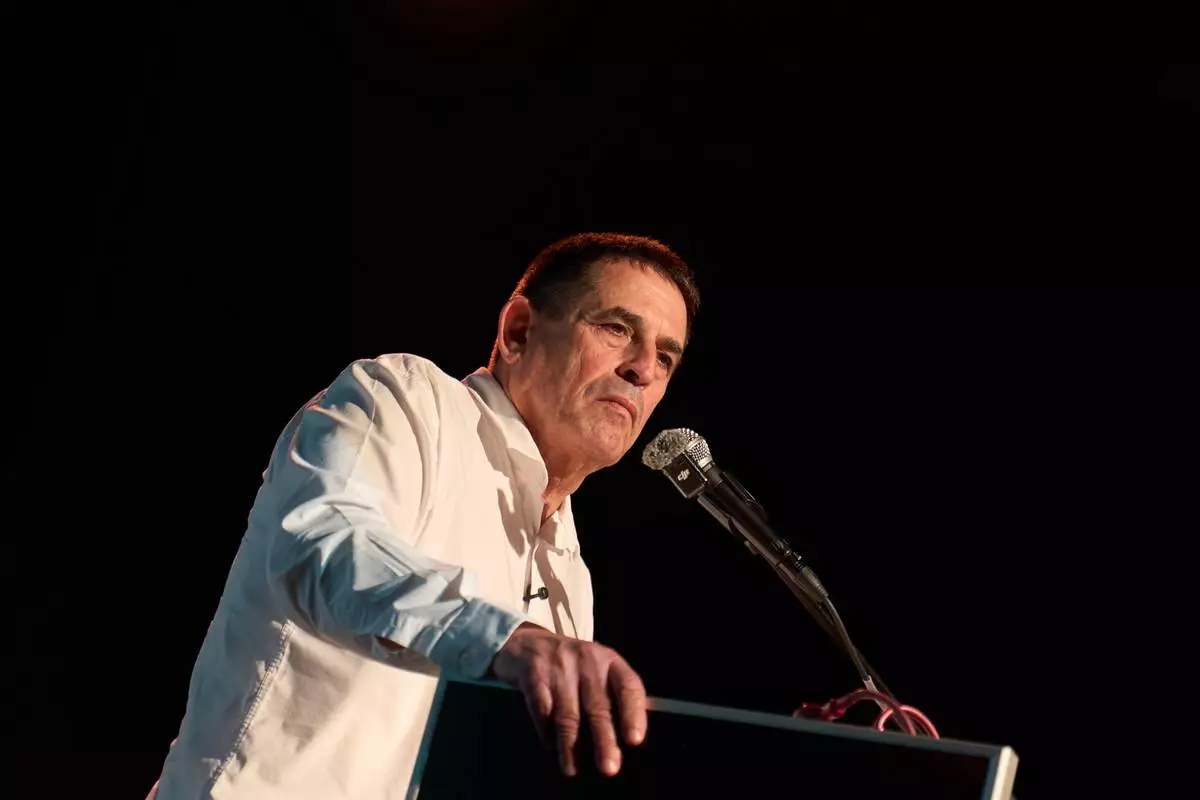
Yoav Segalovitz, a former police investigator running with the Ra'am party, speaks during a campaign event in Tel Aviv, Israel, ahead of the country's general election, Friday, Oct. 23, 2026. (AP Photo/David Goldman)
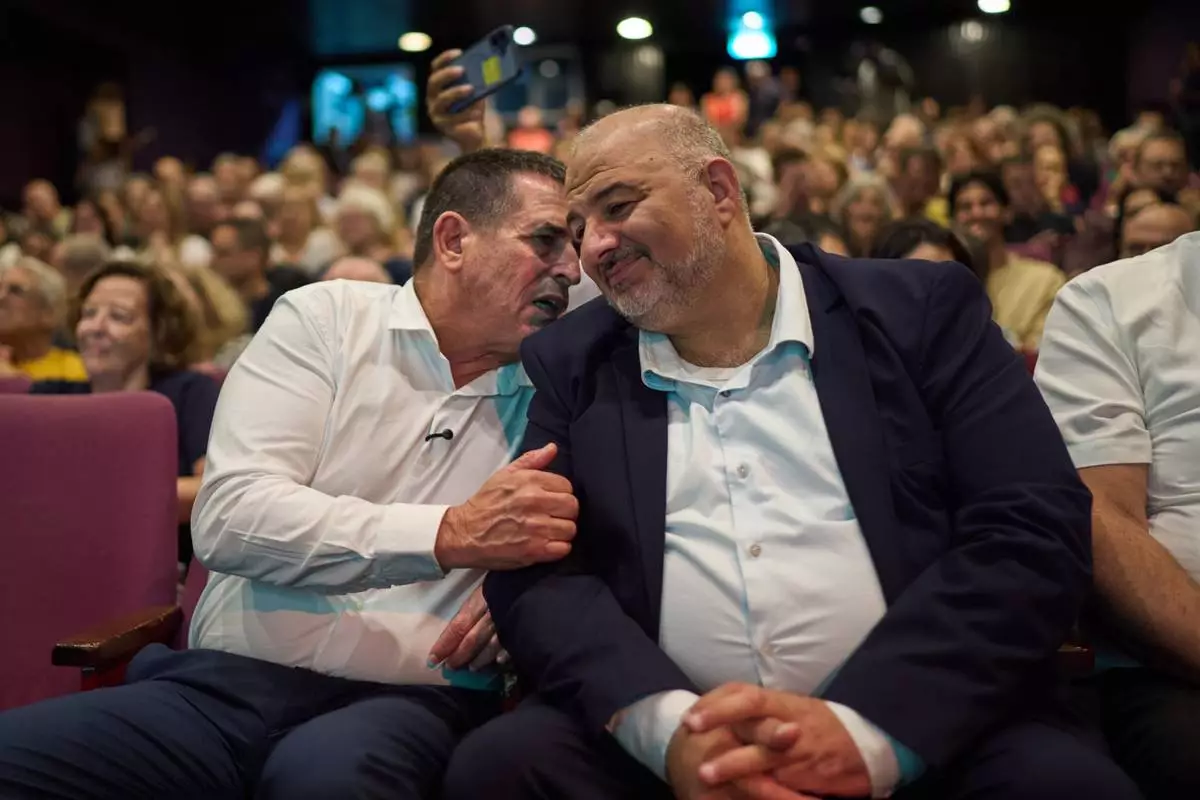
Mansour Abbas, right, leader of the Ra'am party, is joined onstage by Yoav Segalovitz, a former police investigator running second on the party's list, during a campaign event in Tel Aviv, Israel, Friday, Oct. 23, 2026. (AP Photo/David Goldman)
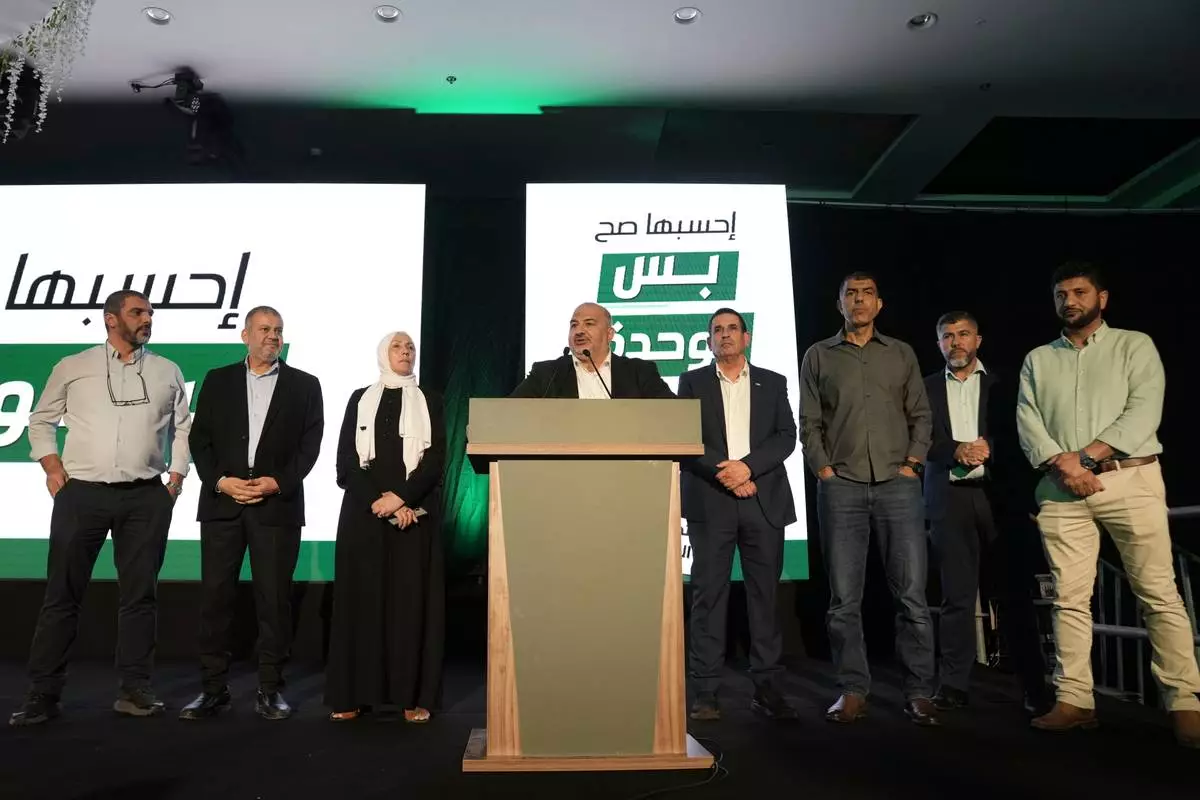
Israeli lawmaker Mansour Abbas, leader of the Ra'am party , centre, speaks to supporters after the release of the first exit poll results in Israel's general election in Sakhnin, Israel, Tuesday, Oct. 27, 2026. (AP Photo/Mahmoud Illean)
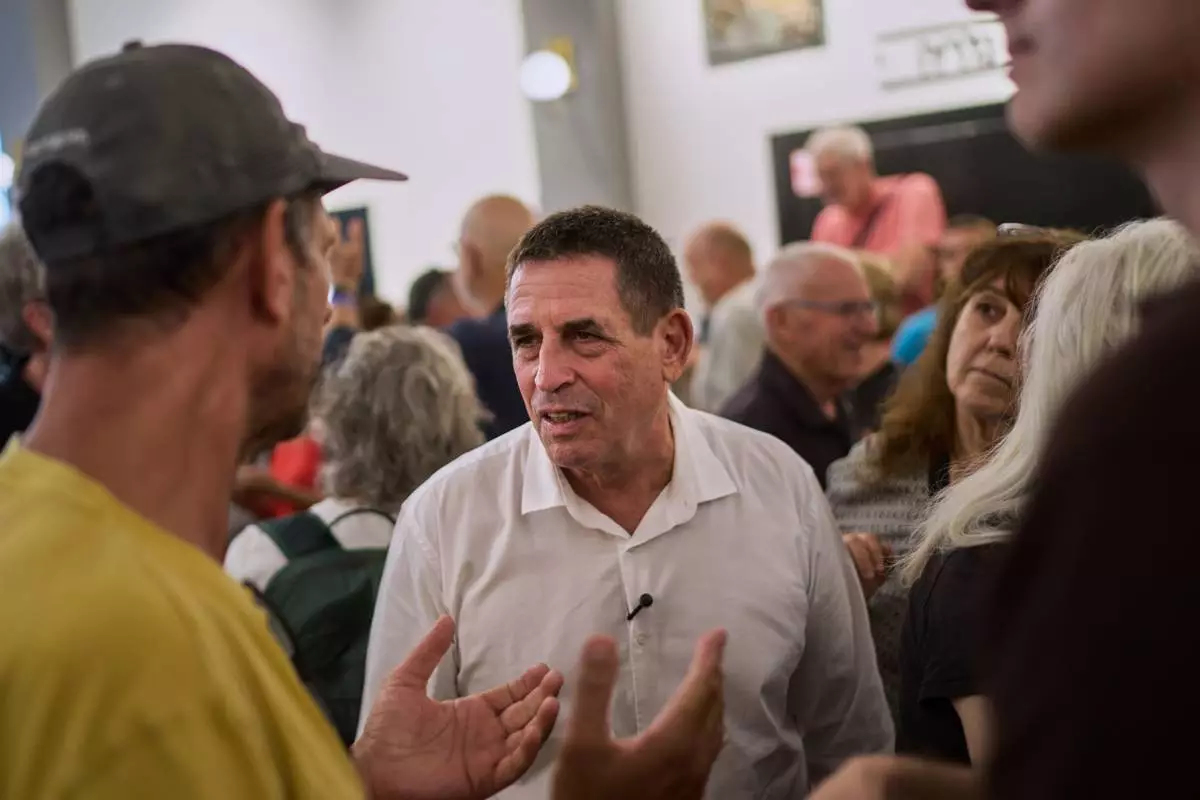
Yoav Segalovitz, a former police investigator running with the Ra'am party, speaks with attendees at a campaign event in Tel Aviv, Israel, Friday, Oct. 23, 2026, ahead of the country's general election. (AP Photo/David Goldman)

Yoav Segalovitz, a former police investigator running with the Ra'am party, speaks during a campaign event alongside Mansour Abbas, the party's leader, in Tel Aviv, Israel, Friday, Oct. 23, 2026, ahead of the country's general election. (AP Photo/David Goldman)