Hong Kong Customs detects drug trafficking case involving incoming passenger at airport
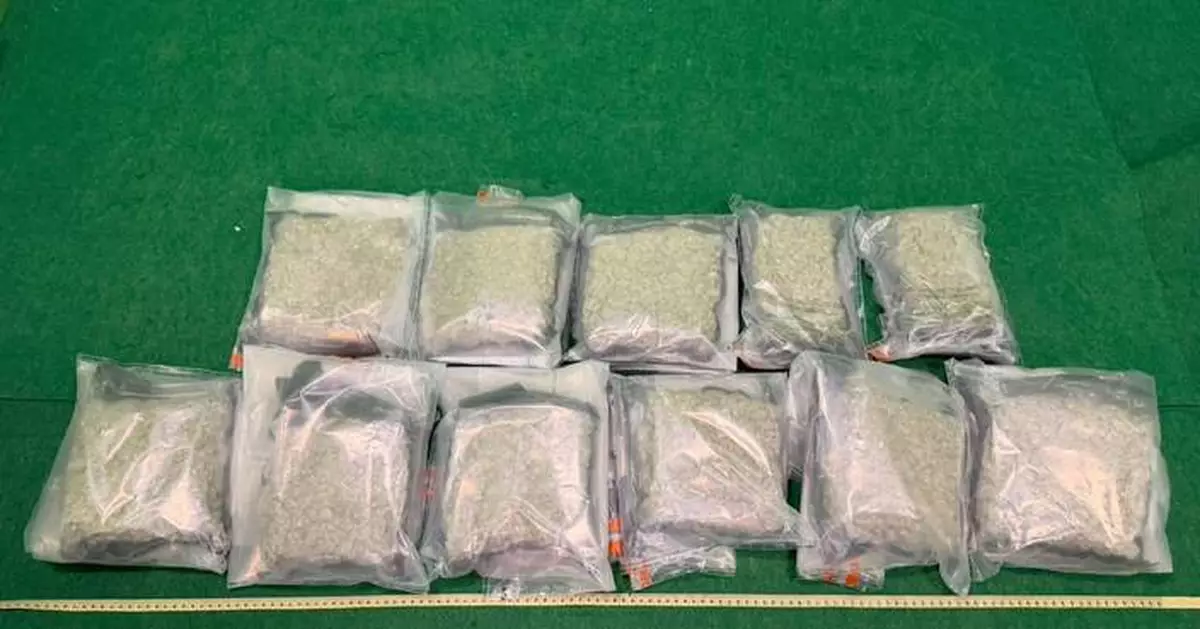
Hong Kong Customs today (October 31) detected a drug trafficking case involving an incoming air passenger at Hong Kong International Airport, and seized about 5 kilograms of suspected cannabis buds, with an estimated market value of about $1.1 million. A man was arrested.
A 37-year-old Mainland male passenger arrived in Hong Kong from Bangkok, Thailand, today. During customs clearance, Customs officers found the batch of suspected cannabis buds inside his carry-on suitcase. The man was subsequently arrested.
An investigation is ongoing.
Customs will continue to step up enforcement against drug trafficking activities through intelligence analysis. The department also reminds members of the public to stay alert and not to participate in drug trafficking activities for monetary return. They must not accept hiring or delegation from another party to carry controlled items into and out of Hong Kong. They are also reminded not to carry unknown items for other people.
Customs will continue to apply a risk assessment approach and focus on selecting passengers from high-risk regions for clearance to combat transnational drug trafficking activities.
Under the Dangerous Drugs Ordinance, trafficking in a dangerous drug is a serious offence. The maximum penalty upon conviction is a fine of $5 million and life imprisonment.
Members of the public may report any suspected drug trafficking activities to Customs' 24-hour hotline 182 8080 or its dedicated crime-reporting email account (crimereport@customs.gov.hk) or online form (eform.cefs.gov.hk/form/ced002).
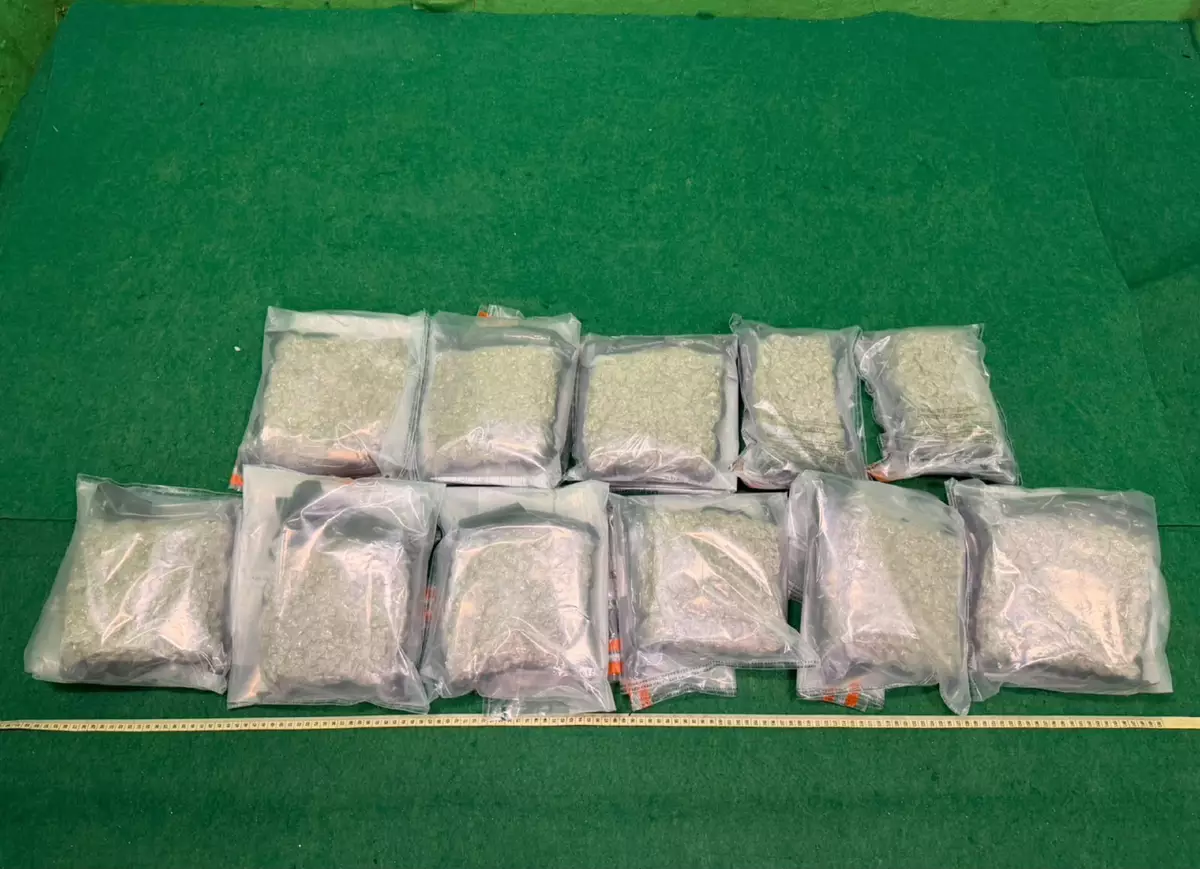
Hong Kong Customs detects drug trafficking case involving incoming passenger at airport Source: HKSAR Government Press Releases
CHP records case of severe paediatric influenza infection
The Centre for Health Protection (CHP) of the Department of Health today (October 31) recorded a severe case of paediatric influenza infection. The CHP urged the public,especially those in high-risk groups, not to underestimate the seasonal influenza and to receive vaccinations as early as possible. This is crucial for preventing severe cases of seasonal influenza and its complications, as well as protecting one's own health and that of their families. In addition, the public should maintain good personal and environmental hygiene at all times to prevent influenza and other respiratory illnesses.
The case involves a seven-year-old girl with underlying illness. She developed a runny nose, diarrhoea and abdominal pain on October 29. On October 30, she had a fever and convulsion and was brought to the Accident and Emergency Department of Tuen Mun Hospital. Her condition subsequently deteriorated and she was transferred to the hospital's paediatric intensive care unit for further treatment. Her respiratory specimen tested positive for influenza A (H1) virus. Her clinical diagnosis was influenza A infection complicated with septic shock. The patient is currently in critical condition.
The CHP's preliminary investigation revealed that the girl had no travel history during the incubation period and had not received the 2026/27 Seasonal Influenza Vaccination (SIV). Her household contacts have remained asymptomatic recently. Three of her classmates have recently developed mild flu-like symptoms without the need for hospitalisation. The CHP has advised the school to implement appropriate infection control measures and will continue to investigate the case.
"Hong Kong entered the influenza season in late June this year and the influenza season has lasted for four months by now. The latest surveillance data showed that the overall influenza activity showed signs of decline but remained above the baseline level. A cumulative total of 28 cases of severe paediatric influenza infection have been recorded in the current influenza season. Among these cases, 20 patients have recovered and been discharged from hospital, two are in stable condition, four are in critical condition and two have passed away," said the Controller of the CHP, Dr Edwin Tsui.
"Vaccine effectiveness begins to wane approximately nine months after vaccination. Therefore, the World Health Organization recommends receiving SIV every year. For most people, more than nine months have passed since they received last season's (2025/26) SIV. Hence, a decline in protection is inevitable. A decline in the overall population's herd immunity, coupled with the fact that the current influenza season has persisted at high levels for an extended period, has increased the likelihood of infection and severe complications among high-risk groups. Individuals who have contracted influenza earlier this influenza season but have not yet received the SIV should also get vaccinated promptly to protect against other circulating virus strains. Receiving SIV is the most effective way to prevent severe cases of seasonal influenza and its complications. SIV also reduces the risk of hospitalisation and death. Therefore, all people aged six months or above, except those with known contraindications, should receive SIV for personal protection as early as possible," he added.
The CHP's analysis of data from the previous year revealed that the rate of severe complications or death among unvaccinated children following influenza infection was approximately five times higher than that among vaccinated children. Among unvaccinated residents aged 65 years or older living in residential care homes for the elderly, the rate of severe complications was approximately four times higher than that among vaccinated residents.
The 2026/27 SIV programmes, including the SIV School Outreach Programme (SIVSOP), commenced on September 17. The SIVSOP this year has introduced a new Electronic Consent Form (e-consent form) feature via eHealth. This new measure not only enables the public to join the SIV Programmes but also streamlines the administrative procedures for healthcare service providers and schools, so that SIV outreach activities can start as early as possible. About 1 600 schools have organised SIV outreach activities. SIV outreach activities are expected to be completed by mid-December, about two weeks earlier than last year.
The health condition of children with influenza can deteriorate rapidly. Parents must pay close attention to their condition and visit an accident and emergency department immediately if the child's condition deteriorates with symptoms such as shortness of breath, wheezing, blue lips, chest pain, confusion, a persistent fever or convulsions. Members of the public should seek medical attention as soon as possible if they develop respiratory symptoms. If they live with members of high-risk groups, such as children, the elderly and those with underlying illnesses or compromised immune systems, they should wear a surgical mask at home to reduce the risk of infecting them. Other effective ways to reduce the spread of the disease include maintaining household hygiene, frequently cleaning and disinfecting frequently touched surfaces, practising good hand hygiene, and ensuring proper indoor air circulation.
Members of the public may refer to the CHP'sCOVID-19 & Flu Express,Seasonal Influenza WebpageandVaccination Schemesfor the latest information.
Source: AI-found images