Skip to Content Facebook Feature Image

NASA telescope is on the verge of plunging back to Earth after failed rescue mission

News

NASA telescope is on the verge of plunging back to Earth after failed rescue mission
News

News

NASA telescope is on the verge of plunging back to Earth after failed rescue mission

2026-10-31 20:03 Last Updated At:20:10

CAPE CANAVERAL, Fla. (AP) — An aging NASA telescope is barely clinging to space after a failed rescue effort left it tottering lower and lower.

The U.S. Space Force predicts the Swift Observatory will come crashing down on or around Friday.

Most of the 1 ½-ton telescope is expected to burn up in the atmosphere. But a handful of pieces made of denser-than-lead tungsten and some mirror parts could survive reentry, according to NASA's Brad Cenko, the mission’s chief scientist.

Any surviving wreckage will most likely plunge into the ocean. But swaths of Africa, Australia, India, Southeast Asia, and Central and South America are within the reentry zone. The Space Force is tracking the telescope’s dwindling path.

Its cosmic cremation has the Swift team mourning yet full of gratitude for the observations the telescope made during its 22 years in orbit. Swift blasted off on Nov. 20, 2004, to search for some of the biggest explosions in the universe: gamma ray bursts and supernovas.

“We’ve known this day would come since before Swift was launched. At least in low-Earth orbit, what goes up must come down. And that end is catastrophic,” said Pennsylvania State University’s John Nousek, an astronomer who led the control team.

Intense solar activity over the past few years dragged Swift down faster than usual. NASA hired Katalyst Space a year ago to mount a rush rescue. But the company’s three-armed robot named Link ran into trouble after launching in July and got no closer than 7 miles to 9 miles (12 kilometers to 15 kilometers) to the telescope. Link plunged back to Earth in September.

Swift resumed observations once the rescue attempt was called off, discovering even more gamma ray bursts and other ultrahigh-energy events. But by late October, the telescope was too low to remain steady for observations, and its systems were shut down.

Its final tally: more than 2,000 gamma ray bursts and 1,400 exploding stars, not to mention a slew of comets, asteroids and star-shredding black holes. The telescope’s superpower was its ability to swivel swiftly — thus its name — toward erupting celestial events.

NASA considered Swift a first responder for the Hubble and Webb space telescopes and others that would follow its alerts and provide deeper investigations. Scientists are still figuring out how to fill the gap.

“Our fervent hope is that the lessons learned by the successes of Swift can be applied to new generations of space missions to accelerate our discoveries about the universe,” Nousek said in an email.

The Associated Press’ health and science coverage receives financial support from the AP Fund for Journalism and private foundations. AP is solely responsible for all content. Find AP’s standards for working with philanthropies, a list of supporters and funded coverage areas at AP.org
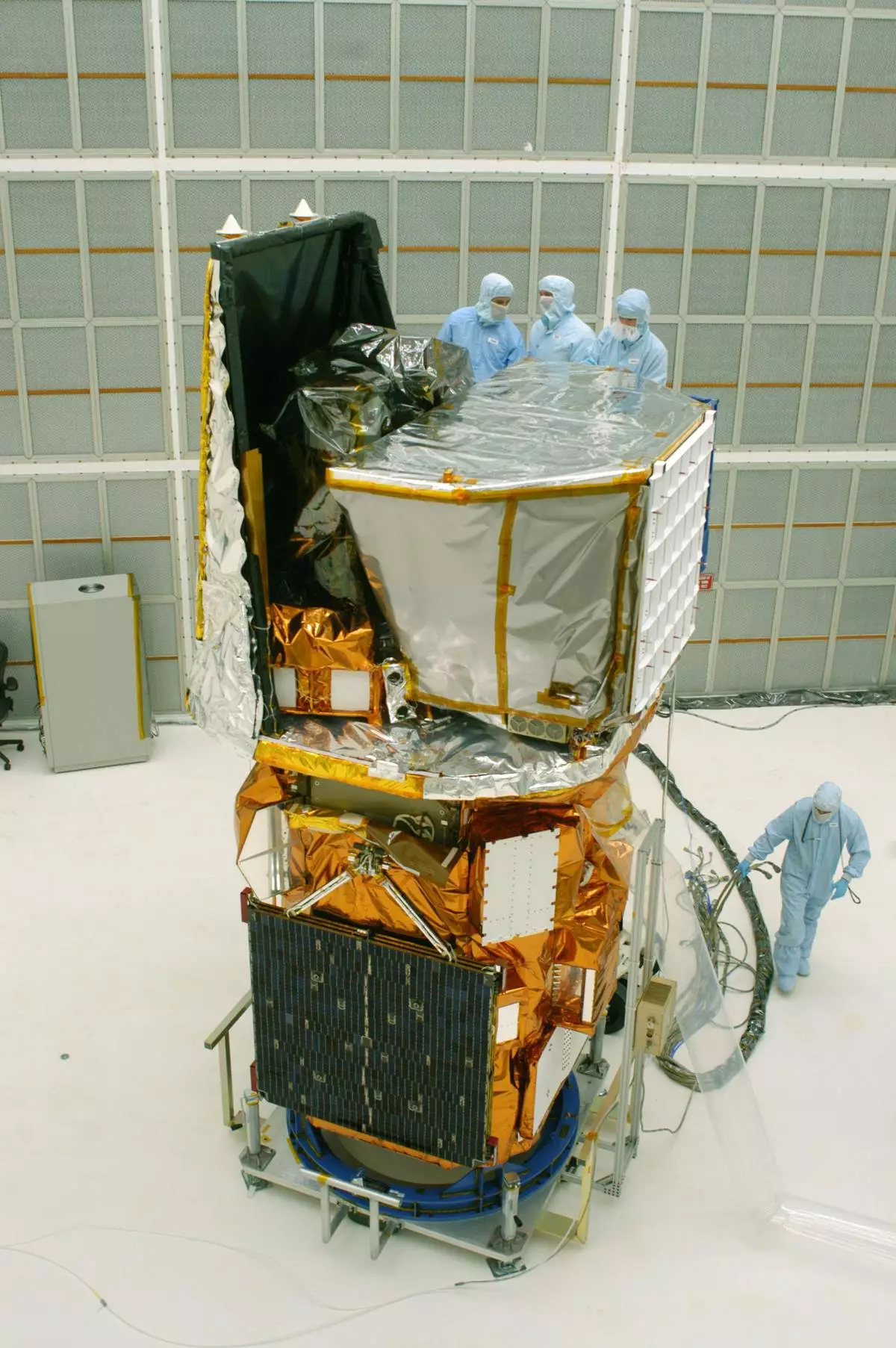
In this photo provided by NASA, Spectrum Astro workers look at the final pieces of protective cover on the Swift spacecraft that must be removed on Sept. 9, 2002 at Cape Canaveral Air Force Station. (NASA via AP)
In this photo provided by NASA, Spectrum Astro workers look at the final pieces of protective cover on the Swift spacecraft that must be removed on Sept. 9, 2002 at Cape Canaveral Air Force Station. (NASA via AP)

In this image provided. by NASA, Spectrum Astro workers remove the final pieces of protective cover on the Swift spacecraft in Hangar AE at Cape Canaveral Air Force Station, Florida, on Sept. 9, 2002. (NASA via AP)
In this image provided. by NASA, Spectrum Astro workers remove the final pieces of protective cover on the Swift spacecraft in Hangar AE at Cape Canaveral Air Force Station, Florida, on Sept. 9, 2002. (NASA via AP)

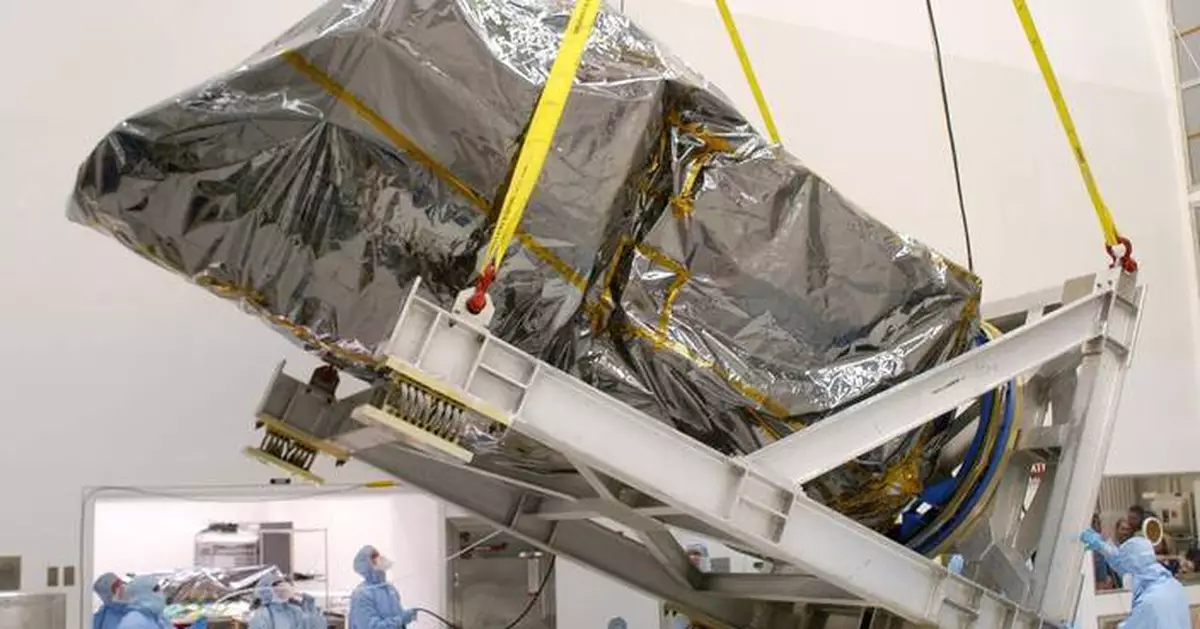
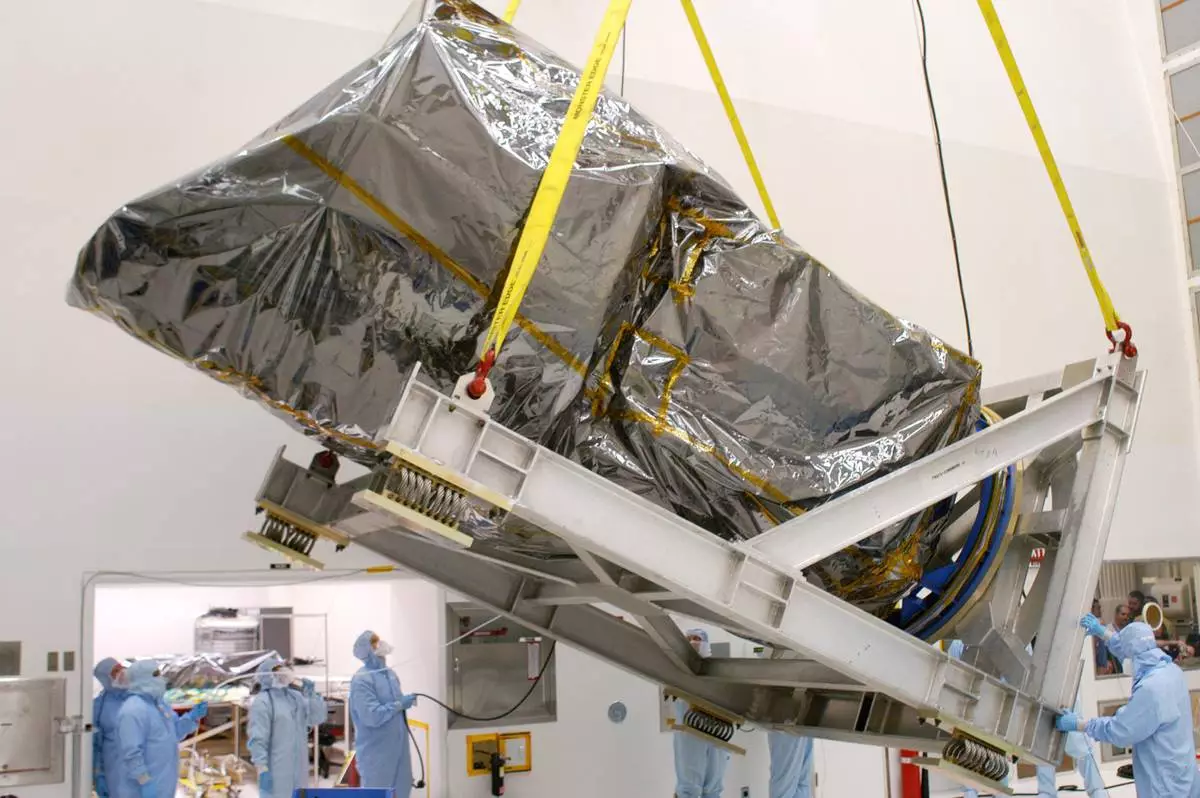
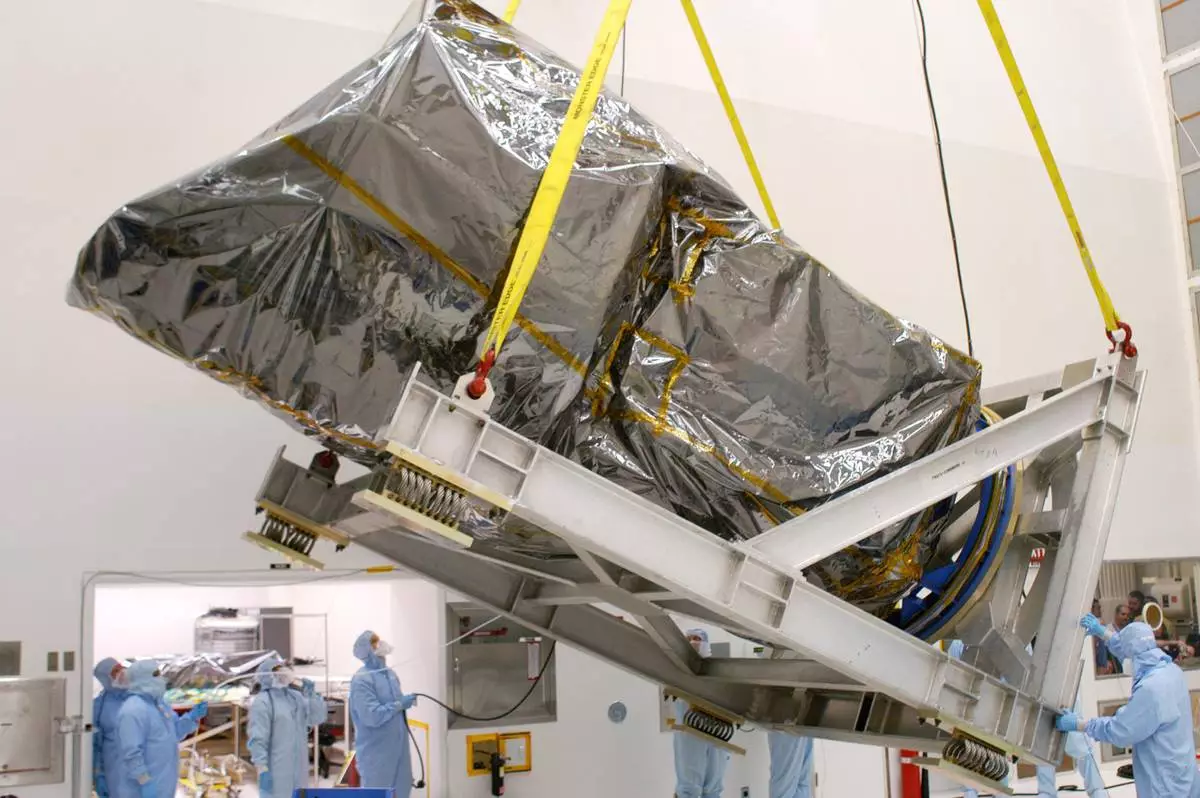
This photo provided by NASA shows an overhead crane raising the Swift spacecraft, wrapped in a protective cover, to vertical before being placed on a work standInside at Hangar AE at Cape Canaveral Air Force Station, in Florida on Sept. 9, 2002. (NASA via AP)


This photo provided by NASA shows an overhead crane raising the Swift spacecraft, wrapped in a protective cover, to vertical before being placed on a work standInside at Hangar AE at Cape Canaveral Air Force Station, in Florida on Sept. 9, 2002. (NASA via AP)

Heavy rains starting Saturday evening were expected to bring a threat of flash flooding to already saturated areas of the U.S. Southwest through Monday, according to the National Weather Service.

As much as 4 inches (10 centimeters) of rain could fall across the region, where a number of weather systems have brought a deadly autumn of soaking rains. Several people were rescued from floodwaters Friday in Arizona and Nevada.

“It’s not going to take much rainfall to be impactful at all in some of these locations just because of how saturated they are,” said Allison Santorelli, a meteorologist with the Weather Prediction Center in College Park, Maryland.

The National Weather Service has issued flood watches for nearly all of Arizona and parts of southern Utah, southwestern Colorado, and western New Mexico, in addition to part of southern Nevada. Those watches include the Four Corners region, a sparsely populated area where Arizona, Colorado, New Mexico and Utah meet that has been hit especially hard by recent rains.

Santorelli said this weekend's rain was expected to bring both flash flooding and small-stream flooding.

The Phoenix Fire Department said in a post on X that it rescued people from four vehicles on flooded streets on Friday night, while a fire captain in nearby Scottsdale said on Facebook that crews were rescuing a person in one vehicle on a flooded street when another vehicle carrying two people drove into the same waters and had to be rescued.

Scottsdale fire Capt. Dave Folio said in a video posted on Facebook that just 2 inches (5 centimeters) of water can "sweep your vehicle off its wheels,'' and that the vehicles were in 3 to 4 feet (0.9 to 1.2 meters) of water.

Crews in Henderson, Nevada, conducted three swift-water rescues during a downpour in the city just outside of Las Vegas on Friday afternoon, a city spokesperson told media outlets. One person was rescued from the top of their vehicle after it became stuck in floodwaters, two people were rescued from a vehicle swept from the roadway by floodwaters, and a person in a wash was rescued but then went into cardiac arrest and died at a hospital.

In western Arizona, heavy rains on Friday in Bullhead City left water, rocks and debris on streets across the city and closed parks, the city said in Facebook posts.

A delivery driver goes through a flooded road on Friday, Oct. 30, 2026, in Henderson, Nev. (AP Photo/Ty ONeil)

A delivery driver goes through a flooded road on Friday, Oct. 30, 2026, in Henderson, Nev. (AP Photo/Ty ONeil)

Recommended Articles