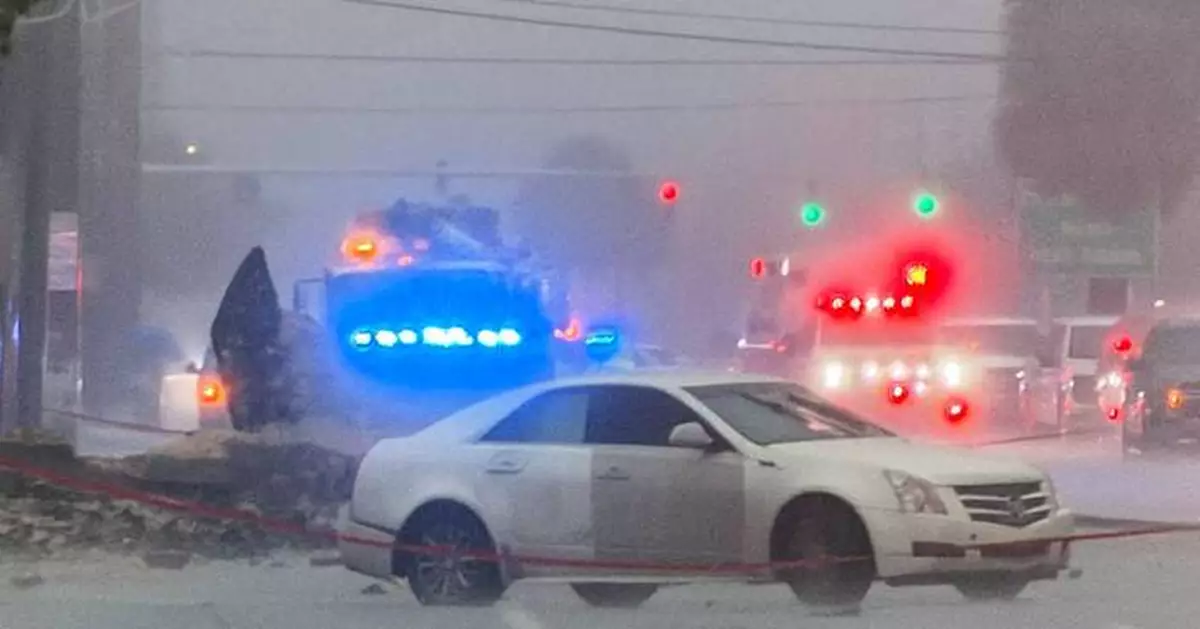
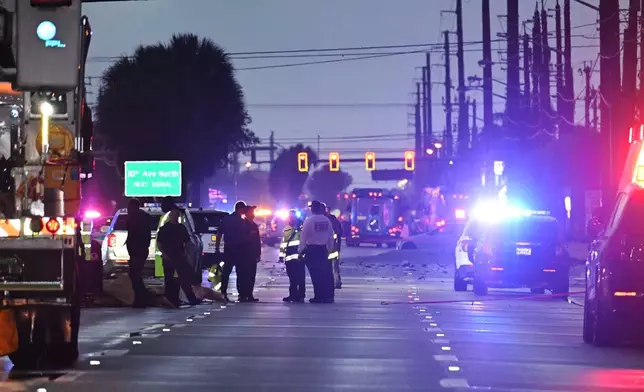
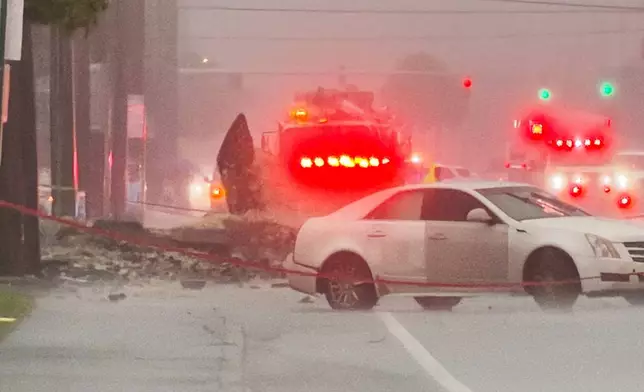
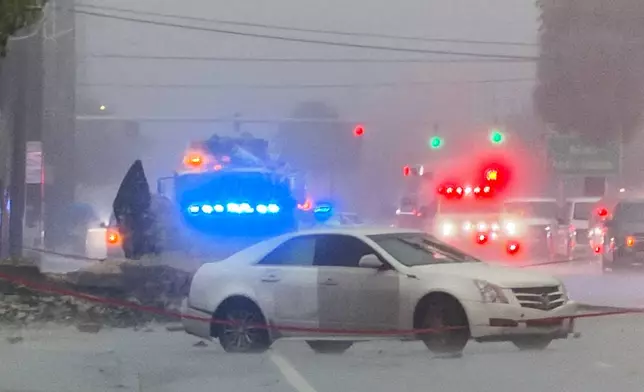
A business jet carrying nine people nose-dived into a South Florida neighborhood Sunday and erupted into a giant fireball that appeared to just miss homes near a busy roadway. Everyone on board was killed, the nation's transportation secretary said.
Video recorded by people inside their cars captured the terrifying moment the Bahamas-bound aircraft plunged from the sky before striking near the Palm Beach County roadway and exploding. Flames flickered around chunks of pavement lining a crater as people milled about, expressing shock that it landed only feet from homes and inches from passing vehicles. Thick black smoke engulfed the crash site.
Click to Gallery
Law enforcement respond to a plane crash in Palm Beach County, Fla., on Sunday, Nov. 1, 2026. (AP Photo/Mark Elias)
Law enforcement respond to a plane crash in Palm Beach County, Fla., on Sunday, Nov. 1, 2026. (AP Photo/Mark Elias)
Law enforcement respond to a plane crash in Palm Beach County, Fla., on Sunday, Nov. 1, 2026. (AP Photo/Mark Elias)
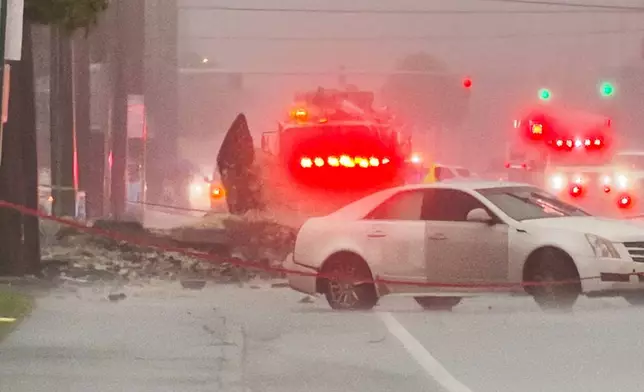
Law enforcement respond to a plane crash in Palm Beach County, Fla., on Sunday, Nov. 1, 2026. (AP Photo/Mark Elias)
Law enforcement respond to a plane crash in Palm Beach County, Fla., on Sunday, Nov. 1, 2026. (AP Photo/Mark Elias)
Transportation Secretary Sean Duffy posted on X that the Learjet 60 crashed in Palm Beach County at 12:50 p.m. and called it a “horrific tragedy.” The Federal Aviation Administration is sending a team to support the National Transportation Safety Board’s investigation, he said.
Florida Gov. Ron DeSantis said there were no immediate reports of anyone on the ground injured or killed.
“It was a cataclysmic plane crash,” DeSantis told reporters at the scene. “It looked like a missile going down and left a big crater on the side of the road.”
Rain pounded the region on Sunday. A flood watch due to excessive rainfall was in effect through Monday afternoon, the National Weather Service said.
The aircraft had departed Austin-Bergstrom International Airport in Texas and was headed to the Bahamas, according to the Federal Aviation Administration. Authorities did not immediately say what caused the jet to go down or who was on it.
The plane was heading east at 35,000 feet (about 11 kilometers) when pilots reported turbulence, icing and precipitation and requested to climb another 2,000 feet (about 610 meters).
Moments later, the plane entered a steep dive, first 10,000 feet per minute, then 20,000 feet per minute and up to 30,000 feet per minute, speeding the plane beyond its design limits, according to air traffic control recordings and flight tracking data.
A pilot declared an emergency and issued distress calls. The plane banked sharply to the right before it smashed into the ground.
Minutes before the crash, the pilot reported ice accumulating on the jet and turbulence that was jolting it by as much as 700 feet (213 meters), according to air traffic control recordings captured by LiveATC.net.
“We have light, clear ice that is manageable and moderate turbulence,” the pilot told controllers.
But the situation rapidly deteriorated. After encountering precipitation and requesting to climb, the pilot declared an emergency as the aircraft began losing altitude at an alarming rate.
“We’re descending 8,000 – mayday, mayday - we’re descending 10,000 feet per minute,” the pilot radioed.
“We are in an overspeed condition descending 20,000 feet per minute,” the pilot radioed, before delivering a devastating acknowledgment of what was about to happen. “We’re going to crash into the ground.”
Jim Reynolds, a spokesperson for Austin-Bergstrom International Airport, said the jet was a private aircraft. He could not immediately provide details about who was on the flight.
Steve Arroyo, an aviation safety expert, said icing and turbulence could have been factors in the crash and may have caused the plane to stall while it was cruising at 34,000 feet (10,363 meters).
There are many potential factors and the NTSB will consider all of them, including how the pilot responded to the icing and turbulence reported over the radio. But investigators won’t rule anything out at this early stage, he said.
The NTSB said investigators were expected to arrive at the crash site on Sunday and Monday. A media briefing is scheduled for Monday in West Palm Beach.
Palm Beach County authorities were evacuating about 600 people from a nearby mobile home community while federal officials investigate the crash. The road will be closed until further notice, county officials said.
The crash occurred in Greenacres, Florida, according to Palm Beach County sheriff’s officials. The city of 45,000 people is about 7 miles (11 kilometers) southwest of West Palm Beach.
Taxin reported from Santa Ana, California. AP Transportation Writer Josh Funk contributed from Gretna, Nebraska.
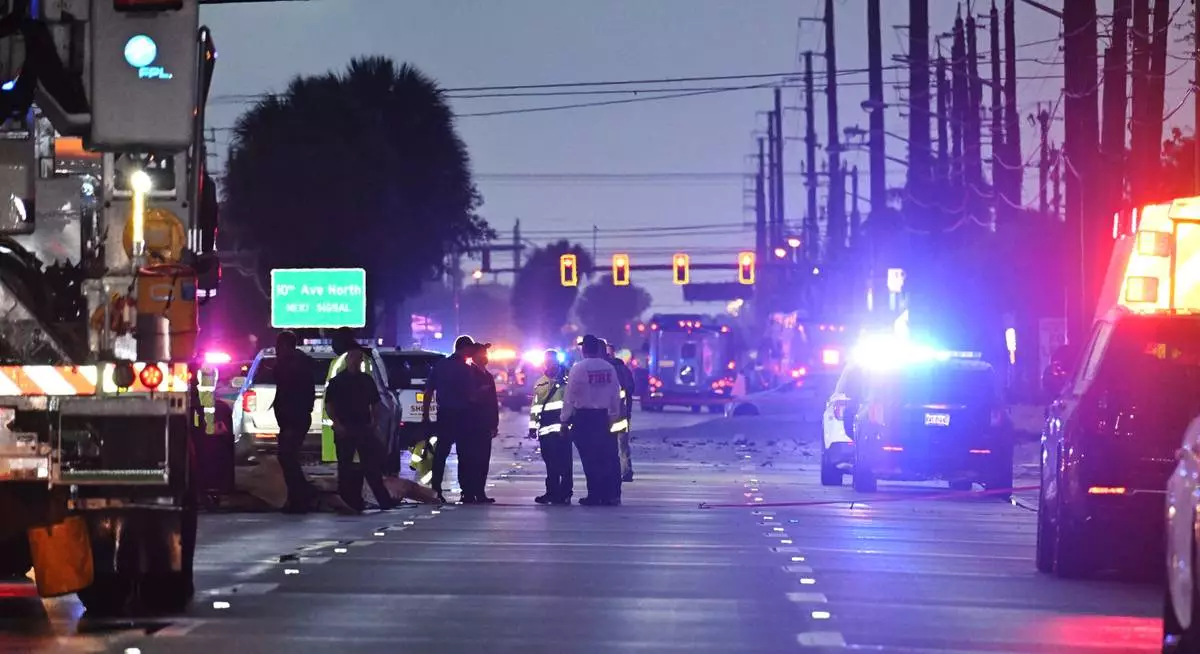
Law enforcement respond to a plane crash in Palm Beach County, Fla., on Sunday, Nov. 1, 2026. (AP Photo/Mark Elias)
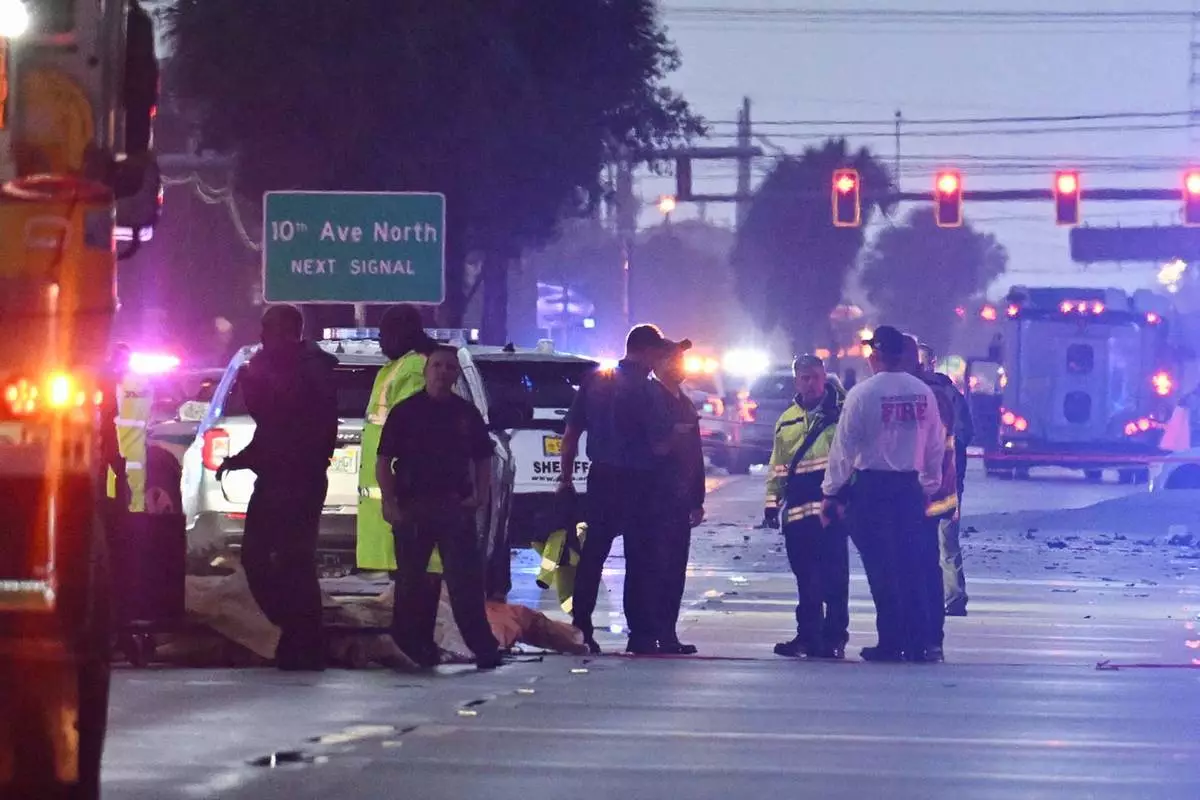
Law enforcement respond to a plane crash in Palm Beach County, Fla., on Sunday, Nov. 1, 2026. (AP Photo/Mark Elias)
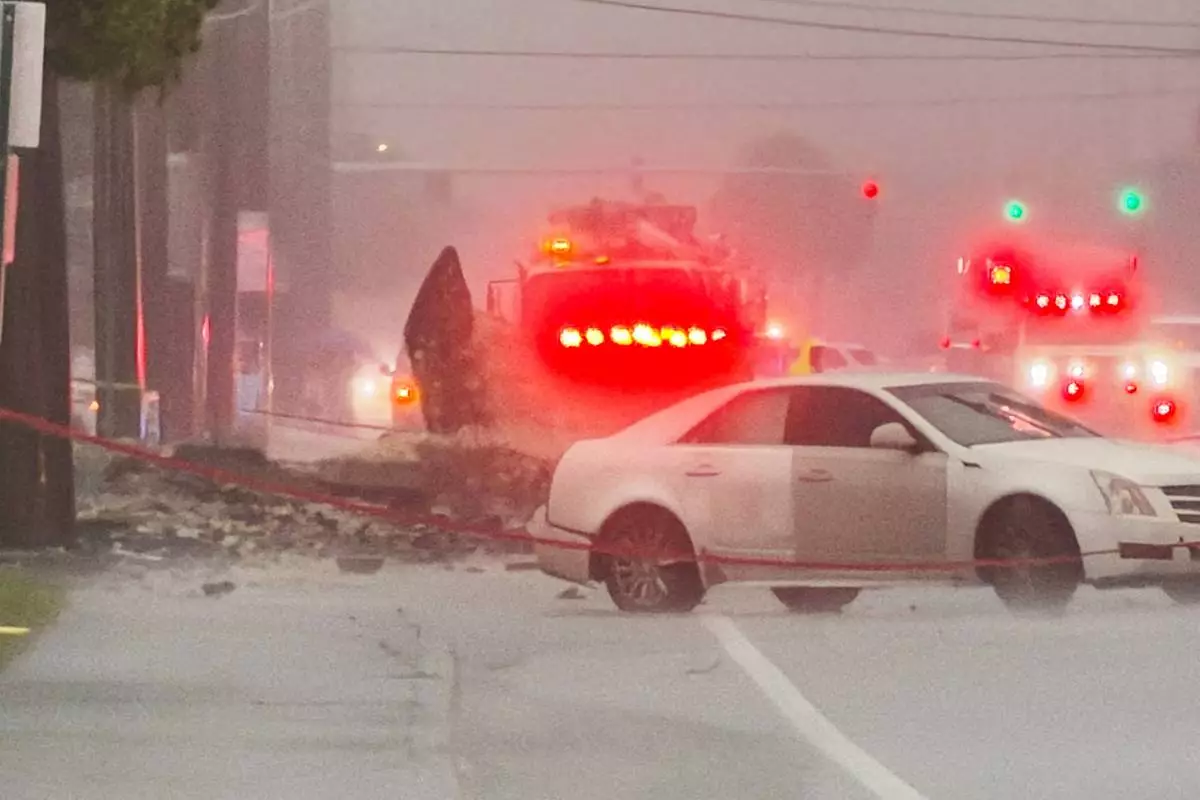
Law enforcement respond to a plane crash in Palm Beach County, Fla., on Sunday, Nov. 1, 2026. (AP Photo/Mark Elias)
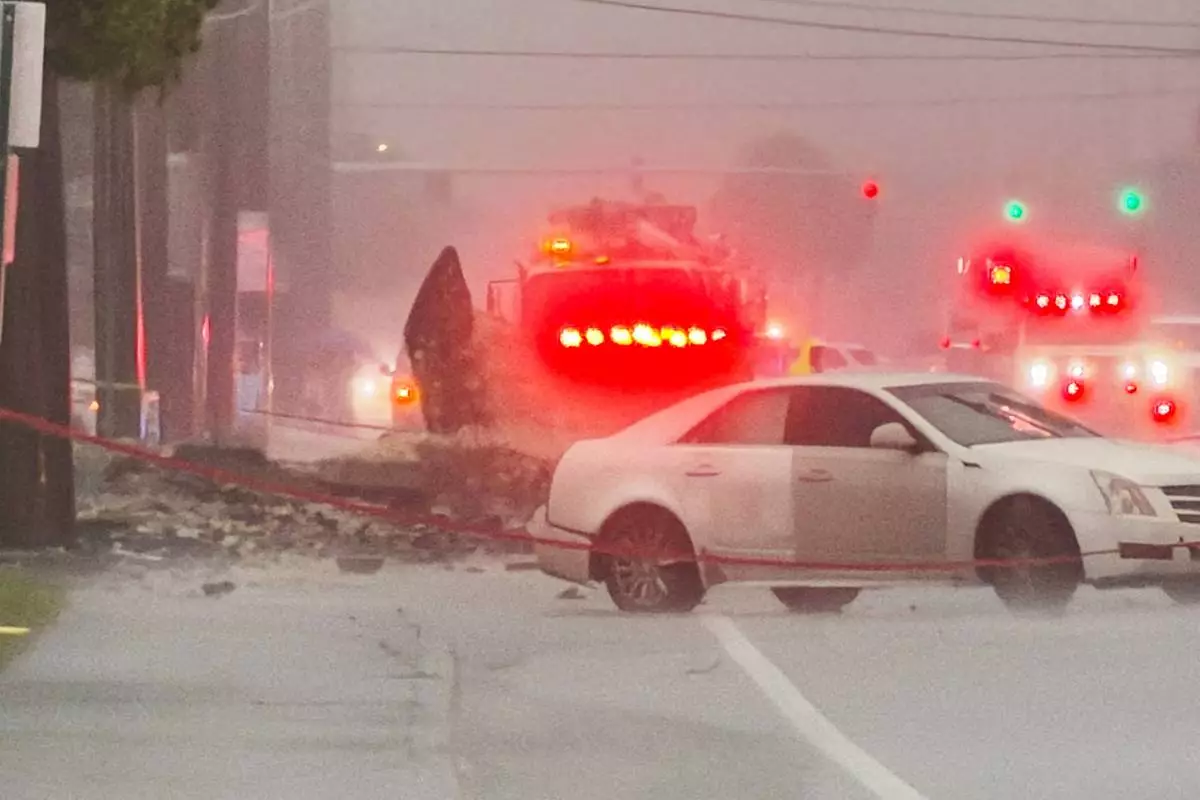
Law enforcement respond to a plane crash in Palm Beach County, Fla., on Sunday, Nov. 1, 2026. (AP Photo/Mark Elias)
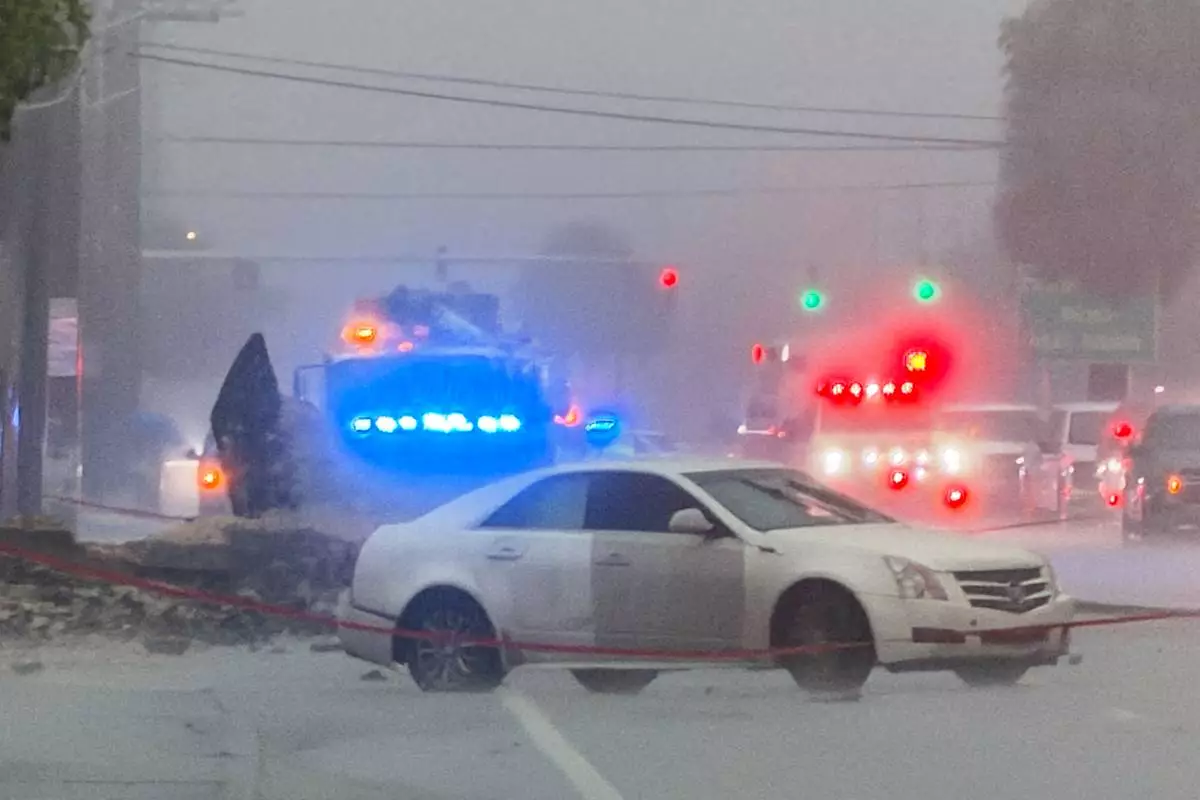
Law enforcement respond to a plane crash in Palm Beach County, Fla., on Sunday, Nov. 1, 2026. (AP Photo/Mark Elias)
KOZATSKE, Ukraine (AP) — A white towel on her gate and a white rag in her hand were Ukrainian Nataliia Diadiuk’s only ways to tell Russian drone operators she is a civilian. When a brief ceasefire kicked in on Oct. 27, she had a moment of respite.
The 53-year-old is one of a handful of residents left in Kozatske, a riverside village located in the kill zone of Ukraine’s Kherson region less than 2 kilometers (1.2 miles) from a Russian-controlled area.
“I really want silence,” Diadiuk said, fighting back tears as she stood on an empty street lined with abandoned houses. “And I want to see the people who left, all of them. People left for both sides."
Diadiuk’s life has been reduced to basic survival: rainwater to drink, firewood gathered around town for heat, a radio she tries to tune in to for news, and the remnants of humanitarian aid that had not reached her in two years until the brief ceasefire that ended Sunday night just days after it began. Going out means dodging every kind of weapon, including mines scattered everywhere. The neighbors she mentions are more often the dead than the few still living nearby.
A team from The Associated Press gained rare access to a so-called red zone to see firsthand what life in the kill zone looks like, a visit made possible only because of a brief, localized ceasefire tied to the humanitarian aid mission in the Russian-occupied city of Oleshky.
Oleshky has drawn the world’s attention, but civilians are trapped in many more places on both sides of the front line. During the mission, Ukrainian regional officials, police, the Ukrainian Red Cross Society and volunteers, with the facilitation of civil-military cooperation specialists, used the rare window of time to reach people on their side of the river, some of them cut off for nearly two years.
In all, 180 people were evacuated from riverside communities and the city of Kherson, including 23 children, the regional administration said. About 140,000 people remain in the Ukrainian-held part of the Kherson region.
Before the war, the whole region, now nearly 70% under Russian control, had about 1 million residents. The riverside is designated a red zone, the highest level of military danger. With the ceasefire over, residents will again face drones, artillery, glide bombs and airdropped mines. Still, many refuse to leave. Some cannot afford to start over, and others will not abandon the places where they grew up.
On the road to Diadiuk’s village, burned-out cars sit abandoned where they were hit, alongside wrecked ground robots that Ukrainians try sending down roads too dangerous for people. A relic of peacetime still stands on that road: “Thank you for keeping the roadside clean.”
In the village, many houses are reduced to burned walls. Glide bombs have left craters, and the tail fins of shells stick out of the asphalt like flowers. Mines dropped from drones lie everywhere, some petal-shaped, others improvised and wrapped in foil or plastic, so every step must be taken with care. Thick vegetation swallows the ruins of empty houses.
What Diadiuk finds hardest to bear is the howling of the dogs left behind in the houses, surviving much as she is. “Even for the sake of these, I can’t leave them,” she says, pointing to two thin dogs that never stray far from her. But she shares what little food she has with other dogs as well.
Isolated and forced to fight for survival every day, she has lost track of time. “I turn on my phone only to see what day it is,” she says. She charges it with solar panels.
Diadiuk collects rainwater, strains it through gauze, treats it with chlorine and boils it. “The water here is more or less all right,” she says. “There are a lot of dead lying in the houses, so it’s good water only in a manner of speaking.”
The village’s ordeal began in the first days of Russia’s full-scale invasion, when it was occupied. After Ukrainian forces liberated it, Kozatske gradually came under siege by drones as the war turned increasingly technological.
“Before, I’d just open the door and walk out,” said Oleksii Shavokin, 54, who lives a little farther down the street. “Now I open it a crack, stick my ear out and listen to the sky."
His house burned down in early 2023 after a mortar attack, he said, but he patched it up and stays on there. He lives off old humanitarian aid and eggs from the hens he still keeps. “I ration my food so it lasts. I’m used to it,” he said. “Now I eat once a day, in the evening, and that’s quite enough.” He has lost 30 kilograms (66 pounds) from a weight of close to 100 kilograms (220 pounds).
Many of the people he knew were killed by strikes, and others left. He decided to stay.
“I value life, but where’s the guarantee a car won’t hit me somewhere else?” Shavokin said. “Wherever it’s written for you, that’s where you’ll lose your life, or go on living. And still, I hope this all ends soon.”
Many residents who stay do not know where they would go and fear they would be left to fend for themselves, said Oleh Tarabaka, head of the Nova Kakhovka city military administration. He was part of the team that tried to persuade Diadiuk and Shavokin to leave.
But it is difficult, he said. Many have lived there their whole lives and fear that once they leave, they will have nothing to live on. Not everyone has someone to go to. Some have no relatives.
“If there hadn’t been a period of quiet, we simply wouldn’t have gotten people out,” Tarabaka said. “We wouldn’t have been able to drive in here.”
What residents are living through goes beyond survival, Tarabaka said, adding that perhaps no word has yet been invented to describe it.
Some, however, can be persuaded to leave. That was the case for Yevhen and his mother, Antonina, who declined to give their last names for security reasons.
One of the military officials turned to Yevhen. “Just make the right decision, the decision of a man and a son,” a Ukrainian soldier from the 42nd brigade who was part of the evacuation group told him.
Eventually, they agreed.
All the way through her bombed-out town, Antonina wailed and wept, not wanting to leave. Her cries echoed through the empty streets.
The temporary truce allowed the Red Cross to evacuate far more people than usual from Kherson city. Normally, every route and every stage must be planned around the constant threat of drones and other weapons.
“Right now, some streets and places in Kherson are a kill zone too. It’s simply impossible to slip through there. The risk is very, very high,” said Mykola Taranenko, commander of the Ukrainian Red Cross Society’s rapid response team in the Kherson region.
His team usually evacuates about 10 people a week, but during the ceasefire week, it took out at least 40.
Among those evacuated were Volodymyr and Kateryna Yakuba, both 77, who divorced more than 20 years ago but left the city together. Their daughter arranged the evacuation, and they are going to stay with her in Odesa.
“We need to get out before the cold sets in,” she said, adding about the ceasefire: “I don’t know how we would have gotten out otherwise.”
“It’s scary to leave home,” her voice trembled. "You don’t know if you’ll come back, or if there will be anything to come back to.”
Associated Press journalists Vasilisa Stepanenko and Evgeniy Maloletka contributed to this report.
Follow the AP’s coverage of the war in Ukraine at https://apnews.com/hub/russia-ukraine
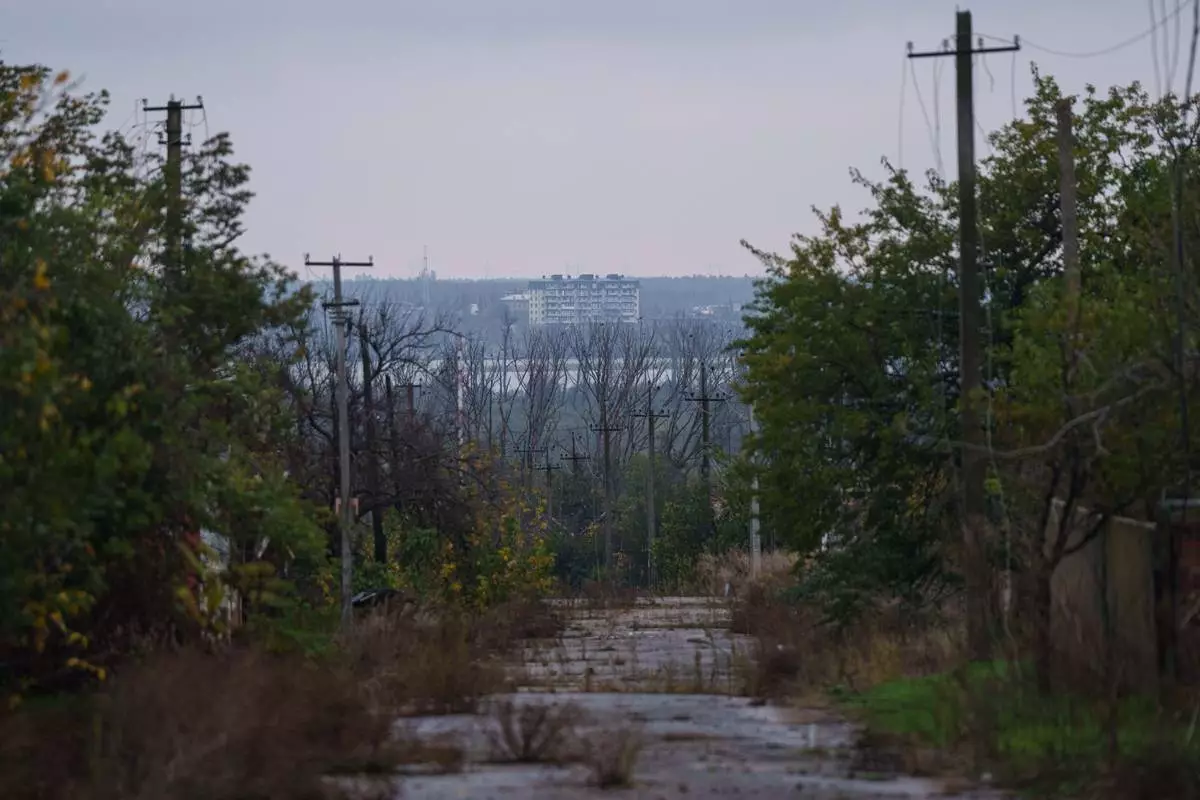
A residential building in Russian-occupied Nova Kakhovka is seen across the Dnipro River from the village of Kozatske during a localized ceasefire linked to a humanitarian aid mission to Oleshky in the Kherson region of Ukraine, Saturday, Oct. 31, 2026. (AP Photo/Evgeniy Maloletka)
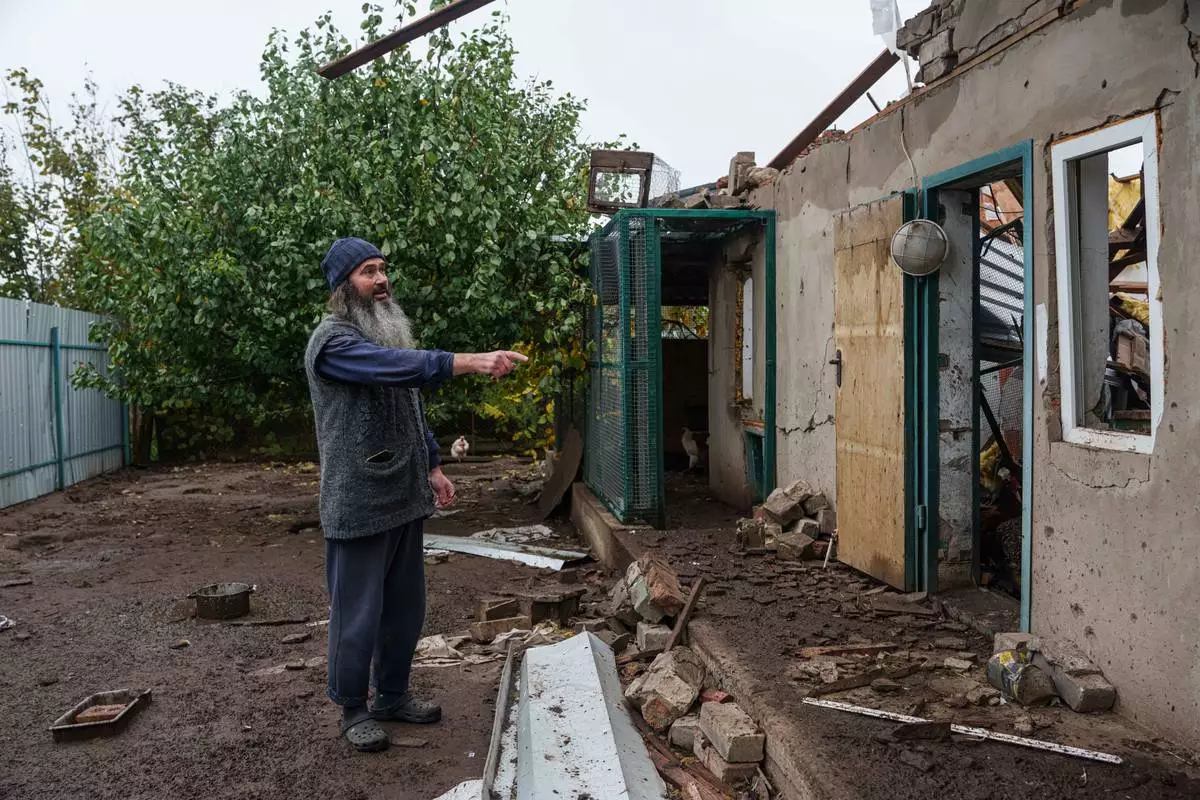
Oleksii Shavokin, 54, a local resident, stands in front of his house destroyed by Russian shelling during a localized ceasefire linked to a humanitarian aid mission to Oleshky, in the village of Kozatske, Kherson region, Ukraine, Saturday, Oct. 31, 2026. (AP Photo/Evgeniy Maloletka)
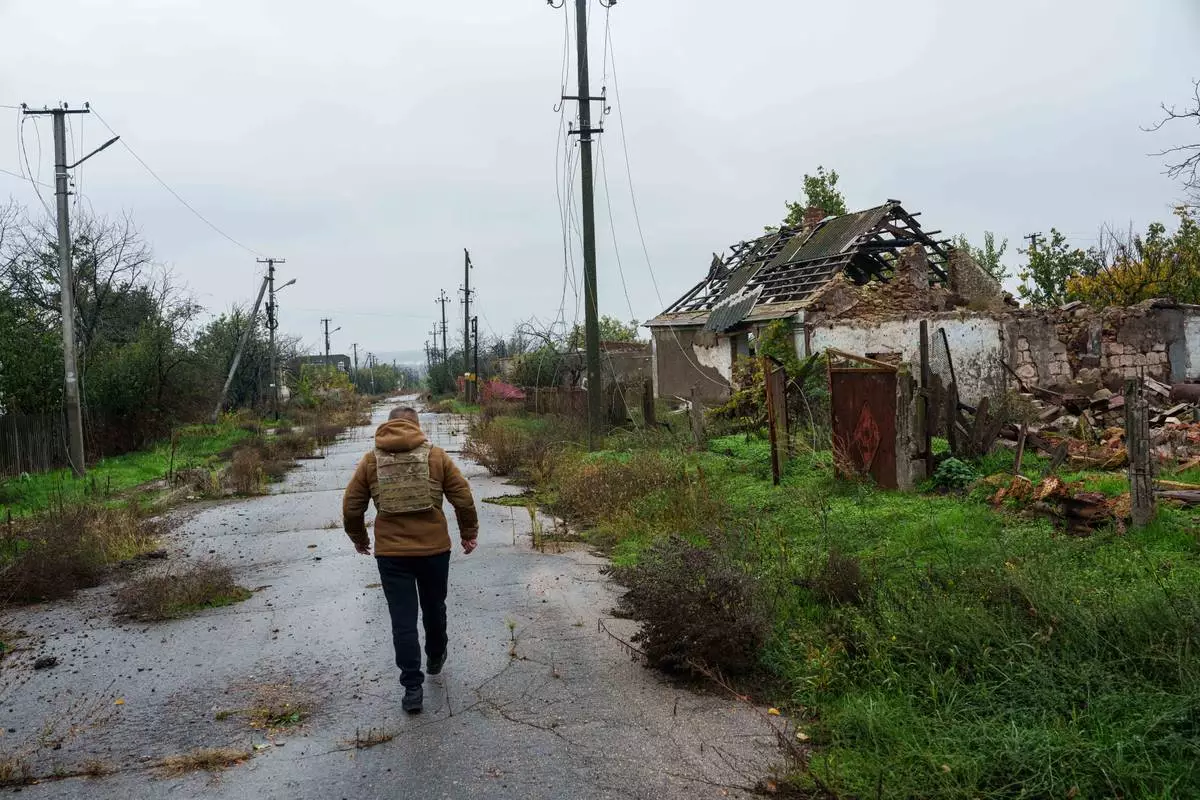
Vadym, a Ukrainian sergeant of the 42nd Marine Brigade walks through an area contaminated with anti-personnel mines in front of destroyed houses during an evacuation of local population to a safe area amid a local ceasefire linked to a humanitarian aid mission in Oleshky, in the village of Kozatske, Kherson region, Ukraine, Saturday, Oct. 31, 2026. (AP Photo/Evgeniy Maloletka)
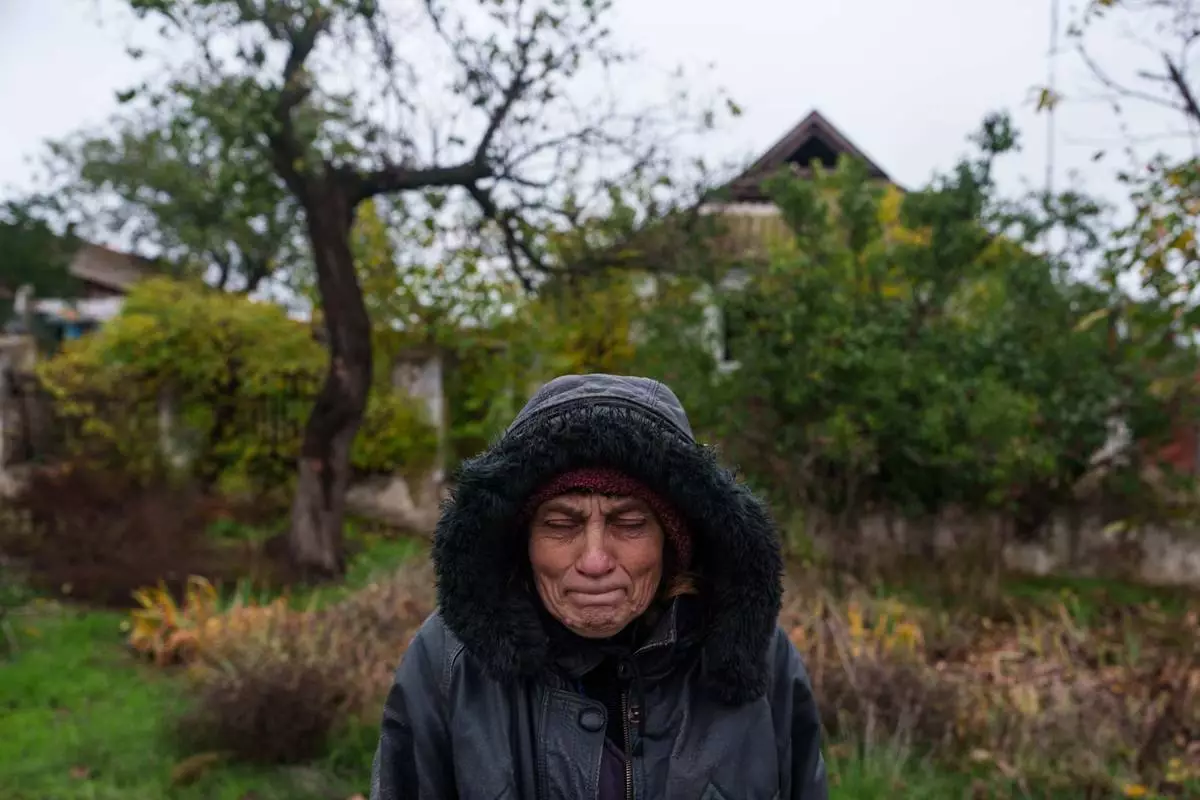
Natalia Diadiuk, 53, a local resident, reacts as she refuses to be evacuated during a localized ceasefire linked to a humanitarian aid mission to Oleshky, in the village of Kozatske, Kherson region, Ukraine, Saturday, Oct. 31, 2026. (AP Photo/Evgeniy Maloletka)
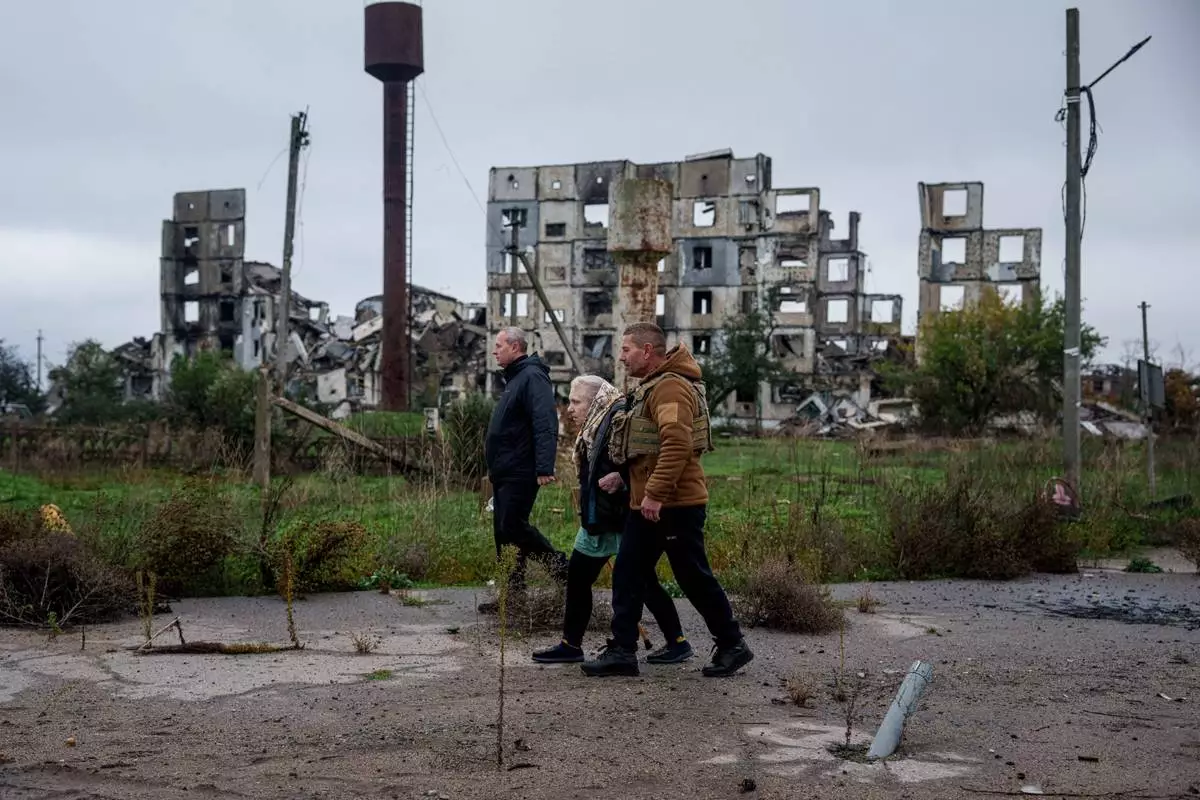
Oleh Tarabaka, head of the Nova Kakhovka military administration, left, and Vadym, a Ukrainian sergeant of the 42nd Marine Brigade, right, help evacuate Antonina, a local resident, as they walk past a destroyed residential building in an area contaminated with anti-personnel mines, during a localized ceasefire linked to a humanitarian aid mission to Oleshky, in the village of Kozatske, Kherson region, Ukraine, Saturday, Oct. 31, 2026. (AP Photo/Evgeniy Maloletka)