Dialogue Despite Division: The 2026 Conference Theme
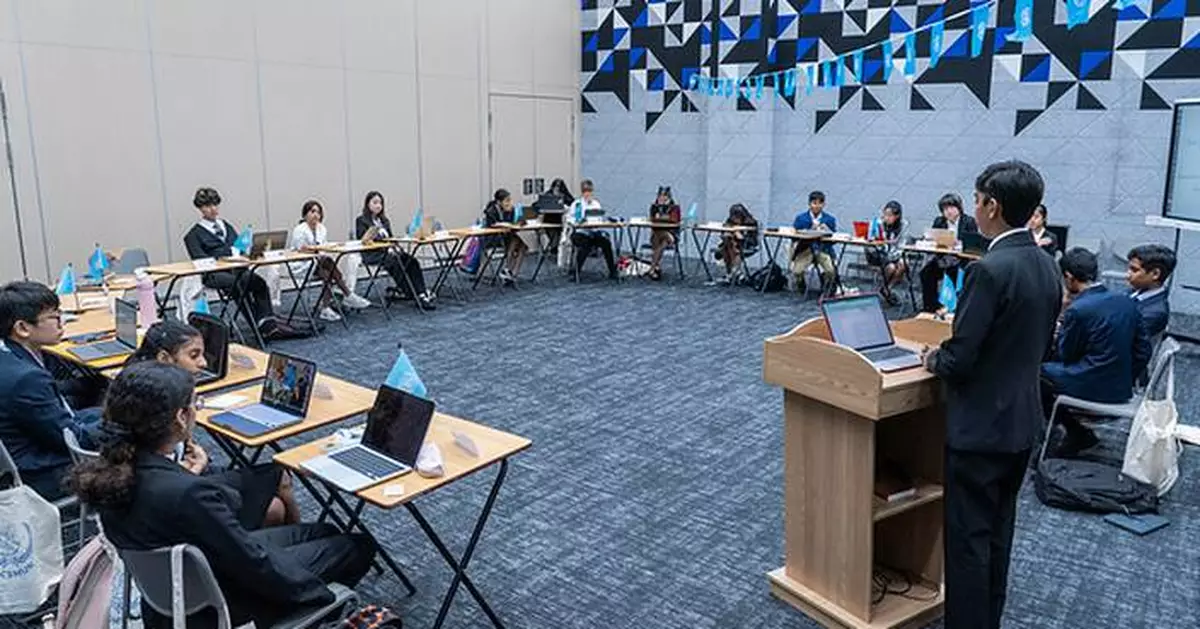
SINGAPORE, Nov. 2, 2026 /PRNewswire/ -- North London Collegiate School (Singapore) hosted its second Model United Nations (MUN) conference at its Depot Road campus in Singapore, welcoming 200 students from six schools: the host school, Tanglin Trust School, Overseas Family School, International French School, German European School Singapore and Canadian International School. This year's theme, "Dialogue Despite Division", asked something simple but increasingly rare of its young delegates: to disagree without losing the ability to listen.
"It was a genuine pleasure to host this year's Conference, and our theme felt fitting given the complex political climate. Our Executive Committee and students rallied around it and fostered a collaborative spirit. We're lucky to have students and visiting schools who can rise to the occasion," said NLCS (Singapore)'s MUN Director, Chris van Dort.
It is a skill the conference's committee topics put to the test immediately. Delegates in the Historical Joint Committee revisited the Cuban Missile Crisis, one of history's starkest lessons in how close dialogue can come to collapsing entirely. In the Disarmament and International Security Committee, students turned to a far more current and unresolved question: the use of artificial intelligence (AI) in warfare and conflict. Debating a Cold War standoff and an emerging twenty-first-century threat on the same day gave delegates a reminder that the stakes of dialogue, and its difficulty, do not belong to any one era.
A Model United Nations Conference Led by Sixth Form Students
MUN conferences across Singapore give ambitious students the opportunity to step into the role of delegate on real political issues, and what distinguishes the NLCS (Singapore) conference is how much of it is shaped by students themselves. This year's event was organised by an Executive Committee (ExComm) of five Sixth Form students studying the International Baccalaureate (IB) Diploma Programme, including Riya Koshy as Secretary-General, Krishiv Sharma as Deputy Secretary-General, Leo Kang as Director of Administrations, Olivia Go as Director of Operations, Olivia van der Vlies as Director of Communications and Yubeom Paik as Conference Manager.
"Having started MUN in Grade 8 and attended so many MUN events, it was a genuine pleasure to help deliver one at our school. The conference nearly doubled in size this year, and it was fantastic to see so many of our students leading discussions," said Conference Manager, Yubeom Paik.
A First Model United Nations Experience for Grades 6 to 8 Delegates
For many students, this was their first conference of the new academic year, and for many younger delegates in Grades 6 to 8, it was their first MUN experience altogether. Excitement and nerves were both evident in the room, the natural mix that comes with stepping into a new challenge for the first time.
Guest speaker Vishnu Padmanabhan, a journalist with The Economist, set the tone early with reflections on dialogue across the borders of China and India, and on the importance of understanding both sides of a story before writing it.
"As the first MUN conference we had ever attended, it was enjoyable to compete against other schools and better understand how to debate complex issues. It was also an excellent learning experience to be part of a larger community beyond our school," said new student delegates Thomas and Stuvan.
Turning Debate into Common Ground
Student delegates across every committee handled difficult, often divisive subject matter with notable maturity, and many had already begun forming coalitions in pursuit of a resolution, dialogue turning into cooperation in real time. By midday, students were reflecting on how much they had grown and how much better they understood what it takes to find common ground with people who see an issue very differently.
MUN Awards: Three Trophies for NLCS (Singapore) Delegates
In the final sessions, students continued to debate and amend their resolutions before moving into the closing ceremony and awards in the early evening. Delegates from all six schools had the chance to reflect on the day and hear closing remarks from the ExComm. Of the eight trophies awarded, NLCS (Singapore) took home three. Soyul Anh was named Best Delegate in the United States Senate, Siddhant Pandey was named Best Delegate in the United Nations Security Council (UNSC) and Ranvir Pathak was named Best Judge in the International Court of Justice (ICJ).
"It was really enjoyable guiding new students through their first conference. For anyone choosing an advanced committee like the UNSC at their first MUN, my advice is to speak at every opportunity. Spend less time writing resolutions and more time preparing speeches and POIs (Points of Information)," said UNSC Best Delegate, Siddhant.
Now in its second year, and having nearly doubled in size since its first, the conference has quickly become a fixture that reflects something NLCS (Singapore) holds at the core of its approach to education: students learn best when they are trusted to lead, to disagree thoughtfully and to work through challenging situations together. Congratulations to the Sixth Form ExComm for organising such a meaningful conference, and to every delegate who took part. NLCS (Singapore) looks forward to welcoming these schools back again next year.
About North London Collegiate School (Singapore)
Founded in August 2020, North London Collegiate School (Singapore) is a British international school offering the academically ambitious NLCS curriculum, followed by the International Baccalaureate (IB) Middle Years Programme from Grade 6 to Grade 10 and culminating in the IB Diploma Programme in the Sixth Form.
Drawing on more than 175 years of educational heritage from its founding school, North London Collegiate School, established in London in 1850, NLCS (Singapore) nurtures individuals to be intellectually curious, socially confident and grounded in compassion through a rigorous academic framework, rich co-curricular opportunities and exceptional pastoral care.
Situated on Depot Road, the School is part of a global family of schools committed to educational excellence and developing global citizens.
To learn more about NLCS (Singapore), please visit our website (https://nlcssingapore.sg/) and follow us on Instagram, Facebook, YouTube and LinkedIn.
** This press release is distributed by PR Newswire through automated distribution system, for which the client assumes full responsibility. **
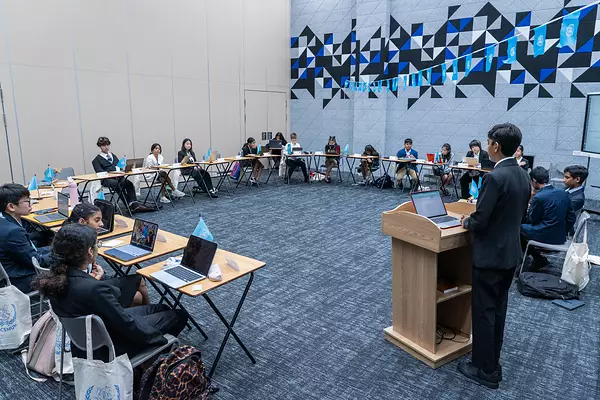
North London Collegiate School (Singapore) Model United Nations 2026: Students Practise the Hard Skill of Dialogue Despite Division
- H.E. Dr Sultan Al Jaber says global energy industry must fundamentally rethink how it builds, protects and delivers secure energy
- OpenAI CEO Sam Altman describes abundant, reliable energy as critical to unlocking next wave of AI-driven innovation and economic growth, with UAE embodying forward-looking adoption
- Day 1 brings together global energy CEOs, policymakers and technology leaders to examine the investment, infrastructure and innovation needed to strengthen resilience
- The world's largest energy event opens its biggest edition to date, with 2,260 exhibitors, 30 country pavilions, four specialised zones and more than 1,800 speakers across 380+ conference sessions - dmg events
ABU DHABI, UAE, Nov. 3, 2026 /PRNewswire/ -- ADIPEC 2026 opened in Abu Dhabi today, bringing together global leaders from energy, government, finance and technology, including OpenAI CEO Sam Altman, to examine how resilient energy systems, infrastructure investment, artificial intelligence and international partnership can strengthen energy security and support future economic growth.
Held under the patronage of H.H. Sheikh Mohamed bin Zayed Al Nahyan, President of the UAE, in his capacity as Ruler of Abu Dhabi, and hosted by ADNOC, ADIPEC 2026 marks the largest edition in the event's history, with an expected 239,000 participants from more than 170 countries. Opening-day discussions highlighted the growing importance of supply resilience, intelligent energy systems and long-term investment in meeting rising demand while ensuring energy remains reliable, accessible and affordable.
Against a backdrop of rising energy demand, geopolitical shifts and growing pressure on infrastructure, the four-day event is focused on strengthening resilience, mobilising capital and advancing the technologies and partnerships needed to support long-term growth.
The Opening Ceremony began with a keynote address from H.E. Dr Sultan Ahmed Al Jaber, UAE Minister of Industry and Advanced Technology and ADNOC Managing Director and Group CEO, who said the global energy industry must fundamentally rethink how it builds, protects and delivers secure energy, following a year of unprecedented disruption that has exposed critical vulnerabilities in international supply chains.
Stating it is not possible to control every situation and remove every risk, Dr. Al Jaber said: "The choices we make today will determine the energy landscape a decade from now. Let's apply the lessons we have learned. Let's build capacity and everything that supports it. Let's forge partnerships that hold when it matters. And if you want a partner you can count on you are in the right room, in the right city, in the right country. Because when it counts the most, you can count on the UAE."
Setting out the case for a more resilient energy system, Dr. Al Jaber said since the disruption in the Strait of Hormuz, nearly one billion barrels of crude have been drained from inventories. He outlined five steps the energy industry can take to reduce the impact of future shocks.
"First, accessible supply. We need expanded strategic storage, larger stockpiles of products and flexible refining capacity closer to consumer markets. Second, routes to market. Supply only counts when it arrives. Infrastructure must be built before it is needed and enabled by advanced logistics. Third, operational intelligence. Moving from automated operations to intelligent energy systems that anticipate risk, optimise performance and drive down the cost of every barrel. Fourth, capital follows confidence. Policy must create it, finance must accelerate it and insurance must keep trade moving. Fifth, which is in my view the most important, is people. Because behind every barrel that arrives is a person who made sure it did. Systems don't carry responsibility, people do. "
Reflecting on the UAE's resilience during recent market disruptions, Dr. Al Jaber said: "We did not write our resilience playbook during this disruption. We wrote it years before. And at ADNOC, it did not make us immune, it made us prepared. Our leadership's foresight in modernising ADNOC made the difference, from integrated trading, to investing in people, to world-class logistics, to XRG's global portfolio in gas, chemicals and energy solutions.
"The evident result is our end-to-end AI-enabled operating model, built for a world of rising demand and delivering what customers need, when they need it, where they need it. Our ambition is to make ADNOC the most customer-centric energy company on earth."
The Opening Ceremony also featured a speech and interview with Sam Altman, CEO of OpenAI, bringing a global technology perspective to discussions on the growing relationship between artificial intelligence, energy demand and infrastructure investment.
"I am tremendously excited for AI to help and enable the energy industry, and I even more excited to see what the world can do with the inspiration, ideas, output, and leverage that people can get out of AI, with abundant energy to make all these wonderful things happen.
Altman highlighted the growing interdependence between AI and energy, arguing that while AI can help make energy systems more efficient, reliable and innovative, the rapid expansion of AI will also require significantly more energy. He said AI was increasingly being used not just as a productivity tool, but as a platform for scientific discovery and problem-solving, with the potential to transform energy operations, materials development and system design.
Altman also praised the UAE's leadership in AI adoption and described the ADNOC-G42-OpenAI partnership as a model for applying advanced AI to real-world industrial challenges.
"I think the UAE has consistently been the most forward-looking country in the world for AI adoption. Going back to the launch of ChatGPT, this is a country that has decided to go all in on AI -- through its government and across its economy. It's an incredible embrace, and it has come from the leadership. There has been an acknowledgement that societies need to bet on these technologies," he said.
As the Strategic Conference got underway, the focus shifted to the decisions and investments required to strengthen energy systems and meet growing global demand.
The opening ministerial panel, 'Energy security is national security: building resilient supply in an uncertain world', His Excellency Suhail Mohamed Al Mazrouei, Minister of Energy and Infrastructure, United Arab Emirates, and Rt. Honourable Dr. Ekperikpe Ekpo, Minister of State for Petroleum Resources (Gas), Nigeria, discussed their countries' approach to ensuring secure and plentiful energy supply to enable their targeted economic growth.
Speaking about the UAE's strategy for further improving its energy sector resilience, HE Al Mazrouei said: "We need to build additional layers of protection to ensure we have enough resilience and spare capacity. All of this will require technology, and we will need AI to design better and become more resilient."
The opening CEO panel, 'Energy security in a fragmented world: designing systems that can absorb disruption', brought together Meg O'Neill, CEO, bp; Richard Jackson, President and CEO of Oxy; and Markus Krebber, CEO, RWE AG, to examine how the industry can safeguard supply, strengthen operational resilience and expand energy capacity.
Speaking about disruptions faced by the energy sector this year, Richard Jackson, President and CEO, Oxy, said: "For us, having gone through these shocks, our strategy has been durability. We talk a lot about resilience, but within our team, we think about durability over time...We have focused on sustainable cash flow and production, and we have taken advantage of the opportunity to invest in more durable production."
Beyond the conference halls, ADIPEC 2026's exhibition opened with 2,260 exhibitors across 16 halls. Bringing together companies from across the global energy value chain, the exhibition showcases technologies and solutions supporting energy security, operational performance and infrastructure development, while creating opportunities for commercial partnerships and investment.
Asia participation is the strongest in the event's history, with China, India, Malaysia, Singapore and South Korea among the 30 country pavilions. Four specialised zones, AI, Digitalisation, Low Carbon and Chemicals and Maritime and Logistics, host companies covering the full breadth of the energy value chain.
ADIPEC 2026 continues until 5 November, with more than 1,800 speakers across 13 conference programmes and over 380 sessions addressing the priorities shaping global energy. Over the coming days, discussions will focus on turning strategic priorities into investment decisions, partnerships and practical solutions that strengthen today's energy systems while expanding capacity for tomorrow.
For more information, visit https://www.adipec.com/
** This press release is distributed by PR Newswire through automated distribution system, for which the client assumes full responsibility. **
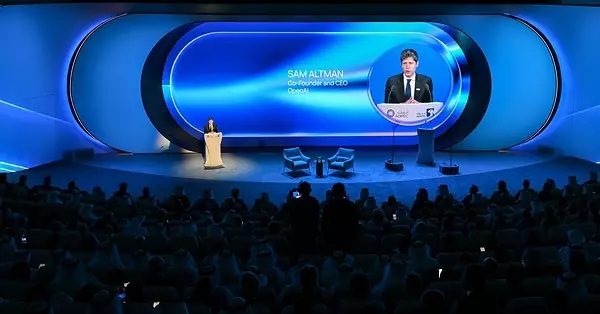
HE Dr Sultan Al Jaber and Sam Altman highlight energy, AI and investment priorities at ADIPEC 2026 opening
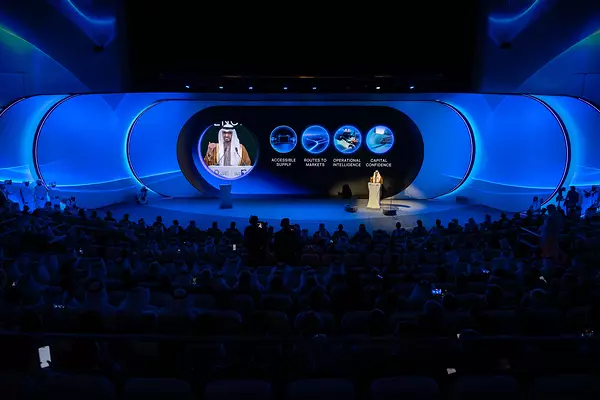
HE Dr Sultan Al Jaber and Sam Altman highlight energy, AI and investment priorities at ADIPEC 2026 opening