TRELEW, Argentina (AP) — Data centers have become one of the most polarizing issues in the world. Argentina’s president wants to lure as many of them as he can get.
As residents and policymakers in the United States and Europe fight the facilities that power artificial intelligence, President Javier Milei is pitching Argentina as a haven, promising a hands-off approach to draw foreign investment his crisis-prone country needs.
Click to Gallery
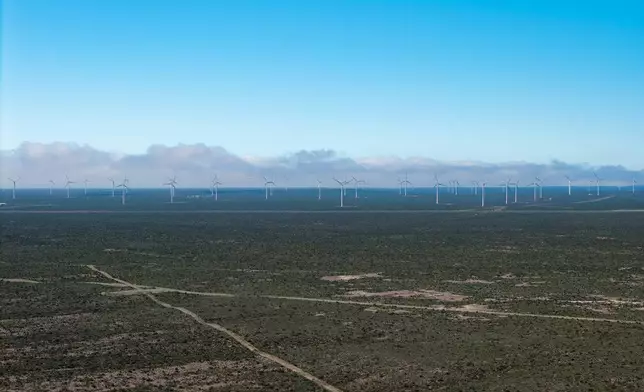
Wind turbines stand on the field near Trelew, Argentina, Wednesday, Oct. 28, 2026. (AP Photo/Cristian Kovadloff)
FILE - Argentina's President Javier Milei delivers a statement at the Organization for Economic Co-operation and Development headquarters, ahead of the ''Argentina Week'', an event aimed at promoting investment and business opportunities, in Paris, Oct. 1, 2026. (AP Photo/Teresa Suarez, File)
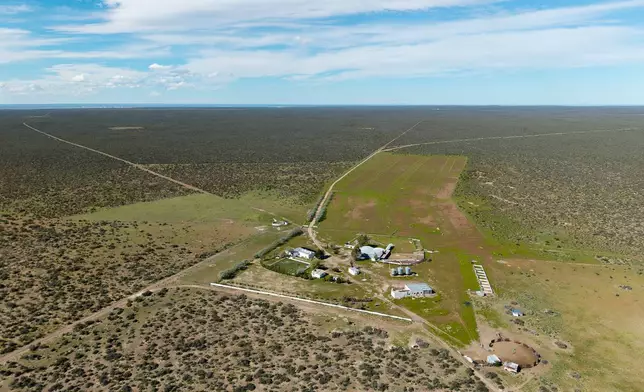
A view of Tatay ranch, one of the properties, picked to host a proposed data center complex near Trelew, Tuesday, Oct. 27, 2026. (AP Photo/Cristian Kovadloff)
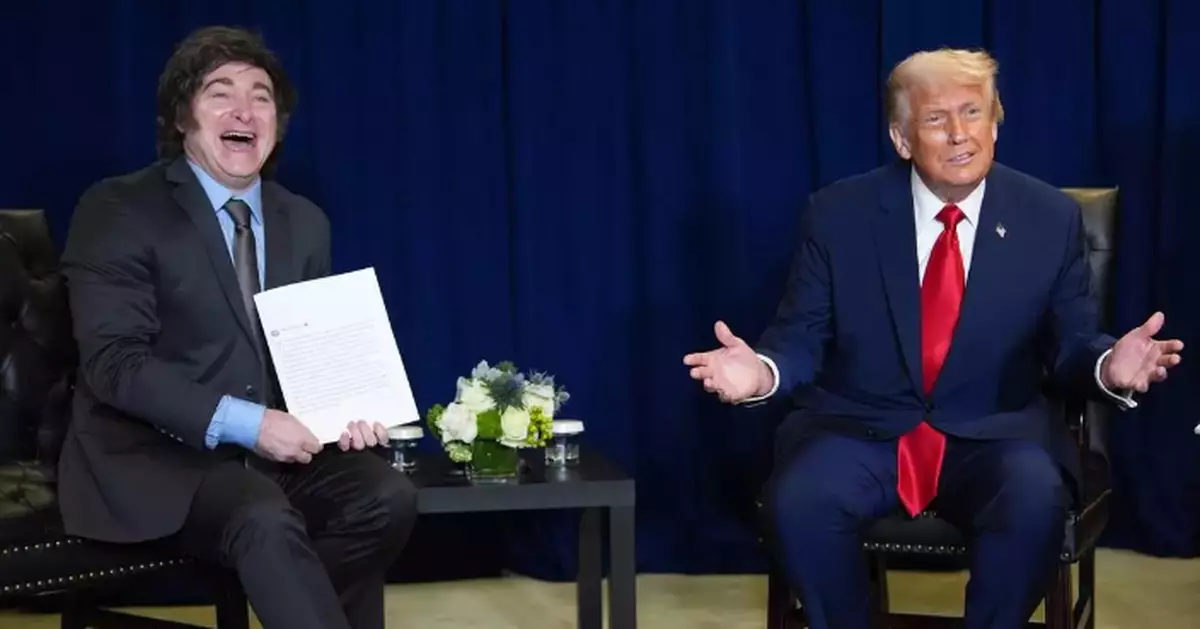
FILE - President Donald Trump meets with Argentine President Javier Milei during the United Nations General Assembly in New York, Sept. 23, 2025. (AP Photo/Evan Vucci, File)
Like his ally, U.S. President Donald Trump, Milei frequently posts AI-generated images on social media. He has proposed creating “nonhuman corporations” run entirely by AI agents.
“We are not going to regulate artificial intelligence,” Milei told the U.S. Chamber of Commerce in Washington last month. “We are going to leave it free.”
Visitor logs obtained by The Associated Press show a steady stream of tech figures meeting with Milei and his aides in recent months, from venture capitalist Peter Thiel to representatives of OpenAI, Amazon, Google, Oracle and data center companies. Foreign Ministry records show that data center developer Crusoe, which helped build OpenAI’s flagship campus in Texas, sought talks this year with Argentine energy officials about U.S. government-backed investments.
Milei’s hopes rest as much on geography as on ideology. Patagonia offers vast, open plains where noisy server farms can be built far from population centers, a chilly climate to cool the machines, powerful winds to generate electricity and one of the world’s largest shale deposits in Vaca Muerta to fuel power plants.
“In densely populated parts of the U.S. and Europe, there’s a lot of fighting over access to the grid and who should get the electricity,” said Marta Zlotkowska, head of international development at Green Capital, a Polish renewable energy company that plans to build a $3 billion data center in Patagonia to lease to big tech firms for AI computing, though it has yet to secure a customer.
“We compared potential locations for the project around the world and Argentina — well, Patagonia — came out on top in every category," she said.
For Argentina’s energy industry, already booming as the Iran war hikes oil prices, data centers represent a tantalizing new market. Pampa Energía, one of the country’s biggest power companies, has announced plans to supply immense amounts of gas-fired power to a data center near Vaca Muerta and is seeking developers.
“Being at the end of the world used to be a disadvantage,” said Rubén Etcheverry, a top official in Neuquén, the Patagonian province home to Vaca Muerta. “But today, faced with energy shortages and rising costs, investors are looking at us.”
To win over companies wary of Argentina’s chronic economic instability, Milei is pushing an incentive scheme that would slash the corporate income tax rate to 15% from 25% for projects of at least $1 billion in AI and other emerging industries. The measure is awaiting Senate approval.
The payoff for Argentines remains unclear. Data centers employ relatively few people. Milei’s proposed incentives don’t require companies to reserve computing capacity for local consumption or to disclose their energy and water use.
“We’re not talking about data centers designed to strengthen Argentine technological sovereignty,” said Alan Rocha Varsanyi, a researcher at Observatorio Petrolero Sur, an Argentine environmental group. “The computing capacity will be exported wherever OpenAI or the other companies need it.”
For all Milei’s hype, Argentina lags behind in the race to become a regional data center hub, as its neighbors tout cheap land, renewable power and expanding fiber-optic connections to U.S. tech giants.
Milei insists his calls for unfettered AI give Argentina an edge at a time when the European Union and a growing number of U.S. states have adopted new regulations. Critics warn he is pushing to deploy AI in Argentina without safeguards against risks ranging from mass surveillance to cyberattacks.
“Without rules, Argentina will become a laboratory — like when companies go to developing countries to test strange drugs they can’t test in major developed countries,” said Nicolás Wolovick, a computer science professor at the National University of Córdoba.
Milei may hear similar concerns next week when Pope Leo XIV, who has warned of AI’s threats to humanity, visits Argentina on his Latin American tour.
Even some in Milei’s own government acknowledge that his anti-regulation stance complicates efforts to build a clear legal framework, with one senior official not authorized to brief media saying companies are waiting for Argentina to settle rules on training AI with copyrighted works and sending personal data abroad.
Some investors are holding back until next year’s potentially tight presidential election, worried that if Milei loses, the next government could unravel his free-market reforms.
“One of our major challenges is getting foreign investors to understand that Argentina remains a friendly place for investment under different political parties,” said Andrés Arbeletche, cabinet coordination secretary for Chubut, a Patagonian province courting several AI mega-projects.
In remote ranching outposts across the treeless plateau of Chubut province, life revolves around tending flocks on steppes and shearing sheep in sheds. With the wool industry in decline after decades of drought, overgrazing and soaring production costs, some ranchers are betting on a different kind of shed — filled not with fleece but with blinking racks of servers.
“Sheep farmers are looking very hard at what alternatives can be found to bring in more income,” said Francisco Sáenz, an agricultural engineer and fourth-generation sheep farmer whose family is among 14 landowners who have leased a combined 130,000 hectares (about 321,000 acres) to Green Capital for its planned data center. The ranchers expect to keep grazing sheep alongside their colossal future neighbor.
Construction isn’t expected to begin until around 2028. If operated continuously at its projected peak demand, the finished campus would use about 2.7 times as much electricity in a year as the entire city of Buenos Aires consumed in 2025, according to an AP calculation.
Green Capital promises to generate all its own electricity from wind turbines, solar farms and gas-fired generators rather than strain Argentina’s congested grid. Provincial officials are counting on the project to deliver billions of dollars in investment, highly skilled jobs and a market for surplus wind power.
“For us, it is all a benefit, and we give nothing up,” Arbeletche said.
But some residents of Trelew, a dust-blown city near the proposed site, say they have no way to judge those assurances. Environmental studies are still underway, permits are pending and the company hasn’t specified how much water the project would need or how much of its power would come from gas.
“There’s just so little information,” said Cristina Gibón, 46, who fears the environmental toll of data centers. “Maybe we’ll have water until we’re old. But afterward, our children will still be here, and they won’t have those resources.”
Worries like hers are feeding a wider backlash against Milei's courtship of Big Tech. In Trelew, a small group of residents has rallied online and in the main square under the banner “Trelew Free of Data Centers.” In Congress, where lawmakers recently accused Milei of selling off the country at a hearing on billionaire Peter Thiel’s interests in Argentina, the opposition has forced the president to gut a bill easing restrictions on foreign land ownership and has stalled his plan to let AI agents control companies.
Back on his family’s farm, Sáenz sees a familiar Argentine reflex.
“Whenever a foreign company wants to make a major investment in Argentina, there’s a lot of criticism. Many people’s first reaction is to say, ‘No, they’re terrible people coming from the outside to take our resources,’” he said. “I’m not saying big companies are the best thing ever. I’m just saying that when I look at other countries, I see stable economies."
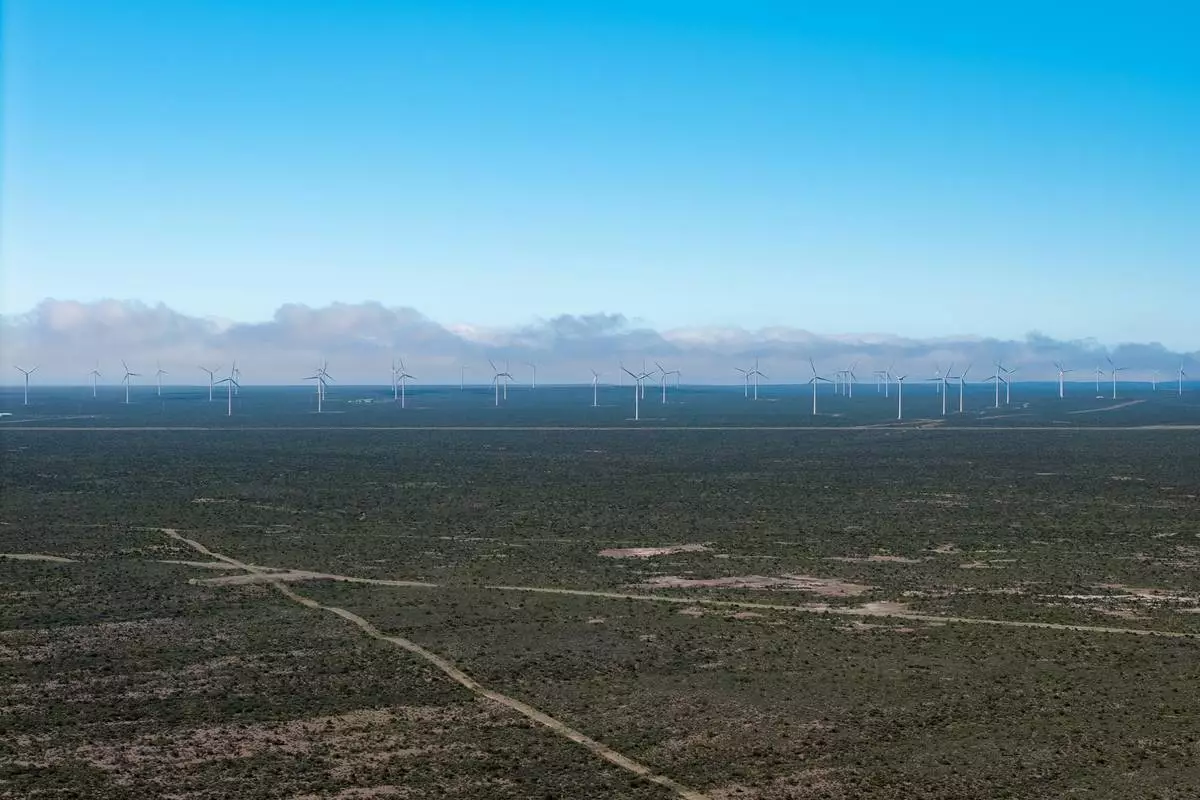
Wind turbines stand on the field near Trelew, Argentina, Wednesday, Oct. 28, 2026. (AP Photo/Cristian Kovadloff)

FILE - Argentina's President Javier Milei delivers a statement at the Organization for Economic Co-operation and Development headquarters, ahead of the ''Argentina Week'', an event aimed at promoting investment and business opportunities, in Paris, Oct. 1, 2026. (AP Photo/Teresa Suarez, File)
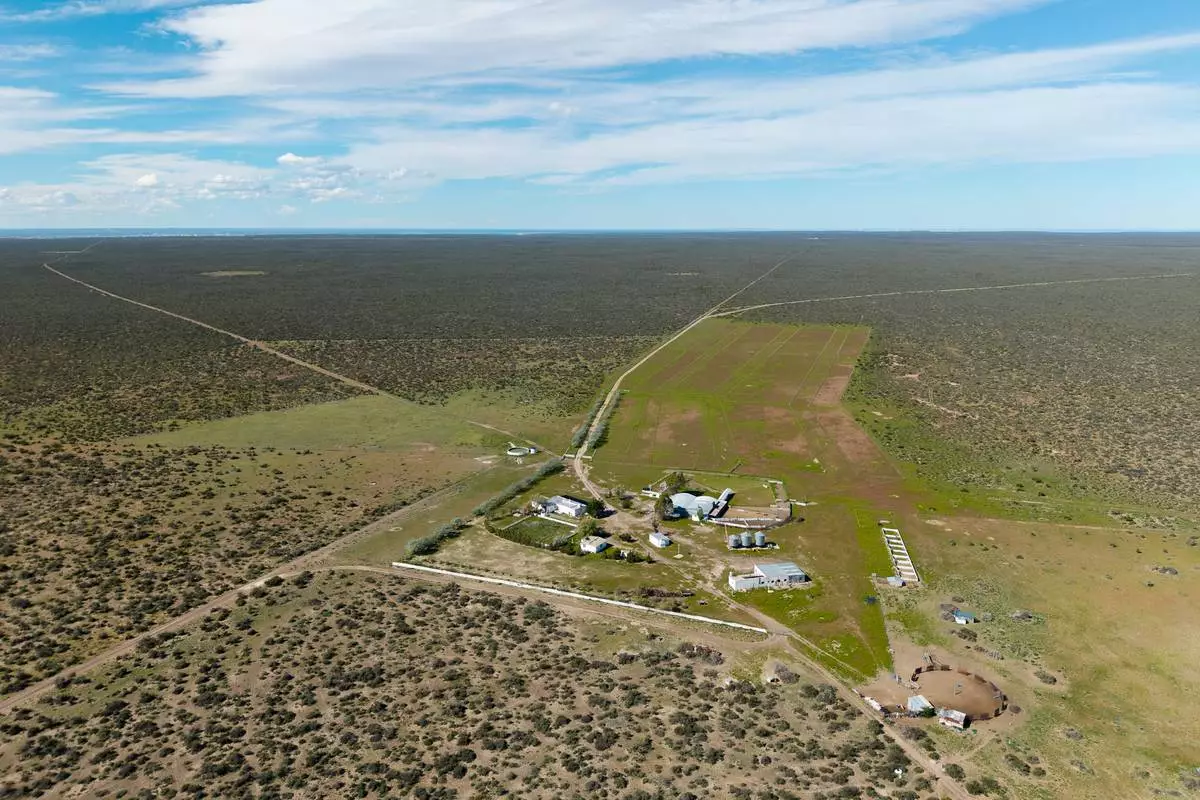
A view of Tatay ranch, one of the properties, picked to host a proposed data center complex near Trelew, Tuesday, Oct. 27, 2026. (AP Photo/Cristian Kovadloff)
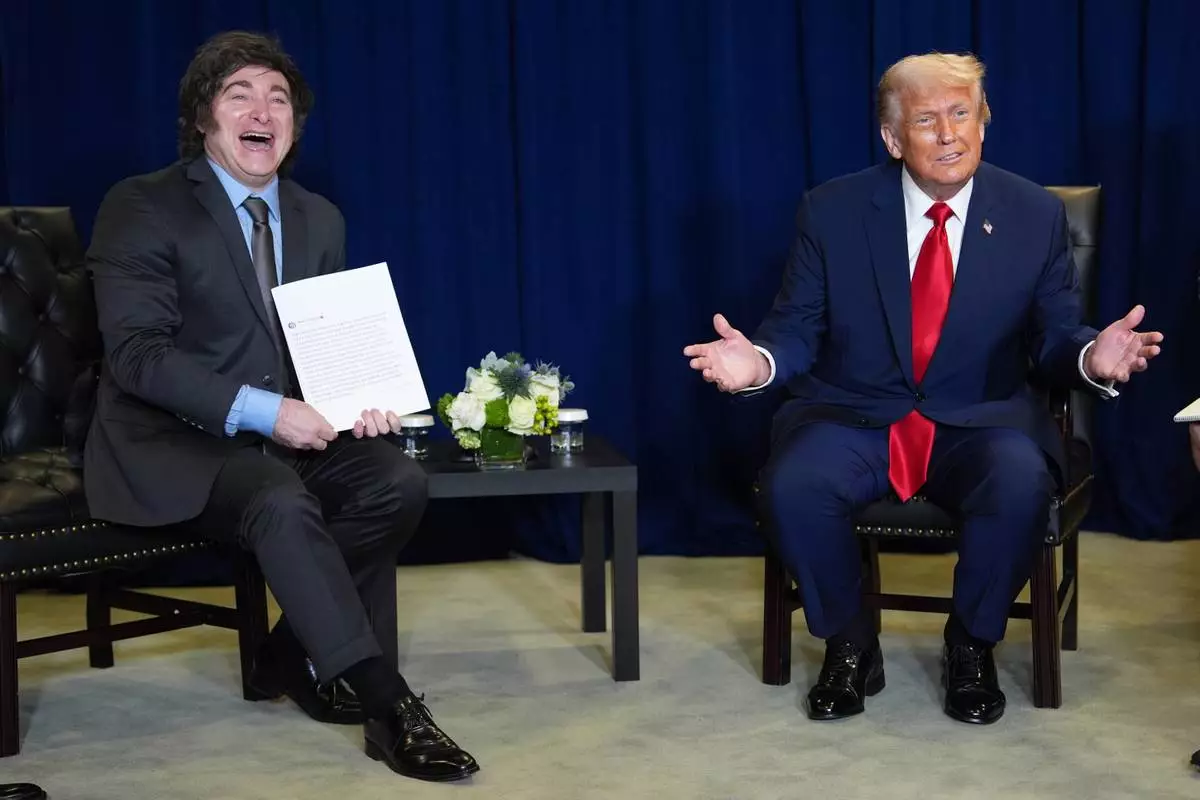
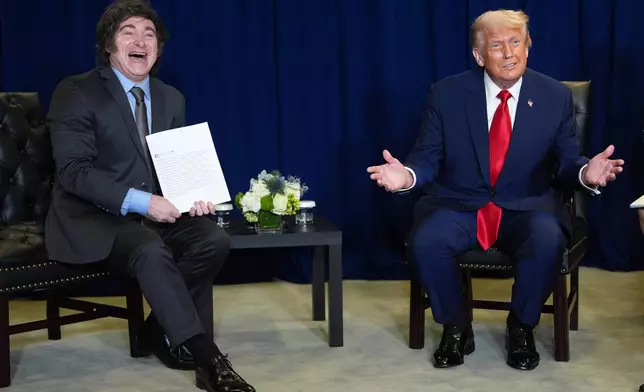
FILE - President Donald Trump meets with Argentine President Javier Milei during the United Nations General Assembly in New York, Sept. 23, 2025. (AP Photo/Evan Vucci, File)
President Donald Trumpclosed out the final weekend of a turbulent midterm campaign with rallies in two states he had handily won in the past. At the same time, Democrats began to fracture in Michigan, risking their effort to retake the Senate. Michigan Democrat Abdul El-Sayed’s former opponent in the U.S. Senate primary, Haley Stevens, stunned party officials Sunday by endorsing Republican Mike Rogers as Democratic tensions boiled over days before the election.
Trump will make his closing pitch of the midterm elections Monday afternoon at the Lincoln Memorial Reflecting Pool, pushing his slow, expensive and problem-plagued efforts to repair it back into the spotlight on the eve of Election Day.
The Latest:
For President Donald Trump, this week’s elections are about him. For his fellow Republicans, the risk is voters will agree.
Midterms almost always serve as a referendum on the president’s party, and losses typically ensue. But Trump’s decisions to impose tariffs, start a war and oversee extravagant Washington renovations — largely without congressional consultation — have made it harder for Republicans to navigate those historical headwinds.
There is a direct connection between his actions and higher gas prices, costlier groceries and persistently high inflation.
Republicans cannot blame the fallout from those decisions on past administrations when Trump has owned them so fulsomely. They also cannot easily distance themselves from an unpopular president who demands loyalty and routinely tells voters the economy is just fine.
At virtually every juncture before Election Day on Tuesday, Trump has complicated the task of protecting Republican majorities in Congress.
The Iran war is “making it exponentially harder for Republicans to keep the House and Senate,” Rep. Derrick Van Orden of Wisconsin, one of the most vulnerable House Republicans, said in a debate while noting his support for the effort.
The NAACP is asking a judge for an emergency order limiting which federal staffers can monitor the polls on Election Day.
The group wants law enforcement agents from the Federal Bureau of Prisons, the Drug Enforcement Administration and the Bureau of Alcohol, Tobacco, Firearms and Explosives to be barred from the role because they could intimidate voters.
“DOJ’s decision to deploy federal law enforcement agents and personnel to election sites is unlawful and serves a plain purpose: to intimidate voters and election workers alike, and to have a chilling effect on in-person voting on Election Day,” the group wrote in its overnight filing.
The Justice Department has insisted its election monitors around the country on Election Day will be there to observe and will not interfere with voting.
President Donald Trump’s administration has made $15 billion in promises to agricultural producers in the weeks before Tuesday’s midterm elections, initiatives intended to offset higher diesel and fertilizer costs that farmers have endured largely due to his tariffs and the Iran war.
Whether that will motivate more voters to turn out in agricultural states where traditionally Republican seats are now seen as competitive is unclear. It may explain Trump’s increased attention on rural areas, including visits Sunday to Iowa and Kansas.
Of the $15 billion, more than half will go toward a one-time payment plan for farmers impacted by soaring diesel prices. Beyond the $15 billion, the agency also plans $13.8 billion in payments to offset shortfalls during the 2025 crop year for farmers who grow key crops such as corn, soybeans, wheat and rice.
Increased fertilizer and fuel costs have made it difficult for farmers to turn a profit this year. Last year, tariffs drove up expenses for other equipment farmers use, and the trade war with China caused a near boycott of U.S. agricultural goods.
The Justice Department has defended the accuracy of a list that it says has more than 20,000 suspected noncitizens registered to vote in California and suggested that an immigrant rights group should face contempt charges over an analysis of the names.
U.S. District Court Chief Judge James Boasberg had allowed the Coalition for Humane Immigrant Rights access to data on people the Trump administration alleges are noncitizen voters. Boasberg ordered the plaintiffs not to disclose any names and to use the data only for arguments about why they have legal standing to challenge its use.
In a Saturday court filing, the group said more than 40% of the people on the list do not appear in the state’s voter file. The filing also identified 22 people who were likely naturalized U.S. citizens while saying that thousands more American citizens appeared to be on it.
The Justice Department argued Sunday that the group’s filing had nothing to do with its legal standing and therefore violated Boasberg’s order. The agency also suggested that Boasberg refer the matter for investigation into possible contempt of court.
▶ Read more
In dozens of Associated Press interviews across the United States, many voters say the America they’ve known is slipping away.
They see lawlessness coming from those who create the laws, hate stirred by politicians and a culture that doesn’t speak to how they live. The angst was palpable among people who cast ballots at advance polling places or drop boxes ahead of Tuesday’s election, which will determine the political party that controls Congress in the final two years of Republican Donald Trump’s presidency.
“He’s just destroying us,” Democrat Linda Markle, 72, said of the president. She spoke outside the Warminster Township library in Bucks County, Pennsylvania.
“I am so afraid for this country,” she said. “People used to look out for each other. Not anymore.”
Trump supporter Therese Mennell in Ohio said he gets it. “There’s that kind of arrogant vibe about him that people don’t like, and sometimes I shut him off because of the way he talks,” the retiree said in Wayne County. “But, I mean, he’s doing the right thing. He is saving our country.”
▶ Read more
In the sleepy Alaskan fishing community of Petersburg, nobody has seen Dan J. Sullivan for weeks.
His rustic home stood dark a day after FBI agents visited friends who donated to his quixotic campaign to unseat the Republican senator with the same first and last name — Dan S. Sullivan. The only display of politics at his home was a yard sign from the League of Women Voters: “Stand Up for Democracy: Vote 2026.”
What may have begun as a ploy to harm the reelection prospects of Sen. Sullivan has taken a serious turn as the Trump administration weighs criminal charges over a campaign tactic known as “ballot stacking.”
“It just seems like such a waste of our taxpayer money,” said Sharon Hunter, a Petersburg resident who, with her husband, donated $1,000 to Dan J. Sullivan, a former elementary school teacher. FBI agents knocked on her door Saturday during a round of interviews with the campaign’s dozen contributors.
“I’m a bit incredulous about their whole angle,” Hunter said, “because they’re targeting a person who’s been a real contributor in this community.”
▶ Read more
Trump is making his closing pitch of the midterm elections at the Lincoln Memorial Reflecting Pool, pushing his slow, expensive and problem-plagued efforts to repair it back into the spotlight on the eve of Election Day.
In comments to reporters as he deplaned from Air Force One for a Sunday rally in Iowa, Trump said his speaking at the site would “show how beautiful it is.”
“We might hold it tomorrow or something,” the president added, without giving specifics. Hours later, the White House formally announced he’d be giving a speech there Monday afternoon.
Rather than using Monday to travel to key states and try to energize his “Make America Great Again” supporters as his Republican Party tries to maintain control of Congress, Trump opted for an event at a Washington renovation project that has been embarrassing and contentious.
The unusual move marks a departure from Trump’s monthlong race to stage more than 25 rallies in largely conservative areas, hoping the GOP can overcome his own low approval ratings and polls predicting that the Iran war, high energy prices and cost of living increases could spell a strong election night for Democrats.
▶ Read more
Michigan Democrat Abdul El-Sayed’s former opponent in the U.S. Senate primary, Haley Stevens, stunned party officials Sunday by endorsing Republican Mike Rogers as Democratic tensions boiled over days before the election that could determine the balance of power on Capitol Hill.
Stevens endorsed Rogers after attending a Detroit church service with him. The remarkable show of support for the President Donald Trump-backed candidate in the tightly contested race comes after she was uninvited to a joint event the same day with El-Sayed, who defeated the congresswoman by a slim margin in the August primary.
“Our Democratic nominee for Senate said I was no longer welcome in his campaign and that I should stay away,” Stevens said in a video announcing the endorsement, which led her top aide to quit. “And he’s right. And that’s why I am endorsing Mike Rogers for the United States Senate today.”
El-Sayed dismissed the endorsement when asked about it by reporters later Sunday, saying he’s focused on issues voters care about, such as the high cost of living.
“At the end of the day, I actually don’t think about Haley Stevens,” he said, adding later: “None of this matters.”
▶ Read more
President Donald Trump closed out the final weekend of a turbulent midterm campaign with rallies in two states he has handily won in the past, while Democrats began to fracture in Michigan, risking their effort to retake the Senate.
The president was in Salina, Kansas, and Dubuque, Iowa, on Sunday. Republicans in both states are fending off robust challenges from Democrats, threatening GOP majorities in the Senate while they’re already at risk in the House.
But in Iowa, Trump insisted Republicans were on the verge of sweeping victories on Election Day on Tuesday.
“We’re going to elect ‘America first’ Republicans up and down the line,” he said near the start of a speech that lasted two hours, long even for Trump, who is known for his lengthy, freewheeling rallies.
Later, he arrived tardy in Kansas, where Air Force One performed a theatrical flyover before landing for an outdoor, airport rally. Hundreds of people started leaving midway through his nearly 90-minute speech in rural central Kansas, which didn’t end until nearly 10 p.m. local time.
▶ Read more
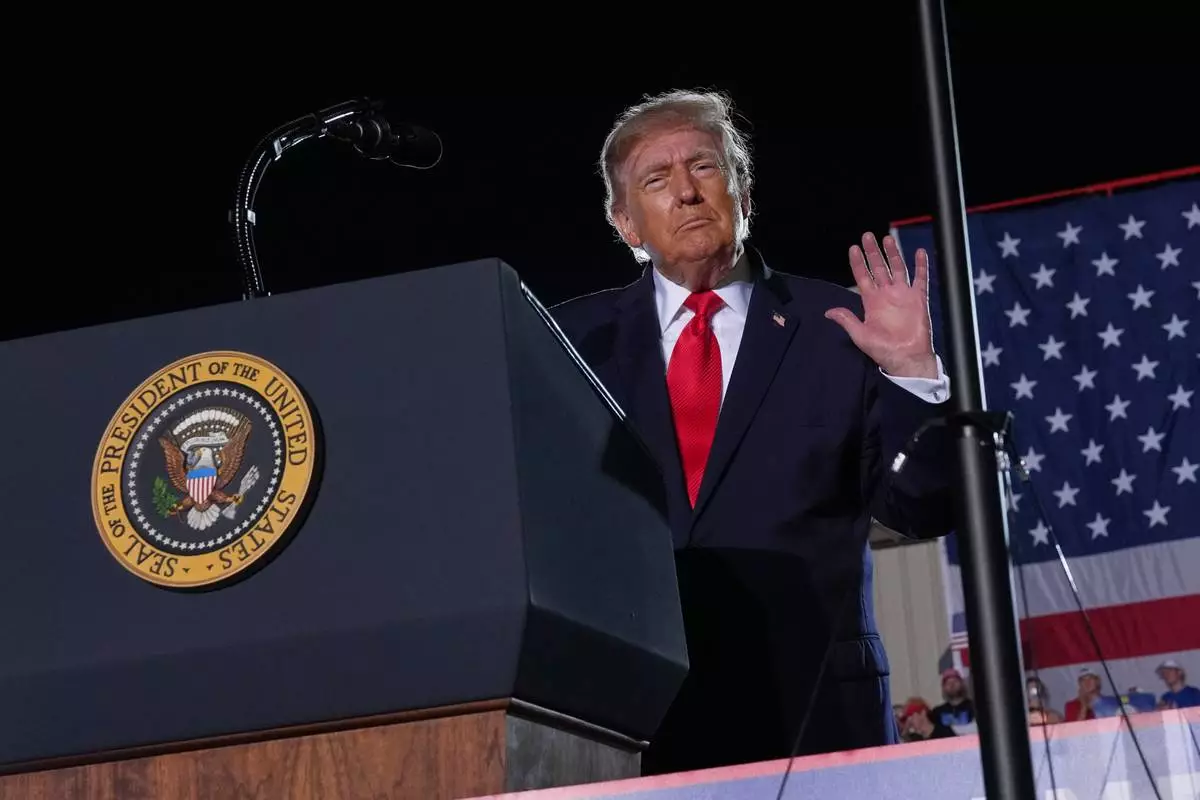
President Donald Trump speaks at a campaign rally at the Salina Regional Airport, Sunday, Nov. 1, 2026, in Salina Kan. (AP Photo/Jacquelyn Martin)
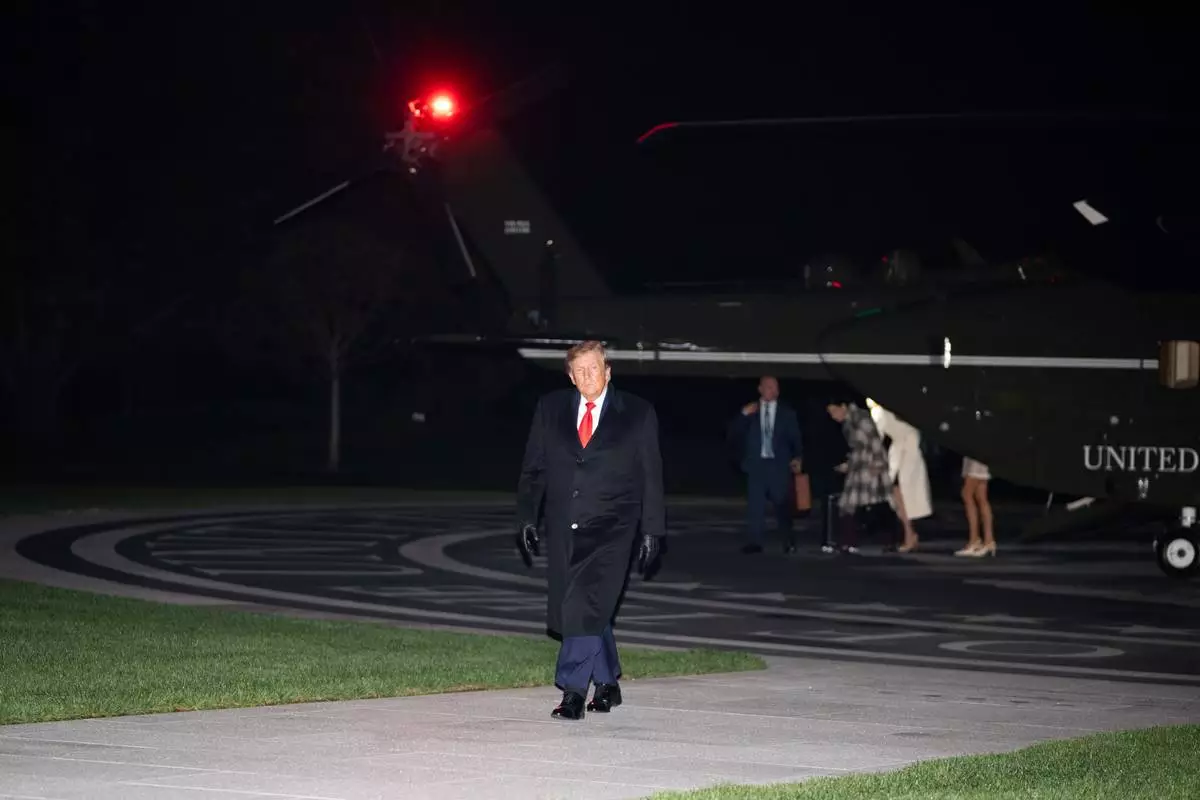
President Donald Trump walks across the South Lawn of the White House after stepping off Marine One, Monday, Nov. 2, 2026, in Washington. (AP Photo/Allison Robbert)
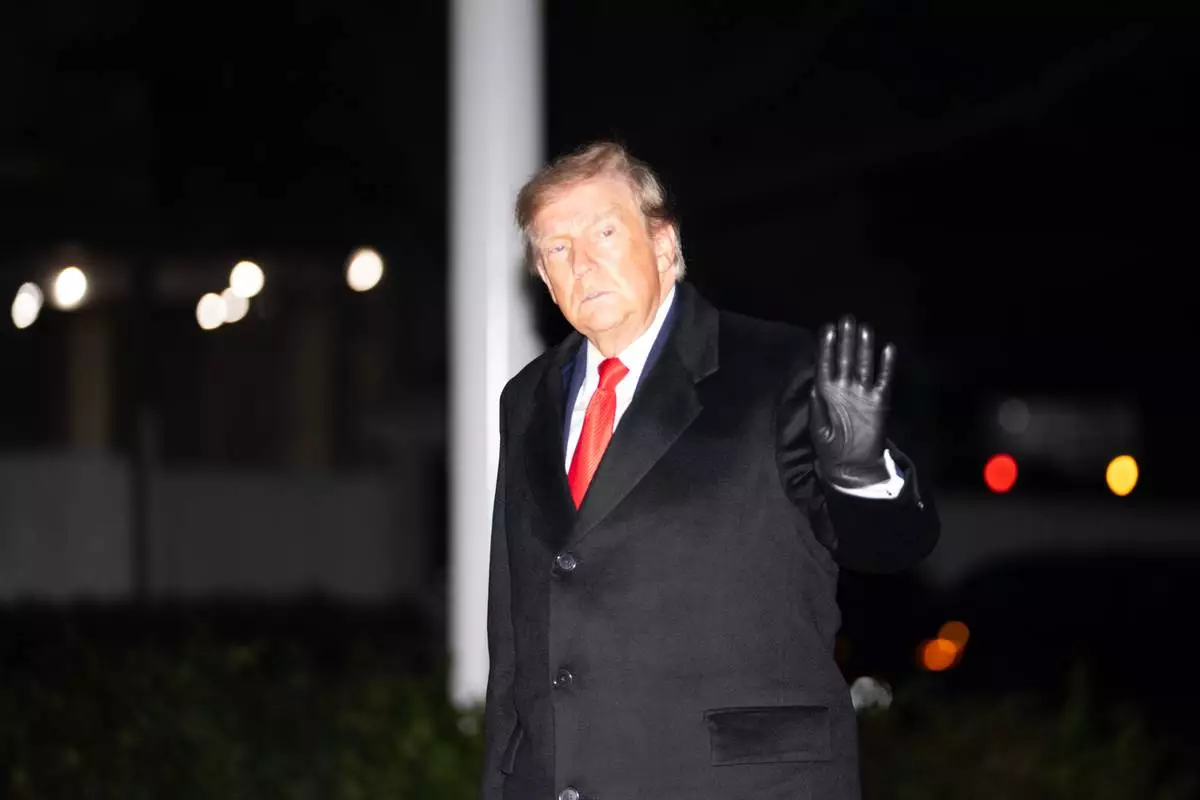
President Donald Trump walks across the South Lawn of the White House after stepping off Marine One, Monday, Nov. 2, 2026, in Washington. (AP Photo/Allison Robbert)