FREMONT, Calif.--(BUSINESS WIRE)--Nov 2, 2026--
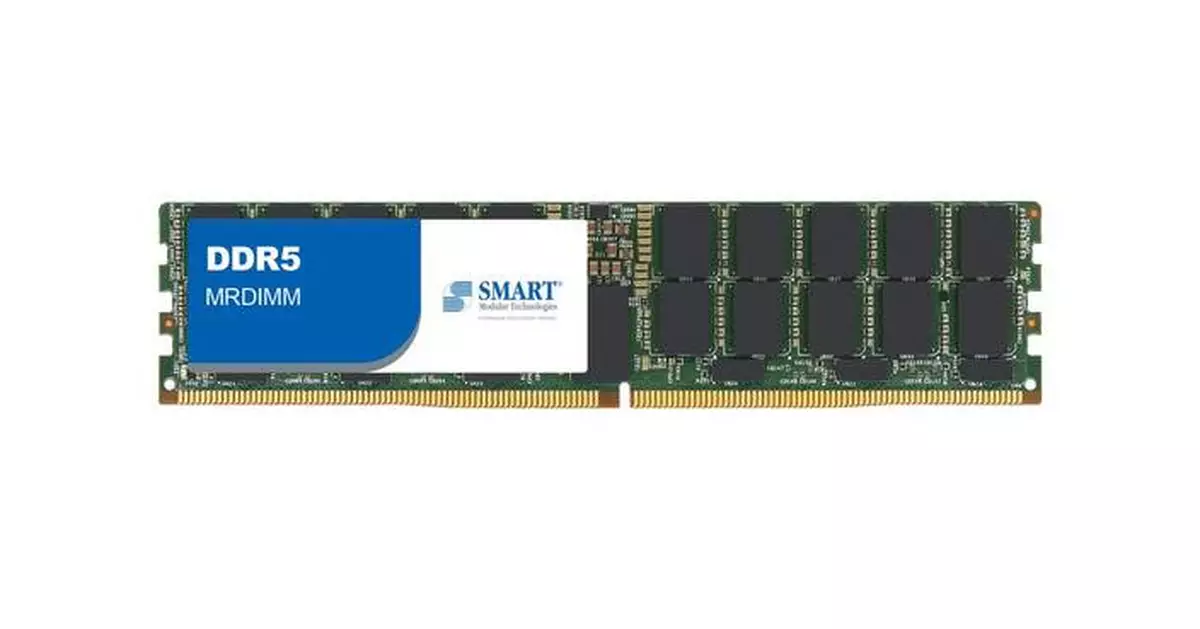
Penguin Solutions, Inc. (Nasdaq: PENG ), the AI Factory Platform Company, today announced its newest SMART Modular DDR5 Multi-Ranked Dual In-line Memory Module (MRDIMM), expanding its portfolio of memory solutions designed for AI data centers. Running at industry-leading DDR5-12800 speeds, these new MRDIMMs address growing bandwidth demand created by the exponential growth in AI inference and agentic AI workloads.
This press release features multimedia. View the full release here: https://www.businesswire.com/news/home/20261030392535/en/
Demonstrating Penguin’s expertise at the intersection of data center AI infrastructure and memory solutions, the SMART Modular MRDIMMs include industry-leading thermal and electrical protections and utilize an innovative architecture that multiplexes two physical ranks into a single logical rank to avoid traditional speed limitations. This significantly increases memory bandwidth compared to standard RDIMMs, helping improve memory subsystem performance for next-generation server platforms.
To ensure mission-critical stability at these unprecedented speeds, the MRDIMMs are available with Penguin’s proprietary and comprehensive Zefr high-reliability testing. This rigorous memory screening process simulates demanding real-world operating conditions to help identify and mitigate potential timing and electrical signal integrity issues, delivering dependable performance and data integrity required for mission-critical AI infrastructure.
“As AI workloads become increasingly memory-intensive, customers need greater bandwidth without compromising reliability,” said Arthur Sainio, Director of Integrated Memory Product Marketing for Penguin Solutions. “Our latest SMART Modular MRDIMMs combine DDR5-12800 data rates with optional Zefr high-reliability testing to help customers improve memory performance and support the demanding requirements of applications such as financial services.”
Key markets and applications for these advanced memory modules include:
For more information on this new product, please visit the SMART Modular MRDIMM product page or contact us for more details.
Penguin Solutions, SMART Modular Technologies, and Zefr are trademarks or registered trademarks of Penguin Solutions, Inc. or its affiliates. All other trademarks are the property of their respective owners.
About Penguin Solutions
Penguin Solutions is the AI Factory Platform Company. We design, build, and manage next-generation data centers for enterprises, sovereign AI initiatives, and neocloud providers.
With deep design expertise at the intersection of data center AI infrastructure and memory solutions, our Full-Stack AI Factory Platform combines differentiated infrastructure software, advanced memory, compute systems, end-to-end services, and industry-leading partner technologies to help customers accelerate deployment, optimize token economics, and maximize the return on their AI investments.
Learn more at PenguinSolutions.com.
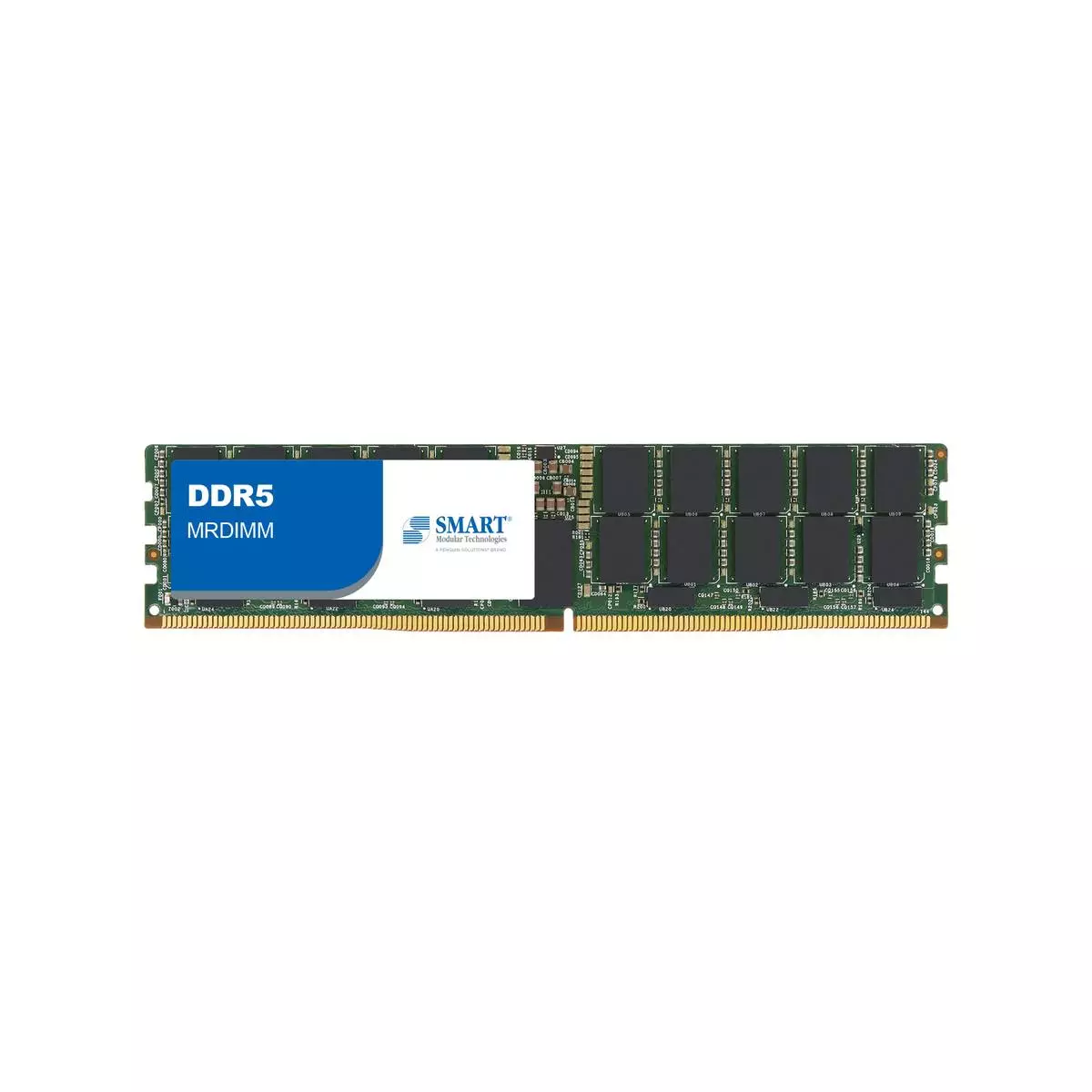
Penguin Solutions Introduces High-Bandwidth SMART Modular MRDIMMs for Next-Generation AI Data Centers
NEW YORK (AP) — Jerry Koosman, an All-Star left-hander who got the final out of the Miracle Mets' shocking 1969 World Series victory over the Baltimore Orioles, died Sunday. He was 83.
Mets spokesman Jay Horwitz said Koosman had been sick for about a year and died of multiple illnesses in Osceola, Wisconsin, surrounded by his children.
Koosman jumping onto catcher Jerry Grote as they hugged on the Shea Stadium mound after the final out of the World Series remains an iconic image in baseball history. The Mets had never finished with a winning record before 1969.
“We were so choked up with emotion we couldn’t talk,” Koosman was quoted as saying in Peter Golenbock’s 2002 book, “Amazin’: The Miraculous History of New York’s Most Beloved Baseball Team.”
Koosman went 222-209 with a 3.36 ERA over 19 major league seasons, throwing 140 complete games that included 33 shutouts and becoming a two-time 20-game winner.
Relying primarily on fastballs and curves, he was 140-137 with a 3.09 ERA for the Mets from 1967-78, then pitched for Minnesota (1979-81), the Chicago White Sox (1981-83) and Philadelphia (1984-85).
"I feared losing. I didn't want to be looked upon as a loser by anyone," Koosman said in a 2019 interview with Mets broadcaster Howie Rose.
An expansion franchise that launched in 1962, the Mets lost 100 games in five of their first seven seasons and had not come come close to a winning record.
Then in 1969, they surged into first place on Sept. 10 during a 10-game winning streak, winning 38 of their last 49 games and finishing atop the new National League East with a 100-62 record. New York’s No. 2 starter behind future Hall of Famer Tom Seaver, Koosman went 17-9 with a 2.28 ERA in 32 starts in 1969.
Koosman was knocked out in the fifth inning in Game 2 against Atlanta of the first NL Championship Series before the Mets rallied and went on to sweep the Braves in the best-of-five matchup.
After Baltimore beat Seaver and the Mets 4-1 in the World Series opener, Koosman allowed one run over 8 2/3 innings and got the victory as New York won Game 2 by 2-1. Koosman pitched a five-hitter in Game 5, retiring future Mets manager Davey Johnson on a game-ending flyout to left fielder Cleon Jones as thousands of fans rushed onto the field at Shea Stadium.
“I turn around and look at Cleon and I see Cleon going back and, uh, the first thing is the heart stops," Koosman told Rose. “Well, then you see him slow down — oh, God, now you know it's OK. Now the only other thing is: Don't drop the ball.”
Koosman was honored with a parade when he returned home to Morris, Minnesota.
Born in Appleton, Minnesota, on Dec. 23, 1942, Koosman played baseball while with the U.S. Army at Fort Bragg in North Carolina. According to his biography by Irv Goldfarb of the Society for American Baseball Research, his catcher was John Luchese, son of a Shea Stadium usher. Luchese told his father about Koosman, who passed the information to Joe McDonald in the Mets' front office. Koosman signed on Aug. 27, 1964, for $1,600.
Koosman worked his way up the minor league system and made his big league debut on April 14, 1967, at Philadelphia’s Connie Mack Stadium with 2 2/3 hitless innings of relief. He was sent to Triple-A Jacksonville when rosters were trimmed and led the International League with 183 strikeouts.
He made it to the major leagues for good in 1968, pitching a four-hit shutout at Dodger Stadium in his first start. He was picked for the All-Star team and faced one batter, striking out Carl Yastrzemski for the final out in the NL's 1-0 win at Houston's Astrodome.
Koosman finished 19-12 with a 2.08 ERA on a staff led by Seaver that included a young Nolan Ryan. He finished second to Cincinnati catcher Johnny Bench in NL Rookie of the year voting
He was part of the 1969 rotation with Seaver, Gary Gentry, Don Cardwell and Jim McAndruw, again making the All-Star team.
“There’s the old saying: good pitching gets out good hitting,” Koosman when the Mets retired his No. 36 in 2021. “So that’s what happened and our pitching kind of took over.”
With the Mets trailing 3-0 in the sixth inning of Game 5 against the Orioles, Cleon Jones claimed a Dave McNally pitch hit him. The ball bounced to Koosman, seated in the Mets dugout by manager Gil Hodges.
“As I bent down, Gil says: `Swipe it against your shoe,'" Koosman told Rose.
Hodges then showed the ball to plate umpire Lou DiMuro, who awarded Jones first base. Donn Clendenon followed with a two-run homer, starting the Mets' comeback in a 5-3.
“Maybe it wasn't mine. Maybe it was Cleon's show polish,” Koosman said.
He made two starts in the 1973 World Series against Oakland, getting no decision in Game 2 and winning Game 5.
With the Mets in decline, Koosman told the team after the 1978 season he would retire unless traded. The Mets dealt him to the Twins in December 1978, and he later was traded to the White Sox in August 1981 and to the Phillies in February 1984.
He is survived by sons Michael and Shawn, and daughter Danielle. His marriage to the former LaVonne Sorum ended in a divorce.
See AP’s full MLB coverage here
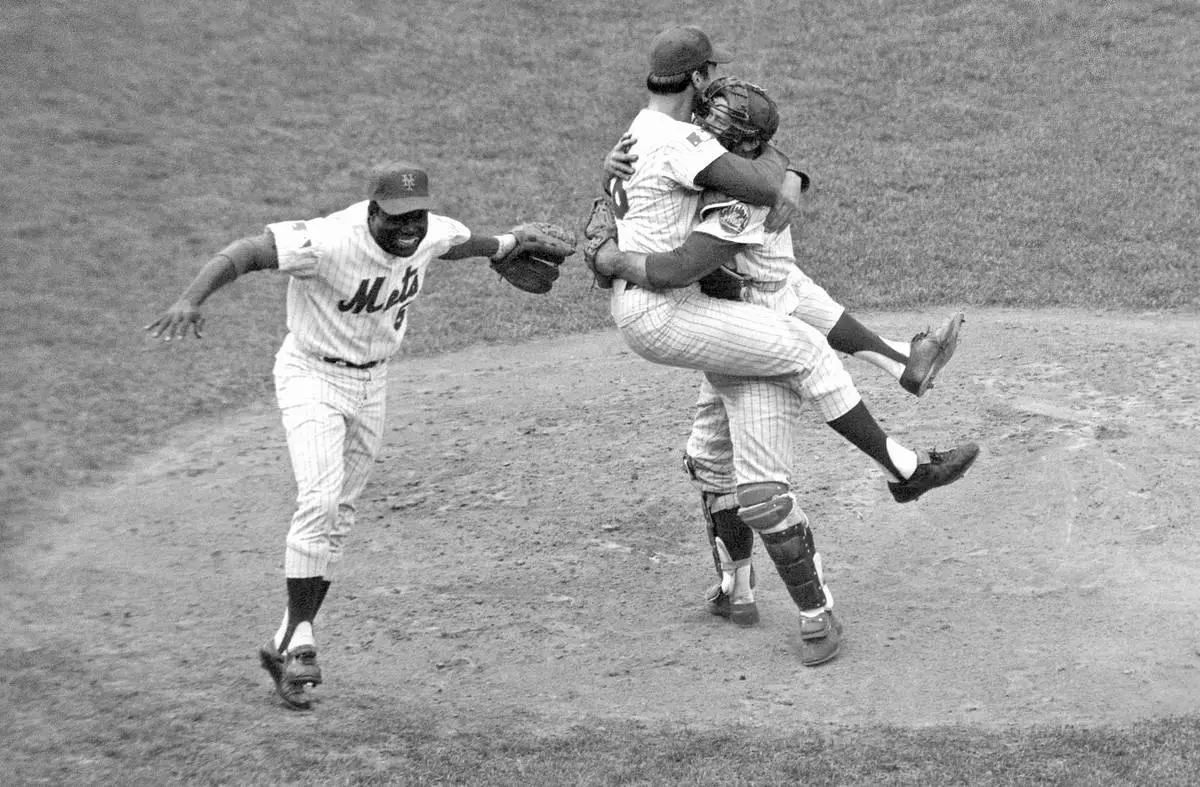
FILE - New York Mets catcher Jerry Grote embraces pitcher Jerry Koosman as Ed Charles, left, joins the celebration after the Mets defeated the Baltimore Orioles in the Game 5 to win baseball's World Series at New York's Shea Stadium on Oct. 16, 1969. (AP Photo, File)
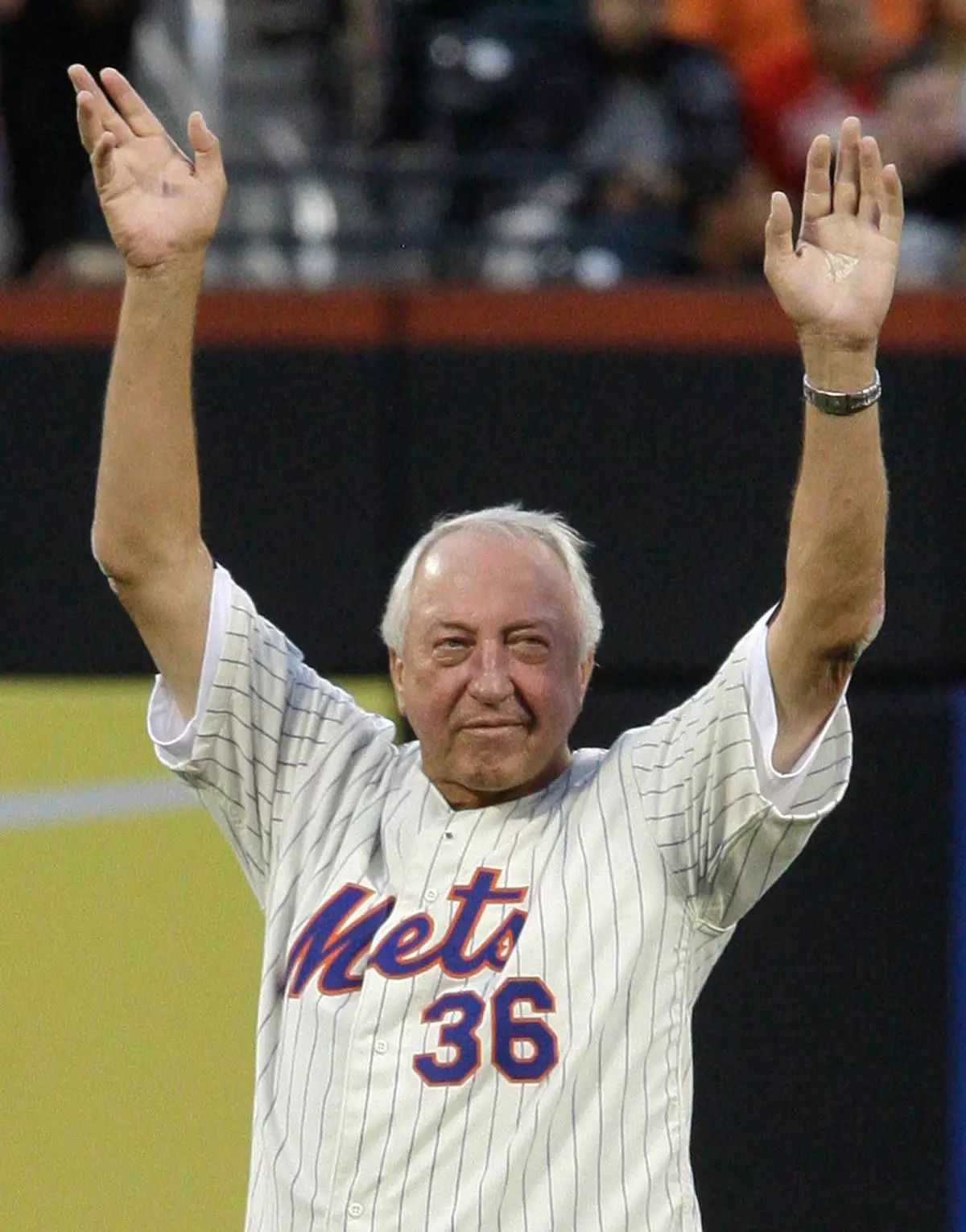
FILE - Jerry Koosman, a member of the 1969 New York Mets baseball teamgestures before a pre-game ceremony before the Mets play the Phillies, Aug. 22, 2009, in New York. (AP Photo/Frank Franklin II, File)
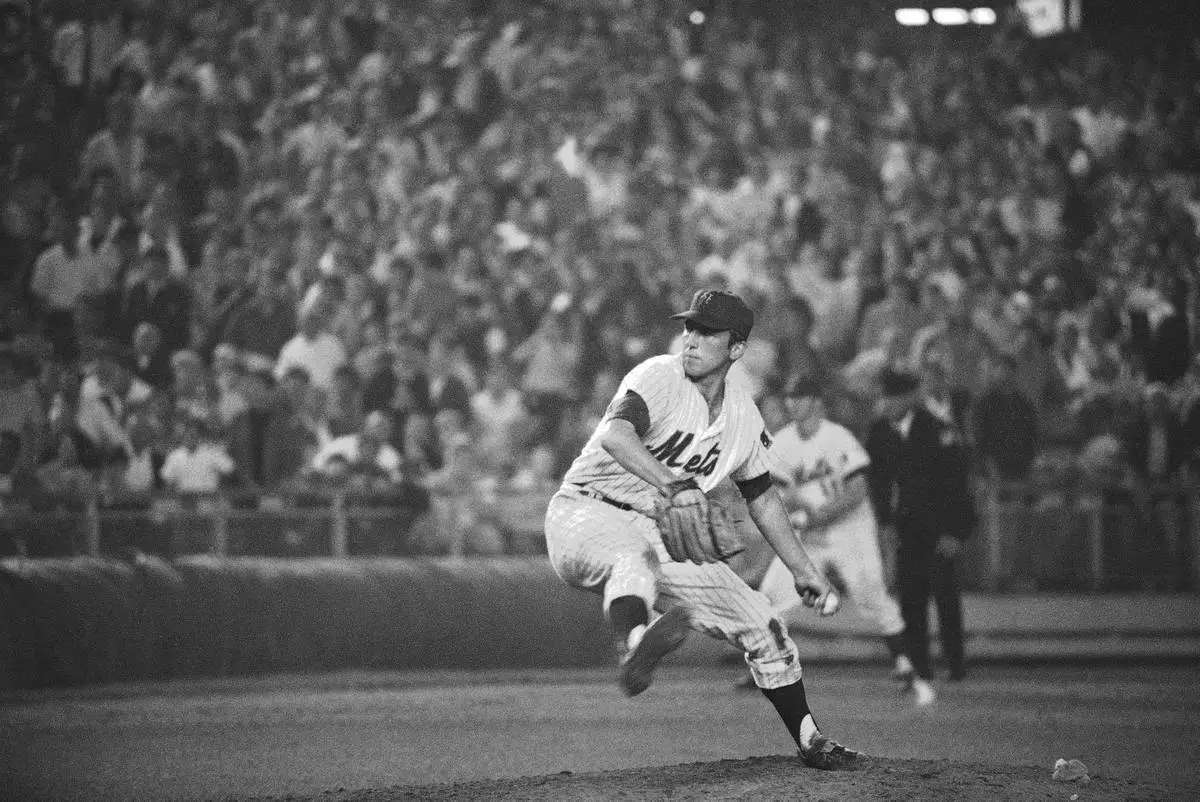
FILE - Jerry Koosman of the New York Mets makes his last pitch against the Chicago Cubs on Sept. 8, 1969. (AP Photo/Ron Frehm, File)