Skip to Content Facebook Feature Image

Green Hills Software Announces MCOR MultiCore OpenGL Renderer for DO-178C Safety-Critical Applications

Business

Green Hills Software Announces MCOR MultiCore OpenGL Renderer for DO-178C Safety-Critical Applications
Business

Business

Green Hills Software Announces MCOR MultiCore OpenGL Renderer for DO-178C Safety-Critical Applications

2026-11-02 21:05 Last Updated At:21:20

SANTA BARBARA, Calif.--(BUSINESS WIRE)--Nov 2, 2026--

Green Hills Software today announced the availability of the MCOR™ MultiCore OpenGL Renderer for safety-critical applications, up to and including the highest design assurance level (DO-178C/ED-12C DAL A). MCOR is an OpenGL ® SC 2.0 graphics driver that delivers scalable, high-performance graphics rendering across multiple CPU cores without using any GPU resources. By using the unique multiprocessing capabilities of the INTEGRITY ® -178 tuMP™ real-time operating system (RTOS), MCOR seamlessly scales graphics performance across a user-defined number of CPU cores. MCOR serves a broad range of 2D and 3D graphics applications, from simple human-machine interfaces (HMIs) to primary flight displays (PFDs) and moving map displays.

This press release features multimedia. View the full release here: https://www.businesswire.com/news/home/20261102731168/en/

“MCOR is a game changer for certifiable graphics applications because it provides freedom from dependencies on overly complex GPUs and GPU drivers,” said Dan O'Dowd, CEO of Green Hills Software. “MCOR builds on the unrivaled multicore airworthiness pedigree of the INTEGRITY-178 tuMP RTOS to deliver a high-performance, DAL A certifiable graphics solution across multiple processor architectures.”

Unlike other graphics drivers, MCOR provides an open-standard interface with user-defined shader programs that scale across multiple CPU cores to deliver deterministic high performance. With that scalable performance, it can drive a 1920x1080 display at 60Hz while leaving processing power for other applications. The key differentiators of MCOR from GPU drivers are that it is designed for DAL A certification, it avoids the interference created by traditional GPU implementations, and it includes features not available for GPUs, such as allowing multiple applications to write windows on the same display.

MCOR runs on top of the safety-critical INTEGRITY-178 tuMP RTOS, which has an unparalleled pedigree of DO-178C DAL A certifications. INTEGRITY-178 was the first commercial partition-enforcing RTOS approved as complying with DO-178B Level A objectives (2002), and the first RTOS included in a multicore certification to DO-178C and AC 20-193/CAST-32A objectives. INTEGRITY-178 tuMP includes Bandwidth Allocation and Monitoring (BAM) technology as a general solution for mitigating multicore interference. BAM ensures that critical applications get their allocated access to shared resources in order to meet their required deadlines, significantly lowering integration and certification risk. Because MCOR runs on the CPU cores, any multicore interference between it and other applications is also mitigated by BAM technology. Green Hills Software has delivered over 90 unique customer safety and security certification evidence packages and is currently in the verification phase for providing DO-178C and AC 20-193 (formerly CAST-32A) airworthiness evidence for INTEGRITY-178 tuMP running on quad-core 11th Gen Intel ® Core™ i7 processors (formerly Tiger Lake).

About Green Hills Software

Founded in 1982, Green Hills Software is the worldwide leader in embedded safety and security. In 2008, the Green Hills INTEGRITY-178 RTOS was the first and only operating system to be certified by NIAP (National Information Assurance Partnership comprised of NSA & NIST) to EAL 6+, High Robustness, the highest level of security ever achieved for any software product. Our open architecture, integrated development solutions address deeply embedded, absolute security and high-reliability applications for the military/avionics, medical, industrial, automotive, networking, consumer and other markets that demand industry-certified solutions. Green Hills Software is headquartered in Santa Barbara, CA, with European headquarters in the United Kingdom. Visit Green Hills Software at www.ghs.com.

Green Hills, the Green Hills logo, INTEGRITY, tuMP and MCOR are trademarks or registered trademarks of Green Hills Software in the U.S. and/or internationally. All other trademarks are the property of their respective owners.
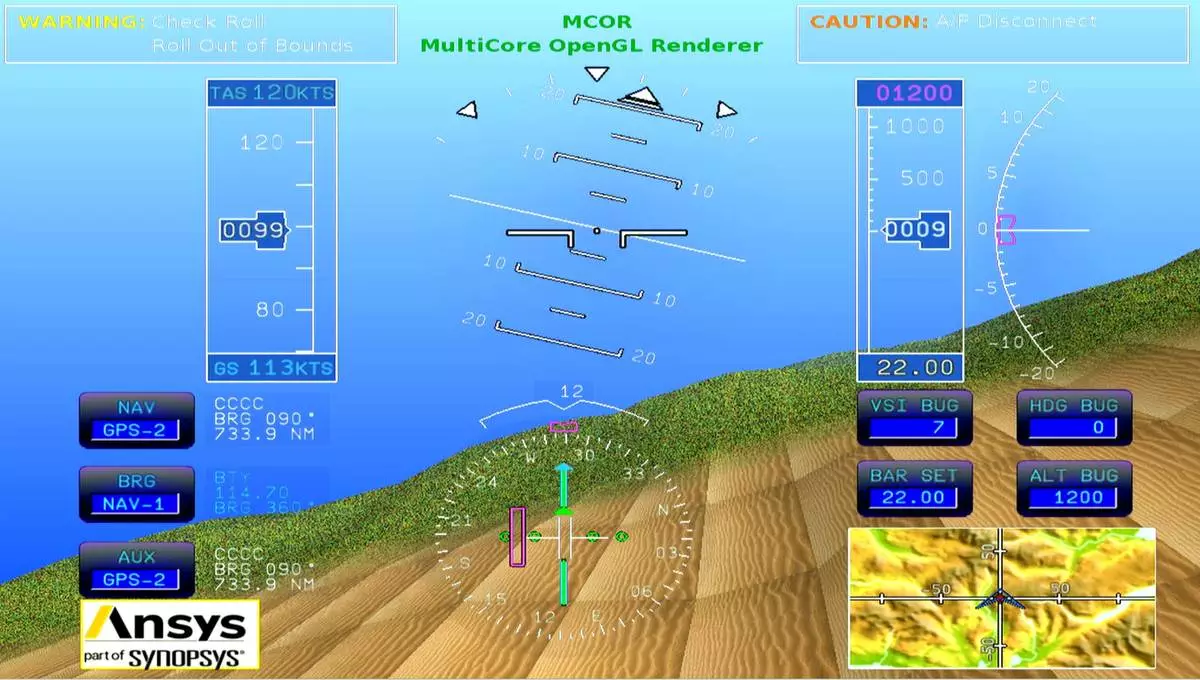
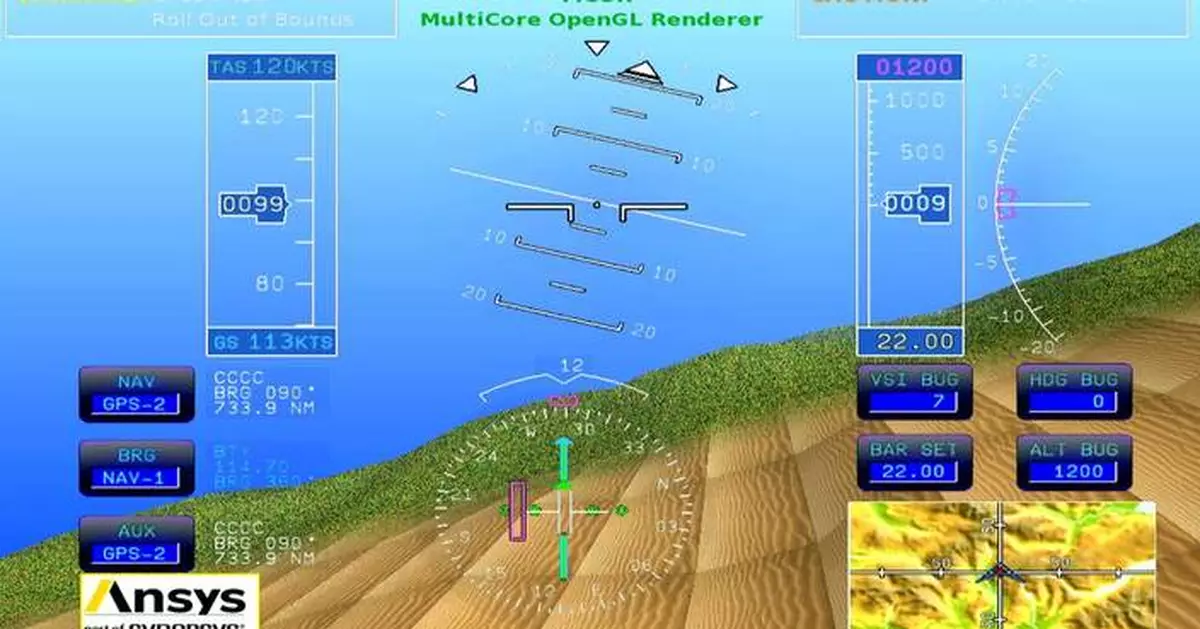
MCOR MultiCore OpenGL Renderer demo running on a quad-core Intel Core i7 with ANSYS SCADE Display

MCOR MultiCore OpenGL Renderer demo running on a quad-core Intel Core i7 with ANSYS SCADE Display
U.S. futures are rebounding from a major market sell-off Friday with a boost from sharply declining oil prices on hopes for progress in diplomatic efforts between the U.S. and Iran.

Futures for the S&P 500 advanced 0.5% Monday, while those for the Dow Jones Industrial Average rose 0.6%. Nasdaq futures rose 0.8%.

U.S. stocks fell Friday in their worst day since June as investors dumped artificial intelligence and tech stocks. There is growing concern that the massive investments in AI will not pay off, at least not fast enough.

Apple will report its latest earnings results after the bell Monday along with Palantir Technologies. Advanced Micro Devices will report its quarterly results on Tuesday.

Last week, earnings reports from Google parent Alphabet Inc. and Amazon rattled markets and raised fresh questions over whether their massive AI-related spending.

Shares of both Marvell and Lumentum are falling after the announcement of an all-stock deal for Lumentum worth about $115 billion, including debt. Marvell, despite the aggressive pullback in AI stocks last week, believes the investment is still warranted.

Markets appear less certain. Marvell slid more than 1% before the opening bell and Lumentum fell almost 3%.

Oil prices dropped Monday, with Brent crude, the international standard, down 4.2% to $108.68 per barrel. Still, that’s much higher than the roughly $65 that a barrel of crude was selling for at this time last year.

Benchmark U.S. crude fell 4.2%, to $99.74 a barrel, compared with $61 per barrel at this time last February.

Iran’s top diplomat said in an interview shared on his Telegram channel over the weekend that Iranian negotiators were in Qatar for talks on a proposal that could reopen the Strait of Hormuz within two days if the U.S. meets several conditions. However, he said no direct talks were being held with the U.S.

The final outcome of the diplomatic efforts to avoid a return to all-out war depends on answers provided by the United States to the “Iranian questions,” he said.

Wall Street is also waiting for the outcome of Tuesday’s U.S. midterm elections. Voters across the political spectrum have shown increasing concerns about AI and data centers, along with inflation and other key issues.

There is critical U.S. economic data arriving Friday when the government issues its October jobs report. In September, U.S. employers added a disappointing 29,000 jobs and the unemployment rate ticked up to a still-low 4.2%.

In equities trading, shares of both Marvell and Lumentum are falling after an all-stock deal for Lumentum worth about $115 billion, including debt. Marvell, despite an aggressive pullback in AI stocks last week, believes the investment environment is still active.

Markets appear less certain. Marvell slid more than 1% before the opening bell and Lumentum fell almost 3%.

In Europe, Britain's FTSE 100 gained 0.1% to 10,736.14 on Monday. Germany's DAX climbed 0.1% to 25,847.97, while the CAC 40 in Paris added 0.2% to 7,988.21. Asian markets were mostly higher.

The U.S. dollar rose to 157.91 Japanese yen from 157.49 yen. The euro was trading at $1.1211, up from $1.1160.

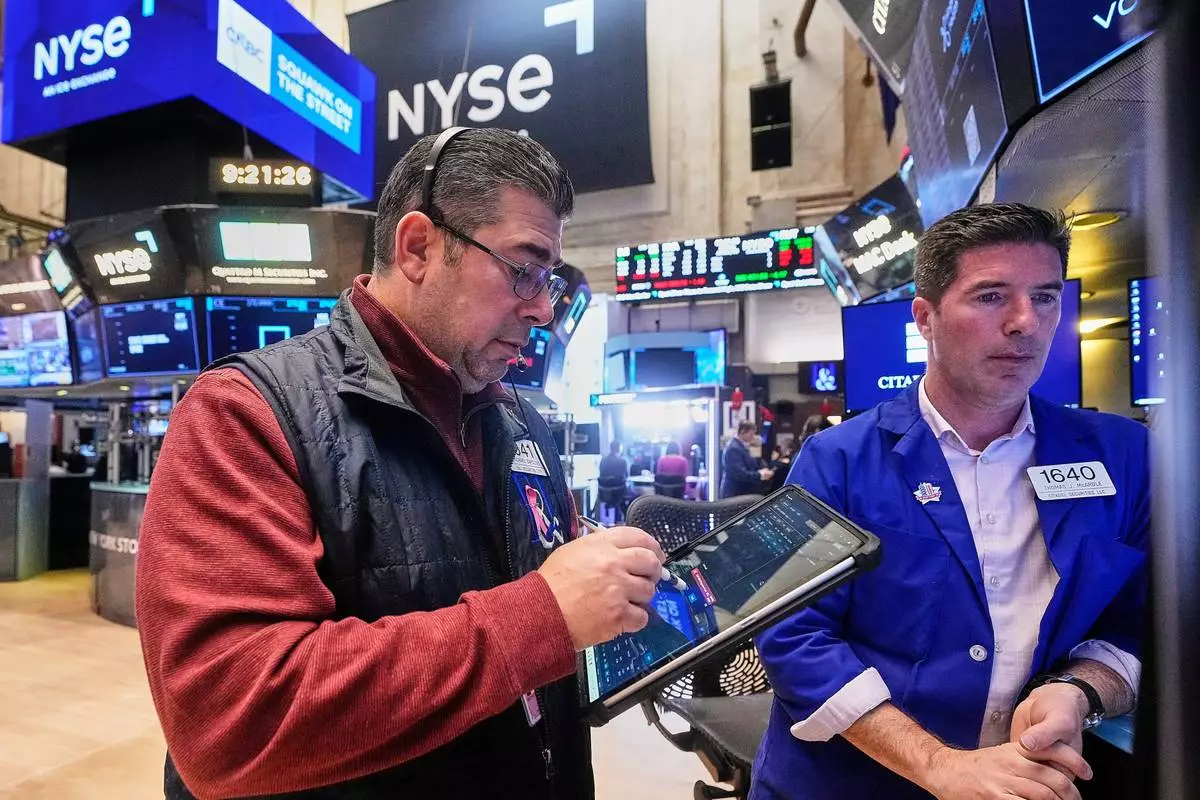
FILE - Trader Michael Capolino, left, and Specialist Thomas McArdle work on the floor of the New York Stock Exchange, Monday, Jan. 26, 2026. (AP Photo/Richard Drew, file)

FILE - Trader Michael Capolino, left, and Specialist Thomas McArdle work on the floor of the New York Stock Exchange, Monday, Jan. 26, 2026. (AP Photo/Richard Drew, file)

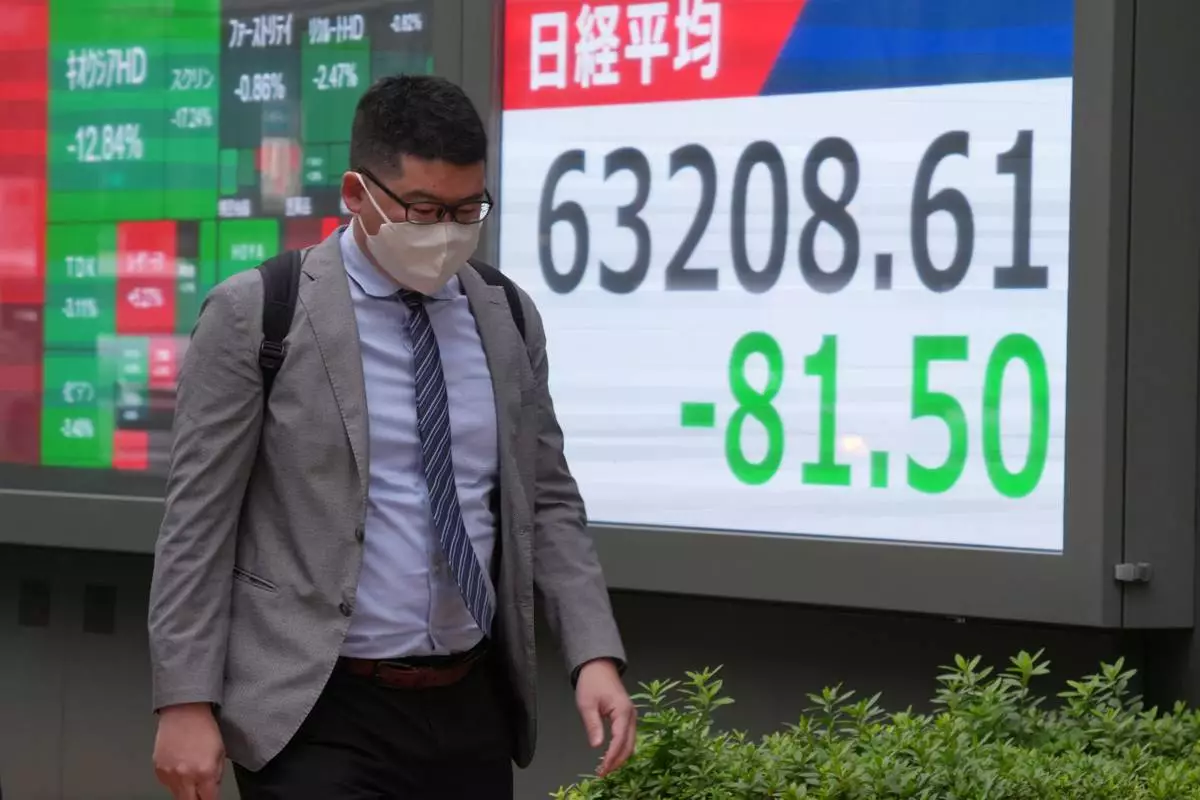
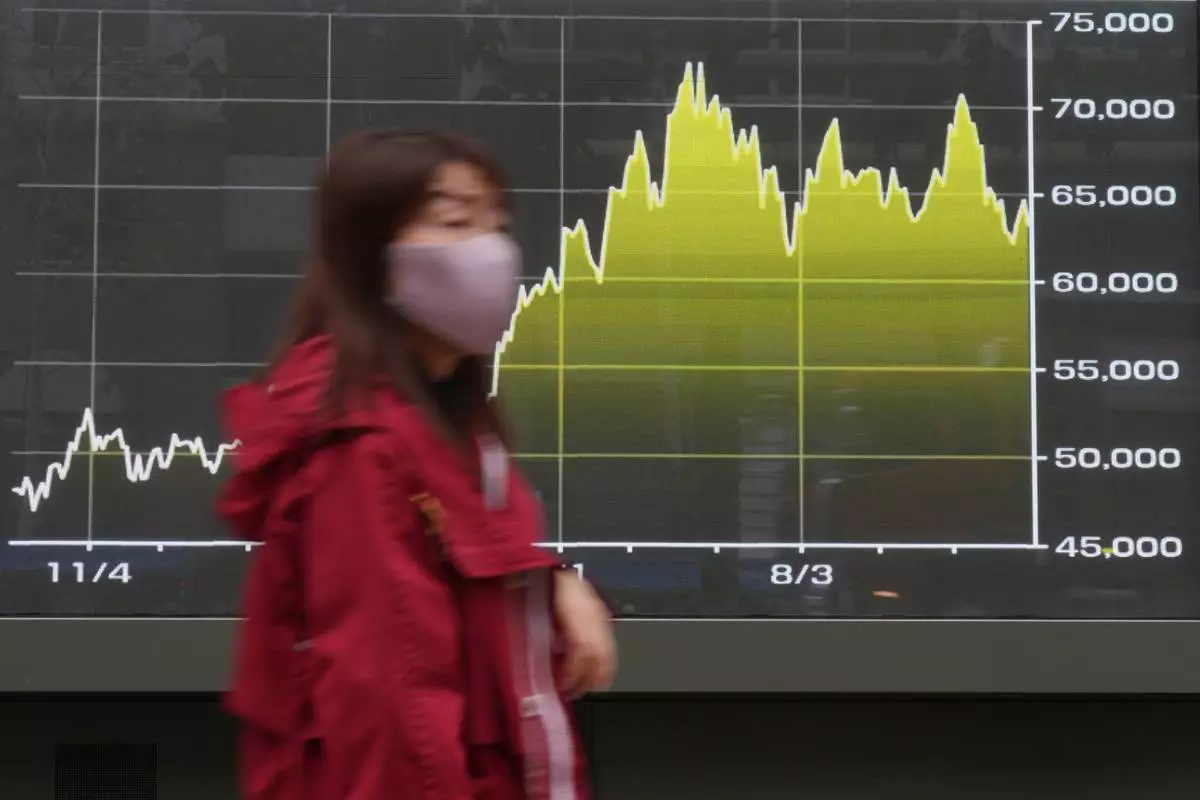
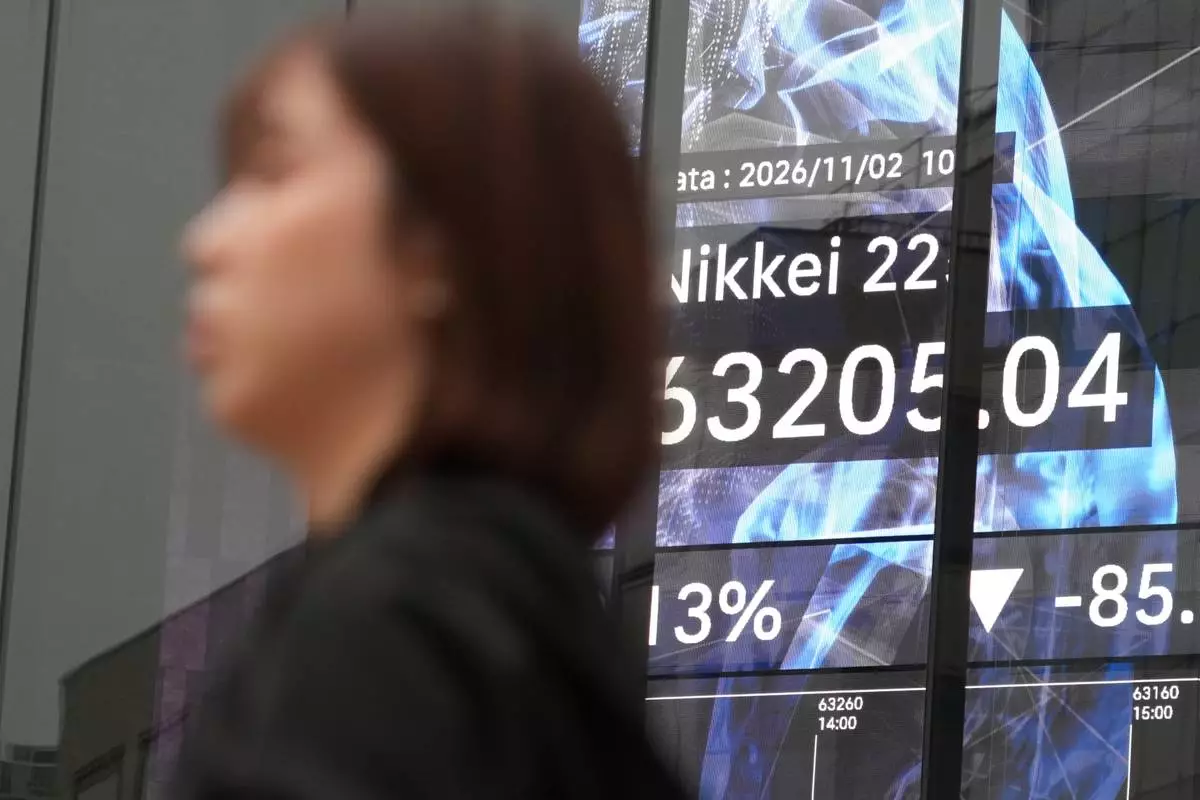
A person walks in front of an electronic stock board showing Japan's Nikkei index at a securities firm, Monday, Nov. 2, 2026, in Tokyo. (AP Photo/Eugene Hoshiko)

A person walks in front of an electronic stock board showing Japan's Nikkei index at a securities firm, Monday, Nov. 2, 2026, in Tokyo. (AP Photo/Eugene Hoshiko)

A person walks in front of an electronic stock board showing Japan's Nikkei index at a securities firm, Monday, Nov. 2, 2026, in Tokyo. (AP Photo/Eugene Hoshiko)

A person walks in front of an electronic stock board showing Japan's Nikkei index at a securities firm, Monday, Nov. 2, 2026, in Tokyo. (AP Photo/Eugene Hoshiko)

A person walks in front of an electronic stock board showing Japan's Nikkei index at a securities firm, Monday, Nov. 2, 2026, in Tokyo. (AP Photo/Eugene Hoshiko)

A person walks in front of an electronic stock board showing Japan's Nikkei index at a securities firm, Monday, Nov. 2, 2026, in Tokyo. (AP Photo/Eugene Hoshiko)

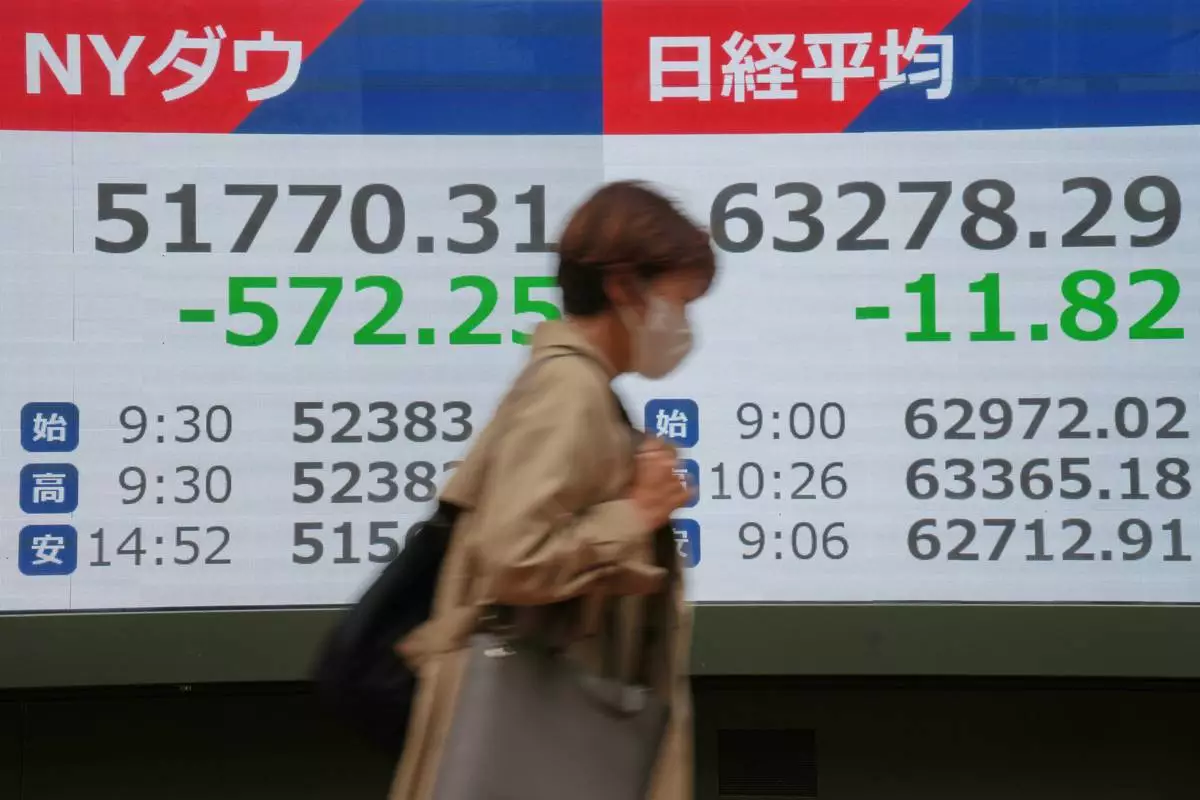
A person walks in front of an electronic stock board showing Japan's Nikkei and New York Dow indexes at a securities firm, Monday, Nov. 2, 2026, in Tokyo. (AP Photo/Eugene Hoshiko)

A person walks in front of an electronic stock board showing Japan's Nikkei and New York Dow indexes at a securities firm, Monday, Nov. 2, 2026, in Tokyo. (AP Photo/Eugene Hoshiko)

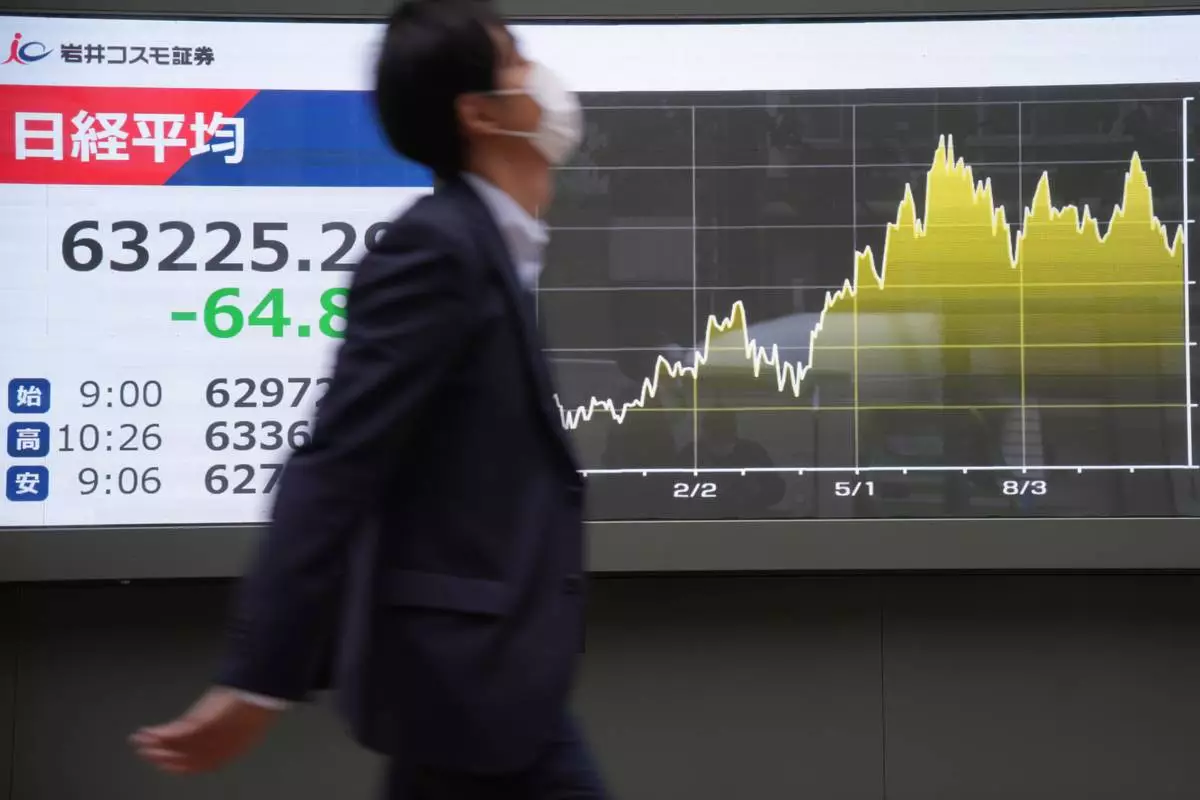
A person walks in front of an electronic stock board showing Japan's Nikkei index at a securities firm, Monday, Nov. 2, 2026, in Tokyo. (AP Photo/Eugene Hoshiko)

A person walks in front of an electronic stock board showing Japan's Nikkei index at a securities firm, Monday, Nov. 2, 2026, in Tokyo. (AP Photo/Eugene Hoshiko)

Recommended Articles