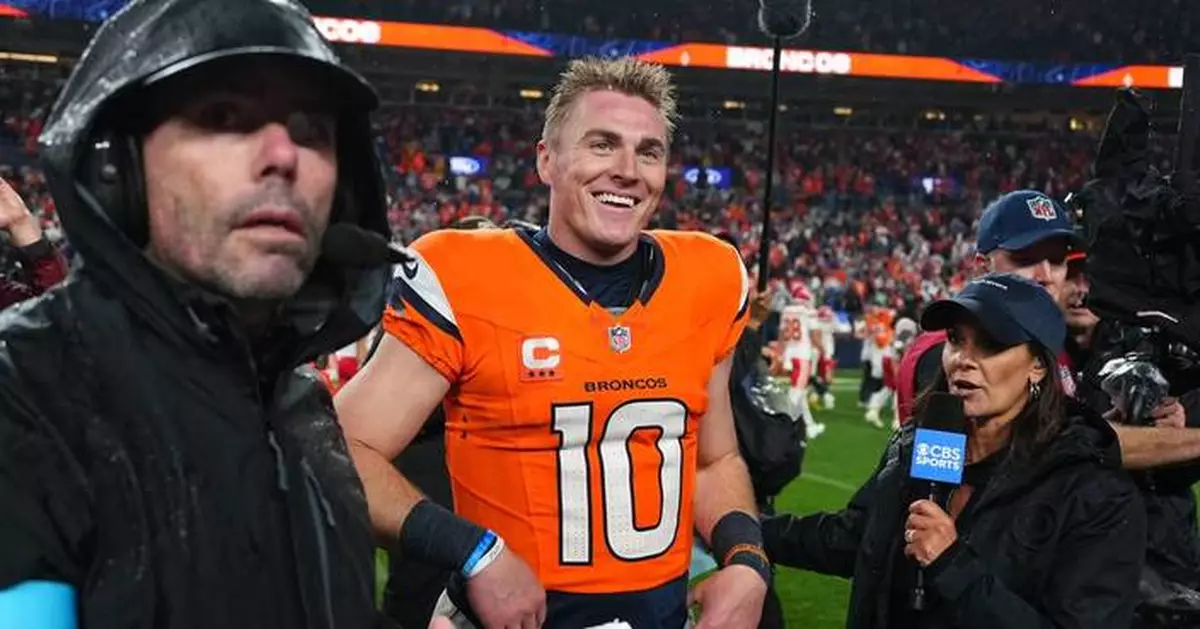
ENGLEWOOD, Colo. (AP) — Bo Nix has his flaws. One thing is undeniable, though: he's key in the clutch.
Denver has been a quarterback town since John Elway arrived in 1983, and game-winning drives in the fourth quarter or overtime have been the Broncos' signature stat ever since.
Elway engineered 40 game-winning drives in the fourth quarter or overtime during his 16-year career in Denver. Payton Manning had 54 in his 18-year career, which culminated with four seasons in the Mile High City.
That's 2 1/2 late-game heroics per season for Elway, three for Manning, both of whom led Super Bowl parades in Denver and ended up enshrined in Canton, Ohio, not long afterward.
Nix is piling up such wins at a rate significantly higher than either of them.
Nix completed his 15th career game-winning drive in the fourth quarter or overtime Sunday in Denver's 28-24 win over Patrick Mahomes and the Kansas City Chiefs.
In doing so, he surpassed Dak Prescott (14 games) for the most game-winning drives in the fourth quarter or overtime by a quarterback in his first three seasons since the 1970 AFL-NFL merger.
Add in his comeback to beat Buffalo in the playoffs last year and he has 16 such games in his 44 NFL starts — or an average of 6.4 a season.
Put another way, Elway had a game-winning drive in the fourth quarter or overtime in 21% of his starts (40 out of 252) and Manning did it in 18% of his games (54 of 292).
Nix comes in at 36% — twice Manning's average — with 16 instances in his 44 career starts, including playoffs.
The Broncos trailed the Chiefs by 11 points in the fourth quarter Sunday and they were facing a sweep by Kansas City that would essentially put them three games behind them in the AFC West race.
Instead, they stormed into first place in the division at 6-2, a half-game ahead of Kansas City, by scoring 15 points over the final 8:55 and staving off the Chiefs on fourth-and-goal in the closing seconds.
“I was saying a few Hail Mary's on the sideline,” right tackle Mike McGlinchey said. “I was praying to some guardian angels. And they came through and our defense did, too. It was an unbelievable stand there. It just goes to show the fight that we have here. ... Our defense is lights out in the biggest moments.”
The offense, too.
“I just think there's a different level of toughness that we have here mentally,” McGlinchey said. “Everybody that's been brought here has a certain football pedigree, has a certain football toughness and love for this.”
The Broncos have won 15 consecutive one-score games dating back to last season and including wins over the Jaguars, Rams, Seahawks, Chargers and Chiefs this year.
“I think it has to come from, ‘Well, we did it before,’" coach Sean Payton said. “You can’t count on that, but it has to come from” having that history.
The fourth quarter magic.
The first three quarters, and on Sunday, it was the third quarter, especially. That's when the Broncos went three-and-out on all three of their drives before closing the game with a pair of touchdown drives.
ILB Alex Singleton continued his torrid start with 14 tackles, a sack and a pass breakup Sunday. That pushed Singleton to 101 tackles and made him the second player this century to top the century mark in stops in his team's first eight games. The only other player to do that was Indy's Zaire Franklin, who had 102 tackles through eight games in 2023.
Darren Rizzi's special teams. With the game on the line, the Broncos surrendered a 44-yard kickoff return to Emmett Johnson that gave the Chiefs great field position on their final drive that began with less than two minutes remaining.
The Broncos got All-Pro CB Patrick Surtain II back on Sunday but lost CB Kris Abrams-Draine (ankle) and S Brandon Jones (hamstring) in the first half. They hope to get S Talanoa Hufanga (ankle) back next week.
20.8% — That's the Broncos' third-down conversion rate (10-for-48) during their four-game winning streak. They were 2-for-2, however, on fourth down Sunday.
The Broncos visit the Carolina Panthers (3-4) next weekend.
See AP’s full NFL coverage here
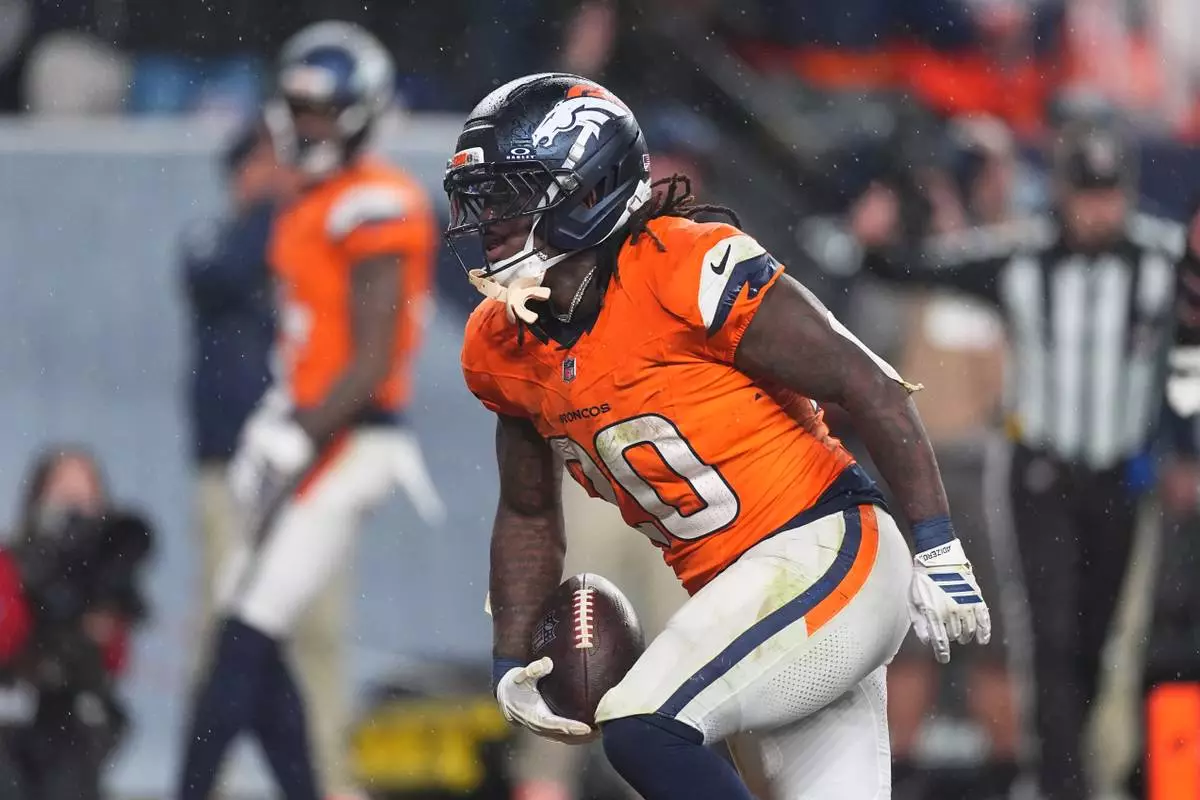
Denver Broncos' Jonah Coleman reacts after a touchdown during the second half of an NFL football game against the Kansas City Chiefs in Denver, Sunday, Nov. 1, 2026. (AP Photo/David Zalubowski)
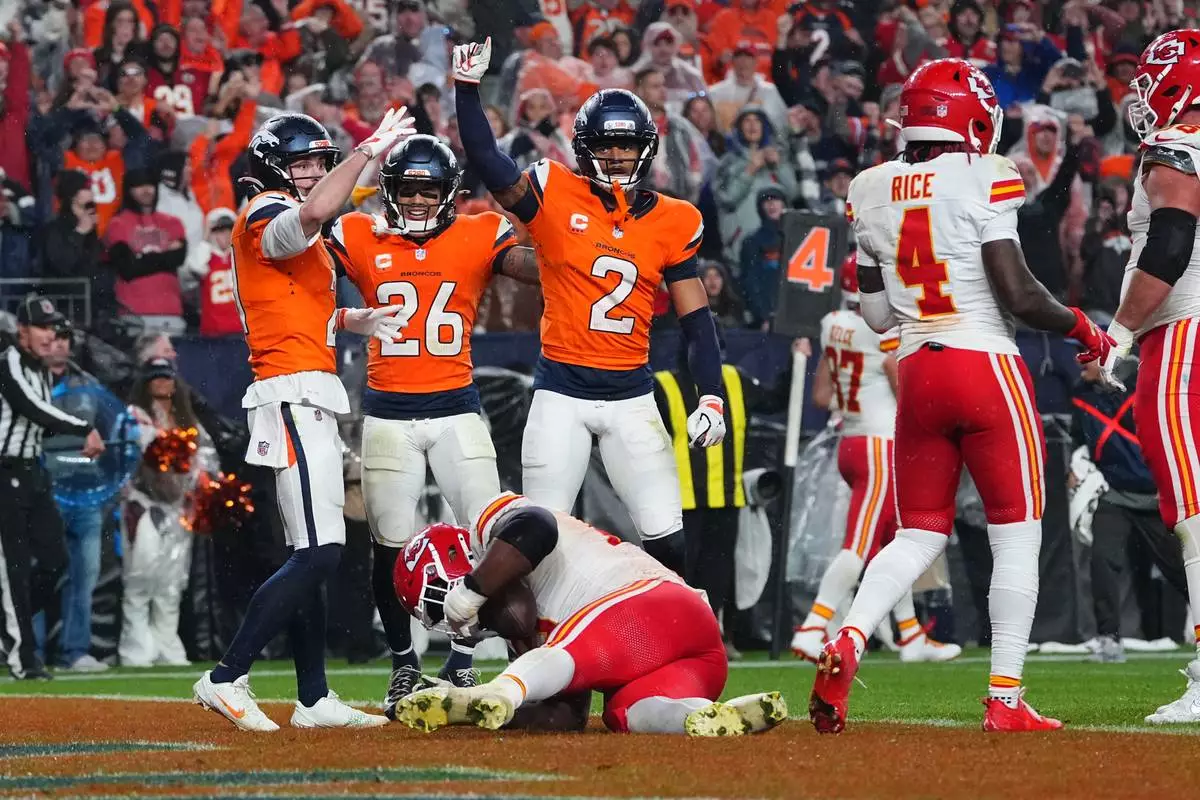
Kansas City Chiefs' Tyquan Thornton and Kader Kohou celebrate as time run out in the second half of an NFL football game against the Denver Broncos in Denver, Sunday, Nov. 1, 2026. (AP Photo/Jack Dempsey)
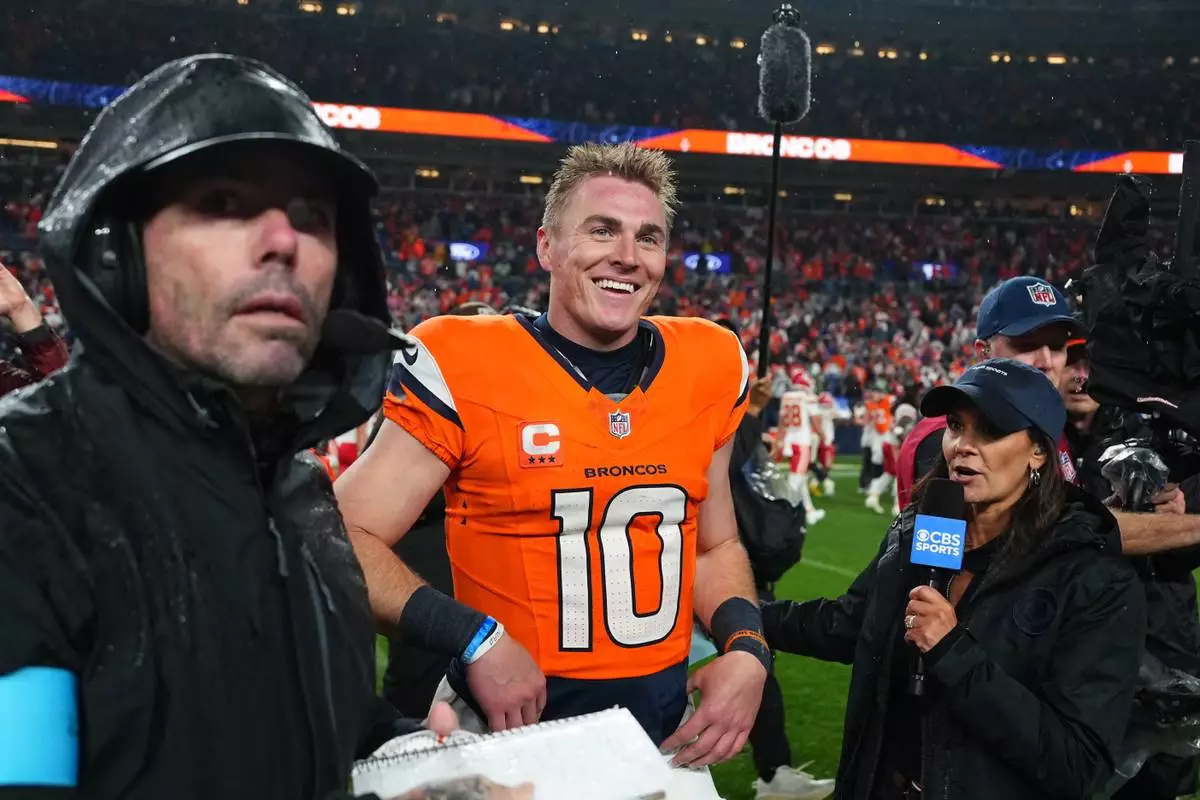
Denver Broncos' Bo Nix smiles after an NFL football game against the Kansas City Chiefs in Denver, Sunday, Nov. 1, 2026. (AP Photo/Jack Dempsey)
WANTAGH, N.Y. (AP) — An amateur historian has stumbled upon a provocative clue to the enduring mystery of what became of a notorious pirate who raided a royal Indian treasure ship centuries ago, implicating a co-conspirator whose name is familiar to many New Yorkers.
James Bailey, who five years ago made headlines after unearthing ancient coins believed to be linked to English pirate Capt. Henry Every, now says that colonial-era documents suggest the “King of the Pirates” and his violent crew got an assist from Thomas Jones, the namesake of Jones Beach, New York’s most visited state park after Niagara Falls.
“You have millions of visitors and generations of New Yorkers going to this beach,” Bailey said. “Nobody knew that he was actually a major player in arguably the biggest heist in the history of piracy.”
Since his big find, Bailey has pored through documents to dig even deeper into the bloody 1695 raid of the Ganj-i-Sawai on the Red Sea and the mystery of what happened to Every.
The pirate crew is said to have tortured, killed and raped those aboard the royal ship, sparking global outrage and what is considered the first worldwide manhunt. Some were caught and executed, but many others, including Every, were never heard from again and are believed to have scattered to Europe and the American colonies.
Documents, including depositions from Every’s associates, suggest Jones was recruited to serve as a “wheelman,” helping the pirates evade authorities after they made off with tens of millions of dollars' worth of gold and silver, according to Bailey.
Other documents show that New York’s governor, charged by the British crown to crack down on piracy, investigated Jones years later after he’d remade himself as the wealthy proprietor of a whaling operation on the barrier beach on Long Island that now bears his name.
Bailey’s research, which he hopes to have published, sheds light on a part of Jones’ checkered past long alluded to but never quite fleshed out in local history books, says John Hanc, author of “Jones Beach: An Illustrated History,” which includes a chapter on Jones.
Born around 1665 in the then-kingdom of Ireland, Jones was a major in the English military before moving to the American colonies. He initially settled in Rhode Island before eventually moving to New York, where he became a prominent businessman and landowner. Jones owned thousands of acres of land on early Long Island, then just a rural expanse east of the rapidly growing New York City.
But rumors of how he’d initially made his fortune persisted long after his death in 1713. Before it was demolished in the early 1800s, his crumbling mansion was said to be haunted by ghosts and strange occurrences. Jones’ grave was repeatedly desecrated by robbers searching for buried treasure before it was relocated to a family burial plot behind a nearby church.
A family history published in 1906 by one of Jones’ descendants dismissed the pirate tales as “slander” and “improbable fictions.”
“People were disposed to cast slurs upon his memory, either for mischievousness, or a spirit of malice,” Thomas Floyd-Jones wrote. “These myths were cherished for over a century after his death, which ignorance and superstition did not fail to magnify.”
Hanc and other experts say it wasn’t too far-fetched for Jones to have at least dabbled in piracy.
After serving in the British military, Jones made a career as a privateer, or a seafarer authorized by the English crown to raid the commercial ships of its rivals during wartime, said Meagan Schulman, a Fordham University doctoral candidate who specializes in 17th century piracy and wasn’t involved in Bailey’s research.
But when the conflict ended, privateers like Jones lost their special status, she said. Those that continued the high seas raids were branded pirates.
“The reality was that privateers were pirates, just sponsored by a certain government or patron,” explained Schulman, who grew up going to Jones Beach. “So maybe the short answer is, yes. Jones can be called a pirate, by some people, but he probably did not ever see himself as one.”
After helping Every and his crew evade capture, the documents cited by Bailey show Jones briefly returned to Rhode Island.
Then in 1696, Jones’ father-in-law, Thomas Townsend, a wealthy New Yorker, gifted him and his wife a significant tract of land on Long Island’s south shore, property records show.
Bailey, who recently retired from Rhode Island's corrections department, posits that allowed Jones a fresh start, as authorities continued to scour pirate-friendly New England for Every and his accomplices.
On Long Island, Bailey says Jones built a homestead and raised a family, but his pirate past was never far behind.
Three years after the Ganj-i-Sawai heist, Richard Coote, New York's colonial governor, described how one of his efforts to root out piracy had led him to Jones.
Citing witness depositions, the governor wrote in 1698 that a certain “barrel of money” traveled from the city to Long Island, where it ended up at Jones’ house. But Jones, who the governor described as “formerly a pirate,” testified that he knew nothing about the barrel.
Bailey’s findings are compelling but shouldn’t be considered conclusive, cautions Richard Blakemore, maritime history professor at the University of Reading in the United Kingdom who also wasn’t involved with Bailey’s work. After all, he said, Thomas Jones is a fairly common name.
If anything, Jones’ possible ties to Every underscore how piracy provided “foundational and multi-generational wealth” for many of the prominent families in the Northeast, says Kevin McDonald, a history professor at Loyola Marymount University in Los Angeles who wrote a book about colonial-era piracy but wasn’t involved in Bailey’s research.
“Popular images of pirates show them as outcasts, but many historians have argued the opposite, based on evidence like this,” agreed Blakemore. “It may surprise readers to find just how much early British colonies were both socially and economically connected to piracy.”

FILE - A recreational fisherman pulls a fluke out of the water as the sun dips beneath the horizon while fishing at Jones Beach State Park, Aug. 1, 2017, in Wantagh, N.Y. (AP Photo/Julie Jacobson, File)

FILE - Amateur historian James Bailey uses a metal detector to scan for Colonial-era artifacts in a field, March 11, 2021, in Warwick, R.I. (AP Photo/Steven Senne, File)
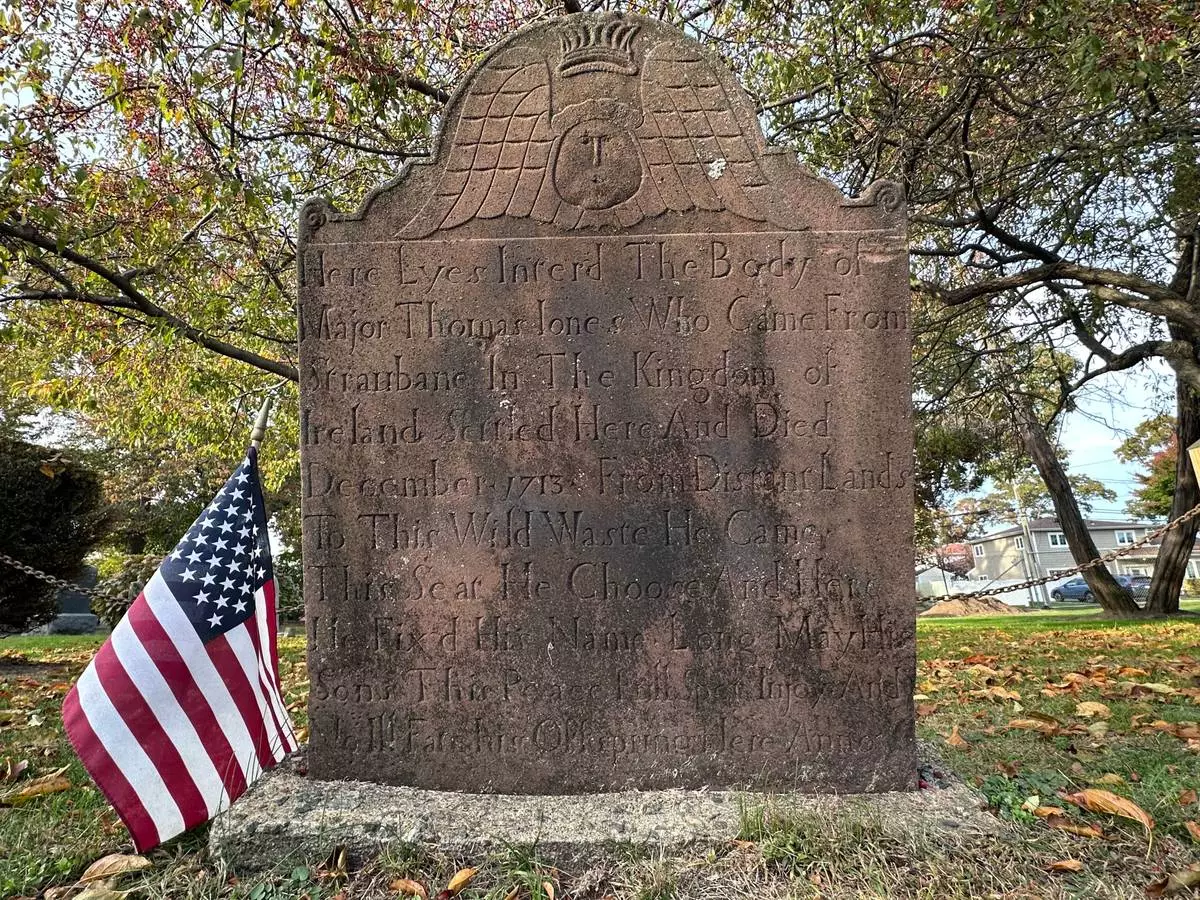
The gravestone of Thomas Jones in the cemetery behind Old Grace Church in Massapequa, N.Y., on Oct. 28, 2026. (AP Photo/Philip Marcelo)
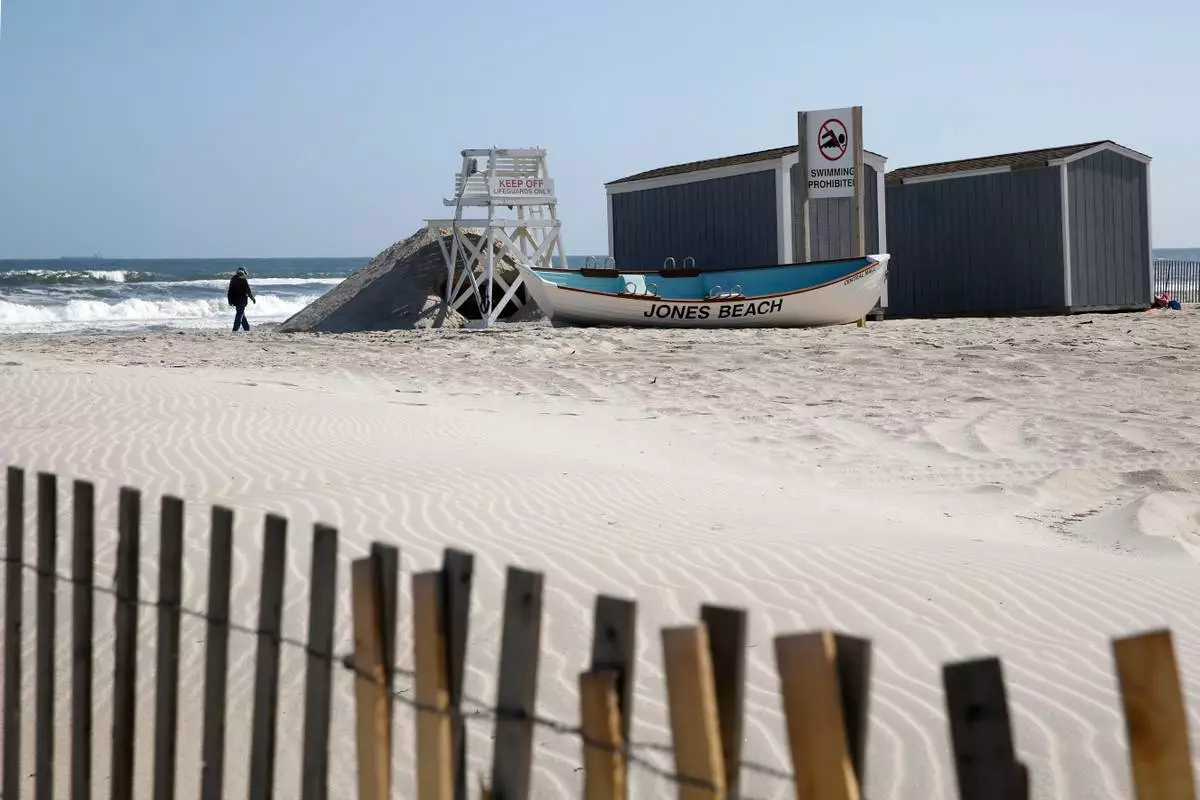
FILE - A person walks by the water at Jones Beach in Wantagh, N.Y., May 21, 2020. (AP Photo/Kathy Willens, File)