EAGAN, Minn. (AP) — Minnesota Vikings quarterback Kyler Murray was under evaluation on Monday for hamstring soreness that developed at Detroit during the team's first defeat of the season.
Murray didn't miss any time in the 19-15 loss, but he was moving gingerly down the stretch on Sunday against the Lions. Asked whether Murray's availability for the upcoming game against Buffalo was in jeopardy, Vikings coach Kevin O'Connell said it was too early in the week to speculate about his status.
Murray struggled to find a rhythm for much of the afternoon in Detroit, finishing 17 for 29 for 210 passing yards, a season-high two touchdowns and one interception. In the five full games he's played this season, the Vikings (6-1) have averaged just 18 points per game. Murray suffered a concussion early in the season opener and was held out the following week.
O'Connell said Murray would remain the starter if he's healthy enough to play. Carson Wentz is the backup.
See AP’s full NFL coverage here
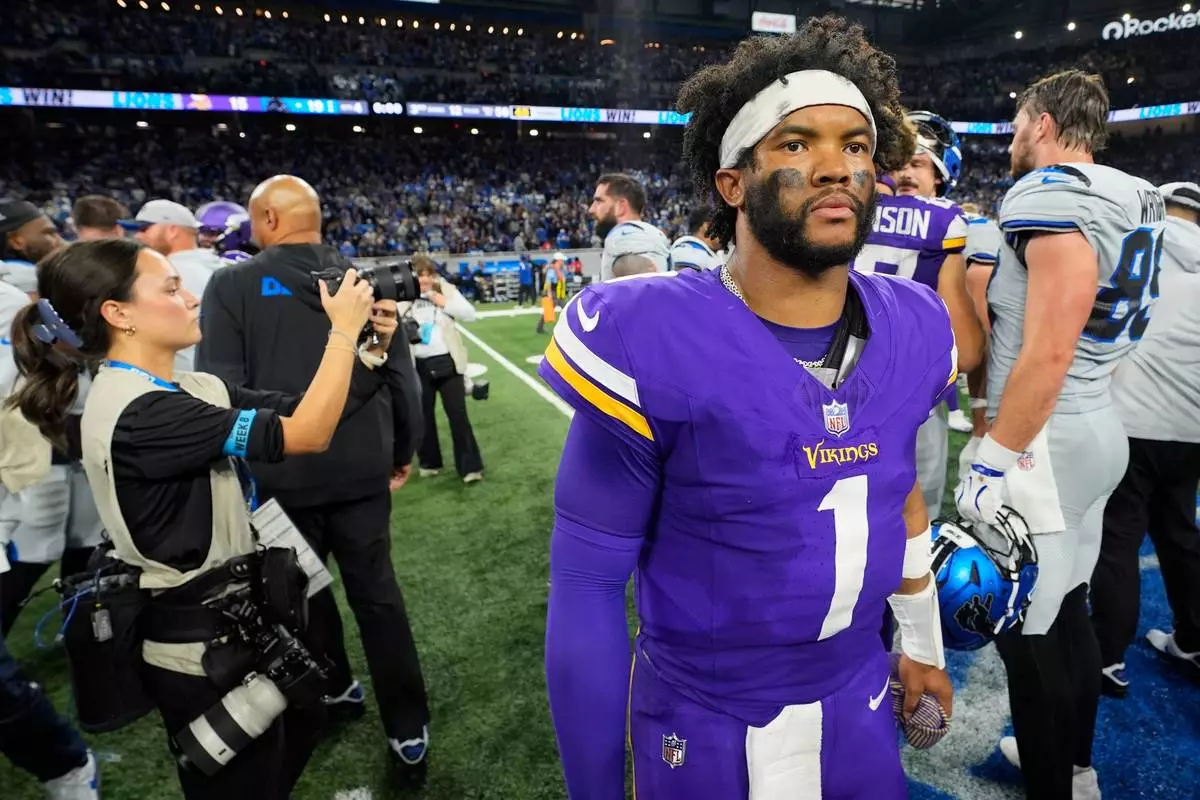
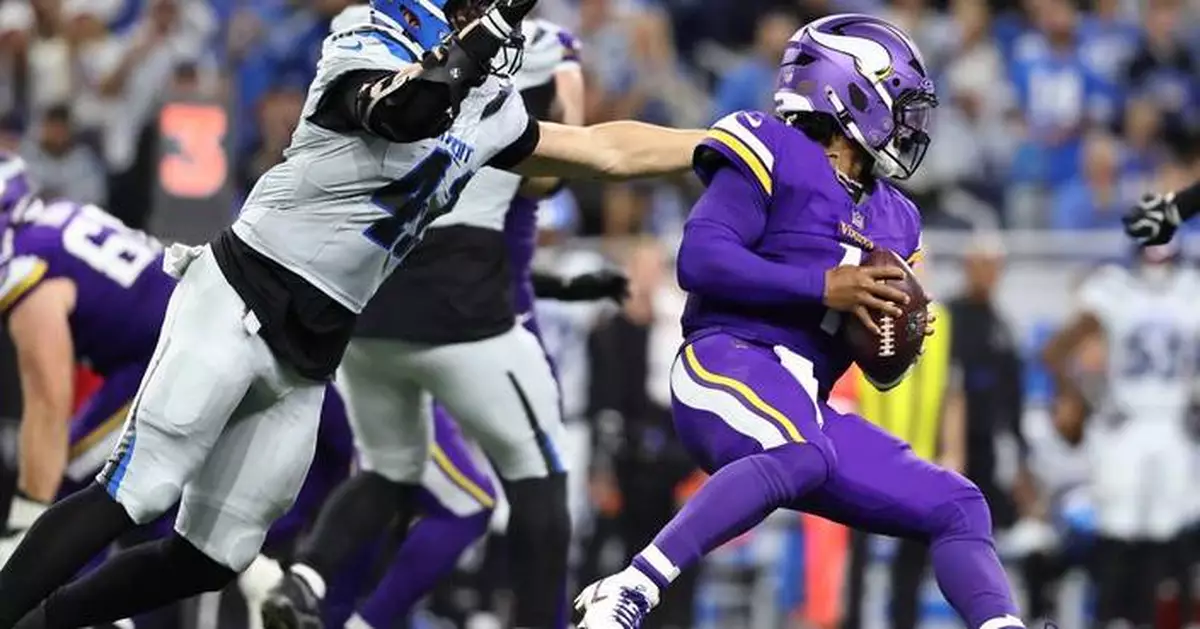
Minnesota Vikings quarterback Kyler Murray (1) walks off the field after an NFL football game against the Detroit Lions, Sunday, Nov. 1, 2026, in Detroit. (AP Photo/Paul Sancya)
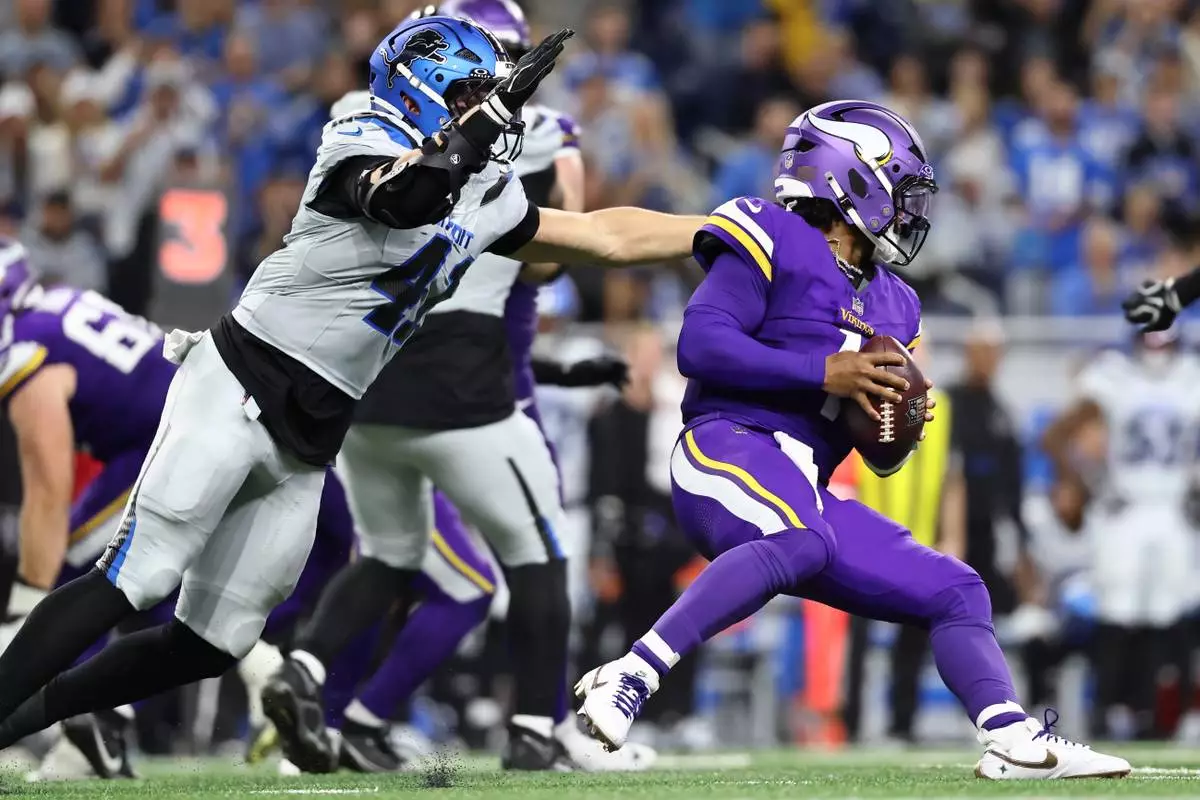
Detroit Lions linebacker Jimmy Rolder (41) sacks Minnesota Vikings quarterback Kyler Murray (1) during the second half of an NFL football game, Sunday, Nov. 1, 2026, in Detroit. (AP Photo/Rey Del Rio)
JERUSALEM (AP) — Israeli Prime Minister Benjamin Netanyahu is pushing for another wave of strikes on Iran after Tuesday's midterm elections in the United States, according to two regional officials and a third person familiar with the matter.
A return to full-scale war with Iran could help Netanyahu to form an emergency government after he and his far-right allies lost their parliamentary majority in last week's elections. U.S. President Donald Trump has alternated between threatening major strikes while pushing for a deal with Iran.
The two officials said diplomatic efforts have made progress, with Qatari mediators holding two rounds of talks last week with Iranian officials. The two officials said the mediators are trying to advance a framework for Iran to cease its attacks in the Strait of Hormuz in return for the U.S. lifting its blockade on Iran's ports.
They said more talks are planned for this week. The two officials spoke on condition of anonymity because they were discussing classified briefings they had received from American, and in one case Israeli, officials.
One official said Netanyahu was working with senior officials in the U.S. administration to persuade Trump to launch a quick but extensive air campaign and that the president does not appear to have made a decision.
Netanyahu pressed for strikes during a call over the weekend with Trump, who would not commit to taking military action, according to a person who was briefed on it.
Other U.S. allies in the Middle East are warning against more strikes, saying it would destabilize the region and could lead Iran-allied Houthi rebels in Yemen to step up their attacks on Saudi Arabia and Red Sea shipping, a third regional official said. Iran-backed militias in Iraq could also get involved.
That official, and the person familiar with the Netanyahu-Trump call, were not authorized to speak publicly and spoke on condition of anonymity.
The Israeli government did not immediately comment. The White House did not directly respond to questions about Netanyahu and Trump’s discussion of potential new strikes during the weekend call.
Trump told reporters on Sunday that he and Netanyahu had a “very good” call the day before. He said they discussed Iran but gave no details. Netanyahu had pushed for renewed strikes even before the Israeli election as he sought to highlight his security credentials to a public deeply scarred by Hamas' Oct. 7, 2023, attack.
Asked at a news conference Saturday about the possibility of new U.S. strikes on Iran and Iranian retaliation, U.S. Secretary of State Marco Rubio would not say what would happen next but reiterated that the Trump administration prefers a diplomatic solution and that talks were ongoing.
“He hasn’t made a decision,” Rubio said, referring to Trump.
“He’d prefer to solve it diplomatically," Rubio said, adding that Trump has “incredible confidence” in military action if that is needed.
Netanyahu has not commented on Iran since the election, and there was no word from his office on the latest call with Trump.
“The standoff in the Gulf between the U.S. and Iran is really between Qatar and Israel,” Andreas Krieg, a professor at King’s College London, who previously worked as an adviser to Qatar's military, said on X.
“Qatar is tirelessly working on a diplomatic offramp with the region’s backing while Israel is looking for military ways to throw the region under the bus.”
Iran wants guarantees that the U.S. will implement its side of any agreement. The U.S. and Israel have twice attacked Iran while it was engaged in negotiations over its disputed nuclear program.
Iranian officials say publicly they are prepared for war or diplomacy.
The new supreme leader, Ayatollah Mojtaba Khamenei, met with Iran’s military chiefs and said the response to “any kind and level of threat” from the U.S. or Israel should be immediate and without “geographic limits,” and urged an expansion of the list of potential targets.
A recent analysis by The Associated Press found that Iranian strikes on more than two dozen U.S. bases since the start of the war have caused billions of dollars in equipment damage.
Khamenei has not been seen publicly since the opening strikes by Israel and the U.S. on Feb. 28 killed his father, the previous supreme leader.
Iran’s security chief, Mohsen Rezaei, told state television that “the tone has completely changed” from the U.S. and called it a “very good sign.” He gave no details about the letter he received from U.S. Vice President JD Vance, which Iran acknowledged last week, and said he had not responded.
October saw the most attacks on commercial ships in the Strait of Hormuz since March, as Iran has tried to ramp up economic pressure on the U.S. to get it to lift its blockade.
The mood was grim at the Manama Dialogue, an annual security summit in Bahrain organized by the International Institute for Strategic Studies.
United Arab Emirates presidential adviser Anwar Gargash told attendees that the U.S. and Iranian stances are far apart, and “if these positions are not bridged, then we have to worry about the worst.”
Gulf nations have spent billions of dollars to boost their defense capabilities since the war began. Egypt’s Foreign Minister Badr Abdelatty told the gathering in Bahrain that the next escalation “will be more dangerous, more destructive, and it will lead to nowhere.”
China will send a special envoy to Iran, Oman and Saudi Arabia in early to mid-November, Foreign Ministry spokesperson Mao Ning told reporters Monday.
“The Middle East Gulf region should not become an arena for great-power rivalry and geopolitical conflict,” Chinese President Xi Jinping told Oman’s sultan, according to a readout from China’s Foreign Ministry. China and Oman called for a return to dialogue.
Magdy reported from New York and Madhani from Washington. Victoria Eastwood in Cairo, Kanis Leung in Hong Kong and Katie Marie Davies in London contributed to this report.
AP STANDARDS: The AP uses anonymous sources only when the information is vital to the news report and not opinion or speculation. The information must be unavailable except under the conditions of anonymity imposed by the source. The source must be reliable, in a position to have accurate information and approved by news managers.
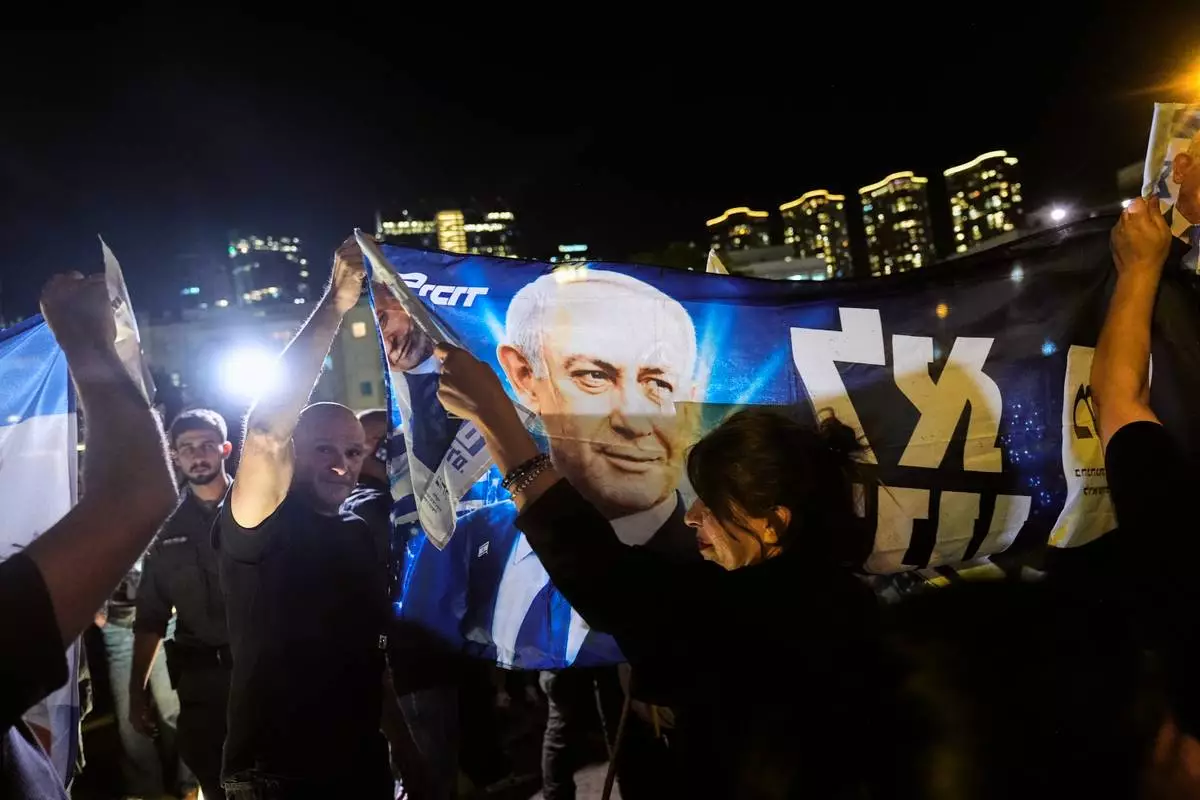
Supporters of Prime Minister Benjamin Netanyahu protest against left-wing activists calling for the formation of a government that includes Arab parties, following Israel's general election, in Tel Aviv, Israel, Saturday, Oct. 31, 2026. (AP Photo/David Goldman)
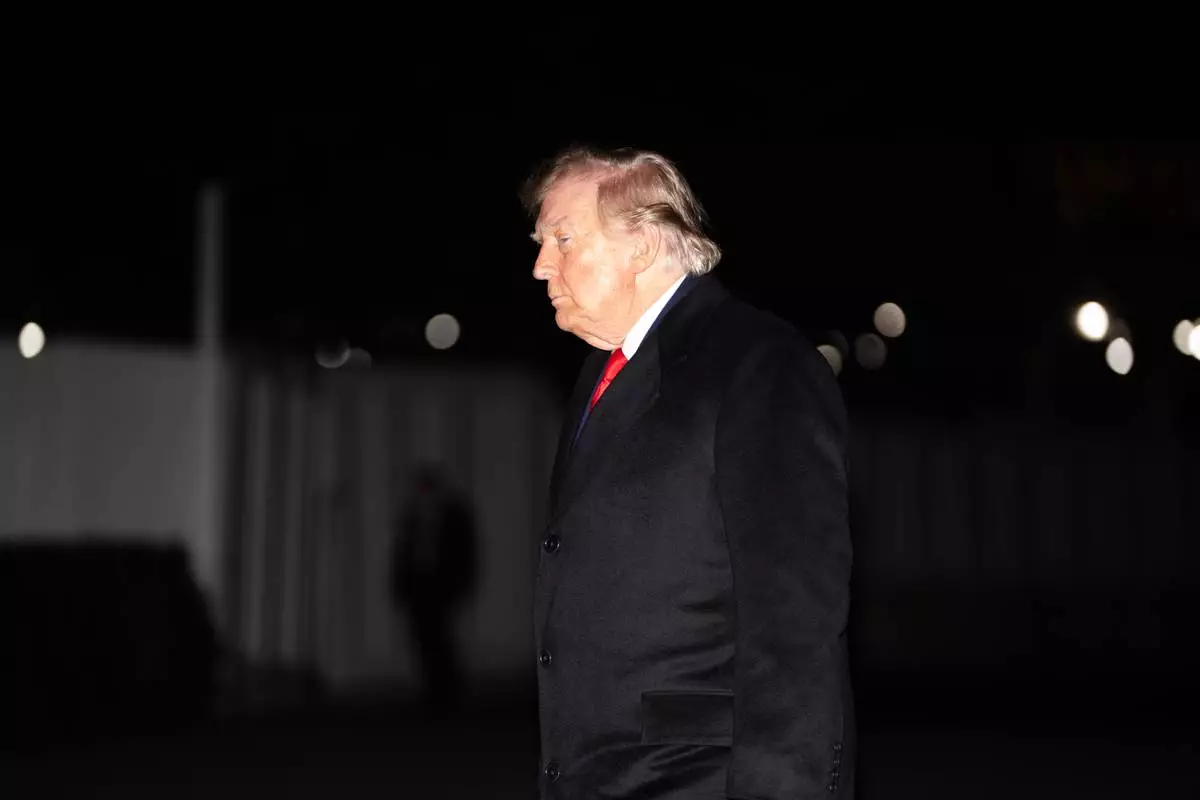
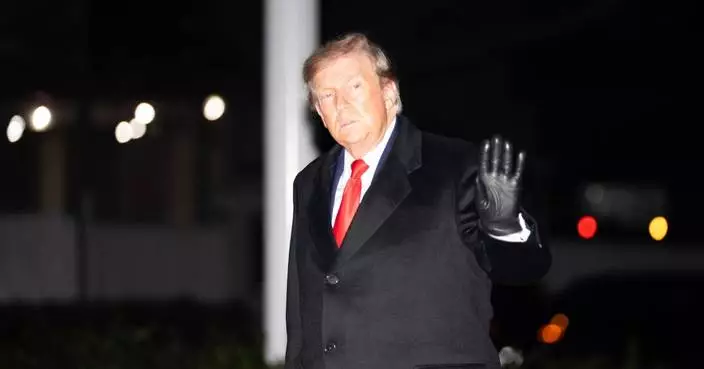
President Donald Trump walks across the South Lawn of the White House after stepping off Marine One, Monday, Nov. 2, 2026, in Washington. (AP Photo/Allison Robbert)
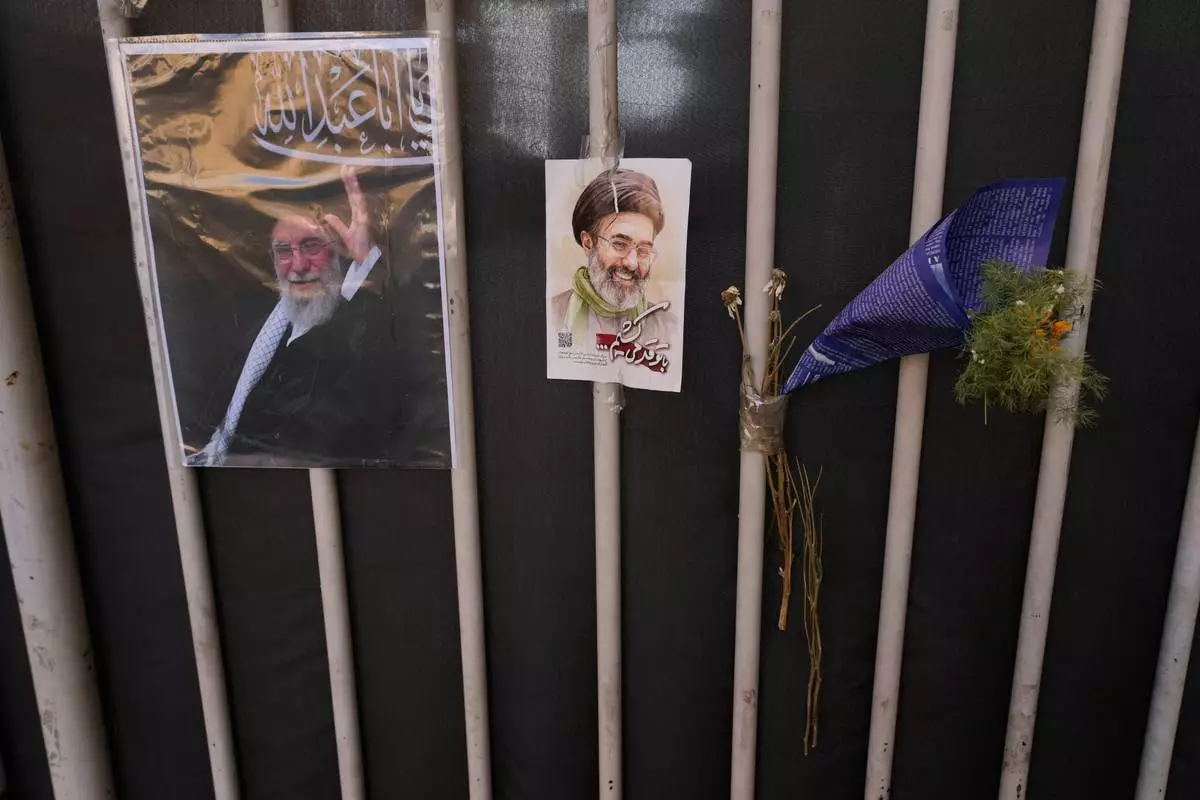
Posters of the Iranian Supreme Leader Ayatollah Mojtaba Khamenei, center, and his father, the late Supreme Leader Ayatollah Ali Khamenei are seen alongside dried flowers on a barricade placed on the street leading to their residence compound where the late Ayatollah Ali Khamenei was killed during the U.S. and Israel strike on Feb. 28, in Tehran, Iran, Friday, Oct. 30, 2026. (AP Photo/Vahid Salemi)