LAS VEGAS (AP) — Dodge is returning to the NASCAR Cup Series in 2027, a year earlier than initially expected.
The Stellantis-owned Dodge brand announced its return at the Specialty Equipment Market Association (SEMA) Show in Las Vegas on Monday.
Dodge will once again give the Cup Series four manufacturers, joining Chevrolet, Ford and Toyota in fielding entries to compete in a 36-race schedule that begins in mid-February and crowns a champion in early November.
Kaulig Racing will use the Dodge Charger to field a two-car team, likely beginning with the exhibition Clash at Daytona International Speedway on Feb. 13. A more telling debut will come in the Daytona 500 eight days later.
AJ Allmendinger and Ty Dillon are expected to fill those Kaulig seats, although a formal driver announcement is planned for NASCAR's championship weekend in Homestead, Florida.
“Everyone said it was impossible to get back in one year. We said, ‘Watch this,’” said Tim Kuniskis, head of American Brands at Stellantis North America. “Sure, we could spend three years planning, testing and perfecting … or we could do all three in real time, on the track. It’s going to be exponentially harder this way. But slow has never been part of Dodge DNA."
Dodge raced in NASCAR through the 2012 season and left the same month it celebrated the Cup title with Brad Keselowski and Penske Racing. It was Dodge’s first Cup championship since Richard Petty’s sixth of seven titles in 1975.
“Dodge’s return to the NASCAR Cup Series is a significant milestone for the sport,” NASCAR CEO Steve O’Donnell said in a statement. “This commitment speaks to Dodge’s belief in our sport and gives fans another reason to be excited about what’s ahead.
“The partnership between NASCAR, Kuniskis and the entire team at Stellantis has been nothing short of phenomenal. They have a deep passion for NASCAR and its ability to showcase the world’s top brands, and we can’t wait to see Dodge on the racetrack for the Daytona 500 and beyond.”
Dodge re-entered the NASCAR Truck Series with its Ram brand in 2026, with eyes on expanding to the premier Cup Series in 2028. Kuniskis vowed to be disruptive while doing it “unlike anyone else.”
Kuniskis said Ram planned to tap into NASCAR’s estimated fan base of 20 million “and turn it into 80 or 100 million.” Kaulig had five trucks race this season, all of which are outside the top 10 in the series standings heading to Homestead.
Normally, it would have taken Dodge years to get ready for the Cup Series. But Dodge reportedly bypassed part of the timeline required to develop a new engine by partnering with Earnhardt Childress Racing to build Dodge-spec powerplants alongside its regular Chevrolet operations.
The Athletic reported that Chevrolet, Ford and Toyota allowed that unique partnership in part because they believed a fourth manufacturer in NASCAR would be good for the overall health of the racing series.
John Probst, president of NASCAR Event Management, said the sanctioning body continues to search for additional manufacturers and noted that an appealing entry point could coincide with a new engine platform planned between 2030 and 2032.
“The North American car market is probably one of a handful in the world that there’s money to be made on car sales," Probst said. “And I think that when you’re trying to sell cars and trucks and using motorsports as a platform to talk to your fans and your customers, there’s no better place to be than in NASCAR.”
See AP’s full auto racing coverage here

FILE - Brad Keselowski's Dodge stands in the garage during practice for the NASCAR Sprint Cup Series auto race at Watkins Glen International in Watkins Glen, N.Y., on Aug. 10, 2012. (AP Photo/David Duprey, File)

FILE - Crew members push the Dodge Charger of driver Brad Keselowski down pit road during qualifying for the NASCAR Coca-Cola 600 Sprint Cup series auto race in Concord, N.C., on May 24, 2012. (AP Photo/Chuck Burton, File)
WASHINGTON (AP) — The United States has conducted defensive strikes on some Iranian targets in the Strait of Hormuz, a U.S. official said Monday, on the eve of crucial midterm elections.
Iranian state television reported that explosions were heard on Qeshm Island. The official, who wasn’t authorized to comment publicly and spoke on condition of anonymity, said that “Iranians using surface to air missiles against U.S. assets” had been targeted.
The strikes appeared to be limited as opposed to a return to full hostilities but followed President Donald Trump previously saying the U.S. would not launch new strikes on Iran before Tuesday's midterms. The unpopular war and the resulting impact on U.S. gasoline prices and other parts of the economy have been a vulnerability for Republicans as they try to keep control of Congress.
The region is on edge about the prospects of the U.S. resuming full-scale operations against Iran, and the new strikes, which were reported earlier by The Wall Street Journal, are certain to raise fresh concerns. Backchannel negotiations also are playing out as Israel and some Middle East allies lobby Trump on the way ahead in the more than 8-month-old war that’s rattled global markets and wreaked havoc on Iran.
The Trump administration was last known to have carried out attacks in early September, but thousands of U.S. troops remain in the waters off Iran to maintain a naval blockade aimed at preventing tankers hauling Iranian oil from getting to the global market. Plus, a third aircraft carrier and thousands of additional troops are on their way to the Middle East.
Before the strikes were confirmed, U.S. Vice President JD Vance offered measured optimism that a deal could still be struck. Vance sent a letter to Iran’s security chief, Mohsen Rezaei, last week, but the White House has offered scant details. Trump told reporters that letter was focused on assisting Iran with “medical supplies and various things.”
“We’ve had a number of good conversations with the Iranians,” Vance told reporters Monday when asked about the letter. “I actually just spoke with the president of the United States about an hour ago about this. Look, the president and I both feel pretty good about the prospects for potentially coming to a negotiated settlement. We’re going to keep on working at it.”
Israeli Prime Minister Benjamin Netanyahu has pushed for another wave of strikes on Iran after the U.S. elections, according to two regional officials and a third person familiar with the matter.
A return to full-scale war with Iran could help Netanyahu to form an emergency government after he and his far-right allies lost their parliamentary majority in last week's elections. Trump has alternated between threatening major strikes and pushing for a deal with Iran.
The two officials said diplomatic efforts have made progress, with Qatari mediators holding two rounds of talks last week with Iranian officials. The two officials said the mediators are trying to advance a framework for Iran to cease its attacks in the Strait of Hormuz in return for the U.S. lifting its blockade on Iran's ports.
They said more talks are planned for this week. The two officials spoke on condition of anonymity because they were discussing classified briefings they had received from American, and in one case Israeli, officials.
One official said Netanyahu was working with senior officials in the U.S. administration to persuade Trump to launch a quick but extensive air campaign and that the president does not appear to have made a decision.
Netanyahu pressed for strikes during a call over the weekend with Trump, who would not commit to taking military action, according to a person who was briefed on it.
Other U.S. allies in the Middle East are warning against more strikes, saying that would destabilize the region and could lead Iran-allied Houthi rebels in Yemen to step up their attacks on Saudi Arabia and Red Sea shipping, a third regional official said. Iran-backed militias in Iraq could also get involved.
The Israeli government did not immediately comment. The White House did not directly respond to questions about Netanyahu and Trump’s discussion of potential new strikes during the weekend call.
Saudi Defense Minister Prince Khalid bin Salman said he spoke by phone Monday with U.S. Secretary of Defense Pete Hegseth about “the latest regional and international developments” and the Houthis’ continued attacks on Saudi Arabia.
Oil prices dropped sharply Monday as renewed diplomatic efforts in the Iran war appeared to show signs of headway.
Trump noted the drop in a speech in Washington on Monday, which was billed as his closing argument to Americans, and sought to minimize the scale of the conflict, which has cost U.S. taxpayers at least $47 billion.
“I don’t know if you even call it a war, because we haven’t been doing any fighting for months,” Trump said.
Iran wants guarantees that the U.S. will implement its side of any agreement. The U.S. and Israel have twice attacked Iran while it was engaged in negotiations over its disputed nuclear program.
Iranian officials say publicly they are prepared for war or diplomacy.
The new supreme leader, Ayatollah Mojtaba Khamenei, met with Iran’s military chiefs and said the response to “any kind and level of threat” from the U.S. or Israel should be immediate and without “geographic limits,” urging an expansion of the list of potential targets.
A recent analysis by The Associated Press found that Iranian strikes on more than two dozen U.S. bases since the start of the war have caused billions of dollars in equipment damage.
Rezaei, the Iranian security chief, told state television that “the tone has completely changed” from the U.S. and called it a “very good sign.” He gave no details about the letter from Vance and said he had not responded.
October saw the most attacks on commercial ships in the Strait of Hormuz since March, as Iran has tried to ramp up economic pressure on the U.S. to get it to lift its blockade.
The mood was grim at the Manama Dialogue, an annual security summit in Bahrain organized by the International Institute for Strategic Studies.
United Arab Emirates presidential adviser Anwar Gargash told attendees the U.S. and Iranian stances are far apart, and “if these positions are not bridged, then we have to worry about the worst.”
Gulf nations have spent billions of dollars to boost their defense capabilities since the war began. Egypt’s Foreign Minister Badr Abdelatty told the gathering in Bahrain that the next escalation “will be more dangerous, more destructive, and it will lead to nowhere.”
China will send a special envoy to Iran, Oman and Saudi Arabia in early to mid-November, Foreign Ministry spokesperson Mao Ning told reporters Monday.
Magdy reported from New York, and Anna from Jerusalem. Victoria Eastwood in Cairo, Kanis Leung in Hong Kong and Katie Marie Davies in London contributed to this report.
AP STANDARDS: The AP uses anonymous sources only when the information is vital to the news report and not opinion or speculation. The information must be unavailable except under the conditions of anonymity imposed by the source. The source must be reliable, in a position to have accurate information and approved by news managers.
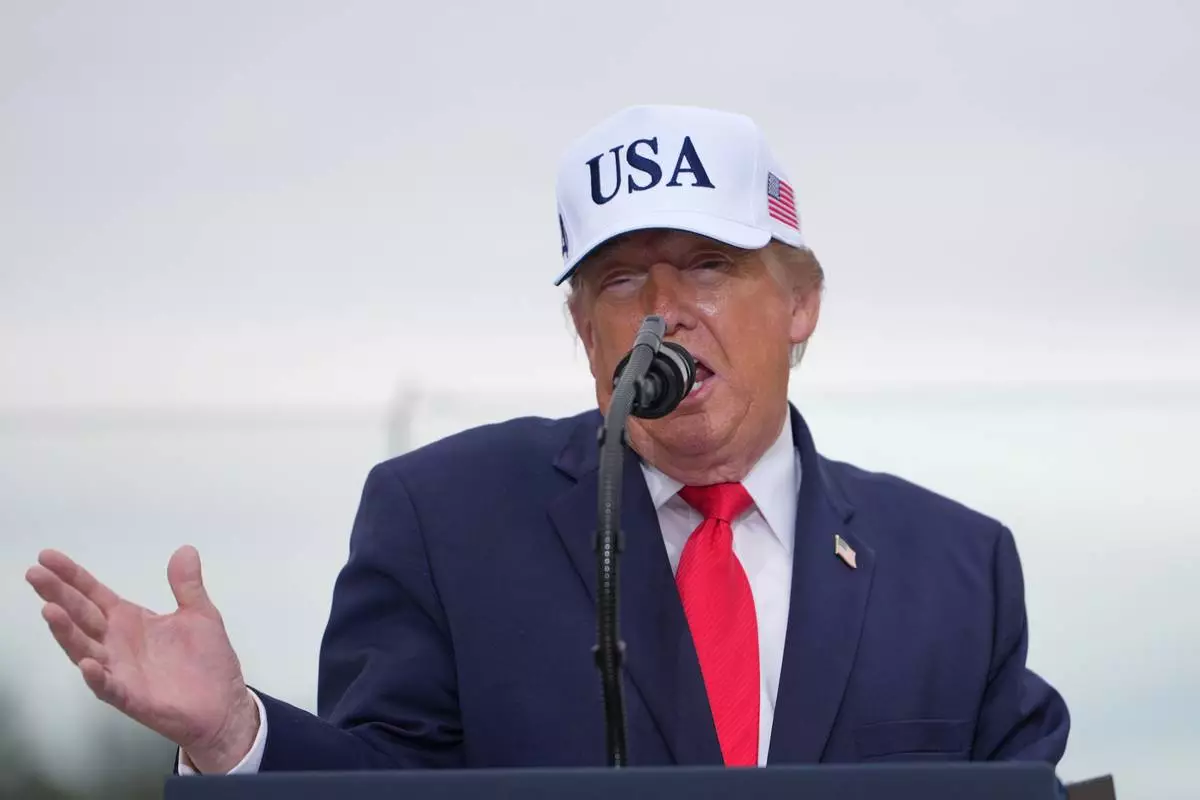
President Donald Trump speaks at the Lincoln Memorial Reflecting Pool, Monday, Nov. 2, 2026, in Washington. (AP Photo/Alex Brandon)
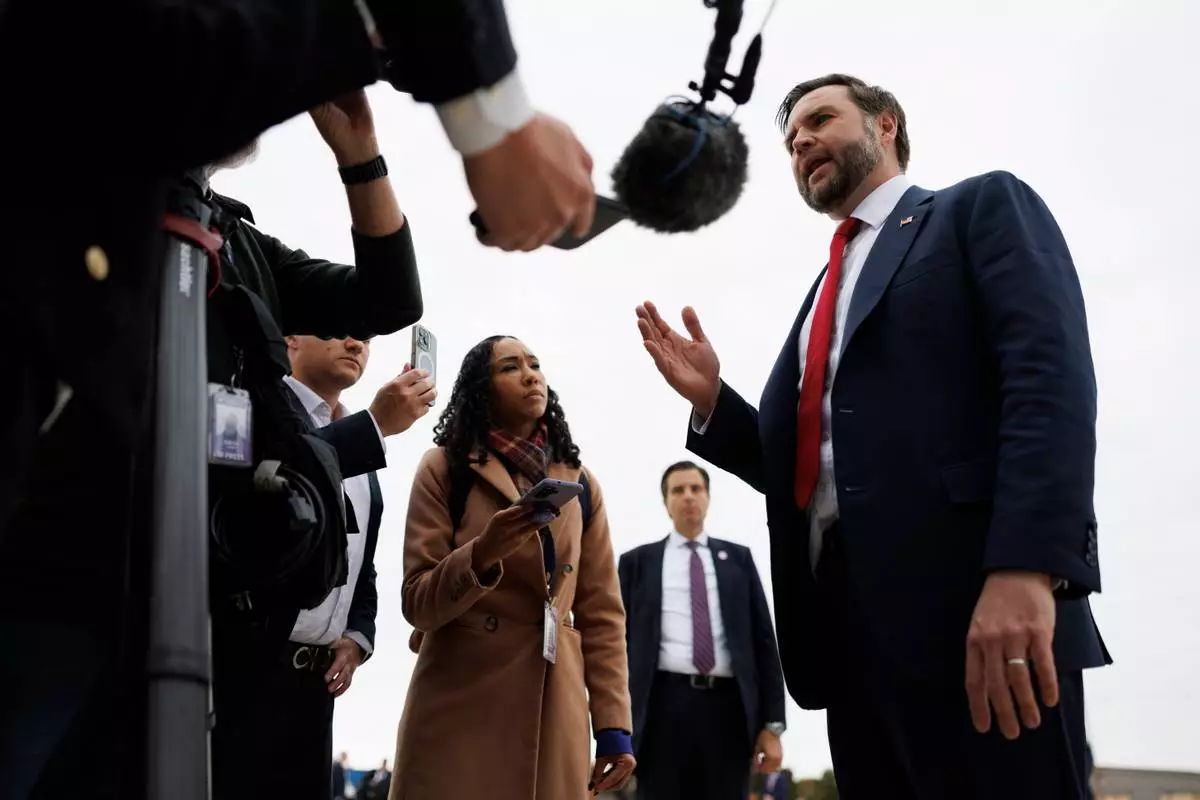
Vice President JD Vance talks with reporters after arriving on Air Force Two, Monday, Nov. 2, 2026, at Joint Base Andrews, Md. (Tom Brenner/Pool via AP)
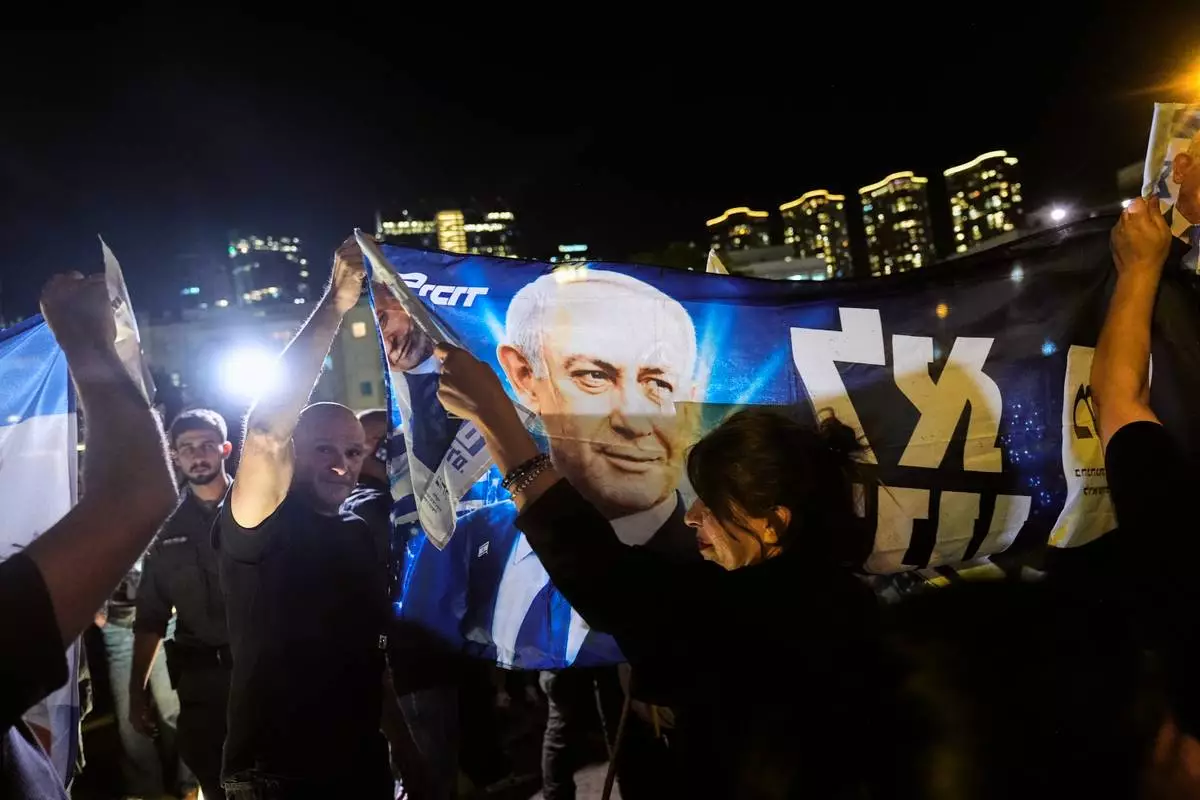
Supporters of Prime Minister Benjamin Netanyahu protest against left-wing activists calling for the formation of a government that includes Arab parties, following Israel's general election, in Tel Aviv, Israel, Saturday, Oct. 31, 2026. (AP Photo/David Goldman)
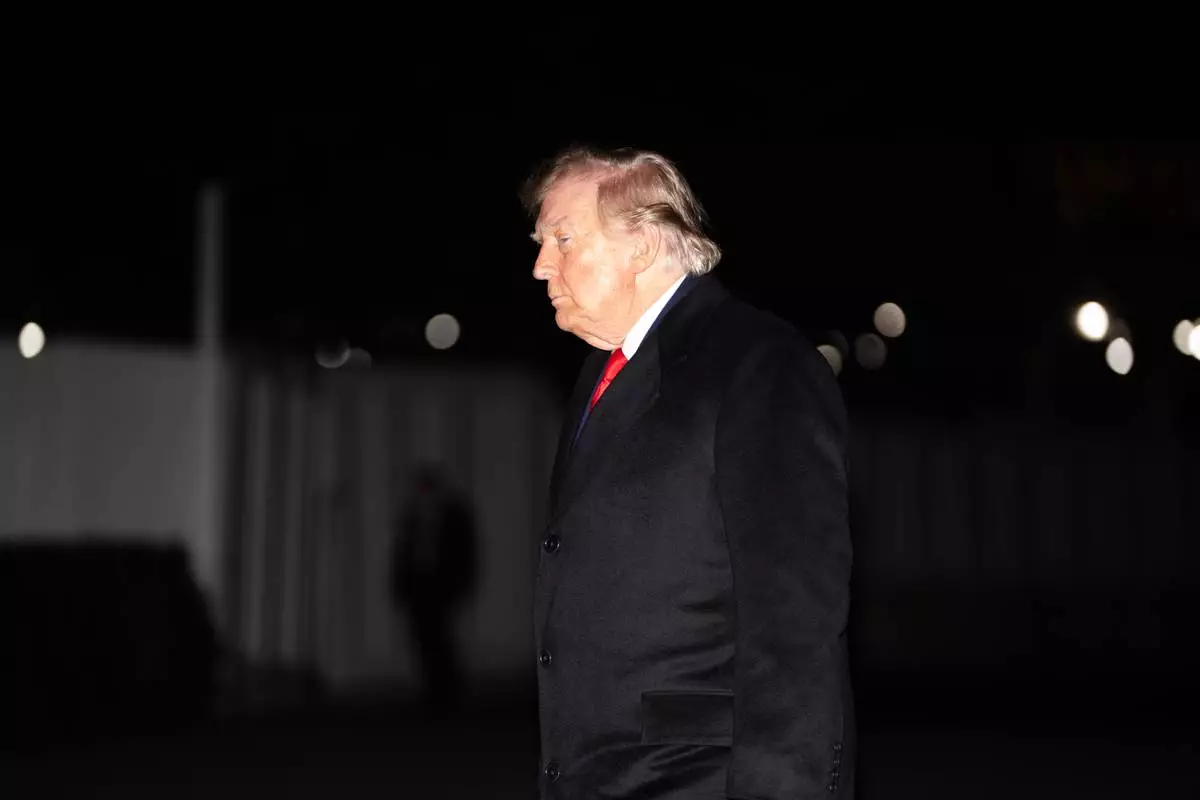
President Donald Trump walks across the South Lawn of the White House after stepping off Marine One, Monday, Nov. 2, 2026, in Washington. (AP Photo/Allison Robbert)
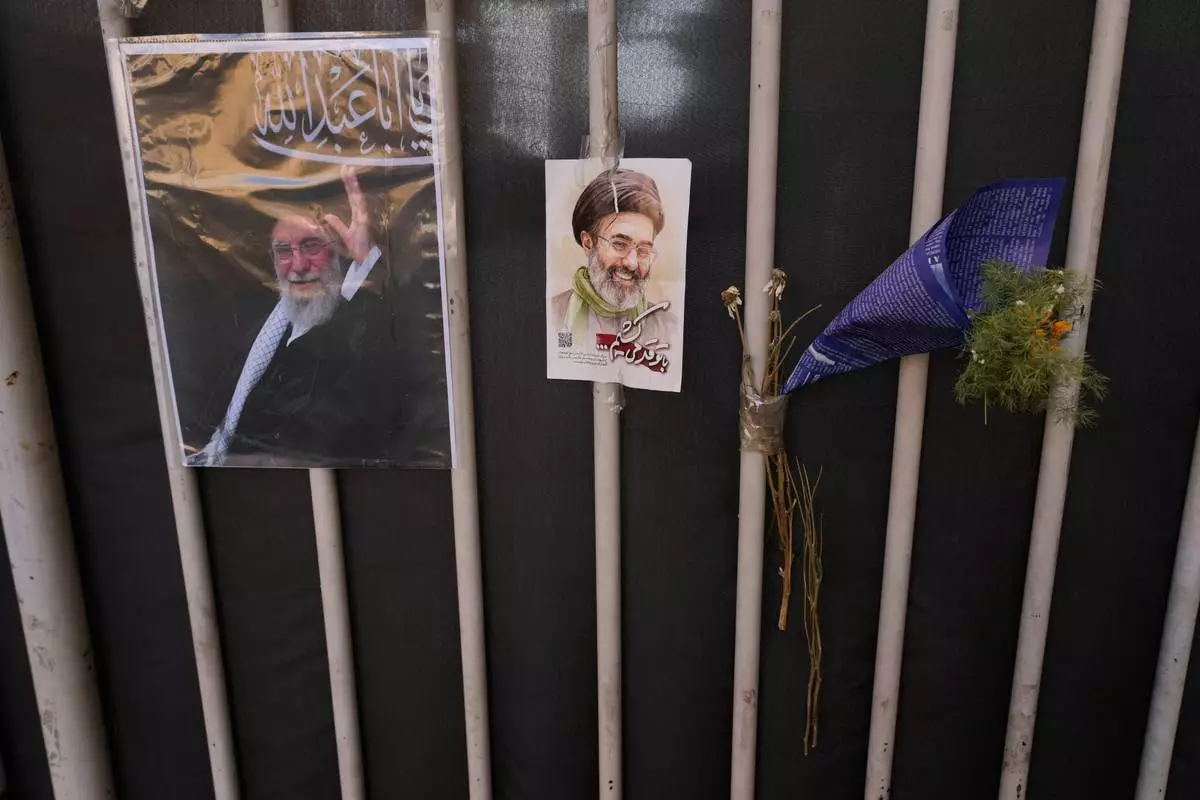
Posters of the Iranian Supreme Leader Ayatollah Mojtaba Khamenei, center, and his father, the late Supreme Leader Ayatollah Ali Khamenei are seen alongside dried flowers on a barricade placed on the street leading to their residence compound where the late Ayatollah Ali Khamenei was killed during the U.S. and Israel strike on Feb. 28, in Tehran, Iran, Friday, Oct. 30, 2026. (AP Photo/Vahid Salemi)