Skip to Content Facebook Feature Image

Financial Secretary Highlights AI's Role in Future Growth at Global Financial Leaders' Investment Summit

HK

Financial Secretary Highlights AI's Role in Future Growth at Global Financial Leaders' Investment Summit
HK

HK

Financial Secretary Highlights AI's Role in Future Growth at Global Financial Leaders' Investment Summit

2026-11-03 16:08 Last Updated At:16:27

Speech by FS at Global Financial Leaders' Investment Summit luncheon

Following is the speech by the Financial Secretary, Mr Paul Chan, at the Global Financial Leaders' Investment Summit luncheon today (November 3):

Distinguished guests, ladies and gentlemen,

Good afternoon.

This morning's discussions have ranged from market developments to capital flows, drawing on the depth of experience in this room. I would like to look beyond the immediate outlook and focus on two questions.

Where will the next wave of growth come from for your company?

And which economies will offer the greatest opportunities?

For many of us, AI will be central to the answer to the first question. But that is only a starting point.

AI is becoming a basic business capability. We use it to assess investments, analyse information and improve efficiency. But as these tools become widely available, access to them will no longer be a competitive edge.

What will matter is how businesses change around them. And that is the distinction between having AI capabilities and being AI-native.

The electrification of factories, beginning in the late 19th century, offers a useful reflection. Initially, electric motors drove the same shafts and belts, leaving factory layouts largely unchanged. The gains in productivity were limited. Significant improvements came when each machine had its own motor, allowing factories to be redesigned around the flow of work.

To realise the full potential of electricity, changing the power source was not enough. The factory itself had to change.

Today, AI presents a similar opportunity. Applying it to existing processes can save time and money. But the real potential lies in redesigning products, organisations and business models.

In an AI-native business, data from real operations helps systems and products improve. Those improvements, in turn, strengthen the business and its ability to serve customers.

So, for investors, the issue is not simply whether a company uses AI, but whether AI is changing how it operates, serves customers and generates revenue.

Technology can improve individual tasks. But its greater promise is to improve how institutions work and how they serve people.

Realising that promise requires us to put AI to work in real-world settings, where new ideas can be tested with customers and under actual operating conditions.

That brings me to my second question: which economies will offer the greatest opportunities?

Across the Chinese Mainland, factories, hospitals and logistics networks provide extensive opportunities to test AI and develop new businesses. China's comprehensive industrial base and wealth of real-world applications make it fertile ground for AI-native growth.

But this is only part of the picture. We should also look to the Global South. The World Bank has highlighted how affordable "small AI" applications can help developing countries improve productivity in agriculture, healthcare and education.

These applications may attract less attention, but their value can be substantial. And with fewer established systems to replace, some businesses can move directly to new ways of working. This creates opportunities to leapfrog traditional stages of development.

The next sources of growth, therefore, will not be confined to today's technology leaders. They will also emerge where companies find new ways to apply AI to unmet needs.

For financial centres, these developments place new demands on us. We need to connect promising businesses with capital and partners, wherever they emerge, and giving investors trusted routes into unfamiliar sectors and economies.

Hong Kong is rising to these challenges and seizing new opportunities by adopting a "Finance+" strategy. That means leveraging our finance capability to empower different sectors, particularly the emerging and future industries, to help build the economy of tomorrow. In the area of technology and innovation, we approach this on two fronts.

Financing innovation and growth

First, by supporting innovative businesses through different stages of development.

Our public markets connect enterprises with international capital. A-plus-H listings help Mainland companies reach global investors and give those investors greater access to opportunities in China.

But public markets are only part of the equation. Promising ideas take time to become viable businesses, often long before a listing is possible. They need patient capital that can look beyond near-term returns and support them through uncertainty.

The Hong Kong Investment Corporation is helping to build that patient capital ecosystem, working with international investors, including sovereign wealth funds and pension funds.

Together, they give enterprises the time and support to build their businesses, establish partnerships and grow.

Building global enterprises

Capital is essential. But it creates the greatest value when it is connected with ideas, talent and commercial expertise.

This brings me to the second front: strengthening Hong Kong's own contribution to innovation.

Our ambition is not only to finance businesses created elsewhere, but also to help create the enterprises of tomorrow.

The Northern Metropolis is central to this effort. It will bring universities, research facilities and technology enterprises closer together, linking education, technology and talent more closely with industry.

It will provide a base for closer collaboration with other Greater Bay Area cities, including Shenzhen and Guangzhou, drawing on their strengths in commercialisation, engineering and advanced manufacturing.

We see China becoming a major source of multinational companies. Hong Kong is well placed to help the next generation of Chinese enterprises go global, while serving as a base for international businesses seeking new partnerships.

For investors, this means opportunities to participate directly in innovation, backing promising ventures and helping build the next generation of global businesses.

Connecting new opportunities

Another priority of ours is to widen Hong Kong's connections, both across economies and across asset classes.

We are deepening our engagement with the Global South, including Southeast Asia, the Middle East and Central Asia, and turning those relationships into investment channels.

In Southeast Asia, we are welcoming more enterprises from Indonesia, Thailand and Malaysia to list in Hong Kong.

In the Middle East, Hong Kong and Saudi Arabia have listed ETFs (exchange-traded funds) tracking each other's markets, giving investors new routes to invest.

In Central Asia, Kazakhstan has already tapped Hong Kong's equity and bond markets. We welcome more issuers to raise capital here through listings and bond issuance.

Beyond equities and bonds, we are broadening the range of assets and services available through Hong Kong. This will give investors more options to diversify and help businesses meet their trading, financing and risk management needs.

Gold and commodities are central to this effort. Our vision is to build an integrated market that brings together storage, physical trading and derivatives, supported by efficient clearing and settlement and connections established with Shanghai.

For gold, we are expanding storage capacity to over 2 000 tonnes initially within three years. We welcome central banks and international investors to store gold in Hong Kong. Our central clearing and settlement system is scheduled to launch in the first quarter of next year, while HKEX (Hong Kong Exchanges and Clearing) is preparing new RMB-denominated, physically settled gold futures.

For commodities, we are expanding warehousing capacity and the range of RMB-denominated products, while exploring tokenised warehouse receipts to facilitate financing. Together, these developments will give businesses more financing options and investors more ways to diversify and manage risks.

Concluding remarks

Ladies and gentlemen, Hong Kong's continued development opens new opportunities for your businesses. Your decisions will help shape which ideas take root, which enterprises thrive and how growth translates into wider prosperity.

For our part, we will continue to uphold openness, clear rules and investor protection on which confidence depends.

But Hong Kong is also a place that embraces new ideas and business models, where innovators find investors who understand their aspirations, where ideas are tested and developed in the market, and where businesses ready to redesign their factories find the capital and partners to grow.

Let us work together to seize the vast opportunities ahead. Thank you very much, and enjoy the rest of your lunch.
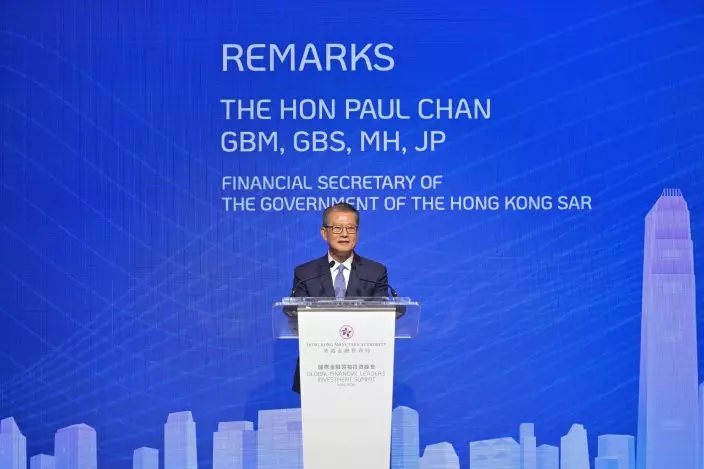
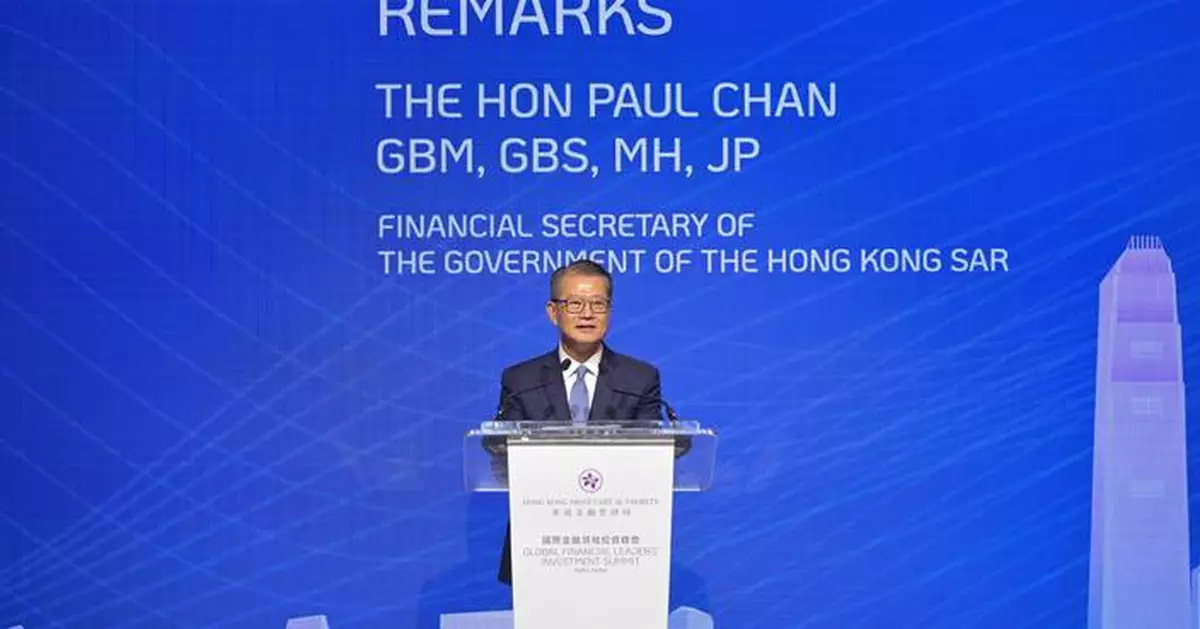
The Financial Secretary, Mr Paul Chan, speaks at the Global Financial Leaders' Investment Summit luncheon today (November 3). Source: HKSAR Government Press Releases

The Financial Secretary, Mr Paul Chan, speaks at the Global Financial Leaders' Investment Summit luncheon today (November 3). Source: HKSAR Government Press Releases
Election Committee Subsector Ordinary Elections' candidates briefed on electoral legislation and guidelines

The following is issued on behalf of the Electoral Affairs Commission:

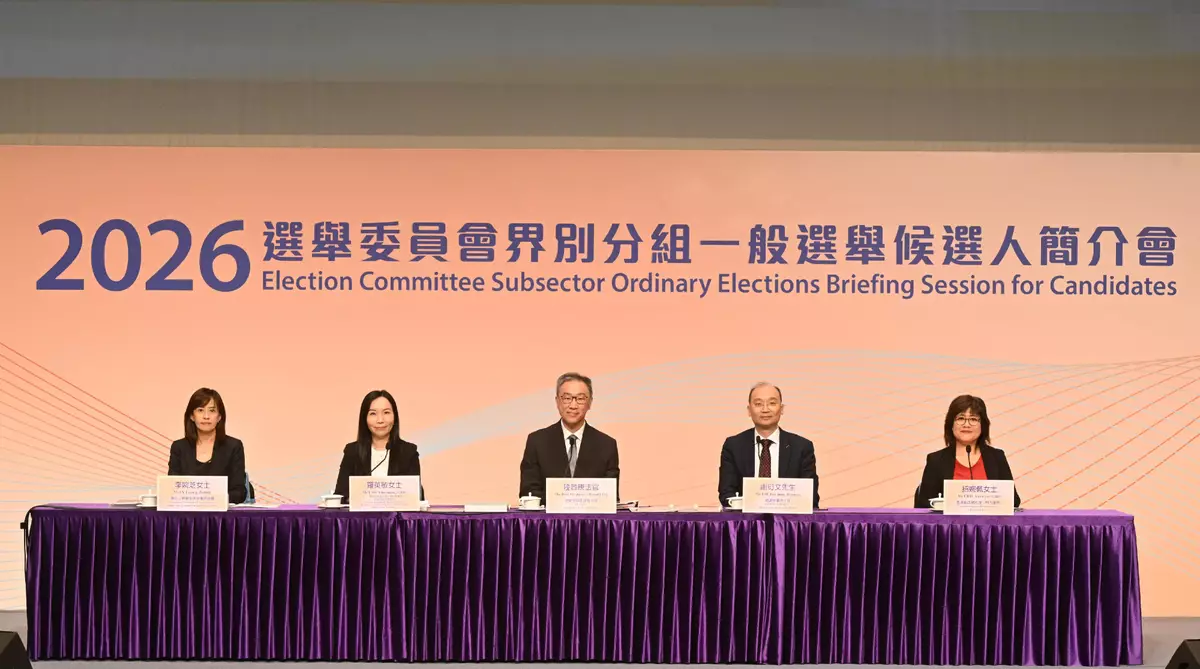
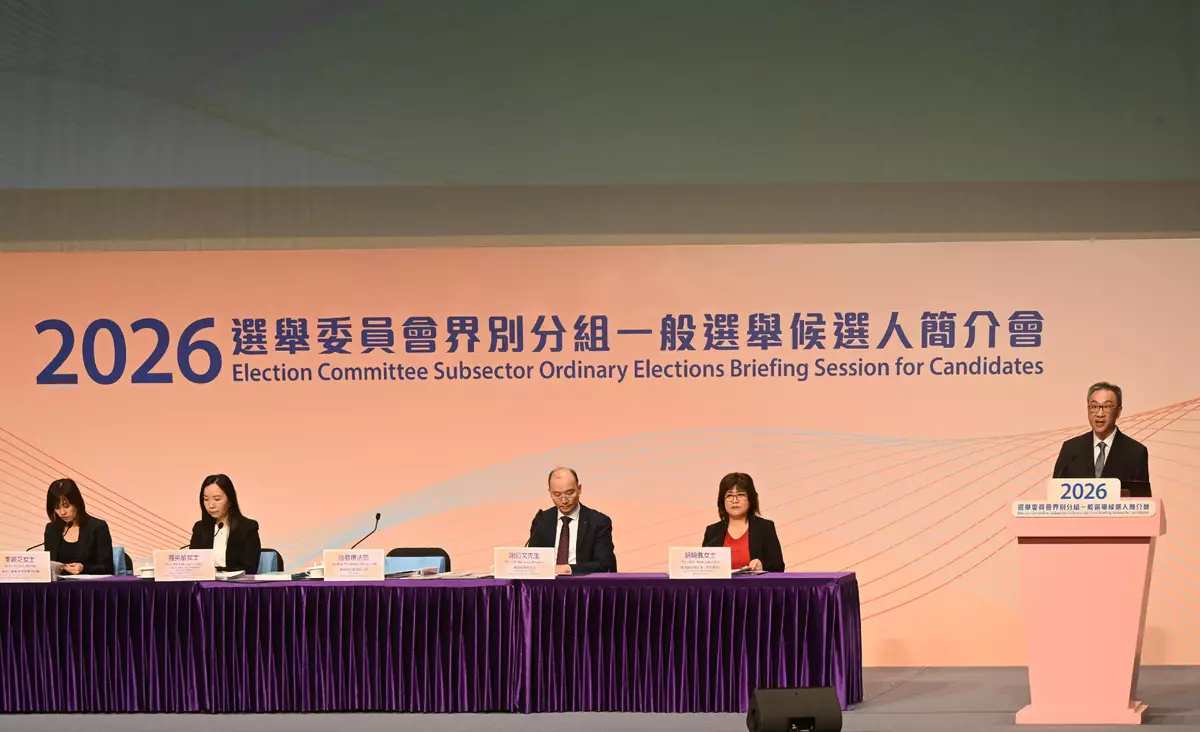
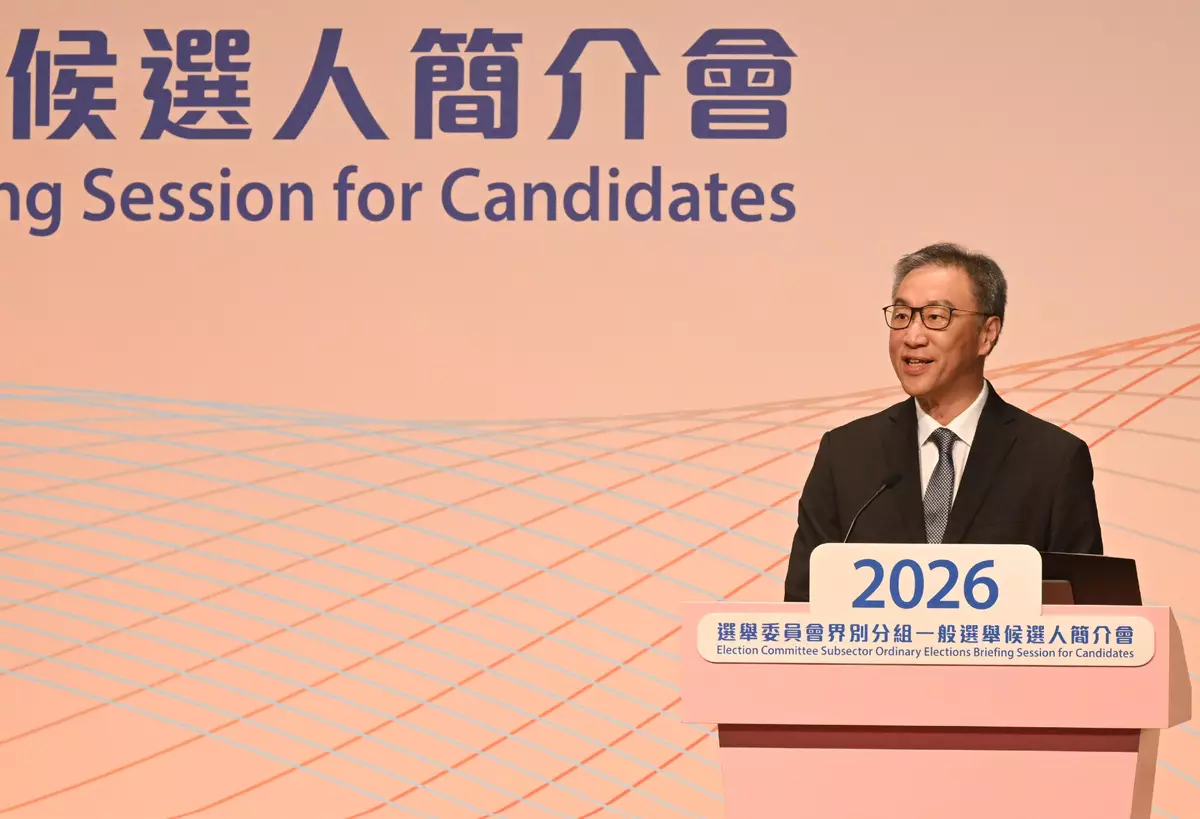
The Chairman of the Electoral Affairs Commission, Mr Justice David Lok, conducted a briefing tonight (November 3) for the candidates of the 2026 Election Committee Subsector (ECSS) Ordinary Elections on the electoral arrangements, the guidelines on election-related activities and important points to note in running their electioneering campaigns to ensure that the elections are conducted in an open, honest and fair manner.

Mr Justice Lok said at the briefing, "The ECSS Ordinary Elections will be held on November 22 and the nomination period closed on October 20. A total of 1 115 nomination forms for candidates were received during the nomination period. The Candidate Eligibility Review Committee earlier published notices in the Gazette with the names of the validly nominated candidates, and the Returning Officers (ROs) also published details in the Gazette of the candidates who were duly elected from the uncontested subsectors."

Mr Justice Lok said that for the elections, there are 31 contested subsectors, involving about 5 700 voters, who may vote on November 22 to elect 723 Election Committee (EC) members. The ROs have determined the order of the names of candidates appearing on a ballot paper by drawing lots on October 29 and the candidate numbers have also been promulgated in the Gazette notices.

At the briefing, Mr Justice Lok highlighted the arrangements and points to note of the elections that are related to the candidates.

No canvassing zone and no staying zone

On the polling day, a certain area outside each polling station will be designated as a no canvassing zone to ensure that voters can gain access to the polling stations without interference. No one is allowed to canvass for votes or conduct "de-facto canvassing" such as making hand gestures and greetings in the no canvassing zone. A no staying zone will also be designated in the vicinity of the entrance and exit of a polling station. No one is allowed to stay in the no staying zone.

The Presiding Officer will request the person who has committed such prohibited acts within these zones to leave. If the person concerned refuses to abide by the order, he or she may be evicted by law enforcement officers or authorised persons.

Arrangements for central counting

Central counting will be adopted for the elections. Once the poll is closed, the ballot boxes will be delivered to the Central Counting Station (CCS) at the Hong Kong Convention and Exhibition Centre. The ROs will supervise the counting process with the assistance of Assistant ROs and counting staff. Questionable ballot papers will be determined by the ROs on site, and their decisions will be final. Any objection raised against the ROs' decisions will be filed on record, and the candidates may make an appeal in accordance with the law.

Video-recording facilities will be installed at the CCS. Candidates, election agents and counting agents may enter the CCS and observe the count at designated areas of the counting zone. Members of the public and the media may also enter the CCS to observe the count, but they are not allowed to enter the counting zone. A notice setting out the maximum capacity of the public area will be displayed outside the CCS.

Announcement of election results

Once the counting of votes of a subsector is completed and verified by the Registration and Electoral Office, the RO will make known the counting results to the candidates and their agents present at the tables for determination of questionable ballot papers at the CCS. If none of the candidates or agents present requests a recount of votes, the RO will thereupon announce the election results. If, according to the counting results, there remain EC members to be elected and the remaining candidates with the highest number of votes have an equal number of votes, the RO shall determine the election results by drawing lots in accordance with the law. The elected candidates will be invited to receive applause on the stage of the Media Centre.

The election results will be displayed outside the CCS and published via press releases and the dedicated election website (www.elections.gov.hk).

Digitalisation of electoral forms

Electronic copies are available for most electoral forms for the elections. Candidates may submit the relevant electoral forms via the REO e-Form Upload Platform and the Central e-Form Services. Election advertisements-related forms can be submitted via the Central Platform for Election Advertisements. Candidates utilising the Central e-Form Services can also make use of the "e-ME" form-filling function of "iAM Smart". However, some of the forms, such as the Return and Declaration of Election Expenses and Election Donations (Election Return), or forms with statutory declarations, are still required under the existing laws or other requirements to be submitted in paper form.

Mr Justice Lok reminded the candidates that once the electronic forms are submitted through the platforms concerned, notifications of confirmation will be issued by the respective platforms via email and/or mobile phone SMS message. With the receipt of the notifications, there is no need to submit the forms using other means again.

Election expenses

To ensure candidates are contesting on a level playing field, a maximum limit of election expenses is set for each subsector: the maximum amount of election expenses for a candidate belonging to a subsector with the number of registered voters not more than 500 is $100,000, while that for a candidate belonging to a subsector with the number of registered voters more than 500 but not more than 5 000 is $160,000. It will be an offence if candidates and their election expense agents incur election expenses in excess of the prescribed maximum limit, be it a very small amount, and the candidates will be subject to criminal liability.

Election meetings

An election meeting is a meeting held to promote or prejudice the election of a particular candidate or particular candidates. Expenses incurred are considered as election expenses. Candidates should note that if they wish to hold election campaigns or election meetings in government premises, they must obtain prior approval from the relevant government departments.

Requirements of election advertisements

According to the law, an election advertisement is an advertisement used for the purpose of promoting or prejudicing the election of a particular candidate or particular candidates. Candidates must upload the electronic copies of the election advertisements and the permission, consent of support, etc, onto the REO's Central Platform for Election Advertisements or the candidate's platform, or submit the relevant materials to the ROs for public inspection within three working days after the publication of the election advertisements. It is an offence if a candidate fails to comply with the requirement.

In addition, at the briefing, a representative from the Independent Commission Against Corruption also briefed the candidates about the Elections (Corrupt and Illegal Conduct) Ordinance and the points to note regarding election expenses and election donations to enhance their understanding of the acts that may constitute corrupt or illegal conducts, whereas a representative from Hongkong Post provided the candidates with a brief overview of the arrangements for free postage service for election mail.

Information on the elections is available on the dedicated election website (www.elections.gov.hk). The video of the candidate briefing will also be uploaded to the dedicated election website and the RTHK website (www.rthk.hk/tv/dtt31/programme/2026ecsoebsc) later. The video is also available for replay via the RTHK website or by downloading the "RTHK On The Go" app.

Election Committee Subsector Ordinary Elections' candidates briefed on electoral legislation and guidelines Source: HKSAR Government Press Releases
Election Committee Subsector Ordinary Elections' candidates briefed on electoral legislation and guidelines Source: HKSAR Government Press Releases

Election Committee Subsector Ordinary Elections' candidates briefed on electoral legislation and guidelines Source: HKSAR Government Press Releases
Election Committee Subsector Ordinary Elections' candidates briefed on electoral legislation and guidelines Source: HKSAR Government Press Releases
Election Committee Subsector Ordinary Elections' candidates briefed on electoral legislation and guidelines Source: HKSAR Government Press Releases

Election Committee Subsector Ordinary Elections' candidates briefed on electoral legislation and guidelines Source: HKSAR Government Press Releases
Recommended Articles