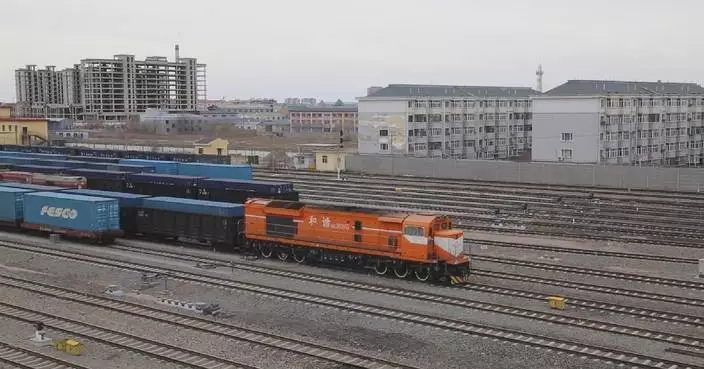
China-Europe freight train trips from the China-Kazakhstan (Lianyungang) Logistics Cooperation Base in east China's Jiangsu Province increased by 7.3 percent year on year to 732 trains in the first nine months of 2026, the latest customs data showed.
The base connects to five border crossings, namely Alashankou (Alataw Pass), Horgos, Erenhot, Kashgar, and Manzhouli.
Also, it has successfully established six major international rail routes linking Central Asia, Mongolia, Türkiye, Russia, and many European countries, carrying cargo ranging from automobiles and auto parts, chemical products, home appliances, textiles and apparel, to electronics.
The China-Europe freight train service began operations in 2011 and has grown rapidly since the implementation of the Belt and Road Initiative. So far, the service has reached 237 cities in 26 European countries and more than 100 cities in 12 other Asian countries, covering nearly the entire Eurasian continent and building a new platform for economic and trade cooperation along the routes.
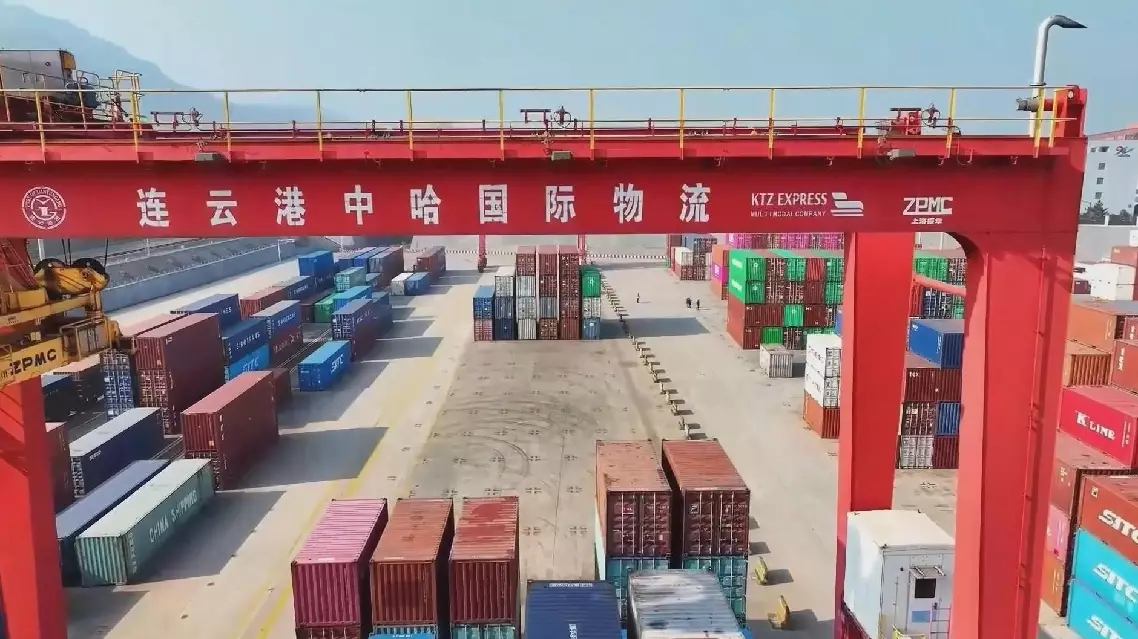
Cross-border freight train trips surge in east China logistics hub from Q1-Q3
China's express delivery volume exceeded 17 billion parcels for a second consecutive month in October, helping drive the expansion of urban and rural consumption, the State Post Bureau (SPB) said Tuesday.
In October, the express delivery industry closely aligned with delivery demand from major e-commerce promotions, building an integrated service chain linking production, sales and transportation, and strengthening capacity deployment and resource input to ensure the efficient circulation of seasonal products. "Express delivery companies have steadily advanced infrastructure construction, taken multiple measures to enhance peak-season support capacity, and improved their level of intelligentization, laying a solid foundation for the industry's high-quality development," said Wang Yuehan, director of the Industrial Economy Research Department at the SPB's Development Research Center.
Facing surging volumes, express delivery companies used large-model systems to coordinate air, rail and road transport resources. Unlike past peak periods when scheduling relied primarily on manual experience and multi-party consultation, today's intelligent systems translate complex logistics and transportation scenarios into mathematical models.
An engineer at SF Technology, the digital-intelligent logistics tech arm of China's SF Express, said large models can dynamically output scheduling strategies based on parcel volume changes.
"On the first day, the pressure may be concentrated in the parcel origin cities. On the second and third days, pressure shifts to mid-route transportation. On the third and fourth days, pressure falls on destination cities for delivery. We support each region in producing corresponding plans based on its own timing, parcel volume and distribution changes," said Huang Yixiao, a senior engineer at SF Technology.
Intelligent scheduling improves peak-season capacity support efficiency while steadily enhancing delivery timeliness. The latest SPB data shows that the 72-hour delivery rate in key monitored regions reached 86.7 percent last month, up 0.9 percentage points year on year.
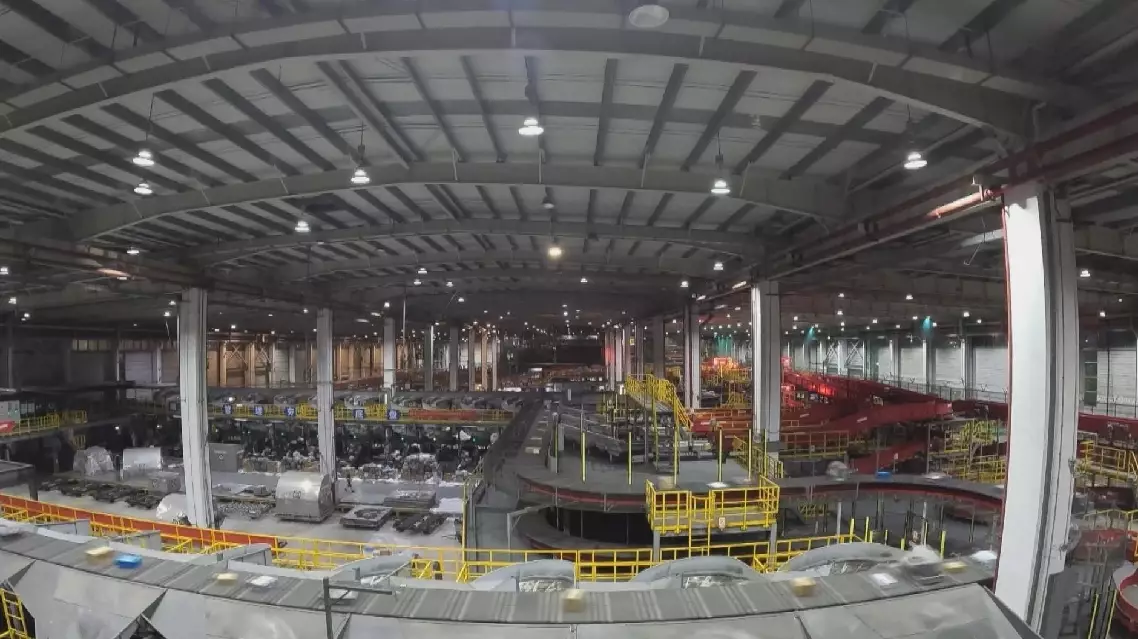
China's express delivery volume tops 17 billion parcels for two consecutive months