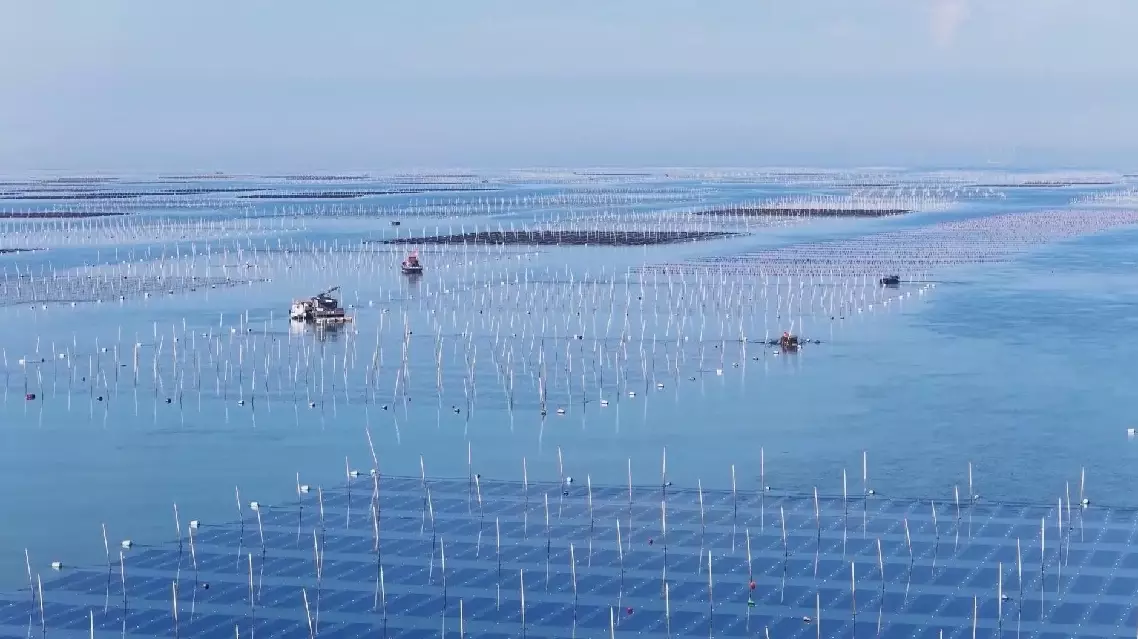
China will accelerate the expansion of its marine industries into deep and distant waters during the 15th Five-Year Plan (2026-2030) period, launching a new round of major scientific and engineering projects, the National Development and Reform Commission (NDRC) announced on Tuesday.
Speaking at a press conference in Beijing, Ma Weichen, deputy head of the NDRC's Regional Coordination Development Department, outlined a broad push into the deep seas.
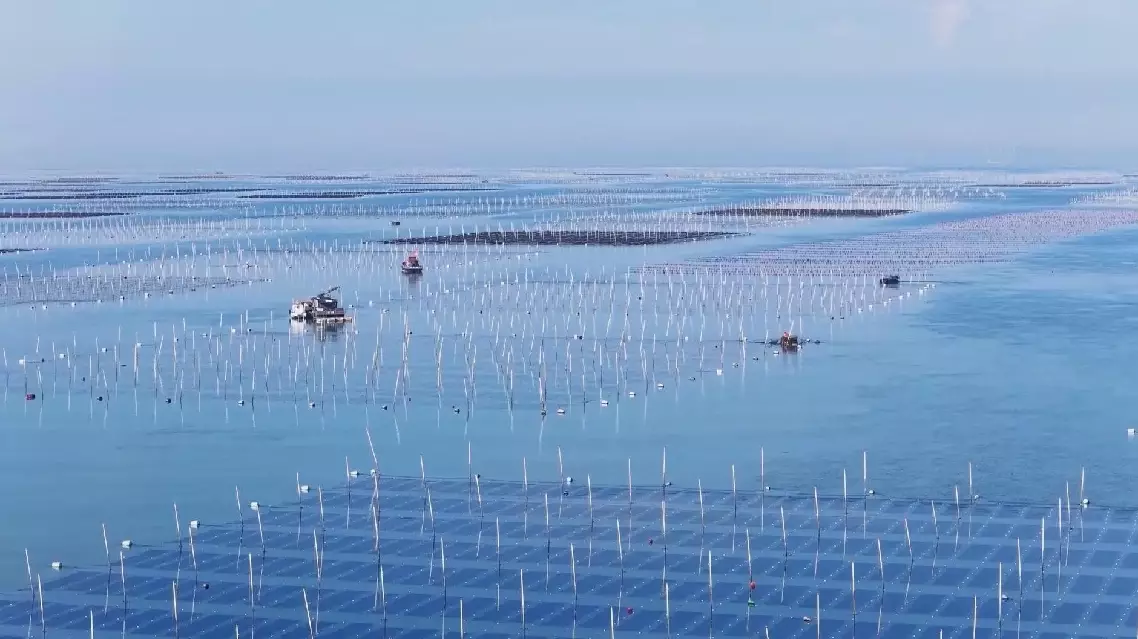
"We will advance the layout and development of marine industries into deep and distant waters, actively develop deep-sea aquaculture and modern distant-water fisheries, develop deep-sea wind power in a regulated and orderly manner, and pursue the integrated construction of offshore wind power bases, transmission projects, and onshore grid connection facilities. By 2030, China's cumulative grid-connected offshore wind capacity is expected to exceed 100 million kilowatts," he said.
"In addition, we will make orderly progress on key tasks such as deep-sea mineral development and ultra-deepwater oil and gas exploration, and implement major projects including the third phases of exploration led by the manned submersible Jiaolong and expedition led by the research icebreaker Xuelong, respectively, to stimulate the momentum and vitality of marine industry development," he said.
The announcement comes as China's marine economy continues to expand at a fast clip. The country's gross ocean product reached 8.5 trillion yuan (about 1.27 trillion U.S. dollars) in the first three quarters of this year, up 4.9 percent year on year, according to the latest data released by the Ministry of Natural Resources.
China to push marine industries into deep seas with new major projects
China to push marine industries into deep seas with new major projects
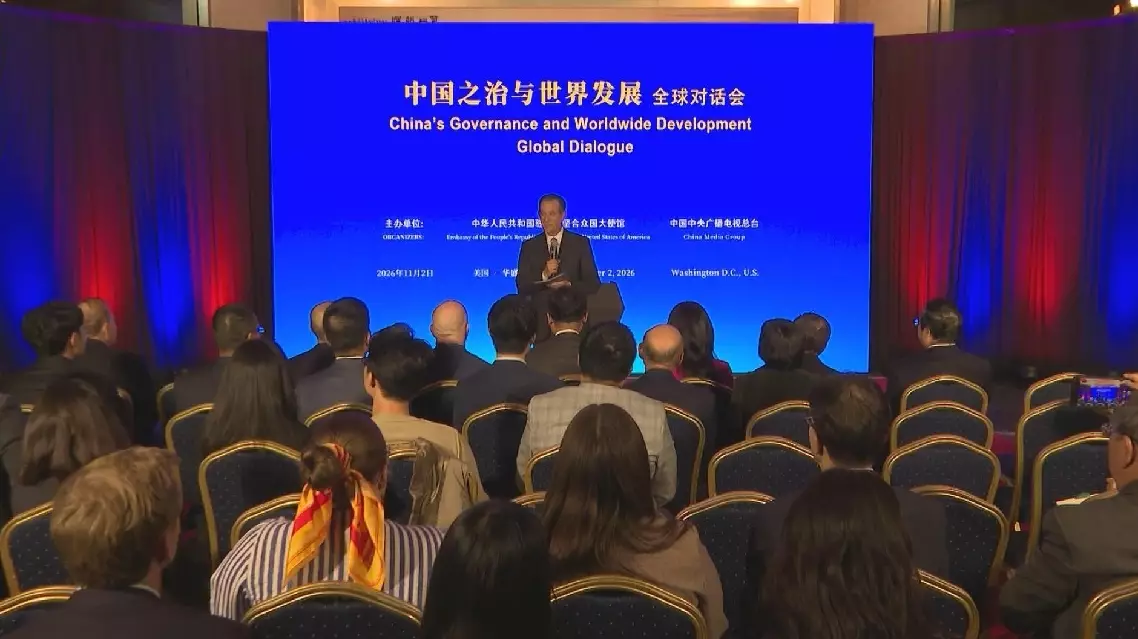
A global dialogue on China's governance and world development was held in Washington, D.C. on Monday, bringing together nearly 100 guests, including U.S. think tank scholars and young representatives, to discuss China's governance experience and its contributions to the world.
The event was co-hosted by China Media Group (CMG) and the Chinese Embassy in the United States.
According to attendees, understanding today's China requires understanding the Communist Party of China (CPC). The recently concluded fifth plenary session of the 20th CPC Central Committee, which drew worldwide attention, reviewed the Party's achievements and experience in full and rigorous self-governance in the new era and made systematic plans for sustaining these efforts, and will surely have a profound impact on China's future development.
They noted that as once-in-a-century changes accelerate and humanity once again stands at a crossroads, more and more countries and political parties are drawing inspiration from China's governance and seeking a development path suited to their own national conditions.
"China being such a leader in the world generally, a lot of countries will follow China's example. When I do learn about different Chinese advancements, it's been really nice to see that a lot of the research and technology that they are sharing is a lot more environmentally sustainable, I think," said Stephanie, a student at American University.
Some attendees said China's resilient and dynamic economy is the most important engine for the world economy and stability, and will continue to contribute positively to global governance.
They also expressed the hope that people-to-people exchanges between China and the U.S. can transcend cultural and institutional differences so that, through mutual understanding, dialogue and cooperation, the two countries can jointly address global challenges and create a better future for humanity.
During the dialogue session, U.S. media leaders and young representatives shared their experiences in China and discussed China's achievements in modernization, analyzing the strong momentum of China's scientific and technological progress.
They noted that China's notable achievements in fields such as green energy transition offer inspiration and reference for global sustainable development. Young representatives from China and the U.S. expressed their hope to strengthen exchanges in science, technology and innovation and contribute to cooperation between the two countries.
China announced an initiative in November 2023 to invite 50,000 young Americans to China for exchange and study over five years. The goal was reached two and a half years ahead of schedule.
During a visit to the U.S. in September, Chinese President Xi Jinping said that 100,000 young Americans will be invited to visit China for exchanges and study over the next five years.
"[For the] initiative for 100,000 students to come back within the next five years, he's already accomplished his first goal, which was five years. He did it in two and a half years. Now he's got a new goal. That's what the young people want," said Ronald Sakolsky, a retired American teacher.
Global dialogue on China's governance, world development held in Washington