China's gross ocean product is projected to exceed 13 trillion yuan (about 1.95 trillion U.S. dollars) by 2030, as the country accelerates efforts to build a strong maritime country during the 15th Five-Year Plan (2026-2030) period, the National Development and Reform Commission (NDRC) said on Tuesday.
To achieve this goal, the top economic planner said that China will focus on three key pillars: technological innovation, emerging industries, and spatial optimization.
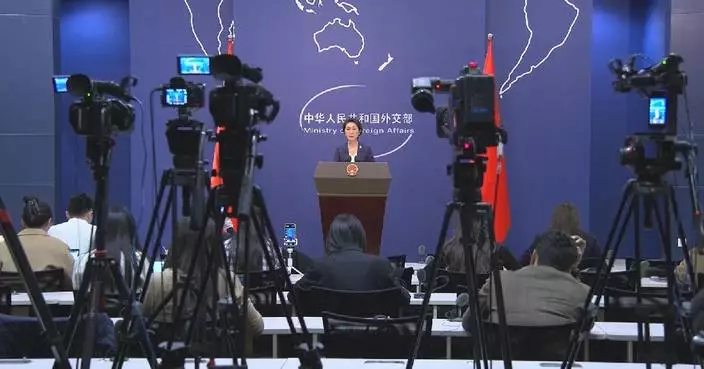
Ma Weichen, deputy head of the NDRC's Regional Coordination Development Department, told a press briefing that China will spearhead major technological breakthroughs in the maritime sector and develop advanced heavy equipment during the five-year period. .
He added that efforts will address critical bottlenecks in high-end instruments, crucial materials, and deep-sea meteorological navigation.
China will also coordinate the construction of national laboratories, key laboratories nationwide, and industrial technology engineering centers in the marine sector, said Ma, noting that higher education institutions will be supported in strengthening priority and emerging interdisciplinary subjects to cultivate cross-disciplinary and practice-oriented talent.
Meanwhile, China plans to upgrade coastal ports and major transportation corridors, leveraging multimodal transport networks to foster clustered development in port-adjacent green petrochemicals, advanced equipment manufacturing, and modern port logistics, he said.
"We will vigorously foster emerging industries such as marine biomedicine, new marine materials, and marine electronic information, actively expand application scenarios in deep-sea industries and ocean energy utilization, while promoting artificial intelligence applications in the maritime sector to translate innovative achievements into new products, services, and growth drivers. By 2030, China's gross ocean product is expected to surpass 13 trillion yuan," said Ma.
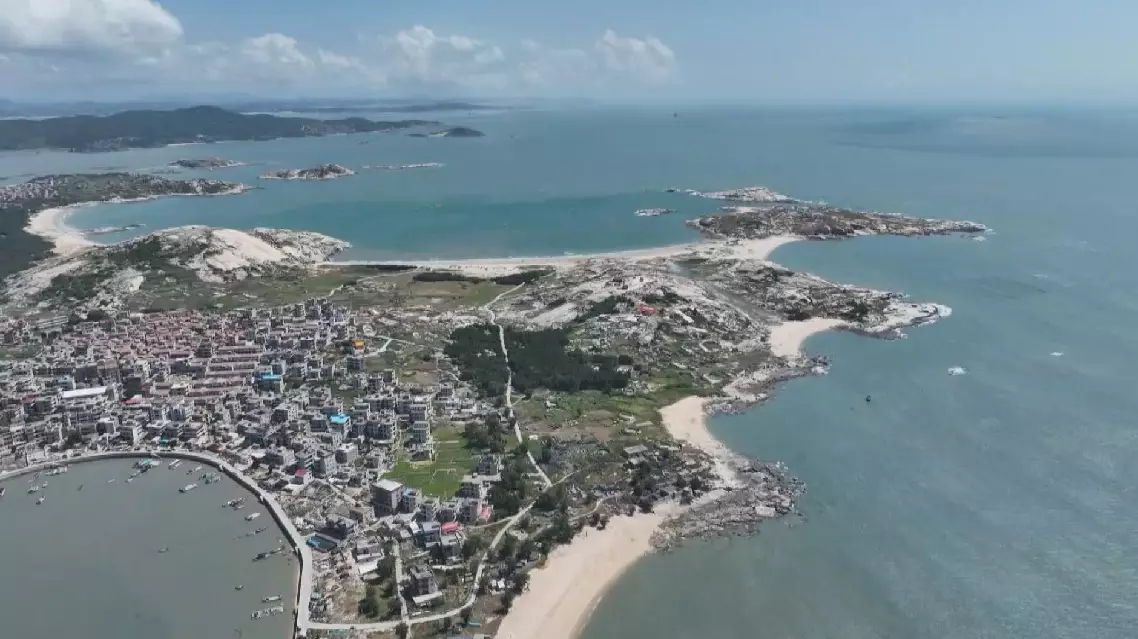
China's gross ocean product expected to surpass 13 tln yuan by 2030
Both large and small Swiss firms stand to gain significant cost advantages following Friday's signing of a protocol to upgrade China-Switzerland free trade agreement (FTA), said Swiss Centers Delegate Nicolas Musy.
China and Switzerland signed their original FTA in 2013, and the agreement entered into force in July 2014. The two countries launched negotiations to upgrade the agreement in September 2024 and announced their completion in August 2026, after five rounds of talks.
Under the protocol, the two sides will make high-standard commitments to further opening up trade in goods, services and investment, while upgrading rules covering rules of origin, trade facilitation, technical barriers to trade, digital trade, competition, and trade and sustainable development.
Musy emphasized that the upgraded agreement comes at a crucial time as Swiss firms face intense competition from European rivals in the Chinese market.
"Swiss companies compete a lot with other Europeans, like Germans or Italians, sometimes French. And this free trade agreement is giving them, let's say, a cost advantage in China. They usually have very good products, but the products are often expensive, so this is a non-negligible factor for Swiss companies and their Chinese partners who are helping them sell or who are partnering up in joint ventures to develop products together," said Musy.
The traditional areas where Switzerland is strong are going to continue to benefit, including pharmaceuticals and chemicals, said the official.
"Traditionally, Switzerland has been selling a lot of medical products into China, but nowadays, of course, they also do some production in China, but more and more now they partner up with new companies, research companies in China who develop pharmaceutical products. Either they buy the products or they do joint ventures, the big companies, big Swiss pharma companies together with the Chinese to sell the Chinese-discovered products to the rest of the world, not only in China. So this is a new aspect," said Musy.
Switzerland's machinery sector maintains strong presence in China, where the sector is partially localized, he said, noting that smaller Swiss companies who are making instruments are developing more partnerships in China to localize their production.
Switzerland is China's seventh-largest trading partner in Europe, while China is Switzerland's largest trading partner in Asia, an official with China's Ministry of Commerce noted. Bilateral trade reached 49.04 billion U.S. dollars in 2025.
Swiss Centers is a non-profit organization serving the Swiss economy by providing adapted services for small and medium enterprises (SMEs) in entering the Chinese and the Asian markets.

Upgraded China-Switzerland FTA to give Swiss companies competitive edge in China: official