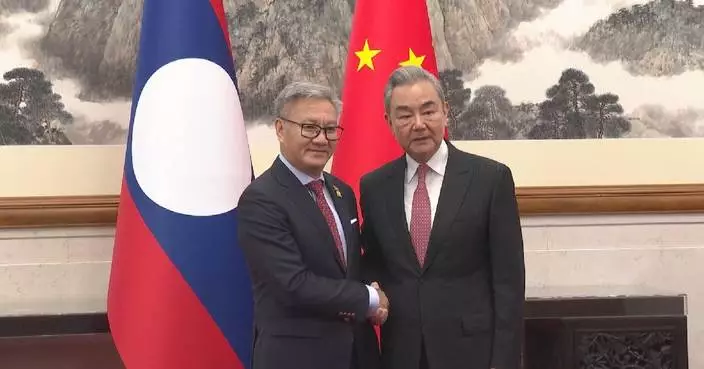
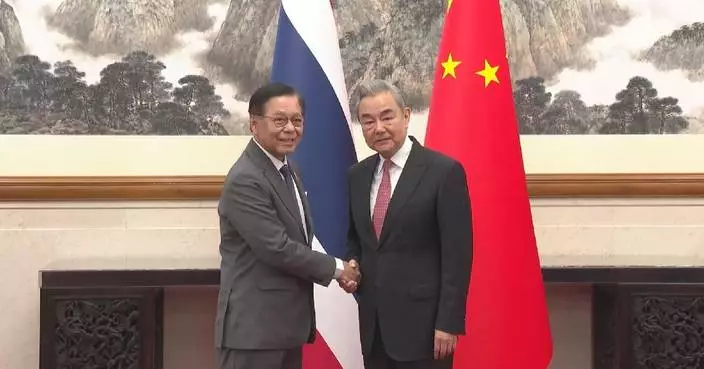
Chinese Foreign Minister Wang Yi on Tuesday called for joint efforts to advance the building of a China-Myanmar community with a shared future, expressing China's support for Myanmar's political reconciliation, economic development and improvement of people's livelihoods.
During their meeting in Beijing, Wang, also a member of the Political Bureau of the Communist Party of China Central Committee, hailed the time-honored "pauk-phaw" friendship between the two countries.
China supports Myanmar in achieving political reconciliation, stabilizing its domestic situation, developing its economy, improving people's livelihoods, and achieving national revitalization, said Wang.
China is always a reliable strategic partner for Myanmar and is willing to work with Myanmar to advance the building of a China-Myanmar community with a shared future, he added.
Wang called on both sides to advance key projects under the China-Myanmar Economic Corridor, deepen cooperation in energy and resources, and step up efforts to combat online gambling and telecom fraud. He urged Myanmar to take concrete measures to protect Chinese personnel, institutions and projects.
Aung Kyaw Hoe said Myanmar upholds the Five Principles of Peaceful Coexistence to carry forward Myanmar and China’s traditional friendship and firmly adheres to the one-China principle.
He said Myanmar was ready to accelerate the construction of economic corridor projects and work with China and other regional countries to combat telecom fraud. He also welcomed further Chinese investment.
Aung Kyaw Hoe is in China to attend the 11th Lancang-Mekong Cooperation (LMC) Foreign Ministers' Meeting.
Established in March 2016, the LMC framework brings together China and the five Mekong countries -- Myanmar, Laos, Thailand, Cambodia and Vietnam.
The mechanism, as its name suggests, is made possible because the six countries share the same river -- called the Lancang River in China and the Mekong River when it flows through the other five countries before emptying into the sea.
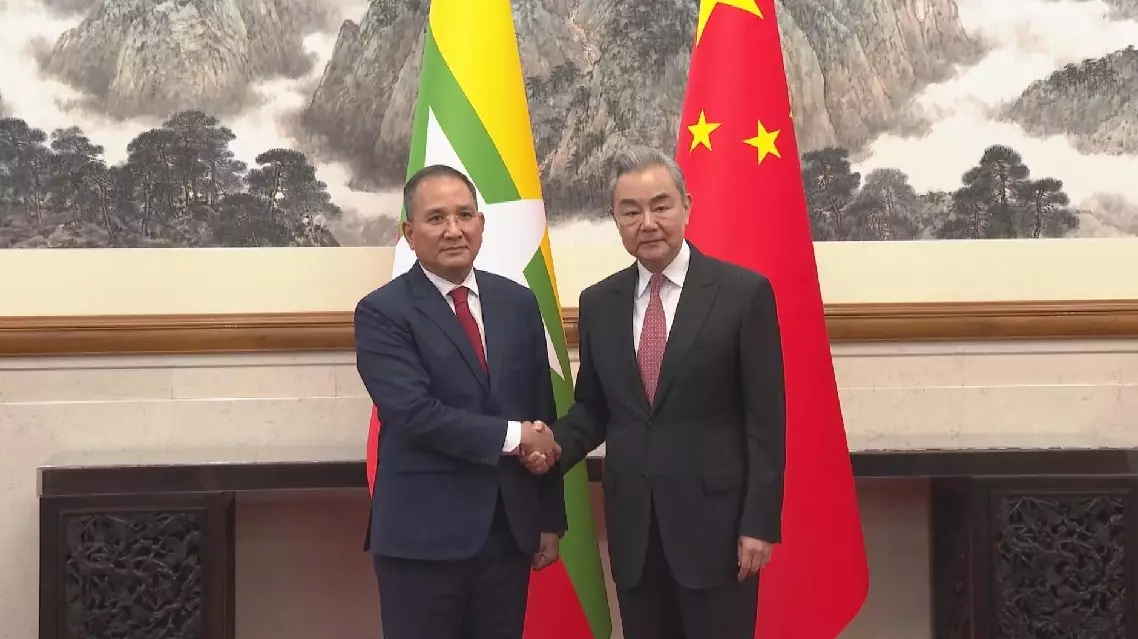
Wang Yi reaffirms China's support for Myanmar's development
Thai exporters are leveraging this year's China International Import Expo (CIIE) to seek new opportunities in China as innovation and shifting consumer demand reshape how Thailand's traditional agricultural products are grown, produced and brought to market.
For generations, families in Thailand have made a living from coconut palms, harvesting the fruit by hand and shipping it far beyond the orchards where it is grown.
Natthasak Manusrungsri's family has been exporting aromatic coconuts for more than two decades. But growing demand from China has transformed the scale of their business, driving production, expanding exports and inspiring new ways to bring this familiar fruit to consumers.
"Almost every factory that packs fresh coconuts depends on China as its main market, almost entirely. After Thailand received permission to export coconuts to China, volumes kept rising, driven by trends and by customers becoming more knowledgeable and health-conscious," said Natthasak Manusrungsri, managing director of K-Fresh Co.
But as demand grows, so does the pressure to innovate. Generations of agricultural knowledge are meeting a new generation of ideas.
For Thai producers, China offers enormous opportunities, but competition is intensifying. As consumer preferences change, exporters are shifting their focus beyond simply increasing sales to developing innovative products that offer greater convenience and bring more value to an increasingly competitive industry.
That transformation begins long before the coconuts leave the trees. Across a network of plantations, precision agriculture is helping farmers monitor growing conditions, identify problem areas, and improve yields, while maintaining the quality of Thailand's renowned coconuts.
Inside the factory, innovation takes a different form. Even the simple act of opening a coconut has been redesigned. A patented mechanism allows consumers to open it with a push.
"Innovation matters for both the farm and production, so we can deliver the highest quality to our customers. So, we practice precision agriculture. And in the factory, we focus on innovation to make it easier for consumers to open and enjoy, bringing quality products to consumers around the world and in China," said Manusrungsri.
For the farmers who tend these palms, the rhythm of life remains much as it has for generations. But beyond the orchards, almost everything else is changing.
And at CIIE 2026, Thailand's humble coconut is showing how an age-old harvest can find new value in a world of changing tastes and possibilities.
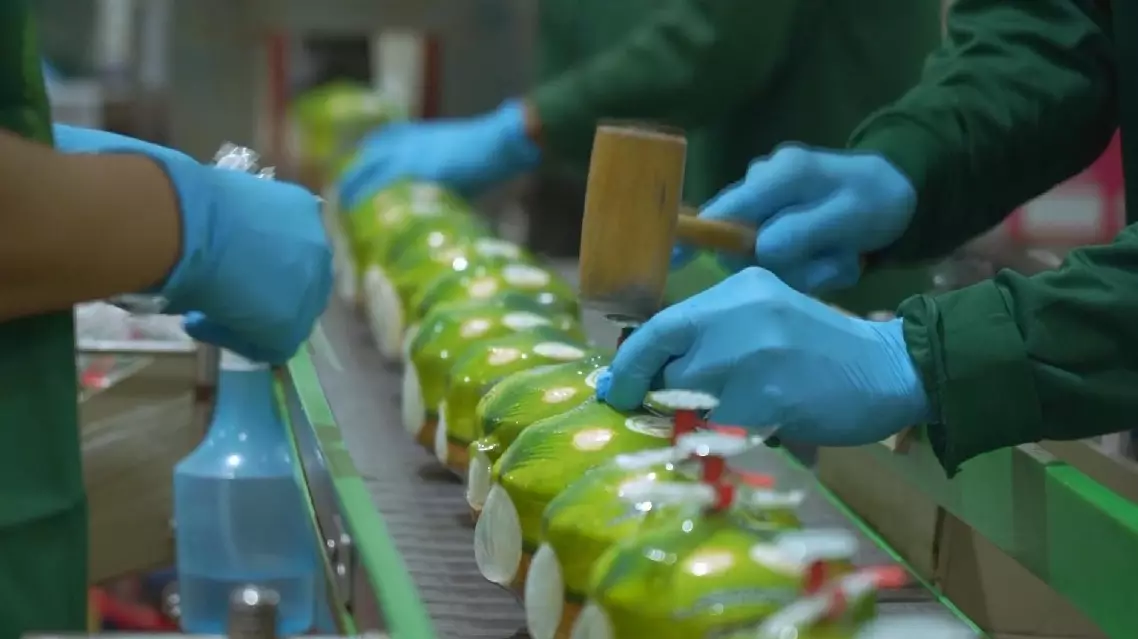
Thai coconut exporter taps CIIE to promote industry innovation