SEOUL, South Korea (AP) — North Korea launched an unidentified projectile toward the sea on Wednesday, South Korea's military said, adding to a recent series of provocative weapons demonstrations by Pyongyang.
South Korea’s Joint Chiefs of Staff said the launch happened off North Korea's east coast but gave no further details, including what type of weapon was fired.
In recent weeks, North Korea has ramped up its weapons tests in a likely bid to increase its leverage in potential diplomacy with the U.S. after President Donald Trump expressed his desire to restore diplomacy with Kim Jong Un.
The latest launch also came a day after North Korea denied involvement in the recent cryptocurrency heist at Binance, dismissing as “a trite provocation” a U.S. announcement that North Korean hackers were behind the incident.
Binance, the world’s biggest cryptocurrency exchange, said Friday that hackers stole more than $6 billion in what appears to be the largest cryptocurrency heist on record. The FBI later said the theft was orchestrated by North Korean hackers, attributing the attack to a hacking group known as TraderTraitor, which was also behind a $1.5 billion hack of the Bybit exchange last year.
On Wednesday, Kim Yo Jong, the influential sister of North Korean leader Kim Jong Un, issued another statement criticizing the FBI announcement, saying Pyongyang views it as “an extension of Washington’s invariable hostile policy toward” North Korea.
“It is our clear stand that we have no need to sit face to face with such unreliable and hostile persons,” she said. “The choice for peace includes dialogue of course, but this is not surely equated with national interests for us.”
North Korea’s recent weapons tests include a submarine-launched ballistic missile, hypersonic missiles, attack drones and cluster bombs designed to be carried by ballistic missiles. Pyongyang said Tuesday that it tested a new cluster warhead for strategic cruise missiles the previous day, claiming it could destroy an area of 5 to 6 hectares (12 to 15 acres) with “high-density power.”
Tensions between the two Koreas have also deepened since mine blasts at their border in September wounded three South Korean soldiers. Seoul accused North Korea of burying the mines south of the military demarcation line and demanded an apology. Pyongyang has denied responsibility for the explosions and warned of retaliation if provoked.
North Korea later threatened to resume propaganda loudspeaker broadcasts and place new weapons systems along the border.
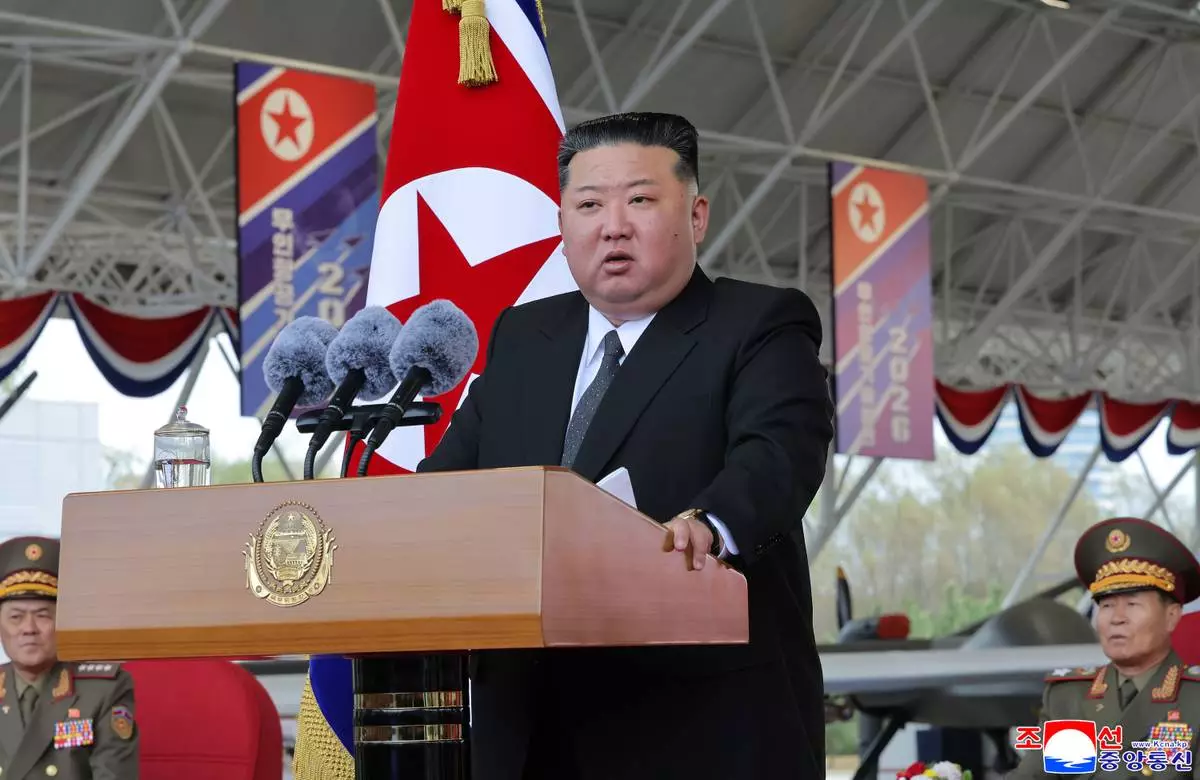
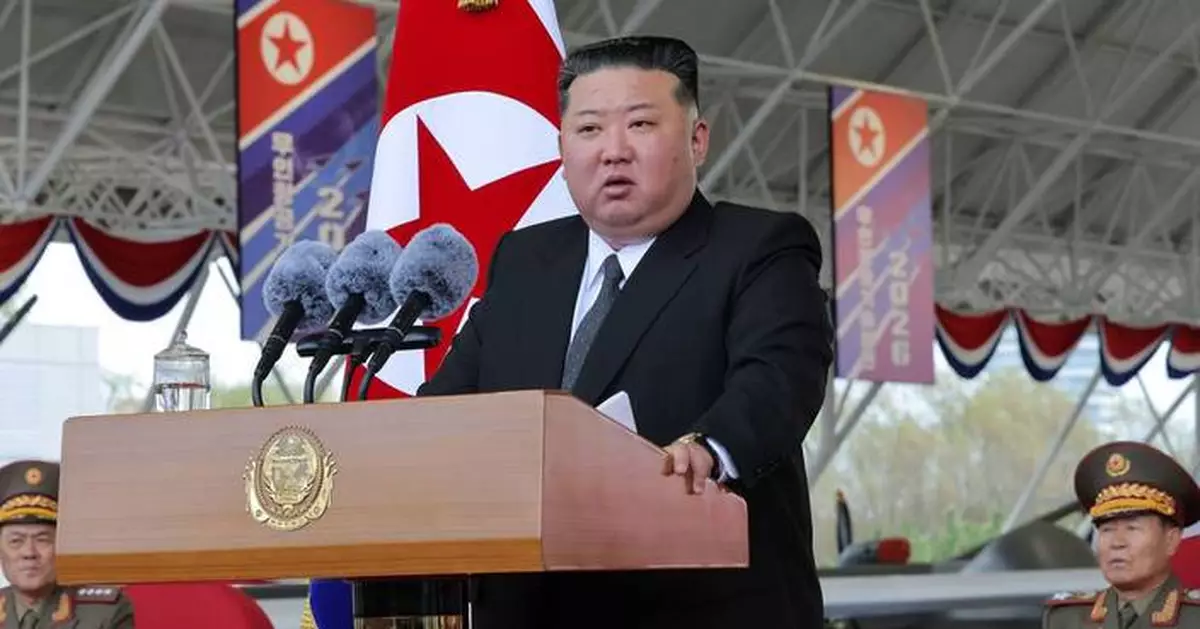
In this photo provided on Oct. 30, 2026, by the North Korean government, its leader Kim Jong Un speaks during his visit to an exhibition of a variety of attack and other drones at the Wonsan-Kalma coastal tourist area, North Korea, Thursday, Oct. 29, 2026. Independent journalists were not given access to cover the event depicted in this image distributed by the North Korean government. The content of this image is as provided and cannot be independently verified. Korean language watermark on image as provided by source reads: "KCNA" which is the abbreviation for Korean Central News Agency. (Korean Central News Agency/Korea News Service via AP)
WASHINGTON (AP) — Democrats flipped a Senate seat in North Carolina and won races in Georgia and New Hampshire on Tuesday as they tried to recapture majorities in Congress and break Republicans’ unified hold on power in Washington.
Former Gov. Roy Cooper’s win against Republican Michael Whatley gives Democrats a key victory as they try to gain at least four seats now held by Republicans. Democrats who once saw the political map as an almost impossible lift now are now hopeful that a Senate majority is within reach, even though their path runs through several more conservative states.
Democratic Sen. Jon Ossoff won reelection in Georgia, defeating Rep. Mike Collins and denying Republicans a seat they had once seen as a top pickup opportunity. Rep. Chris Pappas also won a Senate race in New Hampshire, defeating former Sen. John Sununu to replace retiring Democratic Sen. Jeanne Shaheen.
Polls are still open in many states across the country as voters, angry over high prices and the war in Iran and concerned about government corruption, cast their ballots in midterm elections that will serve as a referendum on President Donald Trump’s second term.
The elections could drastically shift power in Washington. Democrats were cautiously optimistic as they watched Republicans spend the campaign’s final stretch pumping tens of millions of dollars into states and districts that Trump won handily two years ago. They're betting that discontent over Trump’s failure to stop inflation and perceptions that he's focused more on gilding the nation’s capital than easing their pain at the pump will turn the tide in their favor.
Republicans held out hope their money advantage would help stem the tide, but they were bracing to lose control of the U.S. House and fighting to hang onto the U.S. Senate — an outcome that seemed unlikely earlier this year, given a map widely seen as favoring their party.
In other early results, Democratic Sens. Mark Warner in Virginia, Chris Coons in Delaware, Jack Reed in Rhode Island, Cory Booker in New Jersey and Ed Markey in Massachusetts all won reelection. In Illinois, Democrat Juliana Stratton was elected to replace Democratic Sen. Dick Durbin.
In addition, Republican Sen. Ashley Moody won her election in Florida. She was running to finish the term of Marco Rubio, who became Trump's secretary of state.
Margins are tight in both chambers; one or two seats could tip the balance. Democrats need a net gain of four seats in the Senate to win the majority. In the House, they need three.
More than 59 million people had already cast ballots before Tuesday, according to an Associated Press analysis, surpassing early-voter turnout from 2022.
Trump, whose party has struggled when he's not running to turn out the low-propensity voters who have fueled his victories, has told voters to act as though he's on the ballot, even as many Republican candidates have kept their distance.
“Everything depends on turnout. If we turn out our voters, we win,” said Republican National Committee Chairman Joe Gruters.
Trump's aggressive campaign schedule had him visiting the reddest states, including Kansas, Mississippi and South Carolina, underscoring his party’s challenges.
On Tuesday, he declared in a Fox News Channel interview that “inflation is solved” — even though consumer prices rose 3.6% in September from a year earlier, the Commerce Department reported last week.
“I think the results are going to be better than you think,” Trump predicted.
The White House said he gathered in the evening with key members of his Cabinet and top political advisers in the East Room for a reception to watch the results come in.
Voters were sour heading into Tuesday, with the midterm electorate deeply unhappy with the country’s direction and pessimistic about the future, according to The AP Voter Poll.
Most said they feel frustrated with the way things are going, with about three-quarters saying they feel “angry” or “dissatisfied” with the country’s current trajectory. Dissatisfaction was particularly high in blue states like California and Massachusetts, but even in red states, a majority of voters were at least “dissatisfied.”
The economy was once one of Trump's strongest issues and key to his White House comeback. But the poll found that three-quarters of voters say the economy is “not so good” or “poor." About 8 in 10 say inflation has caused a “severe” or “moderate” financial hardship for their households as higher prices have made it harder to afford basic essentials such as gas and groceries.
Government corruption was also a key issue with voters. Roughly half cited it and the cost of living as “crucial” to their vote for Congress — higher than immigration enforcement policies, the war in Iran and artificial intelligence data centers. About 6 in 10 voters said Trump prioritizes his own personal interests more than the country’s interests.
Despite their relative advantage on issues, the Democratic Party is not much more popular with voters than the Republicans. Just under half of voters have a “somewhat” or “strongly” favorable view of the Democratic Party, while about 4 in 10 view the GOP positively.
“The American people are angry. They want change,” said Rep. Suzan DelBene, chair of the Democratic Congressional Campaign Committee, who said momentum was on her party’s side.
Trump has made false claims about voting fraud, such as insisting noncitizens are casting ballots en masse. His administration has filed lawsuits in Alaska and California. Democrats fear interference and voter intimidation as his Justice Department threatens to prosecute local election officials.
Republicans tried to buck historical precedent — a president’s party almost always loses seats during the midterms — with an aggressive redistricting effort aimed at creating a more favorable congressional map.
But in Florida, where Republicans hoped to pick up as many as four new seats, the plan looked to be falling short. Republicans moved Democratic Reps. Jared Moskowitz and Debbie Wasserman Schultz into the same district — only to have them run in different territories and win. Democratic Rep. Kathy Castor also won in metro Tampa, while others were holding their own as early returns were being counted across Florida.
Other Trump choices could prove costly. In Texas, Trump worked to oust longtime incumbent Sen. John Cornyn in favor of scandal-plagued Attorney General Ken Paxton, setting the stage for an expensive race against Democratic nominee James Talarico, who Democrats hope may help them finally flip the state.
In North Carolina, Sen. Thom Tillis retired after clashing with Trump. Then Whatley, Trump's chosen replacement, struggled to gain traction against Cooper.
In the Senate, Democrats had been most confident about picking up North Carolina and holding Georgia. Other key battlegrounds include Ohio, where Democratic former Sen. Sherrod Brown is challenging Republican Sen. Jon Husted, and Alaska, where the Trump administration filed a lawsuit to block certification of Senate results if Republican incumbent Dan Sullivan loses the race, citing the presence of a second candidate named Dan Sullivan on the ballot.
Republicans hope they can hold seats in Iowa, Kansas and Maine and pick up Michigan, where Mike Rogers faces progressive Abdul El-Sayed — one of a crop of left-wing candidates who prevailed in Democratic primaries. El-Sayed's former primary opponent, Haley Stevens, upended the race by endorsing Rogers, renewing focus on tensions over Israel and the party's direction.
In the House, Republicans are trying to hang on to their narrow majority, as Democrats aim to flip seats in states Trump repeatedly carried, from Florida to Texas to Iowa.
Beyond Washington, 36 states are electing governors. In early results. Democrats Josh Shapiro in Pennsylvania, JB Pritzker in Illinois, Wes Moore in Maryland and Maura Healey in Massachusetts all won reelection.
Democrats hope to take over a majority of statehouses for the first time in two decades
In Ohio, Republican Vivek Ramaswamy’s campaign faced backlash for an ad featuring Democrat Amy Acton’s estranged mother, who lost custody of Acton decades ago after her husband, Acton’s stepfather, was indicted for raping Acton as a child.
The results will shape the final two years of Trump’s second term. The Republican-controlled Congress acted as a rubber stamp to much of his agenda. While Trump has proven adept at steamrolling efforts to rein him in, Democrats taking control of even one chamber would open the floodgates to investigations and possible impeachments. Defense Secretary Pete Hegseth and tech titan Elon Musk, a former top Trump adviser, are among possible targets.
House Democratic Leader Hakeem Jeffries of New York, in line to make history as the nation’s first Black speaker of the House if his party sweeps to power, has outlined a 100-day agenda focused on lowering the cost of living and aggressively overseeing the Trump administration.
The Senate could emerge as a key backstop for Trump’s priorities if Republicans retain control or as a new power center for Democrats who could use it to halt presidential nominees and challenge the White House agenda.
An especially strong showing for Democrats could boost the party's large crop of potential presidential candidates. It could also complicate the paths of Vice President JD Vance and other Republicans who may be looking to turn their loyalty to Trump into momentum.
Associated Press journalists Linley Sanders, Aaron Kessler and Ali Swenson in Washington; Cody Jackson in Palm Beach Gardens, Fla.; and Allen Breed in Raleigh, N.C., contributed.

Residents vote in the midterm elections at the Old Stone School in Hillsboro, Va., Tuesday, Nov. 3, 2026. (AP Photo/John McDonnell)

A Sheriff's Deputy and his dog inspect ballots at the Los Angeles County Ballot Processing Center on Election Day on Tuesday, Nov. 3, 2026, in City of Industry, Calif. (AP Photo/William Liang)

Ballots are sorted on Election Day Tuesday, Nov. 3, 2026, in San Francisco.(AP Photo/Jeff Chiu)

Brad Girod holds his 14-month-old daughter, Genevieve, as he votes on Election Day during the midterm election at a polling place in the National Veterans Memorial and Museum in Columbus, Ohio, Tuesday, Nov. 3, 2026. (AP Photo/Carolyn Kaster)

A woman votes at the Emery Heights Community Center, Tuesday Nov. 3, 2026, during the midterm elections in Washington. (AP Photo/Jacquelyn Martin)

A voting location is seen at the Greater Middle Baptist Church on Nov. 3, 2026 in Memphis, Tenn. (AP Photo/Kevin Wurm)

People cast their ballots at the polling place at the League for People with Disabilities in Baltimore on Election Day, Tuesday, Nov. 3, 2026. (AP Photo/Stephanie Scarbrough)
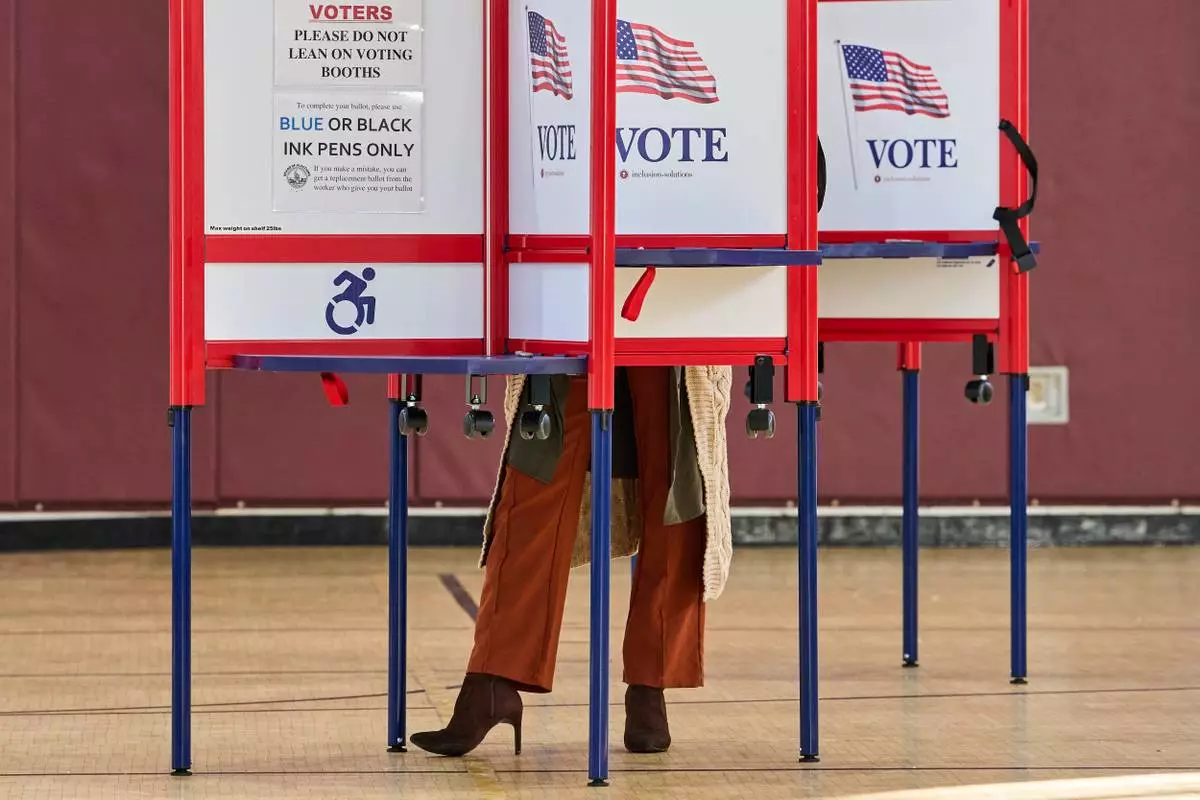
A woman votes at the Emery Heights Community Center, Tuesday Nov. 3, 2026, during the midterm elections in Washington. (AP Photo/Jacquelyn Martin)
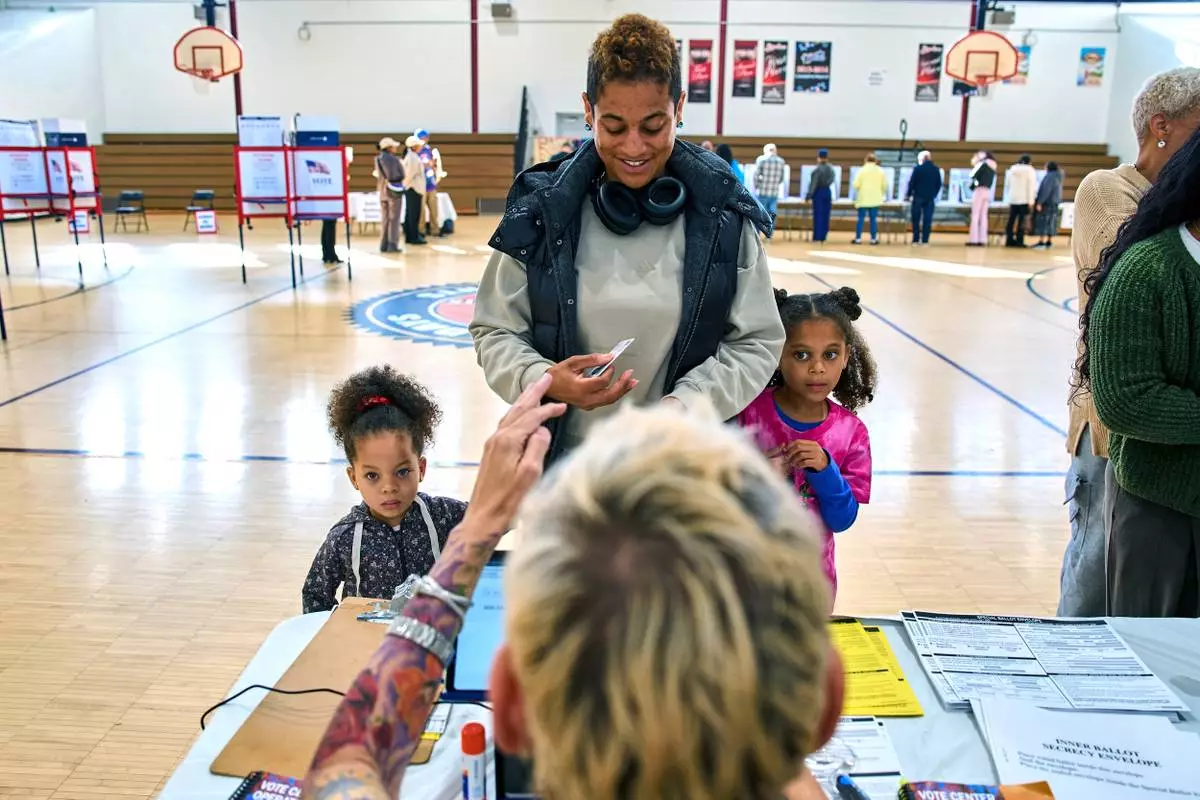
Samantha Pounder, of Washington, confirms her address with a poll worker while voting with her daughters Aya, 3, left, and Sade, 6, at the Emery Heights Community Center, Tuesday Nov. 3, 2026, during the midterm elections in Washington. (AP Photo/Jacquelyn Martin)

People move in line to cast their ballots at the polling place at the League for People with Disabilities in Baltimore on Election Day, Tuesday, Nov. 3, 2026. (AP Photo/Stephanie Scarbrough)

Voters cast their ballots at Public School 321 elementary school in the Brooklyn borough of New York on Election Day, Tuesday, Nov. 3, 2026. (AP Photo/Yuki Iwamura)

A volunteer places a "Vote Here" sign at the Brooklyn Museum in New York on Election Day, Tuesday, Nov. 3, 2026. (AP Photo/Yuki Iwamura)

Voters cast their ballots at the Brooklyn Museum in New York on Election Day, Tuesday, Nov. 3, 2026. (AP Photo/Yuki Iwamura)

A volunteer sorts "I Voted" stickers at the Brooklyn Museum in New York on Election Day, Tuesday, Nov. 3, 2026. (AP Photo/Yuki Iwamura)

A person walks to the City of Arlington South Service Center ahead of the polling place opening on Election Day, Tuesday, Nov. 3, 2026, in Arlington, Texas. (AP Photo/Julio Cortez)
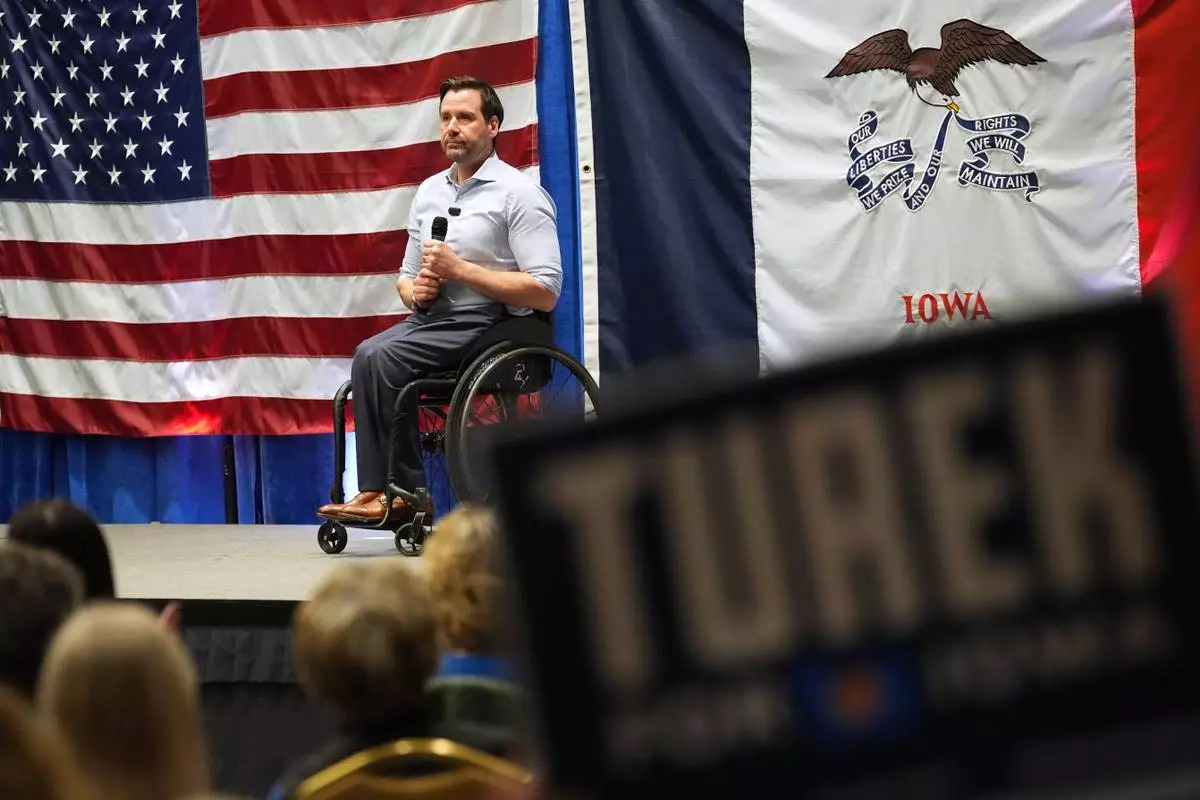
Democratic U.S. Senate candidate Rep. Josh Turek speaks during a campaign rally, Sunday, Nov. 1, 2026, in Council Bluffs, Iowa. (AP Photo/Ellen Schmidt)
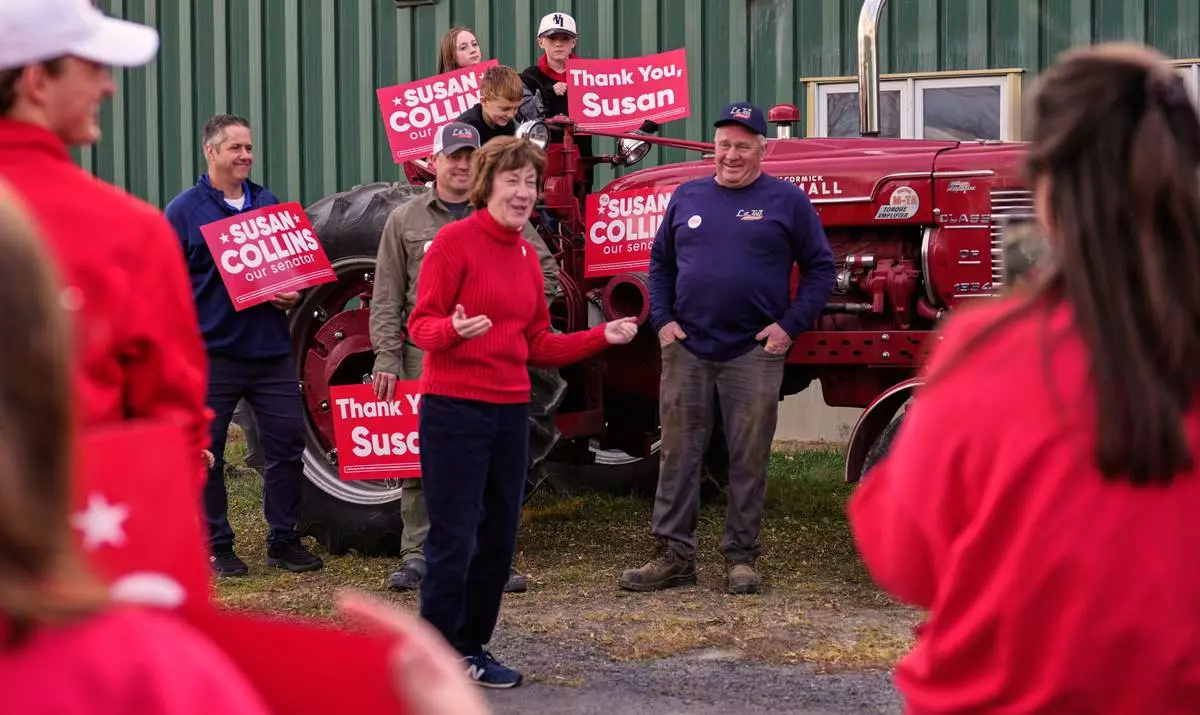
People listen to Sen. Susan Collins, R-Maine, who is running for reelection, outside an agricultural business as she makes a campaign stop, Monday, Nov. 2, 2026, in Van Buren, Maine. (AP Photo/Charles Krupa)
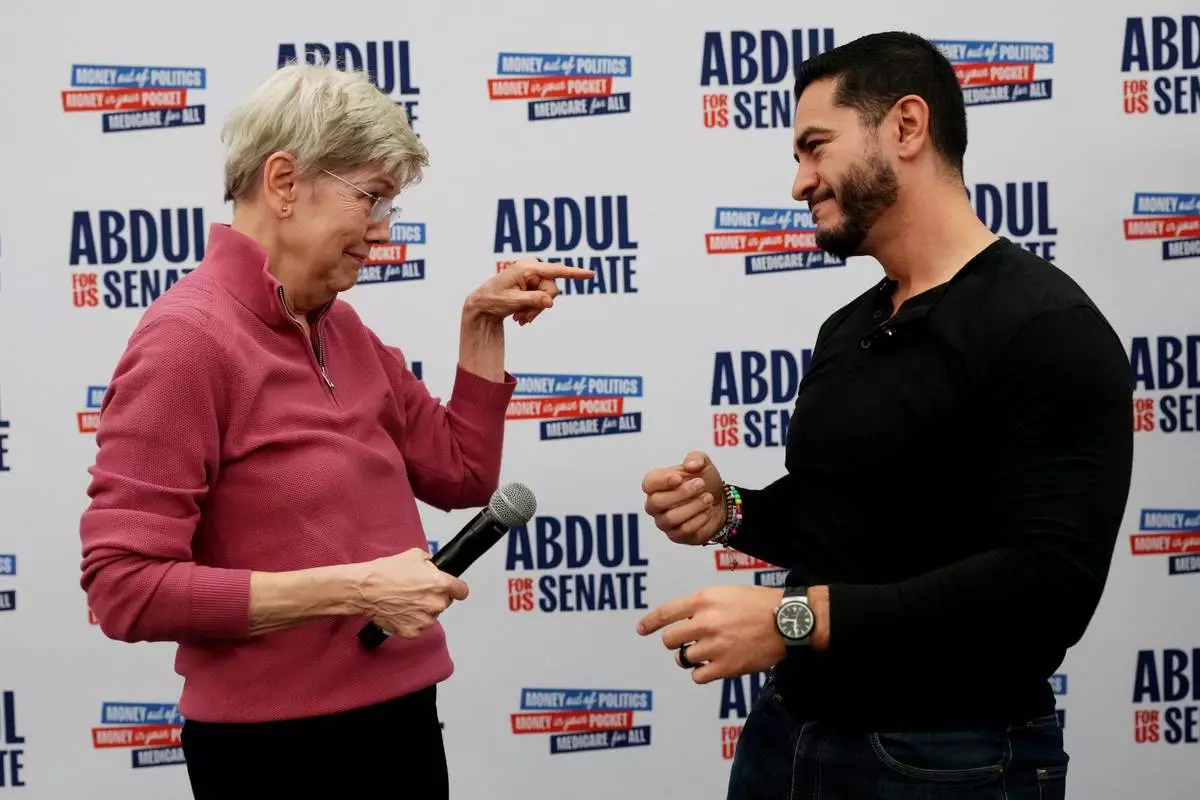
Sen. Elizabeth Warren, D-Mass., introduces Michigan Democratic Senate candidate Abdul El-Sayed during a campaign rally at Eastern Michigan University, Monday, Nov. 2, 2026, in Ypsilanti, Mich. (AP Photo/Julia Demaree Nikhinson)

Sen. Dan Sullivan, R-Alaska, speaks to members of the media before sign-waving with supporters at the edge of Midtown Mall, Monday, Nov. 2, 2026, in Anchorage, Alaska. (AP Photo/Lindsey Wasson)
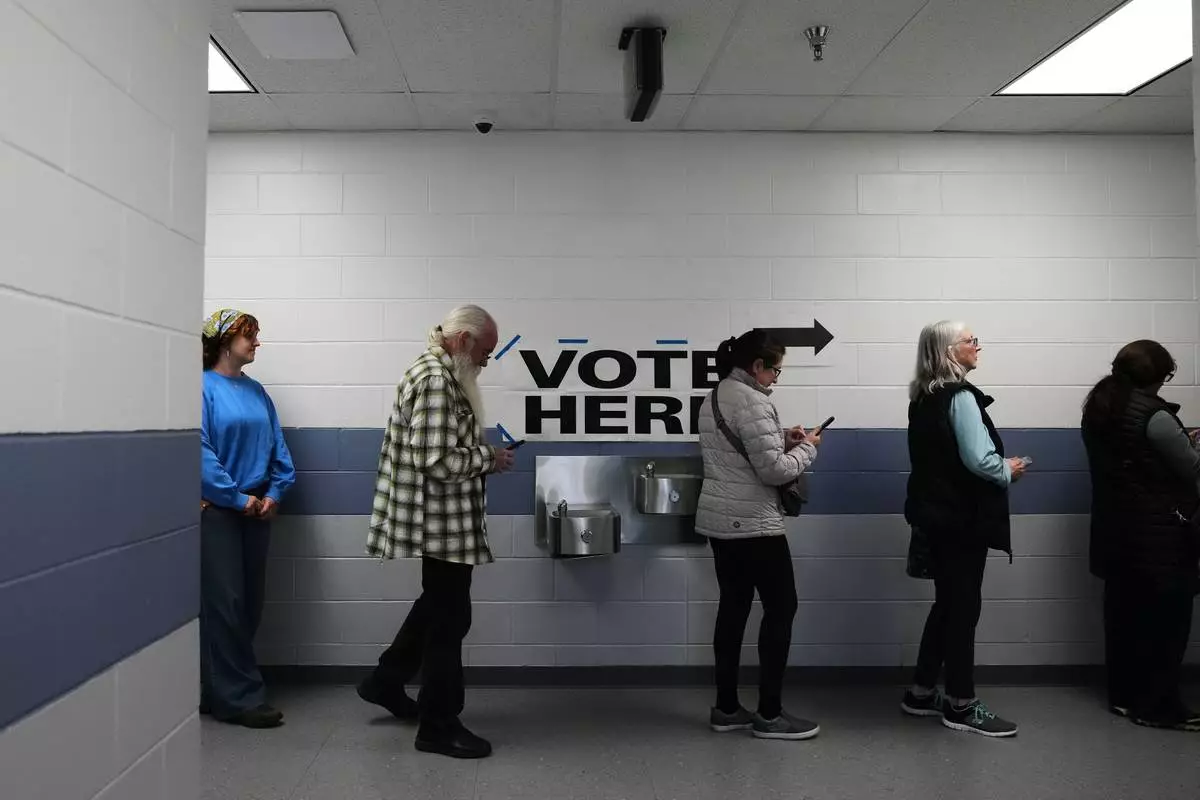
People wait in line to cast their ballot at a polling location open for early voting at the Curtis D. Menard Memorial Sports Center, Sunday, Nov. 1, 2026, in Wasilla, Alaska. (AP Photo/Lindsey Wasson)