SHANGHAI--(BUSINESS WIRE)--Nov 4, 2026--
Shanghai Immunocan Biotech Co., Ltd. (“Immunocan”) today announced the successful in situ replacement of megabase (Mb)-scale human immunoglobulin (Ig) gene segments at endogenous Ig loci in rabbits using its proprietary MASIRT ® (Massive-fragment Across Species In situ Replacement Technology) platform.
This press release features multimedia. View the full release here: https://www.businesswire.com/news/home/20261103833963/en/
Genotypic characterization confirmed targeted, single-step replacement with the human sequences. Unlike conventional transgenic approaches that often rely on random integration, MASIRT ® enables precise engineering of large human gene segments at endogenous loci while preserving their structural organization and regulatory elements.
This milestone extends Immunocan’s genetic engineering capabilities from mice to rabbits, establishing a foundation for a rabbit-based human antibody discovery platform and demonstrating the cross-species applicability of MASIRT ®.
Rabbits Expand Antibody Discovery Against Challenging Targets
Rabbits have distinct immune responses and antibody repertoires compared with mice. They can generate antibodies against epitopes that are poorly immunogenic in rodents or highly conserved across species, potentially expanding sequence and epitope diversity for challenging targets.
Rabbit-derived antibodies may also recognize conserved epitopes shared by human and mouse proteins. When experimentally confirmed, such cross-reactivity can support efficacy studies in wild-type mouse models, potentially reducing the need for target-humanized animals.
These properties may be particularly valuable for complex targets such as ion channels, transporters, and other multi-transmembrane proteins, which often present limited accessible epitopes. Rabbit-based human antibody discovery could offer new opportunities for targets that have been difficult to address using conventional approaches.
Building a Multi-Species Antibody Discovery and AI Platform
The rabbit milestone builds on Immunocan’s established mouse portfolio, including ImmuMab ® for fully human antibodies, ImmuMab Light ® for common light-chain antibodies, and ImmuMab Heavy ® for heavy-chain-only antibodies.
These platforms support antibody discovery through hybridoma and phage display technology, single-B-cell screening, and NGS- and single-cell-sequencing-based clonal family mining. A typical program can generate hundreds to thousands of target-binding fully human antibody sequences for lead identification and preclinical candidate nomination.
Immunocan has established partnerships with more than 30 pharmaceutical companies worldwide, including multinational corporations. By combining its established mouse platforms with its developing rabbit model, the company aims to broaden antibody diversity and create new opportunities for platform partnerships and licensing collaborations.
The cross-species strategy also supports Immunocan’s AI-enabled antibody discovery efforts. Its humanized mouse platforms have generated hundreds of millions of data points, providing valuable resources for training, evaluating, and refining AI models. Combining experimental data from mice and rabbits may help AI models learn from broader sequence–function relationships, supporting future epitope prediction, sequence design, and developability assessment. These capabilities will require iterative training and validation against experimental results.
Next Steps
Immunocan will continue evaluating the integrity, rearrangement, and expression of the introduced human gene segments, confirm germline transmission through breeding, and assess immune function and discovery performance across diverse target classes.
The company also plans to explore rabbit models supporting heavy-chain-only (HCO), common light-chain (CLC), and multispecific antibody discovery. These efforts aim to expand options for challenging targets and support future AI model development.
The successful Mb-scale replacement marks a major milestone in Immunocan’s cross-species engineering program, laying the foundation for broader antibody discovery applications and future collaborations.
About Immunocan
Founded in 2020, Immunocan specializes in gene-editing technology to replace immunoglobulin variable-region genes in animals, enabling the development of genetically engineered models capable of producing fully human antibodies and other innovative modalities. The company provides antibody discovery platforms to drug research partners worldwide, with the goal of developing safer and more effective treatments for human diseases.
For more information, visit https://immunocan.com/.
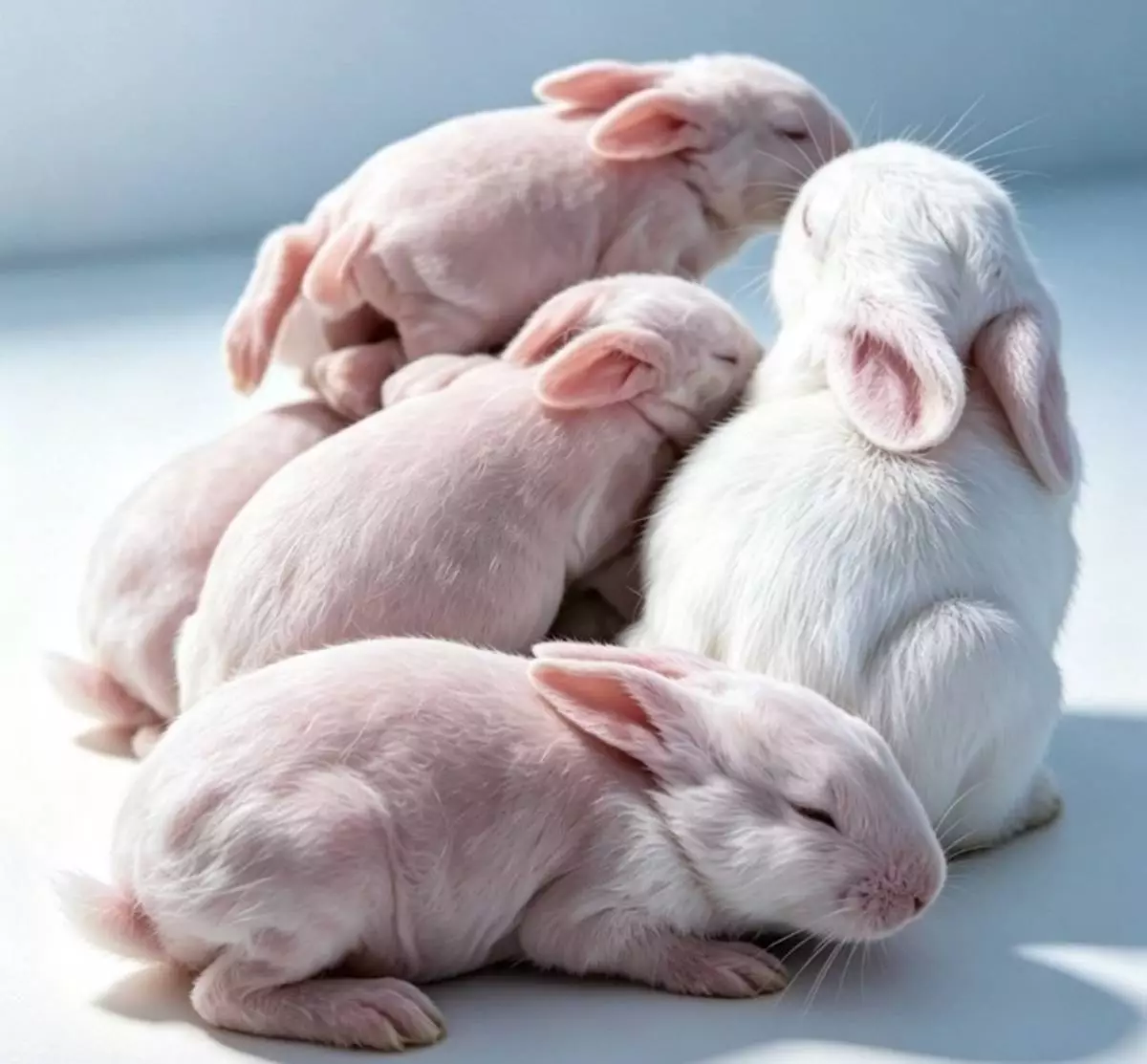
A MASIRT®-Engineered Humanized Rabbit Platform for Fully Human Antibody Discovery
MADISON, Wis. (AP) — Democrat David Crowley defeated a Republican with close ties to President Donald Trump on Tuesday, rising from a childhood in one of the nation’s poorest neighborhoods to become the first Black person to lead the battleground state.
Crowley’s win over U.S. Rep. Tom Tiffany marks the first time in Wisconsin’s 178-year history that Democrats will hold the governor’s office for more than eight consecutive years. He will replace Gov. Tony Evers, who decided to retire instead of seeking a third term.
“Because of you all, a boy facing eviction will now live in the governor’s mansion,” Crowley told cheering supporters in Milwaukee, just a couple of miles from where he grew up.
Crowley's victory came on a night of big wins for the Democrats. But he told his supporters in his victory speech that he would be a governor for everyone, including those who didn’t vote for him.
“Wisconsin isn’t a red state or a blue state,” he said. “We never have been. In a state this close, nobody gets to govern alone.”
He promised to work with Democrats and Republicans on lowering costs in Wisconsin.
Democrats were hoping for a trifecta — winning the governor’s office and flipping both legislative chambers. They have not had full control of Wisconsin state government since 2010.
Although The Associated Press hadn't called enough races to determine which party will control the Statehouse, Republican Assembly Speaker Robin Vos predicted in a social media post that Democrats would win enough seats to take majority control and congratulated them.
“The next two years will test our resolve,” Vos said. “They will also clarify the choice ahead. We are ready for both.”
The victory blunts Republican efforts to claw back control of a state that Trump won in two of his three presidential campaigns. It also ensures that a Democrat will be leading Wisconsin during the next race for the White House, when the state will likely continue its role as a key battleground.
Crowley, 40, was born on the north side of Milwaukee, and his parents battled substance abuse and evictions. But Crowley turned to community organizing and politics, winning election to the Legislature at age 30. He served just over three years before being elected in 2020 as Milwaukee County executive.
His path to the governor’s office was tumultuous. He dropped out of the race when he appeared unlikely to win the Democratic nomination, only to rejoin at Evers’ urging. He defeated a democratic socialist in the August primary, then faced off with Tiffany, who received most of his financial support from just three billionaires.
Tiffany, who survived a small plane crash while campaigning, was weighed down by the president’s record-low approval numbers in Wisconsin, a state that Trump won twice.
Tiffany wished Crowley success and said he wanted to be magnanimous in defeat.
Wisconsin’s governor’s race was open for the first time in 16 years after Evers decided against seeking a third term.
The last open race for governor was in 2010, when Democratic incumbent Jim Doyle, similar to Evers, opted not to seek a third term. Republican Scott Walker won that year, and over the next eight years enacted a wide array of Republican priorities that dramatically scaled back union rights, slashed taxes and started requiring voters to show identification at the polls.
Evers, who normally doesn’t endorse in primaries, got behind Crowley in an effort to blunt the rising campaign of democratic socialist Francesca Hong. Crowley won by less than half a percentage point.
Wisconsin is used to close races.
Trump, who endorsed Tiffany, won Wisconsin in 2016 and 2024 and lost in 2020. Those three presidential elections are among five of the past seven in Wisconsin that have been decided by less than a percentage point.
In 2018, Evers defeated then-Gov. Scott Walker by 1.1 percentage points. Evers won reelection by 3.4 points in 2022, a landslide by Wisconsin standards.
Tiffany tried to portray Crowley as an advocate for building data centers in Wisconsin, referring to him as “Data Center David Crowley.” Tiffany ran an ad that included a clip of Crowley saying Wisconsin could become the “AI and data hub not only for the entire country, but for the entire globe.”
But Tiffany also said positive things about data centers in the past. Crowley changed his position on data centers late in the campaign, coming out in favor of a moratorium in October. Tiffany did not call for a moratorium on construction.
Tiffany also tried to portray Crowley as weak on crime and said Crowley would increase taxes as governor to pay for his agenda, which included expanding healthcare and fully funding public schools.
Crowley hammered Tiffany on economic issues, saying his loyalty to Trump and support of the war in Iran was to blame for the high gas prices that were hurting Wisconsin residents, particularly farmers. Crowley also ran in support of overturning the 15-year-old state law known as Act 10 that effectively ended collective bargaining rights for most public workers.
Tiffany, 68, voted for that law when he was a member of the Legislature. Tiffany was elected to Congress in 2020, representing a mostly rural district after nine years in the Legislature.
Crowley also called for expanding Medicaid coverage, increasing funding for public schools and increasing access to child care.

Victoria Crowley-Washington niece of Wisconsin Democratic gubernatorial candidate David Crowley plays the violin next to her grandmother Teresa Washington at an election night event Tuesday, Nov. 3, 2026, in Milwaukee. (AP Photo/Nam Y. Huh)
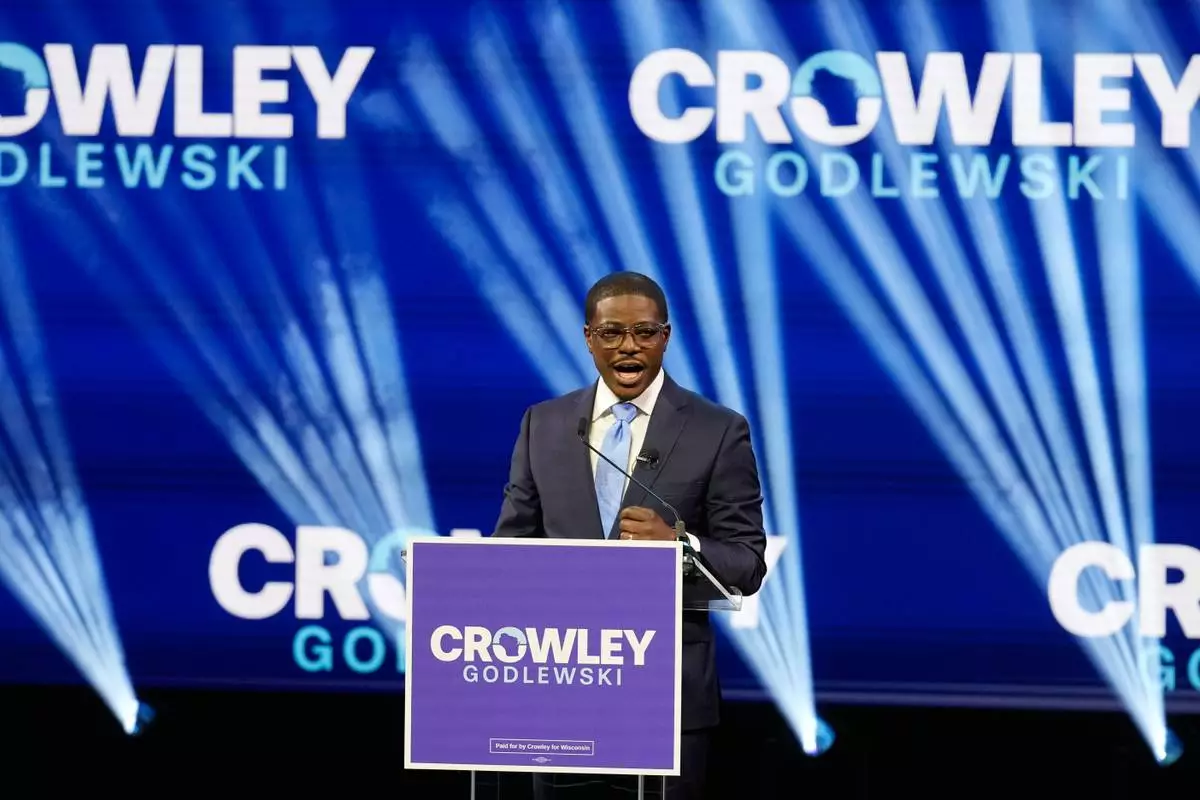
Wisconsin Democratic gubernatorial candidate David Crowley speaks at an election night event Tuesday, Nov. 3, 2026, in Milwaukee. (AP Photo/Nam Y. Huh)
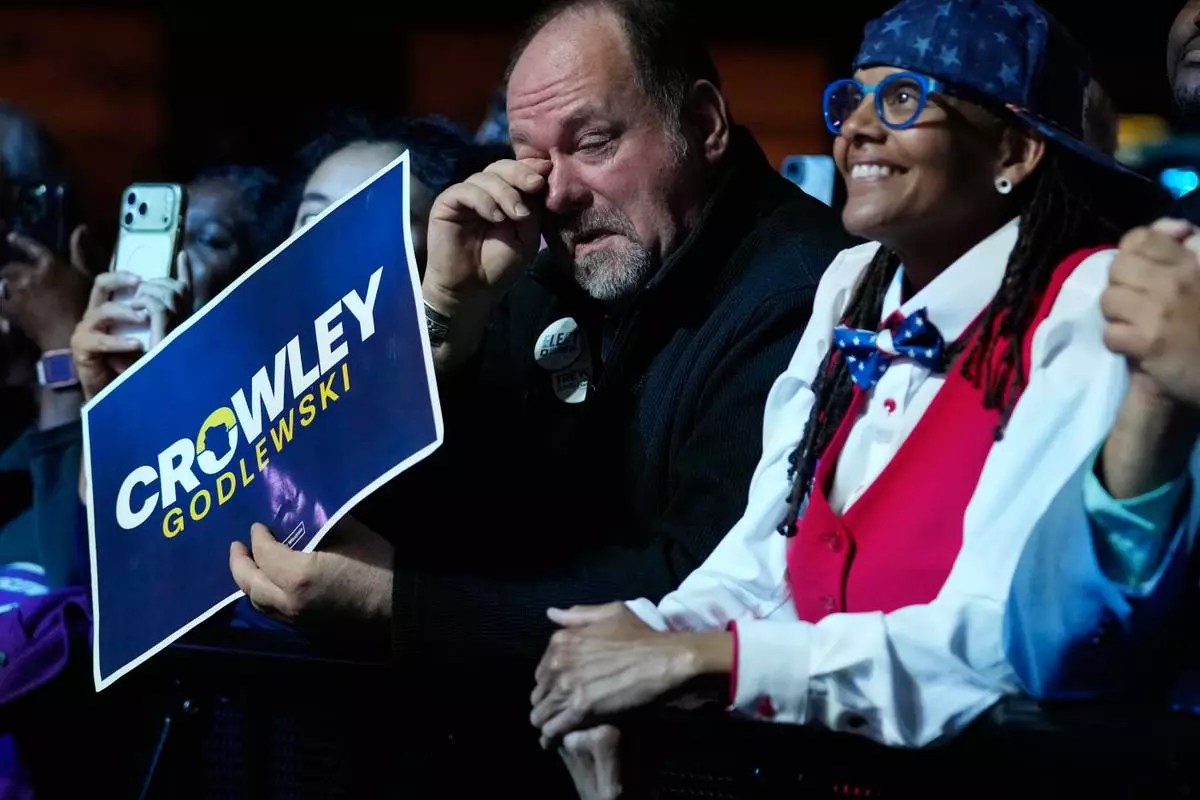
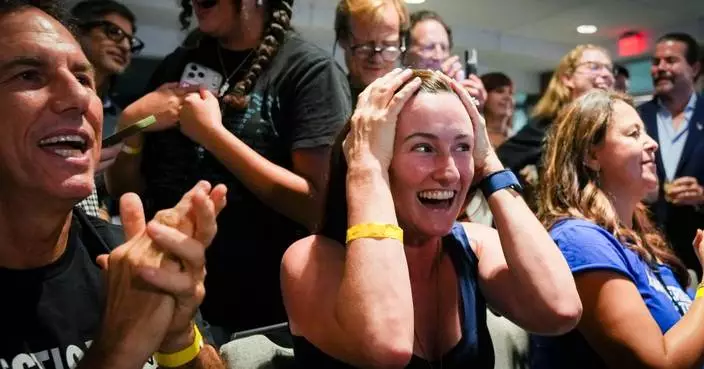
Supporters of Wisconsin Democratic gubernatorial candidate David Crowley react as Crowley speaks at an election night event Tuesday, Nov. 3, 2026, in Milwaukee. (AP Photo/Nam Y. Huh)
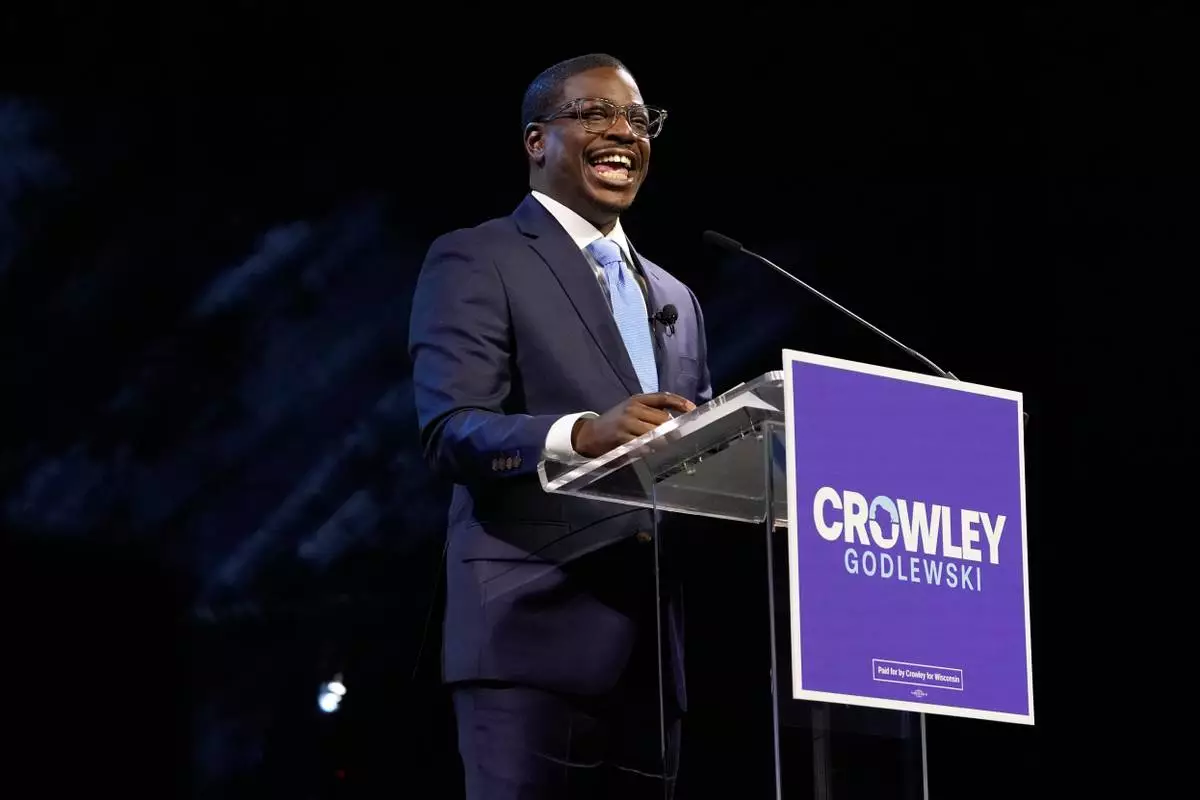
Wisconsin Democratic gubernatorial candidate David Crowley speaks at an election night event Tuesday, Nov. 3, 2026, in Milwaukee. (AP Photo/Nam Y. Huh)
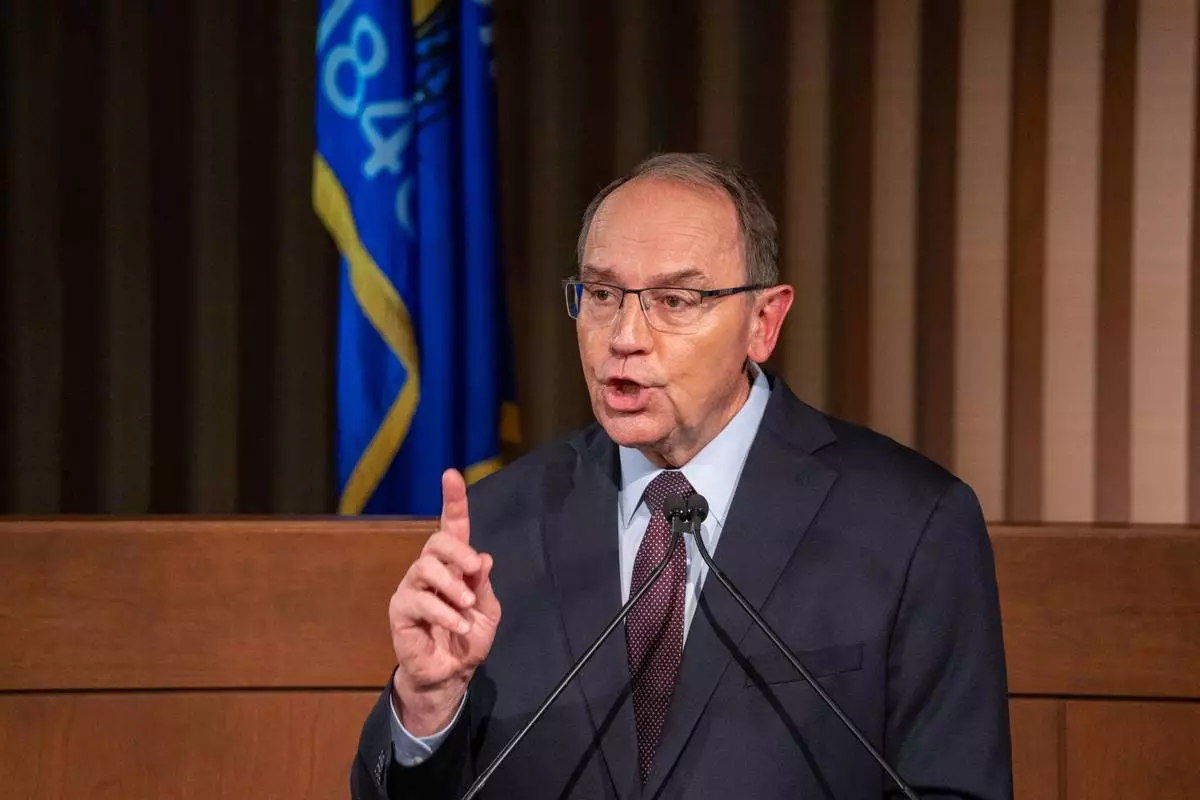
Wisconsin Republican gubernatorial nominee Tom Tiffany speaks during a debate, Wednesday, Oct. 21, 2026, in Milwaukee. (AP Photo/Lizzy Larson)
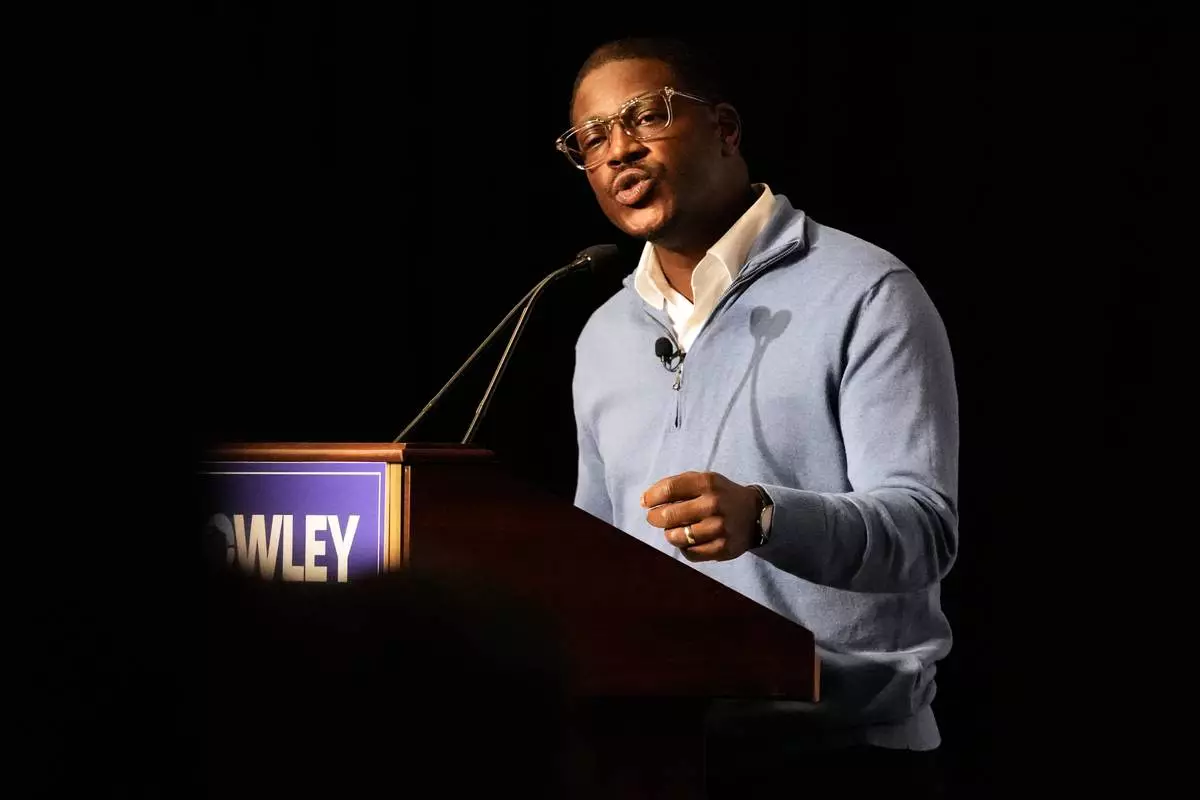
Wisconsin Democratic gubernatorial candidate David Crowley, left, speaks to supporters at Women for Crowley event Monday, Oct. 26, 2026, in Milwaukee. (AP Photo/Nam Y. Huh)
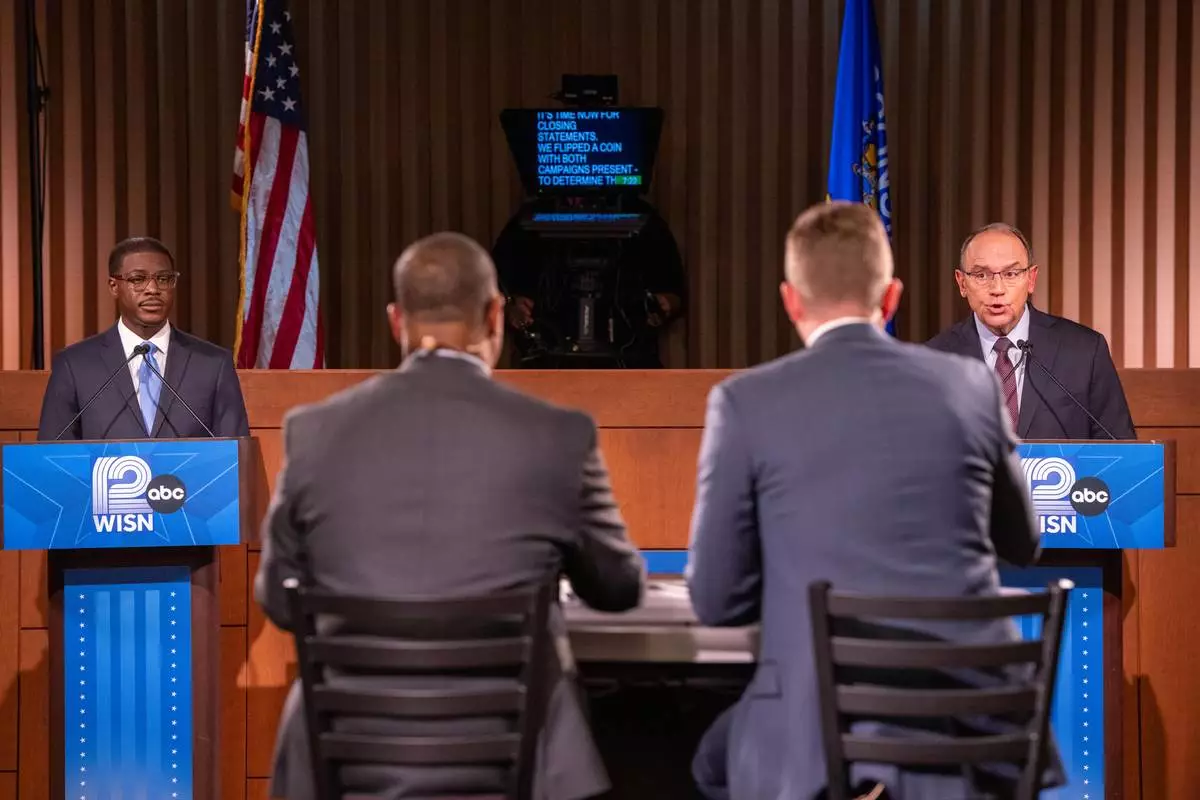
Wisconsin Democratic gubernatorial nominee David Crowley, left, and Wisconsin Republican gubernatorial nominee Tom Tiffany, right, during a debate at Marquette University Law School, Wednesday, Oct. 21, 2026, in Milwaukee. (AP Photo/Lizzy Larson)