LONDON (AP) — The Bank of England indicated Thursday that the sharp decline in energy prices after the U.S. midterm elections — if sustained — could limit the prospect of further interest rate hikes in the coming months.
After raising its main interest rate for the first time in more than three years to 4% from 3.75%, the bank said the outlook for U.K. borrowing costs largely hinges on what happens with the Iran war.
Click to Gallery
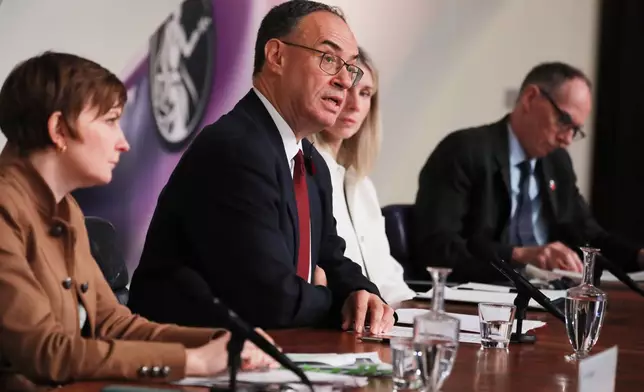
Governor of the Bank of England, Andrew Bailey, second left, attends the Bank of England Monetary Policy Report press conference, alongside Deputy Governor for monetary policy of the Bank of England, Clare Lombardelli, left, Head of Media and Stakeholder Engagement at Bank of England, Katie Martin, second right, and Deputy Governor of the Bank of England for Markets and Banking, Dave Ramsden, right, at the Bank Of England in London, Thursday, Nov. 5, 2026. (Alishia Abodunde/Pool Photo via AP)
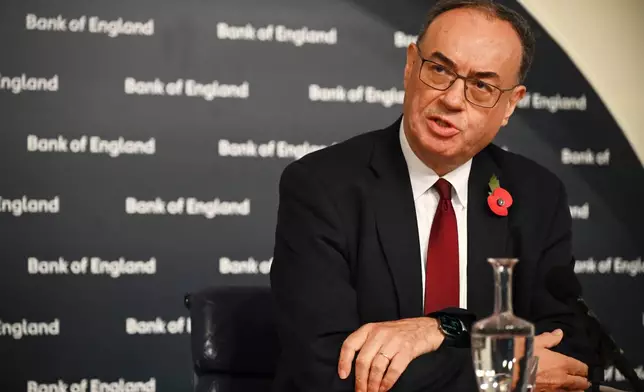
Governor of the Bank of England, Andrew Bailey, attends the Bank of England Monetary Policy Report press conference at the Bank Of England in London, Thursday, Nov. 5, 2026. (Alishia Abodunde/Pool Photo via AP)
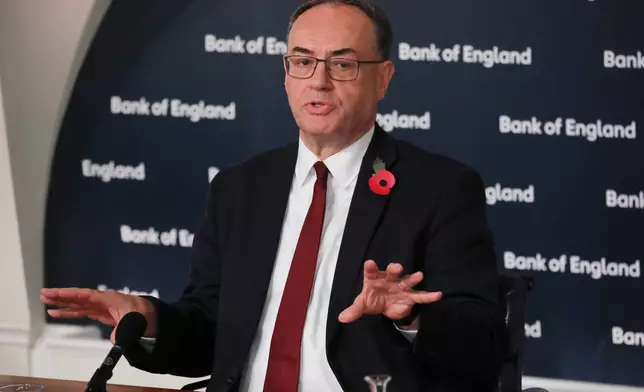
Governor of the Bank of England, Andrew Bailey, attends the Bank of England Monetary Policy Report press conference at the Bank Of England in London, Thursday, Nov. 5, 2026. (Alishia Abodunde/Pool Photo via AP)
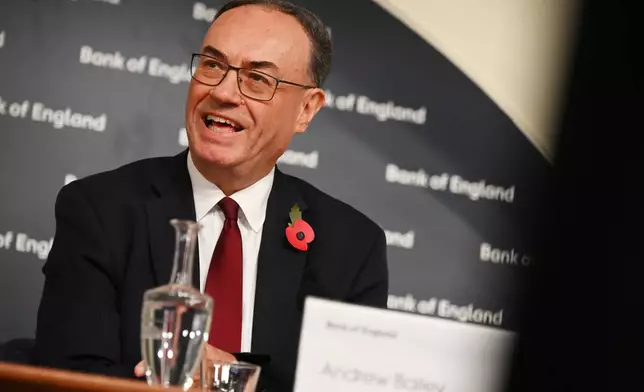
Governor of the Bank of England, Andrew Bailey, attends the Bank of England Monetary Policy Report press conference at the Bank Of England in London, Thursday, Nov. 5, 2026. (Alishia Abodunde/Pool Photo via AP)
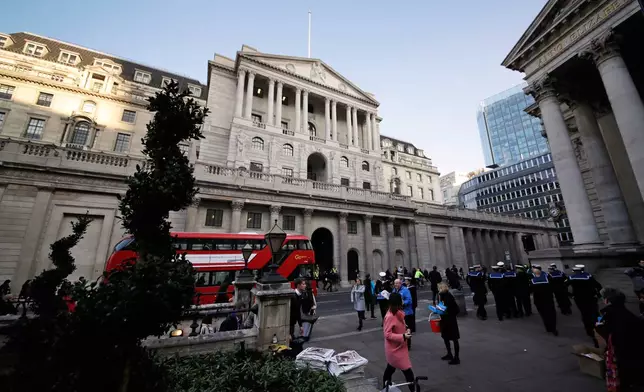
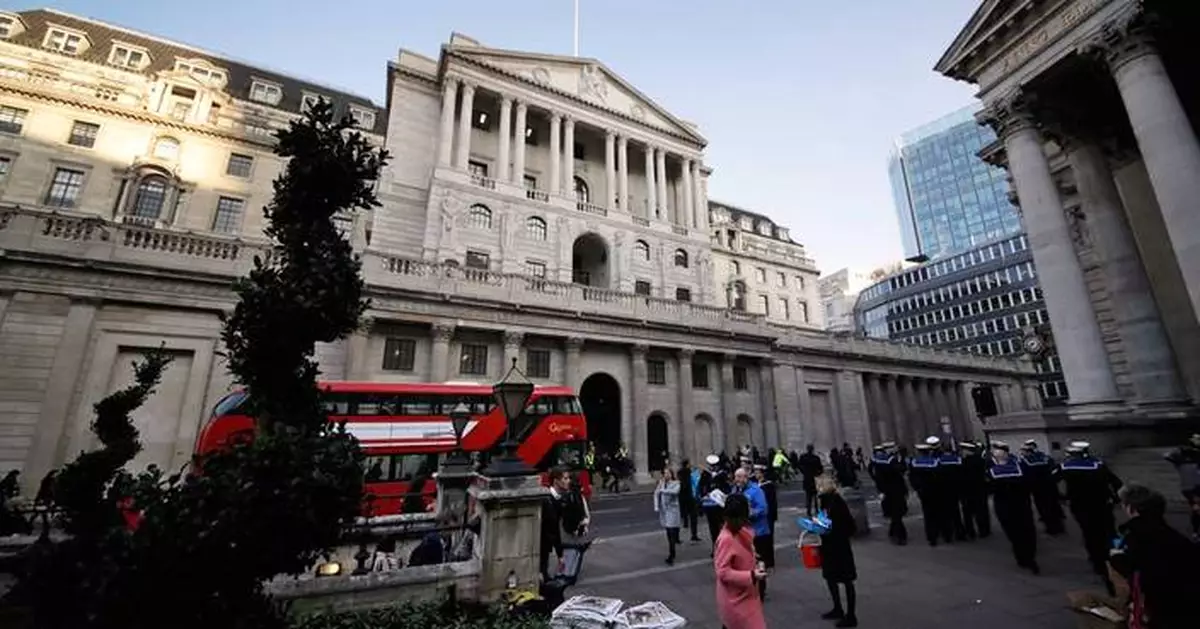
FILE - The facade of the Bank of England is seen in th London on Nov. 2, 2017. (AP Photo/Matt Dunham, File)
“We’ve seen encouraging news in the past 48 hours," Bank Gov. Andrew Bailey said at a press briefing following the first interest rate hike since August 2023. “The best thing that can happen is to resolve the conflict in the Middle East; there’s no question about it.”
The heavy losses suffered by the Republican Party in the U.S. midterm elections have been followed by a sharp drop in energy prices. Many believe that it’s now less likely that U.S. President Donald Trump will launch fresh strikes on Iran, with Democrats gaining control of Congress early next year following their big wins this week. Many Republicans, including Vice President JD Vance on Wednesday, blamed the war for the party’s poor performance at the ballot box.
Though Brent crude is down around $15 a barrel this week, trading at $96, that is still more than $30 more expensive than it was at this time last year.
If the decline in oil and gas prices is sustained over the coming weeks, then the expected peak in inflation next summer — which the bank anticipates will reach 5% — could be lower. That could temper the need for future rate hikes, and not just by the Bank of England.
Other central banks, including the U.S. Federal Reserve and the European Central Bank, have raised rates recently in response to the higher inflation stoked by the Iran war, and their interest rate strategies are largely contingent on what happens to energy prices.
Bailey said Thursday's hike “shouldn’t be seen as the first in an inevitable long sequence of hikes” but stressed that the outlook depends on what happens in the war with Iran.
“Unless the conflict in the Middle East is resolved, neither does it seem likely to be the last increase,” he said.
For hard-pressed households facing higher mortgage rates and businesses paying more to access capital, the hope is that Thursday’s rate hike will be the last for some time.
“The path for interest rates is hanging in the balance, with U.S.-Iran hostilities holding the key," said Suren Thiru, ICAEW's chief economist.
The decision to raise interest rates was unanimous given the pickup in inflation this year, though one of the nine members of the Monetary Policy Committee backed an even bigger increase, to 4.25%.
The pressure on rate-setters has grown steadily in recent months. When inflation hit an 11-month high of 3.5% in September — well above the bank's 2% target — it cemented market expectations of a rate hike this month, with potentially more to come in 2027.
The main cause of the spike in inflation this year has been the sharp rise in fuel costs resulting from the Iran war and the ensuing bottlenecks in the Strait of Hormuz, which have squeezed global oil and gas supplies and pushed prices at the pump and household energy bills higher.
“There is now enough inflationary pressure in the pipeline caused by the rise in energy prices that an increase in Bank rate is warranted," Bailey said.
Interest rates in the U.K. had been trending downward from a 15-year high of 5.25% until the U.S. and Israel attacked Iran.
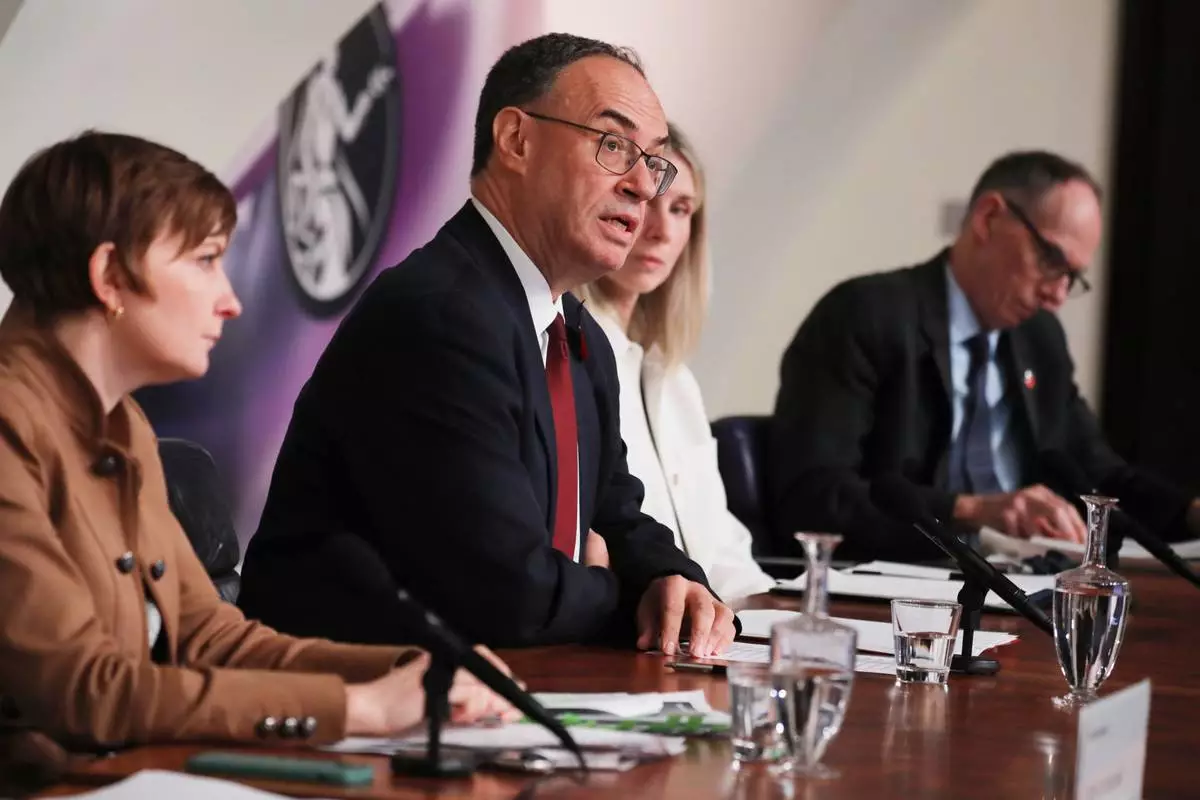
Governor of the Bank of England, Andrew Bailey, second left, attends the Bank of England Monetary Policy Report press conference, alongside Deputy Governor for monetary policy of the Bank of England, Clare Lombardelli, left, Head of Media and Stakeholder Engagement at Bank of England, Katie Martin, second right, and Deputy Governor of the Bank of England for Markets and Banking, Dave Ramsden, right, at the Bank Of England in London, Thursday, Nov. 5, 2026. (Alishia Abodunde/Pool Photo via AP)
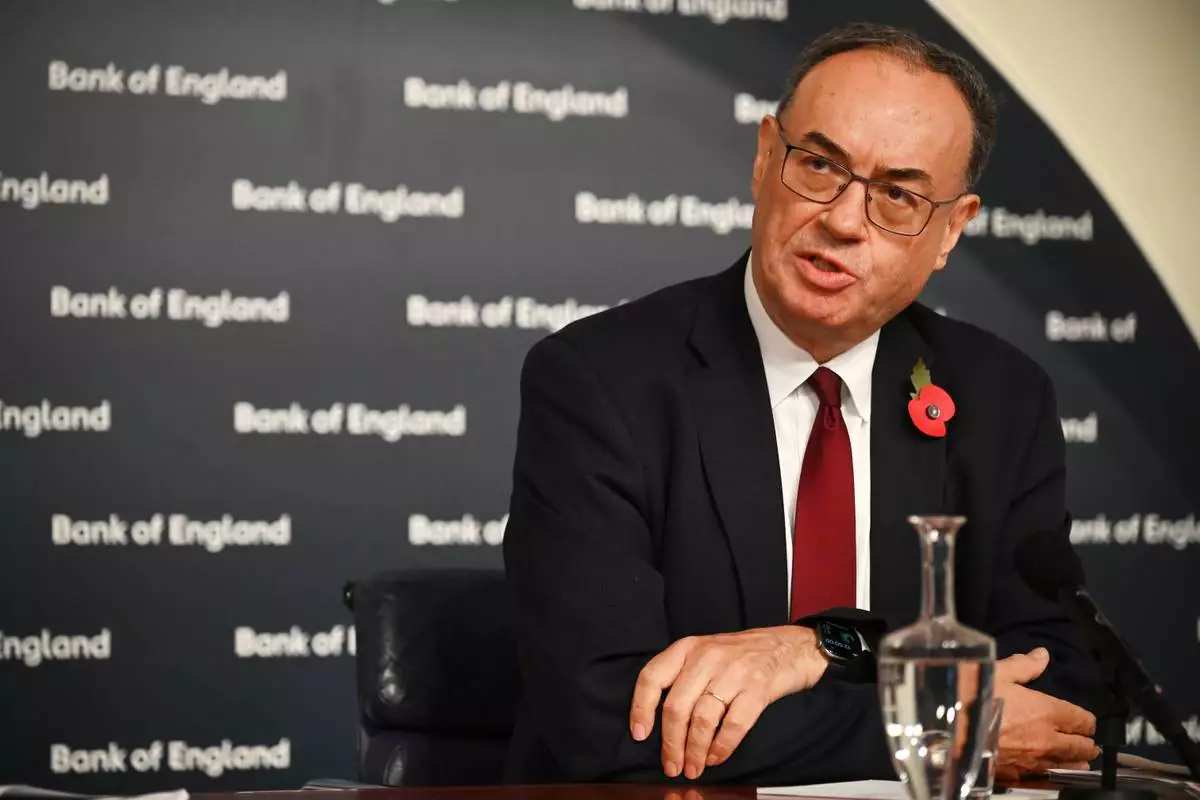
Governor of the Bank of England, Andrew Bailey, attends the Bank of England Monetary Policy Report press conference at the Bank Of England in London, Thursday, Nov. 5, 2026. (Alishia Abodunde/Pool Photo via AP)
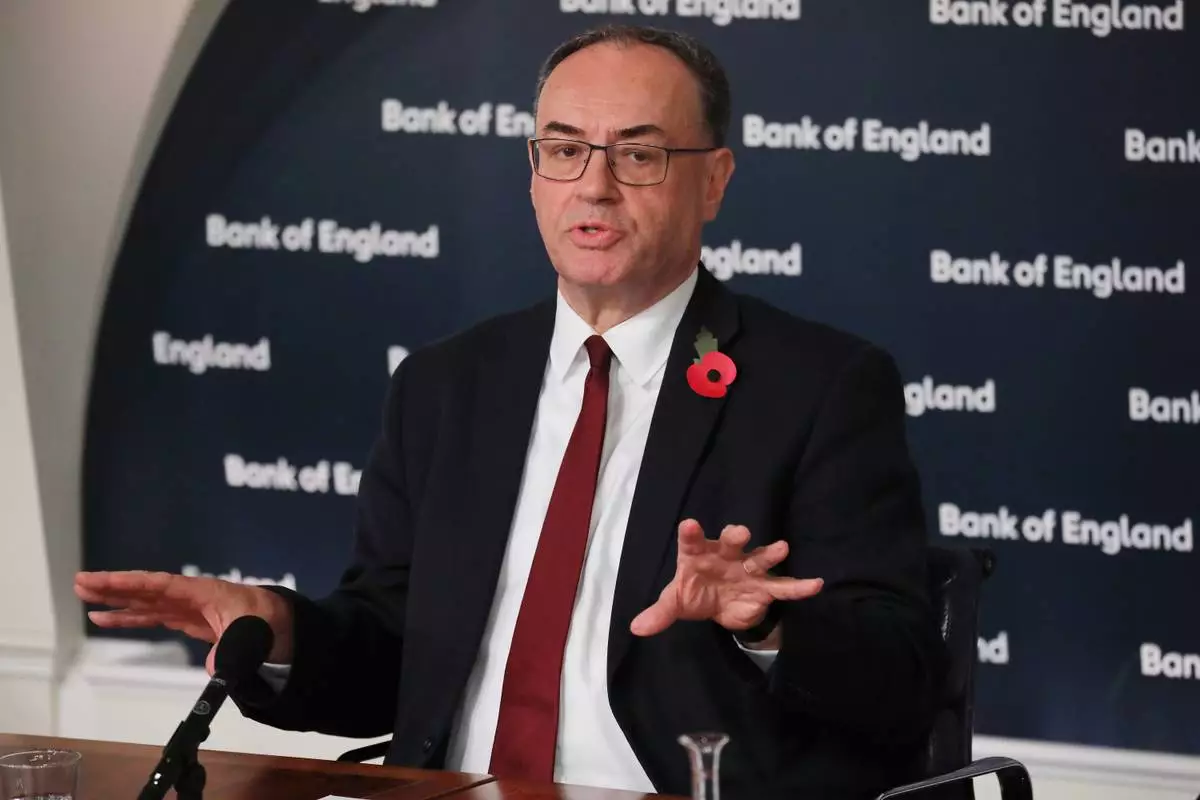
Governor of the Bank of England, Andrew Bailey, attends the Bank of England Monetary Policy Report press conference at the Bank Of England in London, Thursday, Nov. 5, 2026. (Alishia Abodunde/Pool Photo via AP)
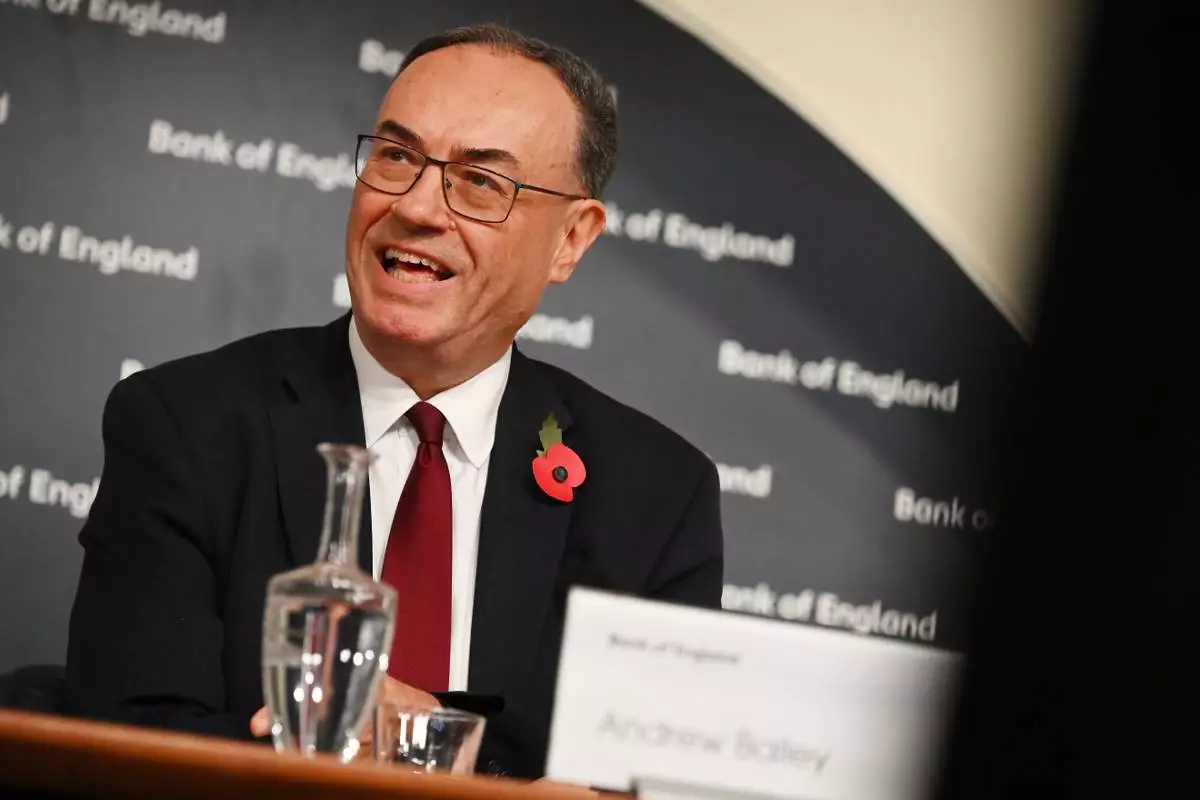
Governor of the Bank of England, Andrew Bailey, attends the Bank of England Monetary Policy Report press conference at the Bank Of England in London, Thursday, Nov. 5, 2026. (Alishia Abodunde/Pool Photo via AP)
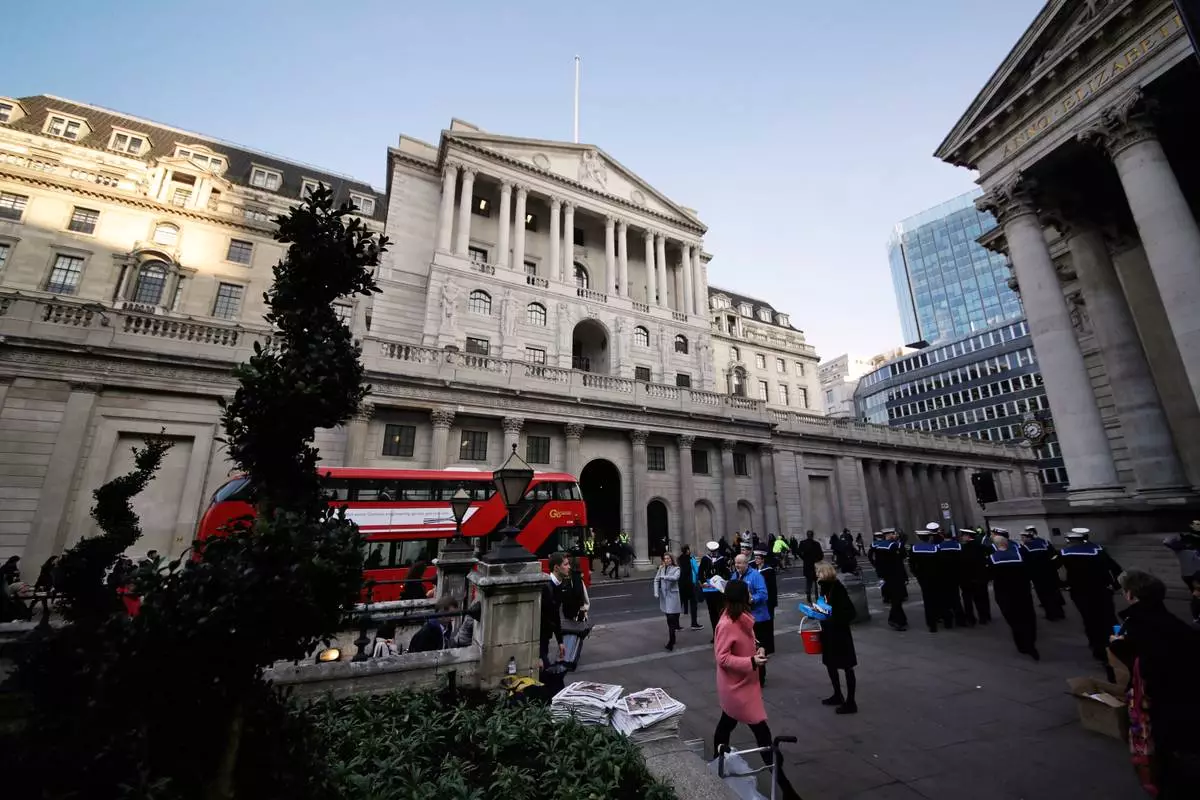
FILE - The facade of the Bank of England is seen in th London on Nov. 2, 2017. (AP Photo/Matt Dunham, File)