A Chinese scholar has spent more than three decades researching the horrific scale of Japan's military sexual slavery atrocities during World War II, confirming the existence of more than 2,000 so-called "comfort station" sites across China and identifying over 300 previously unknown survivors in the country.
The extensive research by Su Zhiliang, a Shanghai Normal University professor and director of the Chinese Research Center for "Comfort Women", began in the early 1990s when he first followed a clue from Tokyo back to Shanghai.
From the early 1930s through the end of World War II, the Japanese imperial military forced hundreds of thousands of women across Asia into sexual slavery, euphemistically calling them "comfort women."
Shanghai holds a particular place in that troubled period of history. The city was the scene of the first so-called "comfort station" opened by the Japanese military in 1932, which later became the largest and longest running site of its kind in China. As the war expanded, the number of these Japanese sexual slavery sites grew across the country, leaving behind a landscape of trauma that researchers are still mapping out to this day.
Su recalled how the shocking issue was suddenly thrust into the global spotlight and gained significant public attention after the shocking revelations made by a brave survivor from the Republic of Korea named Kim Hak-sun, who courageously came forward to share her experiences in August 1991. "I was a researcher at the University of Tokyo at the time. When I learned that the first Japanese military 'comfort station' was in Shanghai, I felt I had to get to the bottom of it. At first, I thought it was a small topic. But the more I looked into it, the more I found," Su said.
Starting in the early 1990s, Su and his team traveled city by city with old maps, household registers and oral records, piecing together the horrifying history of Japanese military "comfort stations" across China.
Starting from Shanghai, the investigation covered 22 provincial-level regions across the country. To date, the existence of over 2,200 of these "comfort stations" has been confirmed, with 192 found in Shanghai and more than 200 in the southern Guangdong, with Su and his team identifying hundreds of survivors.
"In Guangdong Province alone, we've located the sites of over 200 'comfort stations'. Over these 30-odd years, we've found 358 survivors," Su said.
But the work did not stop at collecting numbers. The team found that most of these survivors sadly lived out their later years mired in poverty, and Su's research center later began providing living and medical assistance to the aging victims.
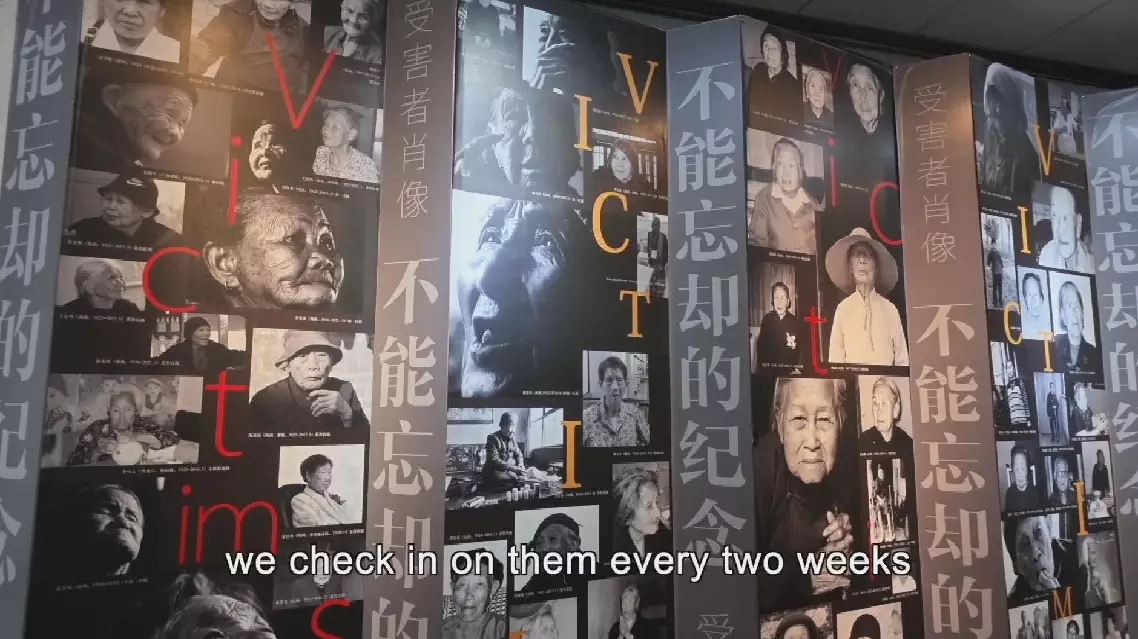
"Most of these women lived in poverty, so starting in 2000, we began providing them with assistance. For the seven survivors still alive today, we check in on them every two weeks and closely monitor their well-being," the professor said.
Su said he is now racing against time to get the testimony of these seven still-living survivors on record and ensure the sites of the "comfort stations" across China are made known for later generations to remember this dark chapter of the past.
"I think the times young people live in today are good. But they need to know that around 90 years ago, all of Asia was engulfed in war. At least 400,000 women were taken to 'comfort stations;' their lives were turned upside down. We cannot take comfort in the fact that we don't face such suffering today. We must remember, we must ask why such evil happened, so we can learn from history and chart a better course for all of humanity," he said.
Chinese scholar chronicles Japan's wartime "comfort women" atrocities, urges remembrance as survivors dwindle