China's state-owned oil and gas giant Sinopec signed procurement agreements worth 41.3 billion U.S. dollars with 37 partners from 18 countries and regions in Shanghai on Wednesday, the first energy purchase deal inked at the ninth China International Import Expo (CIIE).
The deals cover 29 products across 14 categories, including green and low-carbon technologies, artificial intelligence, high-end equipment and digital supply chains, according to the company.
The purchase included a biofuel procurement agreement worth 230 million U.S. dollars between Sinopec's aviation fuel subsidiary and global commodity trader Trafigura. The two sides will deepen cooperation in international jet fuel trade and supply chains and further expand collaboration on sustainable aviation fuel and other green energy.
Sinopec said its cumulative signed procurement agreements across the nine CIIE editions since 2018 had exceeded 366 billion U.S. dollars.
Running from Nov. 5 to 10, this year's CIIE has attracted 4,142 overseas exhibitors, including more than 300 Fortune Global 500 companies and industry leaders. Over 480 exhibits are set to make their global, Asian or China debuts at the event, the highest number in its history.
Launched in 2018 as the world's first national-level expo dedicated to imports, the CIIE has become an important gateway for foreign businesses seeking access to China's vast consumer and industrial markets.
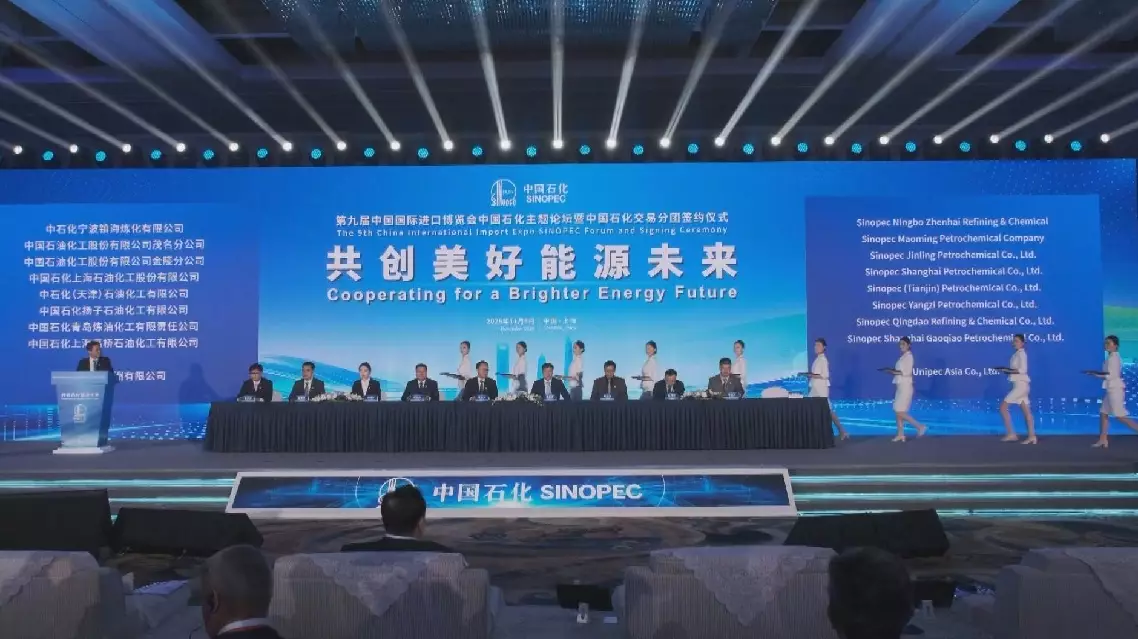
Sinopec spends big on procurement deals at CIIE
China and Africa have completed around 100 joint renewable energy projects with a combined installed capacity of 17 gigawatts (GW) since 2023, according to a report released Wednesday at a China-Africa energy cooperation conference in Yueyang, in central China's Hunan Province.
The China-Africa Renewable Energy Cooperation Report 2026 found that hydropower accounts for the largest share of the joint portfolio, with 16 projects totaling 6.8 GW, followed by seven wind projects with a combined capacity of 2.2 GW, while solar installations make up much of the remainder.
Addressing the conference, Alhaji Mohamed Sarjoh Bah, permanent representative of the African Union (AU) to China, highlighted the strong complementarity between China and Africa in the renewable energy sector, pointing to China's technology and investment capacity and Africa's vast untapped resources.
The report called on both sides to deepen cooperation across the full renewable spectrum, expanding hydropower and geothermal power, scaling up wind and solar, developing biomass, adding energy storage, piloting green hydrogen, and rolling out microgrid and off-grid solutions for remote communities.
"We have provided specialized training to more than 200 African government officials and energy-sector workers, and selected 15 solutions suited to African conditions, including microgrid systems and solar-powered agricultural equipment. Joint efforts have yielded a range of tangible results in China-Africa energy cooperation," said Liu Deshun, chief engineer of the National Energy Administration (NEA) of China.
While describing the opportunities as substantial, the report cautioned that challenges remain.
Yi Yuechun, chief executive officer (CEO) of the China Renewable Energy Engineering Institute (CREEI), said the continent's potential is tremendous but insufficient investment is the main constraint, projecting that Africa's installed renewable capacity will reach 750 GW by 2040 and require total investment of about 1.3 trillion U.S. dollars across power generation, energy storage and cross-border transmission.
Nardos Bekele-Thomas, CEO of the African Union Development Agency-New Partnership for Africa's Development (AUDA-NEPAD), called on Chinese institutions, financing partners, companies and private-sector actors to align their investments in power generation and transmission with the energy needs of productive sectors.
When planning those investments, she said, Chinese partners should proactively link them to demand from industrial parks, mineral and agricultural processing, digital infrastructure and logistics, shifting the focus from infrastructure alone to economic development and jointly building integrated economic corridors.
That vision found a ready echo among Chinese officials at the conference, who pledged to turn the partnership into concrete action.
"China is ready to work with African countries to step up joint technological innovation, technical training and talent development, support their capacity for independent development in the energy sector, and provide strong support for Africa's long-term energy development," said Liu.
Cooperation is also expanding beyond major infrastructure projects to smaller, community-focused initiatives. The report said large hydropower, wind and solar projects have become flagship examples of China-Africa energy ties, while smaller undertakings are helping extend electricity to rural communities.
"By coordinating power supply with an industrial park or mining area, we can meet the park's electricity needs while extending the benefits to surrounding communities. This model can be promoted in many parts of Africa because it supports green, sustainable development and improves local livelihoods," said Jiang Hao, chief technical expert of the CREEI.
Innovative projects in solar thermal power, energy storage and mining-area microgrids are also taking shape, offering practical experience for technical routes suited to African conditions and cooperation models that can be replicated and expanded.
Underscoring the impact of that cooperation, the report said Africa's electricity access rate rose from 42 percent in 2015 to 57 percent in 2024, as efforts to bring power to more people across the continent continue.
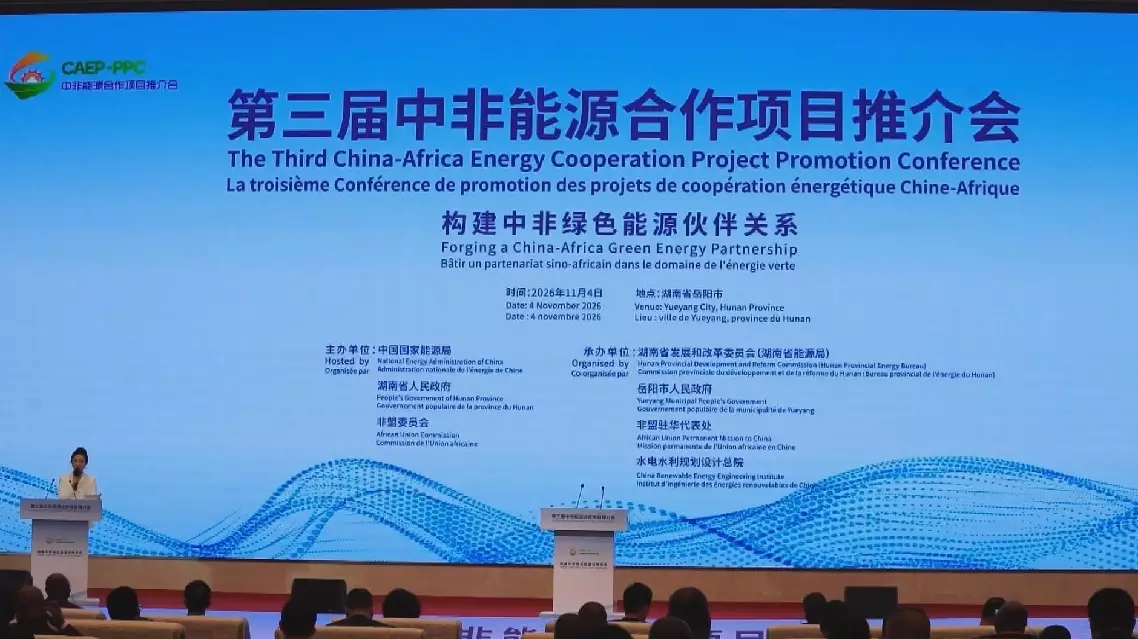
China-Africa renewable energy projects reach 17 GW: report