CAIRO (AP) — An assailant attacked and killed a security officer near the Sri Lankan Embassy in Jordan’s capital Amman on Thursday, in what Jordanian authorities described as a terrorist act.
The attack comes weeks after gunmen opened fire during a funeral at a church in southern Jordan, killing nine people and wounding dozens more.
Click to Gallery
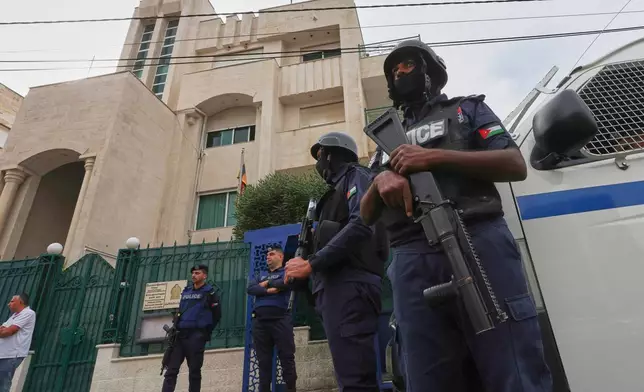
Jordanian police stand guard in front of the Sri Lankan Embassy, background, after an assailant killed a security officer at a guard booth outside the compound in Amman, Jordan, Thursday, Nov. 5, 2026. (AP Photo/Raad Adayleh)
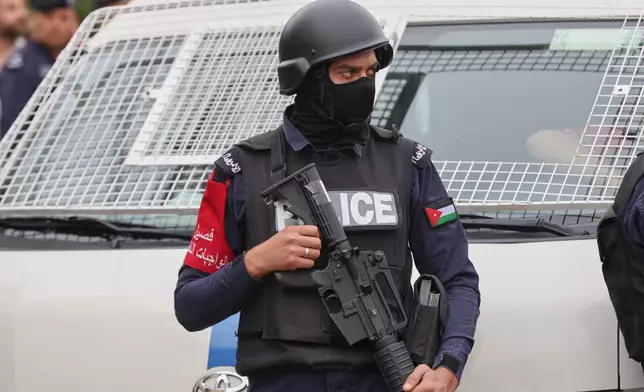
Jordanian police secure the area after an assailant killed a security officer at a security booth outside the Sri Lankan Embassy in Amman, Jordan, Thursday, Nov. 5, 2026. (AP Photo/Raad Adayleh)
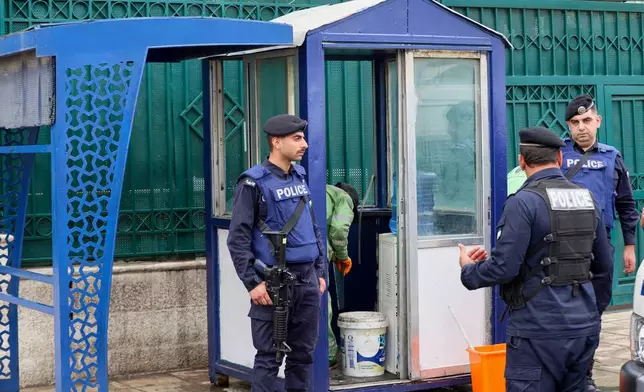
Jordanian police guard the security booth where an assailant killed a security officer outside the Sri Lankan Embassy in Amman, Jordan, Thursday, Nov. 5, 2026. (AP Photo/Raad Adayleh)
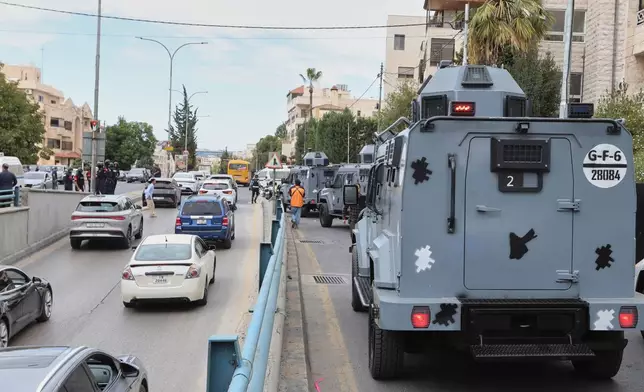
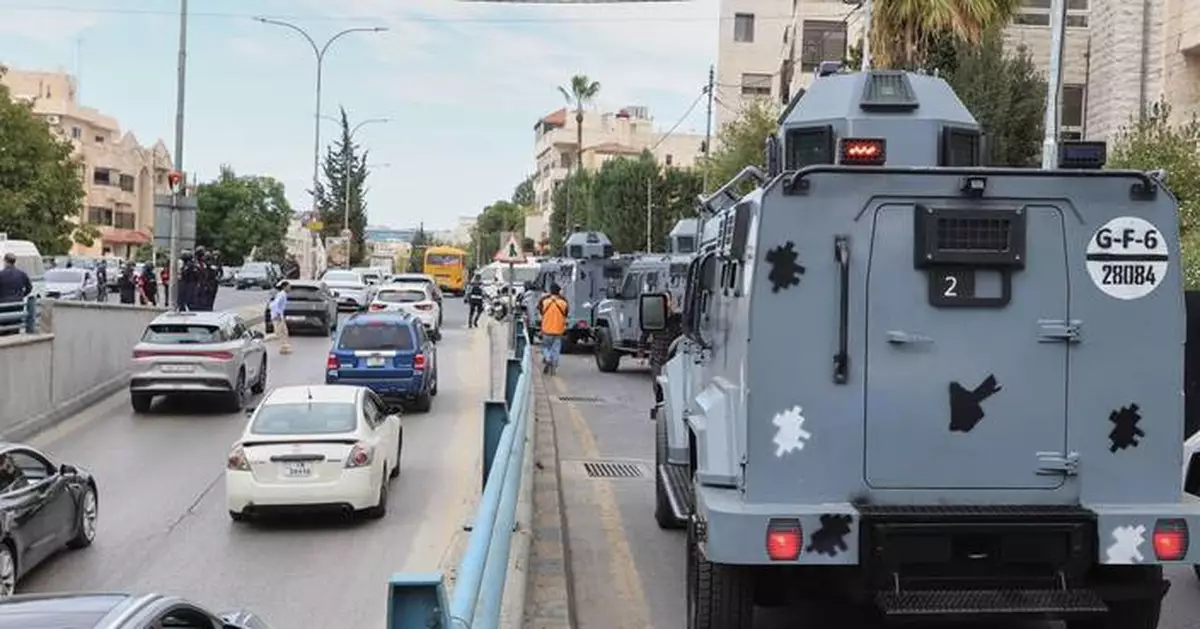
Jordanian police armored vehicles line a street near the Sri Lankan Embassy after an assailant killed a security officer at a guard booth outside the embassy in Amman, Jordan, Thursday, Nov. 5, 2026. (AP Photo/Raad Adayleh)
Jordan’s Public Security Directorate said that a member of its forces was assaulted with a sharp object and died “in a cowardly terrorist attack.” It said a preliminary investigation indicated the attacker had been “planning to commit the terrorist act against the officers of the General Security Directorate.”
Jordan’s state-run Al-Mamlaka TV reported that the assailant, who has been arrested, attempted to seize the weapon from the security officer who was killed. A second security officer intervened, and both the assailant and the second officer sustained injuries, Al-Mamlaka said.
The Sri Lankan Embassy confirmed the attack took place in its vicinity, but didn't elaborate.
Jordanian government spokesperson Mohamed al-Momani wrote on X that the prime minister was “closely monitoring the response of the security services to this incident.” Attacking security personnel while on duty is an “assault on the dignity of the state,” he added.
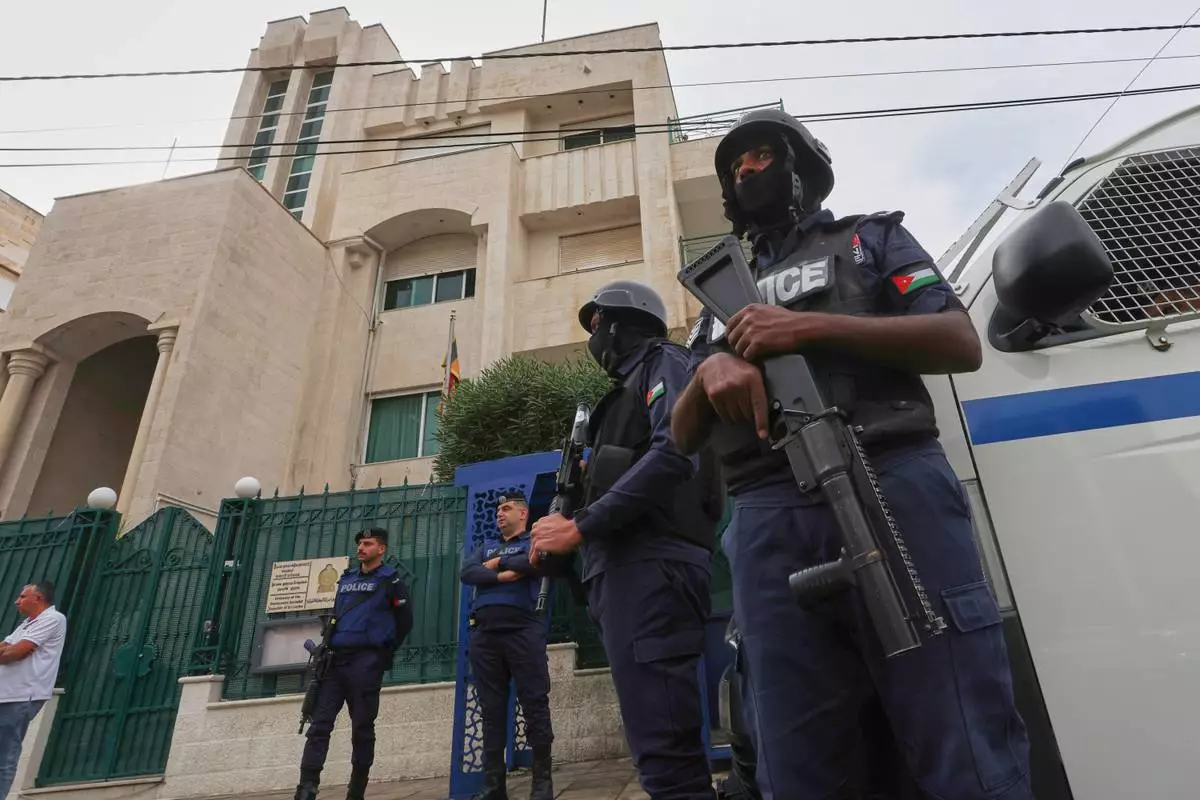
Jordanian police stand guard in front of the Sri Lankan Embassy, background, after an assailant killed a security officer at a guard booth outside the compound in Amman, Jordan, Thursday, Nov. 5, 2026. (AP Photo/Raad Adayleh)
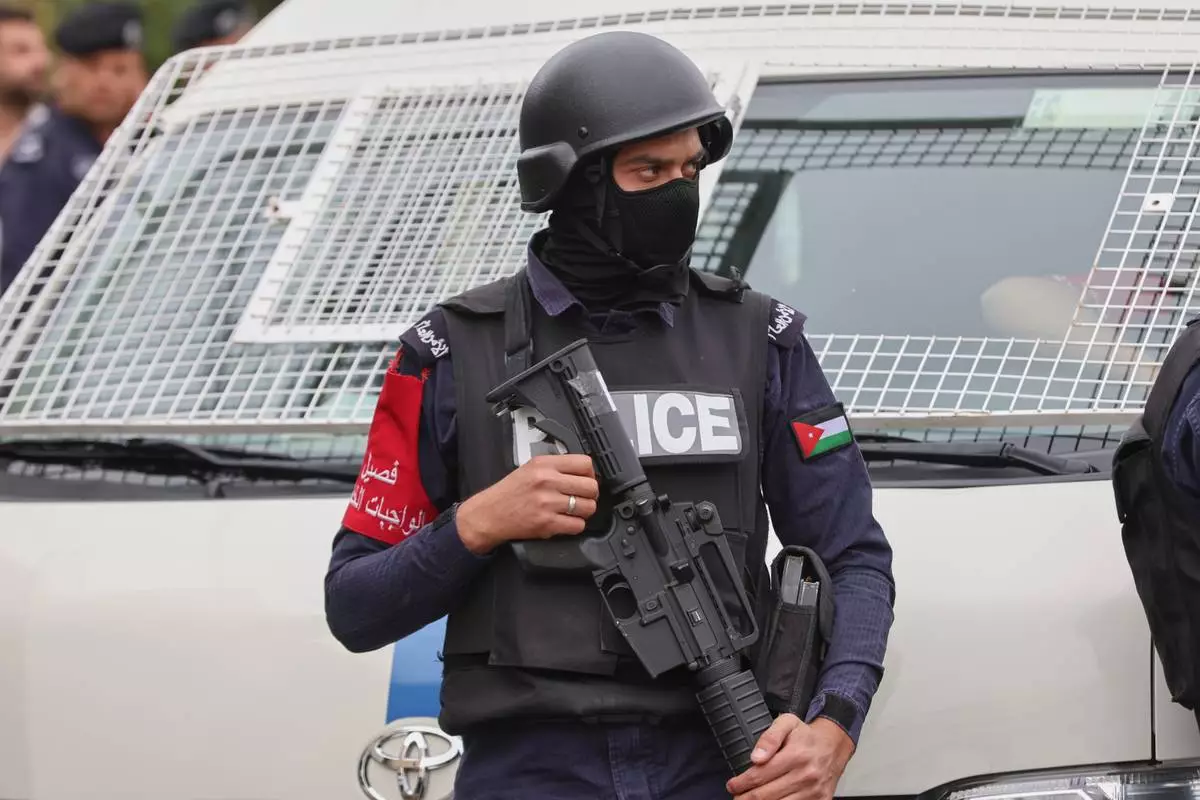
Jordanian police secure the area after an assailant killed a security officer at a security booth outside the Sri Lankan Embassy in Amman, Jordan, Thursday, Nov. 5, 2026. (AP Photo/Raad Adayleh)
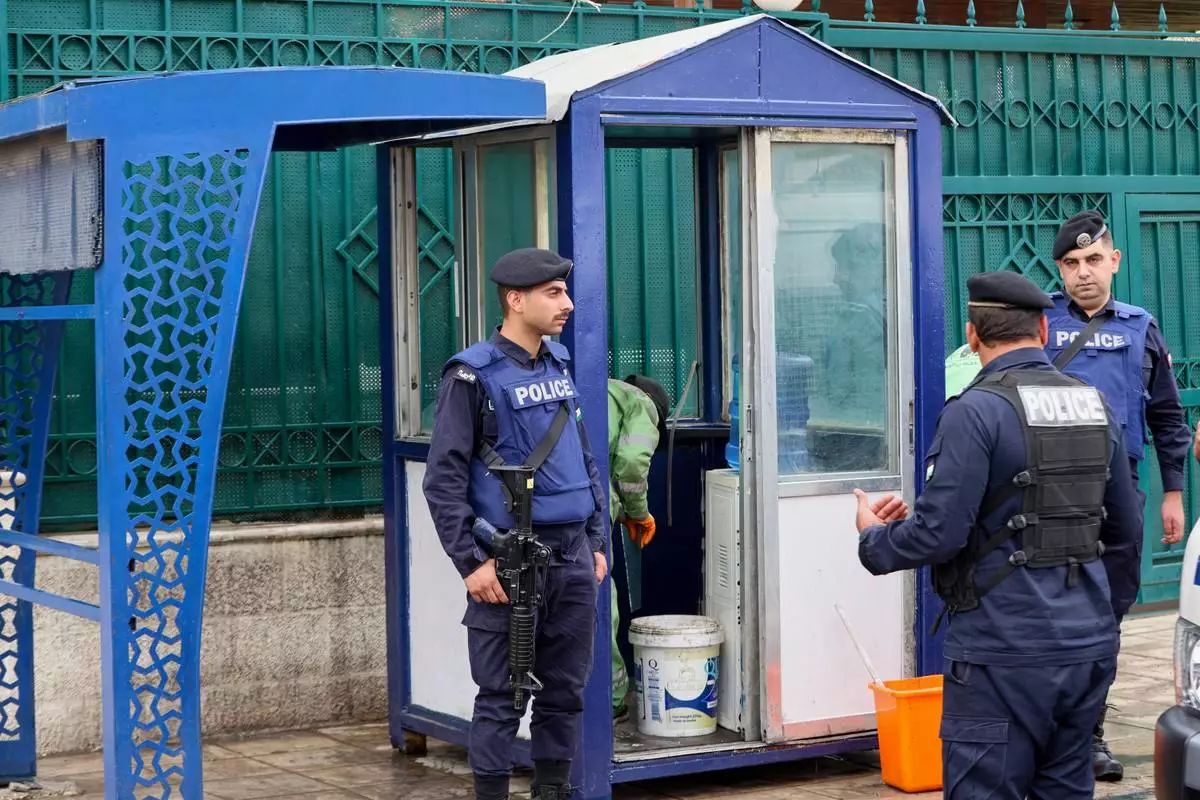
Jordanian police guard the security booth where an assailant killed a security officer outside the Sri Lankan Embassy in Amman, Jordan, Thursday, Nov. 5, 2026. (AP Photo/Raad Adayleh)
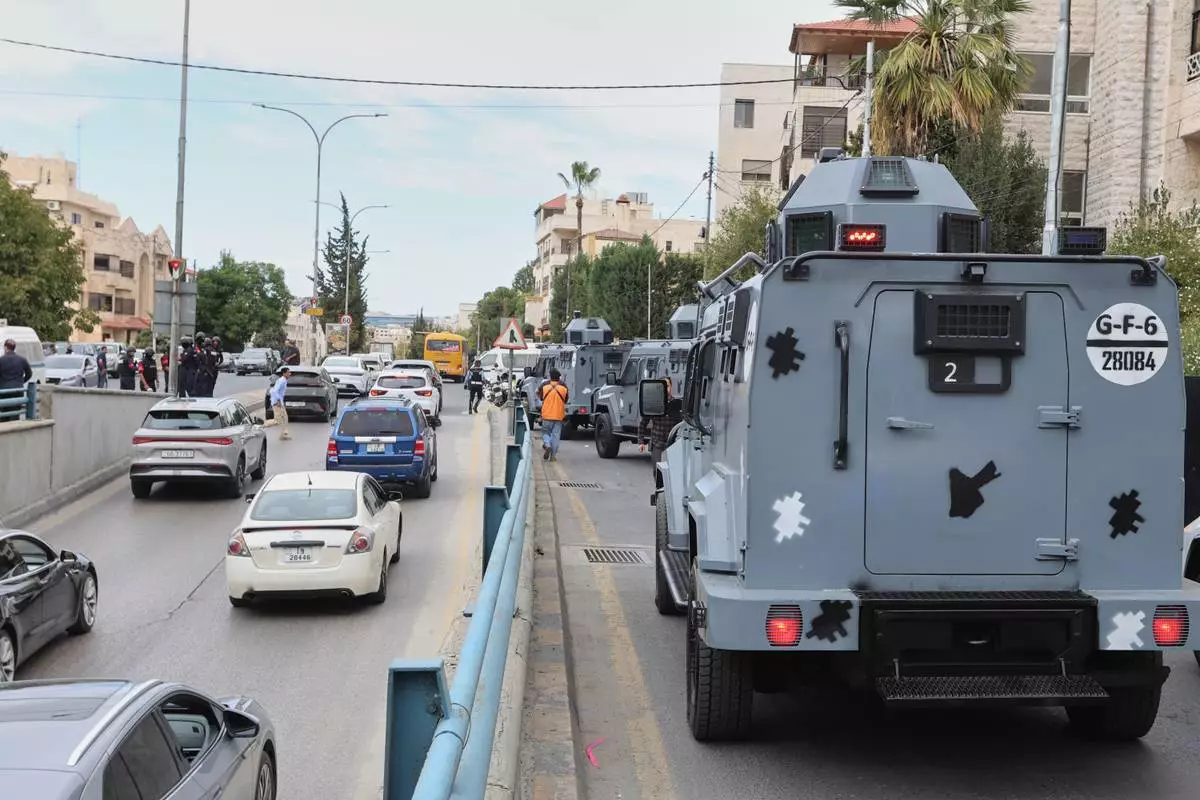
Jordanian police armored vehicles line a street near the Sri Lankan Embassy after an assailant killed a security officer at a guard booth outside the embassy in Amman, Jordan, Thursday, Nov. 5, 2026. (AP Photo/Raad Adayleh)

LONDON (AP) — Hundreds of airline passengers in Europe had their flights diverted or given military escorts this week after a series of bomb threats that officials have said were malicious hoaxes.
It was not immediately known who was behind the threats, which came at a time of rising tensions with Russia and warnings that it may be ramping up so-called hybrid attacks in Europe.
Here's what happens when airlines receive bomb threats.
Assessors determine whether a threat is credible, partially credible or not credible, according to Joji Waites, director of flight safety, policy and regulation for the British Airline Pilots’ Association.
If deemed credible, the flight crew is informed right away and the captain makes all the decisions, guided by a safety checklist, said Waites. If the aircraft is on the ground, that would mean evacuation. If already in flight, the priority would be to land as soon and as safely as possible.
“Pilots are highly trained and skilled professionals. Their expertise is invaluable in ensuring passenger safety and keeping aviation one of the safest forms of transport there is,” Waites said.
Airlines, airport operators and law enforcement generally follow guidelines developed by the European Union Aviation Safety Agency and the International Civil Aviation Organization, which conducts audits to ensure compliance.
Flight crew training includes live situational exercises covering various threats, including how to search for explosives that may have been smuggled on board.
When threats are called in, airline employees are instructed to keep the caller on the line and to gather as much information as possible, according to aviation security expert Philip Baum.
Many of the threats received this week were sent by email, with enough information for authorities to determine that aircraft needed inspection. That can be costly for airlines.
Baum, a visiting professor of aviation security at Coventry University in England, said diverting a flight because of an unruly passenger or a bomb threat can cost up to $250,000.
The costs may be lower in this case because most of the disrupted flights were short-haul, where there is less likelihood of overnight delays, he said.
The intent with these threats “appears to be to sow chaos, uncertainty, about the reliability of air traffic across Europe,” said Jacob Funk Kirkegaard, senior fellow at the Bruegel think tank in Brussels.
The threats could also be testing the relative response time and level of coordination among authorities in different countries, with the aim of identifying weaknesses for future attacks.
“Do the authorities in Poland respond at the same speed and with the same urgency, et cetera, as the authorities of Italy, for instance?” Kirkegaard said, comparing such threats to a “stress test” of the system.
Carlson reported from Brussels and Hadjicostis from Nicosia, Cyprus.
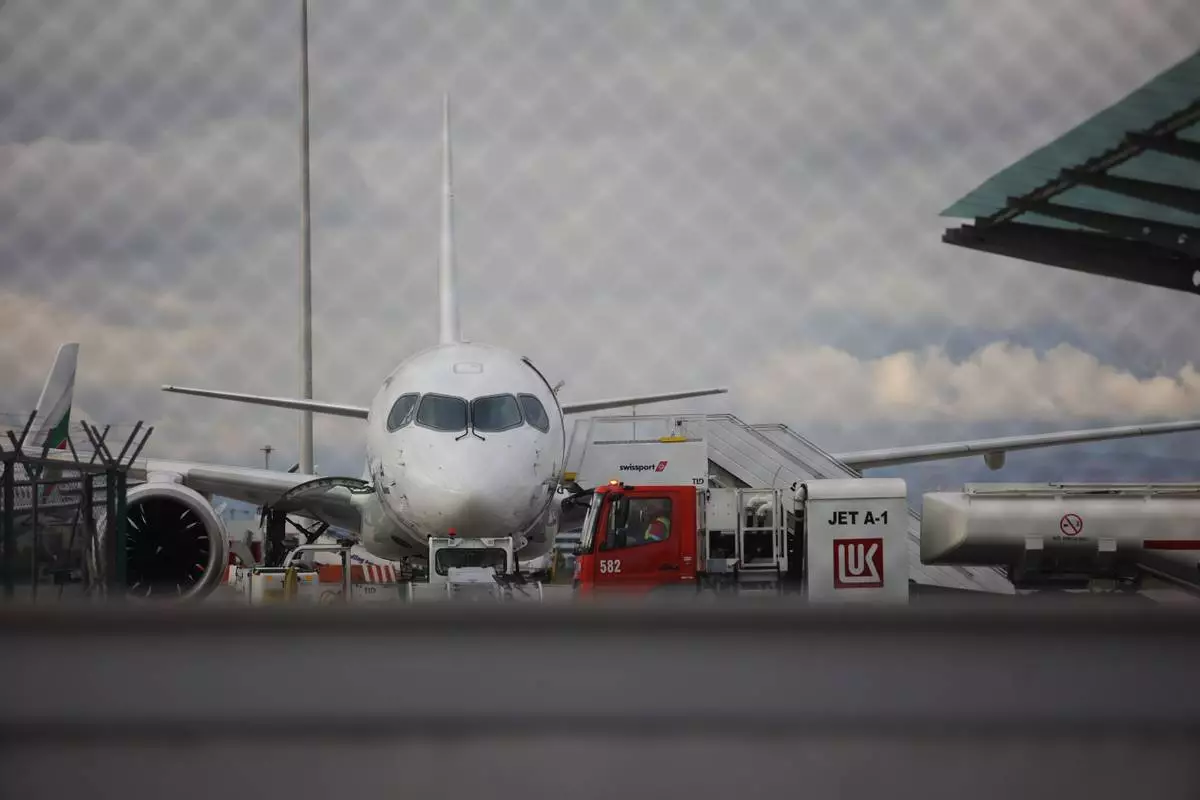
An airplane seen at Sofia's Vasil Levski Airport in Bulgaria, Thursday, Nov. 5, 2026, as three Ryanair flights bound for Sofia, had to make emergency landings because of bomb threats on board. (AP Photo/Valentina Petrova)