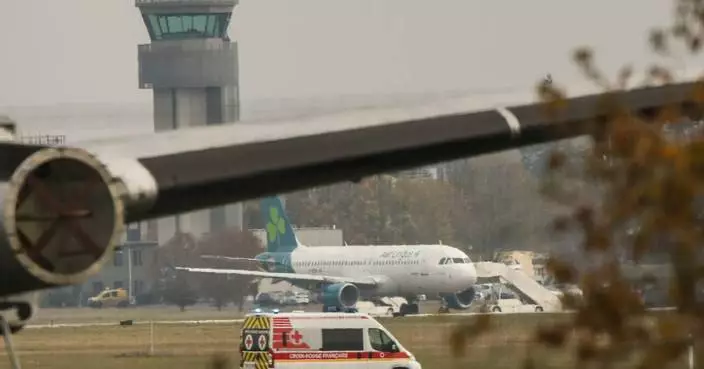
Florida and Alabama plan to execute two men Thursday for killing older adults during home robberies, just hours after Indiana put a prisoner to death in the first of three lethal injections scheduled for the same day in the U.S.
It would be Florida’s 19th execution this year under Republican Gov. Ron DeSantis, matching a record set by the state in 2025, and the second time this year that three people would be put to death on the same day.
The death penalty has faced renewed scrutiny since the September failed execution of Christa Pike in Tennessee, although courts have rejected efforts to halt other executions after she survived two doses of pentobarbital.
In Indiana, Jeffrey Weisheit, 50, was pronounced dead at 12:45 a.m. at the state prison in Michigan City, said Noelle Russell, spokesperson at the Department of Correction.
She said Weisheit’s final meal was barbecue ribs and he had no final words. He had acknowledged killing his girlfriend's two children in a house fire in the Evansville area in 2010 but had hoped that Gov. Mike Braun would grant clemency and change his sentence to life in prison. Braun declined.
Florida has carried out more than half the 32 executions in the U.S. so far this year. DeSantis, who leaves office in January, has said he wants to bring justice to families who have waited decades for death sentences to be carried out.
Jesse Guardado confessed and quickly pleaded guilty to fatally stabbing a 75-year-old woman inside her Walton County home in 2004 before stealing her jewelry box, $80 and other valuables to buy drugs. She had helped him get a job and housing.
A federal appeals court in 2024 said that Guardado, now 64, had received a “full and fair” hearing during the death penalty phase of his case.
In 1991, Michael Taylor, then 19, fatally beat two people, ages 83 and 79, with a metal bar during a robbery in their Gadsden, Alabama, home. Police arrested him with the victims’ Cadillac an hour away in Birmingham.
Death penalty opponents had urged Republican Gov. Kay Ivey to reduce Taylor’s sentence to life in prison, noting his age and immaturity at the time of the killings. She declined.
“If the state kills Michael, it is not the 19-year-old who made the worst mistake of his life who it kills. But the mature, well-respected, God-fearing man sitting in that cell today,” said Esther Brown of Project Hope to Abolish the Death Penalty.
The state plans to execute Taylor, 54, by lethal injection after a judge declared a nitrogen gas method unconstitutional. His attorneys objected to the last-minute switch to lethal injection since he selected nitrogen gas as his method several years ago, but a judge ruled against Taylor.
In Indiana, lawyers failed to persuade Braun, a Republican, to allow Weisheit to undergo brain scans in an effort to reinforce their argument that he has a history of head injuries and mental health problems that should foreclose execution.
Weisheit's last objection centered on the state's planned use of lethal drugs purchased from a pharmacy that is facing a disciplinary hearing next week at the Indiana Pharmacy Board. The Indiana Supreme Court declined to intervene Wednesday night, though two of the five justices wanted a 10-day stay for more information about the drugs' expiration and storage.
The execution provided “long-awaited justice for Alyssa Lynch and her brother Caleb, two innocent children whose lives were stolen in an act of unspeakable cruelty," Indiana Attorney General Todd Rokita said.
Fischer reported from Fort Lauderdale, Florida, and Chandler from Montgomery, Alabama. Associated Press reporter Ed White contributed from Detroit.
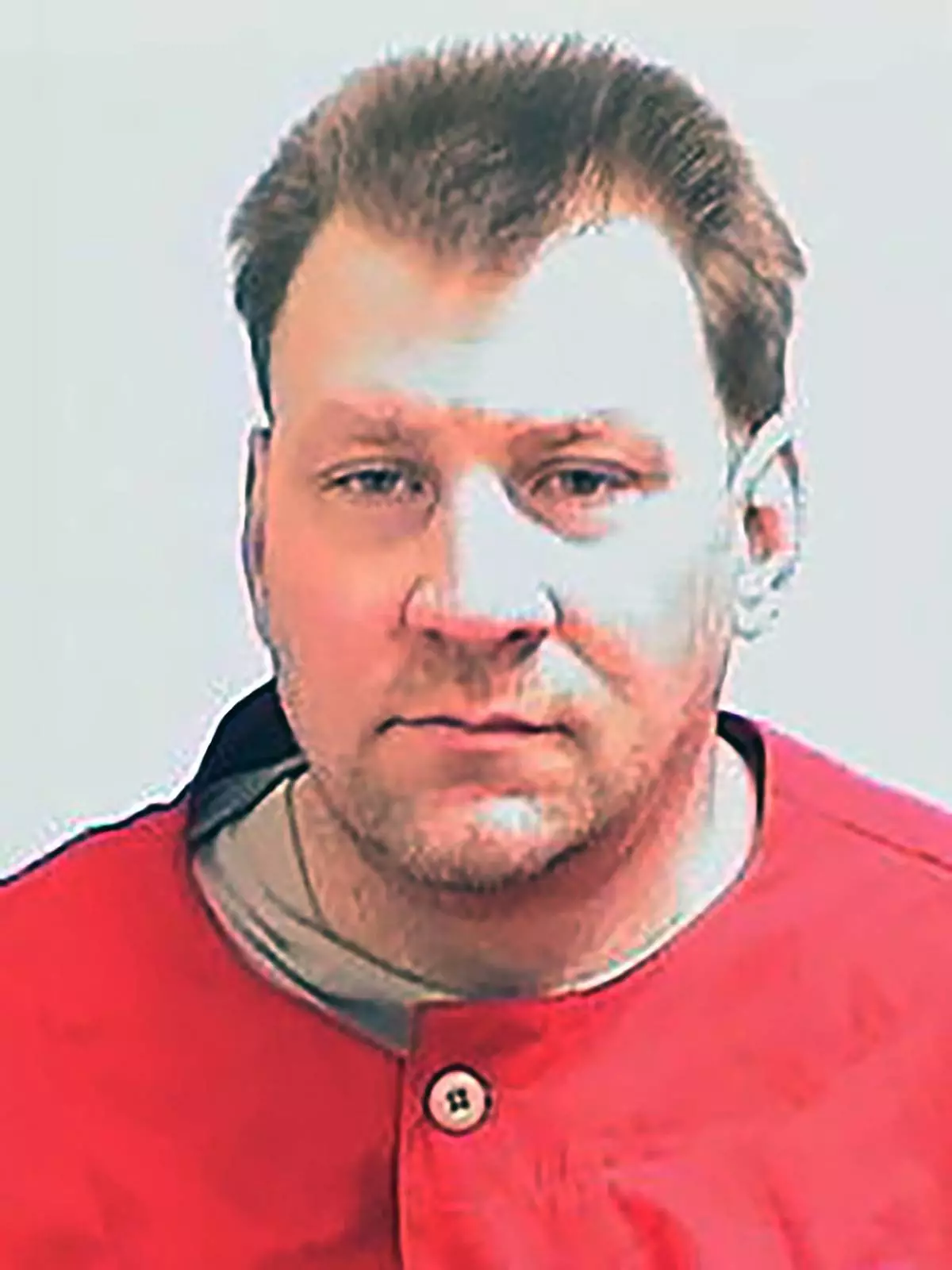
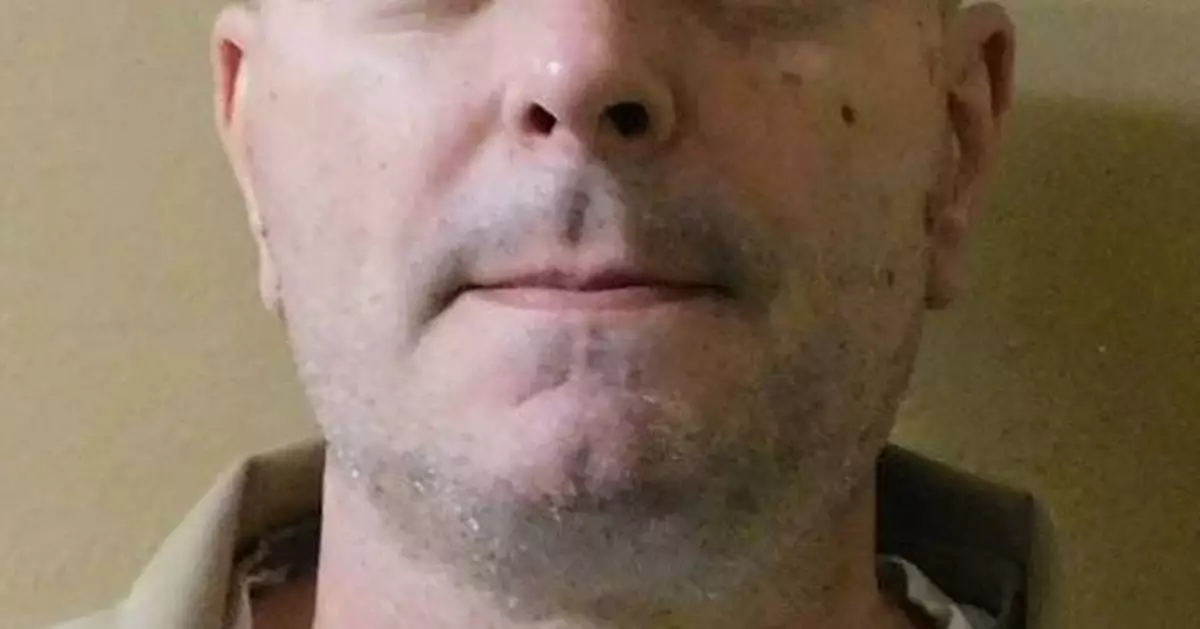
This photo provided by the Indiana Department of Correction shows Jeffrey Weisheit. The Indiana Parole Board is recommending that the death penalty remain in place for Weisheit who killed two children in a house fire.(Indiana Department of Correction via AP)
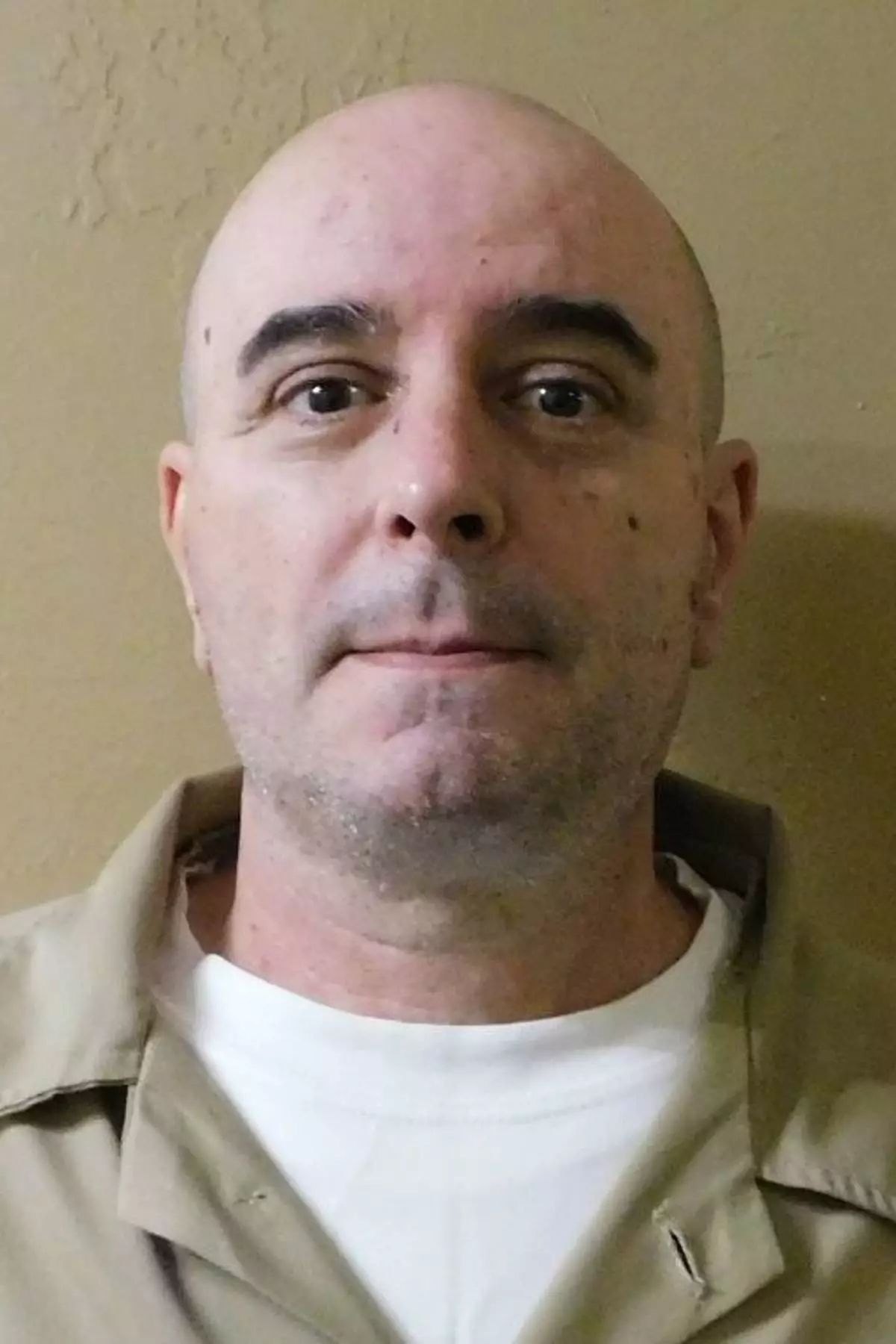
This undated photo provided by the Alabama Department of Corrections on Thursday, Nov. 5, 2026, shows Michael Taylor. (Alabama Department of Corrections via AP)
ASUNCIÓN, Paraguay (AP) — Paraguay’s lower house voted unanimously Thursday to impeach President Santiago Peña just minutes after he announced his resignation, as the collapse of a major digital bank tied to his government froze millions of people’s savings, sent protesters surging into the streets and turned his own party against him.
Peña’s resignation, by video posted to X, would have needed congressional approval. The lower house had already started debating his impeachment when he resigned. Removal from office would require Senate approval.
The impeachment came as thousands protested for a third day, as they attempt to recoup lost savings, wages and pensions from Ueno Bank, a major digital lender.
THIS IS A BREAKING NEWS UPDATE. Check back for updates. AP’s earlier story follows below.
Paraguayan President Santiago Peña resigned Thursday after losing the backing of his own party, as protests rocked the capital for a third day over the collapse of Ueno Bank, a major digital lender tied to his government that froze millions of people’s savings.
Peña announced his resignation in a video posted to X, saying he was stepping down to preserve the country’s stability and democratic institutions while lawmakers gathered inside the Legislative Palace debated his impeachment.
“I have made the decision to submit my resignation as president of the republic,” said Peña, a one-time investor in a company related to Ueno Bank. “I do so thinking of the stability of our country, social peace and the need to preserve our democratic institutions.”
Under Paraguay’s Constitution, Congress must accept or reject the president’s resignation; Vice President Pedro Alliana is in line to succeed him.
Peña offered an apology but stopped short of accepting responsibility for the banking crisis that plunged the South American nation into financial and political turmoil.
“I also want to apologize to the people if I have failed them at any point,” he said. “It was never my intention to betray the trust they placed in me."
He said his priority was ensuring depositors recovered their savings. “Behind every deposit are years of hard work, sacrifice and family dreams,” he said.
Ueno Bank, which exploded from an obscure finance company to a household name in less than five years, claimed more than 60% of Paraguay’s adults as customers. They are now left scrambling to recoup their savings, government pensions, and, for 7,000 employees impacted by the bank's closure, unpaid wages.
Many Paraguayans are left asking how a bank linked to the president, who until last year had a stake in Ueno’s holding company, could grow so rapidly in size and importance despite repeated warnings about its dubious lending practices.
The answer lies in the uncomfortable proximity of Peña’s long-ruling Colorado Party to the country’s regulators and business elite, a weakness that has endured even as steady economic management and rapid growth made Paraguay a darling of international investors in recent years.
“Santiago Peña and the Colorado Party have stolen all our savings,” said Luis Pineda, one of the protesters marching to Congress on Wednesday. “We are fed up with 70 years of plunder.”
Soon after winning its banking license in 2023, Ueno seemed to be everywhere in Paraguay. The digital lender, a rebranded version of a decades-old finance company, lured customers with generous cash-back offers on groceries, grew to more than 70 locations, sponsored Paraguay's national soccer team and plastered its name on the country's main stadium.
Government money poured into Ueno’s coffers under Peña. He also appointed Carlos Carvallo, president of Financiera Ueno, the predecessor to Ueno Bank, to run the central bank, the agency charged with supervising the digital lender.
As of last month, Ueno reported holding roughly $800 million in public deposits, about a quarter of its total, including money from the state pension and health fund and the operators of Paraguay’s giant hydroelectric dams.
Even as retirees’ savings and other public money piled up at Ueno, worries were escalating inside the central bank. In June, its inspectors found a pattern of risky lending to insiders, reported ABC Color, a leading Paraguayan newspaper. Ueno had extended large sums to companies tied to its owners, beyond what the law allows and without enough collateral to cover the debts if they went bad. On a single day in September 2025, nearly $39 million had gone to three such companies.
Peña repeatedly brushed off the warnings. As recently as last month, he defended Ueno and the central bank’s oversight, dismissing the concerns as a smear campaign that was spooking the public.
But on Monday, it all came crashing down. Regulators investigating Ueno’s loans to companies linked to its owners found poorly documented lending, the central bank said, as well as expenses the bank had wrongly counted as assets.
Once the books were corrected, Ueno’s capital, the cushion banks must keep to absorb losses, fell to less than half the legal minimum. The central bank seized the lender Tuesday and announced plans to move customers’ accounts, along with whatever assets still hold value, to other banks before liquidating what’s left.
Ueno’s app, cards and transfers went dark and its branches locked their doors, leaving desperate depositors lined up outside with no way to cash out their savings. On Wednesday, a rush to open new accounts elsewhere crashed other banks’ mobile apps, fueling public panic.
Officials appealed for calm and said they had begun repaying depositors, opening new accounts elsewhere for about 280,000 who had banked only with Ueno.
“The banking system is sound,” insisted Pedro Acosta Bernal, appointed interim central bank president Wednesday after Carvallo resigned at Peña’s request.
Authorities have detained eight senior Ueno executives, including founder Miguel Vázquez and bank President Juan Manuel Gustale. Prosecutors also charged 27 bank officials and business associates with offenses including breach of trust and attempted fraud. Lawyers for several of the detained said they needed time to review the allegations before they could comment.
Hundreds of employees of Ueno Bank and other companies belonging to Grupo Vázquez, the bank’s parent conglomerate, protested outside the Labor Ministry on Thursday, demanding severance and unpaid wages with their jobs in limbo and their salaries trapped at the failed bank. A day earlier, hundreds of retirees, depositors, university students and workers flooded the streets of Asunción, the capital.
“We want your head, Peña!” they shouted. Their signs demanded Peña’s impeachment, called him “the enemy of savers” and pleaded “Give us back our money.” Riot police fired pepper spray and rubber pellets to push back the crowds.
Many demonstrators saw Ueno’s collapse not just as the result of risky banking but as a case study in official corruption. Only Venezuela ranks worse in South America on the latest index of perceived corruption from Transparency International, a global watchdog.
“This is yet another assault on honest, hard-working citizens, people whose small savings are the fruit of years of labor,” said protester Belarmino Balbuena.
At the national stadium that once bore Ueno’s name, the bank’s logo had already been scrubbed away. But across the capital, fresh graffiti denounced politicians as thieves.
Jorge Sáenz contributed to this story. DeBre reported from Buenos Aires, Argentina.
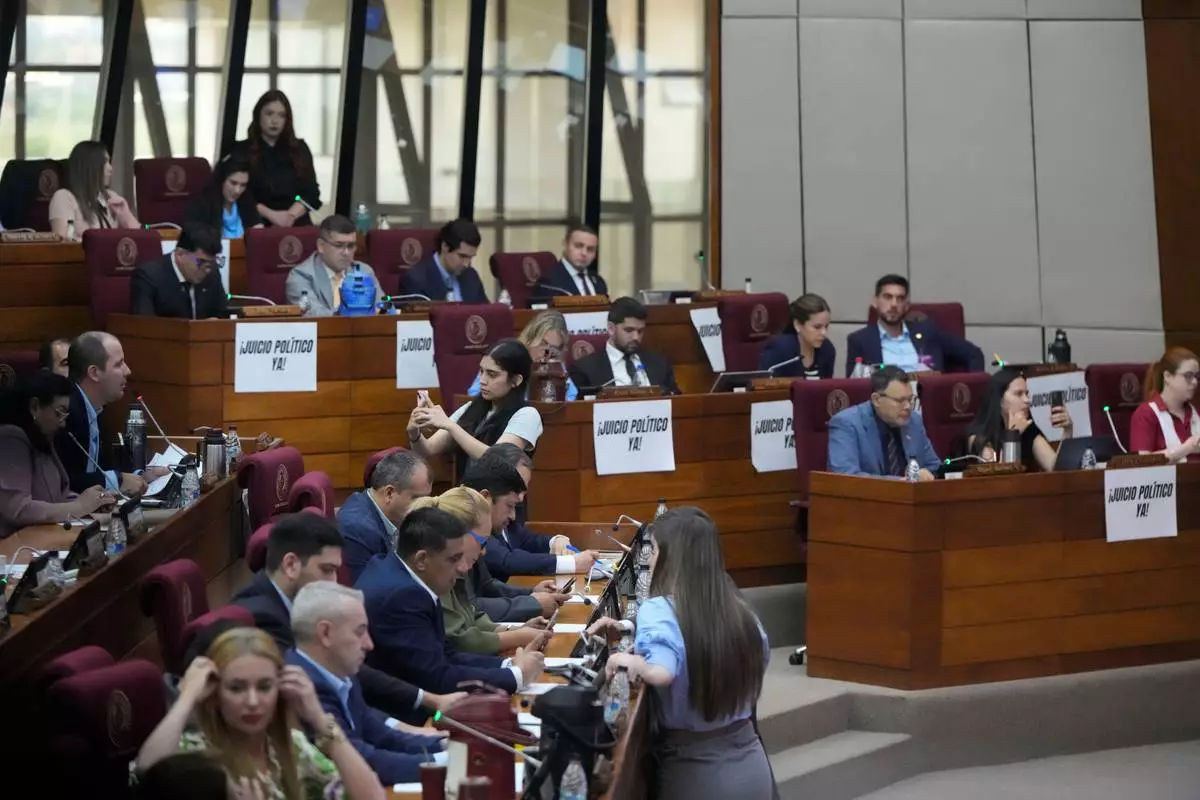
Deputy Carlos Pereira speaks during a discussion on the impeachment of President Santiago Peña in Paraguay's lower house of Congress, as banners reading "Impeachment Now" are displayed on opposition lawmakers' desks in Asuncion, Paraguay, Thursday, Nov. 5, 2026. (AP Photo/Jorge Saenz)
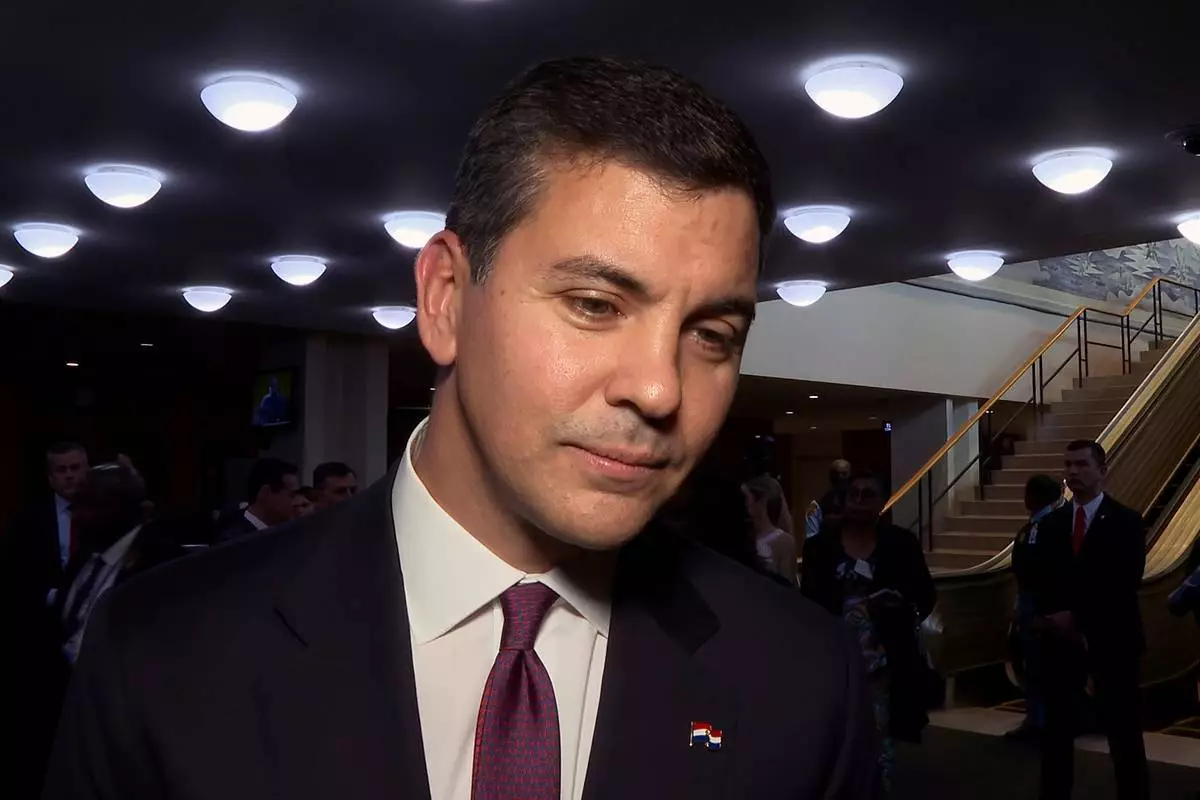
FILE - Paraguay President Santiago Peña speaks to the media at United Nations headquarters, Sept. 19, 2023. (AP Photo/Ted Shaffrey, File)
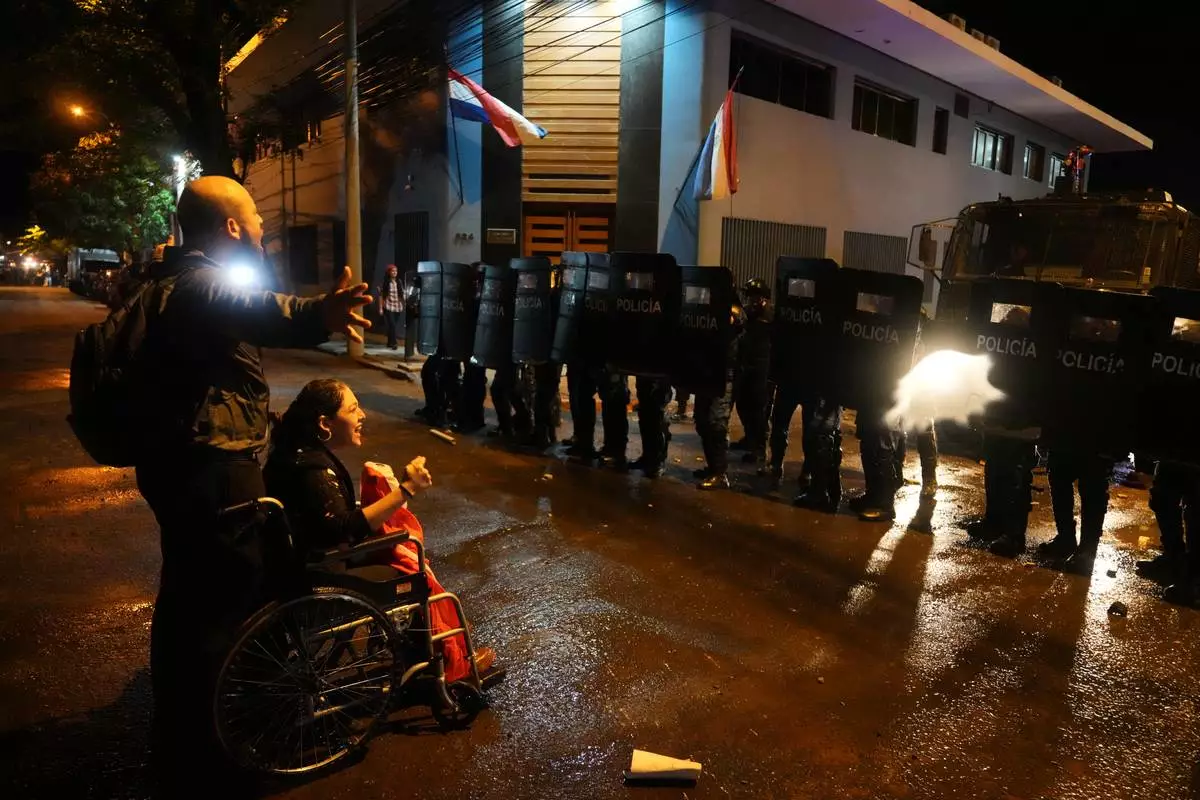
People protest in front of police against the government and Ueno Bank, which Paraguay's central bank seized amid a solvency crisis, in Asuncion, Paraguay, Wednesday, Nov. 4, 2026. (AP Photo/Jorge Saenz)
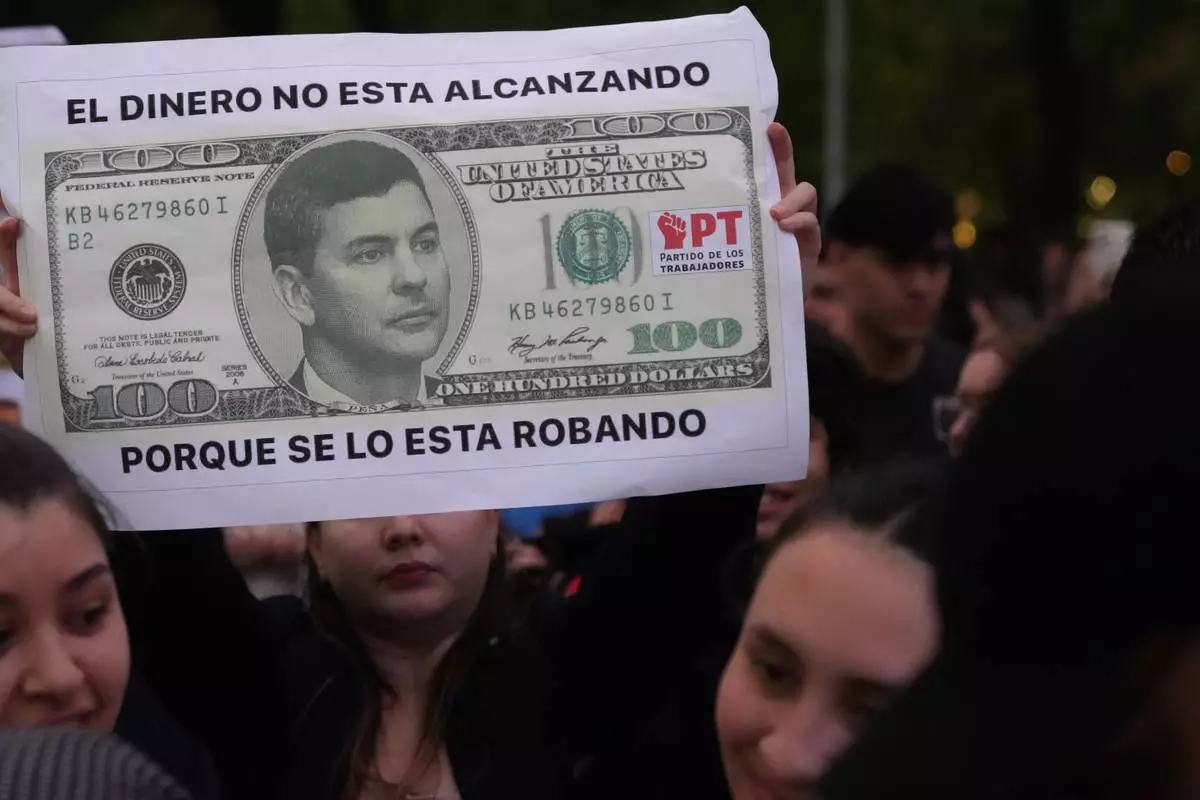
A demonstrator holds a mock U.S. dollar bill depicting Paraguayan President Santiago Peña during a protest against the government and Ueno Bank, which Paraguay's central bank seized amid a solvency crisis, in Asuncion, Paraguay, Wednesday, Nov. 4, 2026. (AP Photo/Jorge Saenz)
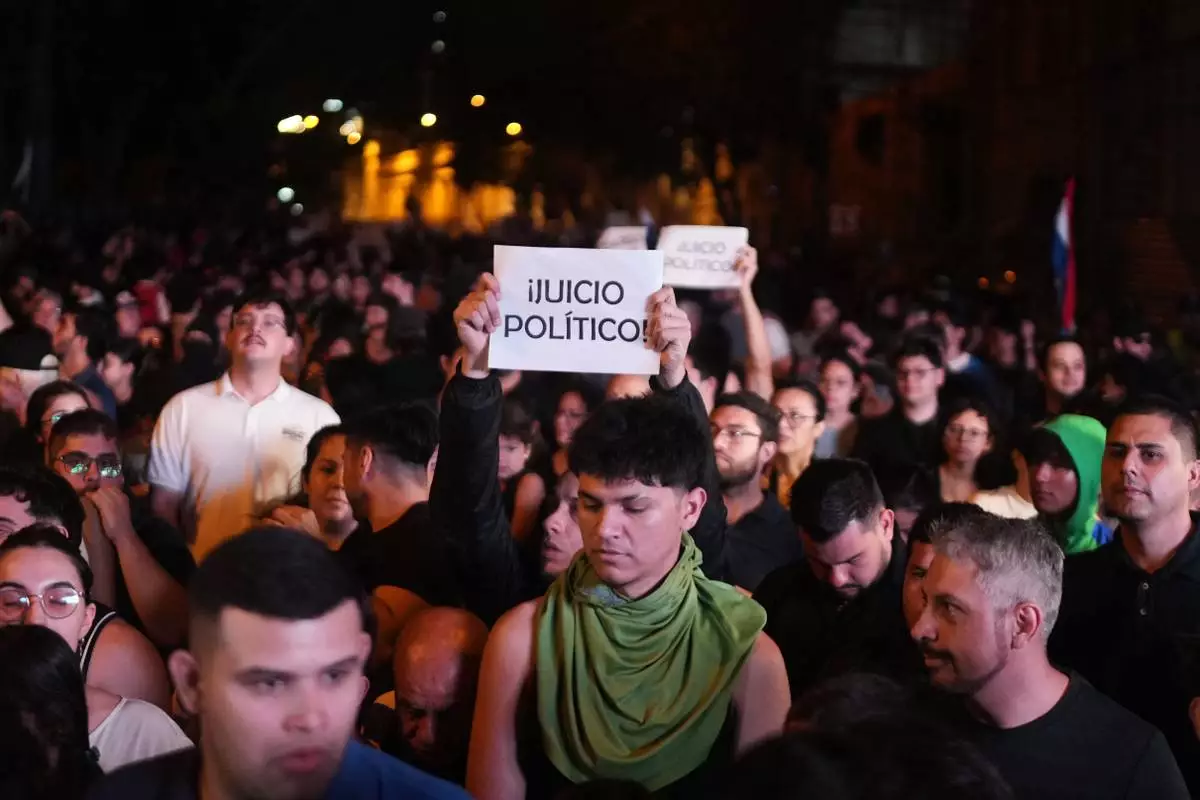
People protest against the government and Ueno bank, which Paraguay's central bank has seized amid a solvency crisis in Asuncion, Paraguay, Wednesday, Nov. 4, 2026. (AP Photo/Jorge Saenz)
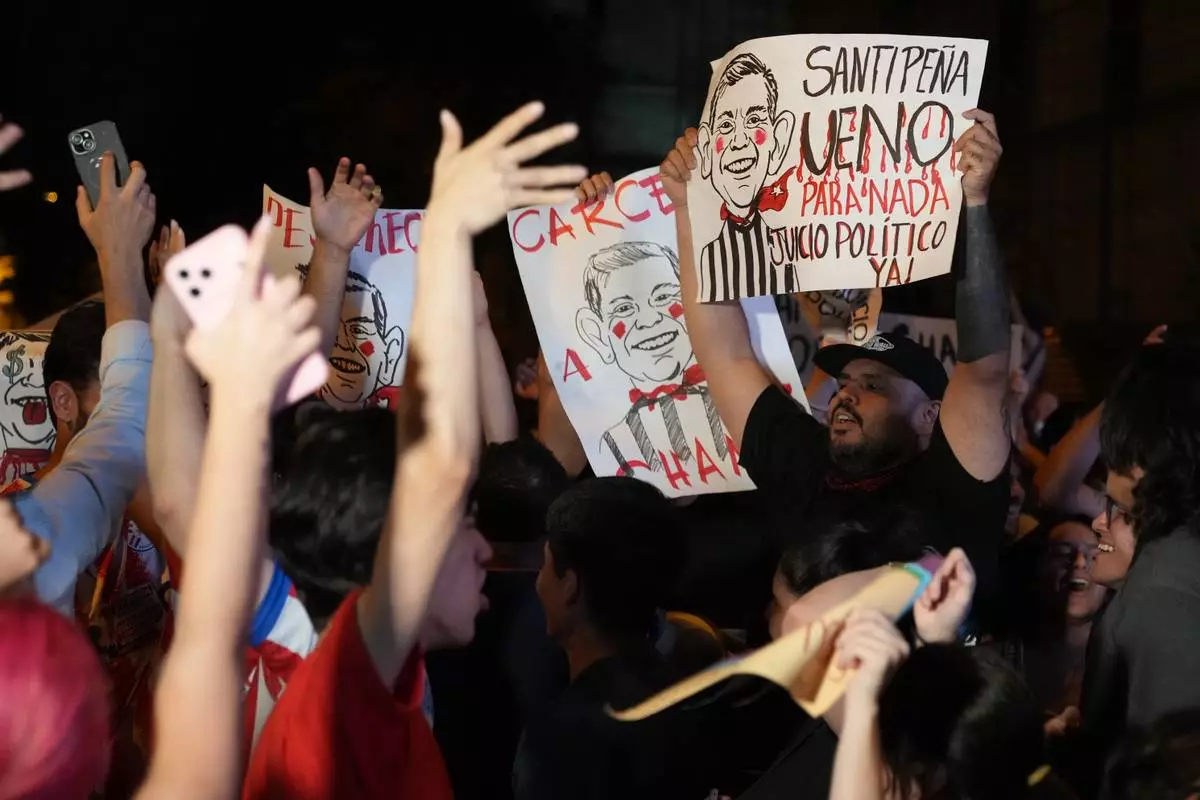
People protest against the government and Ueno bank, which Paraguay's central bank has seized amid a solvency crisis in Asuncion, Paraguay, Wednesday, Nov. 4, 2026. (AP Photo/Jorge Saenz)

Executives of Ueno Bank, taken over by Paraguay's central bank amid a solvency crisis, arrive in custody at the anti-corruption prosecutor's office in Asuncion, Paraguay, Wednesday, Nov. 4, 2026. (AP Photo/Jorge Saenz)
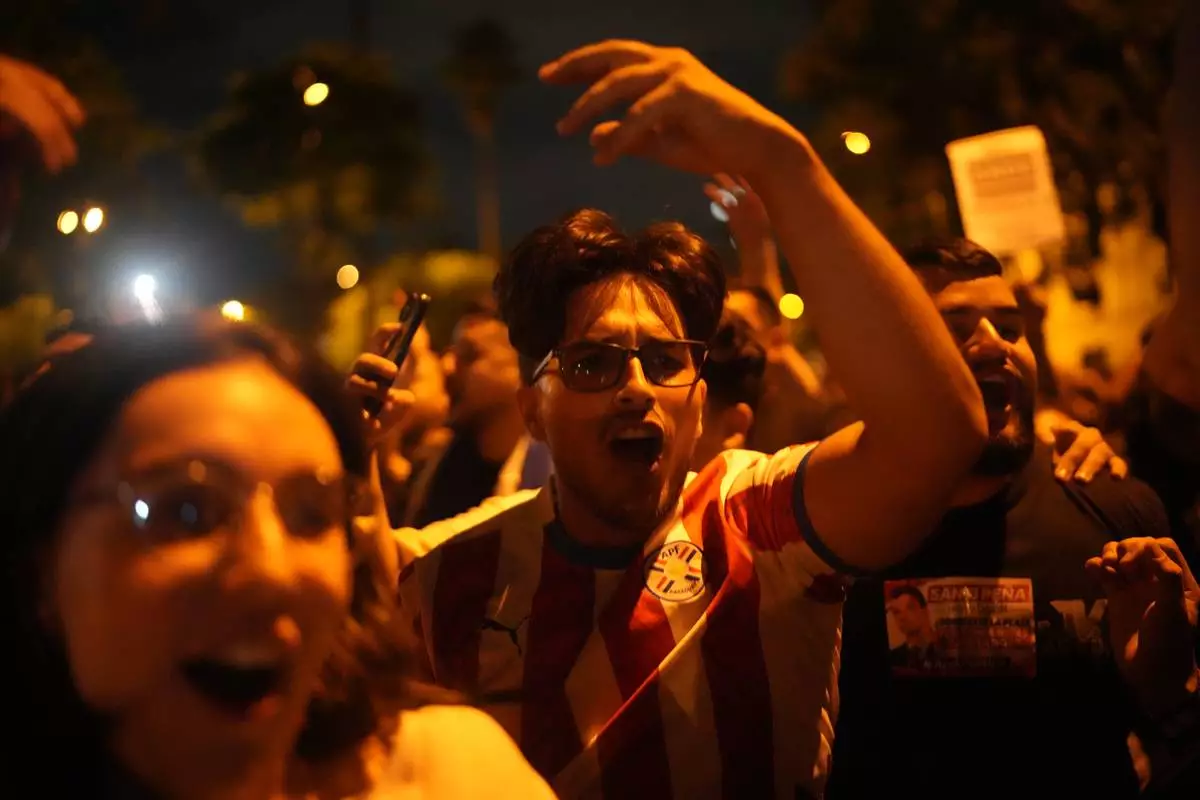
People protest against the government and Ueno bank, which Paraguay's central bank has seized amid a solvency crisis, in Asuncion, Paraguay, Wednesday, Nov. 4, 2026. (AP Photo/Jorge Saenz)
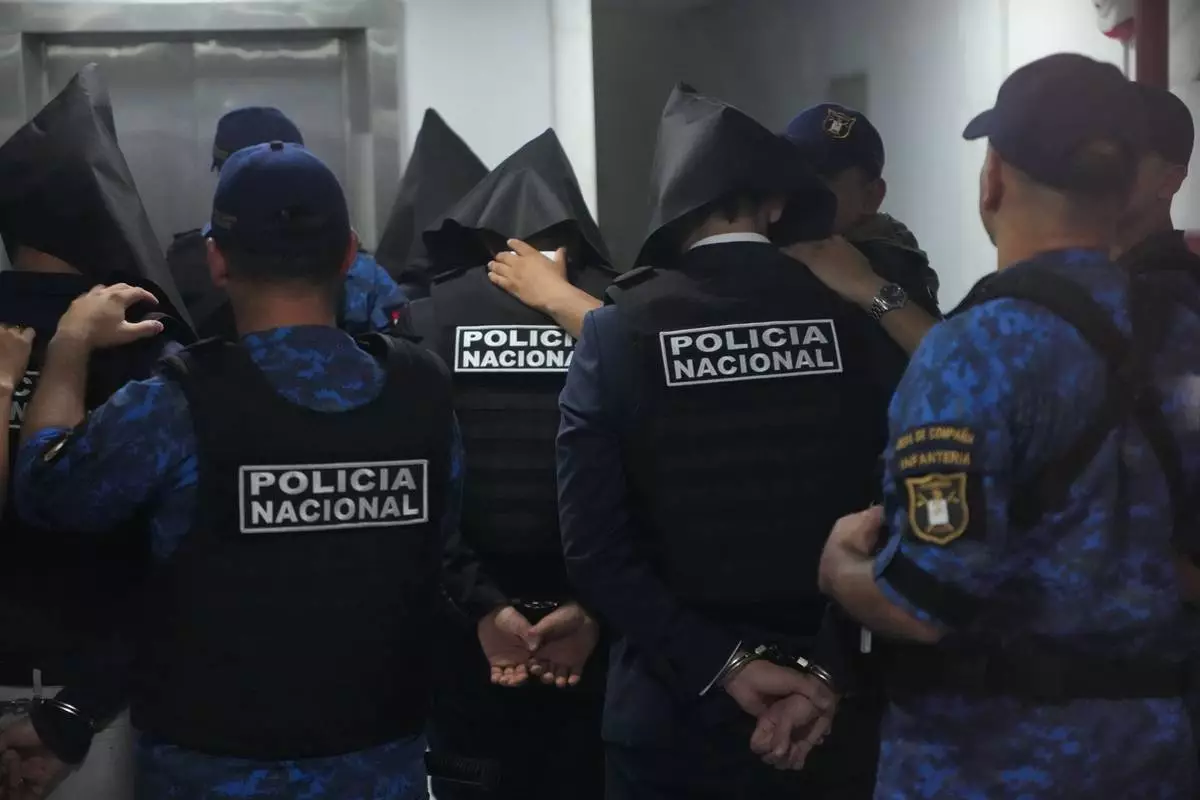
Executives of Ueno Bank, taken over by Paraguay's central bank amid a solvency crisis, arrive in custody at the anti-corruption prosecutor's office in Asuncion, Paraguay, Wednesday, Nov. 4, 2026 (AP Photo/Jorge Saenz)