Three stories about climate change are playing out like popular movie genres as United Nations climate negotiations begin in Antalya, Turkey.
There's the horror story. Many scientists believe global warming is accelerating. Two months ago, the U.N. readjusted its decade-old goal of limiting global temperature rise to 1.5 degrees Celsius (2.7 degrees Fahrenheit) because the world is blowing past that threshold. The fallout from rising temperatures is felt globally, with Europe's deadly summer heat waves and Nepal's devastating flooding as stark examples.
Click to Gallery
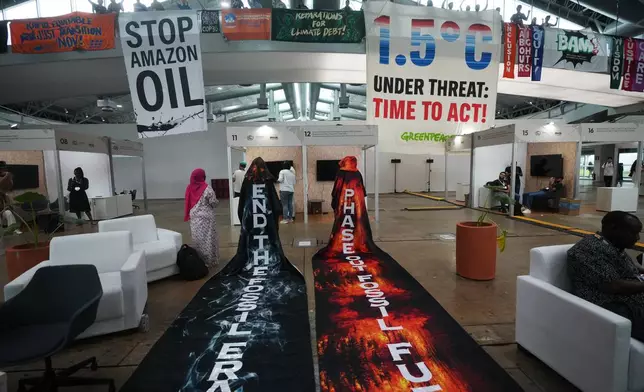
FILE - Activists hang banners while participating in a demonstration at the COP30 U.N. Climate Summit, Nov. 21, 2025, in Belem, Brazil. (AP Photo/Andre Penner, File)
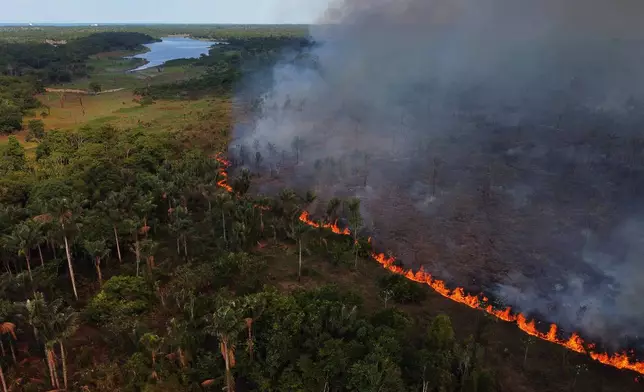
FILE - Wildfires spread near the municipality of Iranduba, Amazonas state, Brazil, Oct. 2, 2026. (AP Photo/Edmar Barros, File)
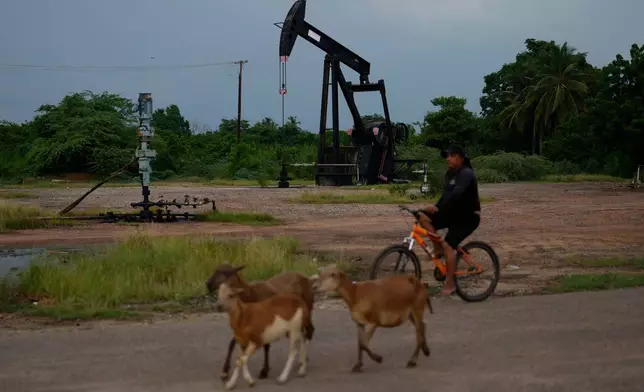
FILE - A man rides past an operating oil pumpjack in Cabimas, Venezuela, Aug. 31, 2026. (AP Photo/Ariana Cubillos, File)
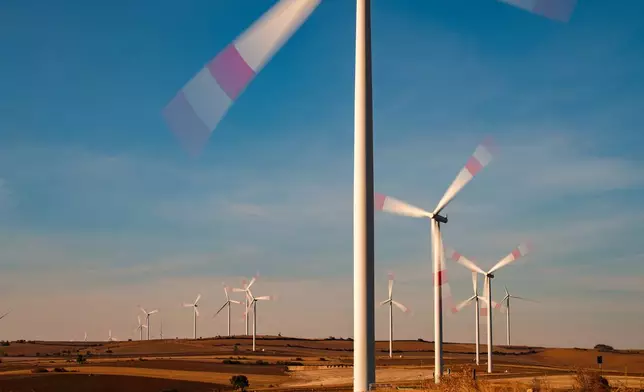
FILE - Wind turbines generate electricity in Balabanli, near Tekirdag, northwestern Turkey, Oct. 9, 2026. (AP Photo/Emrah Gurel, File)
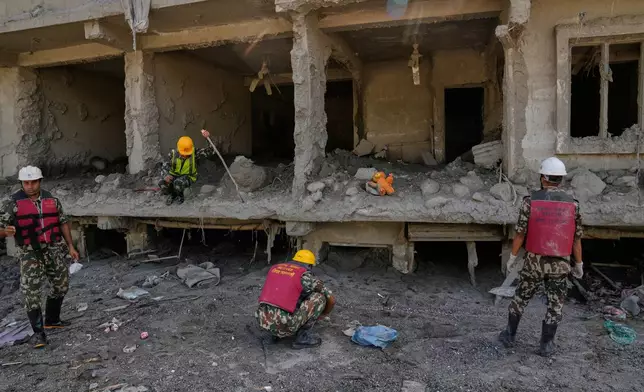
FILE - Nepal army soldiers look for the bodies amid the debris of a house destroyed by recent flash floods in Betrawati, Nepal, Sept. 8, 2026. (AP Photo/Dar Yasin, File)

FILE - A person cools off at a cooling mist spot on a hot and sunny day at the Sensoji Buddhist temple in Tokyo's Asakusa district on Aug. 7, 2026. (AP Photo/Eugene Hoshiko, File)
There's the love triangle. For more than a century the world has been powered by coal, oil and gas. This love affair spurred economic development, as well as the emissions warming the planet. But renewable energy is capturing some of the world's attention because it's cheaper and cleaner than fossil fuels. Instead of switching from one to the other, the world is using both to meet demand from power-hungry artificial intelligence and ever-growing economic development. This isn't helping curb climate change.
Then there's the war movie. Russia's 2022 invasion of Ukraine triggered a European energy shock. This year the United States and Israel bombed Iran. The conflict closed the Strait of Hormuz and sent fossil fuel prices skyrocketing, forcing nations to rethink their energy systems.
These stories are colliding as the 31st Conference of Parties, or COP31, starts Monday with speeches from world leaders and will later dig into how to follow through on past climate pledges.
A key issue this year is the implementation of promises to transition away from fossil fuels. Co-host Turkey is also pushing a separate plan that would help do that by shifting more global energy use — including transportation — to electricity generated from solar and wind power. Negotiators also will hash out how to provide promised funds to poor countries to switch to renewables, adapt to a warmer world and recover from climate-induced damage.
“It’s really the moment that we place a magnifying lens on what’s happening in the world on climate change, both good and bad,” David Waskow, international climate chief at the World Resources Institute, said.
While the U.S. is the world’s largest historic carbon polluter, it skipped last year's COP and isn't expected to participate this year.
“There’s always two topics in the climate negotiations that are relevant and difficult,” said Niklas Höhne, co-founder of Germany’s NewClimate Institute. “The first one is who produces emissions (and) how much. That is difficult enough. But what is even more complicated is the other issue, and that is who pays. And on this one, we are particularly in a difficult situation because the U.S., as the largest contributor, has dropped out. And there’s no other player who can jump in.”
Eleven years ago, the world was on track to hit 4 C (7.2 F) of warming above preindustrial levels by the end of the century. In 2015, nations set the goal of keeping warming to below 2 C (3.6 F), but with a preferred limit of 1.5 C (2.7 F).
Now, the world is at 1.4 C (2.5 F) of warming and is hurtling toward 2.6 C (4.7 F), the U.N. found.
“We have failed so far,” said Johan Rockström, director of Germany’s Potsdam Institute for Climate Impact Research.
Rockström said Earth will likely experience more frequent and extreme weather, such as floods, droughts and storms. And the planet may soon reach “tipping points,” such as ocean currents changing and the Amazon rainforest collapsing.
Even though the burning of fossil fuels is the main cause of warming, it has rarely been targeted in final documents agreed upon at the conference, mostly because those decisions require consensus. This April, 56 countries met at a separate conference to push for a more direct phase out of fossil fuels.
“The reason we are seeing the breach of 1.5 degrees Celsius of warming is because we avoided the absolutely fundamental question of how climate change happened and what’s responsible, the source of the problem and that’s fossil fuels,” said Harjeet Singh, founding director of Satat Sampada Climate Foundation. “Unless and until we resolve the issue of fossil fuel phase out, we will not be able to deal with the problem.”
Brazil, which hosted COP30 last year, this month released a detailed voluntary road map offering directions for how countries could transition away from fossil fuels.
The road map is meant to turn the “big problem” of reducing fossil fuel use into “smaller actionable solutions,” Ana Toni, who served as CEO of last year's climate talks, said. One of the key things nations must do is stop subsidizing fossil fuels, she said. The U.N. estimates fossil fuel subsidies globally hit $1.1 trillion this year.
“What’s standing in the way is not so much technology as governments and incumbent industries,” said Bill Hare, CEO of Climate Analytics. “One cannot underestimate the power and influence of the fossil fuel industry in slowing down action.”
Barbados youth activist Ashley Lashley's first COP was five years ago. She was frustrated by the lack of progress back then, but hopeful because there was a sense of urgency to keep the 1.5-degree goal alive.
Lashley still attends negotiations with some hope, but she is more frustrated than ever. She said “the science has become more alarming, but yet politically we seem to be negotiating how much failure we are prepared to tolerate.”
Qiyun Woo, a Singaporean youth environmentalist, said her generation is tired of “seeing their present and futures blanketed in wildfire smoke, in devastating floods (and) landslides."
What gives most experts hope is how cheap solar and wind energy are, along with the growth in electric cars, strengthening the economic argument for transitioning away from fossil fuels.
“It has never been as easy to reduce emissions than it is today because, again, this year, renewable energy has been developing faster than before,” Höhne said.
Much of the work at climate negotiations gets done on the sidelines, where not everyone has to agree and some nations do more than others.
One important sideline initiative this year is Turkey's goal of increasing electricity's share of global energy use from 21% to 35% by 2035, preferably by using renewable power.
Mohamed Adow, a veteran COP observer and director of Power Shift Africa, said that the conference is taking place at a time when the world is deeply fragmented.
“The closure of the Strait of Hormuz has intensified economic and energy security pressures," he said. "We don’t expect this particular conference to be able to sufficiently respond to the present day challenge ... that is affecting livelihoods and economies.”
The climate talks are hindered by the continued absence of the U.S., Adow said, adding that it wasn't fair to nations like Nepal, which have to face catastrophic destruction alone while the world's wealthiest country and biggest polluter sits on the fence.
“A time will come when we will have to hold the U.S. accountable for the climate harms that it’s caused,” he said.
Borenstein reported from Washington, Delgado from Bangkok and Arasu from Bengaluru, India.
The Associated Press’ climate and environmental coverage receives financial support from multiple private foundations. The AP is solely responsible for all content. Find AP’s standards for working with philanthropies, a list of supporters and funded coverage areas at AP.org.
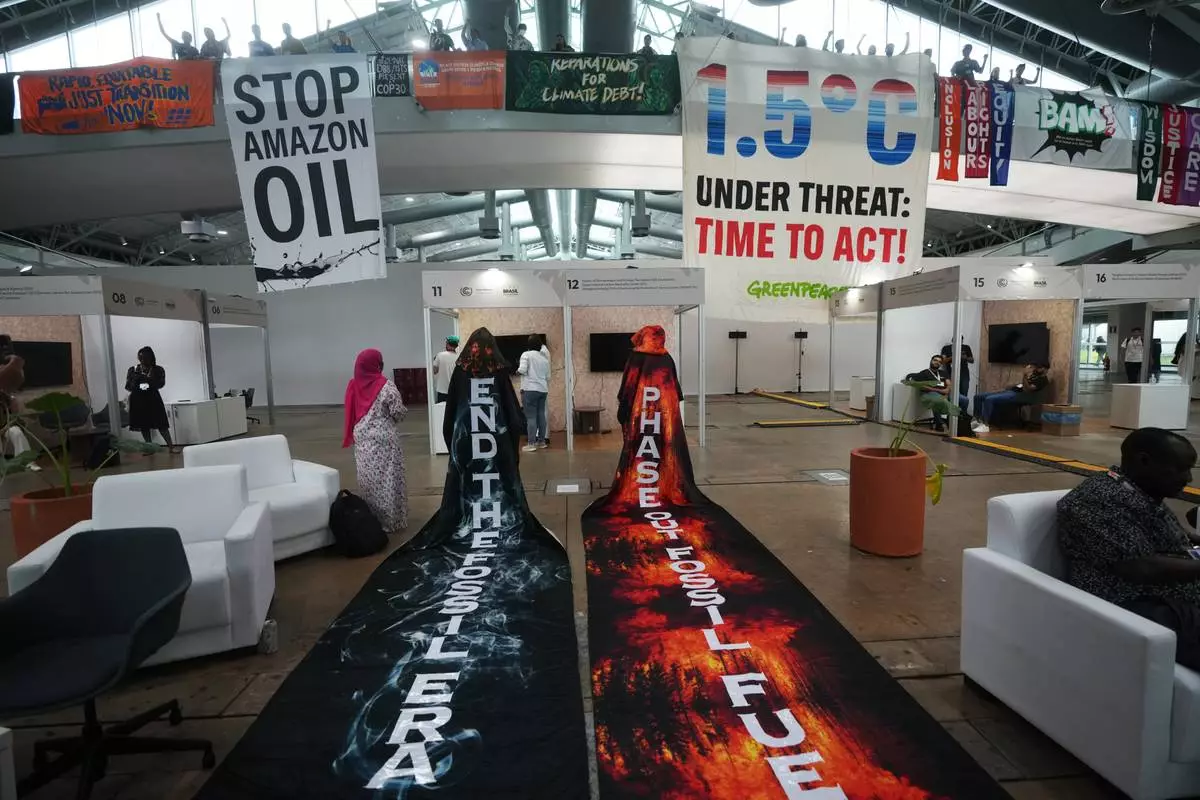
FILE - Activists hang banners while participating in a demonstration at the COP30 U.N. Climate Summit, Nov. 21, 2025, in Belem, Brazil. (AP Photo/Andre Penner, File)
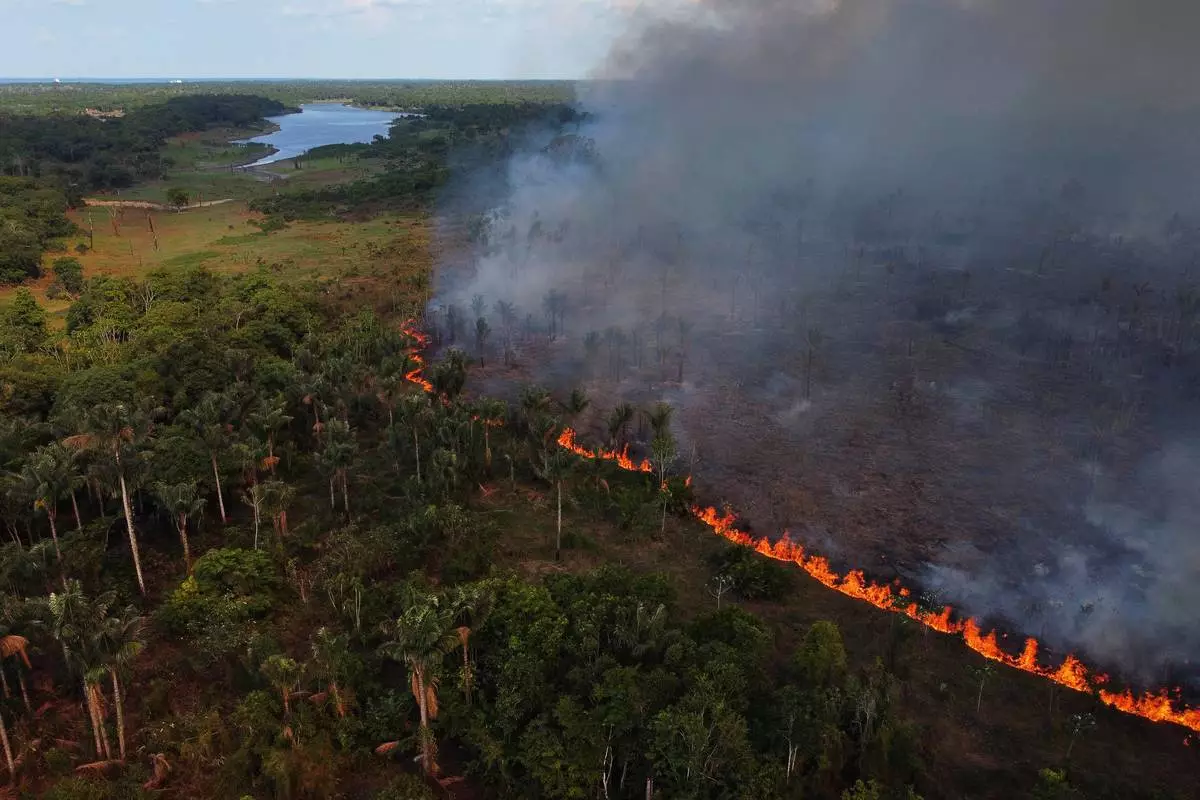
FILE - Wildfires spread near the municipality of Iranduba, Amazonas state, Brazil, Oct. 2, 2026. (AP Photo/Edmar Barros, File)
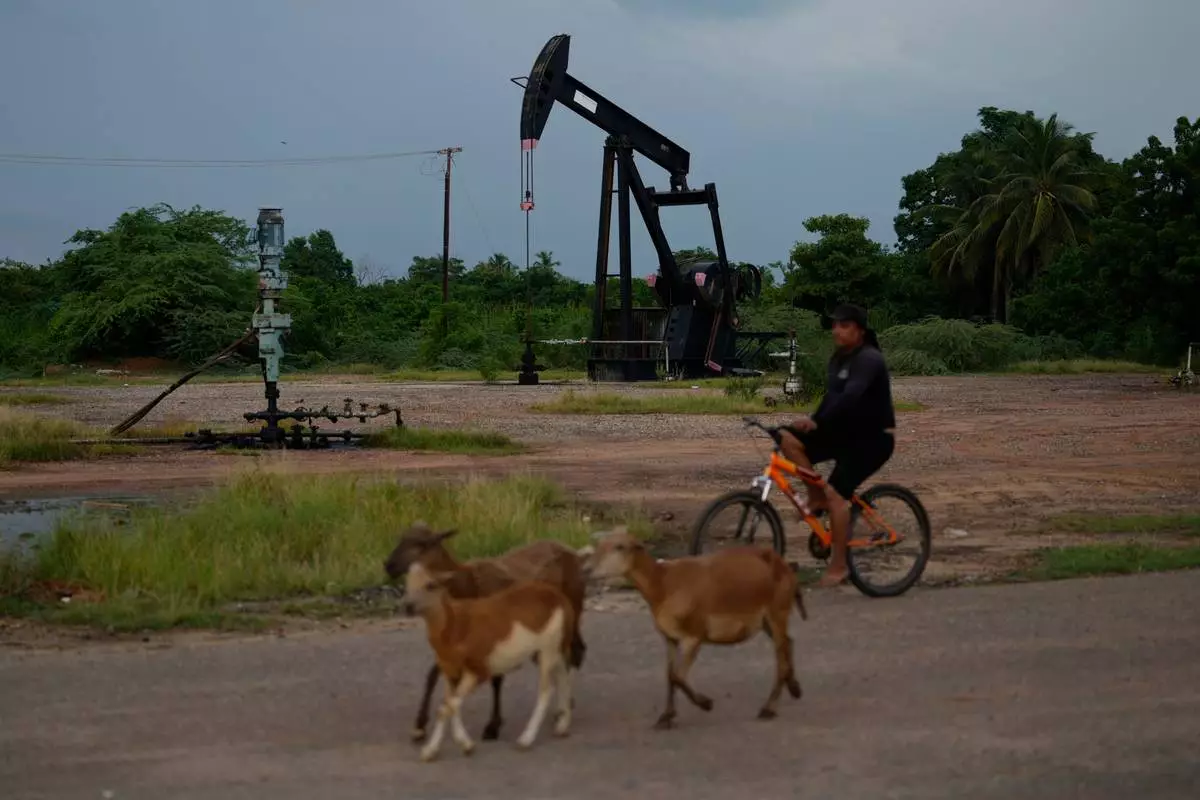
FILE - A man rides past an operating oil pumpjack in Cabimas, Venezuela, Aug. 31, 2026. (AP Photo/Ariana Cubillos, File)
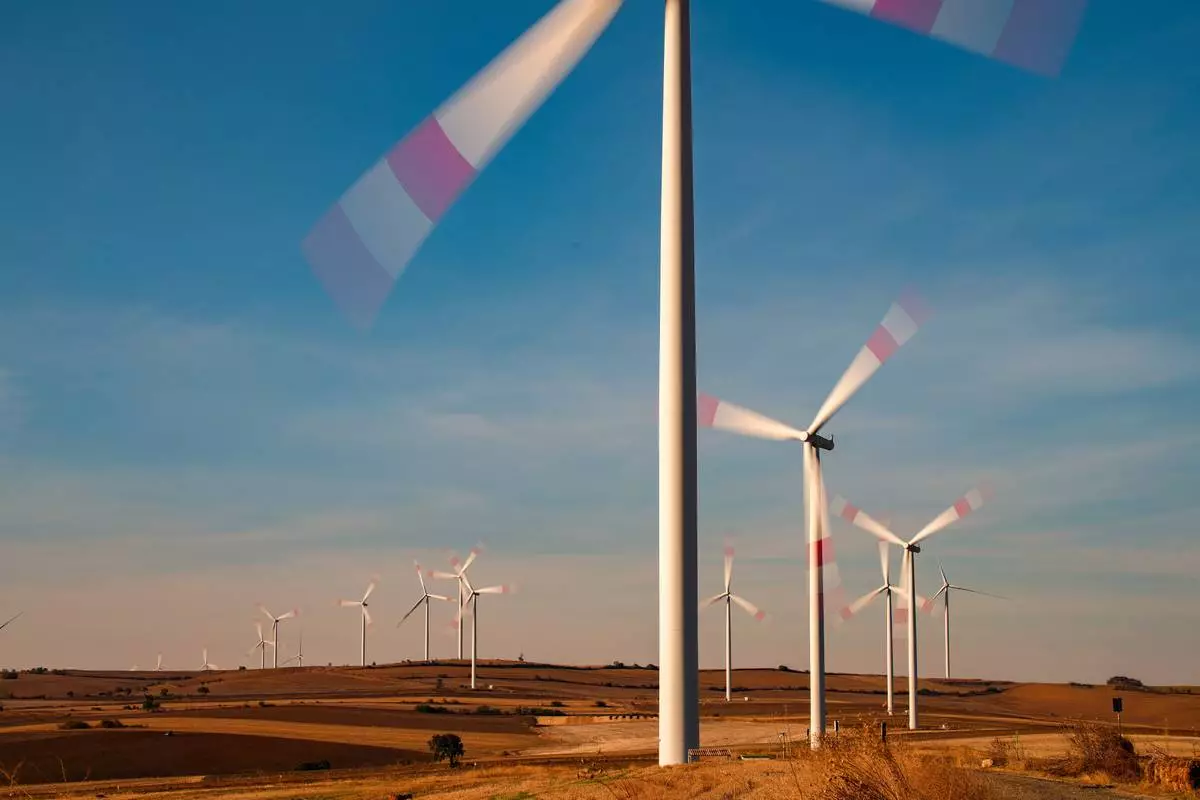
FILE - Wind turbines generate electricity in Balabanli, near Tekirdag, northwestern Turkey, Oct. 9, 2026. (AP Photo/Emrah Gurel, File)
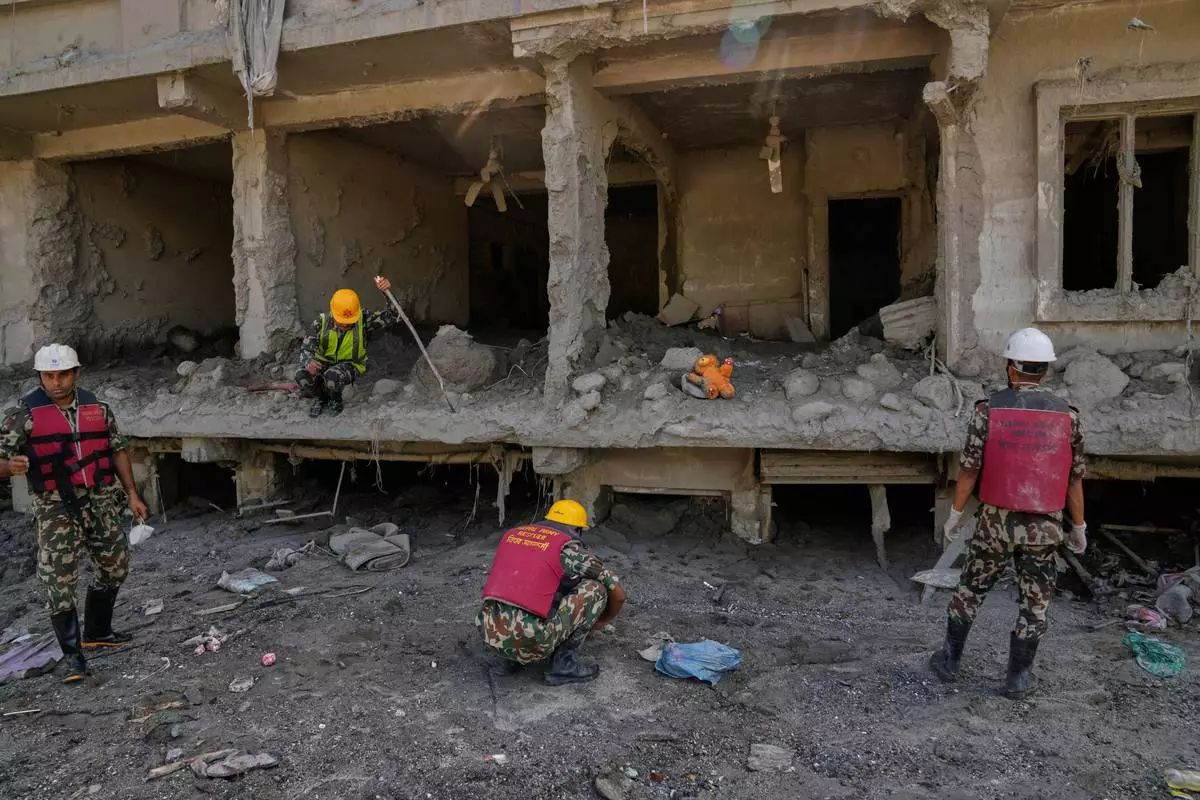
FILE - Nepal army soldiers look for the bodies amid the debris of a house destroyed by recent flash floods in Betrawati, Nepal, Sept. 8, 2026. (AP Photo/Dar Yasin, File)

FILE - A person cools off at a cooling mist spot on a hot and sunny day at the Sensoji Buddhist temple in Tokyo's Asakusa district on Aug. 7, 2026. (AP Photo/Eugene Hoshiko, File)