EDITH, Colo. (AP) — Matthew Martinez has lived nearly all of his 60 years in a canyon on the Navajo River and never saw severe floods.
Then twice over the last two weeks the river surged through his home and outbuildings in far southwestern Colorado, about 25 miles (40 kilometers) south of the resort town of Pagosa Springs. Now he's missing a horse, his barn is damaged and the river swallowed a corral. The house is strewn with mud. His tools washed downstream.
Click to Gallery
Sarah Leyba, left, and Matthew Martinez watch one of their horses in Edith, Colo., Nov. 4, 2026. (AP Photo/Brittany Peterson)
Matthew Martinez, left, and his nephew Nate Huizar walk with one of their horses in Edith, Colo., Nov. 4, 2026. (AP Photo/Brittany Peterson)
A drone image shows the flooded Navajo River cuts through a ranch Nov. 4, 2026 in Edith, Colo. (AP Photo/Brittany Peterson)
Sarah Leyba grieves as she visits her flooded property in Edith, Colo., Nov. 4, 2026. (AP Photo/Brittany Peterson)
“We’re in trouble, all of us are. Not just me, everybody,” Martinez said through tears during his first visit back on Wednesday. He said several families that go back 100 years in the same canyon had similar damage. “Nobody expected this.”
The Navajo, San Juan and Animas rivers were just a few of the streams to surge beyond their banks when round after round of storms dumped heavy rain across the Four Corners region of Arizona, Colorado, New Mexico and Utah.
Scientists say a supercharged El Niño event — when warm water in the Pacific disrupts weather patterns — is making heavy rains more likely and intense across the Southern U.S.
Recent flooding has struck Flagstaff, Arizona; Pagosa Springs and Durango in southwestern Colorado; Farmington in northwestern New Mexico; tiny Bluff in southeastern Utah; parts of the vast Navajo Nation and Sedona and Tucson in Arizona.
With a break in the weather at last, evacuees are returning home.
For Martinez, who was out of town for knee surgery, getting back meant navigating a mucky mess with a four-wheel drive vehicle and a lot of patience over beaten gravel roads. And he's finding his struggles may have just begun.
Martinez didn’t have flood insurance. He couldn’t get it with his house so near the water. He estimates some $200,000 in losses, at least.
He and his fiancee were staying with one of his sons and then in a hotel, but both places have since flooded. Now they're in an Airbnb, but he worries they could end up homeless after his emergency voucher runs out in a few days.
"The government spends, you know, just millions and billions of money on overseas and everything. Right now we need that money on this side,” he said. “We need to get this, you know, all this put back together.”
A FEMA representative came to his property and took photos after the first flood. The second flood hit three days later and was twice as bad, he said.
“I know we’re on some list right now,” Martinez said. “So we’ll listen every day and we’ll see what options we have and go from there.”
As he heals from the knee surgery, he's considering whether it's worth it to ask family and friends for help cleaning up.
Hauling debris to the dump would cost $300 a load and total thousands of dollars he doesn’t readily have, he said.
The flooding did help end months of drought in the Four Corners area, but the raging torrents washed away rich topsoil on his land, leaving just sand and rock. Now he wonders how he'll feed his remaining animals without pasture next year.
“The normal might not ever be normal again,” Martinez said.
Gruver reported from Fort Collins, Colo.

Sarah Leyba, left, and Matthew Martinez watch one of their horses in Edith, Colo., Nov. 4, 2026. (AP Photo/Brittany Peterson)

Matthew Martinez, left, and his nephew Nate Huizar walk with one of their horses in Edith, Colo., Nov. 4, 2026. (AP Photo/Brittany Peterson)

A drone image shows the flooded Navajo River cuts through a ranch Nov. 4, 2026 in Edith, Colo. (AP Photo/Brittany Peterson)

Sarah Leyba grieves as she visits her flooded property in Edith, Colo., Nov. 4, 2026. (AP Photo/Brittany Peterson)
ROME (AP) — Pope Leo XIV is kicking off a three-nation tour of Latin America with a visit to Uruguay, the region’s least Catholic and most secular country, three weeks after undergoing lung cancer surgery that had put the entire trip into question.
Leo is due to arrive in Montevideo after a 13-and-a-half hour flight from Rome. He has a packed three-day itinerary in Uruguay including a visit to a neighborhood plagued by gang violence, a Mass in Paysandú, some 375 kilometers (230 miles) from the capital, and another Mass in the city of Florida, about 100 kilometers (60 miles) away.
The Uruguay leg is the first stop on what will be the longest and farthest trip of his pontificate, all being undertaken as the 71-year-old pope continues his recovery. The trip will also bring him to neighboring Argentina and finally back home to Peru, where Leo served as a missionary priest and bishop for two decades.
"His stamina is fantastic. The way that he's singing is incredible. And you can only sing if your lungs are really strong," said Maria Montserrat Alvar, the Vatican's new communications chief. She noted that Leo has passed the 14-day convalescence period required by doctors after his Oct. 13 surgery and is eager to get on the road.
“His doctors are very confident and he'll have plenty of medical care on board should something happen, but we don't see that in his prognosis or even in the way that he's acting,” she said.
In Uruguay, which hasn’t had a papal visit since 1988, Leo is expected to try to remind the 3.5 million people of their strong Catholic heritage stemming from the times of Spanish colonial rule. He is likely to propose the faith anew as an answer to today’s challenges and problems.
Upon arrival, Leo will meet with President Yamandú Orsi, leader of the center-left alliance that assumed power in Uruguay in March 2025, and then deliver his welcome address to government officials and diplomats. He finishes the long day with a vespers service at the city's cathedral.
Leo will find in Uruguay a country unlike any other in Latin America, which is home to around 40% of the world's 1.4 billion Catholics. Uruguay is considered the most secular country in the region, where only a fraction of people who identify as Catholic actually go to Mass regularly.
Uruguay was the first country in the world to legalize marijuana for recreational use, the second country in Latin America to decriminalize abortion, and the third country in the Americas to legalize same-sex marriage.
More recently, it became the first country in the region to approve assisted dying legislation over the strong opposition of the Catholic Church, evidence of Uruguay’s entrenched, church-state separation that prohibits any mention of God in oaths of office.
Leo is expected to recall the church's opposition to abortion and euthanasia as part of his broader argument about upholding human dignity in all phases of life.
Uruguayan church officials have marveled at the apparent enthusiasm the visit has provoked, with reports that tickets to Leo’s prayer vigil at Montevideo’s Centenario Stadium were snapped up after two days.
“It seems that the pope’s presence is shifting something here and is gradually breaking down this veil that has always sought to obscure and diminish the presence of the Catholic tradition that lies at the country’s foundation,” said Guzmán Carriquiry, the Uruguayan former head of the Vatican’s pontifical commission for Latin America.
“I believe this pope will stir up questions in the hearts of Uruguayans -- disturbing questions -- questions about meaning and, we hope, questions about faith,” he said.
Carriquiry said he expects Leo will seek to revive the Catholic roots of Uruguay, especially when he travels to Florida on Sunday to mark an important Catholic feast day.
The Nov. 8 feast commemorates the Virgin of the Thirty-three, a small wooden icon of the Virgin Mary that is intricately connected to Uruguay’s independence movement. According to tradition, 33 independence patriots acquired the Guaraní statue and had it with them when independence was declared from the Brazilian empire in Florida on Aug. 25, 1825.
“So the number 33 is an ecclesiastical symbol, a national symbol,” said Carriquiry, who was also Uruguay’s ambassador to the Holy See. “And so the pope will speak there about the Catholic tradition that lies at the origin of Uruguay—that stems from Uruguay and gave rise to Uruguay—in order to revive and renew the Catholic tradition in the hearts of Uruguayans.”
Andrew Chesnut, chair of Catholic studies and an expert in the Latin American church at Virginia Commonwealth University, said he wasn’t surprised that Leo’s visit had generated enthusiasm and that he will be welcomed warmly.
“But that’s not necessarily going to translate into folks in the pews,” he said. “If the overarching goal is trying to revitalize Catholicism in the most Catholic region on Earth, Uruguay is kind of a lost cause, and it has been for decades.”
Associated Press religion coverage receives support through the AP’s collaboration with The Conversation US, with funding from Lilly Endowment Inc. The AP is solely responsible for this content.
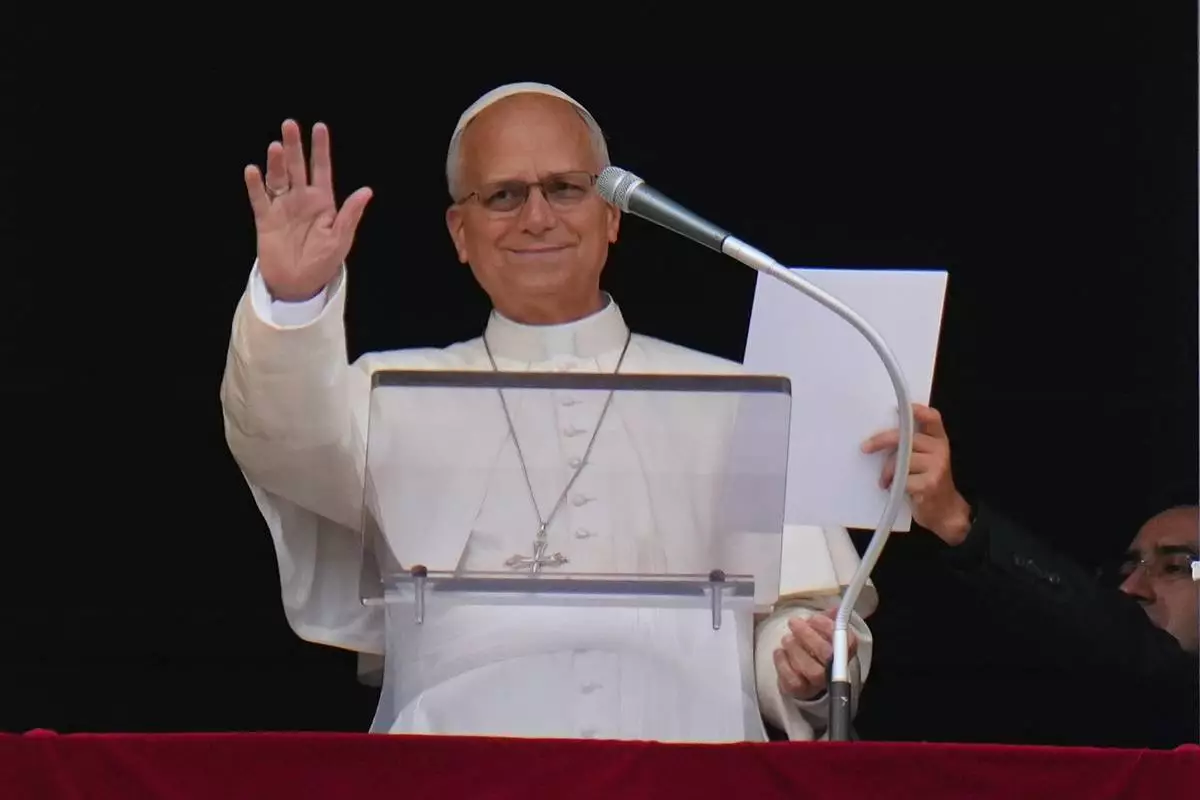
Pope Leo XIV appears at the window of the Apostolic Palace overlooking St. Peter's Square at the Vatican for the Angelus noon prayer on All Saints' Day, a feast celebrated across much of the Christian world, Sunday, Nov. 1, 2026. (AP Photo/Alessandra Tarantino)
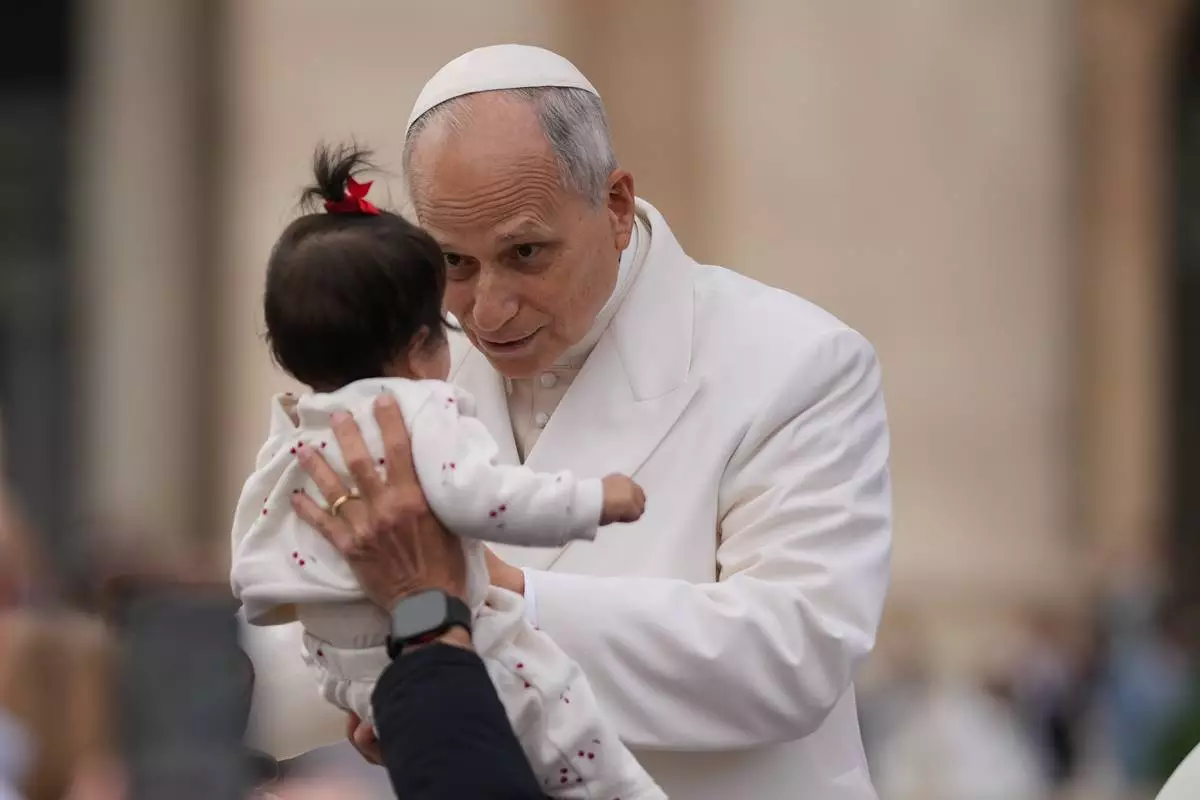
Pope Leo XIV blesses a new born after his weekly general audience in St. Peter's Square at The Vatican, Wednesday, Nov. 4, 2026. (AP Photo/Andrew Medichini)
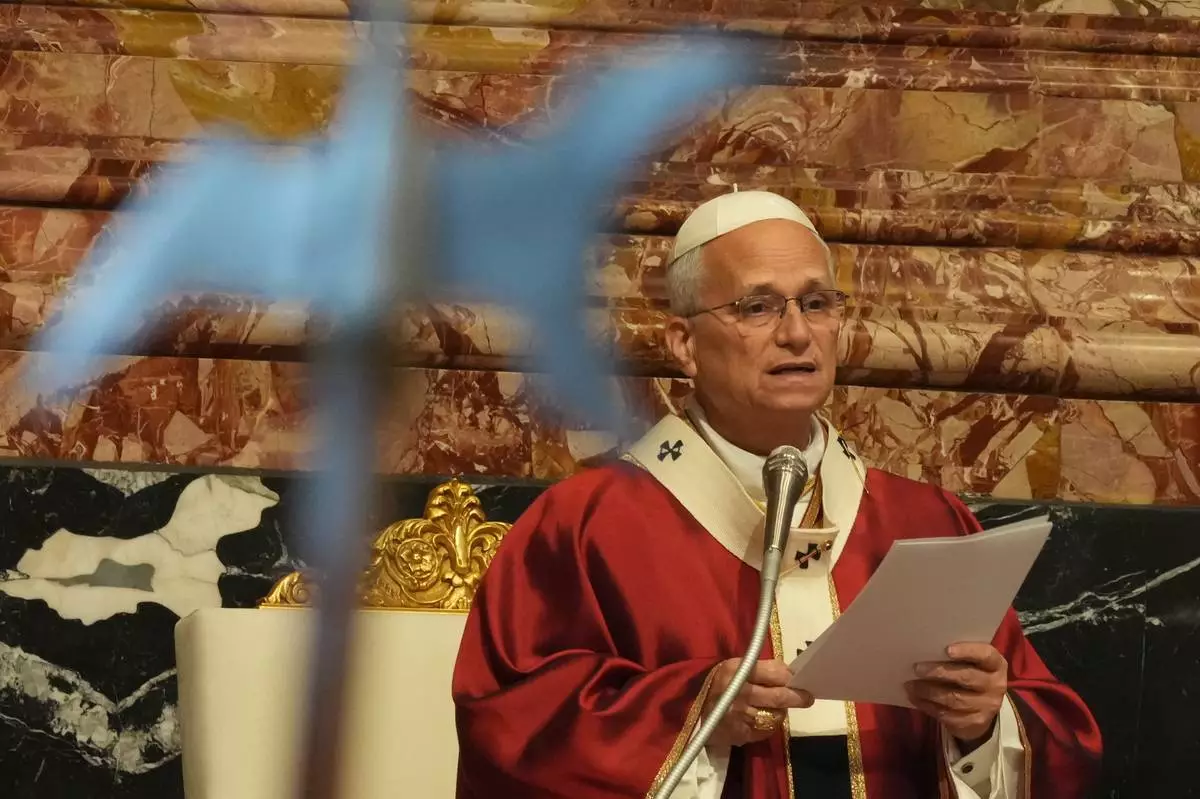
Pope Leo XIV celebrates a mass in memory of cardinals and bishops who died during the past year, in St. Peter's Basilica, at the Vatican, Thursday, Nov. 5, 2026. (AP Photo/Andrew Medichini)
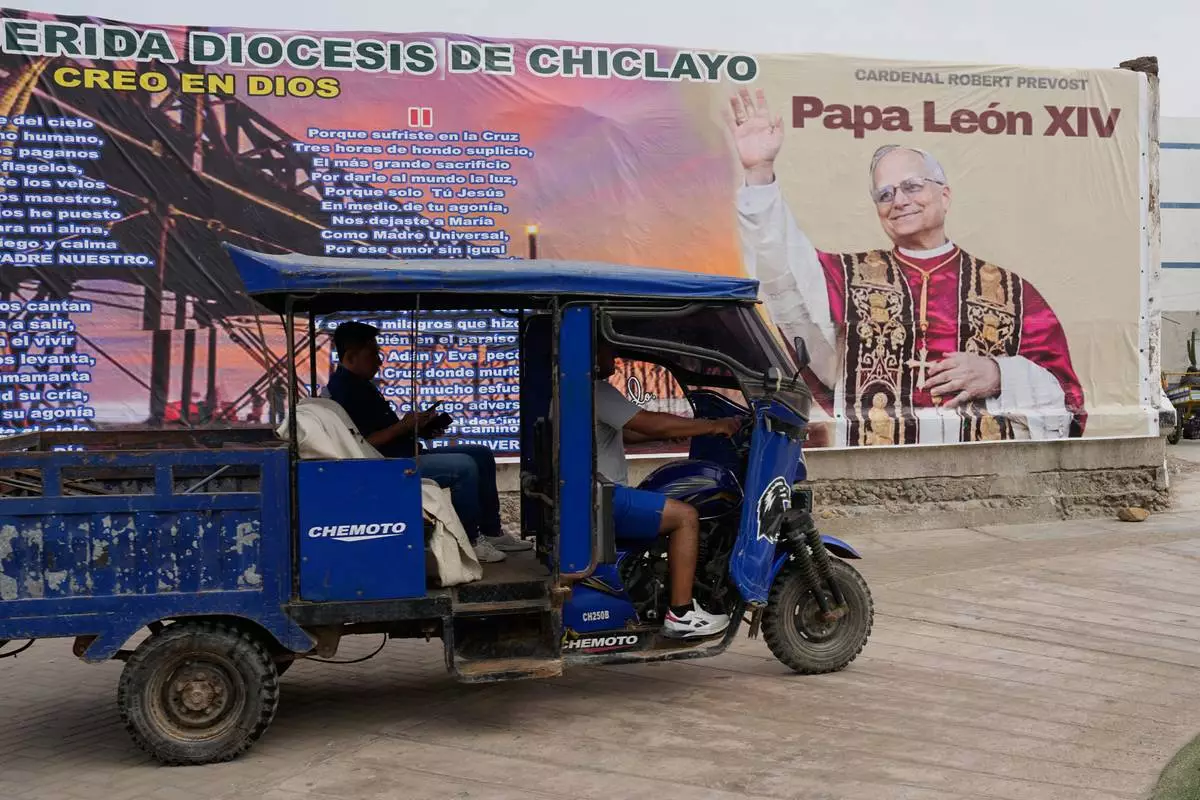
A mototaxi pass drives past a banner of Pope Leo XIV at Pimentel beach in Chiclayo, Peru, Thursday, Nov. 5, 2026, ahead of his planned trip to Uruguay, Argentina, and Peru from November 6 to 17. (AP Photo/Martin Mejia)