ROME (AP) — Pope Leo XIV is kicking off a three-nation tour of Latin America with a visit to Uruguay, the region’s least Catholic and most secular country, three weeks after undergoing lung cancer surgery that had put the entire trip into question.
Leo is due to arrive in Montevideo after a 13-and-a-half hour flight from Rome. He has a packed three-day itinerary in Uruguay including a visit to a neighborhood plagued by gang violence, a Mass in Paysandú, some 375 kilometers (230 miles) from the capital, and another Mass in the city of Florida, about 100 kilometers (60 miles) away.
Click to Gallery
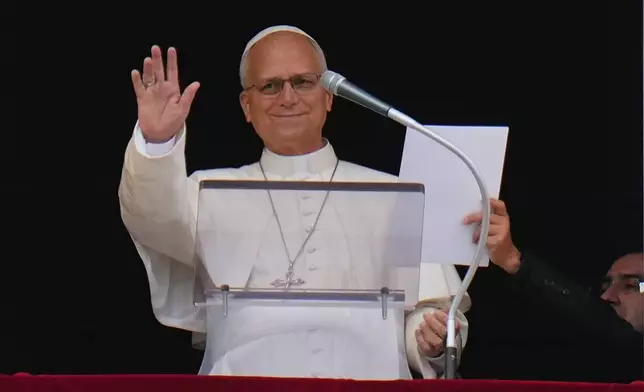
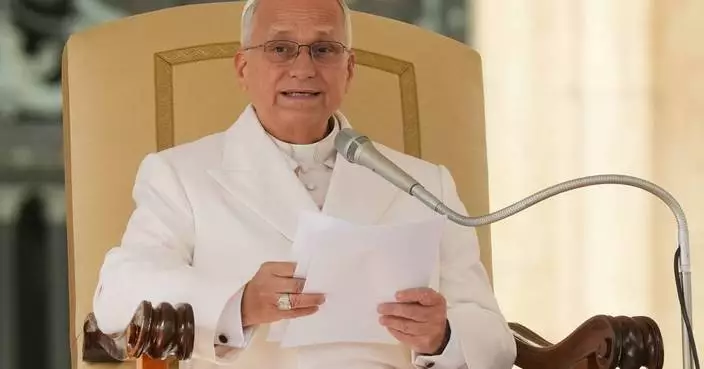
Pope Leo XIV appears at the window of the Apostolic Palace overlooking St. Peter's Square at the Vatican for the Angelus noon prayer on All Saints' Day, a feast celebrated across much of the Christian world, Sunday, Nov. 1, 2026. (AP Photo/Alessandra Tarantino)
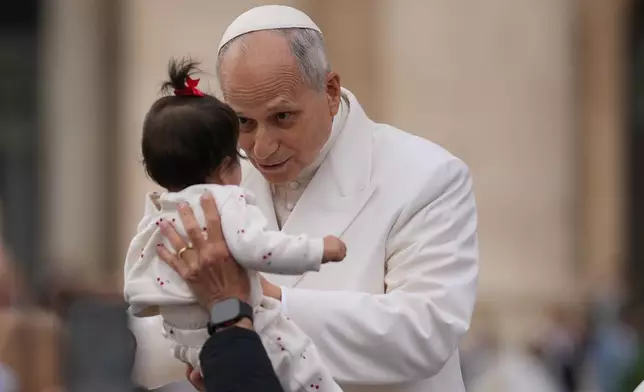
Pope Leo XIV blesses a new born after his weekly general audience in St. Peter's Square at The Vatican, Wednesday, Nov. 4, 2026. (AP Photo/Andrew Medichini)
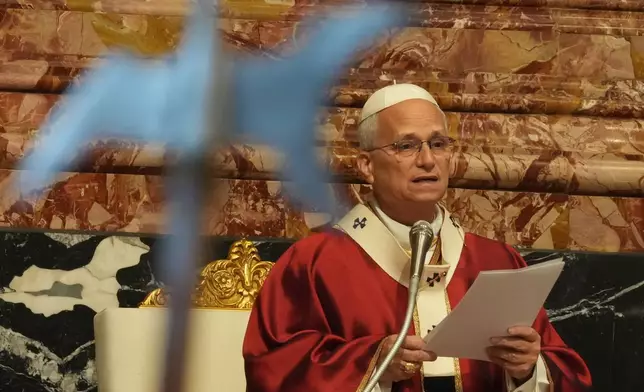
Pope Leo XIV celebrates a mass in memory of cardinals and bishops who died during the past year, in St. Peter's Basilica, at the Vatican, Thursday, Nov. 5, 2026. (AP Photo/Andrew Medichini)
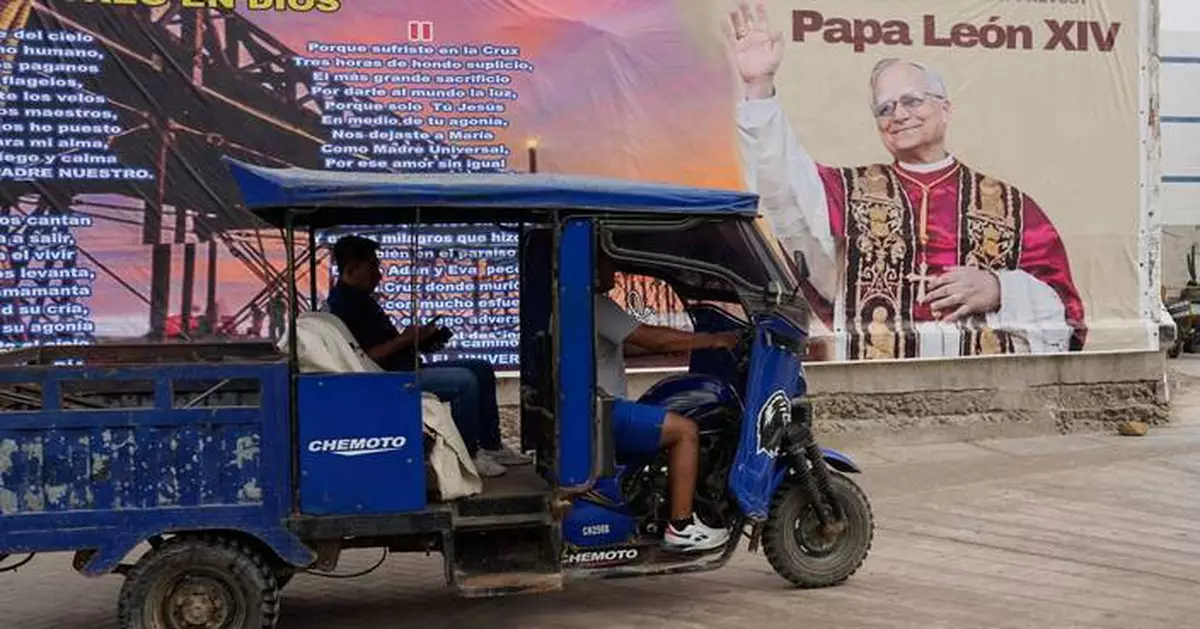
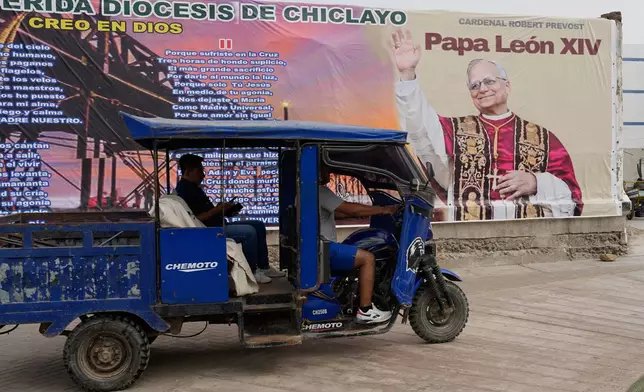
A mototaxi pass drives past a banner of Pope Leo XIV at Pimentel beach in Chiclayo, Peru, Thursday, Nov. 5, 2026, ahead of his planned trip to Uruguay, Argentina, and Peru from November 6 to 17. (AP Photo/Martin Mejia)
The Uruguay leg is the first stop on what will be the longest and farthest trip of his pontificate, all being undertaken as the 71-year-old pope continues his recovery. The trip will also bring him to neighboring Argentina and finally back home to Peru, where Leo served as a missionary priest and bishop for two decades.
"His stamina is fantastic. The way that he's singing is incredible. And you can only sing if your lungs are really strong," said Maria Montserrat Alvar, the Vatican's new communications chief. She noted that Leo has passed the 14-day convalescence period required by doctors after his Oct. 13 surgery and is eager to get on the road.
“His doctors are very confident and he'll have plenty of medical care on board should something happen, but we don't see that in his prognosis or even in the way that he's acting,” she said.
In Uruguay, which hasn’t had a papal visit since 1988, Leo is expected to try to remind the 3.5 million people of their strong Catholic heritage stemming from the times of Spanish colonial rule. He is likely to propose the faith anew as an answer to today’s challenges and problems.
Upon arrival, Leo will meet with President Yamandú Orsi, leader of the center-left alliance that assumed power in Uruguay in March 2025, and then deliver his welcome address to government officials and diplomats. He finishes the long day with a vespers service at the city's cathedral.
Leo will find in Uruguay a country unlike any other in Latin America, which is home to around 40% of the world's 1.4 billion Catholics. Uruguay is considered the most secular country in the region, where only a fraction of people who identify as Catholic actually go to Mass regularly.
Uruguay was the first country in the world to legalize marijuana for recreational use, the second country in Latin America to decriminalize abortion, and the third country in the Americas to legalize same-sex marriage.
More recently, it became the first country in the region to approve assisted dying legislation over the strong opposition of the Catholic Church, evidence of Uruguay’s entrenched, church-state separation that prohibits any mention of God in oaths of office.
Leo is expected to recall the church's opposition to abortion and euthanasia as part of his broader argument about upholding human dignity in all phases of life.
Uruguayan church officials have marveled at the apparent enthusiasm the visit has provoked, with reports that tickets to Leo’s prayer vigil at Montevideo’s Centenario Stadium were snapped up after two days.
“It seems that the pope’s presence is shifting something here and is gradually breaking down this veil that has always sought to obscure and diminish the presence of the Catholic tradition that lies at the country’s foundation,” said Guzmán Carriquiry, the Uruguayan former head of the Vatican’s pontifical commission for Latin America.
“I believe this pope will stir up questions in the hearts of Uruguayans -- disturbing questions -- questions about meaning and, we hope, questions about faith,” he said.
Carriquiry said he expects Leo will seek to revive the Catholic roots of Uruguay, especially when he travels to Florida on Sunday to mark an important Catholic feast day.
The Nov. 8 feast commemorates the Virgin of the Thirty-three, a small wooden icon of the Virgin Mary that is intricately connected to Uruguay’s independence movement. According to tradition, 33 independence patriots acquired the Guaraní statue and had it with them when independence was declared from the Brazilian empire in Florida on Aug. 25, 1825.
“So the number 33 is an ecclesiastical symbol, a national symbol,” said Carriquiry, who was also Uruguay’s ambassador to the Holy See. “And so the pope will speak there about the Catholic tradition that lies at the origin of Uruguay—that stems from Uruguay and gave rise to Uruguay—in order to revive and renew the Catholic tradition in the hearts of Uruguayans.”
Andrew Chesnut, chair of Catholic studies and an expert in the Latin American church at Virginia Commonwealth University, said he wasn’t surprised that Leo’s visit had generated enthusiasm and that he will be welcomed warmly.
“But that’s not necessarily going to translate into folks in the pews,” he said. “If the overarching goal is trying to revitalize Catholicism in the most Catholic region on Earth, Uruguay is kind of a lost cause, and it has been for decades.”
Associated Press religion coverage receives support through the AP’s collaboration with The Conversation US, with funding from Lilly Endowment Inc. The AP is solely responsible for this content.
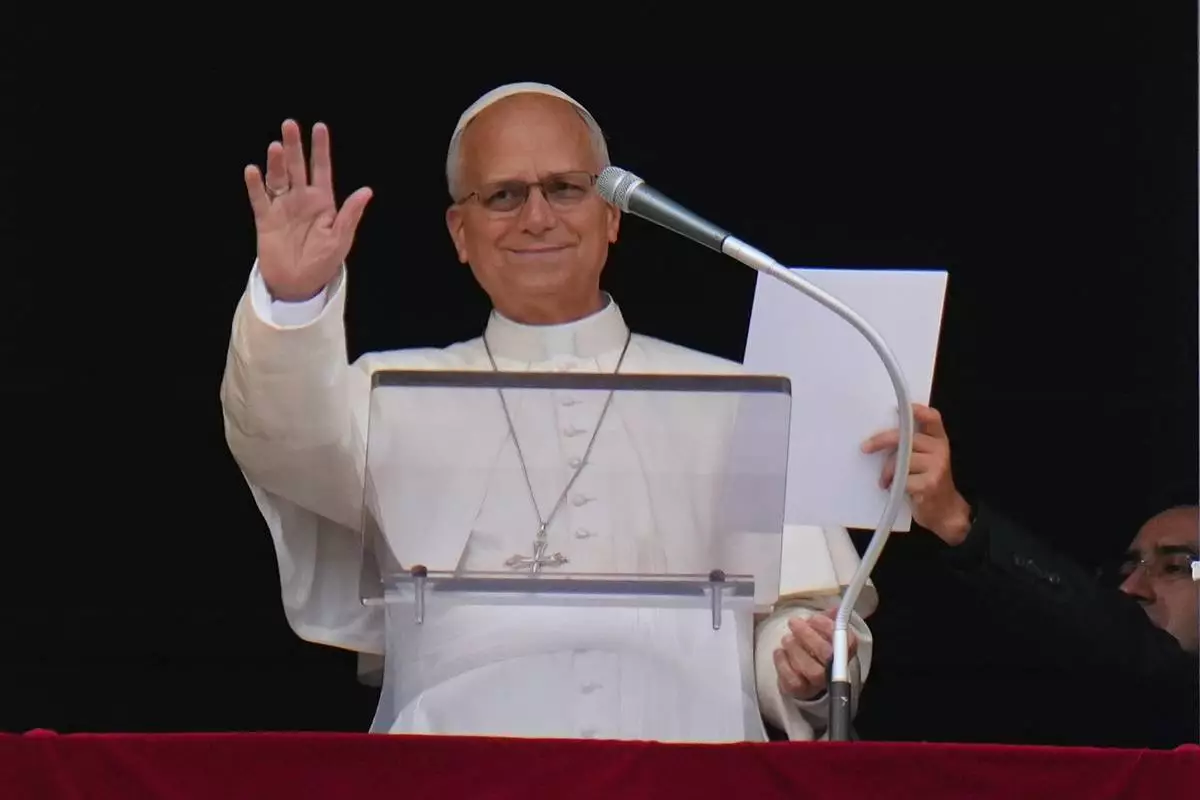
Pope Leo XIV appears at the window of the Apostolic Palace overlooking St. Peter's Square at the Vatican for the Angelus noon prayer on All Saints' Day, a feast celebrated across much of the Christian world, Sunday, Nov. 1, 2026. (AP Photo/Alessandra Tarantino)
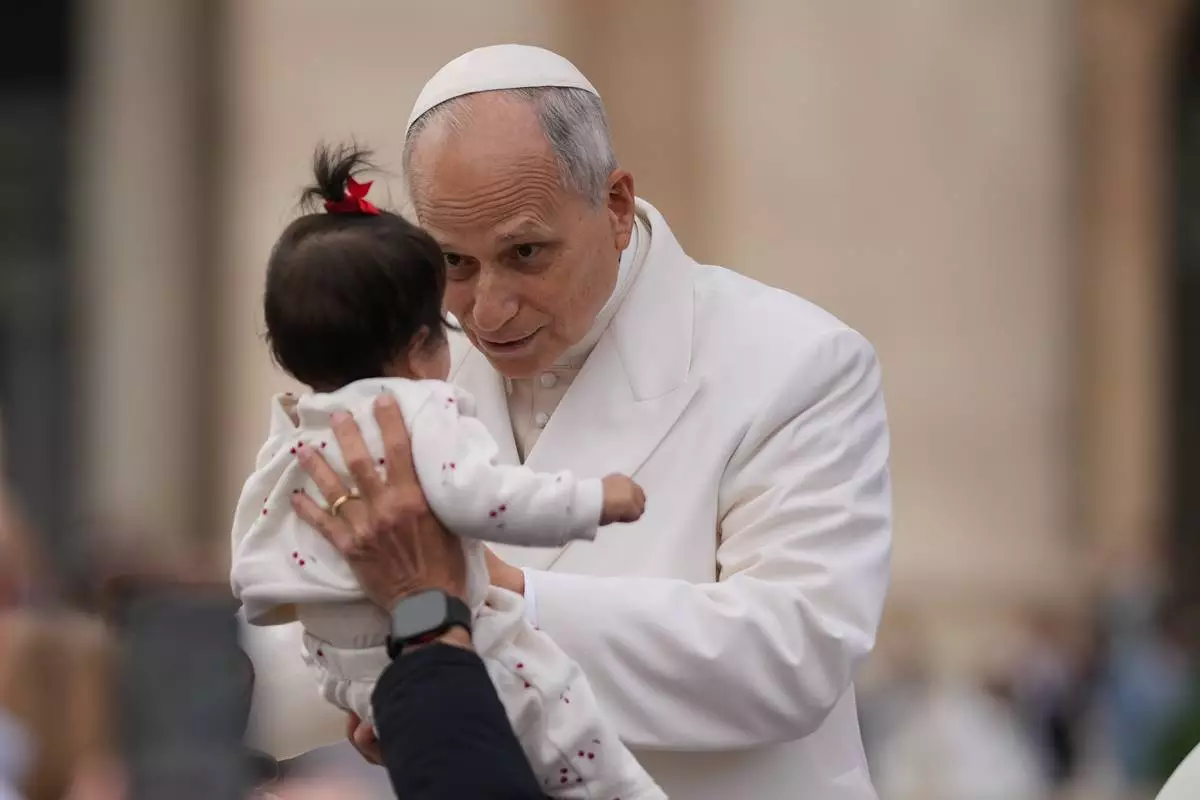
Pope Leo XIV blesses a new born after his weekly general audience in St. Peter's Square at The Vatican, Wednesday, Nov. 4, 2026. (AP Photo/Andrew Medichini)
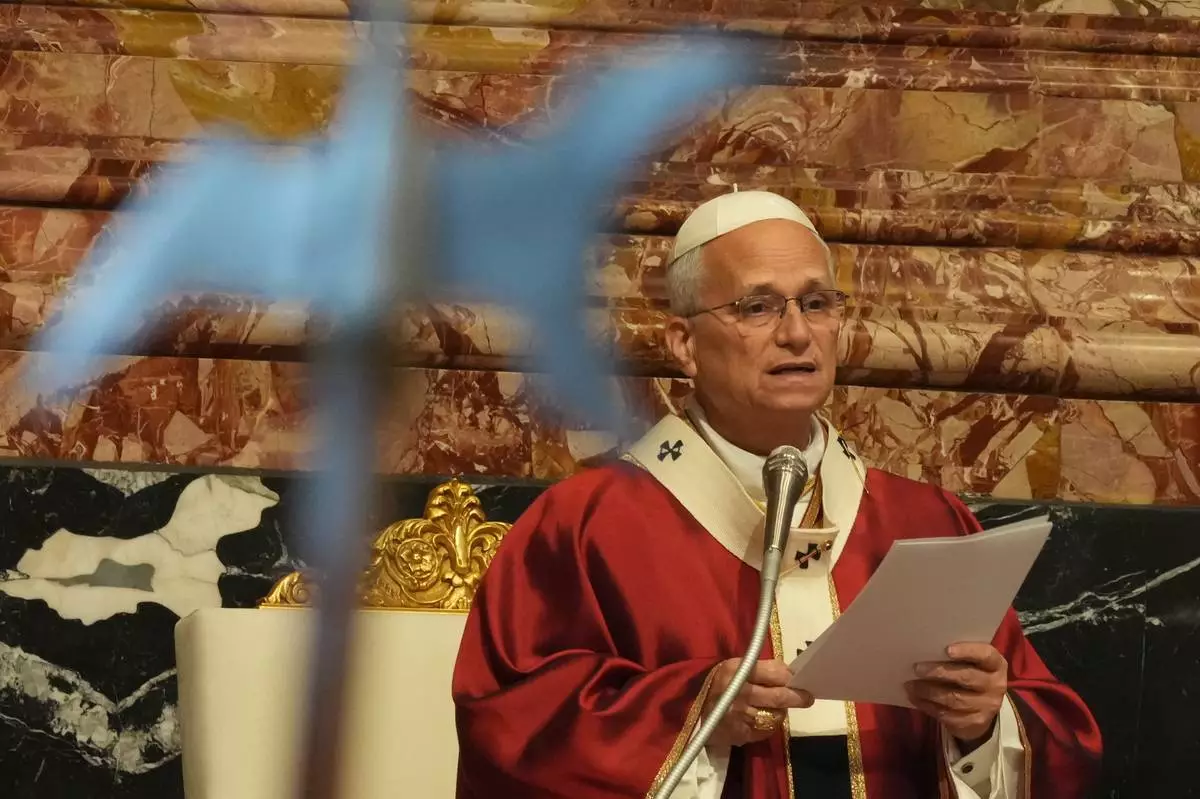
Pope Leo XIV celebrates a mass in memory of cardinals and bishops who died during the past year, in St. Peter's Basilica, at the Vatican, Thursday, Nov. 5, 2026. (AP Photo/Andrew Medichini)
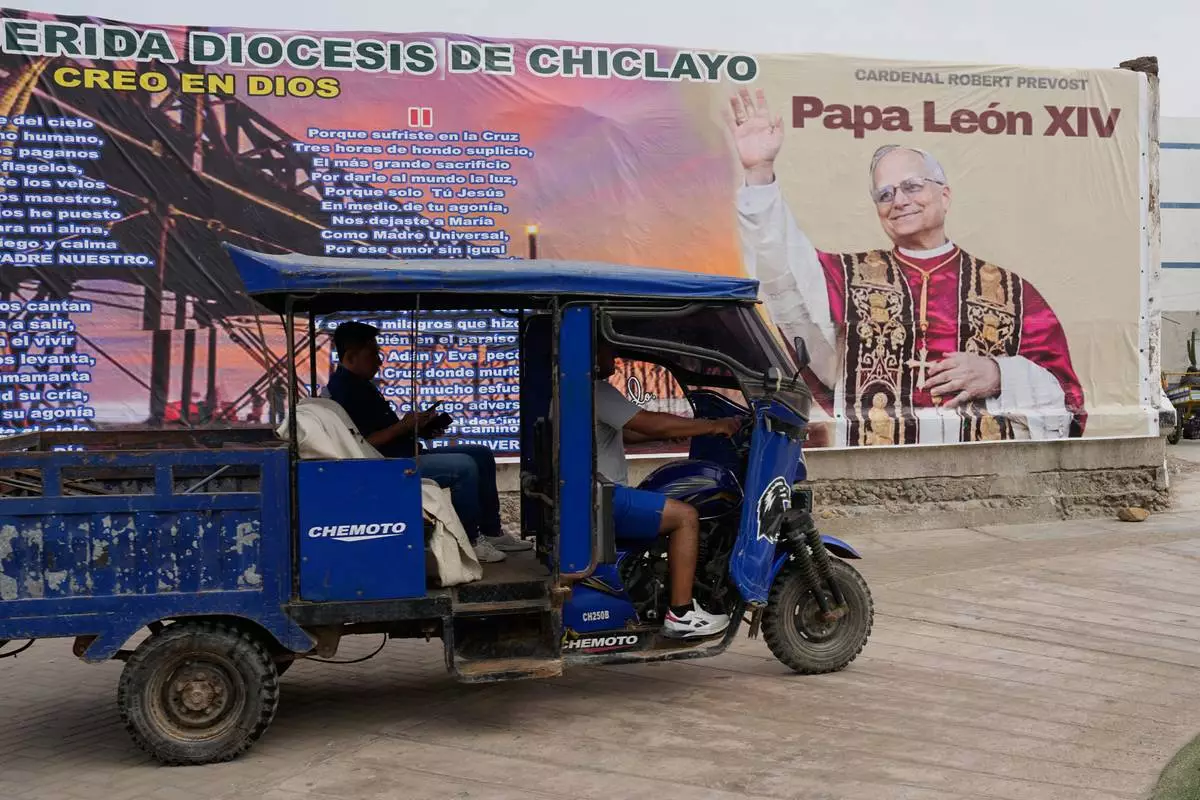
A mototaxi pass drives past a banner of Pope Leo XIV at Pimentel beach in Chiclayo, Peru, Thursday, Nov. 5, 2026, ahead of his planned trip to Uruguay, Argentina, and Peru from November 6 to 17. (AP Photo/Martin Mejia)
NEW YORK (AP) — New limits on federal student loans filled Chloe Frabotta with anxiety as she began studying in New York City to become a physician assistant.
The changes that took effect this fall include caps on loans for particular programs as well as limits on the amount parents can borrow to pay for their children’s schooling. Up until weeks before Frabotta, 25, started her program, it was up in the air whether it would count as a “professional” program with higher loan limits.
Amid the uncertainty, she borrowed around $6,000 in federal loans for her first trimester, taking out private loans for the rest with her mother as a cosigner.
“At least in my circles a lot of people were like, ’I guess that’s what I’m going to have to do, and I’m going to try to make it work,’” Frabotta said.
Students have been turning to private lenders to make up the difference between the cost of their educational programs and the amount they can borrow from the federal government, which offers more flexible repayment terms, the possibility of forgiveness after 10 years in public service, and — for many — lower interest rates.
It's showing up in banks' bottom lines. Private lender SoFi reported in late October that student loan originations hit $2.9 billion in the third quarter, nearly doubling from a year earlier. Days earlier, Sallie Mae, which controls more than half of the private student loan market, said graduate loans were up 119% year-over-year.
President Donald Trump's “Big Beautiful Bill” slashed the amount new graduate students can borrow. Programs designated as professional degrees face federal student loan caps of $200,000, while other graduate programs are capped at $100,000. Previously, graduate students had been able to take out federal loans up to the full cost of their degree.
For new borrowers, the changes include an overall lifetime borrowing cap of $257,500 and limits to the amount parents can borrow to pay for their children’s schooling.
When all the changes are fully phased in, more than half a million borrowers are going to need to borrow an extra $20,000 a year from somewhere other than the federal loan program, estimated Jordan Matsudaira, the director of the Postsecondary Education & Economics Research Center at American University. The hardest-hit students are in expensive programs like medicine, law and dentistry and states with a high cost of living, an analysis by the center found.
The Trump administration has argued the new limits will curb “excessive borrowing” and force schools to evaluate their costs, describing uncapped access to federal student loans as a driver of the soaring cost of college. Since the loan caps took effect, at least 40 schools have cut the cost of at least some of their programs, according to the conservative American Enterprise Institute.
But critics say most colleges cannot afford to lower tuition and have raised concerns that the changes will add new hurdles for students from poor families in particular.
At South Carolina Student Loan, graduate student borrowing increased 400% this year as it rolled out more options to help students. Some schools, like the law school at the University of Kansas, got into the lending game, too. So far, it has approved eight loans, with more in process.
Steven Freedman, associate dean of admissions at the University of Kansas School of Law, said the loans are important to help provide access to all students.
“Now, frankly, private banks get to choose who goes to law school,” he said.
At Lewis & Clark College, a private liberal arts school in Portland, Oregon, the student aid office has been seeing more private student loans. Its graduate school of education and counseling also began offering a new scholarship this fall for students in financial need because of the loan caps.
Anastacia Dillon, associate vice president for financial aid, described the changes as “really disruptive.”
At the University of Mount Saint Vincent in the Bronx, more first-year students are relying on private loans, even as the school boosted aid to students in financial need.
The private loan market boomed in the 1990s and early 2000s during an era of loan limits. After Graduate PLUS, a federal program, extended how much students could borrow up to the full cost of attendance, private lending began to collapse. But critics argue that Graduate PLUS ushered in new problems, contributing to high default rates because students were borrowing more than they could repay.
Some groups predicted the new loan caps could lead to large numbers of borrowers being denied loans from traditional lenders. But students on the whole appear to be finding ways to finance their education, even if they are turning more to private lenders, said Marc Schoonover, general manager of the lender ELFI.
“What we’re hearing and seeing now is that the number of students who truly can’t find an option is a lot smaller than many initially feared,” Schoonover said during a media call organized by the National Council of Higher Education Resources.
A legal fight over which graduate programs would be deemed professional — and therefore eligible for larger loans — extended until just days before the new rule was set to take effect. Ultimately, students pursuing graduate degrees in nursing, physical therapy and several other fields were deemed eligible to take out higher federal student loan amounts — at least for now — after a federal judge blocked part of a Trump administration rule that held them to lower limits.
But that slowed software updates needed to process loans, said Kristina Ortiz Donohue, vice president for strategic enrollment and retention at the University of Mount Saint Vincent.
The last-minute changes also caused schools to delay delivering financial aid packages, Jon Witter, the CEO of Sallie Mae, said on an earnings call with investors. He said the peak lending season extended into October as a result.
Dr. Robert Harrington, dean of Weill Cornell Medicine and provost for medical affairs of Cornell University, said the school received dozens of calls from confused students and their families.
Frabotta’s physician assistant program was ultimately deemed professional and eligible for up to $50,000 annually in federal loans. But she decided to borrow just a fraction of that from the federal loan program, fearful of other changes that might be in store.
Before returning to school, she earned a bachelor’s degree from Boston College and worked as a medical assistant in a dermatology practice.
“This is what I want to do, so if this is the means of how I get there, then if I have to sacrifice at some point,” she said.
Madison Jessen, another first-year Weill Cornell Medicine physician assistant student, said the uncertainty around loan caps prompted her to use most of her savings to pay for her first semester out of pocket. Jessen said she has several younger friends who had planned to go to PA school but pivoted when the loan caps took effect.
That's Harrington's biggest fear.
“What we don’t want to see," said Harrington, himself a first-generation college graduate, "is our programs just becoming the purview of people whose family can afford to pay that bill.”
The Associated Press’ education coverage receives financial support from multiple private foundations. AP is solely responsible for all content. Find AP’s standards for working with philanthropies, a list of supporters and funded coverage areas at AP.org.
——
Hollingsworth reported from Mission, Kansas.
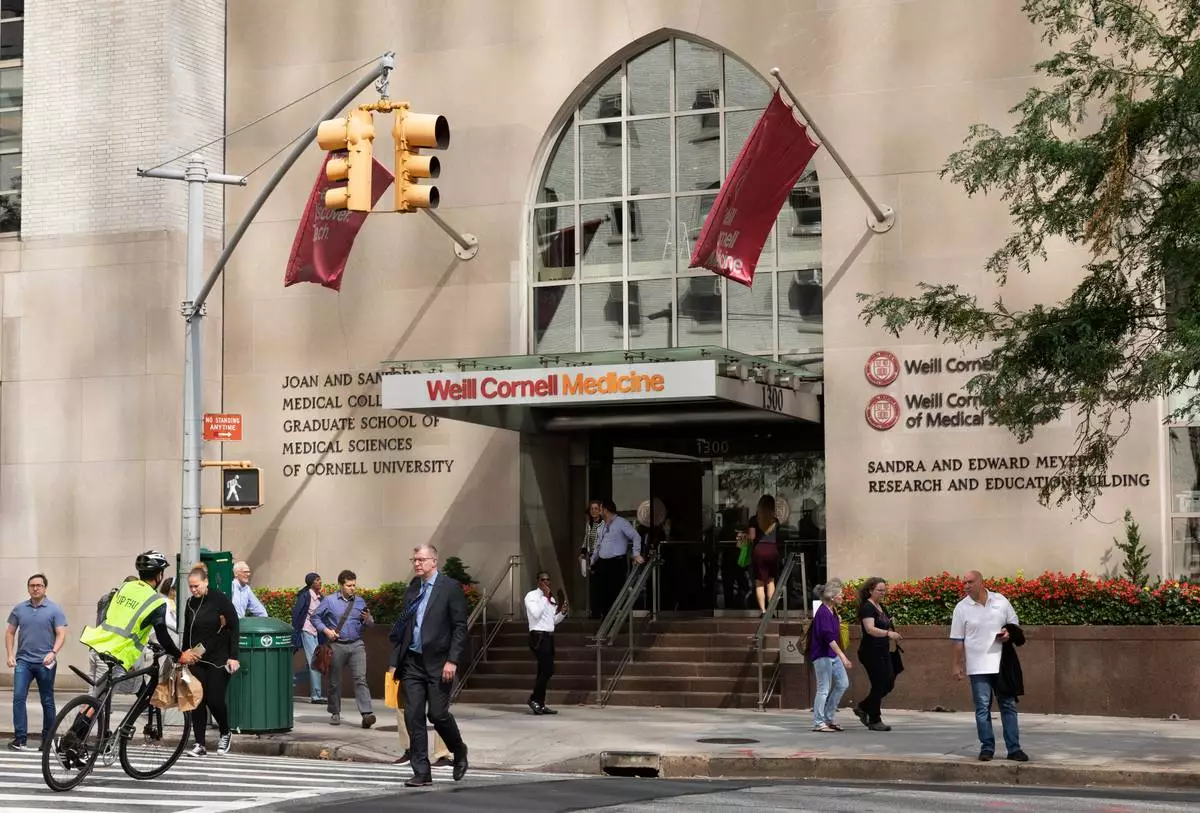
FILE - People pass the Weill Cornell Medicine center in New York on Sept. 26, 2019. (AP Photo/Mark Lennihan)
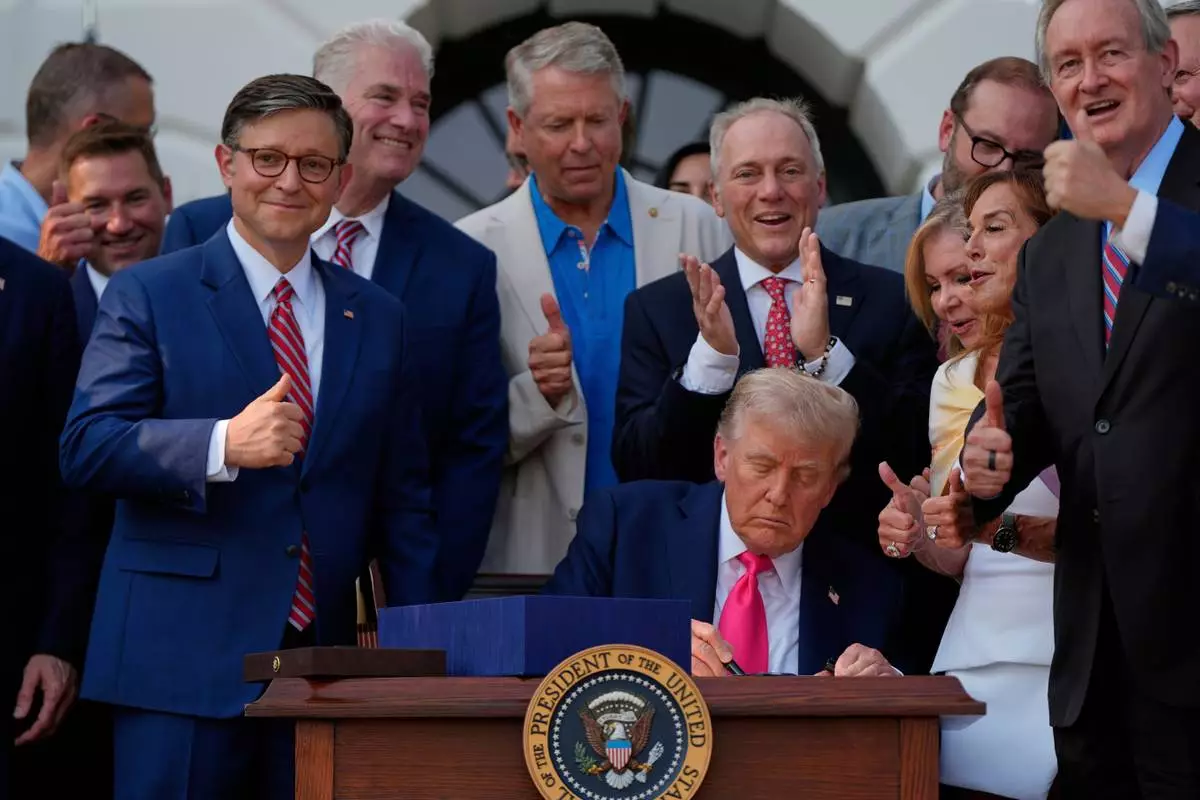
FILE - President Donald Trump signs his signature bill of tax breaks and spending cuts at the White House, July 4, 2025, in Washington, surrounded by members of Congress. (AP Photo/Julia Demaree Nikhinson, File)