BANGKOK (AP) — Myanmar will hold special elections to fill parliamentary vacancies next April in its first vote since this year’s general election that critics said was designed to cement military rule.
The elections will fill vacancies left by elected representatives who took ministerial or government posts and will include areas previously unable to vote because of conflict. The vote is unlikely to change the balance of power in the national parliament currently controlled by the military-backed Union Solidarity and Development Party, but it may provide a measure of public support for the parties contesting the vote.
Myanmar has been in turmoil since the military seized power from the elected government of Aung San Suu Kyi in 2021, triggering widespread opposition. After security forces suppressed peaceful protests with lethal force, many opponents of military rule took up arms, plunging large parts of the country into conflict.
The Union Election Commission said the April 4 by-elections will be held in 55 constituencies, including 34 seats in the lower house, five in the upper house and 16 in regional and state parliaments, according to the announcement published in the state-run Myanma Alinn newspaper Friday.
At least seven of the constituencies are in towns that the military recently recaptured from armed groups fighting against it. Some of the constituencies are in seven states and regions where armed conflicts are ongoing.
Myanmar has 440 seats in the lower house and 224 seats in upper house, with military appointees occupying 25% of the seats in each chamber.
In the general election that concluded in January, the USDP secured nearly 90% of parliamentary seats alongside its allies, while Min Aung Hlaing, the former army chief who led the 2021 military takeover, was sworn in as president in April.
Major opposition parties, including Suu Kyi's former ruling National League for Democracy, had previously been ordered to be disbanded after refusing to take part in what they considered a sham process.
The election was widely criticized as an attempt to legitimize military rule following the army takeover. The conflicts prevented voting in many areas during that election, which was held in only 263 of Myanmar’s 330 townships.
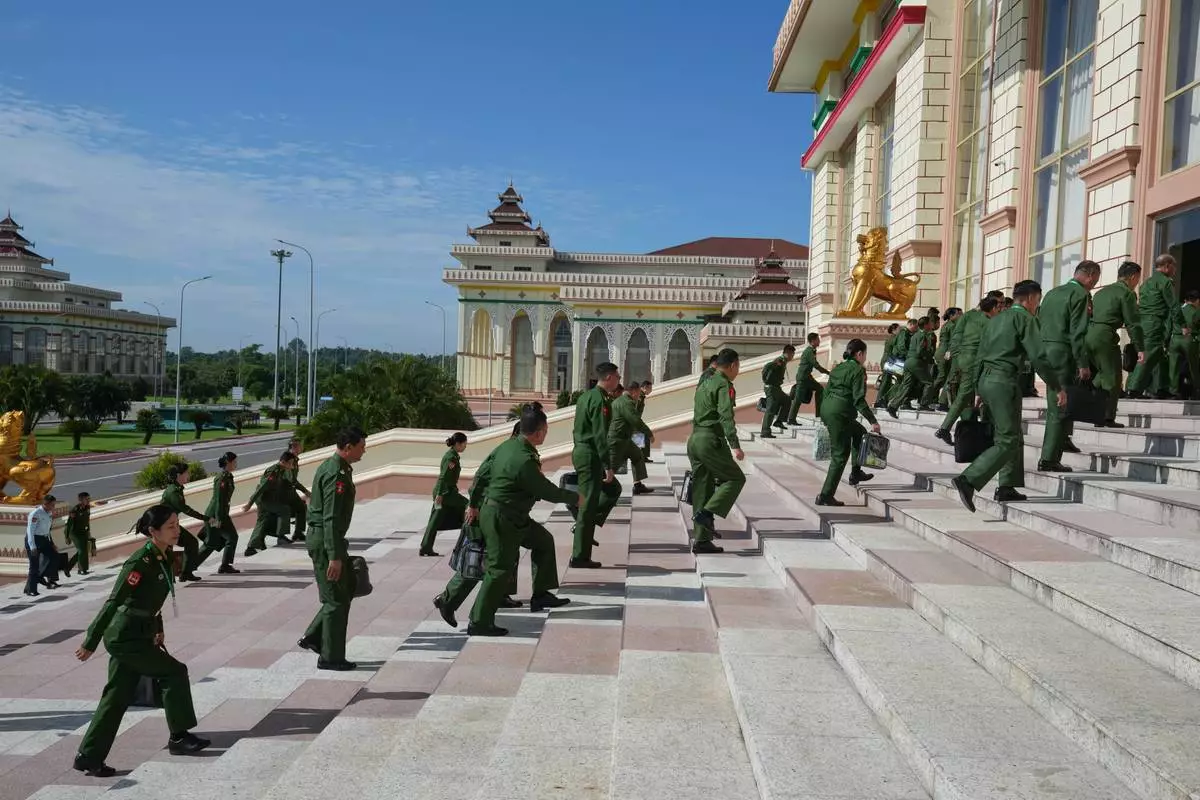
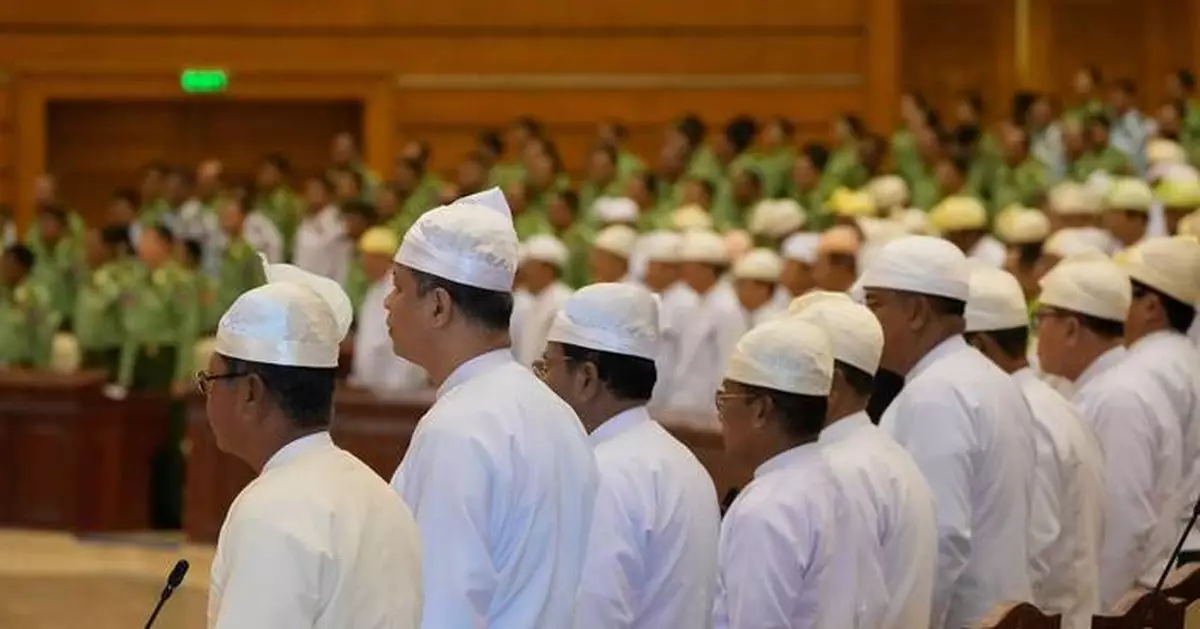
Myanmar's military representatives arrive to attend a regular session of the Union Parliament in Naypyitaw, Myanmar, Friday, Oct. 30, 2026. (AP Photo/Aung Shine Oo)
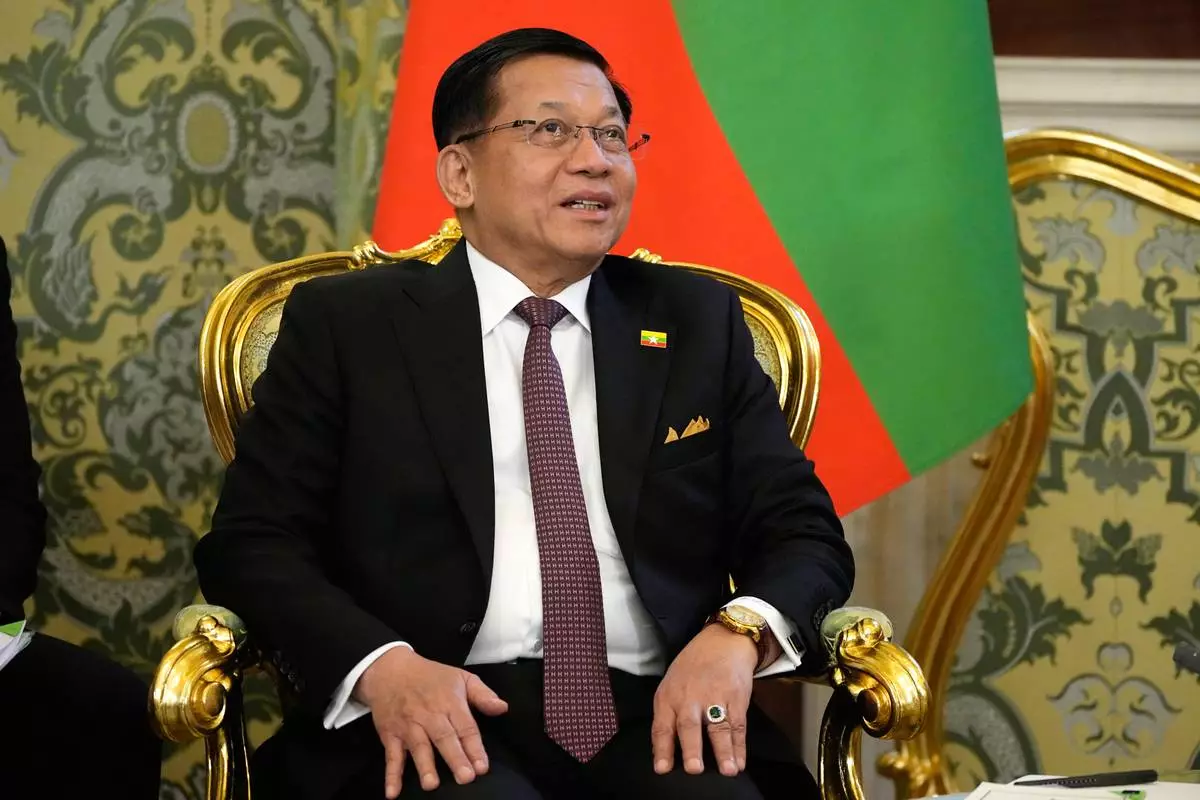
FILE - Myanmar President Min Aung Hlaing speaks during a meeting with Russian President Vladimir Putin at the Grand Kremlin Palace, in Moscow, Aug. 18, 2026. (AP Photo/Alexander Zemlianichenko, Pool, File)
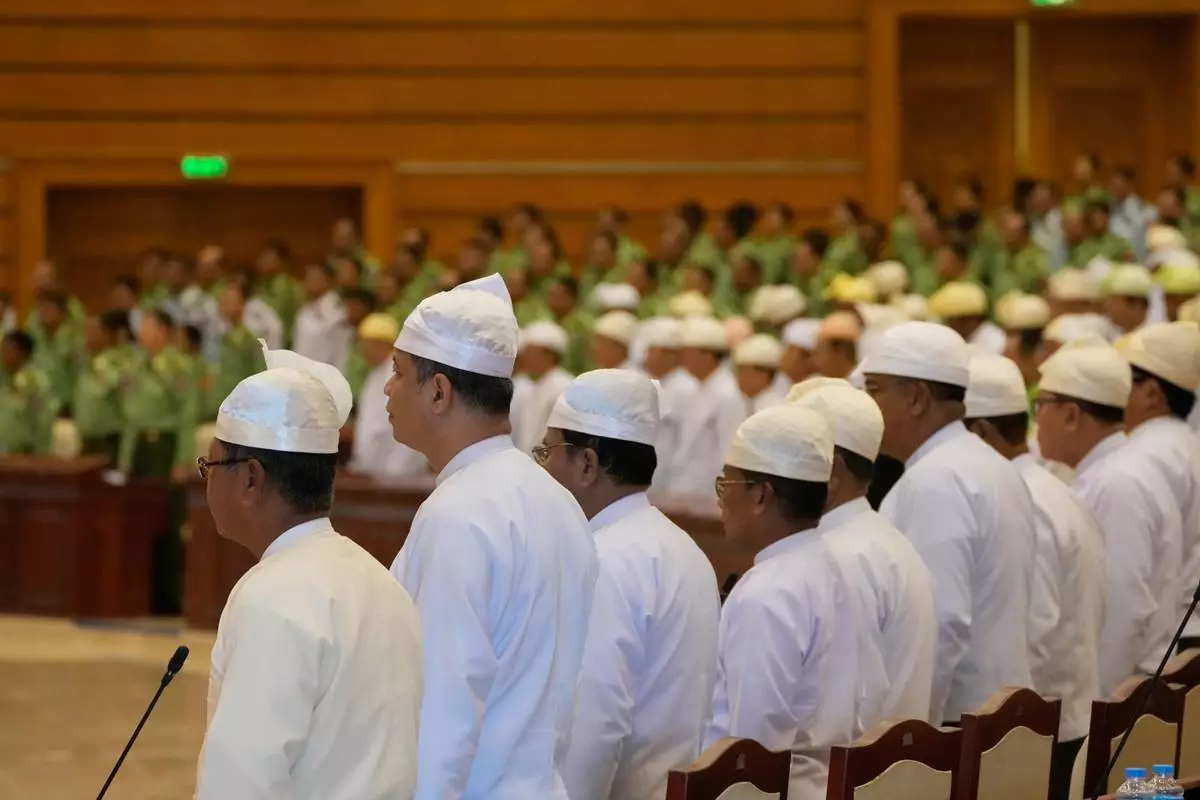
Myanmar lawmakers and military representatives stand as Lower House Speaker Khin Yi arrives during a regular session of the Lower House Parliament in Naypyitaw, Myanmar, Monday, Nov. 2, 2026. (AP Photo/Aung Shine Oo)
KUALA LUMPUR, Malaysia (AP) — Malaysia’s former Prime Minister Najib Razak is set to leave prison to serve the remainder of his graft sentence at home, after his political party on Friday paid a 50 million ringgit ($12.3 million) fine required under the terms of a royal pardon.
Najib, 73, has been imprisoned since August 2022, when Malaysia’s top court upheld his conviction in his first graft trial linked to the multibillion-dollar looting of state investment fund 1MDB. Malaysia’s king in September granted Najib a rare clemency, allowing him to serve the rest of his sentence under house arrest. After paying the fine, he could be free in August 2028.
The house arrest applies only to his reduced six-year sentence in the first trial. It doesn’t cover a separate 15-year prison sentence imposed in December 2025 for corruption and money laundering in a second major trial tied to the 1MDB scandal. He's appealing that sentence.
Asyraf Wajid Dusuki, secretary-general of the United Malays National Organization, said in a statement that the party had collected sufficient funds through its donation drive for Najib. He said the party had completed payment of the fine at the High Court earlier Friday.
The payment fulfills a key condition attached to the royal pardon.
The timing of his transfer from prison to house arrest was not immediately clear. Police were stationed at his house in Kuala Lumpur early Friday and the road leading to his home was blocked.
Najib set up the 1MDB development fund shortly after he took office in 2009. Investigators say at least $4.5 billion was stolen from the fund and laundered by Najib’s associates through layers of bank accounts in the U.S. and other countries. The funds were allegedly used to finance Hollywood films and extravagant purchases that included hotels, a luxury yacht, art and jewelry.
He was originally sentenced to 12 years in prison and fined 210 million ringgit ($51.5 million) in 2020 for abuse of power, criminal breach of trust and money laundering involving 42 million ringgit ($10.3 million) channeled into his bank accounts from SRC International, a former unit of 1MDB.
In January 2024, the Pardons Board halved his sentence to six years and reduced his fine to 50 million ringgit.
King Sultan Ibrahim Iskandar subsequently granted Najib a conditional pardon, paving the way for house arrest until Aug. 23, 2028, provided he paid the fine. If Najib fails to win the appeal in the second trial, he could go back to prison, after the current sentence ends.
Public outrage over the 1MDB scandal led to the historic 2018 election defeat of the ruling coalition, which had governed Malaysia since independence from Britain in 1957. Despite his conviction, Najib still wields influence in his party, UNMO, which is now part of a new government that took power in 2022.
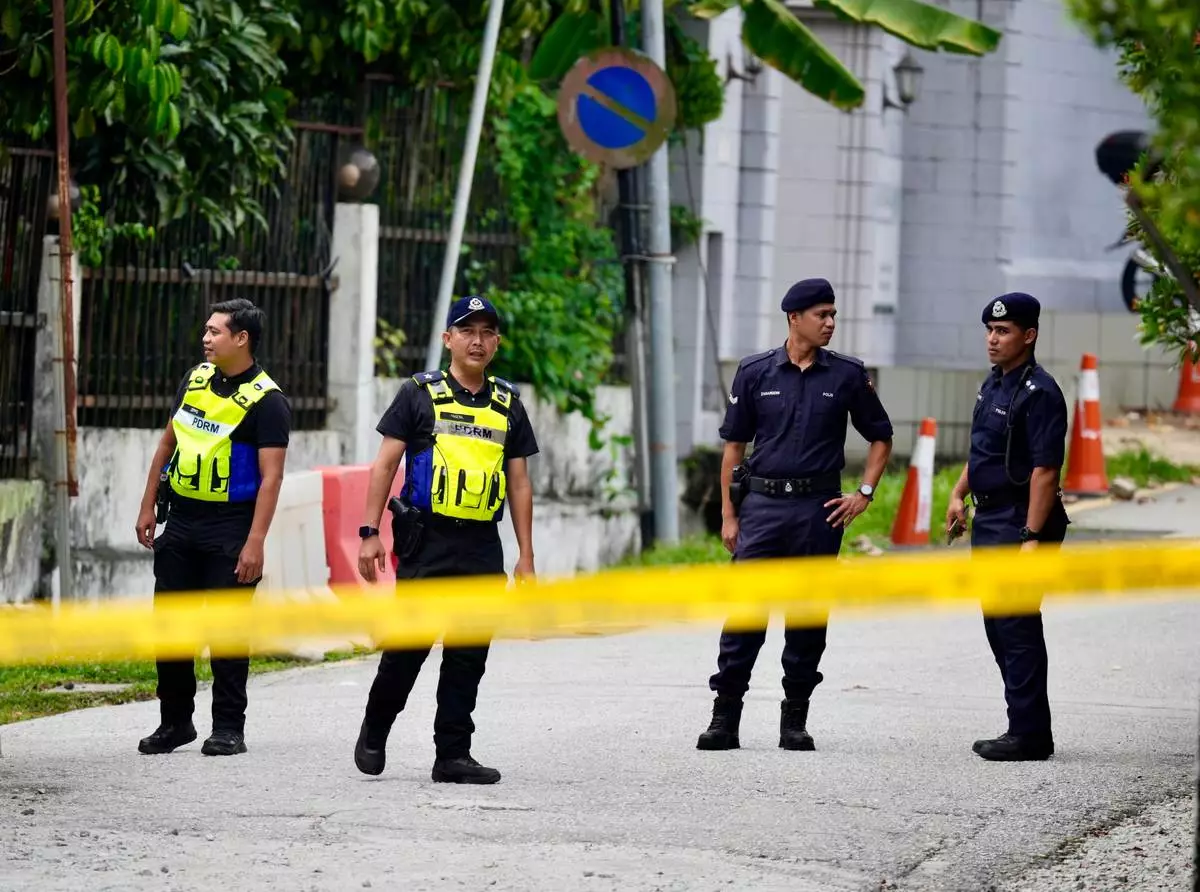
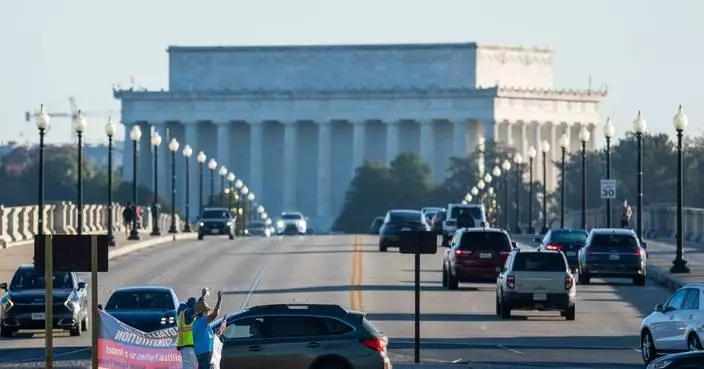
Police guard a road leading to the residence of Malaysia’s former Prime Minister Najib Razak where he is expected to serve his remaining prison time in Kuala Lumpur, Malaysia, Friday, Nov 6, 2026. (AP Photo/Vincent Thian)