Skip to Content Facebook Feature Image

Awkwafina digs into her culinary roots to try something a little crazy: Open a restaurant

ENT

Awkwafina digs into her culinary roots to try something a little crazy: Open a restaurant
ENT

ENT

Awkwafina digs into her culinary roots to try something a little crazy: Open a restaurant

2026-11-06 19:00 Last Updated At:19:20

NEW YORK (AP) — Awkwafina was feeling under the weather recently and decided she was going to make soup. And that startled her because she hasn't always been the kind of person who made soup.

“If I had told myself like a year or so ago that I would be looking at ingredients to make a soup, that would be like insane,” she says, laughing. “Like, a soup? ‘Hell, no, it’s just a hot liquid.’”

The actor-comedian-rapper's 180-degree shift is largely thanks to her latest project: Putting together a menu and finding a location and staff to open her own restaurant.

The eight-episode Apple TV series “Awkwafina: The Unlikely Cook” premiering Friday follows her journey, from learning to make stir-fry at the Culinary Institute of America to waitressing in downtown L.A. Along the way, she turned herself into a pretty good cook.

“I have these friends that are cooking up all kinds of stuff all the time. And I always felt like I was never going to be really a member of that club,” she says.

“But it’s so accessible. It really is a world that you can step into anytime. No one’s going to tell you that you can’t do it or you’re not good enough.”

It turns out that the Golden Globe- and Emmy-winning Awkwafina, born Nora Lum, comes from restaurant royalty.

Her family ran Lum’s, an iconic Cantonese restaurant in the New York borough of Queens that closed in the 1990s after four decades.

Awkwafina's plan to reopen the restaurant — as a pop-up for one night — sent her across America to find dishes to honor her past: To Texas to do her own twist on Lum's barbecue spare ribs, and to Hawaii for a pupu platter.

Martin Yan, the first breakthrough Chinese TV chef, teaches her how to make chicken chow mein, and she learns to make Peking duck in San Francisco, first carefully plucking out the feathers by hand. “I love giving ducks Brazilians,” she jokes on the show.

The mission was to do something that would make her family proud, especially for her father and grandmother, who helped raise her when her mother died young.

“I feel connected to my ancestors because I’m repeating dishes in a process that they did,” she says. Making food, she adds, “is an act of love in every way.”

Executive producer David Brindley says Awkwafina and the filmmakers didn't intend to end with a pop-up. The series was initially pitched as an exploration of Asian American food but, things grew more personal and meaningful.

“It sets it apart, I think, from lots of other food travel shows because it’s got an authenticity at the heart of it,” he says.

Awkwafina waitressed at the Golden Dragon banquet hall in Los Angeles, learnt to make Korean-style dumplings from chef Roy Choi and collaborated on a logo and font for the menu. She chose a pizzeria in Manhattan as the site for the pop-up, which fed 50 guests.

Awkwafina leaned on a lot of Asian American food specialists during the series and was struck by how many are reentering an industry their parents didn't want them to work in.

“Their parents came here and worked in kitchens, started restaurants and takeout places so that their kids could become lawyers and doctors,” she says. “And so to see people go back to their roots, it’s almost like rebellious.”

Pulling it all together was stressful — especially nailing the show-stopping duck dish with pineapple salsa cooked in a pizza oven at the end — and Awkwafina saw a new side of herself.

“I had never seen myself ever be flustered, be serious, rushing around,” she says. “That was really weird to see. It was a version of myself that I’d never noticed before.”

Viewers watch a woman who started the series struggle to make ramen with Spam be able to master complex meals by the end, even suggesting a dish be more tangy or that a sauce should be added to the shrimp.

So complete is the transformation that Awkwafina is in the process of reopening Lum's for the long-term, not just as a pop-up.

“Without the show, I don’t think I would have been able to do that confidently,” she says. “I would not have been able to just dive into that.”

Brindley says viewers will delight in seeing the host go from zero to hero — starting with knowing very little about food and ending up in command, opening a restaurant.

“What the show does is say to the viewers that it’s never too late to try something new, try something different, and you, too, can master that. That might be food, it might well be something else,” he says. “That is, I think, really inspiring.”
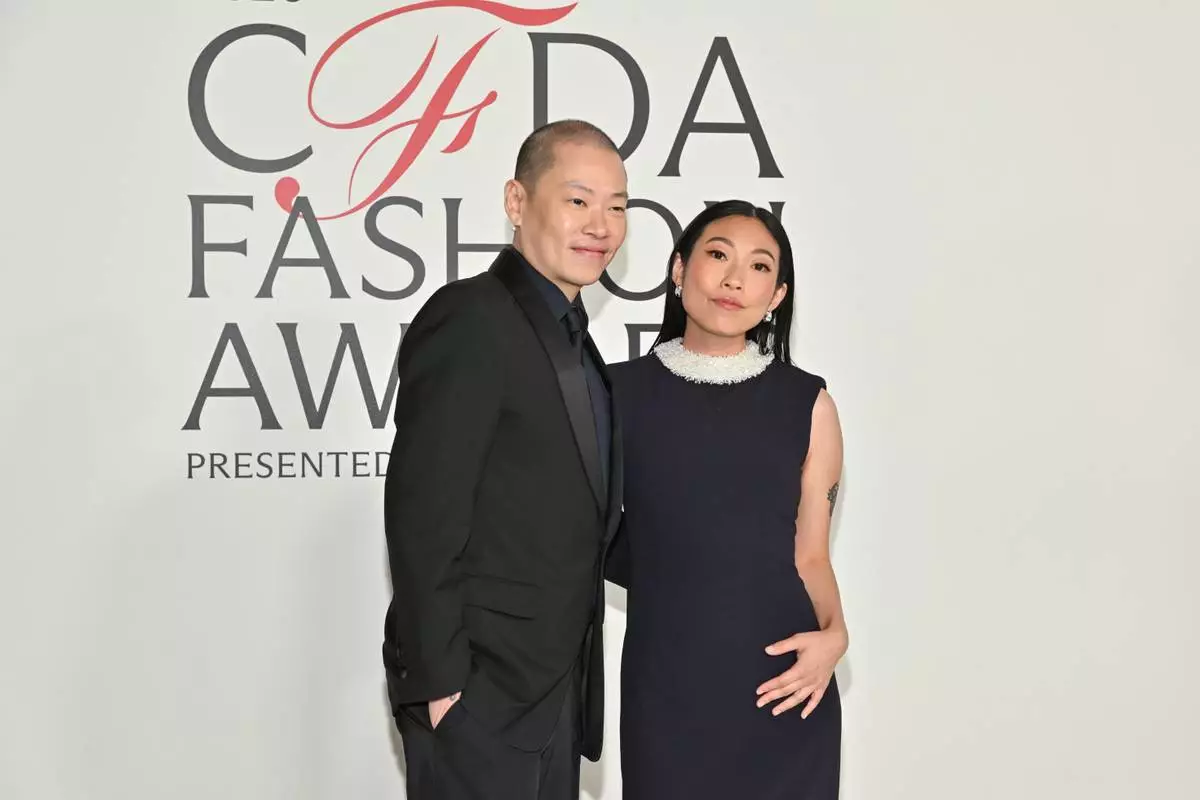
Jason Wu, left, and Awkwafina arrive at the CFDA Fashion Awards, hosted by The Council of Fashion Designers of America, at The American Museum of Natural History on Monday, Nov. 2, 2026, in New York. (Photo by Evan Agostini/Invision/AP)

Jason Wu, left, and Awkwafina arrive at the CFDA Fashion Awards, hosted by The Council of Fashion Designers of America, at The American Museum of Natural History on Monday, Nov. 2, 2026, in New York. (Photo by Evan Agostini/Invision/AP)
KUALA LUMPUR, Malaysia (AP) — Malaysia's attorney general on Friday temporarily blocked the transfer of former Prime Minister Najib Razak from prison to house arrest to serve the remainder of his graft sentence at home, saying more legal clarification was needed.

The last-minute intervention came after local media reported that Najib had left the prison, after his political party paid a 50 million ringgit ($12.3 million) fine required under the terms of a royal pardon allowing house arrest.

The attorney general's office said in a statement that Najib would remain in prison until the legal matters were resolved.

Najib has been imprisoned since August 2022, when Malaysia’s top court upheld his conviction in his first graft trial linked to the multibillion-dollar looting of state investment fund 1MDB. Malaysia’s king in September granted Najib clemency, allowing him to serve the rest of his sentence under house arrest once he pays the court-imposed fine.

The house arrest applies only to his reduced six-year sentence in the first trial. It doesn’t cover a separate 15-year prison sentence imposed in December 2025 for corruption and money laundering in a second major trial tied to the 1MDB scandal. He's appealing that sentence.

The attorney general's office cited legal ambiguities in the house arrest order and raised concerns over how it could affect Najib's consecutive 15-year prison sentence. It said the delay was not to meant to contest the royal pardon allowing house arrest but to ensure it was implemented accurately and in line with the law.

Local media earlier reported that Najib was taken out of prison under tight security after his lawyers delivered the house arrest order. Police were stationed at Najib's house in Kuala Lumpur since early Friday and the road leading to it was blocked. Najib's lawyers could not be immediately reached for comment.

Asyraf Wajid Dusuki, secretary-general of the United Malays National Organization, said in a statement that the party had collected sufficient funds through its donation drive for Najib. He said the party had completed payment of the fine at the High Court earlier Friday.

Prime Minister Anwar Ibrahim earlier said that he disagreed with UMNO’s decision to settle Najib's fine because it risked sending the wrong message about large-scale corruption offenses. But he acknowledged it was the party's right.

“That should not give the public the impression that acts of corruption involving billions of ringgit can simply be overlooked," he was quoted as saying by the national news agency Bernama.

Najib set up the 1MDB development fund shortly after he took office in 2009. Investigators say at least $4.5 billion was stolen from the fund and laundered by Najib’s associates through layers of bank accounts in the U.S. and other countries. The funds were allegedly used to finance Hollywood films and extravagant purchases that included hotels, a luxury yacht, art and jewelry.

He was originally sentenced to 12 years in prison and fined 210 million ringgit ($51.5 million) in 2020 for abuse of power, criminal breach of trust and money laundering involving 42 million ringgit ($10.3 million) channeled into his bank accounts from SRC International, a former unit of 1MDB.

In January 2024, the Pardons Board halved his sentence to six years and reduced his fine to 50 million ringgit.

King Sultan Ibrahim Iskandar subsequently granted Najib a conditional pardon, paving the way for house arrest until Aug. 23, 2028, provided he paid the fine. If Najib fails to win appeal in the second case, he could face a further 15 years in prison after the current sentence ends.

Public outrage over the 1MDB scandal led to the historic 2018 election defeat of the ruling coalition, which had governed Malaysia since independence from Britain in 1957. Despite his conviction, Najib still wields influence in his party, UNMO, which is now part of a new government that took power in 2022.

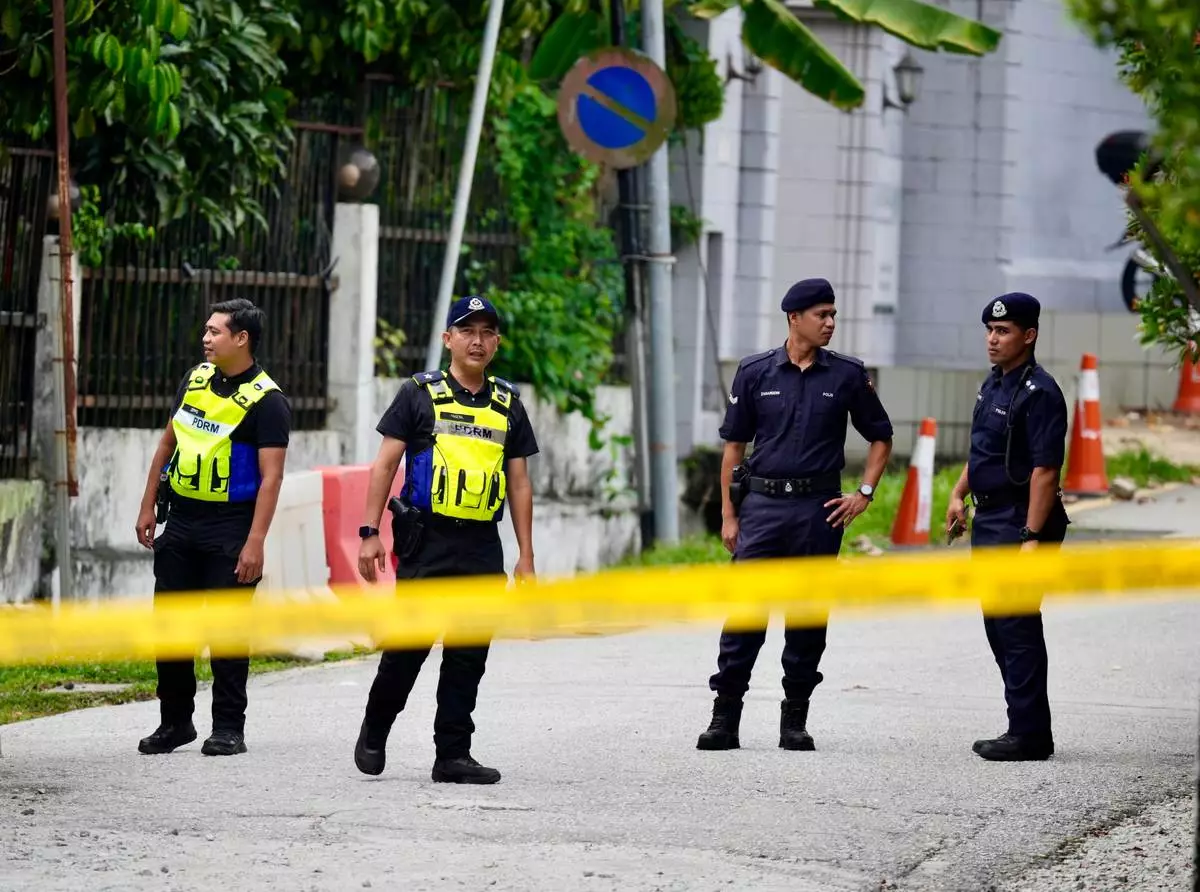
Police guard a road leading to the residence of Malaysia’s former Prime Minister Najib Razak where he is expected to serve his remaining prison time in Kuala Lumpur, Malaysia, Friday, Nov 6, 2026. (AP Photo/Vincent Thian)

Police guard a road leading to the residence of Malaysia’s former Prime Minister Najib Razak where he is expected to serve his remaining prison time in Kuala Lumpur, Malaysia, Friday, Nov 6, 2026. (AP Photo/Vincent Thian)

Recommended Articles