DAR ES SALAAM, Tanzania (AP) — Tanzanian opposition leader Tundu Lissu was sentenced to four years in prison on Friday after being convicted of incitement but was acquitted of the more serious charge of treason.
Lissu, the chairperson of the Chadema party, was found guilty of inciting people to disrupt last year’s election.
The three-judge panel in Dar es Salaam ruled, however, that prosecutors had failed to prove he intended to intimidate the government. The treason charge carried a possible death sentence.
He was arrested on April 9, 2025, after addressing a rally calling for electoral reforms and was charged with treason the following day.
Lissu, who has spent more than 18 months in detention, denied wrongdoing, saying his speech was part of a legitimate campaign.
“Those who are innocent, like me, do not apologize,” Lissu told the court. “You have sought out an offense that did not exist, and you have done so following political directives,” he said.
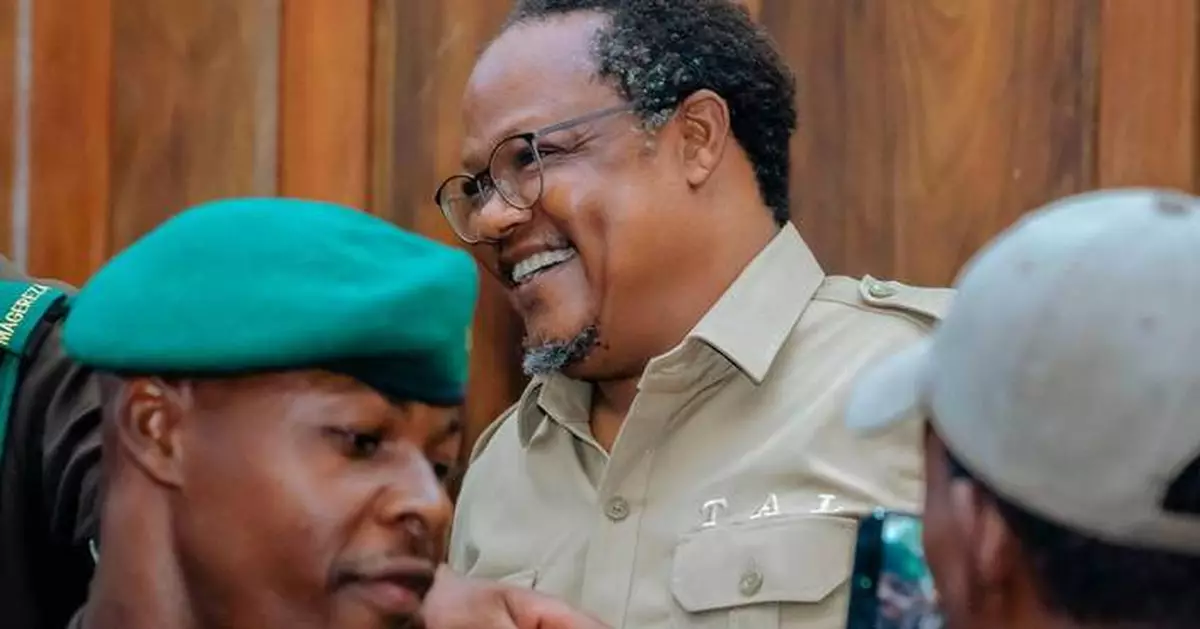
Supporters chanted “Viva!” as Lissu arrived at court amid tight security and raised a clenched fist. His hair had grown longer during his detention, and he wore it in dreadlocks. His elder sister and several Chadema leaders attended the proceedings.
Lissu remained in custody during last year’s general election, in which presidential candidates from the two main opposition parties were barred from competing.
His detention has been marked by disputes over access to his lawyers. After prison authorities allowed him to meet privately with his younger brother, he ended a brief hunger strike on Oct. 27, his lead lawyer, Rugemeleza Nshala, told The Associated Press.
The election triggered protests and deadly violence. An inquiry reported in April that at least 518 people had died. Its chairman, Mohamed Chande Othman, said the toll was likely higher because some families buried relatives without taking their bodies to morgues.
The United Nations has called for an investigation into the killings and reports that police removed bodies from mortuaries to undisclosed locations. Chadema estimated that about 2,000 people were killed, a figure the U.N. said it could not verify amid insecurity and an internet shutdown.
The judgment came days after Lissu’s elder brother, Alute Mughwai Lissu, died on Sunday. Lissu appealed to the court to release him so he could attend the burial.
“Please, let me go and lay Mzee Alute to rest,” he said.
Lissu was taken back to prison after sentencing.
He survived being shot 16 times in a 2017 assassination attempt and has spent periods in exile, citing threats to his life.
Khaled Kazziha contributed from Nairobi, Kenya
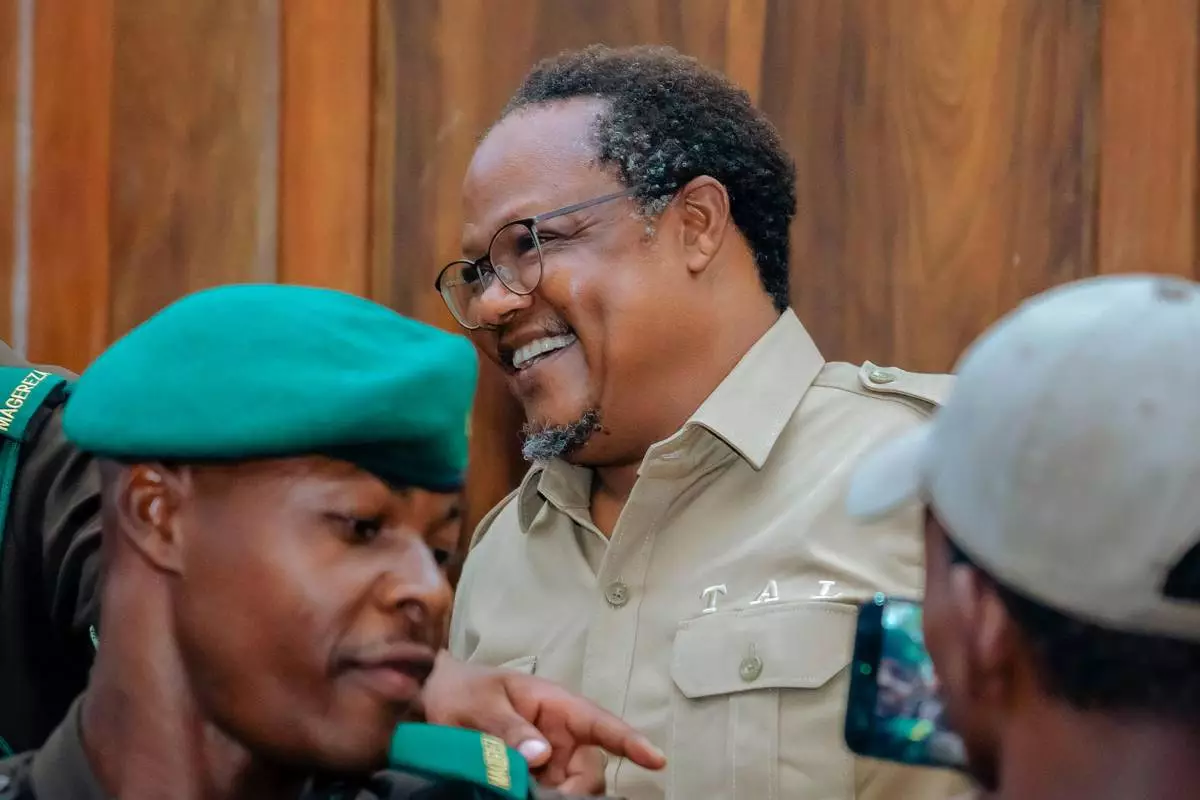
FILE -Main opposition leader Tundu Lissu arrives at the High Court of Tanzania as his treason trial continues before a three-judge bench in Dar es Salaam, Tanzania, Feb 9, 2026. (AP Photo/Florence Majani, File)
Clergy members and other Democratic candidates with an unapologetically Christian message to “love your neighbor” helped their party flip control of Congress.
It was a striking midterm victory that demonstrated the strength of the religious left as a counter to the stalwart evangelical support for President Donald Trump and his fellow Republicans.
“This attempt to corner the market on Christianity by evangelicals was repudiated,” said Brian Kaylor, a Baptist pastor and editor of a progressive faith and politics site.
Instead, American mainline Protestantism, with its less-strident theology, took the election spotlight.
Seminarian James Talarico in Texas, megachurch pastor Adam Hamilton in Kansas and Iowa ministers Sarah Trone Garriott and Lindsay James flipped key seats in the U.S. Senate and House. They’re part of the mainline Presbyterian, Methodist and Lutheran branches with moderate or progressive beliefs.
Unlike the nationalists wanting America to privilege a particular Christian worldview in public life, the mainline candidates in keeping with their Christian values backed church-state separation and sought common ground across religions, Kaylor said.
"There were so many people in our country who felt so strongly that what was happening in D.C. was not moral,” Hamilton told The Associated Press. "It didn’t reflect our national values."
That’s why he and the other candidates ran, he said, and why they were elected.
Mainline denominations have historically been part of the country’s civic establishment as the church home of most presidents and other elites. But membership has been sliding for decades. Despite that shift, the wins show these Protestants can still have significant influence — though not with white evangelicals.
Across the board, white evangelical Protestants stayed consistent in their overwhelming midterm support for Republicans. Most Protestants who identify as “liberal” or “moderate,” about 7 in 10, voted for Democrats, according to The AP Voter Poll, a survey of roughly 100,000 midterm voters.
The four mainline candidates also got a big boost from voters who reject organized religion. At least 7 in 10 religiously unaffiliated voters supported Democratic Senate and House candidates in Texas, Kansas and Iowa, The AP Voter Poll showed.
Others said being a progressive pastor wasn’t the prime factor in these victories.
“If I hear a story about the Democratic Party scouting out pastors to run in 2028 based on Talarico and Hamilton, I think they’ve totally missed the upshot from this election,” said Ryan Burge, a professor at Washington University in St. Louis who studies religious demographics. “It’s about economic issues. It’s about disdain for Trump. It’s about high prices.”
In the longtime GOP stronghold of Texas, Talarico flipped a U.S. Senate seat — the first election in 30-plus years that Democrats won statewide races — by defeating Republican Ken Paxton, an evangelical.
Voters also ousted Texas Lt. Gov. Dan Patrick, a Republican who chaired Trump’s Religious Liberty Commission and declared, “There is no separation of church and state.”
In Talarico’s acceptance speech, the 37-year-old state legislator recounted how his grandfather, a Baptist preacher, taught him about Jesus, a “barefoot rabbi” who commanded people to love God and neighbor. And not just the neighbor who looks, prays or votes like him, the Presbyterian Church (U.S.A.) seminarian and former middle school teacher said.
“Two thousand years ago, when the people at the top hurt his neighbors, that barefoot rabbi didn’t stay in his room and pray. He walked into the seat of power, and he flipped over the tables of injustice. … Texas, it’s time to start flipping tables," Talarico said.
A longtime Texas Trump supporter and Southern Baptist pastor, the Rev. Robert Jeffress, maintains that the pluralistic religion promoted by Talarico and other candidates is not actually Christianity, a criticism raised by others during their campaigns.
“People want to choose a religion that’s nice and warm and fuzzy, whether it’s built on truth or not,” said Jeffress, who leads First Baptist Church in Dallas. “What James Talarico believes, according to the words of Jesus, is not true.”
He attributes the Democrats’ success to a trifecta of inflation, the Iran war and “less than ideal candidates.” Jeffress also suspects many evangelicals stayed home.
White evangelical Protestants made up a slightly smaller share of the electorate than in 2024, when Trump was running for president: 21% in 2024, compared with 17% in 2026, The AP Voter Poll showed. That could be due to lower turnout among white evangelicals or higher turnout among other groups. About 2 in 10 voted for Talarico in Texas and Hamilton in Kansas.
Burge, the professor who studies religious demographics, asserts that the Democratic clergy members who won were strong candidates but also benefited from very favorable political winds.
“If you ran Adam Hamilton in 2024, he’s beat by double digits and we’re not having this conversation,” Burge said.
Hamilton, pastor of the nation’s largest United Methodist congregation, called for “decency” in politics, drawing on Jesus’ Golden Rule in his victory speech: “Do unto others as you would have them do unto you.”
“I can’t not talk about my faith. It’s just, it’s my life. It’s what I eat, sleep, drink and breathe,” he told the AP. But being religious isn’t required to follow biblical injunctions "to do justice, to love kindness."
While campaigning for Hamilton’s Republican opponent, Sen. Roger Marshall, Vice President JD Vance questioned Hamilton’s religiosity.
“It was so ridiculous that there was no reason to even respond to it,” said Hamilton, who welcomes a conversation with Vance and other critics about faith and theology.
Democrats Sarah Trone Garriott and Lindsay James, who flipped U.S. House seats in Iowa, didn’t have political ambitions when they pursued ordination.
Trump’s 2016 election sparked James’ involvement. The Presbyterian Church (U.S.A.) chaplain sees her ministry experience — from church potlucks to the pews — as a strength when connecting with all voters.
“I spent time bringing people together across difference,” she told the AP in March.
Trone Garriott, a state senator and a pastor in the mainline Evangelical Lutheran Church in America, thinks the religious right’s high profile in national politics has made some progressive Christians wary of sharing their faith publicly.
But she sees the power in diverse coalition building. In her acceptance speech, she evoked hope and the power of loving your neighbor. “When people come together on our common ground, we will do powerful things,” she said.
Among Republicans, clergy candidates for Congress also prevailed, including Mark Harris of North Carolina, a Southern Baptist pastor, and Tim Walberg of Michigan, a former pastor.
Black Protestants vote overwhelmingly Democratic and have long comfortably talked faith and politics in a way white mainliners have not. This year, victorious Democrats included at least two Black clergy members — the Rev. Frederick Haynes III, a Baptist from Texas, and U.S. Rep. Emanuel Cleaver II, a United Methodist minister from Missouri.
In North Carolina, Democrat LaKesha Womack unseated a Republican incumbent in the U.S. House. She is an ordained deacon in the African Methodist Episcopal Zion Church, a historically Black Protestant denomination.
Womack told the AP her faith prompts her to advocate for “policies that address poverty and immigration and making sure everybody has access to healthcare.” And she defends religious freedom for all.
“With the white Christian nationalists almost taking over the narrative of what it means to be a Christian, I think there are a lot of people of faith in this country who wanted to reclaim that narrative,” she said.
Womack said that Democrats shouldn’t read too much into this year’s clergy victories.
“I don’t think we should go out and try to recruit ministers to become politicians if that’s not what they’re called to do,” she said. “It has to be authentic.”
AP reporter Tiffany Stanley contributed to this report.
Associated Press religion coverage receives support through the AP’s collaboration with The Conversation US, with funding from Lilly Endowment Inc. The AP is solely responsible for this content.
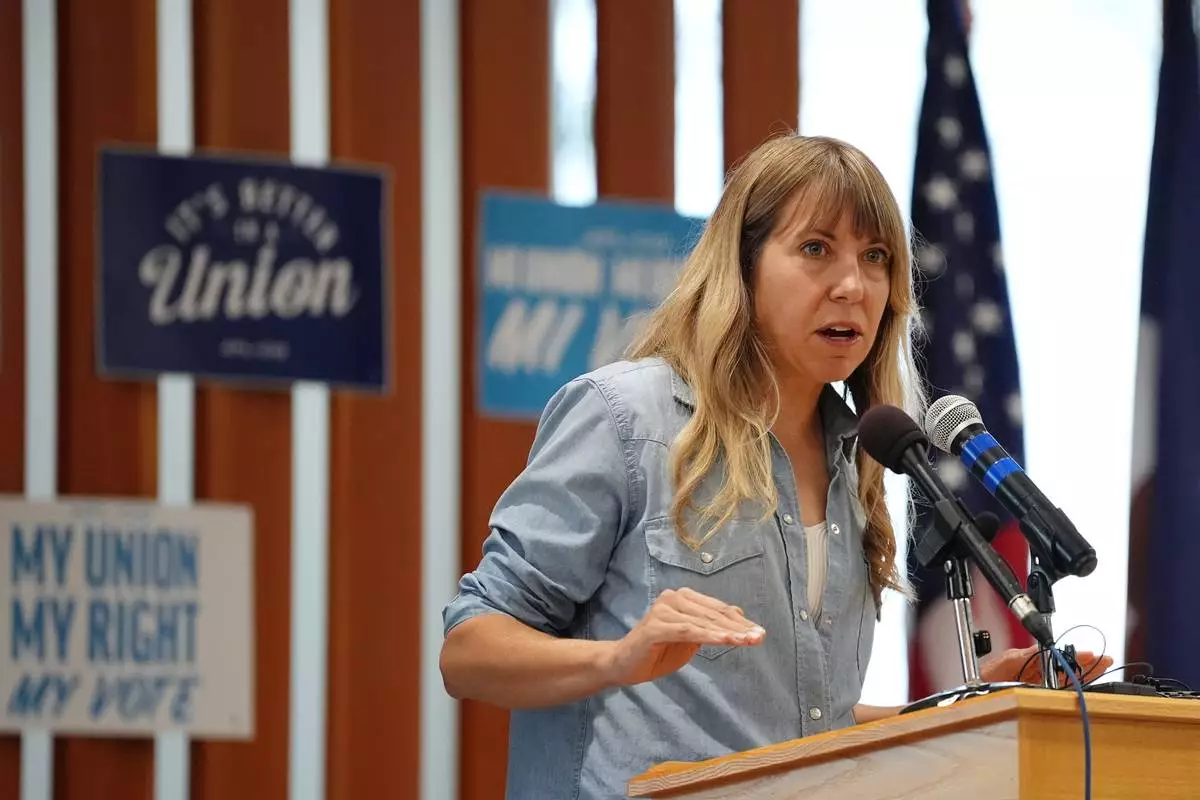
Iowa Democratic congressional candidate Sarah Trone Garriott speaks during a union rally, Saturday, Oct. 31, 2026, in Ankeny, Iowa. (AP Photo/Ellen Schmidt)

A supporter of Democratic Senate candidate Adam Hamilton celebrates at an election night event, Tuesday, Nov. 3, 2026, in Overland Park, Kansas. (AP Photo/Charlie Riedel)
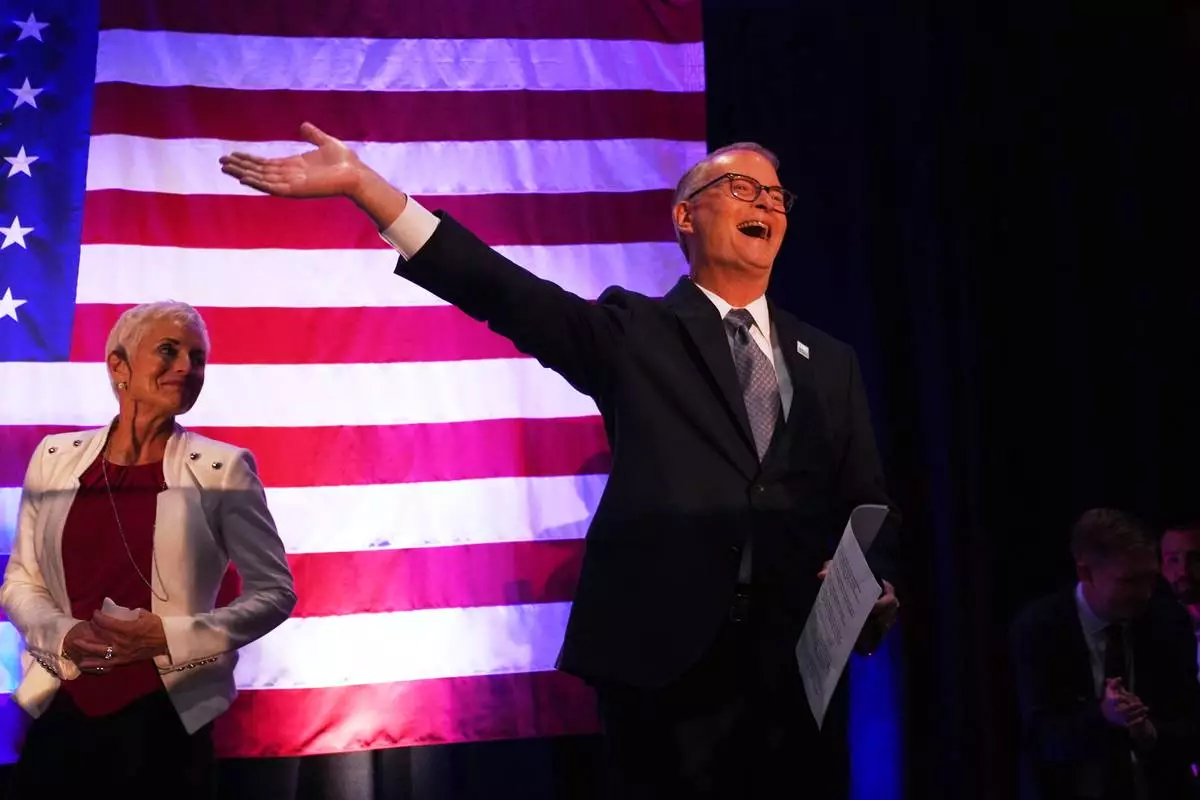
Democratic Senate candidate Adam Hamilton reacts to supporters at an election night event with his wife LaVon Bandy, Tuesday, Nov. 3, 2026, in Overland Park, Kansas. (AP Photo/Charlie Riedel)
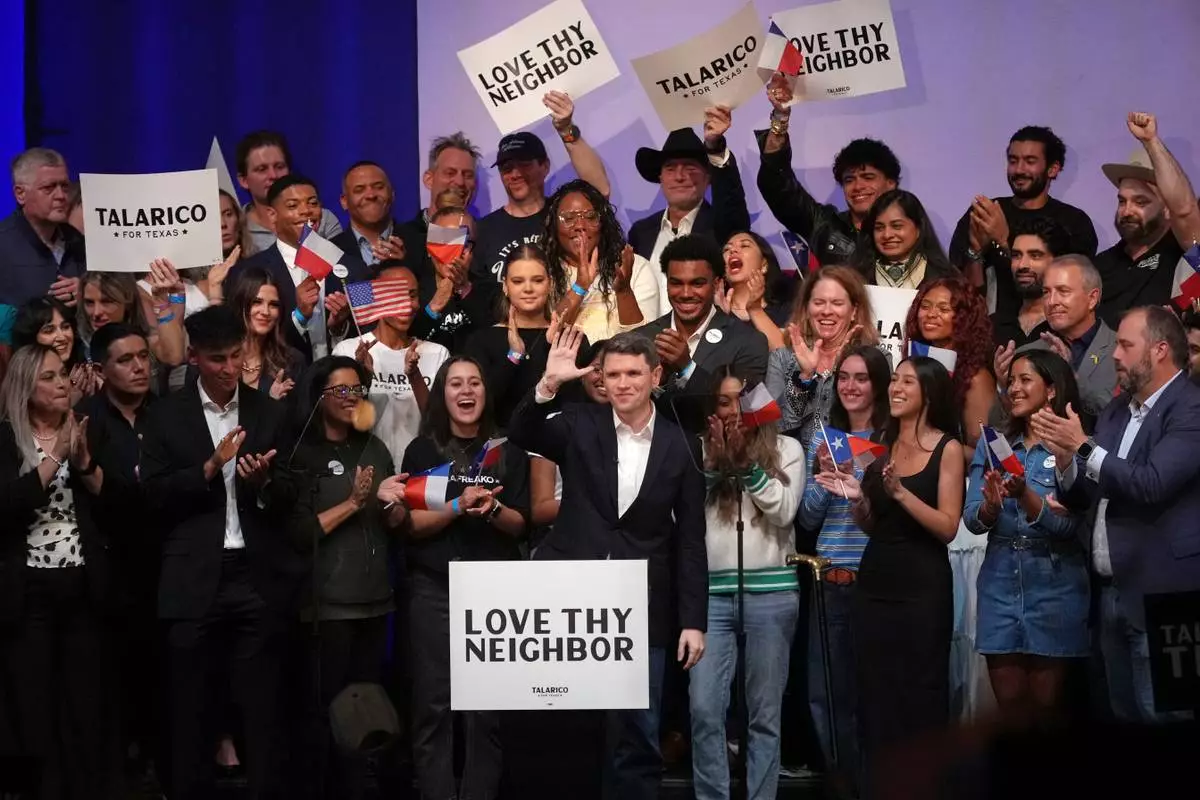
Democratic Senate candidate Texas state Rep. James Talarico concludes a speech at an election night event in Austin, Texas, Tuesday, Nov. 3, 2026. (AP Photo/Eric Gay)