SEOUL, South Korea, Nov. 7, 2026 /PRNewswire/ -- Cancer drugs keep improving, but their limits remain. When antibody therapies first emerged, only a fraction of patients benefited, and small-molecule anticancer drugs often carry severe toxicity. Rather than developing a new anticancer drug, Park Shin-young, CEO of VS Pharmtech (https://www.vspharmtech.com/), has focused on an "anticancer efficacy enhancer" that strengthens existing treatments.
Park graduated from Seoul National University's School of Applied Biology and Chemistry. He then worked in planning roles at Daewon Pharmaceutical, SCM Lifescience and CLIPS, a clinical research company. "Whether a new drug can be commercialized is decided in the clinic," Park said. "I was drawn to the fact that you can gauge a drug's chances of success early, at the clinical stage."
The company grew out of a patent advisory meeting at the Korea Institute of Radiological & Medical Sciences in late 2018. There, Park encountered research on combining an existing drug with radiation therapy to improve its anticancer effect. He suggested that developing the approach into an efficacy enhancer could give it much wider use. He was offered the chance to start a company on the spot and founded VS Pharmtech that November.
A 20-year-old drug at one-fifth the dose
The company's lead pipeline candidate, VS-101, is a radiosensitizer that makes tumors more responsive to radiation so that more cancer cells die. When radiation damages a cancer cell's DNA, the cell detects the damage and tries to repair it. VS-101 weakens RAD51, a protein central to that repair process, and drives the cancer cell toward death.
VS-101 is being developed through drug repositioning, which finds new uses for an existing medicine. In this case, the drug has been used for more than 20 years. The company aims to give patients only about 20% of the original dose. "The drug itself doesn't cause DNA damage or toxicity," Park said. "We designed the dose so that patients receiving other cancer treatments can take it alongside them without strain."
The first results came from a Phase 1 trial in Korea. Seven patients with stage 1–3 head and neck cancer received VS-101 together with radiation therapy. All seven achieved complete remission, meaning their tumors disappeared, with no dose-limiting toxicities or serious adverse events.
Based on these results, the U.S. Food and Drug Administration (FDA) approved the company's Phase 2 plans for head and neck cancer, breast cancer and glioblastoma. These trials extend to patients receiving chemotherapy and radiation together, adding VS-101 to cisplatin for head and neck cancer and to temozolomide for glioblastoma. "This means the FDA recognized that VS-101 causes no significant harm when combined with other anticancer drugs," Park said. "We expect approval for a trial in hard-to-treat ovarian cancer, in combination with a PARP inhibitor, in the first half of next year." The current trials, run at U.S. institutions including Yale Cancer Center, add VS-101 to standard chemoradiation for patients with advanced head and neck cancer. The goal is to improve outcomes without additional side effects.
Seeking joint research at Berkeley
VS Pharmtech is pursuing commercialization on two tracks. For VS-101, it plans to discuss global licensing deals based on interim Phase 2 data. For its preclinical candidates, which are covered by new-compound patents, it is negotiating region by region. One option is to supply them as payloads to antibody-drug conjugate (ADC) developers. The company is in talks with firms in the Middle East, Latin America, Japan and China.
The company is also expanding its overseas footprint. It was selected for MARU SF, run by the Asan Nanum Foundation, and then for Bakar Labs, an accelerator program at UC Berkeley. VS Pharmtech is the first Korean company admitted to Bakar Labs. "The first resident company we reached out to was Catena Biosciences, founded by former students of Professor Jennifer Doudna, the 2020 Nobel laureate in chemistry," Park said. "We plan to actively pursue joint R&D with member companies."
Going abroad has not been without difficulties. "Getting FDA approval for a Phase 2 trial doesn't cost much, but it serves as official recognition that you can run clinical development overseas," Park said. "I hope there will be more government programs, training and patent support that let companies practice this process in advance."
VS Pharmtech has raised a cumulative KRW 18.6 billion (about US$13 million) and is currently raising additional funding. It aims to list on the KOSDAQ in 2027 and has already appointed a lead underwriter to plan its timeline. "The timing of the listing will depend on when we close a licensing deal and how large it is," Park said. "We hope to share good news soon."
The company is also a resident of SVC Seoul, a global startup hub in Seoul's Hongdae area. The hub was established to connect startups with strong overseas growth potential to companies, universities, and investors in Korea and abroad.
** This press release is distributed by PR Newswire through automated distribution system, for which the client assumes full responsibility. **

VS Pharmtech Boosts Cancer Treatment Efficacy Without Adding Toxicity
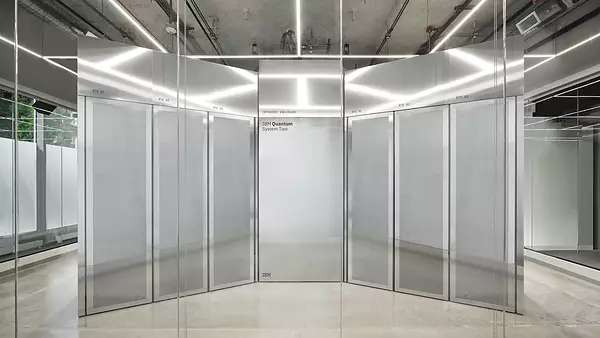
Hosted by the University of Chicago, IBM Quantum System Two is now operational at Hyde Park Labs and will be a prominent fixture of Illinois Quantum and Microelectronics Park (IQMP) upon the site's completion.
IBM's first quantum computer in Illinois extends the company's industry and academic partnerships across the state, enabling the Illinois ecosystem and beyond to scale quantum algorithms and applications.
CHICAGO, Nov. 7, 2026 /PRNewswire/ -- IBM (NYSE: IBM), the University of Chicago, the State of Illinois, and Illinois Quantum and Microelectronics Park (IQMP) today unveiled an IBM Quantum System Two in Chicago, IBM's first quantum computer in Illinois and the company's most advanced system available. Initially located at Hyde Park Labs and hosted by the University of Chicago, the system is fueled by IBM Quantum Nighthawk, the most powerful quantum chip IBM has ever built.
Today, organizations across Illinois are already working with IBM to explore how quantum computing can scale to computationally difficult challenges. The new system aims to catalyze the state's robust ecosystem of scientists, universities, national laboratories, startups, and enterprises, many of whom are collaborating with IBM in Chicago within IQMP's National Quantum Algorithm Center (NQAC) to develop the next generation of algorithms and applications. As the anchor system of NQAC, which was established in 2024 by Illinois Governor JB Pritzker with IBM as a leading member, the new quantum computer will ultimately be moved to IQMP, a first-of-its-kind campus in Chicago currently being built to develop and scale quantum technology and microelectronics innovation.
"IBM is proud to deploy our first quantum computer of IQMP — an IBM Quantum System Two. Today, it can deliver scientifically useful results to organizations across the state of Illinois and beyond," said Arvind Krishna, Chairman and CEO, IBM. "As IBM's first quantum computer in Illinois, the system's deployment marks a milestone for Illinois' quantum community and builds on IBM's partnerships across the state as we expand quantum research across academia and industries."
"I want the next generation of breakthroughs to happen in Illinois and the jobs and opportunity that come with them to benefit the people of Illinois," said Governor JB Pritzker. "With the unveiling of IBM's Quantum System Two in Hyde Park, we are giving researchers and businesses the tool to turn big ideas into real-world solutions. With our growing partnership with IBM, we are building an industry that will give Illinoisans more career opportunities and build a future right here at home."
"The presence of IBM's first quantum computer in Illinois, the company's most advanced system available, is a testament to what's possible when partners across government, industry and academia work together toward a shared vision," said Harley Johnson, CEO of the IQMP. "Today reflects the unique strength of Illinois' quantum ecosystem. We're thrilled to see IBM Quantum System Two at Hyde Park Labs while the Park is under construction, and we're more energized than ever to welcome it to the IQMP, where it will anchor the National Quantum Algorithm Center and further establish Illinois as the global destination for quantum innovation."
"The deployment of IBM's Quantum System Two represents the culmination of a years-long partnership that brought together academia, government, and private industry to usher in a new generation of discovery. I am delighted that this machine is being unveiled here in Hyde Park, where our neighbors and community will have a view into the future," said University of Chicago President Paul Alivisatos.
"IBM Quantum System Two brings another critical capability to Illinois' growing quantum ecosystem and showcases the collaboration that makes our state such a draw," said Illinois Economic Development Corporation President and CEO Christy George. "For companies developing quantum technologies and applications, access to advanced computing systems, leading researchers, and industry partners in one place is a powerful advantage. This investment strengthens Illinois' position as a destination for companies looking to innovate, grow, and help shape the future of quantum computing."
This new IBM Quantum System Two advances IBM's mission to bring useful quantum computing to the world and extends the company's commitment to advancing Illinois as a global epicenter for quantum innovation.
Since NQAC's founding, IBM has helped grow the center into a hub within Chicago where industry leaders work side-by-side with IBM researchers to build quantum applications that can scale alongside technical progress in the field. This includes NQAC Grand Challenge participants Deloitte and AbbVie, who are working with IBM and Northwestern University to build quantum molecular simulation approaches for researchers engaging in drug discovery.
Other Grand Challenges participants working with IBM include EPRI and the University of Illinois Urbana-Champaign (U. of I.) to explore how quantum optimization algorithms could lead to more efficient power grids.
Additionally, research institutions and national labs such as Fermilab are working with IBM in Illinois to accelerate high-energy physics research with quantum and advance technologies for distributed quantum computing.
IBM is also teaming with leading universities such as the University of Chicago and U. of I. to push technological progress in quantum computing. For example, IBM and the University of Chicago recently demonstrated quantum advantage over leading classical methods using an approach with guaranteed correctness.
Now, IBM's quantum computing technology is being brought physically into Chicago. Through NQAC, the new quantum computer will empower Illinois' quantum community to develop new algorithms and applications that will translate to real-world impact. And it will serve as a catalyst for developing Illinois' current and future quantum workforce. Earlier this year, IBM announced it would establish the FutureNow Chicago center at the IQMP in partnership with City Colleges of Chicago, to bring 750 jobs to the region across AI, cybersecurity, data science, quantum computing and other technologies.
With the arrival of IBM Quantum System Two, Chicago and the State of Illinois will be cemented as a leading destination for quantum innovation, industrialization, and workforce development.
Supporting Quotes
"IBM's continued partnership and the unveiling of IBM Quantum System Two mark an exciting moment for the industry and our state's quantum ecosystem," said Brad Henderson, CEO of P33. "Deepening collaboration between industry, our universities, national labs, and state government is what sets us apart and further cements Illinois as a global leader in quantum technology."
"We are proud to contribute the University of Illinois Urbana-Champaign's expertise and decades of leadership in supercomputing alongside our higher education and corporate partners," said Illinois Chancellor Charles L. Isbell, Jr. "As a public-serving university, Illinois' mission is to advance education, research, and economic opportunity across the state, and we're excited to engage in work that translates the brilliance of Illinois faculty into tangible, real-world impact that affirms the state of Illinois and Chicago as the epicenter of the next generation of technological progress."
"This is a significant milestone in advancing Illinois' quantum economy and turning our state's world-class research capabilities into real-world economic opportunity," said Illinois Department of Commerce and Economic Opportunity Director Kristin Richards. "Through the State's leadership and strategic investments in quantum, we are building an ecosystem for long-term industry growth, new business investment, and high-quality jobs."
About IBM
IBM is a leading global hybrid cloud and AI, and business services provider, helping clients in more than 175 countries capitalize on insights from their data, streamline business processes, reduce costs and gain the competitive edge in their industries. Thousands of governments and corporate entities in critical infrastructure areas such as financial services, telecommunications and healthcare rely on IBM's hybrid cloud platform and Red Hat OpenShift to affect their digital transformations quickly, efficiently and securely. IBM's breakthrough innovations in AI, quantum computing, industry-specific cloud solutions and business services deliver open and flexible options to our clients. All of this is backed by IBM's legendary commitment to trust, transparency, responsibility, inclusivity and service.
For more information, visit https://research.ibm.com.
Media contacts:
Brittany Forgione
IBM
Brittany.forgione@ibm.com
Erin Angelini
IBM
Edlehr@us.ibm.com
** This press release is distributed by PR Newswire through automated distribution system, for which the client assumes full responsibility. **
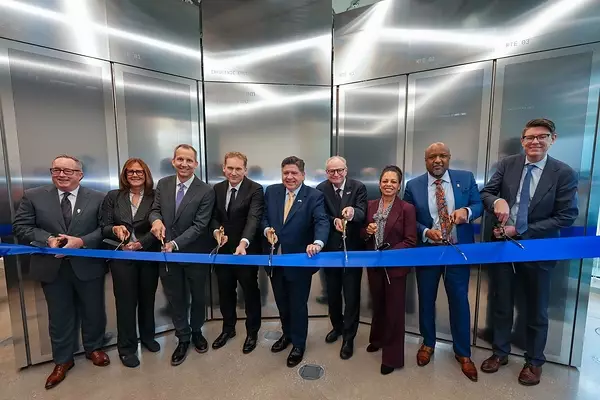
IBM Unveils Its Most Advanced Quantum Computer in Chicago, Marking a Milestone for Illinois's Quantum Future
IBM Unveils Its Most Advanced Quantum Computer in Chicago, Marking a Milestone for Illinois's Quantum Future