Skip to Content Facebook Feature Image

Stephen Miller replaces Susie Wiles as Trump's White House chief of staff after GOP's midterm defeat

News

Stephen Miller replaces Susie Wiles as Trump's White House chief of staff after GOP's midterm defeat
News

News

Stephen Miller replaces Susie Wiles as Trump's White House chief of staff after GOP's midterm defeat

2026-11-07 09:37 Last Updated At:09:40

WASHINGTON (AP) — President Donald Trump said Friday that Stephen Miller was replacing Susie Wiles as White House chief of staff, installing as his closest adviser a loyal, combative bulldog for his “America First” agenda as the president prepares to stare down a newly empowered Democratic Congress next year.

Miller, long a member of Trump’s tight inner circle, is a key architect of the administration’s hard-line immigration policies. He is one of Trump’s longest-serving aides, joining his long-shot 2016 presidential campaign as a speechwriter. He most recently has served as White House deputy chief of staff for policy and oversees a broad portfolio, though he is best known for his role in Trump’s immigration policy.

The staff shuffle signals that Trump, whose Republican Party was handed monumental defeats in Tuesday's midterm elections, is resisting a conciliatory approach to Democratic lawmakers who are eager to investigate the administration — including Miller himself as a top target. Miller, 41, is a dogged defender of Trump and has built a deep and sophisticated understanding of a president's executive power and how the federal government operates, portending a potential burst of executive actions in the final two years of Trump's presidency.

Wiles gave Trump her resignation Thursday night, a person familiar with the events told The Associated Press, speaking on condition of anonymity to describe the private conversation. Trump praised Wiles and said she’d continue to work for his political organization.

Trump on Friday night denied that he made the change because he was unhappy with his team after the deep losses his party suffered.

“Not because of the election. It’s just time," Trump said. "Sometimes you change. The election wasn’t my election. I wasn’t on the ballot.”

Wiles, the steely political operator and longtime adviser to Trump, was the first woman to ever serve in that post and the longest-serving White House chief of staff for Trump, who cycled through four of them during his first four-year term.

“Serving President Trump in the White House has been the honor of a lifetime. I’m so proud to have been a part of what we’ve accomplished together from securing our border and cutting taxes to strengthening our economy and putting America First,” Wiles said in a social media post shortly after Trump’s announcement.

The departure also came months after Wiles indicated she no longer showed evidence of breast cancer after she underwent months of treatment for the disease, a diagnosis she went public with in March 2026.

During the midterm campaign, Miller took frequent partisan swipes at Democrats, calling them “extremists, freaks and America-hating lunatics” on social media and promoting unfounded theories about election fraud in California and Alaska.

He has been a major part of the Trump administration’s anti-fraud task force targeting benefit programs and a decision to suspend Microsoft and others from a green card program. He also served as homeland security adviser at the White House, giving him a perch from which to coordinate with other agencies across the government.

He joined Trump on Friday for his trip to Florida, and the president noted to reporters that "Stephen has been with me from the beginning.

"He gets it; very good politically," Trump said as he departed the White House. "He’ll do a great job. Great manager.”

But the immigration policies that Miller is so closely associated with were a major liability for Republicans during the just-wrapped election. The midterm AP Voter Poll found that most voters, about 6 in 10, said the administration’s immigration enforcement actions had gone too far and they “somewhat” or “strongly” disapproved of how Immigration and Customs Enforcement had handled its responsibilities.

“Just days after the American people rejected his corrupt and lawless presidency, Donald Trump is doubling down,” said Rep. Robert Garcia, D-Calif., who is set to become chairman of the powerful House Oversight Committee. “Stephen Miller is the architect of the unconstitutional ICE raids that have terrorized our communities and kidnapped and killed American citizens and immigrant families.”

In a statement, Garcia added, “Stephen Miller should lawyer up.”

Trump on Friday praised Wiles, the veteran Florida operative who joined Trump’s team during his 2016 presidential bid, as having done a “very good job, great job.”

But he added, “Sometimes in life, you have to make moves.”

Wiles, 69, is the second woman to lead Trump’s presidential campaign to victory, although she never embraced the formal title of campaign manager.

She has been credited with steering the most disciplined of his three presidential bids, and Trump himself has said he was often told that Wiles led his “best-run campaign.” Often called the “ice maiden” by the president, she was seen as the no-brainer choice to serve as White House chief of staff at the start of his second term.

Wiles stuck with the job even after her breast cancer diagnosis. Deep into the midterm campaign, six months after having revealed her diagnosis, she said she was “cancer-free,” indicating she no longer showed evidence of cancer after her pathology results came back clear.

In a rare interview, Wiles told Fox News Digital last month that she hadn’t been planning on getting the mammogram that ultimately detected her cancer. Her doctor suggested she do the exam anyway, because a mammogram machine was available that day and her schedule was too busy and unpredictable.

Wiles, the daughter of the late NFL player-turned-broadcaster Pat Summerall, cut her reputation as someone who brought discipline to the president’s chaotic style and shunned the spotlight, so much so that at Trump’s 2024 election night victory party, she repeatedly shook her head and avoided the microphone as Trump tried to coax her to speak to the crowd.

In addition to Trump, Wiles also ran incumbent Sen. Rick Scott’s 2010 campaign for Florida governor and briefly served as manager of former Utah Gov. Jon Huntsman’s 2012 presidential campaign. She spearheaded Ron DeSantis ’ successful run for Florida governor in 2018, but DeSantis would eventually urge the Trump campaign in 2020 to cut ties with Wiles, creating a rift that led to a particularly vicious effort by those in Trump’s orbit to mock DeSantis throughout his failed run for the Republican presidential nomination against Trump in 2024.

But in December 2025, nearing the end of Trump’s first year back as president, Wiles became the headline when Vanity Fair magazine published a series of interviews with her and other top Trump administration officials conducted by the author Chris Whipple, an expert on White House chiefs of staff.

The Wiles interviews stuck out for their candor, which is unusual for a sitting White House chief of staff. She said Trump has an “alcoholic’s personality,” although the president does not drink, and said then-Attorney General Pam Bondi had “whiffed” in her handling of the Jeffrey Epstein files while remarking that Vice President JD Vance has been a “conspiracy theorist for about a decade.”

Trump and other administration aides rushed to defend Wiles, who, in turn, disparaged Vanity Fair for publishing what she called a “disingenuously framed hit piece,” though she did not deny making the comments.

In the interviews, which were conducted over a period of several months, Wiles also revealed a bit of her management style, saying she was “not an enabler.”

“I try to be thoughtful about what I even engage in,” Wiles said. “I guess time will tell whether I’ve been effective.”

Associated Press writers Michelle L. Price in West Palm Beach, Florida and Jill Colvin in New York contributed to this report.
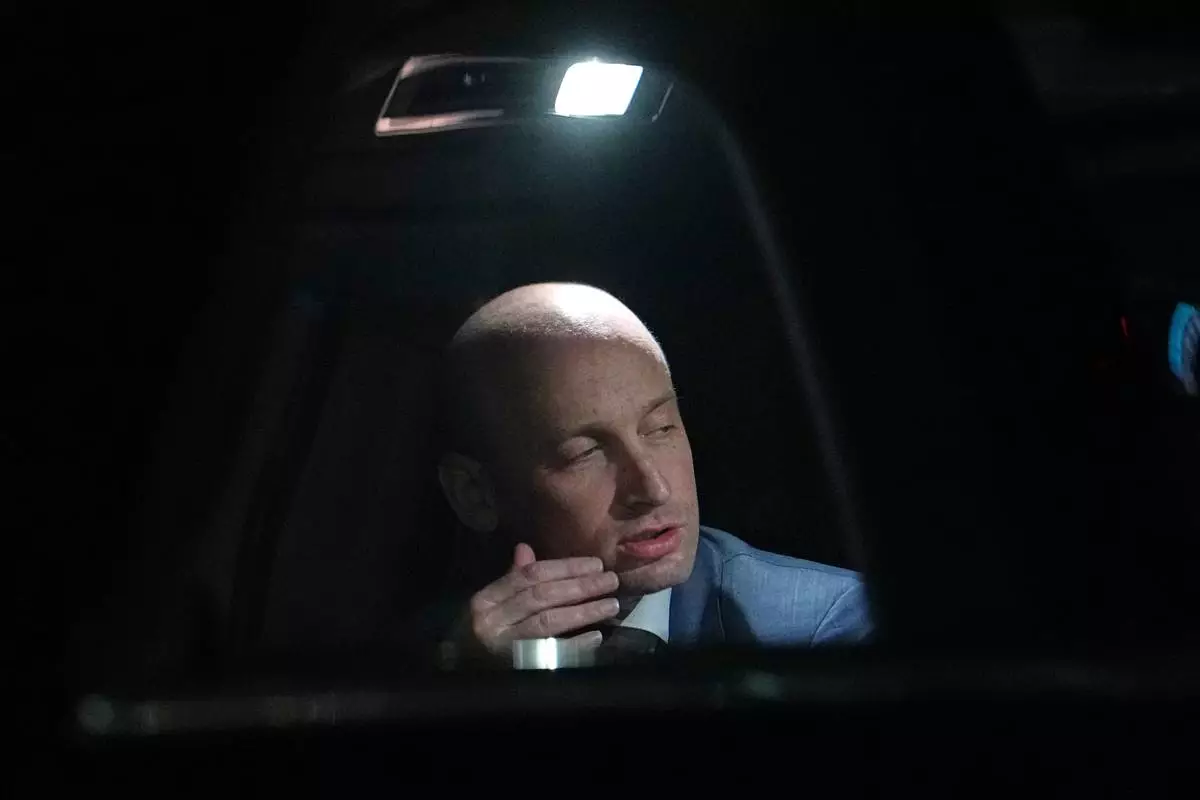
Incoming White House chief of staff Stephen Miller talks as he sits in the presidential limo known as 'the beast' as President Donald Trump talks to reporters after arriving on Air Force One, at President Donald J. Trump International Airport in West Palm Beach, Fla., Friday, Nov. 6, 2026. (AP Photo/Jacquelyn Martin)
Incoming White House chief of staff Stephen Miller talks as he sits in the presidential limo known as 'the beast' as President Donald Trump talks to reporters after arriving on Air Force One, at President Donald J. Trump International Airport in West Palm Beach, Fla., Friday, Nov. 6, 2026. (AP Photo/Jacquelyn Martin)

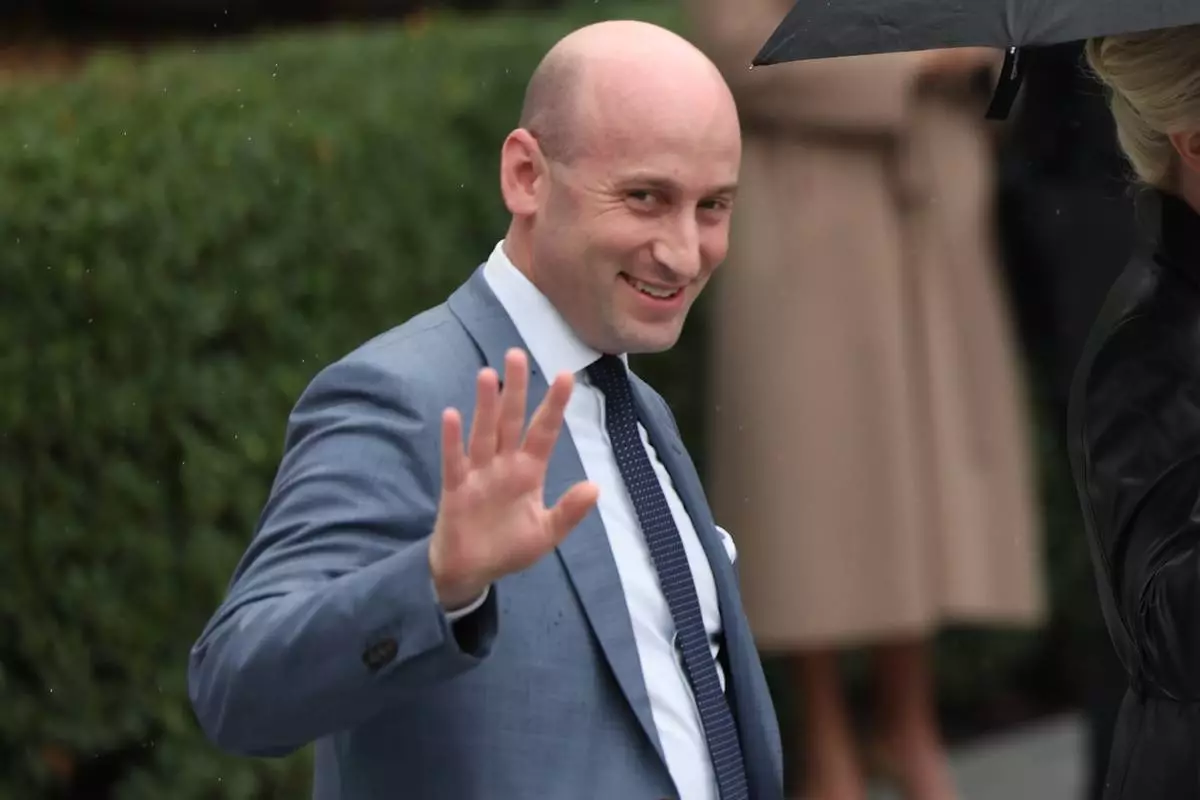
Incoming White House chief of staff Stephen Miller walks to board Marine One with President Donald Trump on the South Lawn of the White House, Friday, Nov. 5, 2026, in Washington. (AP Photo/Tom Brenner)
Incoming White House chief of staff Stephen Miller walks to board Marine One with President Donald Trump on the South Lawn of the White House, Friday, Nov. 5, 2026, in Washington. (AP Photo/Tom Brenner)

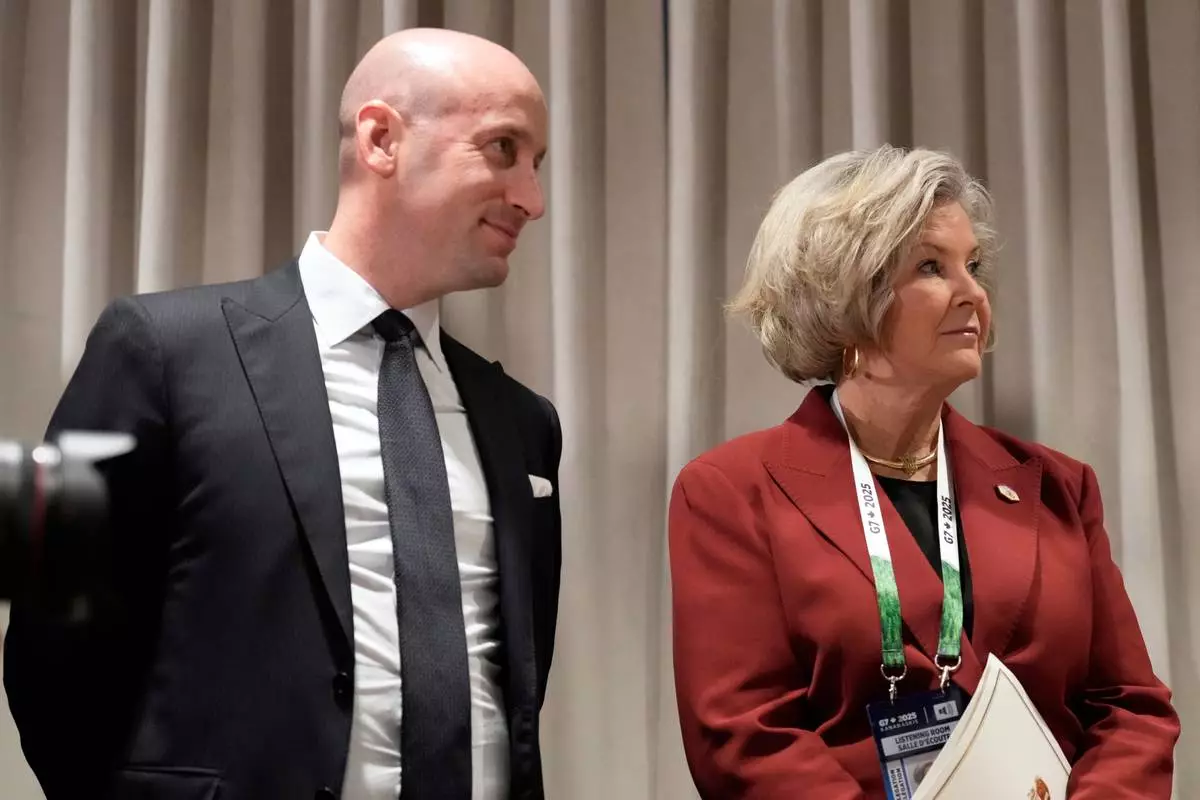
FILE - White House Deputy Chief of Staff Stephen Miller, left, and White House Chief of Staff Susie Wiles listen during a meeting with President Donald Trump and Canada's Prime Minister Mark Carney on the sidelines of the G7 Summit, June 16, 2025, in Kananaskis, Canada. (AP Photo/Mark Schiefelbein, File)

FILE - White House Deputy Chief of Staff Stephen Miller, left, and White House Chief of Staff Susie Wiles listen during a meeting with President Donald Trump and Canada's Prime Minister Mark Carney on the sidelines of the G7 Summit, June 16, 2025, in Kananaskis, Canada. (AP Photo/Mark Schiefelbein, File)
WASHINGTON (AP) — President Donald Trump said the U.S. military on Friday carried out new limited strikes on Iran, targeting its air defense systems.

Iranian state media reported the sound of two explosions in the Suza area of Qeshm Island, which is in the crucial waterway for oil shipments.

Trump in an exchange with reporters described the military action as "minor."

“They knocked out -- they built a little bit of an anti-aircraft device and we knocked it out in about 15 minutes, maybe five," Trump told reporters shortly after arriving in West Palm Beach, Florida, on Friday evening.

The U.S. military also reported carrying out what it described as defensive strikes on Monday. Explosions were heard on the islands of Qeshm and Hengam in the strategic Strait of Hormuz, and in the nearby mainland area of Bandar Abbas.

Friday's strikes are the first since Trump’s Republican Party was dealt a stunning repudiation in Tuesday’s midterm elections in the U.S.

The electoral setback — Republicans lost both chambers of Congress — was stoked in part by voter dissatisfaction with Trump’s execution of the conflict and elevated fuel prices, a byproduct of the war that’s affected nearly every sector of the global economy.

In the days since Republicans' shellacking at the polls, Trump has vacillated between threatening to “destroy” Iran and suggesting that a resolution to the war is near.

Earlier Friday, two Middle East government officials said Iran was reviewing proposals presented by chief mediator Qatar aimed at addressing differences with the United States about Tehran’s nuclear program.

But one of the officials stressed that the Iranians, at least at the moment, remain unwilling to engage in negotiations with the Trump administration over its atomic activities until the U.S. agrees to several core conditions that Iran has been demanding be part of any ceasefire agreement.

Difference over Iran's nuclear program is the thorniest issue and one that Trump insists must be resolved as part of any deal meant to end the more than 8-month-old war.

Both officials were not authorized to comment publicly on the delicate negotiations and spoke on the condition of anonymity.

Meanwhile, U.S. Central Command, which oversees U.S. military operations in the Middle East, announced in a post on X late Friday that the United States was offering “a reward of up to $20 million and possible relocation for information about Iran’s nuclear program, including its facilities, equipment, and associated personnel, such as those in the scientific community, or the movement of any of the above.”

The post included a link to the State Department’s Rewards for Justice program.

The White House declined to comment about the Qatari-presented proposals on Iran's nuclear program, but Trump noted earlier Friday in an exchange with reporters that mediators' discussions with Iran continue.

“We are talking to Iran. We have been,” said Trump, who insists the U.S. military remains in control of the conflict with a battered Iran.

Yet, Tehran insists on several concessions from the U.S., which Trump has declined in the past. Among the core demands Iran says must be met before engaging in nuclear talks: ending the U.S. blockade on Iran’s ports, lifting sanctions, unfreezing its assets, issuing compensation for war damage, and ending hostilities throughout the region, including Israeli operations in Lebanon.

Mediators and Iran have discussed a potential bridge deal aimed at helping pave the way for further talks on Tehran’s nuclear program, according to regional officials.

They said the proposal, which was recently presented to the two sides by Qatari mediators, called for implementing trust-building measures over the course of two days.

These measures include lifting the U.S. blockade and releasing some of the billions of dollars in Iranian frozen funds seized over the years as part of a U.S. campaign to isolate Iran over its nuclear program. In return, Tehran would allow International Atomic Energy Agency inspectors at its sites bombed by the U.S. and Israel, the officials said.

On the second day, Iran would reopen the Strait of Hormuz in line with a modified agreement that Iran and Oman have reached on the waterway but has not been approved by the United States, the officials said. That mechanism would be temporary until a permanent deal is reached on the strait in cooperation with other Gulf countries, they said.

Following the implementation of the measures, the U.S. and Iran would embark on extensive talks addressing Iran’s stockpile of highly enriched uranium as well as other aspects of its program, the officials said.

Iran has long maintained that its nuclear program is peaceful. According to the International Atomic Energy Agency, Iran has 440.9 kilograms (972 pounds) of uranium that is enriched up to 60% purity, a short, technical step from weapons-grade levels of 90%.

A flurry of diplomatic phone calls in recent days between leaders in the Persian Gulf and beyond has been aimed at easing tensions in the region. Concerns have mounted over the possibility that Trump could still order the U.S. military to carry out new strikes against Iran.

Defense Secretary Pete Hegseth spoke on Friday with his Qatari counterpart, Sheikh Saoud bin Abdulrahman Al Thani, about developments, according to the Qatari government.

The Qatari government announced the call between the countries’ defense officials after confirming earlier Friday that Trump and Qatar’s emir had a separate call to discuss efforts to deescalate tensions.

Iranian Foreign Minister Abbas Araghchi also held phone calls with his Iraqi and Tunisian counterparts on Friday to discuss tensions in the region. Araghchi discussed with Iraqi Foreign Minister Fuad Hussein Tehran’s vision for resuming negotiations with the U.S., according to Iraq’s News Agency.

Egyptian Foreign Minister Badr Abdelatty, who held two calls with Araghchi this week, said in a post on X on Friday that it was critical that both sides demonstrate “flexibility” to achieve the “compromise solutions” necessary to prevent the region from sliding into a new wave of escalation.

Egypt’s top diplomat also held a phone call with his Emirati counterpart, Abdullah Bin Zayed Al Nahyan, to emphasize the importance of political negotiations to prevent another military confrontation that could fuel violence and destruction, according to a statement by Egypt’s Foreign Ministry.

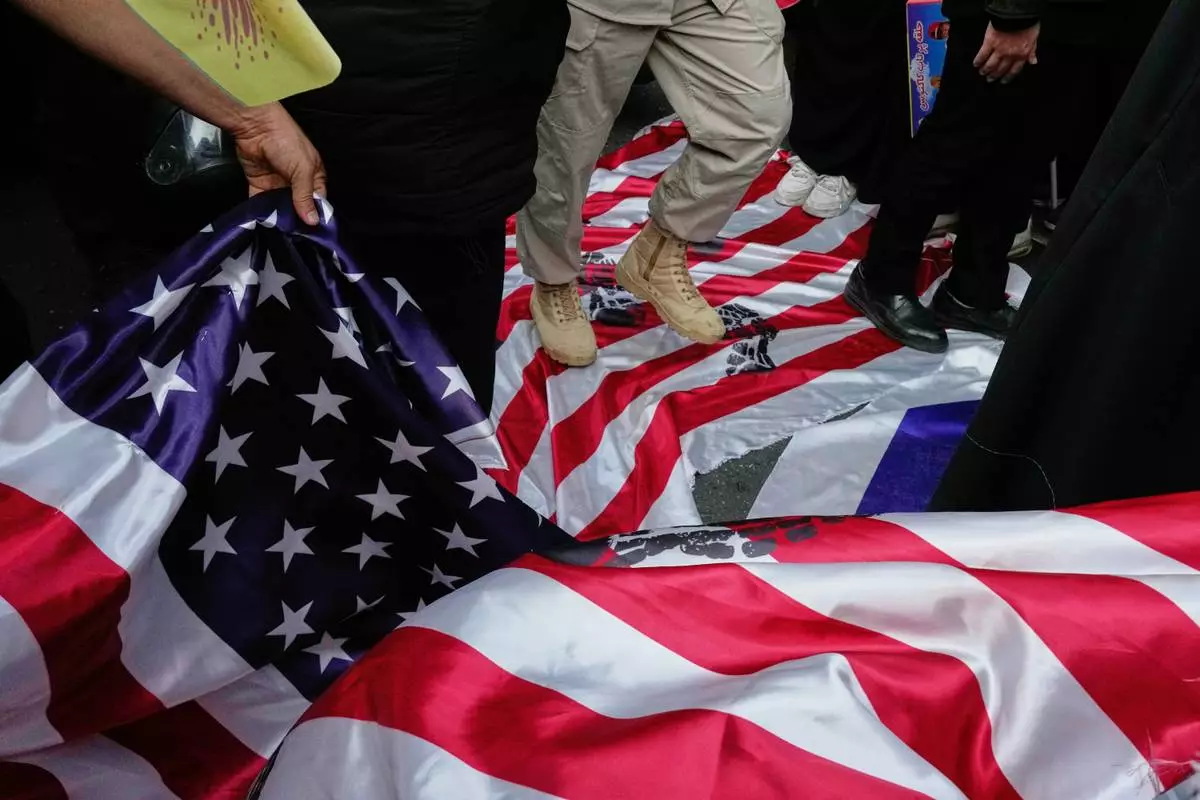
Iranian government supporters step on U.S. and Israeli flags during the annual rally marking the anniversary of the 1979 U.S. Embassy takeover, outside the former embassy in Tehran, Iran, Wednesday, Nov. 4, 2026. (AP Photo/Vahid Salemi)

Iranian government supporters step on U.S. and Israeli flags during the annual rally marking the anniversary of the 1979 U.S. Embassy takeover, outside the former embassy in Tehran, Iran, Wednesday, Nov. 4, 2026. (AP Photo/Vahid Salemi)

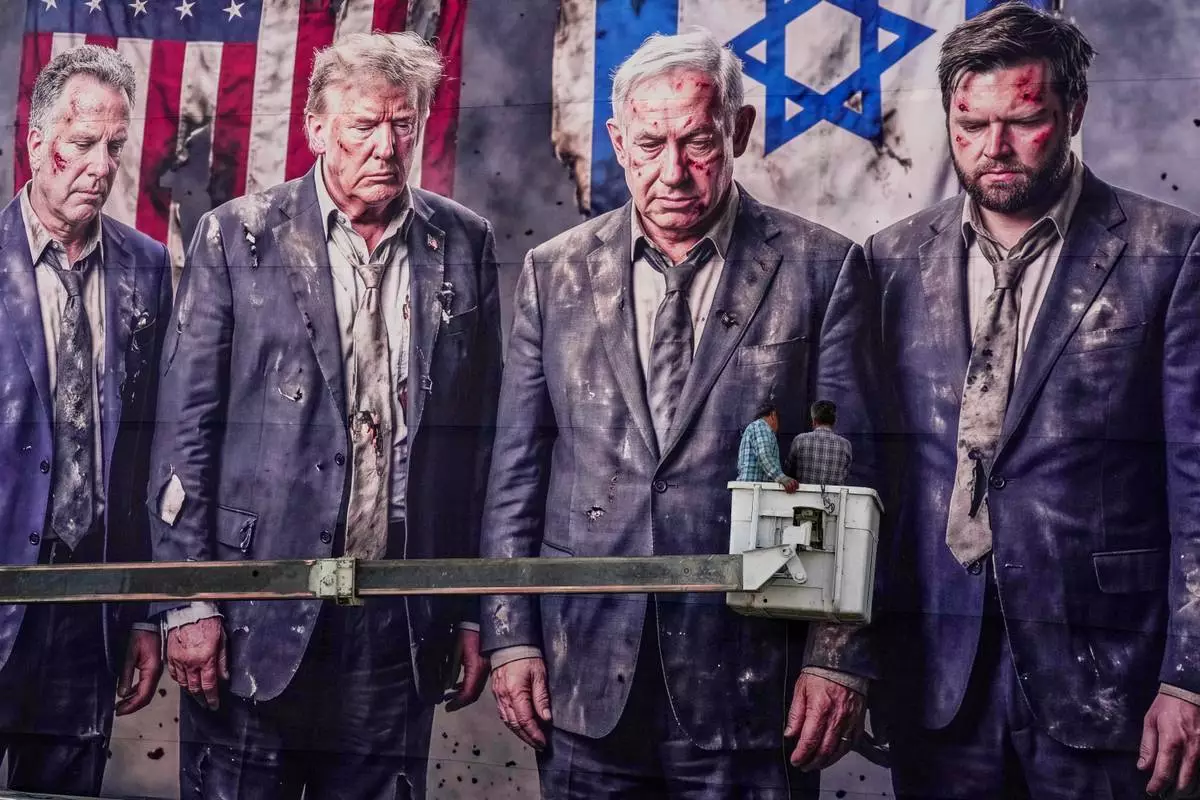
Workers install a billboard depicting, from left, U.S. special envoy to the Middle East Steve Witkoff, U.S. President Donald Trump, Israeli Prime Minister Benjamin Netanyahu and U.S. Vice President JD Vance with apparent injuries and torn clothing in central Tehran, Iran, Tuesday, Nov. 3, 2026. (AP Photo/Vahid Salemi)

Workers install a billboard depicting, from left, U.S. special envoy to the Middle East Steve Witkoff, U.S. President Donald Trump, Israeli Prime Minister Benjamin Netanyahu and U.S. Vice President JD Vance with apparent injuries and torn clothing in central Tehran, Iran, Tuesday, Nov. 3, 2026. (AP Photo/Vahid Salemi)

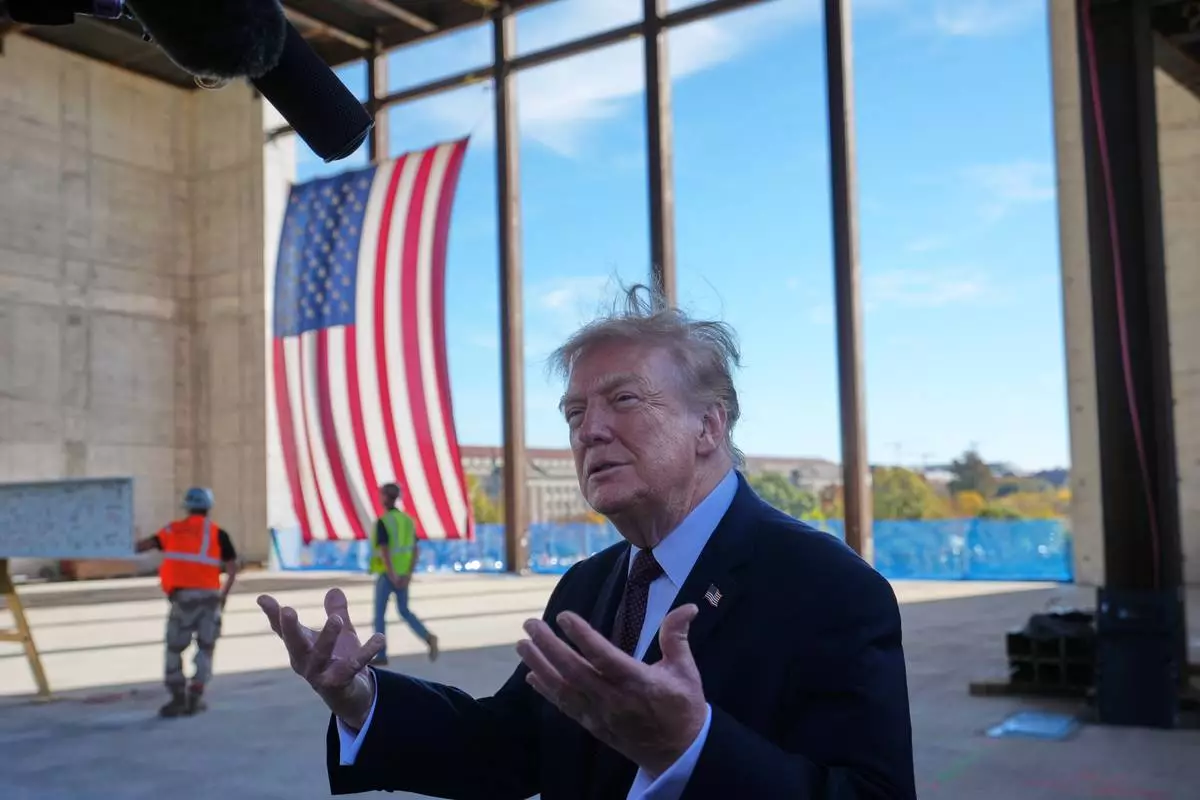
President Donald Trump talks to reporters during a tour of White House Ballroom construction at the White House, Wednesday, Nov. 4, 2026, in Washington. (AP Photo/Alex Brandon)

President Donald Trump talks to reporters during a tour of White House Ballroom construction at the White House, Wednesday, Nov. 4, 2026, in Washington. (AP Photo/Alex Brandon)

Recommended Articles