DALLAS--(BUSINESS WIRE)--Nov 6, 2026--
HGP Intelligent Energy, LLC ("HGP"), a nuclear technology company, today announced it has submitted a letter of intent to the U.S. Nuclear Regulatory Commission (NRC), the first formal step toward regulatory review of its technology for pressurized water reactors, the most common type of U.S. nuclear plant.
This press release features multimedia. View the full release here: https://www.businesswire.com/news/home/20261106799752/en/
One of the fastest ways to add electricity is to “uprate” existing nuclear plants, letting them produce more power from the reactors they already have. In October, the U.S. Department of Energy announced conditional loan commitments of up to $9.2 billion for uprates.
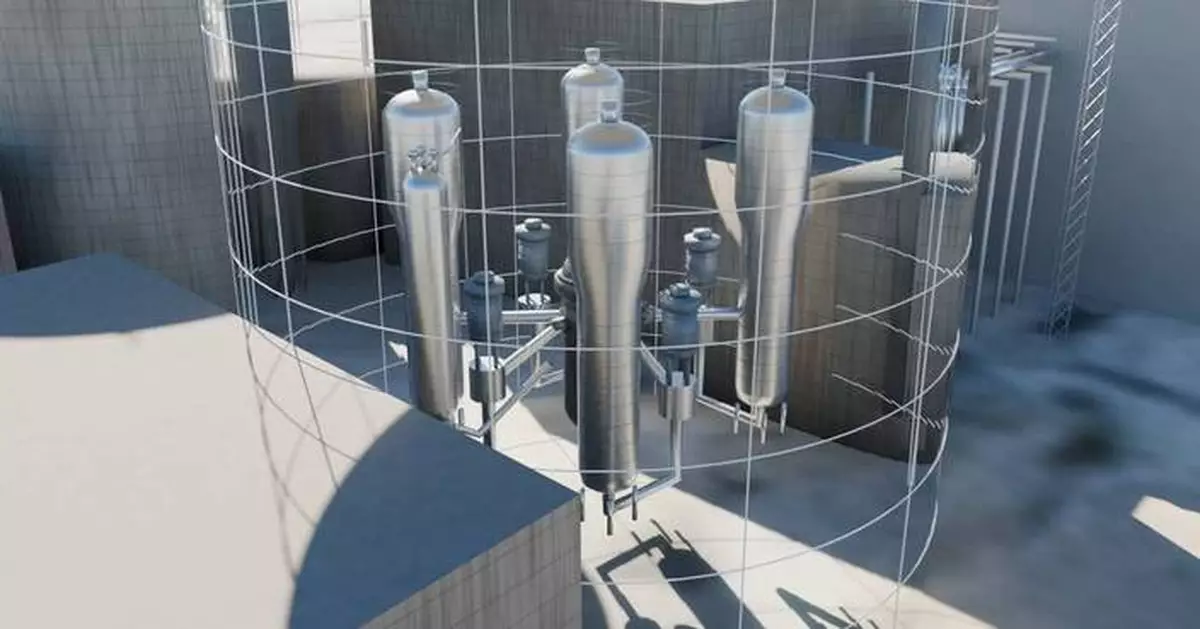
HGP’s software and coolant controls are designed to help a plant run steadily at higher output. Most plants adjust power by moving control rods or changing the chemistry of the cooling water. HGP adjusts it by changing how fast cooling water flows through the reactor, guided by a “digital twin,” a live, physics-based computer model of the plant. The goal is fewer unplanned shutdowns, so the added megawatts that new investment pays for stay on the grid. The system is designed to be introduced in stages. It starts in watch-only mode, reading plant data with no ability to change anything, and any step beyond that would go through NRC review. The plant’s safety systems stay independent throughout. HGP calls this approach Reactor-to-Rack: dependable nuclear power matched to the needs of data centers.
GP plans to file a detailed technical report with the NRC. If the NRC accepts it, plant owners could rely on it in their own uprate applications. The NRC has not reviewed or approved HGP’s technology. Separately, HGP was quoted by the NRC in a recent rulemaking on how the agency will review reactor designs previously authorized by other federal agencies. HGP actively participates in NRC rulemaking on how new nuclear technology is reviewed and licensed.
"Uprates are one of the fastest ways to meet rising electricity demand, including from AI data centers, using plants that are already built and paid for," said Gregory Forero, Founder and Chief Executive Officer of HGP. "We are moving forward in close coordination with the NRC."
About HGP Intelligent Energy
HGP Intelligent Energy, LLC, based in Dallas, Texas, develops software and coolant-control technology that helps nuclear plants deliver steady, dependable power. www.hgpenergy.com
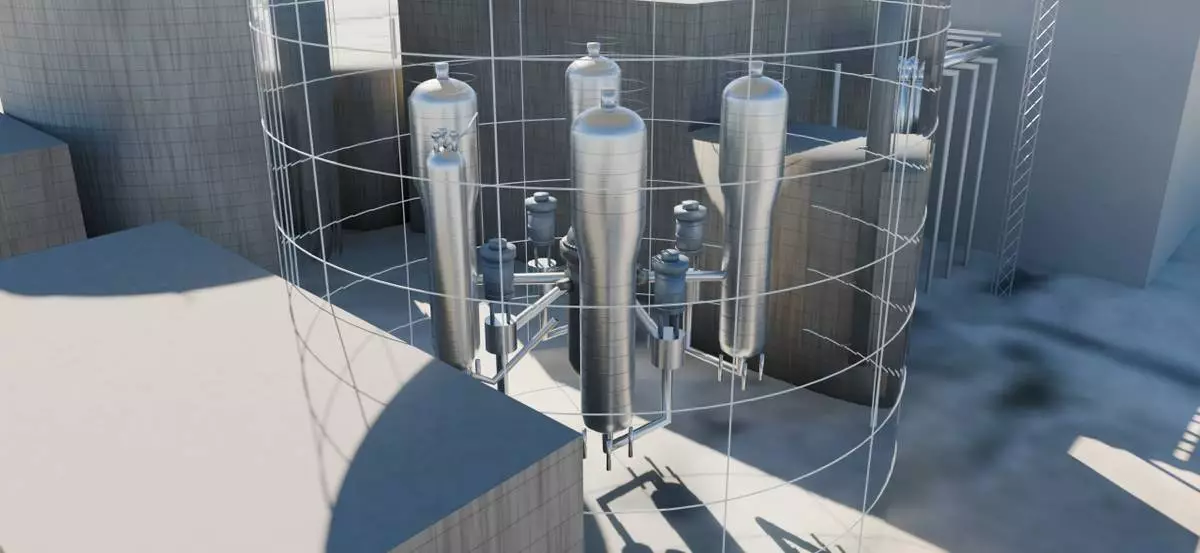
HGP rendering of a nuclear plant's reactor cooling system. Illustrative only. Image: HGP Intelligent Energy.
ASUNCIÓN, Paraguay (AP) — Paraguay’s Senate voted to remove President Santiago Peña on Friday, convicting him of misconduct over the collapse of a major digital bank tied to his business interests.
Vice President Pedro Alliana was set to succeed him.
By convicting Peña instead of accepting his resignation, senators stripped him of the lifetime Senate seat and immunity granted to former presidents, leaving him vulnerable to prosecution. Prosecutors earlier opened three criminal investigations Thursday into public deposits in Ueno, targeting Peña, Alliana and current and former central bank and pension fund officials.
Lawmakers accused Peña of using his office to benefit a bank in which he held a financial stake, exposing public pension funds to losses. In just a few years, Ueno grew from a little-known lender into one of Paraguay’s biggest banks, helped by more than $800,000 in public deposits during his presidency.
THIS IS A BREAKING NEWS UPDATE. Check back for updates. AP’s earlier story follows below.
ASUNCIÓN, Paraguay (AP) — Paraguayan President Santiago Peña failed to appear for his impeachment trial in the Senate on Friday despite promising to defend himself in person, as lawmakers moved toward a verdict that could remove him from office over the dramatic collapse of a bank tied to his administration.
Peña is accused of using his political influence to steer hundreds of millions of dollars in public funds into Ueno Bank while regulators overlooked risky insider lending. The central bank’s seizure of Ueno this week sent shockwaves through Paraguay’s financial and political system and locked nearly 3 million customers out of their savings, prompting mass demonstrations.
Senators voted 39-3 to reject Peña’s request for another 72 hours to prepare his defense. He said he received the summons only hours before the session, along with some 300 pages of accusations and evidence, which left him no time to review the case. Presidents impeached in recent years in other countries, including the United States and Brazil, have had weeks to prepare.
The Senate wrapped up closing arguments late Friday afternoon and moved to a final session to deliberate and vote on whether to remove Peña from office.
His lawyers, Ricardo Preda and Adolfo Ferreiro, argued that senators should have accepted the resignation that the president submitted Thursday instead of pressing ahead with the trial. Opposition lawmakers insist Peña be removed through impeachment to be held accountable, a choice that could decide whether he retains immunity from prosecution.
“He must go, but not home. He must go to a maximum-security prison,” opposition Sen. Yolanda Paredes told reporters. “The public is fed up with impunity.”
Under Paraguay’s Constitution, elected presidents who resign receive a lifetime Senate seat that comes with parliamentary immunity. Prosecutors have already opened criminal investigations into the bank’s collapse targeting Peña, current and former central bank and pension fund officials and Vice President Pedro Alliana, who is next in line for the presidency.
Public outrage has become more thunderous by the day. Thousands of protesters demanding their frozen savings back and accountability for Ueno’s failure have clashed with police firing rubber bullets and pepper spray this week. Paraguay’s largest teachers’ union, which has more than 40,000 members, plans to begin an indefinite national strike Monday to press for protection of public pension funds.
“This was an enormous betrayal of trust,” said Yinal López, a worker at the state electricity company, whose employee pension fund also had money at Ueno. “The president made a mockery of the people. He used their money, the people’s money, to do whatever he wanted.”
Ueno’s implosion has plunged Paraguay into its deepest political crisis in more than a decade — and at dizzying speed. Regulators seized the bank before dawn Tuesday. By Thursday afternoon, Peña had offered to resign as his conservative Colorado party turned on him, led by former President Horacio Cartes, the party chief and Peña’s longtime mentor. By Friday, his interior minister, chief of staff, legal adviser and political adviser had all quit.
It was a staggering reversal of fortunes for Peña, a telegenic technocrat and former International Monetary Fund economist who owed his rapid political ascent to Cartes. The tobacco magnate, among Paraguay’s richest men, made Peña his finance minister and twice backed him for president over rival factions’ objections.
Once in office, though, Peña quietly amassed a rival power base, analysts say. Ueno Bank, flush with public deposits, became the centerpiece of both his business empire and his effort to win over provincial governors as he sought to escape Cartes' shadow.
“It's like a Shakespearean drama. He tried to displace his mentor, his political patron,” said Miguel Carter, director of DEMOS, a Paraguayan research center. “But he did so on very fragile grounds.”
Cartes struck back. In September, senators loyal to him demanded answers from the central bank about Ueno’s lending, citing leaked internal reports that warned its loans to related companies put its solvency at risk. When Ueno collapsed this week, so did Peña’s leverage, and Cartes, once sanctioned by the U.S. Treasury over alleged corruption, publicly called for the ouster of his erstwhile protégé.
“Cartes put the nail in the coffin,” said Andrew Nickson, a Paraguay expert at the University of Birmingham. “Peña had no political base to rely on, and he was left high and dry."
Ueno rose from obscurity to become Paraguay’s fifth-largest bank by deposits in just a few years, with more than $800 million in public money turbocharging its expansion. It signed up more than two-thirds of the country’s adults, its splashy logo appearing everywhere from the national soccer stadium to street vendors’ bank cards.
The impeachment charges cite Peña’s stake in Ueno’s holding company, which he divested under pressure last year, and his appointment of a former Ueno executive to run the central bank that regulated it. Lawmakers also accuse him of letting the state pension fund deposit $355 million at the bank, beyond legal limits.
Analysts say those high-level connections helped shield Ueno from regulatory scrutiny even as concerns about its finances grew.
“For the last 20 years, the central bank has been one of the two pillars that gave Paraguay international credibility in managing its economy," said José Tomás Sánchez, a political theory professor at the National University of Asunción. “And under Peña, it began to lose credibility, lose neutrality and then relax all its control mechanisms to favor the business group that had Ueno Bank as one of its pillars.”
Overnight, Ueno customers could no longer withdraw cash, access their savings or use their cards to buy anything. The digital lender had aggressively courted the poor and unbanked with generous supermarket rebates, and more than 1 million Paraguayans opened their first bank account there, according to Ueno. Even players on the national soccer team, which Ueno sponsored through its run to a World Cup upset of Germany this year, say their accounts are frozen.
"The ripple effect on the general population has been immense," Nickson said. “That has fueled the ire of many people in Paraguay who are not particularly politically aware or very interested in politics."
Some depositors began recovering their money Thursday, starting with those holding up to 10 million guaraníes (about $1,600). Deposits are insured up to about $37,000, which the central bank says covers nearly all of Ueno’s customers. It calls the collapse an isolated case and insists the broader financial system is safe.
Prosecutors have charged 27 people, including Ueno’s controlling shareholder, Miguel Vázquez, with crimes including breach of trust and attempted fraud, and six bank directors are in pretrial detention. Authorities have seized nine luxury cars from Vázquez’s home, along with a yacht and small planes linked to him, and searched executives’ homes in a gated community outside the capital.
DeBre reported from Salto, Uruguay, and Batschke from Montevideo, Uruguay.
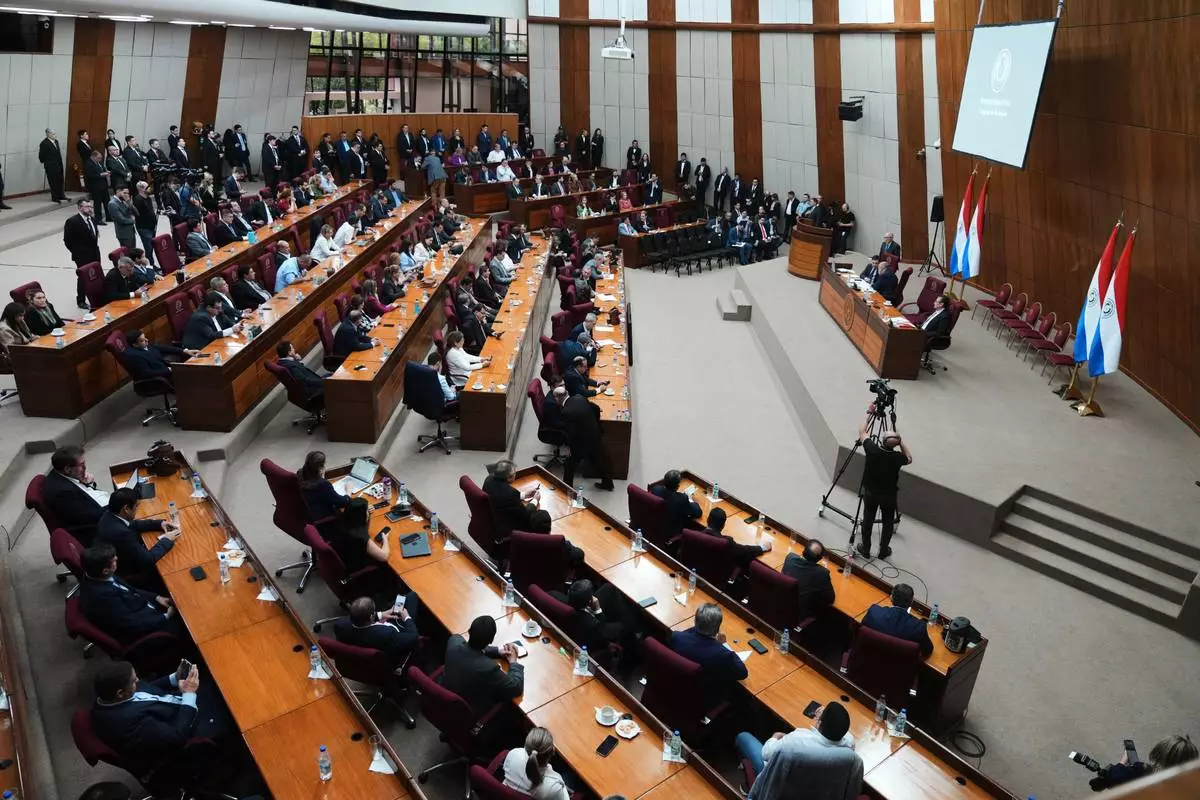
Lawmakers debate whether to accept President Santiago Pena's resignation, after Paraguay's central bank took over Ueno Bank amid a solvency crisis that froze millions of people's savings, at Congress in Asuncion, Paraguay, Thursday, Nov. 5, 2026. (AP Photo/Jorge Saenz)
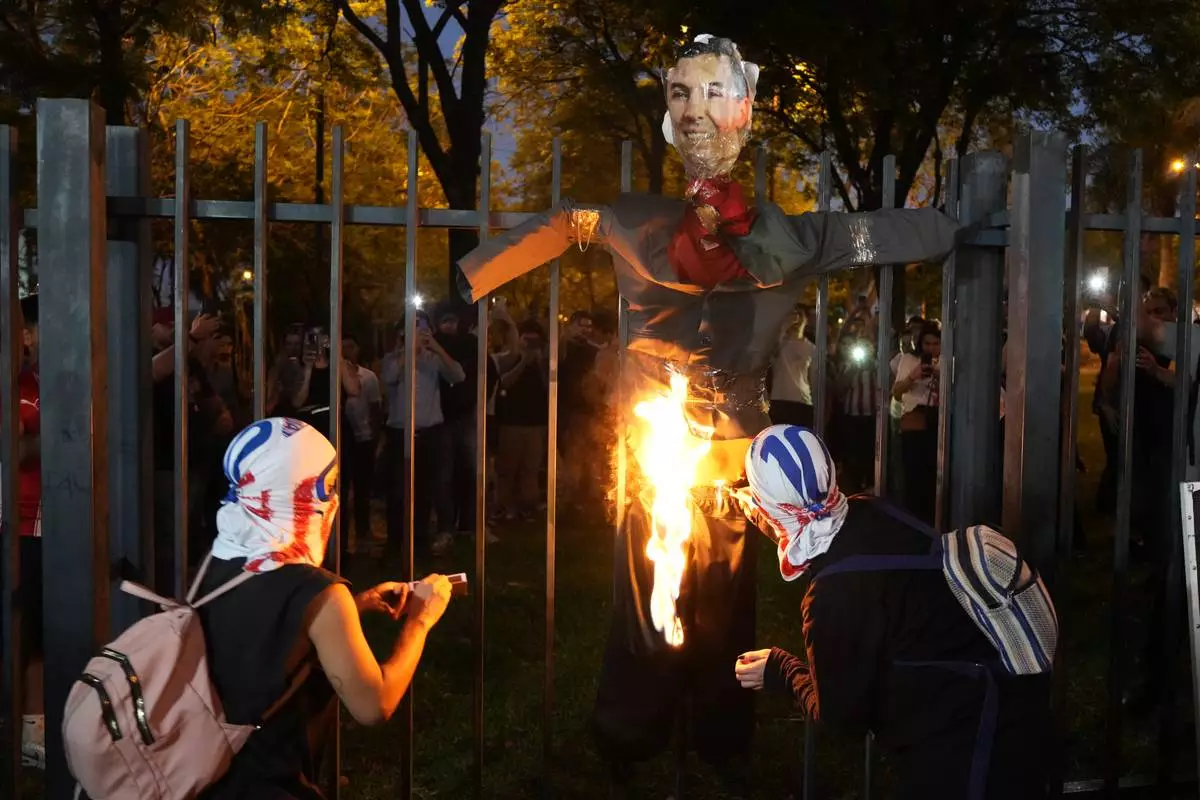
Protesters burn a effigy depicting President Santiago Pena outside Congress following a failed session to discuss Pena's resignation, days after Paraguay's central bank took over Ueno Bank over a solvency crisis, in Asuncion, Paraguay, Thursday, Nov. 5, 2026. (AP Photo/Jorge Saenz)
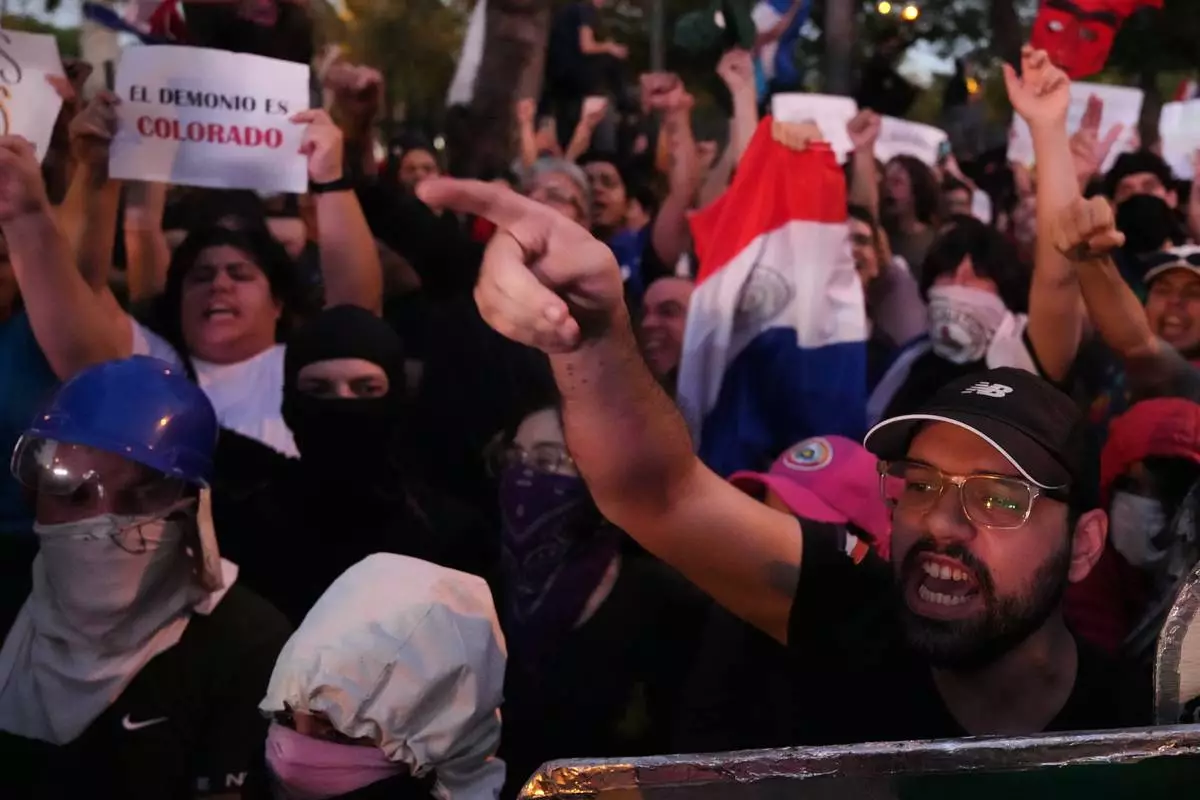
People protest outside Congress during a session to discuss President Santiago Pena's resignation, days after Paraguay's central bank took over Ueno Bank amid a solvency crisis, in Asuncion, Paraguay, Thursday, Nov. 5, 2026. (AP Photo/Jorge Saenz)
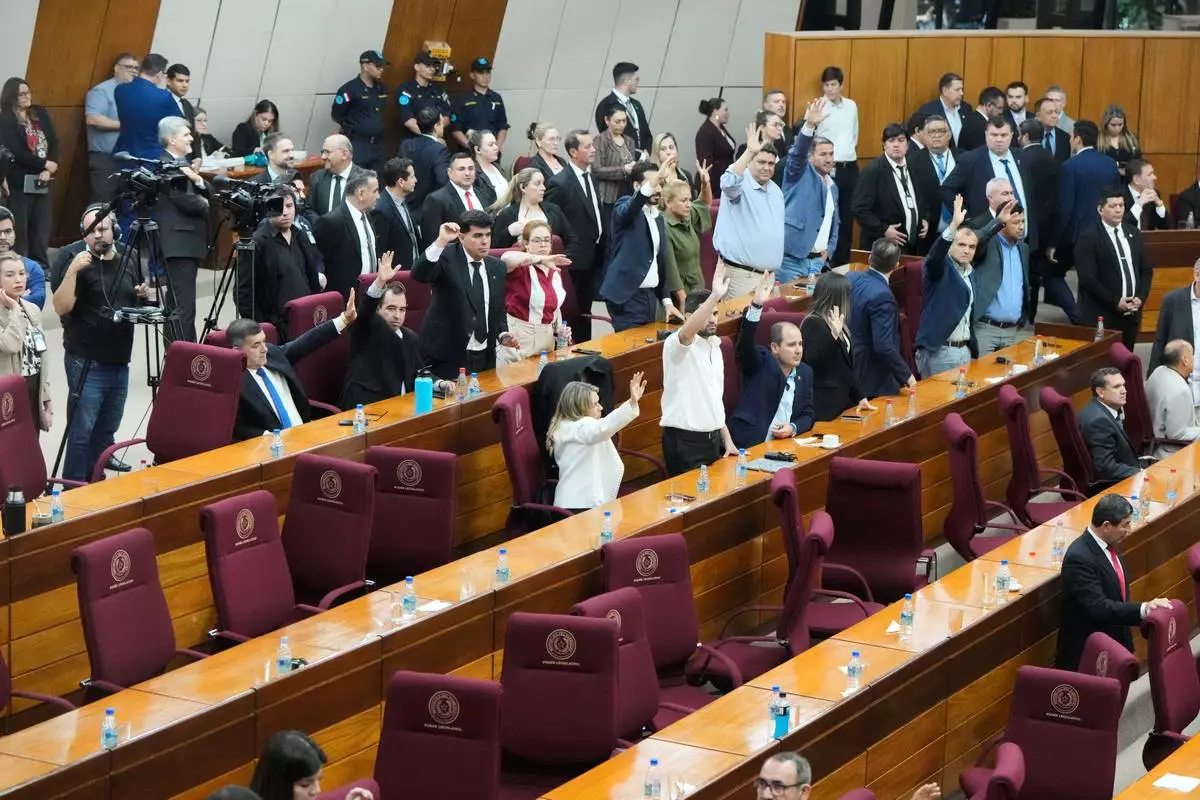
Lawmakers debate whether to accept President Santiago Pena's resignation following Paraguay's central bank takeover of Ueno Bank amid a solvency crisis, at Congress in Asuncion, Paraguay, Thursday, Nov. 5, 2026. (AP Photo/Jorge Saenz)
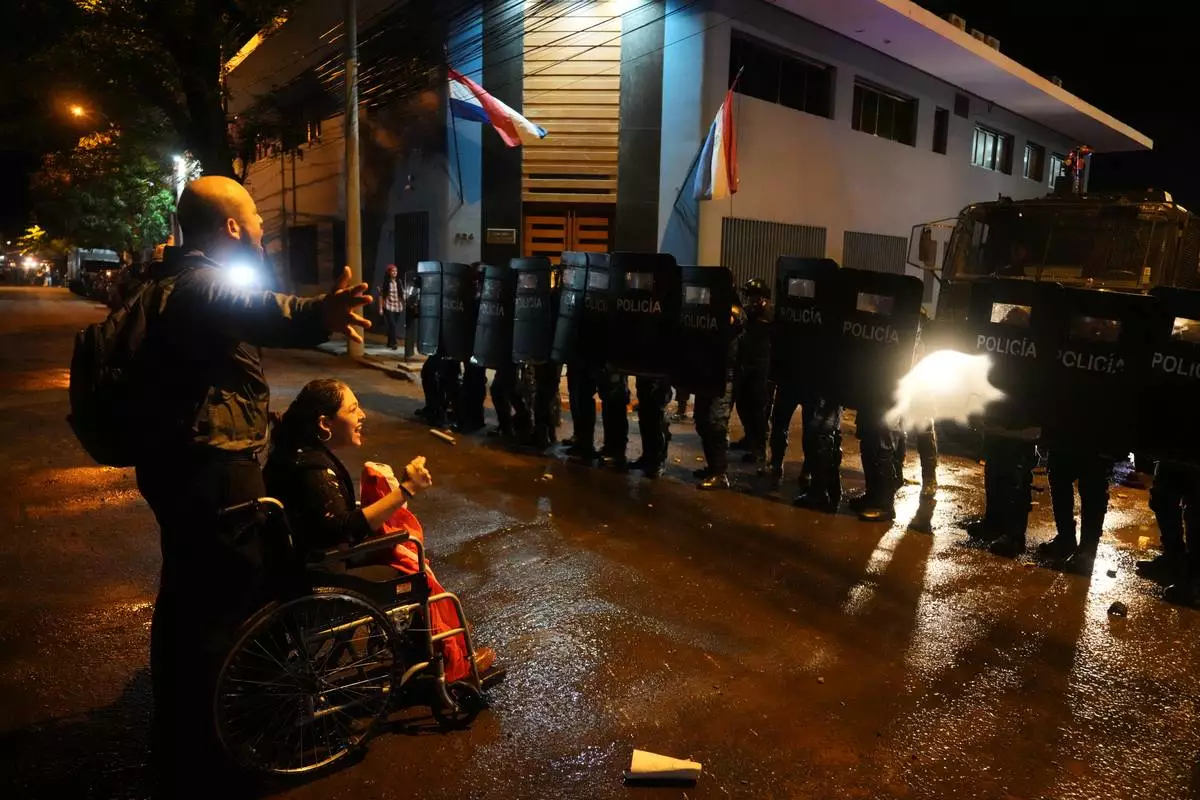
People protest in front of police against the government and Ueno Bank, which Paraguay's central bank seized amid a solvency crisis, in Asuncion, Paraguay, Wednesday, Nov. 4, 2026. (AP Photo/Jorge Saenz)