The European Public Prosecutor's Office (EPPO) said on Friday that its Madrid office has launched a second investigation into possible fraud involving EU funds for the maintenance and upgrading of Spain's Madrid-Seville high-speed railway line, in the wake of a fatal high-speed train crash on October 28 which led to the deaths of 69 people and injury of dozens of others.
According to an EPPO statement, investigators are carrying out investigative measures at Spain's railway infrastructure manager ADIF, the Spanish Railway Safety Agency (AESF) and the Court of Auditors. The investigation is supported by the Central Operative Unit (UCO) of the Spanish Civil Guard and was initiated by the EPPO on its own initiative.
The investigation concerns EU funds allocated to the upgrading of the Madrid-Seville high-speed railway line, including its safety, signaling and communication systems. The deadly October 28 train crash occurred near Urda, in the province of Toledo, on the same railway line.
The EPPO launched its first investigation in March 2026 into possible fraud involving EU funds for railway maintenance near Adamuz, where an earlier train accident in January killed 46 people.
The EPPO said it had exceptionally decided to confirm the opening of the investigation given the high level of public interest, adding that it would not disclose further details at this stage.
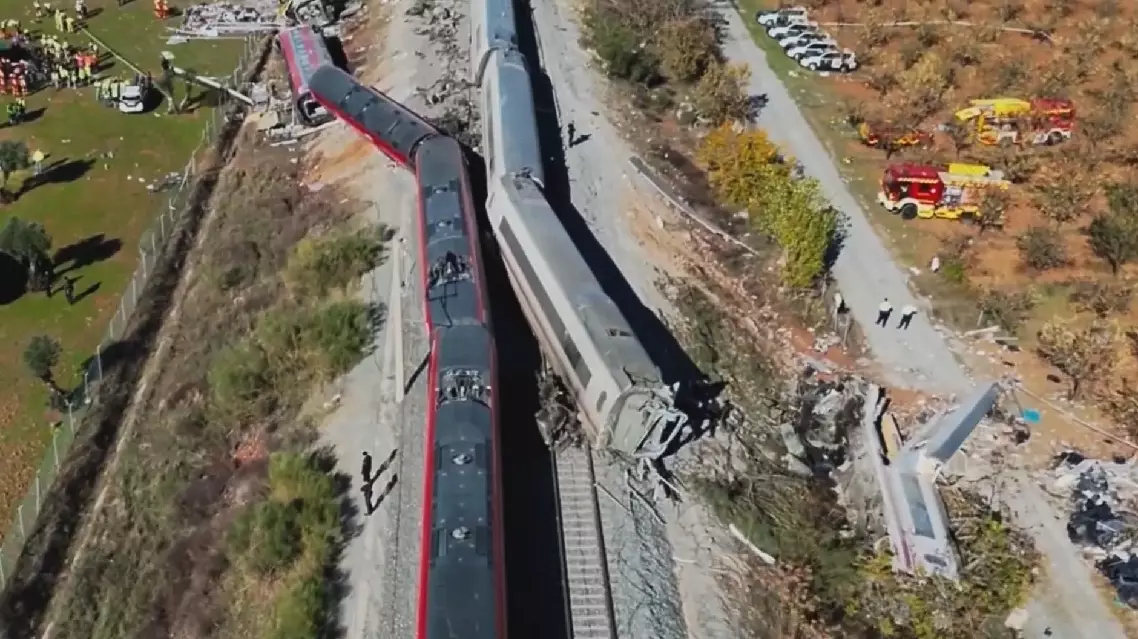
Second probe into suspected fraud in Spain's high-speed train crash case opened
A fresh wave of bomb threats targeting commercial flights disrupted air travel across Europe on Friday, prompting security checks at airports in several countries.
Nine flights arriving at or departing from Prague Airport were targeted on Friday, including four inbound and five outbound flights, the Czech News Agency reported. Police inspections found no explosives, and airport operations continued without significant disruption.
The incident came a day after four aircraft heading to Prague received similar threats. Czech authorities have launched an investigation into the incidents and their possible links to similar threats elsewhere in Europe.
In Italy, the control tower at Rome's Fiumicino Airport received an anonymous call on Friday saying there was an explosive device on a passenger plane flying from Prague to Rome, according to Italy's ANSA news agency. The flight was then diverted to land in Venice, and police were carrying out security checks on the aircraft.
In France, four aircraft flying over French territory were targeted, with three landing at Paris-Orly Airport and one at Bordeaux. All four landed without incident and were undergoing security inspections by bomb disposal teams, the French prime minister's office said, adding that an investigation was underway to determine the source of the alerts.
Portuguese police said on Friday that they received a bomb threat that day against a Ryanair flight from Lisbon to Rome, Italy. No explosive device was found after a security search.
The latest incidents follow a series of threats reported on Tuesday and Thursday, with more than 20 flights affected on Thursday alone.
The flights that received threats on Thursday involved countries including Italy, Spain, the Czech Republic, Bulgaria and Finland, and airlines including Ryanair, Wizz Air, LOT Polish Airlines and Aer Lingus. Some airports and airlines received the threats by email, while some flights received security alerts in the air.
On Tuesday, Poland, Spain, Bulgaria and Italy reported in turn that passenger planes had received bomb threats. Seven planes were involved, causing some flights to be diverted and an airport to be briefly closed.
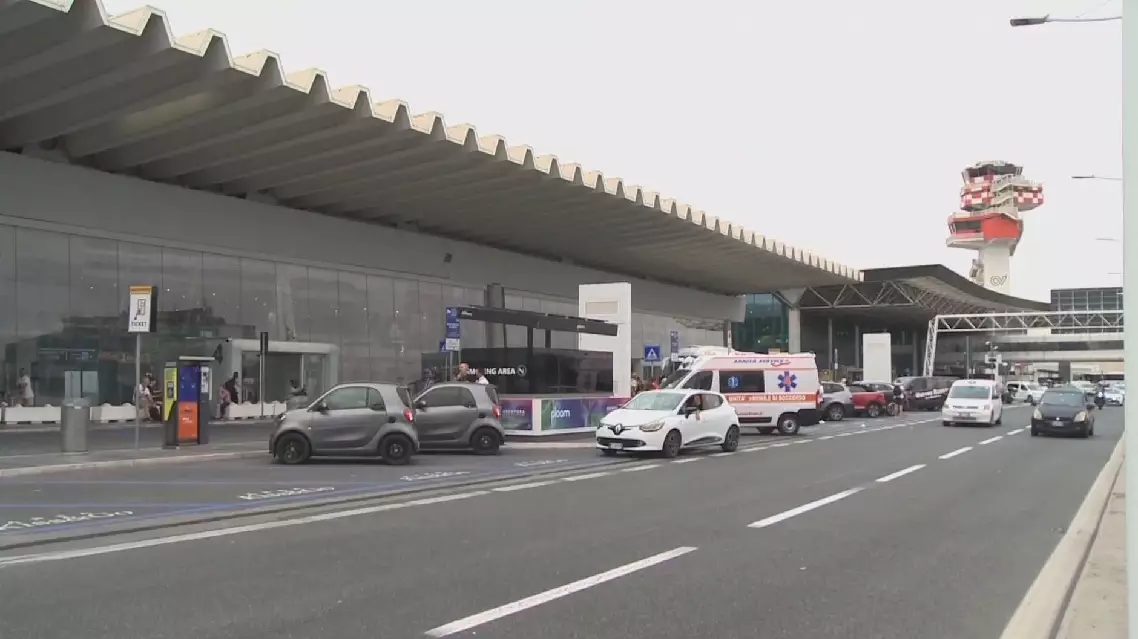
Europe on alert as fresh wave of bomb hoaxes disrupts flights