Skip to Content Facebook Feature Image

Int'l exhibitors voice confidence in Chinese market at ninth CIIE

China

China

China

Int'l exhibitors voice confidence in Chinese market at ninth CIIE

2026-11-07 23:30 Last Updated At:11-08 03:20

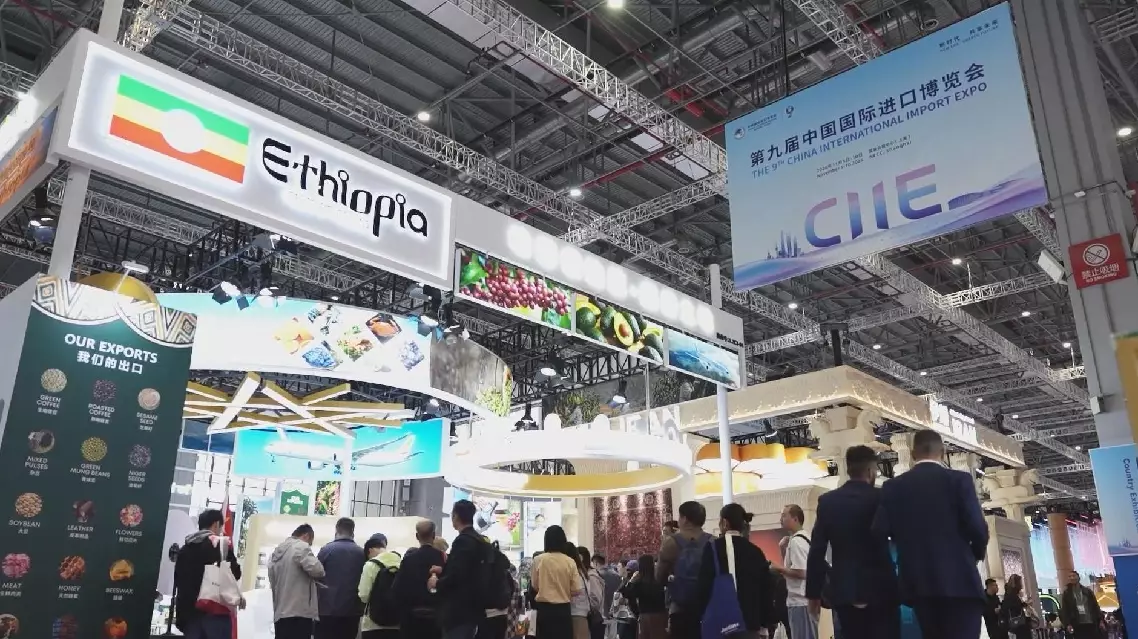
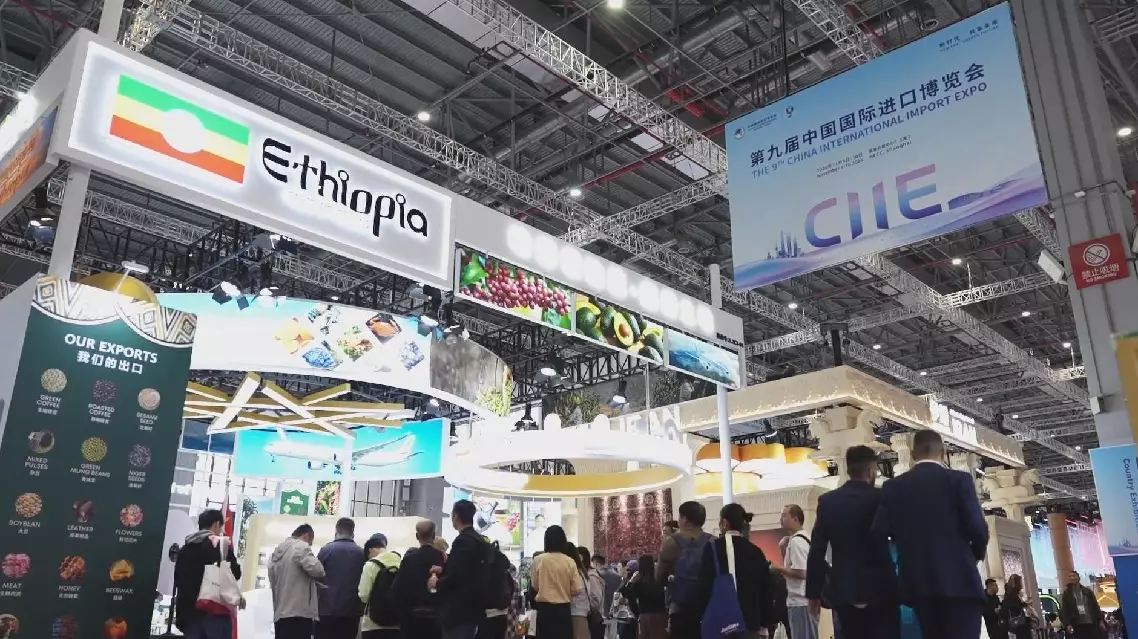
International companies are looking to deepen their presence in China, citing growing opportunities in the country's increasingly sophisticated consumer market and expanding industries, executives said at the ninth China International Import Expo (CIIE) in Shanghai.

The expo, which opened on Thursday, has attracted more than 4,100 overseas exhibitors, including over 300 Fortune Global 500 companies and industry leaders, making it the largest edition of the annual event to date.

First held in 2018, the CIIE has become a key platform for international companies seeking to expand their business in China.

"I think more than half of the brands we have in China were introduced here in CIIE, so it's always a great opportunity. We've grown at the same time as the CIIE," said Nicolas Hieronimus, chief executive officer (CEO) of France-based cosmetic giant L'Oreal Group.

Singapore-based Perennial Holdings, a newcomer to the CIIE, is showcasing a full-scale model of a senior living community at the expo. The company sees the event as an opportunity to promote international cooperation and tap into China's growing healthcare market.

"It's going to drive a lot more healthcare initiative. So we believe that through this showcasing, there will be a lot of opportunities. I think on the medical side, there will be many international medical professionals interested to participate in the growth of the China healthcare," said Pua Seck Guan, executive chairman and CEO of Perennial Holdings.

Many exhibitors also said they have gained fresh insights into the Chinese market as measures outlined in China's 15th Five-Year Plan (2026–2030) continue to be rolled out.

"The Chinese consumer market actually became much more sophisticated. And people are looking for more, not just for products anymore and for technical features. They look for smarter products. They look for more innovations. And people are becoming more sophisticated looking for lifestyle products," said Bernd Rutzler, executive vice president and chief marketing officer of German cleaning equipment producer Karcher Group.

"We very much value the elevation of the biopharmaceutical industry to a strategic pillar in the 15th Five-Year Plan. This is very much in line with what Boehringer wants to do. We want to continue to invest in China and leverage the strong foundation that has been built in the ecosystem to continue. And we have established a lot of partnerships here already," said Ioannis Sapountzis, president and CEO of German biopharmaceutical company Boehringer Ingelheim China.
Int'l exhibitors voice confidence in Chinese market at ninth CIIE
Int'l exhibitors voice confidence in Chinese market at ninth CIIE

Int'l exhibitors voice confidence in Chinese market at ninth CIIE

Int'l exhibitors voice confidence in Chinese market at ninth CIIE
New Zealand's ruling National-led coalition has secured a parliamentary majority in the general election, preliminary results showed early Sunday, putting Prime Minister Christopher Luxon on course to retain power for a second term.

The Election Commission's tally of all voting places has resulted in 11 "overhang" seats, increasing to 131 the total number of seats in parliament, which normally has 120.

Among the seats, the National Party, ACT New Zealand and New Zealand First collectively secured 67, giving the three-party coalition a narrow majority to continue governing, while the opposition bloc of the Labor Party, the Green Party and the Maori Party garnered 57 in total.

The contest between the National and the Labor, led by former prime minister Chris Hipkins, remained exceptionally close, with each securing over 29 percent, according to preliminary figures.

Addressing supporters in Auckland, Luxon said the election was "too close to call," with the final outcome hinging on special votes to be counted. He acknowledged that negotiations and compromise would be needed to form the next government.

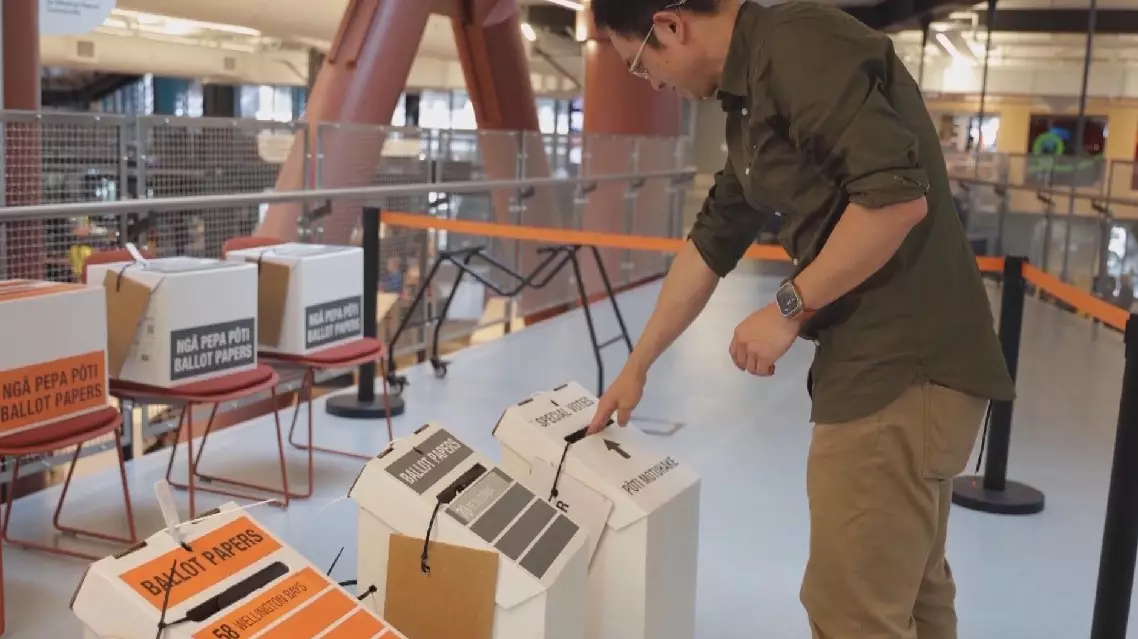
The outcome could still change when 700,000 special votes are counted days later. These include ballots cast by overseas voters and people voting outside their electorates, and are not included in the preliminary results, according to the Electoral Commission, which is scheduled to release the final official results, including special votes, on Nov. 27.

The Green Party has won a record 16 seats in parliament. The centrist Opportunity Party has also made a parliamentary breakthrough, projected to win seven seats, preliminary results showed.

The country has nearly 3.8 million provisionally enrolled voters for the 2026 general election, representing 93.6 percent of the estimated eligible population, below the final enrolment rates of 94.7 percent in 2023 and 94.1 percent in 2020, the commission said.

New Zealand uses the mixed-member proportional voting system to elect its parliament. Under this system, voters cast two ballots, one for a political party and another for their local electorate candidate. The government is usually formed by two or more parliamentary political parties.

New Zealand's National-led coalition wins majority parliamentary seats: preliminary results

New Zealand's National-led coalition wins majority parliamentary seats: preliminary results

Recommended Articles