NEW YORK--(BUSINESS WIRE)--Nov 9, 2026--
Glia today announced it has surpassed $100 million in annual recurring revenue (ARR), solidifying its position as the category-defining vertical AI platform for financial services. Fueled by rapid market adoption, sales of Glia's AI solutions grew 93% year over year in the third quarter of 2026. The milestone comes as banks and credit unions increasingly move away from general-purpose horizontal AI in favor of specialized, banking-specific platforms designed for high-stakes, regulated environments.
This press release features multimedia. View the full release here: https://www.businesswire.com/news/home/20261109459451/en/
McKinsey estimates generative AI could unlock up to $340 billion annually in banking through increased productivity — provided it is embedded securely into everyday workflows. Glia’s Banking AI platform has delivered that foundation across 700 institutions, including 1 in 4 organizations on Forbes’ 2026 Best-in-State lists. Processing tens of millions of daily agentic interactions for over 95 million U.S. consumers, Glia’s proven impact shows in the data: banking leaders using Glia report twice the satisfaction with their AI technology compared to industry peers.
"Crossing $100 million in ARR speaks directly to the accelerating demand for banking-specific AI that drives real operational change," said Dan Michaeli, CEO and co-founder of Glia. "Hitting this milestone while staying profitable is proof that specialization wins. Unlike general CCaaS or AI vendors trying to adapt horizontal models to banking, Glia was built from day one specifically for financial institutions. That laser focus allows us to automate complex workflows across front and back offices with the security, compliance and deep banking system integration that only a true vertical AI platform can provide."
Fueling this momentum is a period of rapid innovation at Glia. In just two months, the company expanded its Banking AI platform with Glia Branch, extending AI capabilities onto the physical branch floor; Glia Relationship Management (GRM), a banking-specific AI CRM that unifies interaction history and core banking data into actionable insights; and Glia Agentic Workflows, which automates complex standard operating procedures across core and third-party systems directly within live customer interactions. Building on this platform expansion, Glia introduced Prospect Snapshot, its first solution tailored specifically for commercial banking teams — extending the value of the Glia Banking AI platform across the entire institution. Together, these innovations unify physical, digital and back-office operations into a single, governed system of action.
“In the AI era, community and regional financial institutions must find growth and improve efficiency by replacing manual, legacy processes with safe, governed automation — and that’s why we’ve invested in Glia from the beginning,” said Craig Leonard, CEO of Harvard Federal Credit Union. “Glia’s Banking AI Platform has expanded our operating capacity, and hitting this milestone validates what we’ve known for years — Glia is setting the standard for the industry.”
Looking ahead, Glia remains committed to extending its lead in vertical AI by deepening its domain-specific capabilities across front-, middle- and back-office banking operations. As regulatory and security requirements evolve, Glia continues to provide the trusted foundation institutions need to scale AI safely and fuel growth.
“This milestone is just the foundation,” added Michaeli. “We're building the future of Banking AI, and our momentum has never been stronger."
About Glia
Glia is the #1 Banking AI platform, empowering community and regional financial institutions to create efficiencies, accelerate loan growth, drive deposits, and deliver experiences that win against megabanks and fintechs. Glia’s Banking AI combines intelligence, knowledge, and action into a single agentic framework, activating an AI workforce of specialized agents that draw from banking data, interaction history, and integrated systems of record. Banking-trained AI agents automate workflows across voice and digital—from front office to back office—resulting in decreased operational costs and enabling the Universal Banker model. With ironclad security and reliability proven across more than 700 institutions, Glia provides the trusted foundation they need to safely scale AI. It’s why Glia customers quickly and confidently put Banking AI to work with measurable results from day one. Learn more at glia.com.

Glia announced it has surpassed $100 million in annual recurring revenue (ARR), solidifying its position as the category-defining vertical AI platform for financial services.
KRAKOW, Poland (AP) — Poland was reeling Monday from a weekend mass shooting in which a gunman opened fire, killing six people and wounding 15 in the city of Krakow before being shot by police.
The gunman, identified as Michał Oksiński, died Monday morning at a hospital, after undergoing several surgeries for critical injuries, police said.
Poland's interior minister said Oksiński held far-right views, but prosecutors said it was too early to determine a motive. Prosecutors said they are investigating the shooting as a terrorist offense.
Police also found the bodies of the suspect's parents and sister at the family home.
Here is what we know about the mass killing that marked a grim first in modern-day Poland:
Police say the 24-year-old attacker, wearing military-style clothing and a bulletproof vest, drove into the city's main square and opened fire on Saturday. The square, in Krakow’s Old Town, is a major tourist destination in Poland’s second-largest city.
What unfolded was a scene of chaos and terror. Videos posted on social media show people running away from the square into narrow streets nearby, as well as first responders trying to resuscitate victims.
Prosecutors said Monday that “tens, if not hundreds” of bullets were fired in Krakow. They also said the attacker had four guns in his possession while in Krakow, including two semi-automatic AR-15 rifles.
Even after Oksiński was wounded by police officers, he continued firing, Krakow police spokesperson Katarzyna Cisło said.
Four women and two men were killed in the square.
Three of the women and one man were Polish, Krzysztof Jan Klęczar, the Malopolska regional governor, said on Sunday. A man from the United Kingdom and a woman from Austria were also among the dead. The wounded included people from Britain, Portugal, Russia, Germany and Austria.
The two police officers who stopped the gunman, in actions authorities described as heroic, remain in the hospital. They were both conscious on Monday.
After the shooting, authorities on Saturday night paused St. Mary’s Trumpet Call — a traditional five-note melody that is played every hour from the highest tower of St. Mary’s Basilica on the main city square — in tribute to the victims.
It was the first time the call had been missed since World War II.
On Sunday afternoon, St. Anne’s Church in Krakow filled with mourners attending a service for the victims.
The square reopened Sunday evening with mourners gathering to lay flowers and candles in honor of the victims.
Interior Minister Marcin Kierwiński described his views as radical and ultranationalist, and said evidence indicated he had a fascination with far-right ideologies.
Prosecutors said they had opened an investigation into murder and attempted murder, including attacks on police officers, describing the shooting as a terrorist offense.
At the suspect's home in Ostrowiec Świętokrzyski, about 150 kilometers (93 miles) northeast of Krakow, authorities said they discovered the bodies of the suspect's parents and sister. They said the three likely died from gunshot wounds and they were likely killed either during the night before the square attack or on Saturday morning.
The suspect’s dead sibling was a young artist studying at the Krakow Academy of Fine Arts, which confirmed that Magdalena Oksińska was a third-year student.
“Magdalena Oksińska, 21 years old, a queer person, was an absolutely talented painter, photographer, poet and writer,” architect Pavko Krajka wrote on social media, in a post accompanied by images of the artist’s paintings. “Her death is a great loss for Krakow, Polish, European and queer culture.”
Another painter, Izabela Woźna, a mother of four, was among the victims.
Police found four firearms at the scene of the attack. They were recovered from the attacker or from his car. Two were semi-automatic rifles and two pistols.
Local officials said seven weapons were also seized from the family home, bringing the total number of firearms recovered to 11.
They said both father and son had gun permits. The attacker had permits for a semi-automatic rifle and a pistol since March, they said. Neither father nor son was known to authorities.
The Swit shooting club in Starachowice, where the attacker is believed to have trained, issued a statement Sunday saying it offered only “static shooting,” which involves firing from a fixed position at a stationary target.
The suspect, it said, “was never trained in our club in the areas of dynamic, tactical or combat shooting.”
Mass shootings are uncommon in Poland, a country of 37 million people where about 411,000 people hold gun permits. Interest in gun ownership has been rising, however.
Kacper Rekawek, a researcher at the International Center for Counterterrorism in The Hague, Netherlands, said the attack resembled incidents of “lone wolf” attacks in Europe over the past years.
Prosecutors said they found a yellow flag bearing a black snake, known as the Gadsden flag, hanging on the wall of the attacker’s room. The flag originated during the American Revolution and was later adopted by the U.S. Tea Party movement.
Tomasz Safjański, a security expert, told Rzeczpospolita newspaper that Poland had experienced its first case of an “active shooter” — someone actively killing people in a public place — and that the gunman was Polish, even as authorities remain focused almost exclusively on external threats such as Russia’s hybrid warfare.
“We are failing to address the radicalization of young people,” he said. “By focusing on an external enemy, the state overlooks the threat that is growing within our schools, our neighborhoods, and online.”
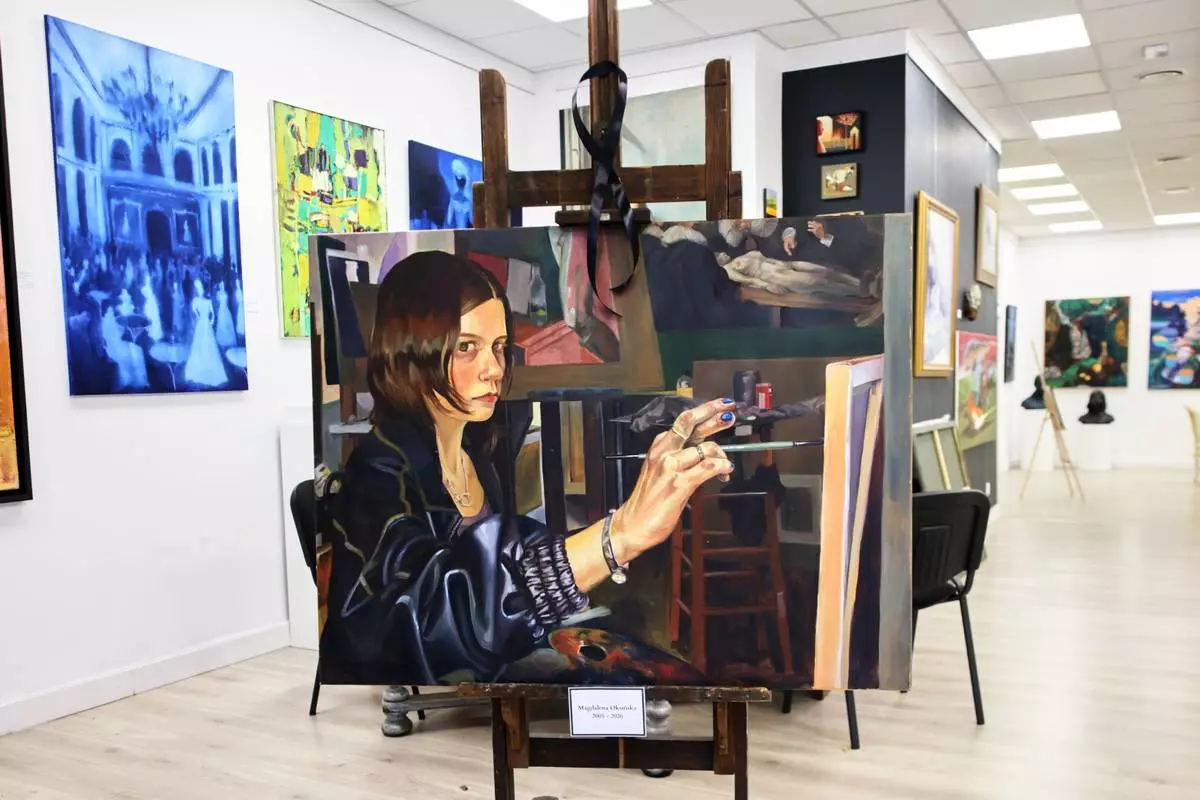
An auto portrait of Magdalena Oksinska, the killed sister of the assassin, is displayed in a gallery in Krakow, Poland, Monday, Nov. 9, 2026. (AP Photo/Beata Zawrzel)
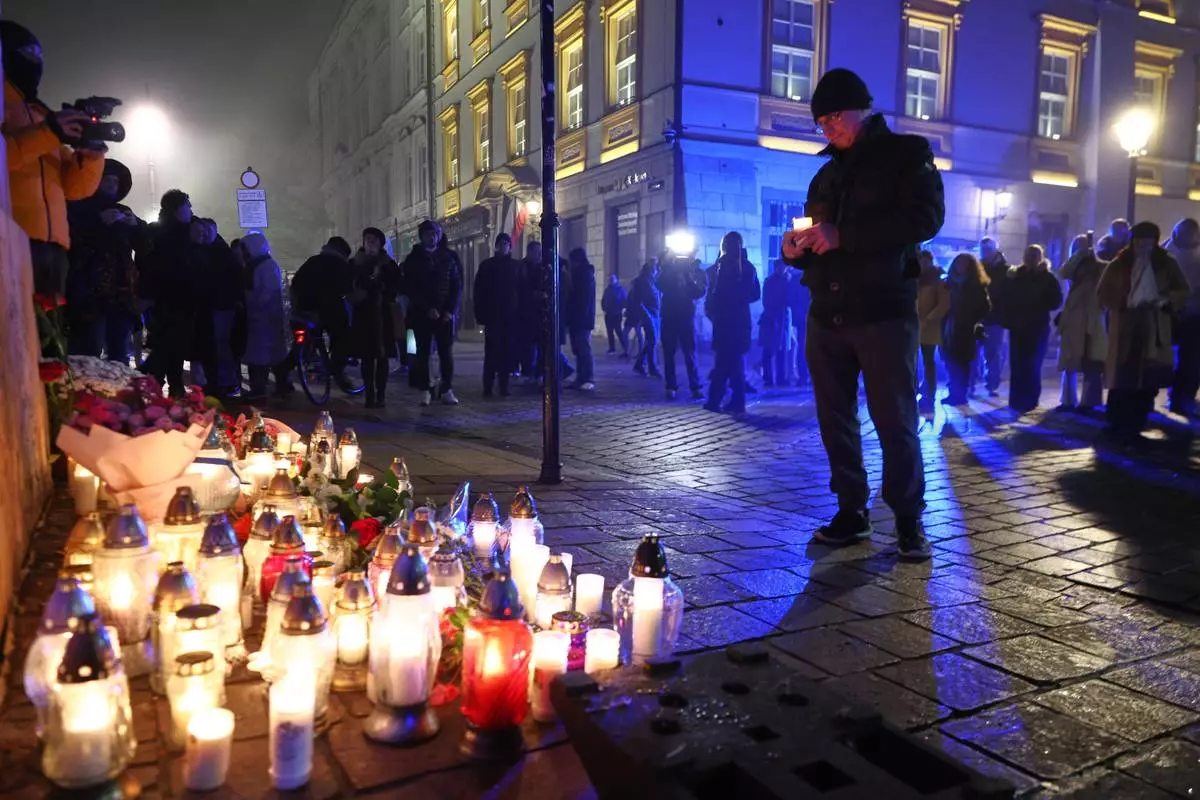
A man holds a candle as he stands at the main square in Krakow, Poland, Sunday, Nov. 8, 2026 where several people were shot the day before. (AP Photo/Beata Zawrzel)
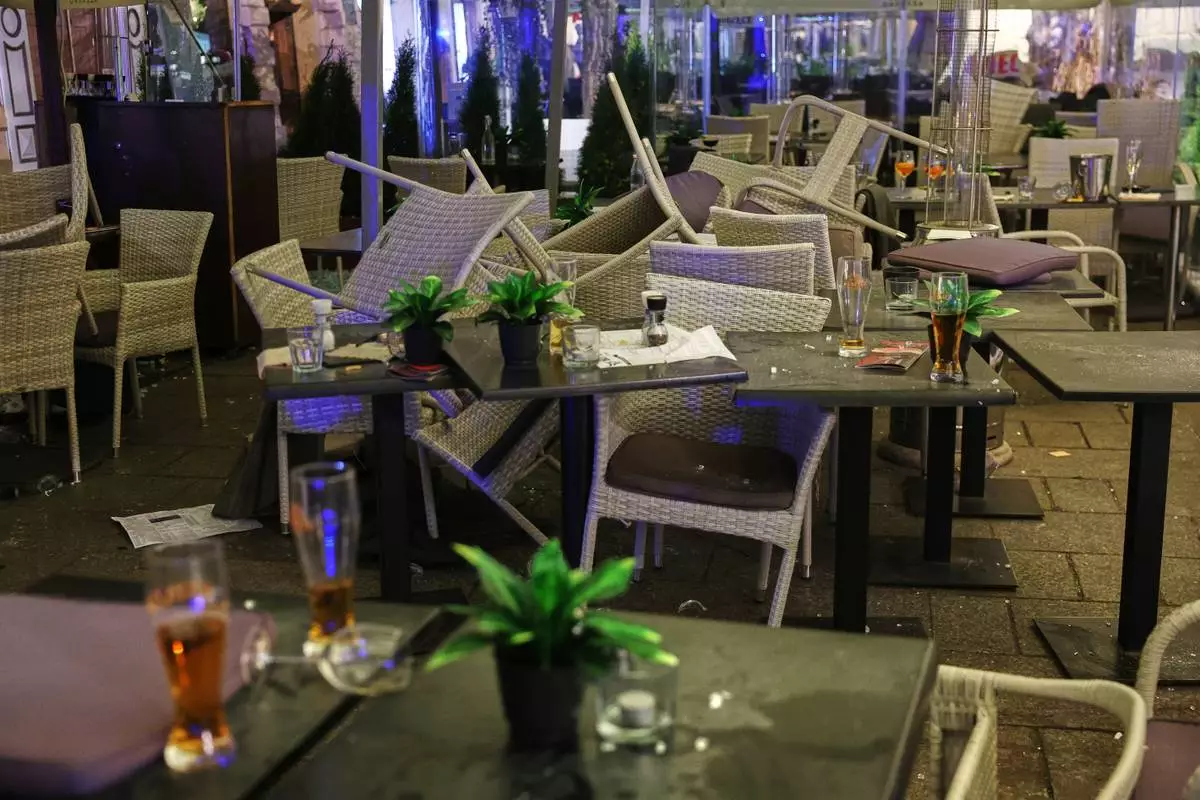
Chairs lie scattered across a cafe terrace at the main square in Krakow, Poland, Sunday, Nov. 8, 2026 where several people were shot the day before. (AP Photo/Beata Zawrzel)
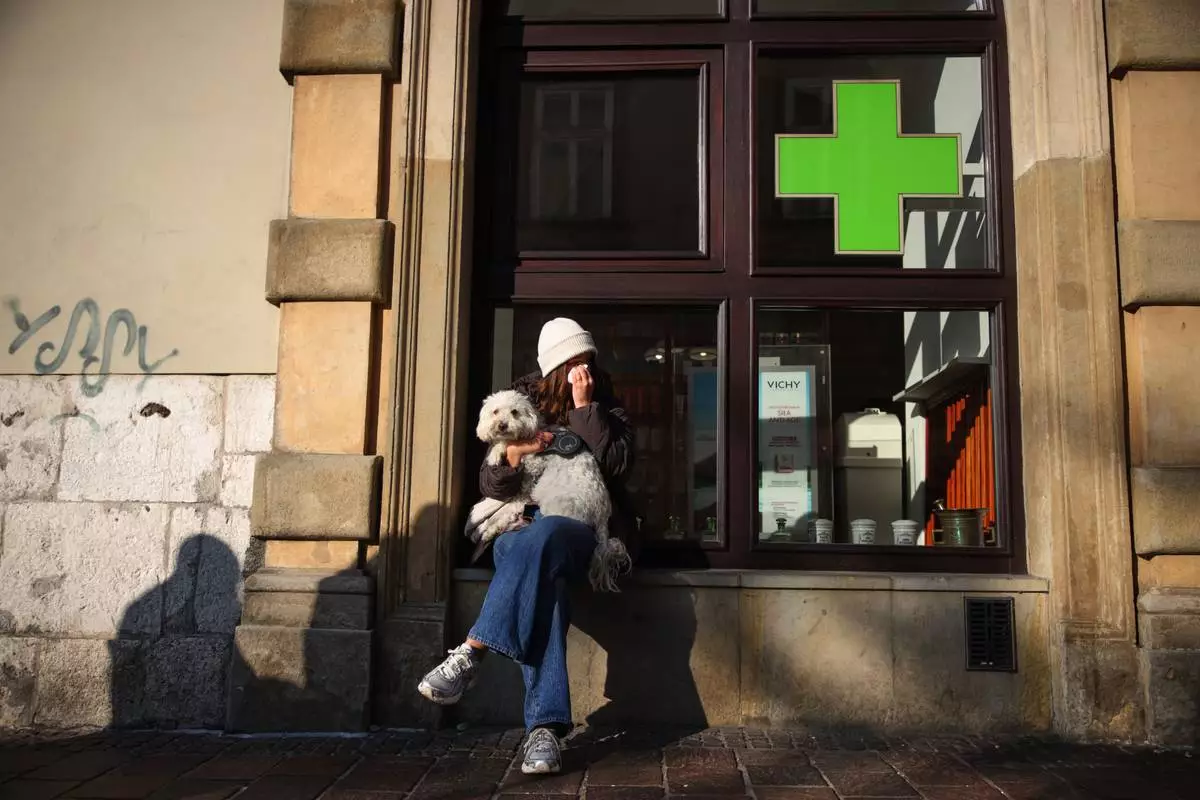
A woman with a dog crying near the main square two days after a shooting in Krakow, Poland, Monday, Nov. 9, 2026. (AP Photo/Beata Zawrzel)
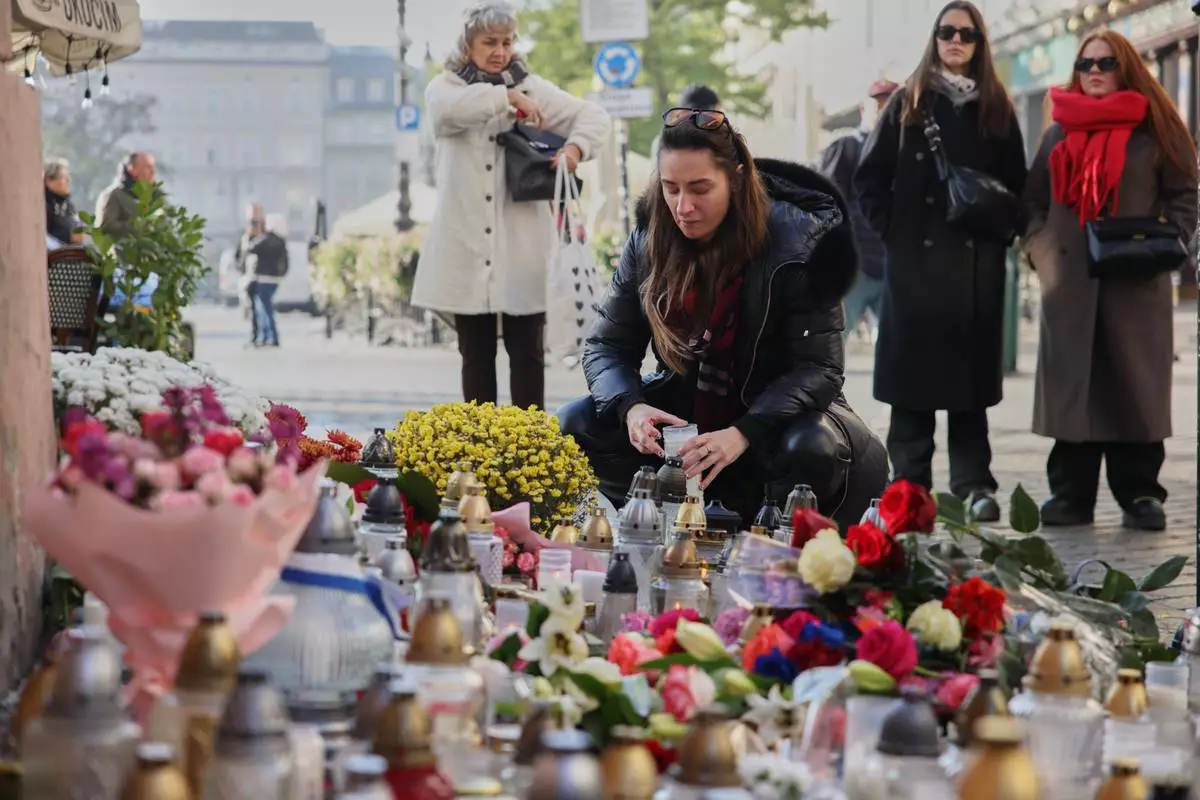
A woman lights a candle to commemorate the victims two days after a shooting in Krakow, Poland, Monday, Nov. 9, 2026. (AP Photo/Beata Zawrzel)
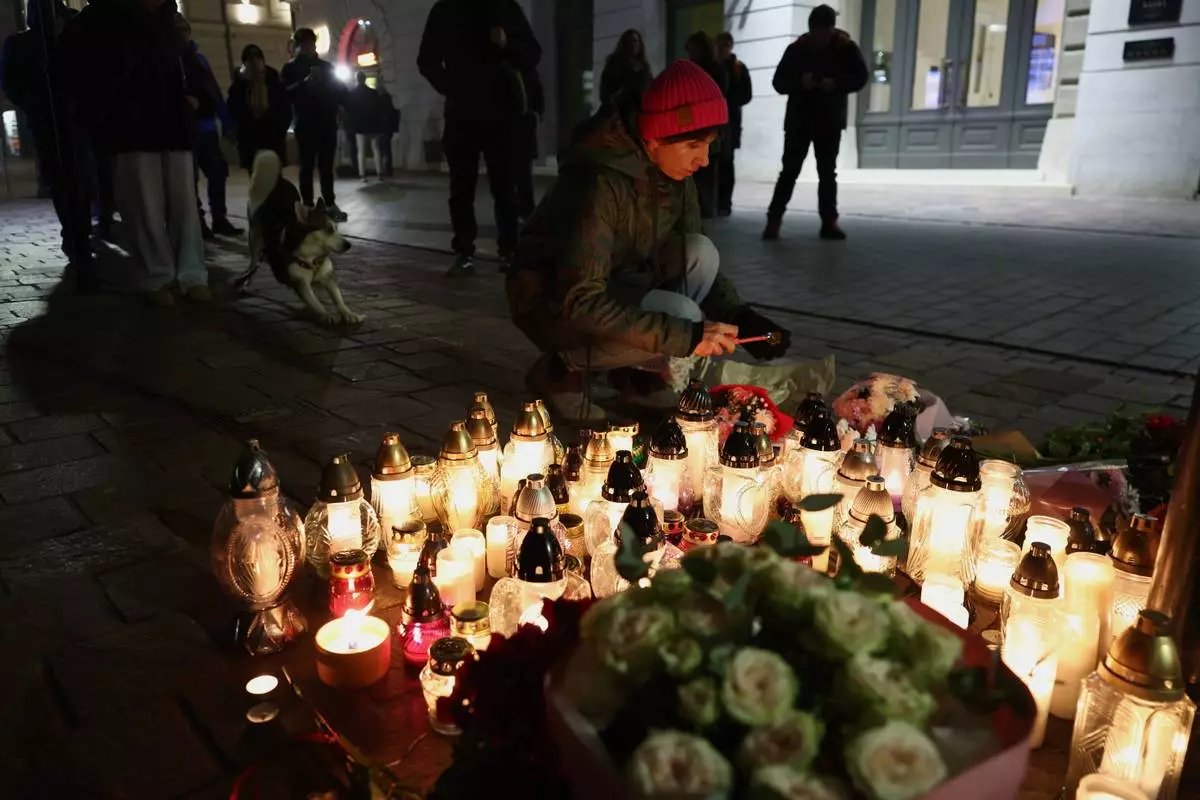
A woman lights a candle near the main square in Krakow, Poland, Sunday, Nov. 8, 2026, where several people were shot the day before. (AP Photo/Beata Zawrzel)
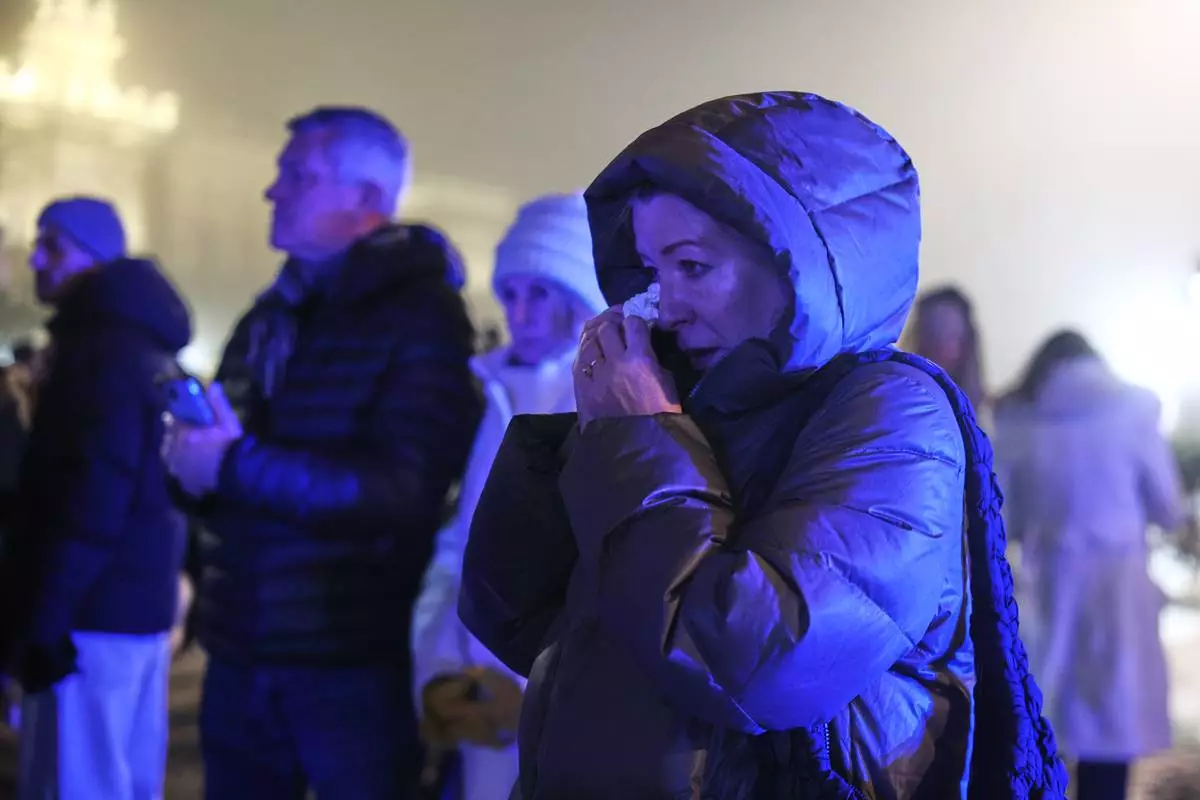
A women crying at the main square in Krakow, Poland, Sunday, Nov. 8, 2026 where several people were shot the day before. (AP Photo/Beata Zawrzel)
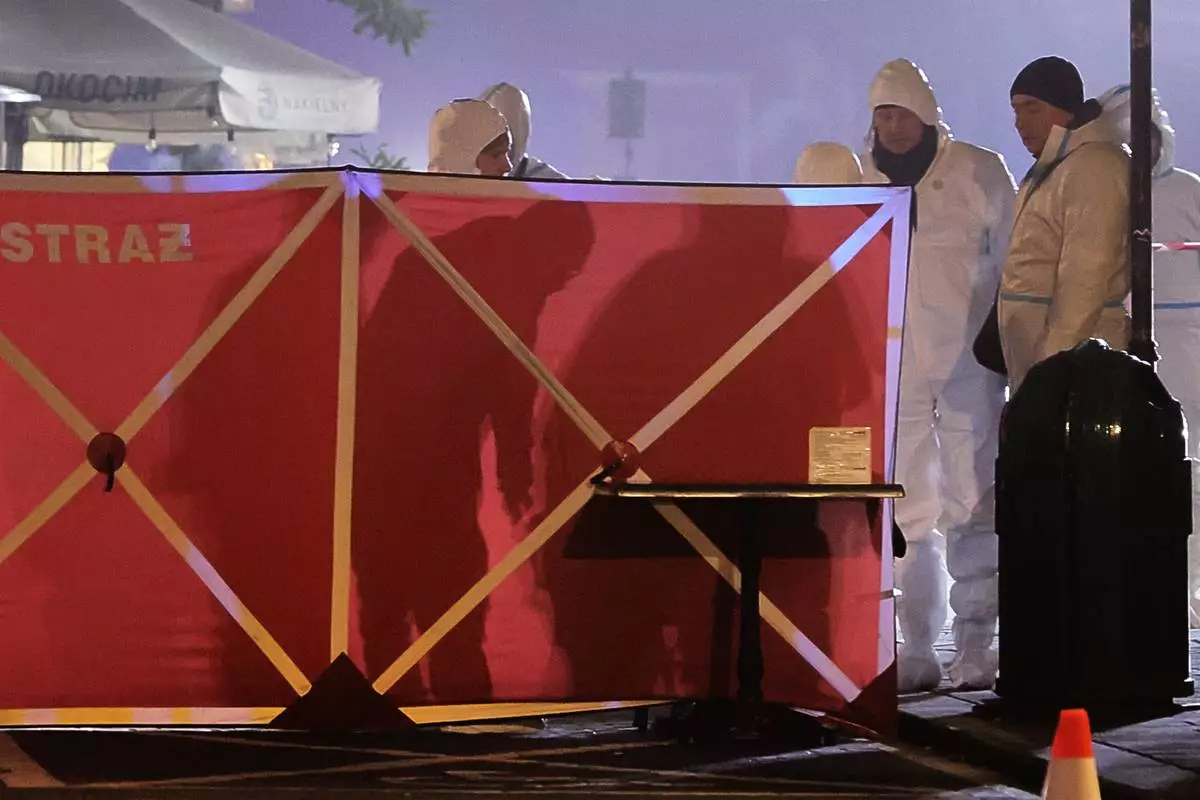
Forensic investigators work behind police privacy screens in a cordoned off area after a shooter opened fire in a market square in Krakow, Poland, Saturday, Nov. 7, 2026, leaving people dead and injured, according to authorities. (AP Photo/Beata Zawrzel)
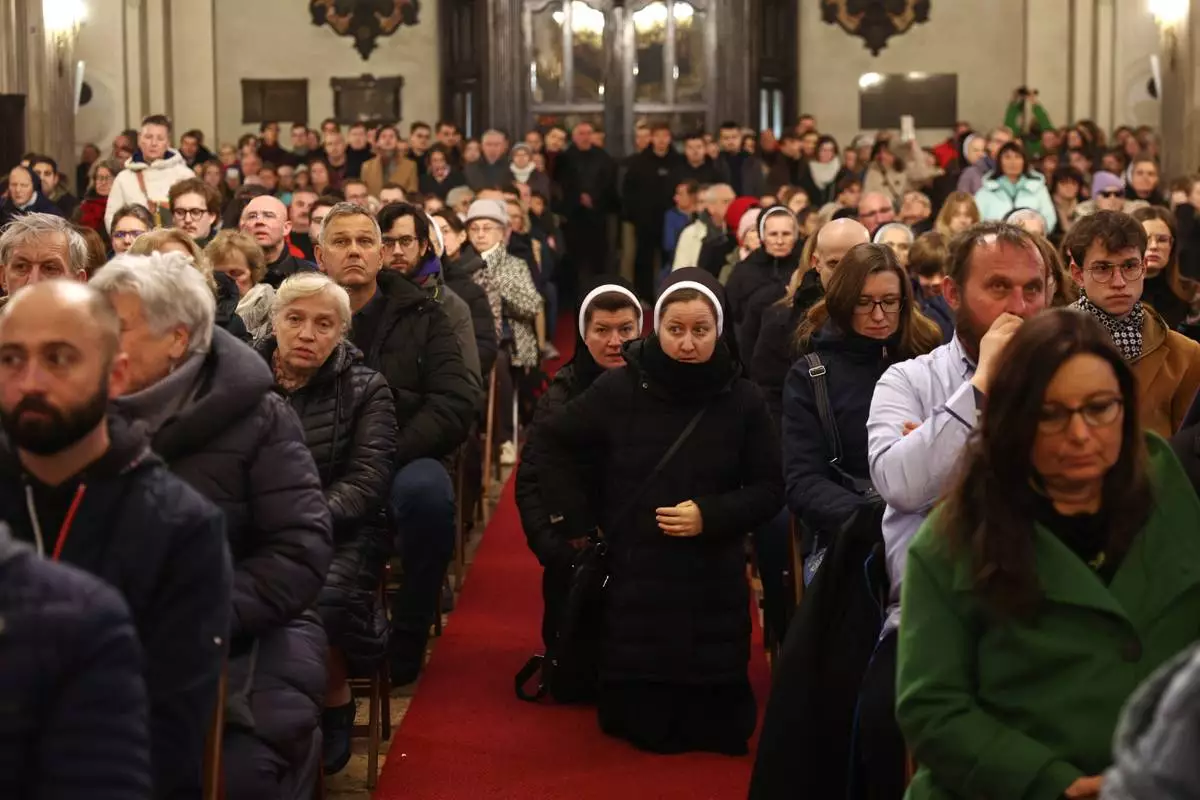
Worshippers attend a Mass for the victims of the previous day's shooting in Krakow, Poland, Sunday, Nov. 8, 2026. (AP Photo/Beata Zawrsel)
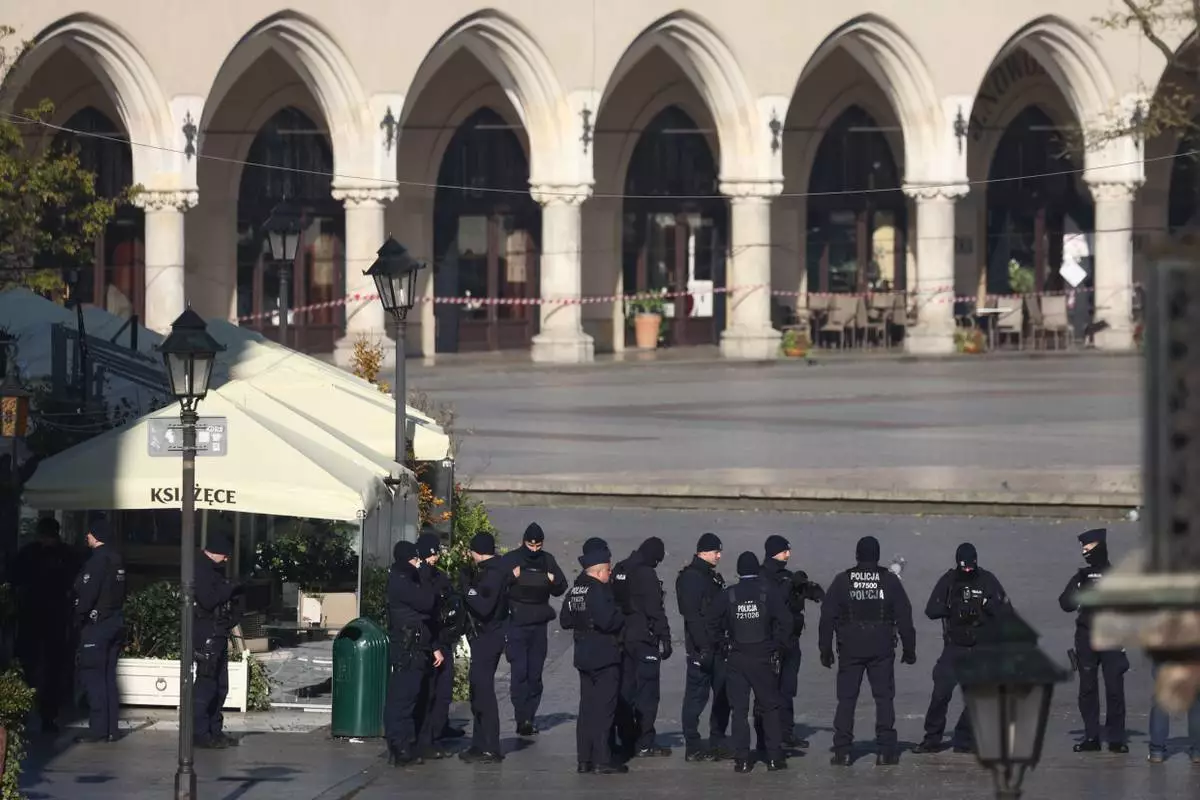
Police officers stand at the market square in Krakow, Poland, Sunday, Nov. 8, 2026, where several people were shot the day before. (AP Photo/Beata Zawrzel)
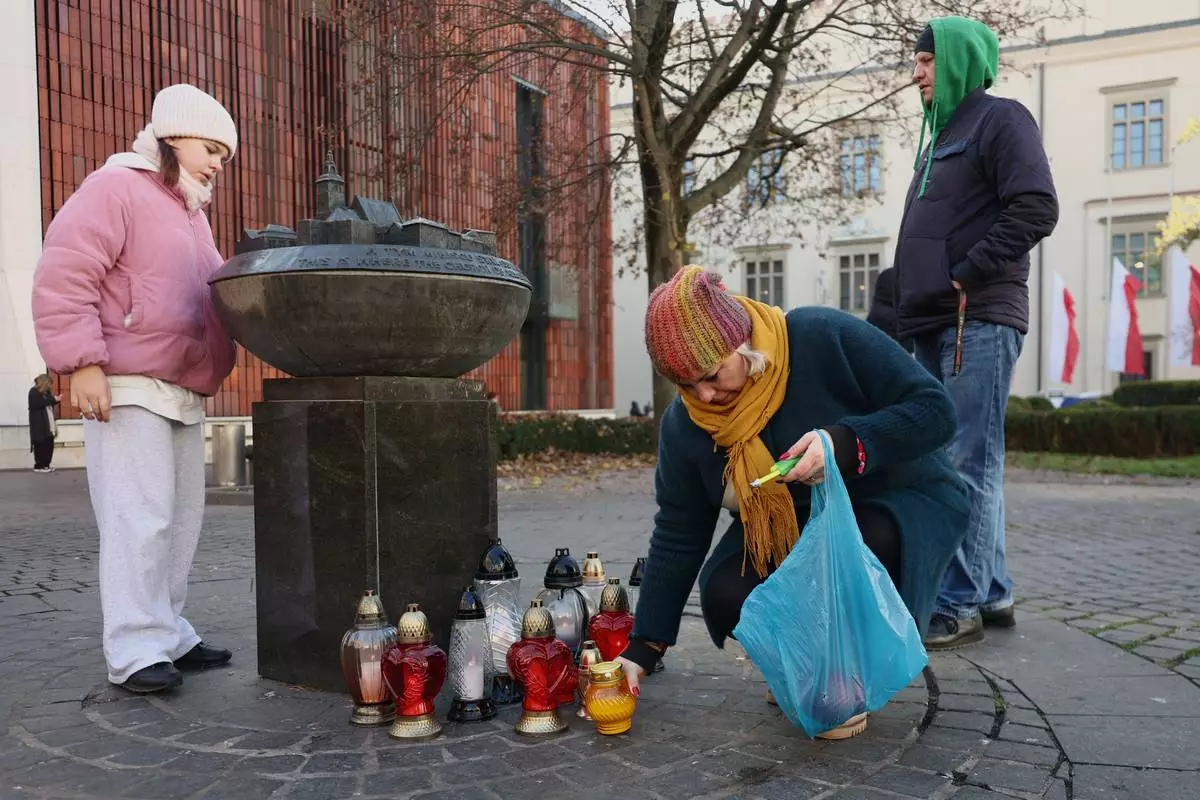
People place candles near the market square in Krakow, Poland, Sunday, Nov. 8, 2026, where several people were shot the day before. (AP Photo/Beata Zawrzel)
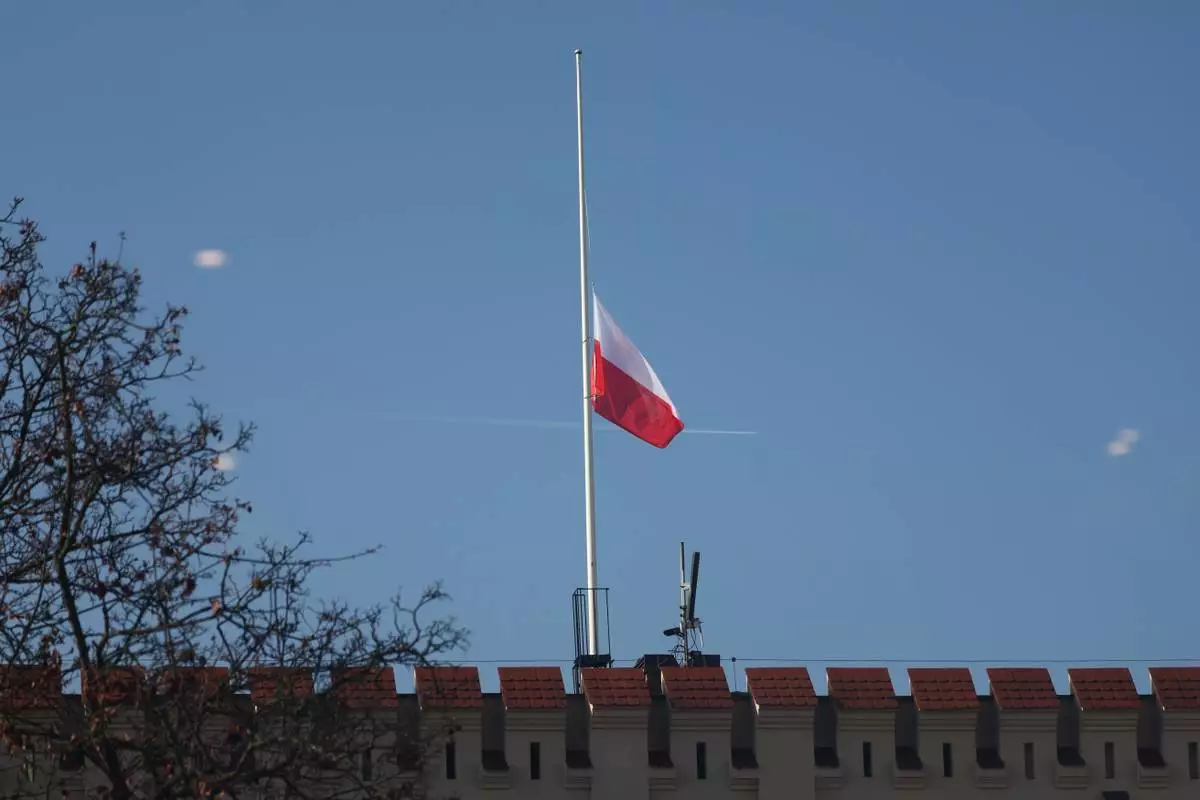
The flag of Poland flies at half-mast at the town hall in Krakow, Poland, Sunday, Nov. 8, 2026, where several people were shot the day before. (AP Photo/Beata Zawrzel)
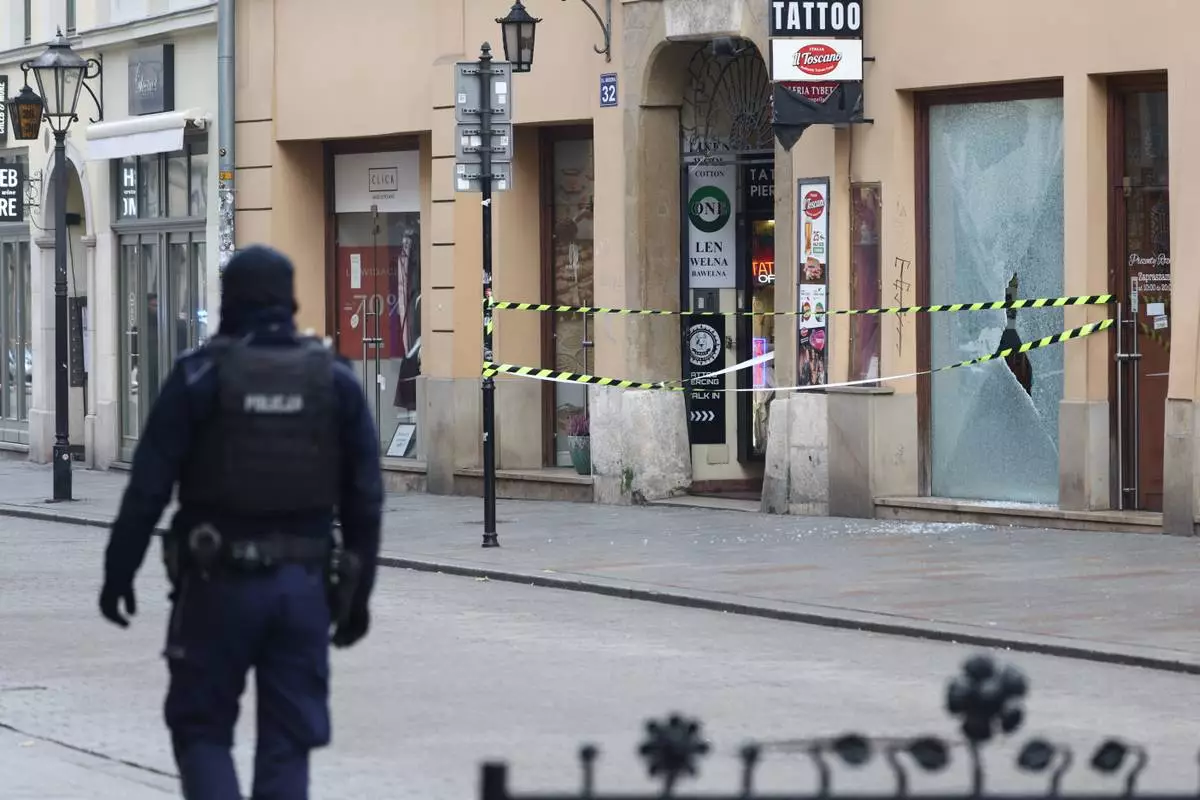
A police officer guards near the market square in Krakow, Poland, Sunday, Nov. 8, 2026, where several people were shot the day before. (AP Photo/Beata Zawrzel)
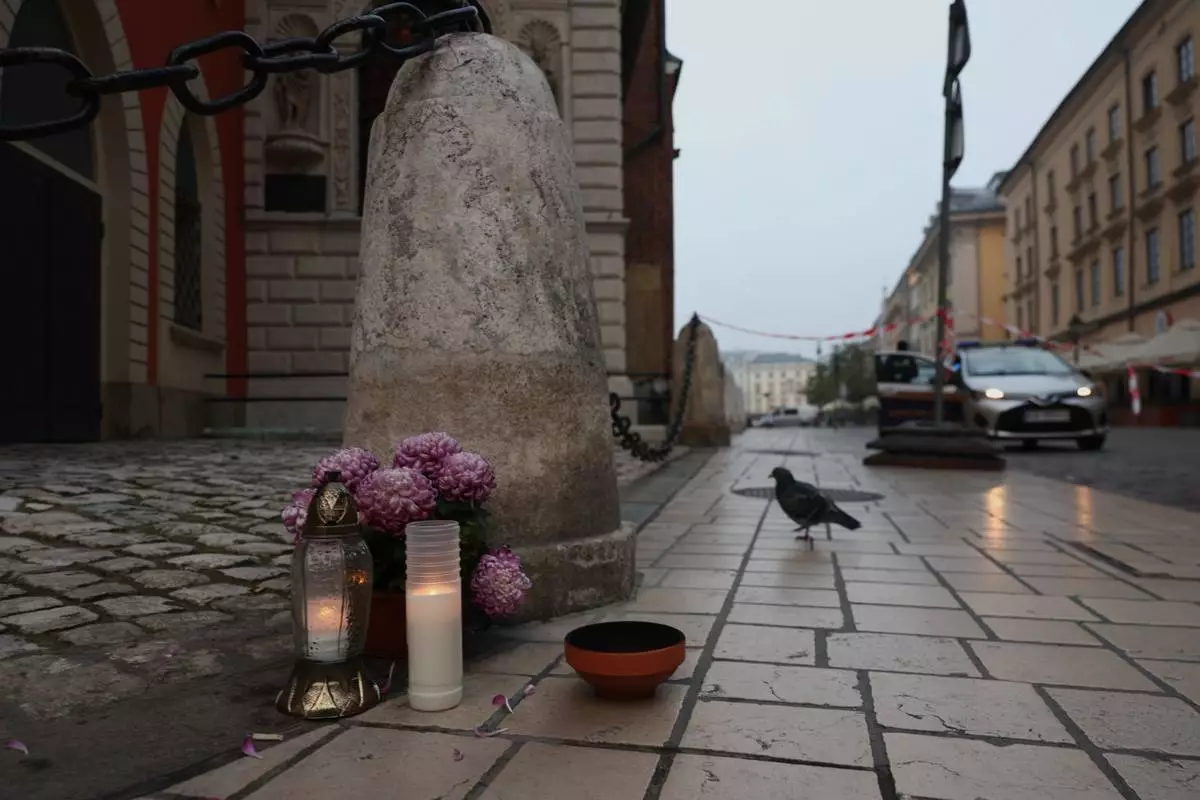
Candles stand near the market square in Krakow, Poland, Sunday, Nov. 8, 2026, where several people were shot the day before. (AP Photo/Beata Zawrzel)