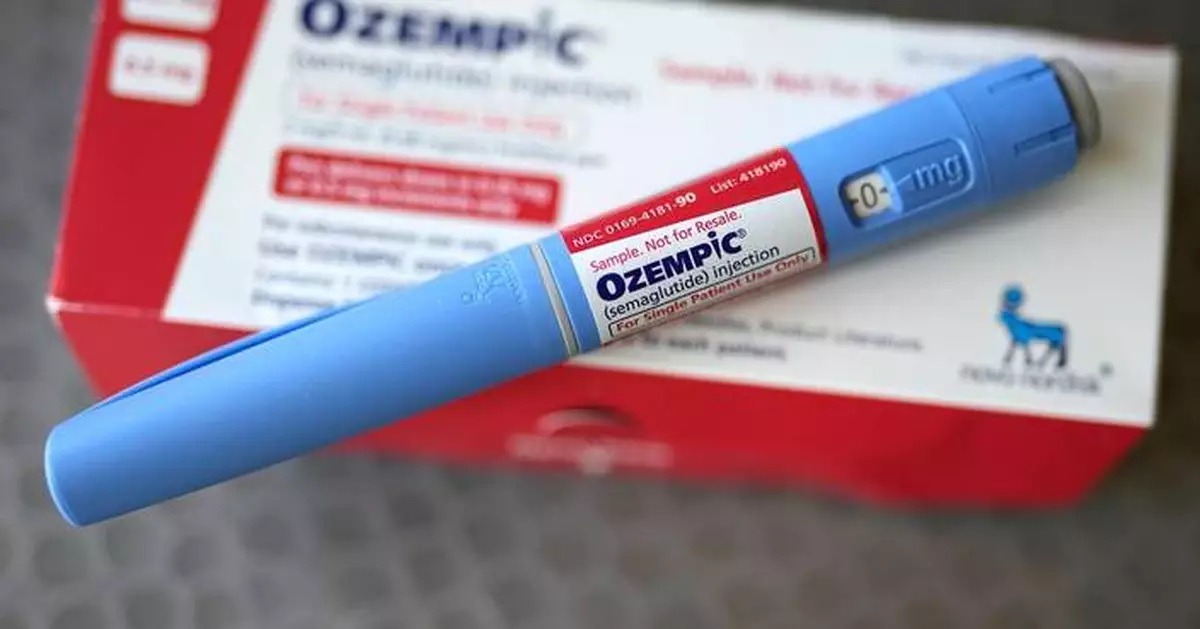
WASHINGTON (AP) — Popular weight loss drugs including Ozempic and Wegovy will carry a new warning about a possible rare side effect that can sometimes lead to permanent vision loss, U.S. health regulators announced Monday.
The Food and Drug Administration said the risk will be added to the labeling of all GLP-1 drugs, the blockbuster medications used to treat obesity, diabetes and several other medical conditions. The class includes a dozen injectable or pill-based drugs, including widely used brands like Zepbound and Mounjaro.
The eye condition, known as non-arteritic anterior ischemic optic neuropathy, can cause significant vision loss. The problem, which has been reported with all GLP-1 drugs, is caused by decreased blood flow to the optic nerve, although the underlying cause isn't understood, the FDA said.
FDA scientists began looking into the problem after the publication of a 2024 medical paper tying the condition to certain patients taking semaglutide, the active drug in Eli Lilly's Ozempic.
An FDA analysis of more than 125 clinical trials found that the problem occurred in roughly 6 of every 100,000 patients who took a GLP-1 for at least one year. The comparable rate for people taking a placebo or other types of glucose-lowering medications was less than 4 per 100,000, the FDA said.
The agency also found reports of the problem in its electronic reporting system for drug injuries and side effects.
Symptoms of the problem include blurred vision, blind spots, distorted colors and other visual disturbances, according to the FDA. Patients experiencing such problems should contact a health care professional immediately, the agency said.
The Associated Press’ health and science coverage receives financial support from the AP Fund for Journalism and private foundations. AP is solely responsible for all content. Find AP’s standards for working with philanthropies, a list of supporters and funded coverage areas at AP.org.
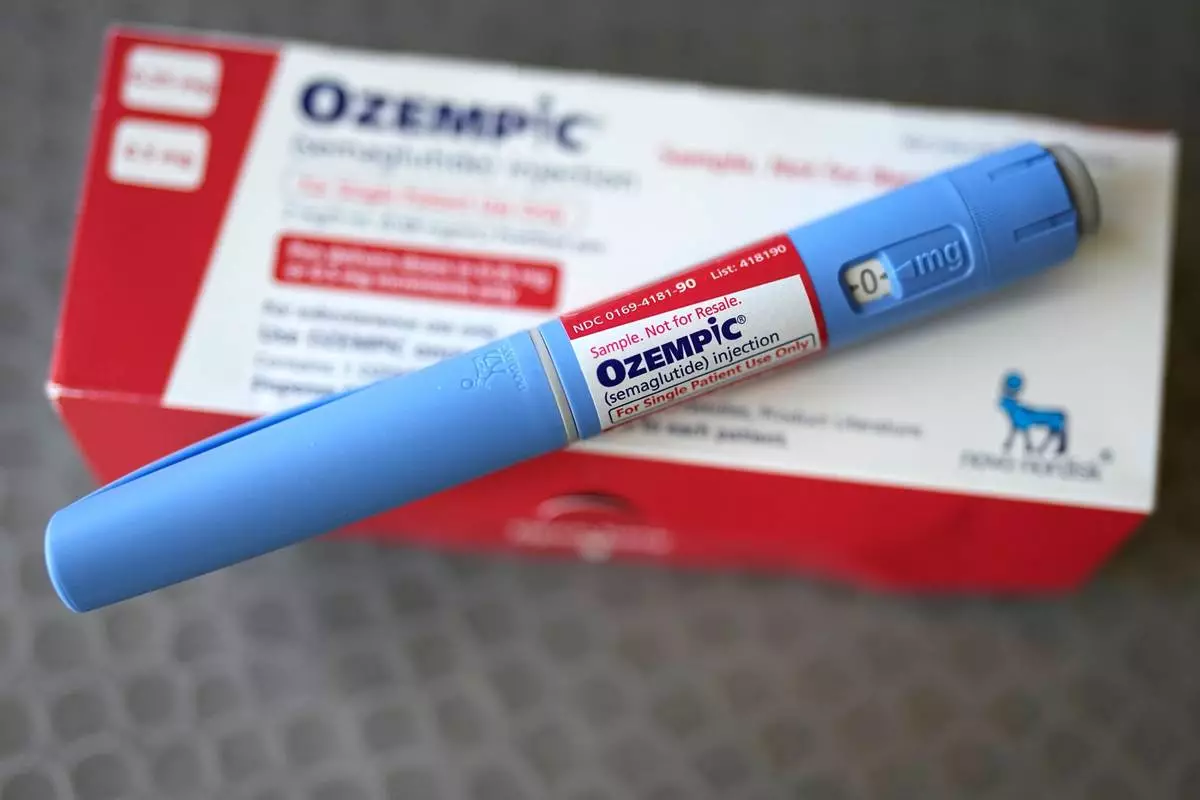
FILE - The injectable drug Ozempic in Houston on July 1, 2023. (AP Photo/David J. Phillip, File)
The Army-Navy game, one of the most storied rivalries in college football, will be played one week earlier in the season starting next year to avoid conflicts with the expanded College Football Playoff.
The change was announced Monday after the CFP said it would double in size from 12 to 24 teams next season. The 128th edition of Army-Navy is now set to take place in Philadelphia on Saturday, Dec. 4, 2027, instead of Dec. 11.
“As long as the integrity of that game and exclusive rights for that window are good for us, I’m good with it,” Navy coach Brian Newberry said on a video call with reporters. “Everybody knows how important that game is. But to maintain that exclusive window, to honor that game the way it should be honored, I’m really pleased with that.”
Army-Navy has been a tradition on the second Saturday of December since 2009. Before that, it was on the first Saturday of the month. The rivalry dates to 1890.
President Donald Trump signed an executive order in March barring the CFP and other postseason games from airing at the same time as Army-Navy. The White House did not immediately respond to a message seeking comment.
“The Army-Navy Game is one of those games that carries meaning that far extends beyond the football field,” said B. David Tyler, a professor of sport management at UMass who has studied sports rivalries. “Preserving that and preserving the stories and the narratives that come with it are important enough to warrant special exceptions in college football and in this new playoff era.”
Army athletic director Tom Theodorakis expressed his thanks to stakeholders for their work in making this happen.
“As we look ahead to future games, we are excited about the opportunity to build on our strong foundation and secure new commitments that demonstrate a shared passion to grow the game and drive economic impact in host cities,” Theodorakis said.
Army and Navy are members of the American Conference, whose commissioner, Tim Pernetti, said the change protects the significance of the game.
“This common-sense approach expands access, strengthens schedules, brings more postseason games to campus and keeps more programs in the playoff hunt, delivering meaningful competition and memorable experiences for fans,” Pernetti said in a statement.
The highest-ranked team from the Group of Six — which includes the American — is guaranteed a spot in the CFP, along with 19 at-large selections chosen by a committee.
“In recent years we’ve seen teams -- both Army and Navy, more often Navy but Army, too — where they have put together a team that is a top-24 team in the country,” Tyler said. “This gives that opportunity for them to compete.”
This year's game will be played at the Meadowlands in New Jersey on Dec. 12. Having it a week earlier allows players at the Naval Academy to get through facing Army before fall semester final exams.
It was not clear if Army and Navy will maintain a bye week before their annual showdown next year or beyond that. The stakes remain high no matter the timing.
“Obviously that game is something we prepare for year-round, to a certain extent,” Newberry said, “so it won’t change anything.”
AP Sports Writer Stephen Hawkins contributed to this report.
Sign up for Top 25 poll alerts here, visit the Top 25 here and see AP’s full college football coverage here
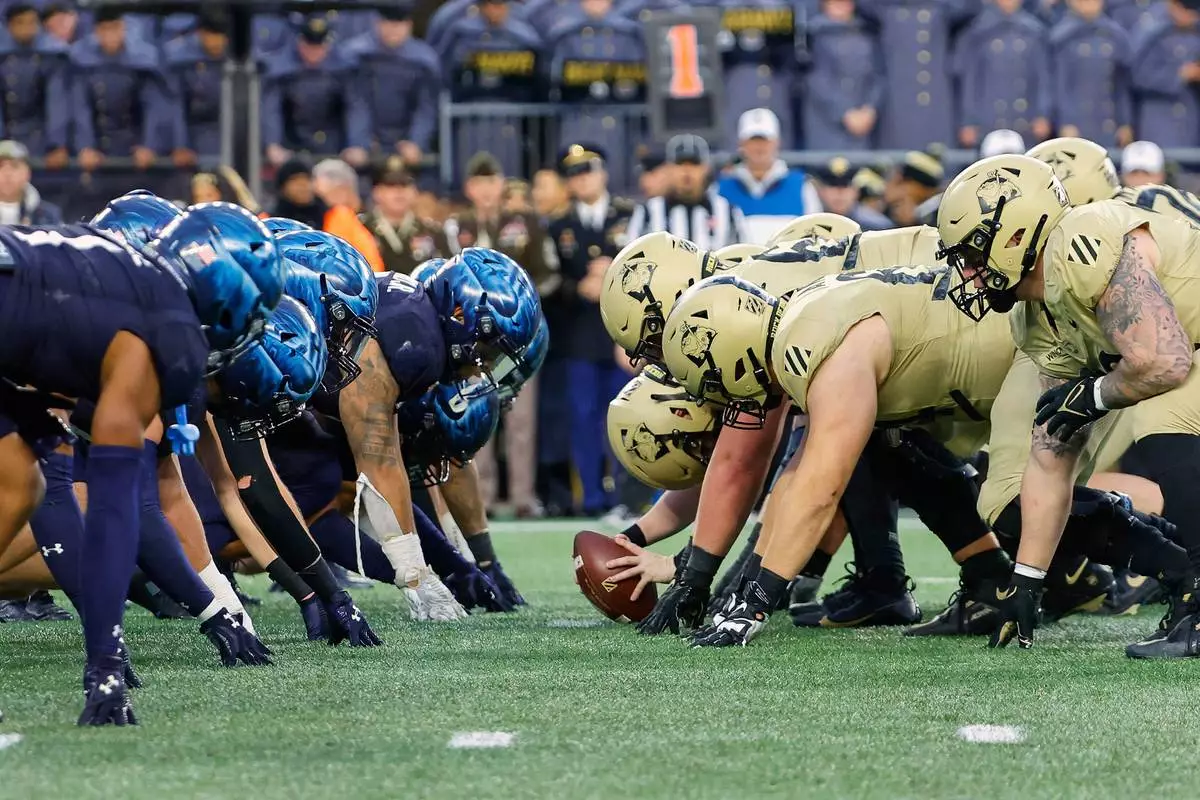
FILE - The Navy, left, and Army line up for the snap at the line of scrimmage during the first quarter of an NCAA football game, Dec. 9, 2023, in Foxborough, Mass. (AP Photo/Winslow Townson, File)