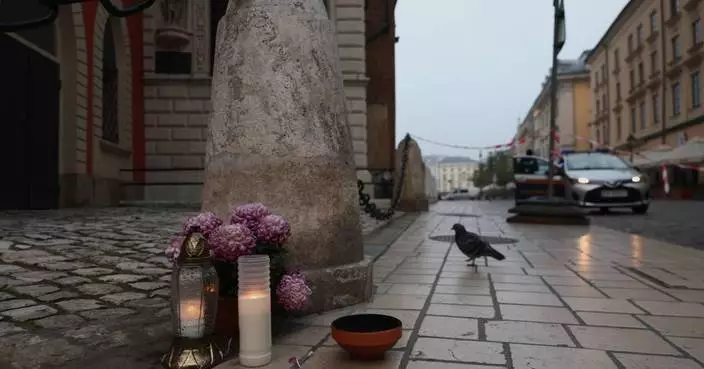
The death toll from airstrikes near Yemen’s capital has increased to 44, most of them women and children, health authorities from the Iran-backed Houthi rebels said overnight. Separately, Iran’s foreign ministry on Monday dismissed comments by U.S. Secretary of State Marco Rubio that Iranian demands for ending the war have been “ridiculous.”
Here is the latest news from the Middle East on Monday. Read our full coverage here.
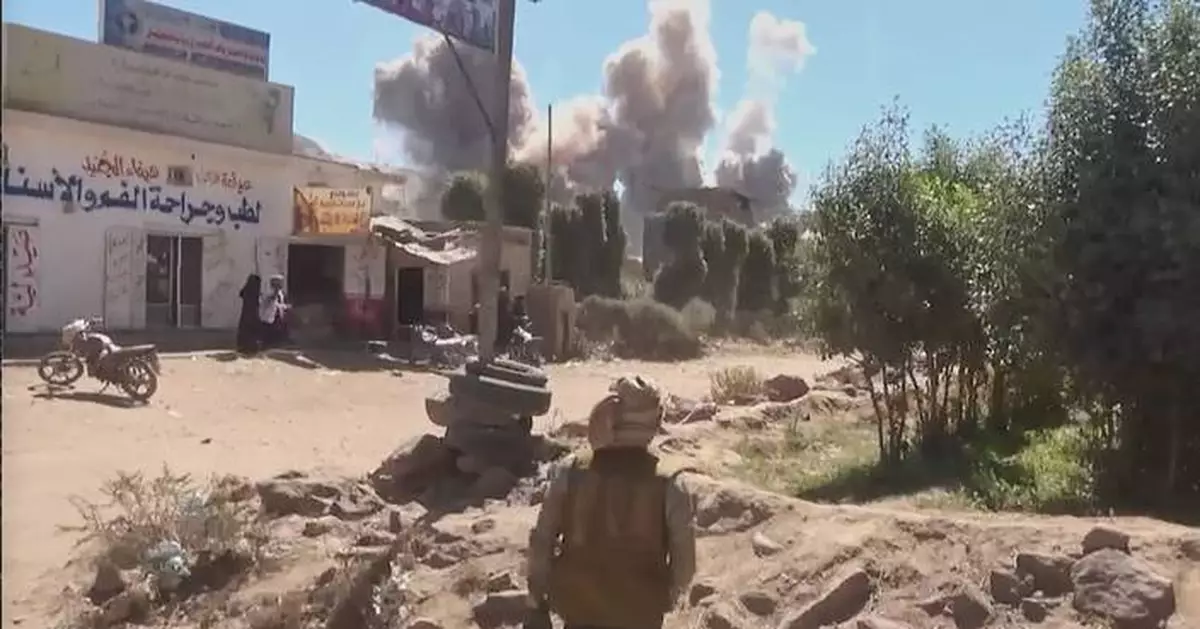
The death toll from airstrikes that hit homes near Yemen’s capital, Sanaa, on Saturday has increased to 44, most of them women and children, Houthi health authorities said late Sunday.
The strikes on the village of al-Shariya, east of Sanaa, wounded 40 others, including eight children and nine women, said Anees al-Asbahi, spokesperson for the Houthi-run Health Ministry. The dead included 21 children and 10 women, he said, making the strikes one of the deadliest attacks in the latest bout of violence in Yemen’s yearlong civil war.
Al-Asbahi said rescue teams were still searching the area for missing people, raising fears that the death toll could rise.
He blamed Saudi Arabia for the strikes, which came amid a major escalation in fighting between the Iran-backed rebels and the kingdom that has killed hundreds of people in Yemen and dozens in Saudi Arabia.
Iran’s foreign ministry on Monday dismissed remarks by U.S. Secretary of State Marco Rubio, who said Sunday that Iranian demands for ending the war had sometimes been “outrageous and ridiculous.”
At a briefing, foreign ministry spokesperson Esmail Baghaei told reporters that U.S. strikes during talks in June 2025 and February this year had been “illogical and ridiculous.” He described the war as a “criminal” act.
Baghaei said none of Iran’s demands were illogical or ridiculous. They include an end to the U.S. blockade of Iran’s ports, the lifting of sanctions, the unfreezing of Iranian assets, compensation for war damage and an end to hostilities throughout the region, including Israeli operations in Lebanon.
On Sunday, Rubio said President Donald Trump prefers a diplomatic solution, but “right now, it hasn’t been very productive because the Iranian demands are simply not just unacceptable, but in some cases outrageous and ridiculous and really not realistic.”
Trump told CNN in a phone interview Sunday that as long as the U.S. sees progress in negotiations with Tehran and the two sides sign a “strong agreement,” it is “highly unlikely it’s going to be necessary” to resume strikes.
Baghaei said Iran’s proposal to end hostilities by lifting sanctions and reopening the strategic Strait of Hormuz remains “on the table.” Last week, he said Iran had shortened the timetable for implementing its seven-step plan to reopen the strait and resume nuclear talks with the U.S. from seven days to two.
Trump is scheduled to meet Qatari Prime Minister Sheikh Mohammed bin Abdulrahman Al Thani at the White House on Monday, according to his official schedule.
Qatar has helped mediate efforts to end the war between the U.S. and Iran.
Turkish President Recep Tayyip Erdogan told journalists on a return flight from Azerbaijan late Sunday that he had discussed his concerns with Trump.
“We do not want a new wave of attacks to be launched against Iran, nor do we wish to see our region dragged into further instability,” he said. “Unfortunately, we are now seeing a shift in a negative direction. We are doing everything in our power to prevent this."
Iraqi Prime Minister Ali al-Zaidi traveled to Iran on Saturday to deliver a message from Trump regarding efforts to contain tensions and prevent the region from sliding into war, two Iraqi officials with knowledge of the trip said.
They spoke on condition of anonymity because they were not authorized to comment publicly.
The Iraqi officials said that Iran remained firm in its position and insisted it would make no concessions in the negotiations.
— Qassim Abdul-Zahra in Baghdad
This report will be updated throughout the day as new developments emerge.
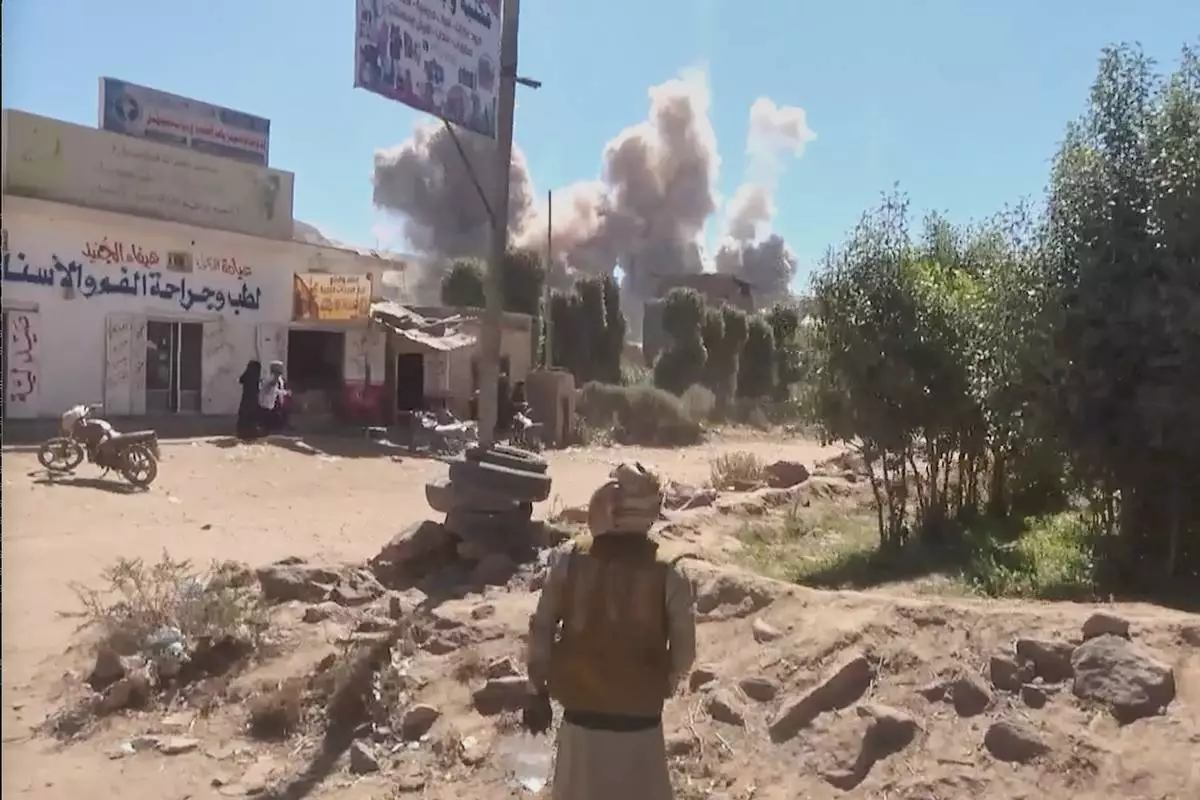
This image taken from video released by Houthi-run Al-Masirah TV on Saturday, Nov. 7, 2026, shows a man watching smoke rise following what the channel described as an airstrike by Saudi-backed government forces on a town near Sanaa, Yemen. (Al-Masirah TV via AP)
KABUL, Afghanistan (AP) — Perched high above the southern edge of Kabul’s old city, the imposing fortress of Bala Hissar has endured centuries of invasions, uprisings and conflict that scarred Afghanistan and left the citadel crumbling.
Now, an extensive, yearslong project by the Aga Khan Trust for Culture, or AKTC, is painstakingly conserving Bala Hissar. The aim is to turn the site into a public archaeological park, complete with landscaped gardens, restaurants and a museum.
Despite decades of neglect and war, archaeological treasures gradually unearthed within the walls of the strategic fortress in the Afghan capital are revealing more than two millennia of the country’s tumultuous history.
The excavations are uncovering an astonishing wealth of finds, from evidence of ancient human habitation to the remains of a Buddhist monastery and the luxurious baths of a Mughal palace.
“We never thought we would find so much,” said archaeologist Babak Rafiei-Alavi, standing at one of Bala Hissar’s excavation sites as workers with trowels painstakingly sifted through the earth. “It’s like a submarine coming out of the ocean.”
Work in five separate trenches at the site has unearthed ancient coins, fragments of Buddhist statues, glazed Islamic ceramics, oil lamps, countless pieces of pottery and the remains of palaces, monasteries and dwellings.
“In some parts we were expecting something. But not this,” Rafiei-Alavi said of the discovery of remnants of a Mughal palace, complete with murals, a thronelike structure and a star-shaped pool carved into the rock at the top of the hill.
The location of Bala Hissar, which means High Fort in Dari, is key to its significance. Cascading down a prominent outcrop of the Kuh-e-Sher Darwaza mountain ridge, the fortress occupies a commanding position above the old city that helped it protect access routes to Kabul.
Bala Hissar also was an important religious settlement and political center of power along a crucial trade route connecting the Indian subcontinent to Central Asia and beyond. It was “part of a string of pearls of these types of cultural and human settlements,” Aga Khan Cultural Services Project Manager Mustafa Nouri said.
Through the ages, the site has served as a fortress, palace complex, arsenal, administrative center, prison and military garrison.
“Bala Hissar embodies every stage of Afghan history until the American presence and the post-American presence,” Nouri said.
Only traces remain of its royal palaces and Buddhist monasteries. But an enduring characteristic has been the site’s use as a strategic defensive location, from the first century B.C. to the Mughal empire, Anglo-Afghan wars, Soviet invasion, civil war and the U.S.-led coalition. Part of the site’s lower areas are still used by the Afghan military.
“Effectively, whoever controlled Bala Hissar controlled Kabul, and controlled the region,” Nouri explained.
While Bala Hissar suffered repeated destruction and rebuilding through the centuries, the heaviest blow came when British troops avenged the 1879 killing of British envoy Sir Louis Cavagnari and his entourage inside Bala Hissar by destroying much of the complex.
Today, the sprawling site still bears the scars of years of neglect and Afghanistan's repeated conflicts.
Parts of its defensive walls have crumbled. The hulk of a rusting Soviet tank, one of several still within the walls, sits on the slope leading to the highest point of the fortress. At the foot of the hill, destroyed and decaying Soviet military hardware lies tangled in a rusty heap. Nearby, large-caliber weapons abandoned after the U.S. withdrawal in 2021 stand in neat rows, now property of Afghanistan’s military.
Part of the site within the walls was leveled off in 2008 by U.S. forces who “destroyed many archaeological layers,” Rafiei-Alavi said.
Planning for the AKTC’s ambitious conservation project began in 2017, with work starting the following year. Initial surveying and documenting, including with ground-penetrating radar and 3D laser scans, were followed by emergency stabilization to prevent further collapse of the historic fortifications.
The French Archaeological Delegation in Afghanistan was initially involved in excavations, but work temporarily halted after the Taliban seized power in Afghanistan in 2021.
The French delegation did not return. But the AKTC continued operating and has carried out its most extensive work since 2022, Nouri said.
Using locally sourced rock, parts of the defensive walls are being rebuilt. In keeping with international norms of conservation and restoration, new segments are deliberately distinguishable, slightly recessed or protruding from the original construction, Nouri explained.
Metal reinforcements now hold together one of the exterior towers, which had split open and was in danger of crumbling.
The main objective is to turn Bala Hissar into an archaeological public park.
The extensive site and ambition of the project, which includes a training program for Afghan archaeology students, is a “long-term commitment … in terms of decades, due to the fact that it’s not only conservation works, but also it’s quite rich in archaeology,” Nouri explained.
One of the archaeological trenches is already 11 meters (36 feet) deep, with more to be uncovered.
“Everywhere in Bala Hissar when you dig you find something, because it’s inhabited for more than 2,000 years,” Rafiei-Alavi said.
Afghan authorities say they are keen to preserve the country’s cultural artifacts and historical sites, a radical departure from the previous Taliban rule of Afghanistan from 1996 to 2001.
In 2001, the Taliban dynamited two giant, sixth-century Buddha statues carved into a cliff face in Bamiyan in central Afghanistan and ransacked the National Museum of Afghanistan in Kabul, smashing ancient artifacts, especially statues considered to be un-Islamic.
But now, the current Taliban government says it is keen to safeguard the nation’s monuments.
“We recognize the importance of preserving the country’s ancient sites,” said Ministry of Information and Culture spokesperson Khubaib Ghufran. “We view these remnants of past civilizations as valuable sources of insight and lessons. We fully appreciate their significance.”
The government prioritizes restoring monuments facing threats, such as Bala Hissar, “ensuring that we can pass on the legacy of both past and present civilizations to future generations in a well-preserved state,” Ghufran said.
Abdul Qahar Afghan in Kabul, Afghanistan, contributed to this report.
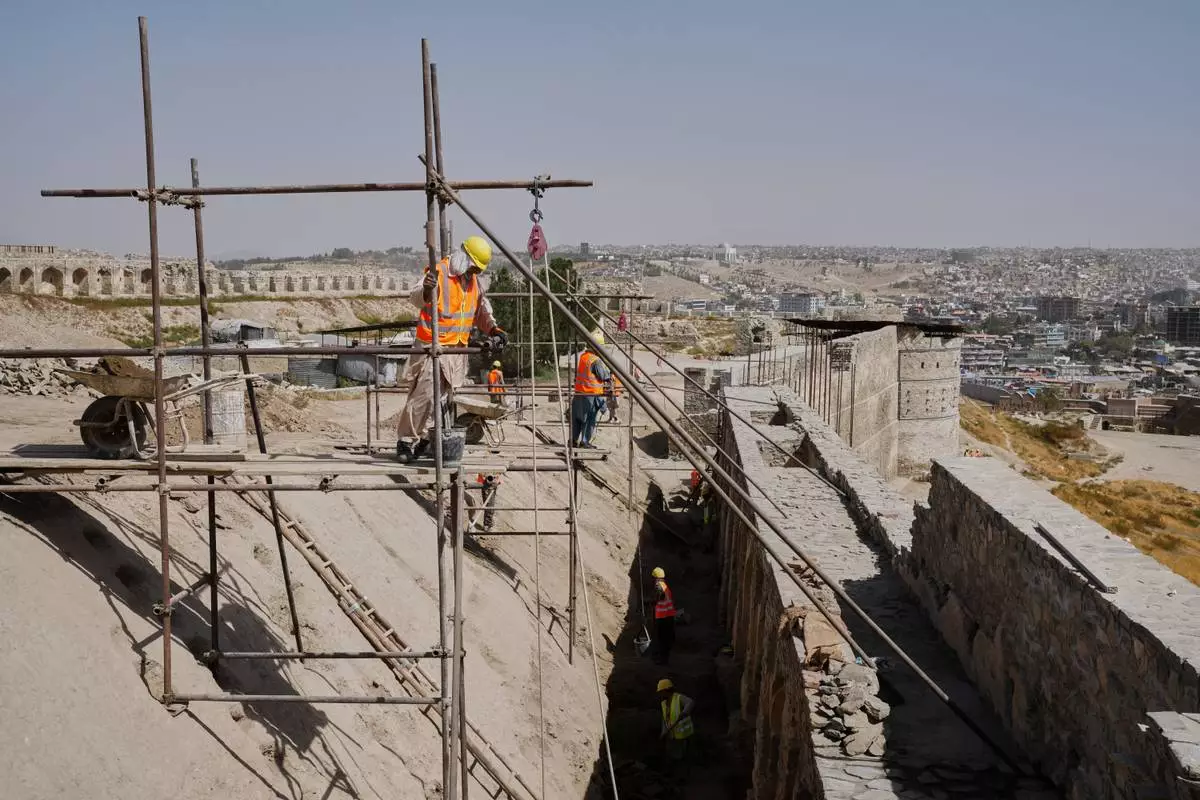
Workers carry out restoration work at the historic Bala Hissar fortress in Kabul, Afghanistan, Thursday, Oct. 8, 2026. (AP Photo/Siddiqullah Alizai)
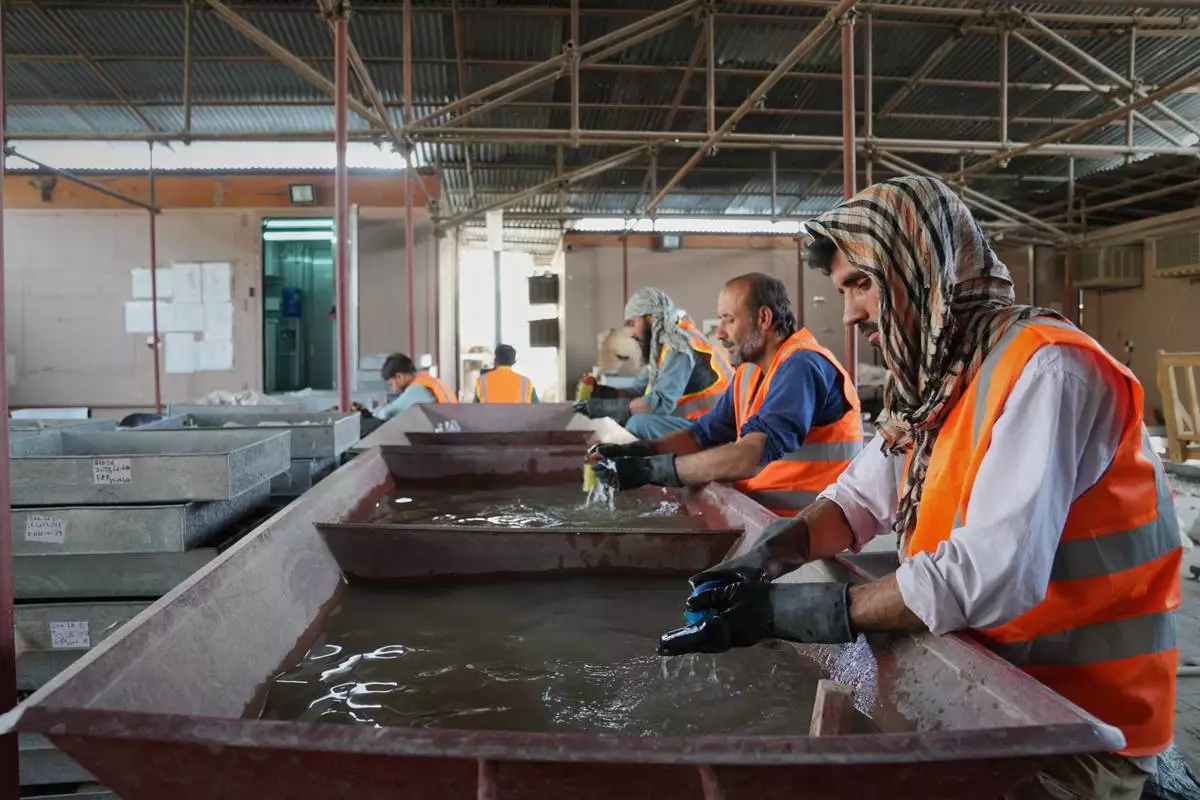
Workers wash artifacts from the historic Bala Hissar fortress compound during restoration work in Kabul, Afghanistan, Thursday, Oct. 8, 2026. (AP Photo/Siddiqullah Alizai)
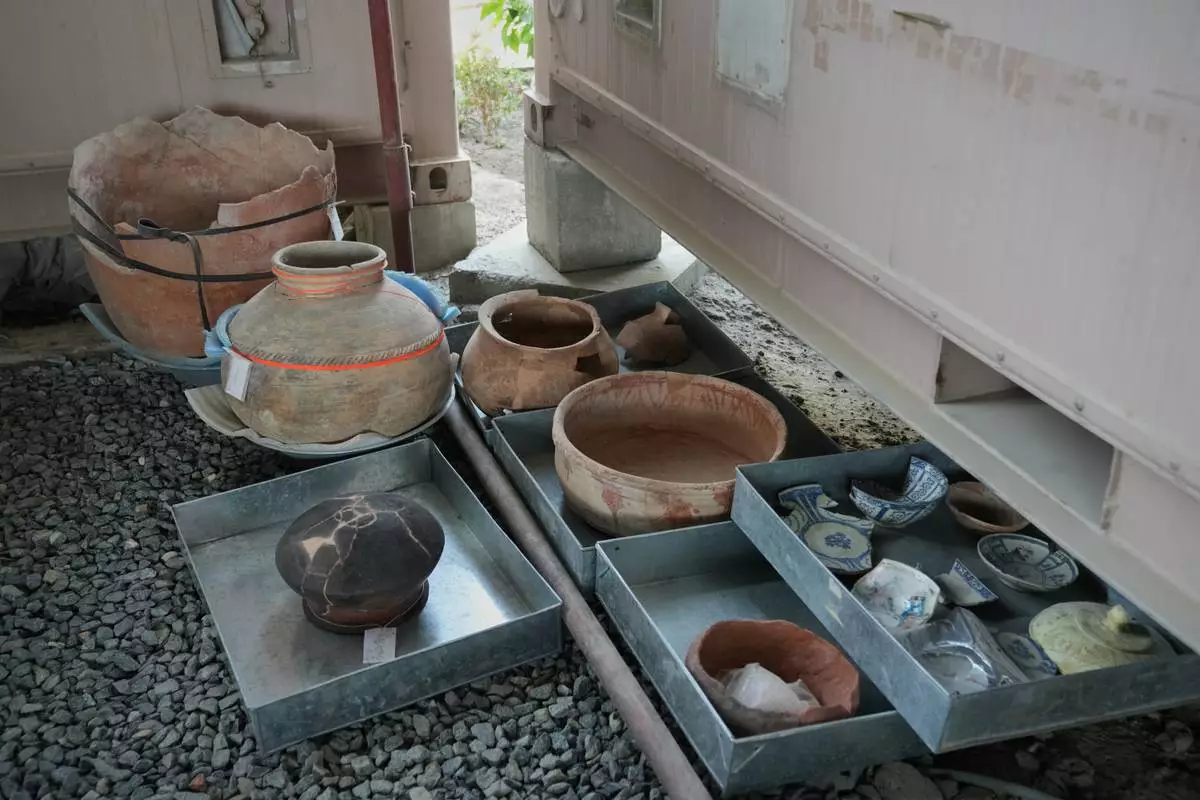
Pottery and other artifacts from the historic Bala Hissar fortress compound are arranged in trays during restoration work at the site in Kabul, Afghanistan, Thursday, Oct. 8, 2026. (AP Photo/Siddiqullah Alizai)
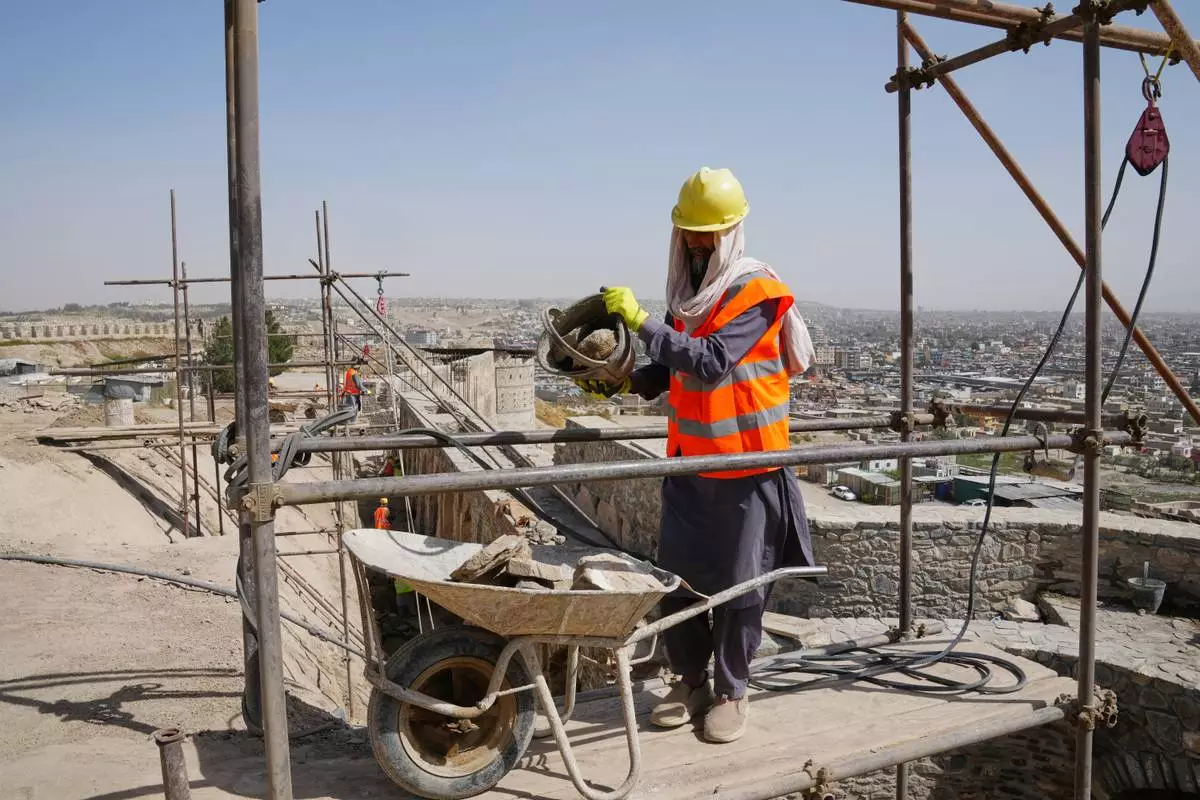
Workers carry out restoration work at the historic Bala Hissar fortress in Kabul, Afghanistan, Thursday, Oct. 8, 2026. (AP Photo/Siddiqullah Alizai)
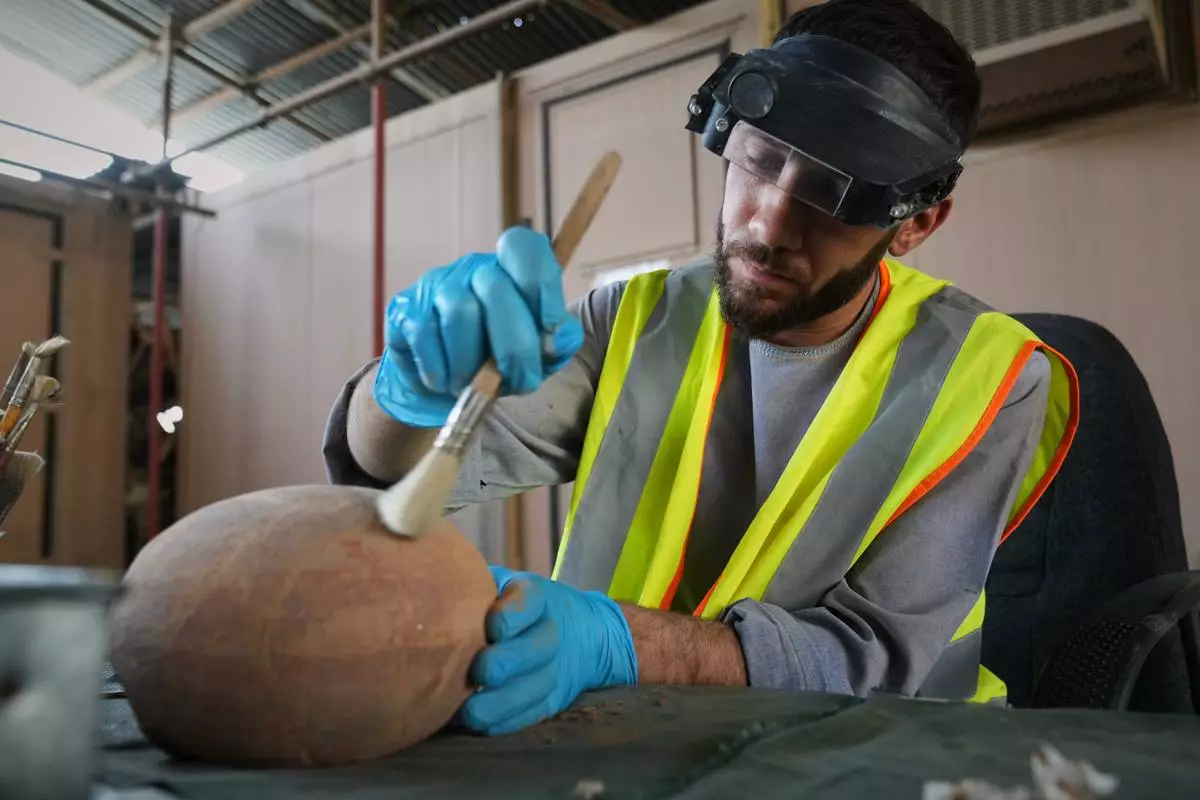
A worker uses a brush to clean a pottery vessel from the historic Bala Hissar fortress compound during restoration work in Kabul, Afghanistan, Thursday, Oct. 8, 2026. (AP Photo/Siddiqullah Alizai)
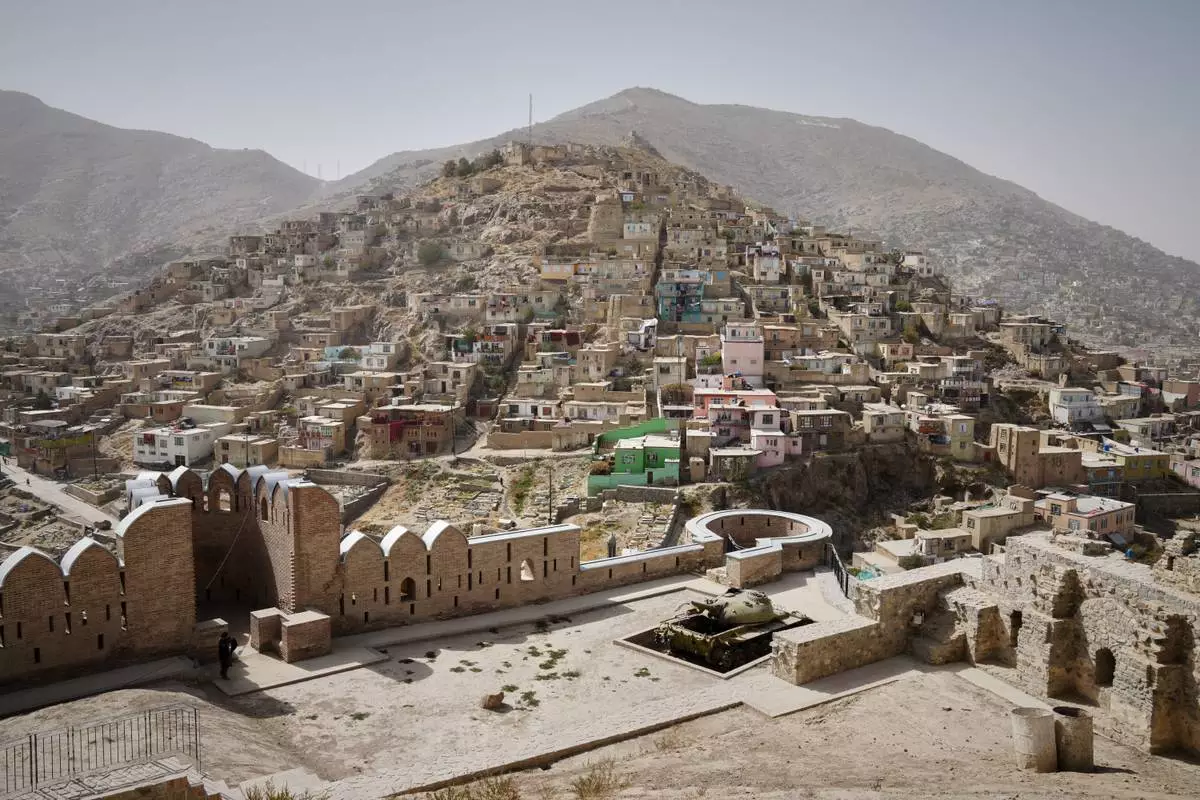
A view of the historic Bala Hissar fortress as it undergoes restoration, with a hillside neighborhood in the background, in Kabul, Afghanistan, Thursday, Oct. 8, 2026. (AP Photo/Siddiqullah Alizai)