Skip to Content Facebook Feature Image

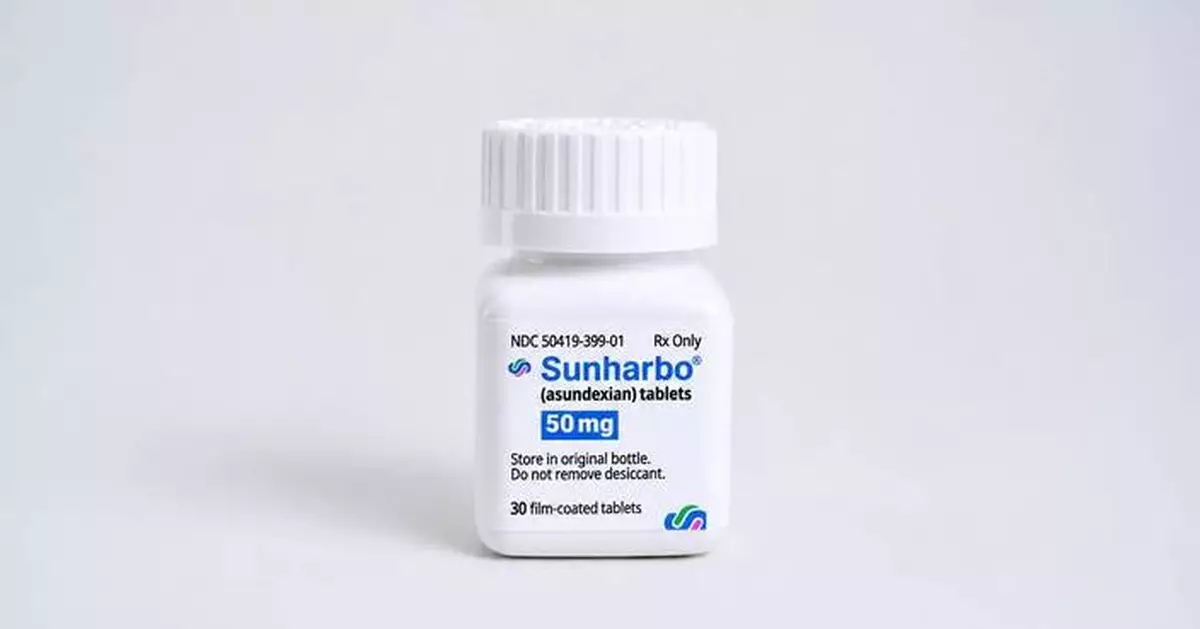
Bayer’s SUNHARBO® (asundexian), 50 mg tablets, the First and Only Factor XIa Inhibitor, Approved by the U.S. FDA to Reduce the Risk of Stroke in Adults With Recent Non-Cardioembolic Ischemic Stroke or High-Risk Transient Ischemic Attack...

Business

Bayer’s SUNHARBO® (asundexian), 50 mg tablets, the First and Only Factor XIa Inhibitor, Approved by the U.S. FDA to Reduce the Risk of Stroke in Adults With Recent Non-Cardioembolic Ischemic Stroke or High-Risk Transient Ischemic Attack...
Business

Business

Bayer’s SUNHARBO® (asundexian), 50 mg tablets, the First and Only Factor XIa Inhibitor, Approved by the U.S. FDA to Reduce the Risk of Stroke in Adults With Recent Non-Cardioembolic Ischemic Stroke or High-Risk Transient Ischemic Attack...

2026-11-10 09:11 Last Updated At:09:30

WHIPPANY, N.J.--(BUSINESS WIRE)--Nov 9, 2026--

Bayer

Bayer’s SUNHARBO ® (asundexian), 50 mg tablets, the First and Only Factor XIa Inhibitor, Approved by the U.S. FDA to Reduce the Risk of Stroke in Adults With Recent Non-Cardioembolic Ischemic Stroke or High-Risk Transient Ischemic Attack, in Combination With Antiplatelet Therapy

This press release features multimedia. View the full release here: https://www.businesswire.com/news/home/20261021770347/en/

Bayer announced today that the U.S. Food and Drug Administration (FDA) has approved SUNHARBO ® (asundexian), 50 mg tablets, a first-in-class, once daily, Factor XIa inhibitor indicated in combination with antiplatelet therapy to reduce the risk of stroke in adults with recent non-cardioembolic ischemic stroke (NIHSS ≤15) or high-risk transient ischemic attack (TIA). Reducing the risk of a stroke after an initial event is often referred to as secondary stroke prevention. The recommended dosage of SUNHARBO is 50 mg once daily. SUNHARBO is the first approved medicine in the U.S. to target Factor XIa, representing a new approach to reducing the risk of ischemic stroke. 1

SUNHARBO is an inhibitor of Factor XIa. Factor XIa inhibition reduces amplification of thrombin generation. In preclinical models, Factor XIa inhibition targets more pathological clotting (thrombosis) with lesser impact on normal clotting response (hemostasis). 1

BAYER EXECUTIVE COMMENTARY

"For decades, Bayer has worked to advance care in cardiovascular and cerebrovascular diseases. Today’s approval offers stroke patients a novel treatment option to reduce their risk of stroke, building on our company’s legacy to develop first-in-class products that address significant health challenges,” said Nelson Ambrogio, President of Bayer U.S. Pharmaceuticals. “We are proud to bring the first approved Factor XIa inhibitor to market in the U.S. for secondary stroke prevention.”

WHY SECONDARY STROKE RISK REDUCTION MATTERS

EXPERT COMMENTARY

“For those who survive a stroke, the risk of another potentially devastating event is highest in the days and weeks after the initial event, and that risk persists over time,” said Ashkan Shoamanesh, M.D., Co-principal Investigator of the OCEANIC-STROKE clinical study and Senior Scientist at Population Health Research Institute (PHRI), a joint institute of Hamilton Health Sciences and McMaster University (Ontario, Canada). “I believe SUNHARBO introduces an important new addition to post-stroke care that can be used to help patients reduce the risk of a secondary stroke.”

OCEANIC-STROKE CLINICAL TRIAL RESULTS

SUNHARBO was approved based on results from the pivotal Phase 3 OCEANIC-STROKE study where SUNHARBO was studied versus placebo in adults after a non-cardioembolic ischemic stroke (NIHSS ≤15) or high-risk transient ischemic attack, both in combination with antiplatelet therapy. The study randomized 12,327 patients to receive either SUNHARBO (N=6,162), or placebo (N=6,165). The mean age at enrollment was 68 years. The primary endpoint was time to first occurrence of ischemic stroke. 1

This approval marks the first for a Factor XIa inhibitor in the U.S. Bayer anticipates that SUNHARBO will begin shipping in mid-to-late November and is expected to become available for hospitals and pharmacies to order across the U.S. shortly thereafter.

Bayer is committed to making SUNHARBO accessible. If a patient cannot afford their prescription, Bayer may be able to help. Eligible patients may receive their Bayer prescription medicine at no cost through the Bayer U.S. Patient Assistance Foundation. For more information, please visit www.patientassistance.bayer.us or call to speak with a member of Bayer’s team at 1-866-2BUSPAF (228-7723).

As of November 2026, SUNHARBO is currently under review by the European Medicines Agency (EMA) and Japan's Ministry of Health, Labour and Welfare (MHLW). SUNHARBO was approved by China's National Medical Products Administration (NMPA) on October 26, 2026.

AboutSUNHARBO ® (asundexian)

SUNHARBO is a once-daily, first-in-class, oral Factor XIa inhibitor approved by the U.S. FDA and indicated in combination with antiplatelet therapy to reduce the risk of stroke in adults with recent non-cardioembolic ischemic stroke (NIHSS≤15) or high-risk transient ischemic attack (TIA). SUNHARBO is the first approved Factor XIa inhibitor in the U.S. and represents the first medicine in a new class designed to target Factor XIa. SUNHARBO is an inhibitor of Factor XIa. Factor XIa inhibition reduces amplification of thrombin generation. In preclinical models, Factor XIa inhibition targets more pathological clotting (thrombosis) with lesser impact on normal clotting response (hemostasis). 1

SUNHARBO was approved based on results from the pivotal Phase 3 OCEANIC-STROKE study where SUNHARBO significantly reduced ischemic stroke in patients after a recent non-cardioembolic ischemic stroke or high-risk transient ischemic attack compared to placebo (6.2% vs. 8.4%; HR 0.74; 95% CI, 0.65–0.84; P<0.0001), both in combination with antiplatelet therapy. 1

For additional information about SUNHARBO, healthcare professionals may visit SUNHARBOhcp.com. Please see the full prescribing information.

INDICATION

SUNHARBO ® is indicated in combination with antiplatelet therapy to reduce the risk of stroke in adults with recent non-cardioembolic ischemic stroke (NIH Stroke Scale ≤ 15) or high-risk transient ischemic attack (TIA).

IMPORTANT SAFETY INFORMATION

CONTRAINDICATIONS and WARNINGS & PRECAUTIONS

None.

ADVERSE REACTIONS

Bleeding

Diarrhea

Hepatic Enzyme Increased

DRUG INTERACTIONS

USE IN SPECIFIC POPULATIONS

Pregnancy

Lactation

Hepatic Impairment

For additional important risk and use information, please see the full Prescribing Information.

You are encouraged to report side effects or quality complaints of prescription drugs to the FDA. Visit www.fda.gov/medwatch or call 1-800-FDA-1088.

About Bayer’s Stroke Franchise

Bayer is a leader in cardiovascular (CV) and cerebrovascular diseases, with a longstanding legacy of scientific innovation in the prevention and treatment of thrombotic conditions. Building on this heritage, Bayer is advancing innovative approaches to help address unmet needs in stroke, with a focus on the area of secondary stroke prevention and research into new pathways, including Factor XIa. Bayer aims to help shape the future of stroke care with products strategically positioned to help address critical unmet needs and drive significant long-term value. Bayer is working alongside the stroke community to better understand unmet needs and support patients and care partners across the stroke journey.

About Bayer

Bayer is a global enterprise with core competencies in the life science fields of health care and nutrition. In line with its mission, “Health for all, Hunger for none,” the company’s products and services are designed to support efforts to master major challenges presented by a growing and aging global population and create value through innovation and growth. The Bayer brand stands for trust, reliability and quality throughout the world. In fiscal 2025, the Group employed around 88,000 people and had sales of 45.6 billion euros. R&D expenses amounted to 5.8 billion euros.

Find more information at: Health for all, Hunger for none | Bayer United States
Follow us on Facebook: Bayer
Follow us on LinkedIn: Bayer | Pharmaceuticals
Follow us on X: BayerUS
Follow us on Instagram: BayerUS

Forward-Looking Statements

This release may contain forward-looking statements based on current assumptions and forecasts made by Bayer management. Various known and unknown risks, uncertainties and other factors could lead to material differences between the actual future results, financial situation, development or performance of the company and the estimates given here. These factors include those discussed in Bayer’s public reports which are available on the Bayer website at www.bayer.com. The company assumes no liability whatsoever to update these forward-looking statements or to conform them to future events or developments.

References:
 

Bayer’s SUNHARBO® (asundexian), 50 mg tablets, the First and Only Factor XIa Inhibitor, Approved by the U.S. FDA to Reduce the Risk of Stroke in Adults With Recent Non-Cardioembolic Ischemic Stroke or High-Risk Transient Ischemic Attack...
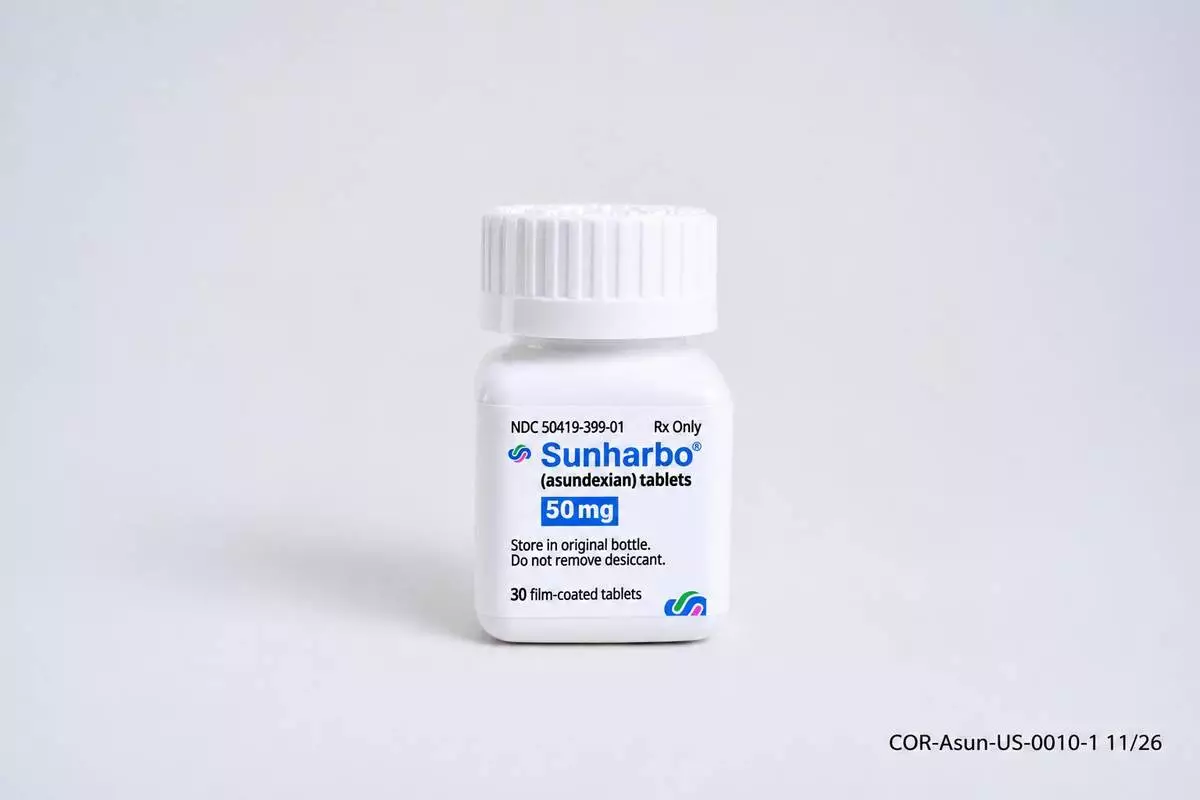
Bayer’s SUNHARBO® (asundexian), 50 mg tablets, the First and Only Factor XIa Inhibitor, Approved by the U.S. FDA to Reduce the Risk of Stroke in Adults With Recent Non-Cardioembolic Ischemic Stroke or High-Risk Transient Ischemic Attack...

Bayer’s SUNHARBO® (asundexian), 50 mg tablets, the First and Only Factor XIa Inhibitor, Approved by the U.S. FDA to Reduce the Risk of Stroke in Adults With Recent Non-Cardioembolic Ischemic Stroke or High-Risk Transient Ischemic Attack...
Bayer’s SUNHARBO® (asundexian), 50 mg tablets, the First and Only Factor XIa Inhibitor, Approved by the U.S. FDA to Reduce the Risk of Stroke in Adults With Recent Non-Cardioembolic Ischemic Stroke or High-Risk Transient Ischemic Attack...

College football will expand its playoff to 24 teams beginning next year in a move that resets decades of tradition surrounding a once all-important regular season and dumps conference championship showdowns that used to be among the sport's marquee events.

The announcement from the College Football Playoff and ESPN on Monday made official a deal that's been in the works for months. The network reported it would pay an additional $1.7 billion over five years on top of the original $7.8 billion contract that runs through the 2031 season.

The new format will grant the Power Four conference champions automatic spots and give one more to the best team from the Group of Six. But that slot and the other 19 will be decided by a selection committee that will serve as the latest set of decision makers in college football's long history of polls and opinions having lasting impacts on teams' fates.

Beginning next year, around 30% of college football's 68 power-conference schools will have a chance to play for the title, drawing the CFP closer to the NFL, which allows 43% of its teams into the playoffs. It leaves behind the last vestiges of yesteryear, when between four and eight teams entered December with a legitimate shot to win it all.

It's a seismic shift that even ESPN conceded comes with some question marks. The network pays billions to televise regular-season games that might — or might not — have more meaning under the new system.

“In all honesty, it's impossible to know for sure,” ESPN senior vice president Nick Dawson said in a conference call.

The revenue generated from the playoff expansion will presumably make up for the estimated $345 million the Power Four conferences generated in TV money for their title games. ESPN would then not be on the hook for $140 million of the extra money due to cancellation of the title games, the network reported.

The top eight seeds will receive first-round byes in the new format and the playoff will start on the second weekend in December, with the first two rounds of games on campus. The traditional Army-Navy game will be played on the first weekend in December, which used to be reserved for conference title games.

Both the Southeastern and Big Ten conferences, whose approval was needed to adopt this change, and their Power Four brethren — the Big 12 and Atlantic Coast Conference — are banking that most of the additional spots will go to their members so their second-tier teams will have new motivation to keep spending big in an era of NIL payments and $50 million football rosters.

“I think it will be healthy for teams like our current situation, building to try to get to that point,” said coach Barry Odom, who is trying to rebuild at Purdue.

The first final for the 24-team playoff remains set for Jan. 24, 2028, in New Orleans. Traditional bowl games will still host the quarterfinal and semifinal rounds.

As for the rest of the bowls, most of them operated or televised by ESPN: “No decisions have been made at this time,” Dawson said.

As part of the expansion, the CFP is requiring Power Four teams to play at least 10 regular-season games against conference foes, other Power Four opponents and Notre Dame. Group of Six teams will have to play 10 games against conference opponents.

In theory, these requirements will keep everyone in the same ballpark when it comes to strength of schedule, which figures to play a huge role in the selection committee's considerations.

Notre Dame didn't receive any guarantees, the way it did this year when, if it’s ranked in the top 12 by the CFP for what will be the last year of the 12-team postseason, it will get a spot.

Coach Marcus Freeman said he looks at the change as a net positive, in part because a team like his can now presumably afford more than one loss, and in part because of the new scheduling requirements. Notre Dame is one of only two independents left in major college football.

“I don’t want this to be like March Madness and have 60-something teams making the playoff,” he said. “But the more opportunities we have to make the playoff, it helps us.”

The new schedule also guarantees two off weeks during a regular season that will begin the week before Labor Day.

The move to 24 teams marks the second expansion of the playoff since it began in 2014 as a four-team affair. Right after it moved to 12 in 2024, most thought it would eventually max out at 16, which was the SEC’s preference.

But the Big Ten wanted to go bigger, while the SEC balked at that, concerned about the league title game — a property it invented in 1992 and made billions from over the decades — along with the marketability of CFP games featuring third- and fourth-place finishers in power conferences.

ESPN took care of the money problem. Now, the question is whether fans will embrace an NFL-style free-for-all that could include about one-third of the Power Four’s 68 teams, depending on what happens with Group of Six schools whose role in these big-money power grabs seems to diminish with every move.

It's the latest change for a sport that, for decades, built its distinct character and generated controversy by leaning on media and coaching polls to hand out national titles.

Like then, critics see a risk in giving more power to a selection committee that hasn’t really mastered four- or 12-team brackets. The exclusion of Florida State in 2023 and Notre Dame last season stand out as the best examples, and the first rankings this season left people scratching their heads again.

Skeptics also view the expanded playoff as another dilution of what is largely seen as one of the most important regular seasons in sports, replacing potential matchups between, say, Alabama and Georgia in an SEC title game with a 13 seed vs. 20 seed game that would pit, say, Kentucky and South Carolina.

Fan reaction “certainly weighed into the decision,” Dawson said.

“Ultimately, we just need to make a spectacular playoff,” he said. “The CFP has a responsibility to our fans, they're the lifeblood of college football. We owe them to make this great. That really is our intent.”

As Big Ten commissioner Tony Petitti argued from the beginning, a postseason that gives bubble teams hope and keeps others vying for home-field advantage or byes will bring more eyes — not fewer — to the end of a regular season that sometimes boils down to only three or four traditional rivalry games with meaning.

Of course, nobody can be certain how things will play out. The only sure thing is that college football will never look quite the same.

“If they think it’s a good thing for college football, then I’ve got to believe that this is the route we’re headed,” Wisconsin coach Luke Fickell said, “and we’re going to make it a great thing for college football.”

This story has been corrected to show the Purdue coach's name is Barry Odom.

AP Sports Writers Mike Marot, Steve Megargee, Will Graves, Aaron Beard, Brett Martel and Jim Vertuno contributed to this report.

Sign up for Top 25 poll alerts here, visit the Top 25 here and see AP’s full college football coverage here

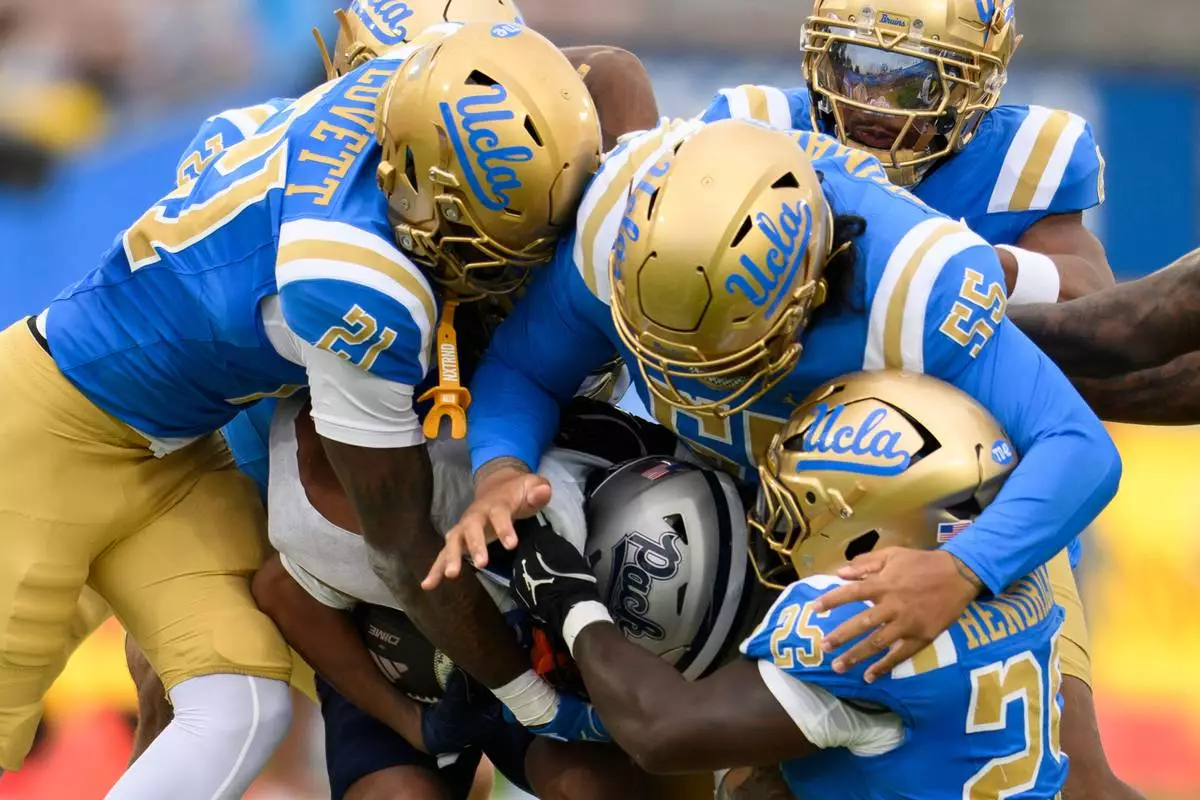
UCLA defenders tackle Nevada wide receiver Perrion Williams, center bottom, during the second half of an NCAA college football game Saturday, Oct. 31, 2026, in Pasadena, Calif. (AP Photo/Kyusung Gong)

UCLA defenders tackle Nevada wide receiver Perrion Williams, center bottom, during the second half of an NCAA college football game Saturday, Oct. 31, 2026, in Pasadena, Calif. (AP Photo/Kyusung Gong)

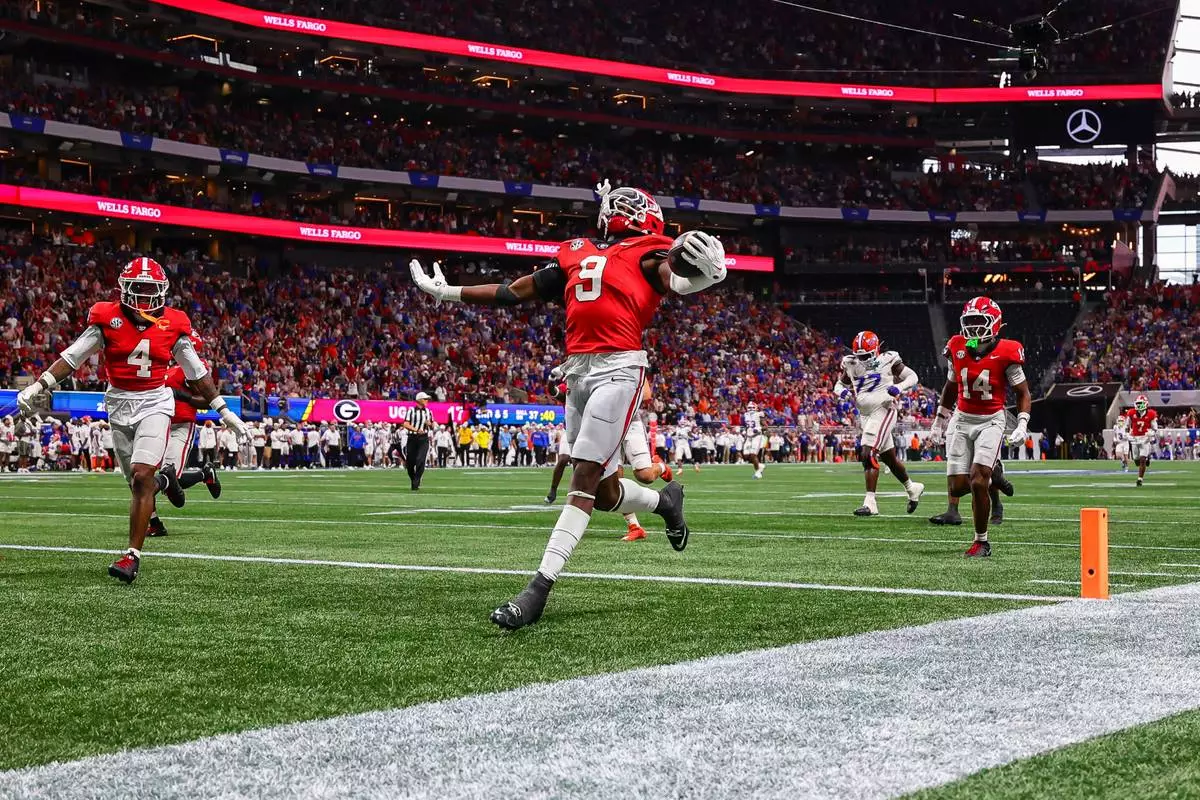
Georgia linebacker Chris Cole (9) scores a touchdown during the first half of an NCAA college football game against Florida, Saturday, Oct. 31, 2026, in Atlanta. (AP Photo/Colin Hubbard)

Georgia linebacker Chris Cole (9) scores a touchdown during the first half of an NCAA college football game against Florida, Saturday, Oct. 31, 2026, in Atlanta. (AP Photo/Colin Hubbard)

Fans storm the field after an NCAA college football game between Southern California and Ohio State, Saturday, Oct. 31, 2026, in Los Angeles. (AP Photo/Ryan Sun)

Fans storm the field after an NCAA college football game between Southern California and Ohio State, Saturday, Oct. 31, 2026, in Los Angeles. (AP Photo/Ryan Sun)

Recommended Articles