Russia will not agree to a "freeze" in the Ukraine conflict that leaves existing security threats unresolved and creates conditions for renewed escalation, Russia's Permanent Representative to the United Nations Vasily Nebenzya said Monday.
Nebenzya made the statement at a U.N. Security Council meeting.
"The Zelensky regime and their Western backers are still seeking to replace a comprehensive settlement with temporary ceasefires covering energy infrastructure, food supplies, airspace and maritime activities. Behind these initiatives, one can see the desire of the West to give Kiev time to replenish its losses, regroup its forces, rearm and restore its military capabilities ahead of a possible resumption of hostilities," Nebenzya said.
"Russia will not agree to such a scheme. We will not accept a freeze in the conflict that would preserve existing threats to our security and create conditions for a new escalation. Our position is firm and unchanged. Any settlement should be comprehensive, sustainable and long-term, addressing the Ukraine crisis' root causes," he said.
"Our country repeatedly stated that we are not keen to engage in armed confrontation with Europe. However, if European states themselves unleash a war, the nature of the confrontation will be different in principle, and the situation may escalate quickly," Nebenzya continued.
Also speaking at the U.N. Security Council meeting, Ukraine's Permanent Representative to the United Nations Andriy Melnyk said that Ukraine expected results from the trilateral talks in Abu Dhabi on Tuesday and Wednesday, but noted that a political breakthrough is hardly within the reach without a summit at the highest level.
"Without a summit at the highest level, a breakthrough, a political breakthrough is hardly within the reach. That is why Ukraine's president stands ready to meet Putin at the earliest occasion, be it in Florida in December, on the sidelines of the G20, or in any other place in the world, if need be, even in Antarctica, anywhere, but not in Moscow," said Melnyk.
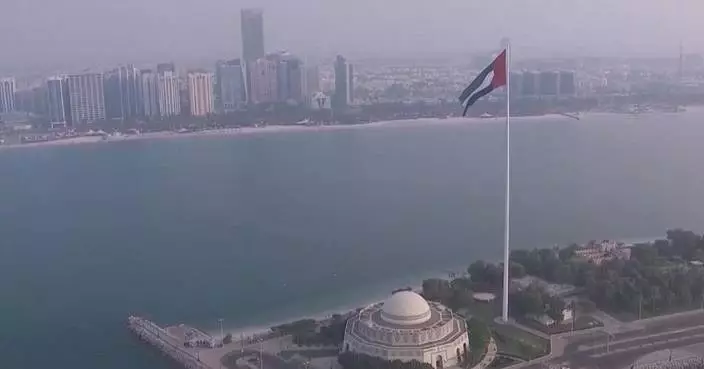
The Russian and Ukrainian delegations arrived in Abu Dhabi, the capital of the United Arab Emirates (UAE), on Monday to participate in trilateral talks involving Russia, Ukraine and the United States, informed sources confirmed to Xinhua.
The talks are scheduled to take place on Tuesday and Wednesday as part of ongoing efforts to explore ways to resolve the Ukraine crisis.
Earlier on Monday, Rustem Umerov, head of Ukraine's Foreign Intelligence Service, announced on Telegram that the Ukrainian negotiating team was heading to the UAE for the talks.
Representatives of other European countries, including the United Kingdom, France, Germany and Italy, as well as officials from NATO and the European Commission, will also be present in Abu Dhabi, he said.
Umerov added that Ukraine plans to hold separate coordination meetings with its European partners.
The Abu Dhabi meeting will mark the first trilateral meeting between Russia, the United States and Ukraine since February.
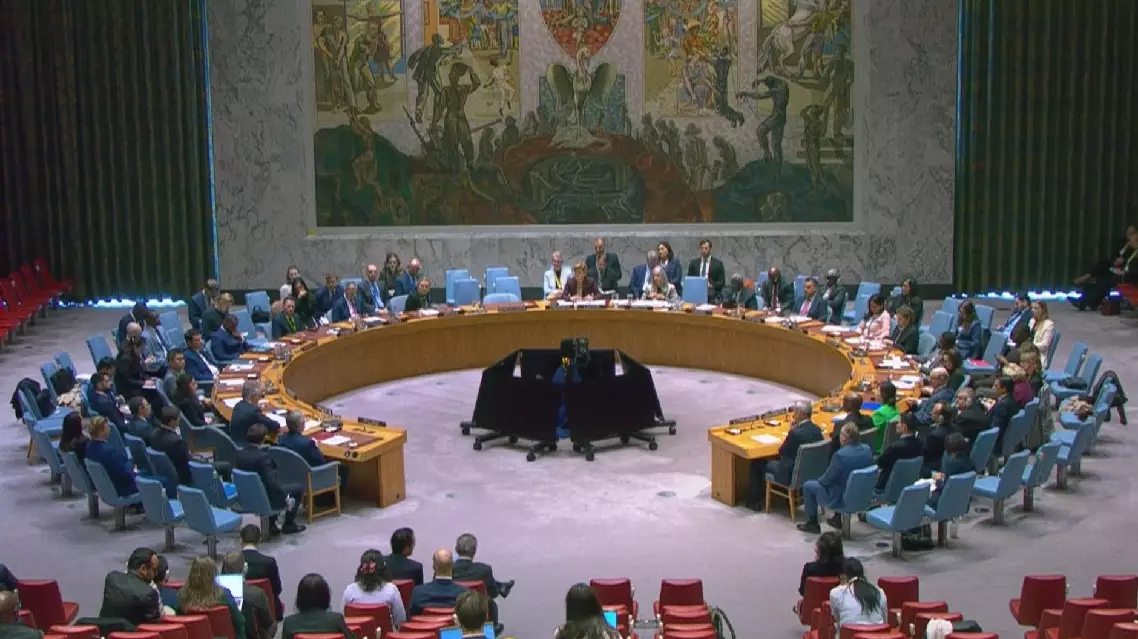
Russia rejects "freeze" in Ukraine conflict as Kyiv urges Putin-Zelensky summit
Russia rejects "freeze" in Ukraine conflict as Kyiv urges Putin-Zelensky summit