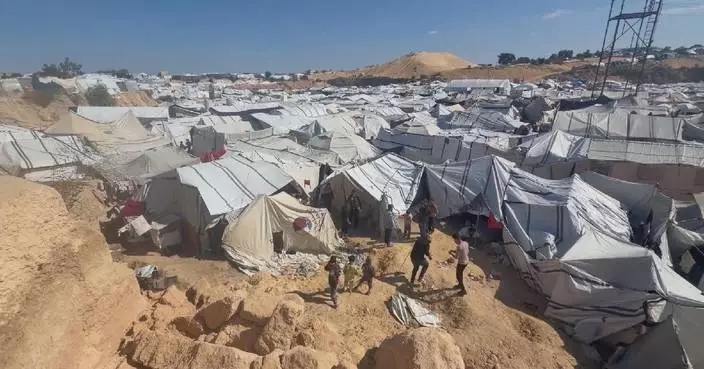
The 24th Chinese peacekeeping contingent to Lebanon, together with the Chinese embassy in Beirut, has carried out a series of humanitarian assistance activities in the Tyre District of southern Lebanon, offering free medical services and donating supplies to local communities.
As part of the outreach, the peacekeepers visited a local school, the Mosan Center for Special Needs and other facilities, distributing supplies and providing free medical consultations in an effort to convey goodwill and support peace through concrete action.
The contingent, known as CHINBATT, serves with the United Nations Interim Force in Lebanon (UNIFIL), the UN mission tasked with keeping peace along the country's volatile southern border, where Chinese peacekeepers combine their regular duties with demining, engineering and medical support for local communities.
For the communities receiving the aid, that long-standing presence has grown into a relationship built on trust over the years.
"We want to thank also the CHINBATT from UNIFIL. And they [have] been with us [for] 10 years. We don't feel that we are alone, [that] somebody is with us," said Ali Charafeddine, head of Mosan Center for Special Needs.
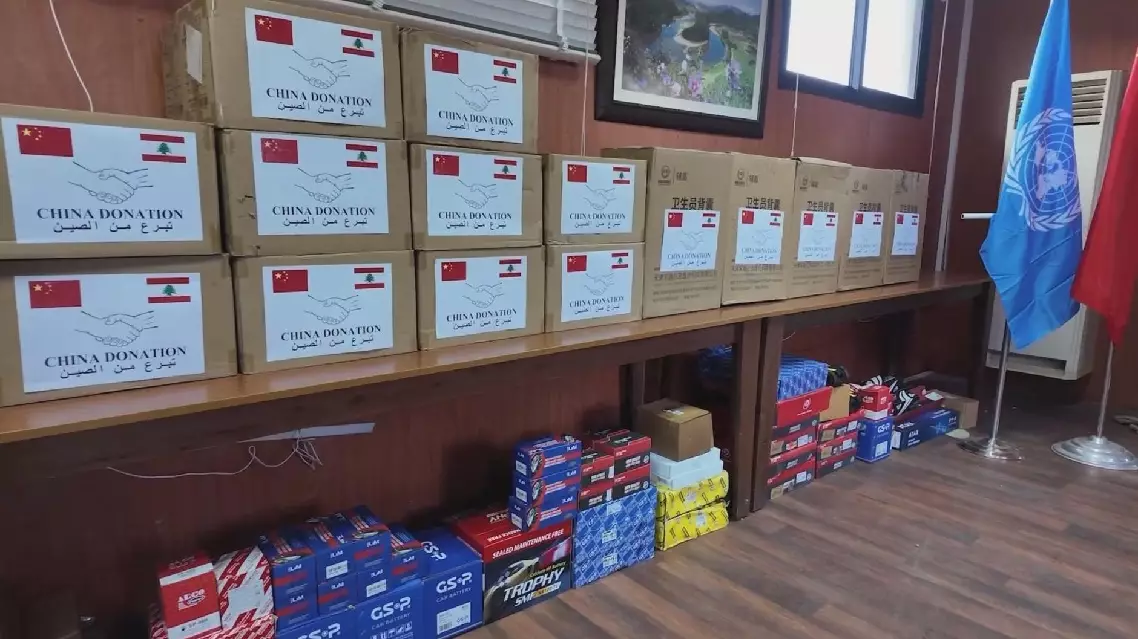
Chinese peacekeepers in Lebanon carry out humanitarian aid activities
China on Saturday released the top 10 benchmark scenarios for the multi-hazard, alert, zero-gap and universal (MAZU) platform, an AI-driven meteorological early warning solution, at a sideline event of the ninth China International Import Expo (CIIE) in Shanghai.
The scenarios were selected from 20 teams shortlisted worldwide. The selection focused on the most critical areas of global meteorological disaster prevention and mitigation and explored pathways to turn digital-intelligence meteorological advances into disaster-prevention capabilities, based on the feasibility of scenario applications, the advancement of AI technology, data security and regulatory compliance, and the replicability of innovation.
The scenarios will leverage the CIIE to engage financial institutions in Shanghai and Chinese companies going global, expand their applications, and support global green and low-carbon development and climate governance.
"We're working with the Shanghai Meteorological Service on the MAZU system. We think that in Jordan, this system will help us make the warnings in exactly time for the public, to save the public from this flash flooding," said Ra'ed Ahmad Subhi Rafid, director of the Jordan Meteorological Department.
"In Malaysia, we still don't have many landslide early warning platforms, so that's why we collaborate with the China counterparts. We collect the data from MAZU, which is the data from a satellite Fengyun and the data from CMA (China Meteorological Administration) and also the data from Beidou for our GNSS (Global Navigation Satellite System) equipment. This is a good collaboration between Malaysia and MAZU," said Kamarul Hawari Bin Ghazali, a professor at Universiti Malaysia Pahang Al-Sultan Abdullah.
"In the first phase, we plan to install equipment for the port and then for the mine extraction areas, by the end of this year for the ports. We need the MAZU project cover all the country by providing service for all the social economic development sectors, like energy, agriculture, transportation, risk management, disaster management, tourism and so on," said Rene Tato Loua, director general of the National Agency of Meteorology of Guinea.
The MAZU system integrates observation data from China's Fengyun meteorological satellites and domestically developed AI weather forecast models to provide high-resolution, rapidly updated weather monitoring and natural disaster pre-warning services, and to support disaster relief efforts, the CMA said.
Named after Mazu, the traditional Chinese goddess of the sea and protector of sailors, the system has already been deployed in seven countries while supporting cloud-based trials in more than 50 nations. In the years to come, the China-made MAZU system is expected to be applied in 30 countries.
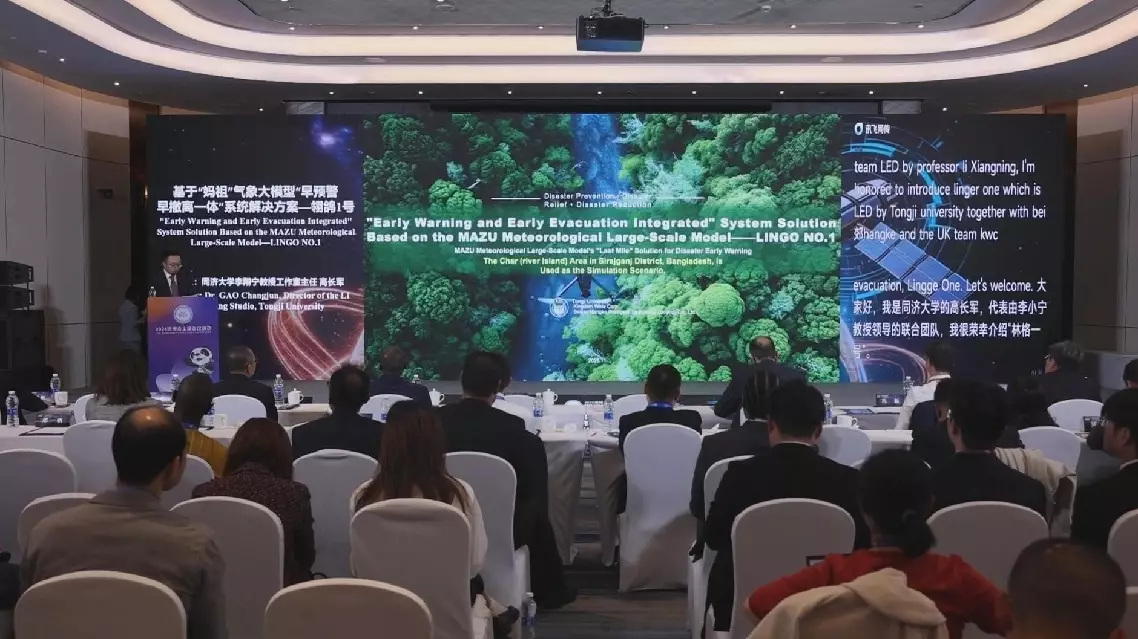
China unveils top 10 MAZU AI early warning scenarios at CIIE